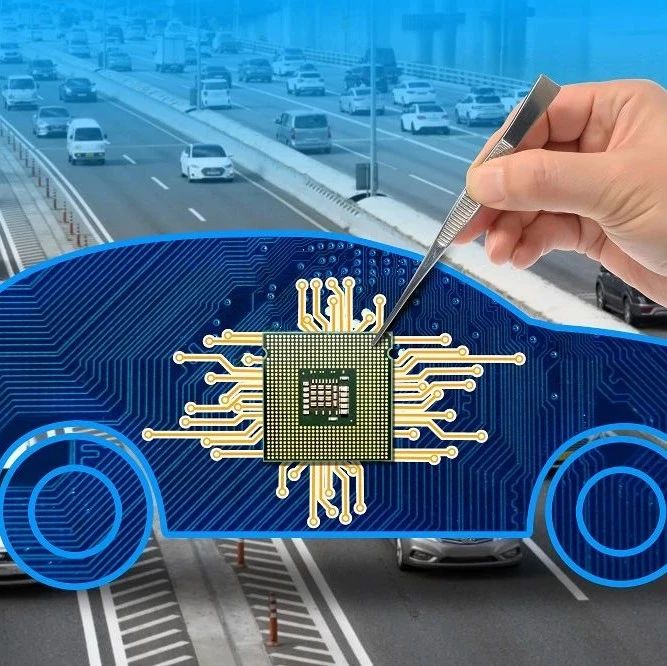
软件定义汽车(SDV)

Search documents
标普全球汽车分享智能化与全球化背景下的产业发展方向
Jing Ji Guan Cha Bao· 2025-08-14 11:08
Core Insights - S&P Global Automotive has released its latest assessment of future opportunities and trends in the automotive industry during the "2025 Mobility Intelligence Dialogue" event in Beijing, focusing on the transformation driven by artificial intelligence and globalization [2] - The company will host industry summits in Shanghai, Beijing, and Guangzhou in September, addressing topics such as technological evolution and global strategies [2] Group 1: Automotive Trends - The integration of new applications like video, gaming, and health monitoring is transforming car interiors from simple infotainment systems to multifunctional living spaces, with over 95% of connected new cars expected to have full OTA capabilities by 2030 [3] - The focus for automakers will shift towards high-performance hardware and differentiated software ecosystems, emphasizing user engagement and service stickiness in the emerging "cockpit economy" [3] Group 2: Electric Drive and Battery Systems - Competition in the electric drive sector is moving from individual performance metrics to system integration and global adaptability, with Chinese manufacturers advancing to high integration levels in their electric drive systems [3] - Some domestic high-end electric drives have achieved peak power exceeding 580 kW and maximum speeds of 30,000 RPM, positioning them at the forefront globally [3] Group 3: Global Expansion and Market Dynamics - For suppliers planning to expand internationally, the key consideration is whether to export finished products or establish local manufacturing, with regional production capabilities becoming crucial for long-term competitiveness [4] - The Chinese heavy-duty truck market is undergoing structural transformation, with a shift towards logistics and high-value transport scenarios, while the export of new energy heavy-duty trucks is growing despite global trade barriers [4] Group 4: Data Utilization and Strategic Planning - S&P Global Automotive emphasizes the importance of integrating technical parameters, market forecasts, regulatory trends, and consumer behavior into a unified analytical framework to aid automakers in product planning and competitive strategy [5] - The global window of opportunity for Chinese automakers is opening, with success in electric drive integration, localized production, and differentiated cockpit services being critical for their positioning in the next phase of global automotive industry segmentation [5]
恩智浦(NXPI):FY2025Q2 业绩说明会纪要:各终端趋势好于预期,复合增速及长期毛利率指引乐观
Huachuang Securities· 2025-07-24 08:55
Investment Rating - The report assigns a positive outlook for NXP Semiconductors, indicating a potential for growth in the upcoming quarters, particularly in the automotive and industrial sectors [2][4]. Core Insights - NXP Semiconductors reported Q2 2025 revenue of $2.93 billion, a year-over-year decrease of 6%, but exceeding the midpoint of guidance. The Non-GAAP gross margin was 56.5%, down 2.1 percentage points year-over-year, while Non-GAAP EPS was $2.72, also above guidance [3][7]. - The company has completed the acquisition of TTTech Auto and is awaiting regulatory approval for the acquisitions of Kinara and Aviva Links, aimed at enhancing its product portfolio and software capabilities in the automotive sector [4][14]. - For Q3 2025, NXP expects revenue to be $3.15 billion, a year-over-year decrease of 3% but an 8% increase quarter-over-quarter. The management expresses confidence in achieving a compound annual growth rate of 8%-12% for automotive and industrial IoT segments from 2024 to 2027 [4][18]. Company Performance Overview - **Q2 2025 Performance Summary**: - Revenue: $2.93 billion (YoY -6%) - Non-GAAP Gross Margin: 56.5% (YoY -2.1 percentage points) - Non-GAAP Net Profit: $690 million (YoY -17%) [3][7]. - **Segment Revenue Breakdown**: - Automotive: $1.73 billion (YoY flat, QoQ +3%) - Industrial & IoT: $546 million (YoY -11%, QoQ +7%) - Mobile Devices: $331 million (YoY -4%, QoQ -2%) - Communication & Others: $320 million (YoY -27%, QoQ +2%) [10][11]. Strategic Investments - The acquisition of TTTech Auto is expected to integrate 1,100 software engineers into NXP's software-defined vehicle solutions, although its revenue contribution is minimal in the short term [14][25]. - The company is managing operational expenses related to the pending acquisitions of Kinara and Aviva Links, which are relatively small in scale [22][25]. Performance Guidance - **Q3 2025 Guidance**: - Expected revenue: $3.15 billion (YoY -3%, QoQ +8%) - Non-GAAP Gross Margin: 57% [4][17]. - **Long-term Growth Outlook**: - Revenue CAGR from 2024 to 2027 is projected at 6%-10%, with specific segments like automotive and industrial IoT expected to grow at 8%-12% [18][30]. Q&A Insights - Management expresses a significantly improved confidence in the cyclical recovery, supported by various positive signals from distributors and customers [21][30]. - The automotive sector is anticipated to see a recovery driven by the end of inventory consumption cycles among Tier-1 customers, rather than relying solely on macroeconomic improvements [23][39].

本田日产共研汽车操作系统,抗衡中美车企
日经中文网· 2025-07-15 03:00
Core Viewpoint - The competition in the next-generation automotive sector will be significantly influenced by software updates that enhance driving performance and functionality, with companies like Tesla and Huawei leading the charge in software innovation [1][2]. Group 1: Collaboration between Honda and Nissan - Honda and Nissan are negotiating to standardize the basic software (operating system) for vehicle control, aiming to implement it in new models by the late 2020s [1]. - The two companies have been conducting joint research on software technology since August 2024, with plans to decide on mass production development based on the effectiveness of their collaboration [1][2]. - The collaboration is driven by concerns over data competition in the next-generation automotive field, where features like autonomous driving and enhanced in-car experiences are critical [2]. Group 2: Development of Operating Systems - Honda is developing its own operating system called "ASIMO," while Nissan is also advancing its proprietary system, aiming to create user-friendly systems akin to Apple's iOS and Google's Android [2]. - Both companies plan to launch vehicles equipped with their independently developed operating systems starting in 2026, with a joint system expected to debut in new models by the late 2020s [2]. - The collaboration aims to reduce development costs, which can reach trillions of yen, by sharing resources and technology [2]. Group 3: Competitive Landscape - Tesla, a leader in the industry, utilizes its own operating system, resolving approximately 40% of recall issues through software updates [2]. - Chinese tech companies like Huawei are also at the forefront of software innovation in the automotive sector [2].


大众汽车称未来五年内约2万名员工将自愿离职
Huan Qiu Wang· 2025-06-04 02:04
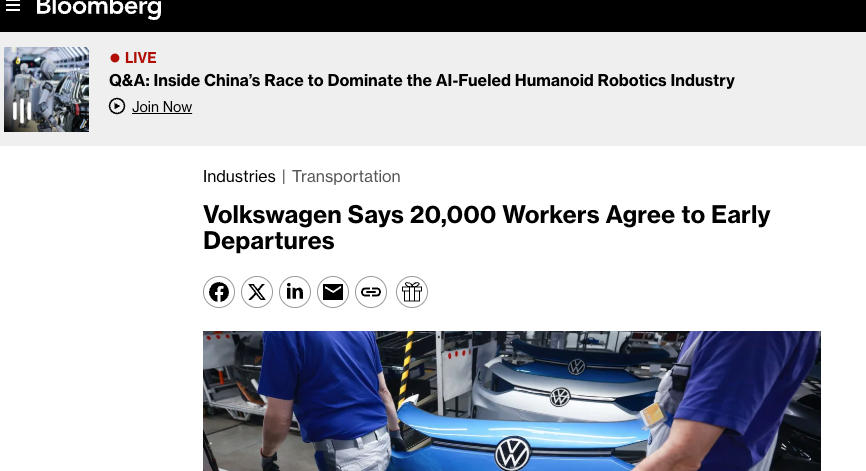
Core Insights - Volkswagen AG plans to reduce approximately 20,000 employees in Germany over the next five years through a voluntary departure program to address uneven demand in the European market and accelerate its electrification transition [1][3] - This restructuring is the largest since the launch of the "Future Pact" strategy in 2024, aimed at optimizing costs and enhancing operational flexibility [1][3] Group 1: Market Challenges - The company faces long-term underutilization of production capacity in German factories due to weak consumer demand in Europe, rising supply chain costs, and lower-than-expected penetration rates of electric vehicles [3] - CEO Oliver Blume highlighted the dual challenges of demand structure and energy transition in Germany, emphasizing the need for streamlined operations to support electrification, digitalization, and software-defined vehicle strategies [3] Group 2: Employee Impact - The voluntary departure plan will affect various functions, including research and development, production, and administration, across Volkswagen's German brands such as Volkswagen Passenger Cars, Audi, and Porsche [3] - The total number of employees in Germany will decrease from 280,000 to approximately 260,000, representing a 7% reduction [3] Group 3: Strategic Goals - The restructuring is not only a response to short-term demand fluctuations but also a critical step in Volkswagen's long-term electrification strategy, with a goal to increase the share of electric vehicle production in Europe to 80% by 2030 [3] - The reorganization is expected to free up over €3 billion (approximately 234 billion RMB) in annual cost savings for investments in battery factories, autonomous driving, and connected vehicle technologies [3] Group 4: Future Production Plans - Volkswagen's factories in Emden, Zwickau, and Hanover will gradually transition to pure electric production bases, with plans to launch 10 new all-electric models by 2026 [4] - The company is collaborating with U.S. battery manufacturer QuantumScape to develop solid-state battery technology, which is currently in mass production testing and is expected to be implemented in German production lines by 2027 [4] - Blume emphasized that the goal is not only to cut costs but also to build future competitiveness through restructuring, maintaining Germany as a core base for innovation and manufacturing [4]
削减电动化投资 本田重回混动战略
Bei Jing Shang Bao· 2025-05-21 16:42
Group 1 - Honda has adjusted its electric vehicle (EV) sales target, now expecting EV sales to be below the previously announced 30% by 2030 due to a slowdown in the EV market [1] - The company plans to enhance its hybrid vehicle lineup, aiming to launch 13 next-generation hybrid models globally over the next four years starting in 2027 [1] - Honda's total vehicle sales target is to increase by over 3.6 million units by 2030, with hybrid vehicle sales expected to rise by 2.2 million units [1] Group 2 - For the fiscal year 2024, Honda reported a revenue increase of 6.2% to 21.69 trillion yen, but operating profit and net profit saw significant declines, with operating profit down 12.2% to 1.21 trillion yen and net profit down 24.5% to 835.84 billion yen [2] - The company anticipates that tariffs from various countries will impact the operating profit by 650 billion yen in the next fiscal year, with an estimated effect on 550,000 vehicles and a profit impact of about 300 billion yen [2] - Honda's revenue forecast for fiscal year 2025 is 20.3 trillion yen, a decrease of 6.4%, with operating profit expected to drop by 58.8% to 500 billion yen and net profit projected to fall by 70.1% to 250 billion yen [2] Group 3 - Honda is developing a new generation of Advanced Driver Assistance Systems (ADAS) to be widely adopted in its electric and hybrid models launching in North America and Japan in 2027 [3] - In China, Honda is collaborating with Momenta to create an ADAS suitable for local road conditions, with all new models in the Chinese market set to feature this technology [3] - The company aims to implement a robust supply chain strategy focused on mixed production lines for electric and hybrid vehicles, ensuring the supply of electric components centered around batteries [3] Group 4 - Honda plans to modularize its electric motorcycles and will start production at a new factory in India in 2028, aiming to capture the leading market share in the electric motorcycle sector [4] - The strategic adjustments by Honda reflect the broader challenges faced by traditional automakers in the electrification wave, balancing high R&D costs with uncertain market demand [4] - Other automakers, like Ford, have also shifted focus from electric to hybrid vehicles due to lower-than-expected demand, indicating a trend among traditional manufacturers [4]
心智观察所:车载通信为何是国产替代的薄弱环节
Guan Cha Zhe Wang· 2025-05-11 01:15
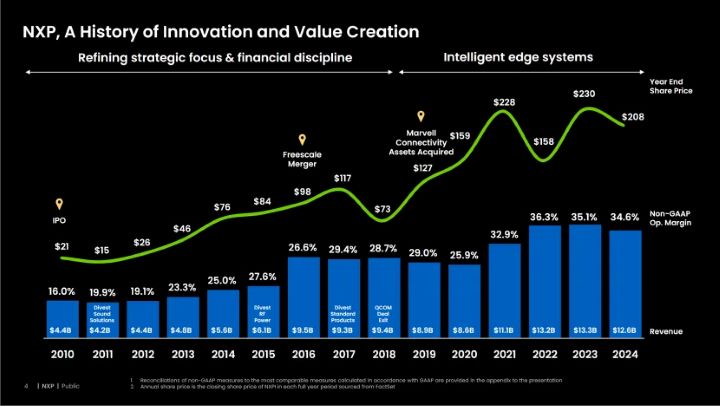
Group 1: Company Performance - NXP reported Q1 revenue of $2.84 billion, a year-over-year decline of 9% and a quarter-over-quarter decline of 9% [1] - Following the earnings report, NXP's stock price dropped over 7% in after-hours trading, resulting in a market value loss of approximately $4.5 billion [1] - The company announced the retirement of CEO Kurt Sievers at the end of the year, with Rafael Sotomayor set to take over [1] Group 2: Market Conditions - The global automotive and industrial chip market has been experiencing a downturn since 2024, with companies facing challenges in inventory clearance [1][2] - The global automotive chip inventory turnover period has extended by 30%-50% year-over-year due to a significant drop in demand from automakers [2] Group 3: Strategic Moves - NXP made notable strategic moves, including a $307 million acquisition of AI chip startup Kinara Inc. and the launch of the new S32K5 series MCU, which features embedded MRAM technology [4][5] - The acquisition of Kinara is part of NXP's broader strategy to enhance its AI capabilities and provide a comprehensive AI platform [5] - NXP's focus remains on enhancing automotive and industrial communication capabilities through edge AI tools [5][6] Group 4: Industry Trends - The automotive communication market is undergoing significant changes, driven by the evolution of the automotive concept and increasing demands for computing power and integration in vehicle communication chips [7] - The shift towards software-defined vehicles (SDVs) necessitates a deep integration of communication chips and computing units, testing manufacturers' full-stack capabilities [8]

专访‖Elektrobit CEO Maria Anhalt:以SDV重塑智能汽车开发范式
Zhong Guo Qi Che Bao Wang· 2025-04-30 05:56
Core Insights - The automotive industry is undergoing a transformation driven by electrification and intelligence, focusing on smart connected new energy vehicles and the development of a new smart car ecosystem [1] - Elektrobit, a leading automotive software supplier, is at the forefront of this transformation, promoting innovative development paradigms for smart vehicles through its software-defined vehicle (SDV) technology roadmap [1][5] Industry Trends - The Shanghai Auto Show highlighted the importance of enhancing efficiency throughout the entire development cycle of smart vehicles, from virtual development to mass production [1] - The Chinese market is rapidly advancing towards smart technology, with Elektrobit establishing offices and R&D centers in major cities to support local automotive companies [5] Elektrobit's Innovations - Elektrobit showcased several innovative SDV solutions at the Shanghai Auto Show, including: - EB corbos Linux for Safety Applications, the first open-source solution compliant with functional safety standards [11] - Next-generation digital cockpit powered by Google Gemini Gen AI and Unreal Engine, offering high flexibility for brand customization [13] - A virtual SDV development environment that seamlessly integrates development, prototyping, testing, and validation [16] - Fail-operational software solutions for next-generation autonomous vehicles, ensuring high reliability even during system failures [18] - Advanced in-vehicle networking solutions that enhance performance and simplify connectivity [24] Collaboration and Future Trends - Elektrobit collaborates with various Chinese companies, including Geely, to explore cutting-edge technologies and develop customized solutions [24] - Future trends in automotive development include: - Standardization of hardware and software for multi-model production lines [24] - Widespread adoption of virtual development technologies to reduce costs and accelerate development [24] - Increasing integration of smart cockpit technologies [24] - Elektrobit offers comprehensive software services and solutions across the SDV development spectrum, from Level 1 to Level 5, providing targeted guidance based on client needs [24]

HERE首秀上海车展:AISDV赋能,助力中国车企全球化布局
Zhong Guo Qi Che Bao Wang· 2025-04-30 04:45
Group 1 - HERE Technologies made its debut at the Shanghai Auto Show, highlighting the innovation and technological breakthroughs in the Chinese automotive market [1][5] - The company focuses on global business expansion, providing high-quality maps and location intelligence solutions to assist Chinese automotive companies in their internationalization efforts [5][10] - HERE has established partnerships with leading companies such as BYD, Geely, and SAIC, covering over 200 countries and accounting for 80% of China's vehicle export volume in 2024 [5][10] Group 2 - HERE offers customized solutions for electric vehicles, including Navigation on Autopilot (NOA) and digital cockpit experiences, aimed at enhancing driving safety and expanding international market reach [7][10] - The company leverages its extensive database of charging facilities and deep understanding of local regulations to provide advanced data services that support the implementation of high-level driving functions [7][10] - HERE showcased cutting-edge technologies such as in-car navigation, AI smart assistants, and Advanced Driver Assistance Systems (ADAS) at the auto show, emphasizing the significant improvements in vehicle safety, efficiency, and user experience [10] Group 3 - The partnership between Neusoft and HERE began in 2017, with the first project launched in Vietnam in 2018, and a deep cooperation agreement signed in 2023, resulting in production collaborations in over 110 countries [11] - Neusoft, as a leading domestic software company, has built a sales network covering over 110 countries, while HERE provides high-quality map data and advanced technologies to support their collaboration [11][13] - The joint development of the OneCoreGo® intelligent solution 5.0 aims to achieve weekly map updates and create a human-machine co-driving solution for international markets, with ongoing efforts in AI and high-precision mapping [13]

从深蓝欧洲发布会看中国汽车全球化进程的创新与突破
Yang Shi Wang· 2025-03-24 07:38
Core Viewpoint - Changan Automobile's European launch event for its Deep Blue brand marks a significant milestone in China's automotive globalization, showcasing a shift from "following" to "leading" in the industry [1] Group 1: Globalization Strategy - Changan's "Haina Baichuan" global strategy represents a systematic approach to globalization, transitioning from product export to brand and industry export [2] - The company is establishing a localized operational system in Europe, including a research center in Munich and over 1,000 sales outlets [2][3] Group 2: Technological Innovation - Deep Blue vehicles are integrating advanced technologies such as the Tian Shu model and AR-HUD systems, aligning with European safety and performance standards [4] - Collaborations with companies like Huawei and CATL are creating a new paradigm of "technology integration + resource synergy" [4] Group 3: Market Impact - In 2023, China's new energy vehicles captured over 18% of the European market, with Changan aiming for global sales of 5 million vehicles by 2030, 60% of which will be new energy vehicles [4][5] - The shift from "product export" to "ecological landing" reflects the growing technological innovation and collaborative capabilities of Chinese automakers [5] Group 4: Global Influence - China's automotive exports have risen significantly, but true globalization encompasses the influence of technology standards, brand value, and industrial ecosystems [6] - The 50th anniversary of China-Europe diplomatic relations provides a historical context for Changan's entry into the European market, potentially enhancing cooperation between the two regions [6]

现代:汽车半导体量产在即,三星代工
半导体芯闻· 2025-03-18 10:32
Group 1 - The core viewpoint of the article is that Hyundai Mobis has completed the internal design of automotive semiconductors for software-defined vehicles (SDV) and plans to start mass production, marking a significant step in the automotive semiconductor market [1][2]. - Hyundai Mobis aims to establish a research base in Silicon Valley by the end of this year to enhance its technological capabilities and secure automotive semiconductor technology [1][3]. - The company has developed semiconductors for key components such as electrification, electronics, and lighting, with plans to outsource production to Samsung Electronics [1][2]. Group 2 - The demand for automotive semiconductors is rapidly increasing due to advancements in autonomous driving technology and the shift towards electrification, with the number of semiconductors in mass-produced vehicles reaching up to 3,000 [2]. - Market research firm IDC predicts that the global automotive semiconductor market will grow from $41.182 billion in 2020 to $88.275 billion by 2027, with an average annual growth rate of approximately 12% [2]. - Hyundai Mobis is focusing on two areas: power semiconductors to improve electric vehicle range and performance, and system semiconductors for various vehicle functions [2].