
估值修复

Search documents
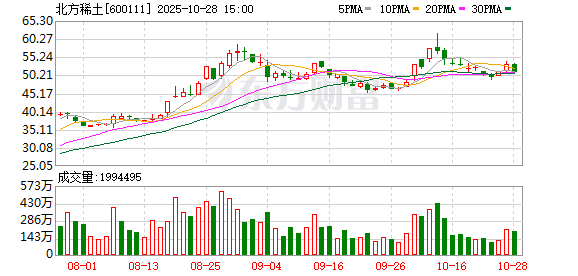
前三季度净利率仅5% 北方稀土融资余额猛增
2 1 Shi Ji Jing Ji Bao Dao· 2025-10-28 09:45
Core Viewpoint - The profitability of Northern Rare Earth is relatively lower compared to other raw material industries, with a net profit margin of approximately 5.1% reported in the third quarter [2]. Financial Performance - In the third quarter, the company achieved a revenue of 30.29 billion yuan and a net profit of 1.541 billion yuan, with a significant decline in profit growth rate from 1951.52% in the first half of the year to 280.27% [2][3][10]. - The company's net profit for the first three quarters was 431 million yuan, 501 million yuan, and 610 million yuan, showing a sequential increase [14]. Price and Cost Dynamics - Domestic rare earth prices have significantly declined entering the fourth quarter, while the price of rare earth concentrate increased by 37% compared to the third quarter, leading to increased pressure on profitability [4][17]. - The operating revenue in the third quarter grew by 33.32%, while operating costs increased by 33.75%, indicating a rising cost pressure [16]. Market Sentiment and Stock Performance - Following the release of the third quarter report, the stock price of Northern Rare Earth fell by 4.2% [5]. - The financing balance reached a historical high of 8.77 billion yuan, with a notable increase of over 700 million yuan in a single day [5][23]. Future Outlook - The company is expected to face challenges in replicating the exaggerated profit growth of the first half of the year due to anticipated price recovery in the second half of 2024 [8][9]. - Analysts have expressed strong confidence in the company's profitability, with some predicting annual profits exceeding 3 billion yuan, which may be difficult to achieve given the current market conditions [18][19].


睿远港股通核心价值混合:三季度降低了创新药板块获利仓位 互联网板块成为配置重点
Zheng Quan Shi Bao Wang· 2025-10-28 05:25
Core Viewpoint - The fund has moderately reduced its holdings in the innovative drug sector while increasing allocations to the non-bank financial and internet sectors in Q3 2025 [1] Non-Bank Financial Sector - The tightening liquidity environment benefits insurance companies' interest spreads, with valuations at historically low levels, providing good safety margins and recovery potential [1] - In the context of a weak macroeconomic recovery, the stable nature of insurance products is likely to attract more capital [1] Internet Sector - The internet sector has become a key focus for allocation in Q3, with valuation recovery driven by a combination of macroeconomic, fundamental, and liquidity factors rather than a surge in performance [1] - The initiation of the Federal Reserve's interest rate cut cycle has lowered risk-free rates, directly boosting the valuations of long-duration assets like internet companies [1] - Improved market sentiment regarding overall demand has enhanced growth prospects for core businesses such as e-commerce and advertising [1] - Internet companies have shifted from a growth-oriented to a profit-oriented approach after several years of strategic adjustments, resulting in significantly improved profitability and cash flow quality [1] - In a challenging environment for traditional industries and increased volatility in certain tech sectors, leading internet firms have become a consensus investment choice due to their high liquidity, clear business models, and stable shareholder returns, attracting funds from other sectors [1]
AH溢价上行意味着什么?为什么说当前是港股投资的好时机
Sou Hu Cai Jing· 2025-10-28 05:06
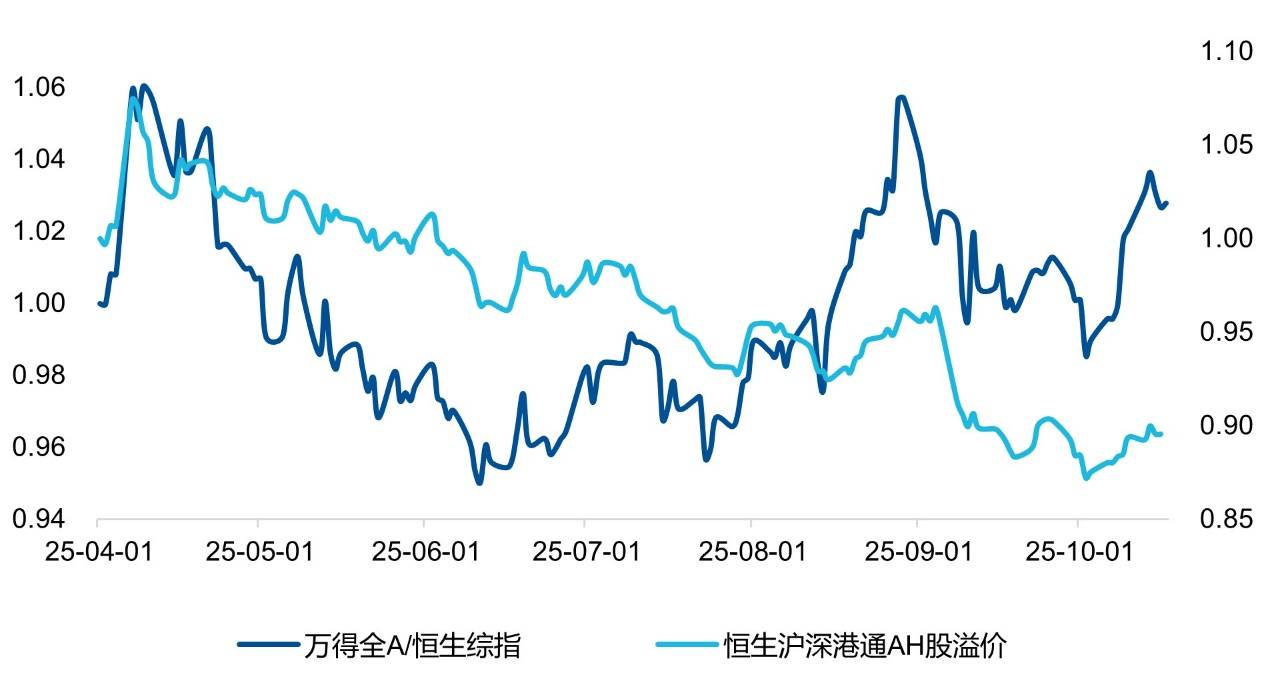
Group 1 - The valuation gap between A-shares and H-shares has widened, with the AH premium index rising since October, indicating that H-shares are becoming more attractive to investors [1][2] - The AH premium is defined as the price difference between the same company listed in both A-shares and H-shares, influenced by factors such as investor structure and liquidity [1] - Recent data shows that the AH premium index has been increasing, suggesting that A-shares are relatively overvalued compared to H-shares, driven by a recovery in risk appetite in the mainland market and a strengthening of the RMB [1] Group 2 - Over 100 companies are listed in both A-shares and H-shares, with A-shares generally having higher valuations; some leading stocks have price differences exceeding 40% [4] - The AH premium for leading stocks has mostly expanded, indicating that A-shares' valuation premium is still rising while H-shares are becoming more attractive [4] - H-shares are seen as having improved investment value due to lower valuations reflecting similar profit expectations compared to A-shares [4] Group 3 - The Hang Seng Index's equity risk premium (ERP) has recently rebounded from a three-year rolling -2 standard deviation position, indicating a shift in investor sentiment towards re-evaluating H-share assets [7][10] - The recovery in the ERP suggests that the valuation repair of H-shares is transitioning from being sentiment-driven to being supported by earnings and liquidity [7][10] - The Hang Seng China Enterprises Index is highlighted as having high valuation repair potential and strong liquidity, making it a focal point for investors during the current liquidity cycle [10]
银河证券:当前消费风格估值处于历史低位 修复空间较大
Zheng Quan Shi Bao Wang· 2025-10-28 00:37
Core Viewpoint - The report from Galaxy Securities highlights the increasing importance of consumption in China's economic structure amid slowing traditional investment growth and heightened external uncertainties, particularly for export-dependent enterprises [1] Group 1: Economic Context - Structural adjustments in the economy are leading to a slowdown in traditional investment growth [1] - Export-dependent companies are facing increased pressure due to external uncertainties [1] - Insufficient effective demand remains a prominent issue during the "14th Five-Year Plan" period [1] Group 2: Consumption Insights - The role and status of consumption in the "three drivers" of the economy are becoming more prominent [1] - The "14th Five-Year Plan" may focus on reforms in income distribution, high-quality consumption supply, and improving long-term mechanisms to stimulate consumption [1] - Current consumption style valuations are at historical lows, indicating significant potential for valuation recovery [1] Group 3: Investment Focus - Attention is drawn to sectors with valuations at historical mid-low levels and relatively strong performance metrics, including beer, feed processing, animal husbandry, white goods, and condiments [1]

中国银河证券:A股当前消费风格估值处于历史低位
Di Yi Cai Jing· 2025-10-28 00:13
Core Viewpoint - The report from China Galaxy Securities highlights the increasing importance of consumption in the economy due to structural adjustments and external uncertainties, with a focus on the "14th Five-Year Plan" to stimulate consumer demand through reforms and improved supply [1] Economic Context - Traditional investment growth is slowing down, and export-dependent companies are facing pressures due to heightened external uncertainties [1] - Insufficient effective demand remains a prominent issue during the "14th Five-Year Plan" period [1] Consumption Focus - The "14th Five-Year Plan" is expected to focus on reforms in income distribution, high-quality consumer supply, and the establishment of long-term mechanisms to promote consumption [1] - Consumption is becoming more prominent among the "three drivers" of the economy [1] Market Valuation - Current consumption style valuations in the A-share market are at historical lows, indicating significant potential for valuation recovery [1] - Key sectors to watch include beer, feed processing, animal husbandry, white goods, and condiments, particularly those with valuations at historical mid-low levels and relatively strong performance metrics [1]
宝城期货橡胶早报-20251027
Bao Cheng Qi Huo· 2025-10-27 02:19
Report Summary 1. Report Industry Investment Rating No relevant content provided. 2. Report's Core View - Both Shanghai rubber 2601 and synthetic rubber 2512 are expected to run strongly, with an intraday view of being strongly volatile and a medium - term view of being weakly volatile [1][5][7] 3. Summary by Relevant Categories Shanghai Rubber (RU) - **View**: Intraday view is strongly volatile, medium - term view is weakly volatile, and the reference view is to run strongly [5] - **Core Logic**: The 4th Plenary Session of the 20th Central Committee released favorable policies, improving the macro - sentiment. The rubber futures sector had a valuation repair. The better - than - expected September domestic new car production and sales data supported the industry factor, boosting the bulls' confidence. The positive signal from the China - US economic and trade talks also improved the macro - sentiment. On the night of last Friday, the 2601 contract of Shanghai rubber futures was strongly volatile, with the price rising 0.23% to 15385 yuan/ton. It is expected to maintain a strongly volatile trend on Monday [5] Synthetic Rubber (BR) - **View**: Intraday view is strongly volatile, medium - term view is weakly volatile, and the reference view is to run strongly [7] - **Core Logic**: The 4th Plenary Session of the 20th Central Committee released favorable policies, improving the macro - sentiment. The rubber futures sector had a valuation repair. The positive signal from the China - US economic and trade talks continued to improve the macro - sentiment. On the night of last Friday, the 2512 contract of synthetic rubber futures was weakly volatile, with the price falling 0.63% to 11085 yuan/ton. It is expected to maintain a strongly volatile trend on Monday [7]
永赢基金刘庭宇:多重因素支撑黄金资产长期价值
Shang Hai Zheng Quan Bao· 2025-10-26 15:37
Core Viewpoint - Multiple factors support the long-term value of gold assets, despite recent price adjustments due to short-term market dynamics [1][5] Group 1: Gold Market Dynamics - As of October 22, the scale of gold ETFs has exceeded 240 billion, more than three times that of the end of last year [2] - The rise in gold prices is driven by global trade uncertainties and a shift in the Federal Reserve's monetary policy, which has lowered the cost of holding gold [2] - Central banks continue to increase gold reserves, with major gold-holding countries having significant room for further accumulation [2] Group 2: Investment in Gold Stocks - Gold stocks are gaining attention as they offer high elasticity and valuation recovery potential, making them suitable for investors seeking excess returns [3] - Historical data shows that gold stocks are generally more sensitive to gold price fluctuations, with a sensitivity factor of over 1.5 times [3] - Current valuations of major gold mining companies are still relatively low compared to historical averages, indicating potential for valuation recovery [3][4] Group 3: Operational Efficiency of Gold Companies - Quality gold mining companies can enhance returns through operational improvements, such as cost reduction and increased market share [4] - The growth potential of gold stocks, combined with favorable market sentiment, suggests promising performance for undervalued gold stocks [4] Group 4: Risk Considerations - Investors should consider their risk tolerance and asset allocation when investing in gold, as the implied volatility of gold options is at a historical high [5] - While short-term risks exist, the long-term outlook for gold and gold stocks remains positive [5]
红利资产“避风港”效应升温
Jing Ji Guan Cha Wang· 2025-10-24 10:01
Core Insights - The A-share market has experienced increased volatility since October, with previously strong technology sectors showing significant fluctuations, while defensive dividend sectors have started to strengthen [2][3] - Agricultural Bank's stock price has risen continuously for several trading days, achieving a cumulative increase of over 20%, significantly outperforming the broader market [2] - Investors are shifting towards low-volatility, high-dividend funds, with many funds in this category achieving positive returns, contrasting with the decline in technology-themed funds [3][4] Market Trends - Technology sectors such as batteries, semiconductors, and electronic chemicals have seen declines, impacting technology-themed funds, with over a hundred funds dropping more than 7% since October [3] - In contrast, most dividend funds have reported positive returns, with several funds exceeding 5% returns as of October 23 [3][4] - There has been a notable shift in market sentiment towards dividend funds, with recent inflows reversing previous outflows, indicating a growing preference for these assets [4] Investment Strategies - A balanced investment approach is being adopted, with a significant portion allocated to large-cap dividend funds, while also considering smaller-cap growth funds and Hong Kong dividend funds for diversification [5][6] - The appeal of Hong Kong dividend funds is increasing due to their higher dividend yields compared to A-share counterparts, with some indices showing yields above 6% [5] - Investors are advised to consider A-share dividend funds as core assets for stability, while using Hong Kong dividend funds as satellite assets to enhance overall portfolio returns [6] ETF Market Dynamics - In Hong Kong, dividend strategy ETFs have gained popularity among institutional investors, with significant inflows observed [7][8] - The rise in these ETFs is attributed to their ability to provide risk diversification and stable income, especially in a volatile market environment [8] - Investors are encouraged to focus on key features of dividend ETFs, such as dividend frequency, underlying asset quality, and operational convenience, to align with their investment goals [9]

中金:25Q3炉料强势侵蚀利润 关注钢铁核心资产估值修复
智通财经网· 2025-10-24 06:53
Core Viewpoint - The steel industry is entering a weak demand season in Q3 2025, with apparent consumption of five major steel products at 155.6 million tons, a year-on-year decrease of 0.9% [1] - Despite expectations of production capacity exit and improved profitability for steel companies, the execution of production restrictions has been below expectations, leading to high iron water levels and rising prices for coking coal, coke, and iron ore, which are eroding profits [1] Industry Overview - The steel industry's key companies are expected to see a slight decline in profitability quarter-on-quarter in Q3 2025, but a significant year-on-year improvement due to a low base in Q3 2024 [1] - The industry is anticipated to benefit from the gradual exit of production capacity and improved supply-demand dynamics, leading to a mid-term recovery in industry prosperity [2] Company Analysis - A total of 19 key companies in the A-share market have a combined market value of 651.75 billion yuan, accounting for 67.2% of the total market value of the Shenwan steel sector [3] - For general steel products, price recovery is evident, but profit erosion due to rising costs from raw material disturbances is significant. For instance, the gross profit margin for long products and flat products is expected to decline by 33 and 29 yuan per ton quarter-on-quarter, while year-on-year improvements are projected at 159 and 454 yuan per ton, respectively [3] - Hualing Steel is expected to achieve a net profit of 740 million yuan, a quarter-on-quarter decrease of 38% but a year-on-year increase of 68% [3] Investment Strategy - The steel sector is viewed as relatively undervalued, with high-quality core assets trading below book value. The trend is expected to outweigh volatility, with a focus on two main investment lines: 1. Long-cycle dimension: undervalued core assets are expected to see valuation recovery, with Hualing Steel being a top pick [4] 2. Short-cycle dimension: production control and capacity exit will have a greater impact on rebar companies, suggesting a focus on efficient companies with a high proportion of long products [4]

A500ETF基金(512050)昨日净流入3775万元,高盛:中国股市的投资逻辑正在发生根本性转变
Mei Ri Jing Ji Xin Wen· 2025-10-24 03:36
Group 1 - The A-shares market experienced a rebound on October 23, with the Shanghai Composite Index rising by 0.22% to recover the 3900-point level. The A500 ETF (512050), which tracks the CSI A500 Index, increased by 0.43% with a trading volume of nearly 5 billion yuan, leading comparable funds. The ETF saw a net inflow of 37.75 million yuan [1] - Goldman Sachs released a report indicating a fundamental shift in the investment logic of the Chinese stock market, entering a more sustained and lower-volatility "slow bull" phase. Analysts predict a potential 30% increase in key Chinese stock indices, including A-shares and H-shares, by the end of 2027, driven by an average annual compound growth rate (CAGR) of approximately 12% in earnings and a 5%-10% valuation re-rating [1] - This bullish outlook is supported by four pillars: a friendly policy environment, accelerated earnings growth driven by AI, anti-"involution," and corporate overseas expansion, relatively cheap valuations, and strong domestic and foreign capital inflows [1] Group 2 - The new generation core broad-based A500 ETF (512050) assists investors in easily allocating to core A-share assets. The ETF tracks the CSI A500 Index, employing a dual strategy of industry-balanced allocation and leading company selection, covering all 35 sub-sectors and integrating value and growth characteristics. It is overweight in new productivity sectors such as AI, pharmaceuticals, renewable energy, and defense, compared to the CSI 300 [2]