
即时零售

Search documents
申万宏源:阿里闪购战略升级注入强劲需求动力 即时配送规模效益有望进一步凸显
智通财经网· 2026-01-15 09:09
Group 1 - Alibaba's strategic upgrade for Taobao Flash Purchase aims to secure a dominant position in the instant delivery market, which is expected to inject strong demand into the industry [1] - The competition in the instant retail sector is becoming more compliant under antitrust regulations, potentially driving a shift from low-priced categories like food and beverages to higher-priced categories, thus creating more growth opportunities for logistics [1] - Increased investment in high-frequency subsidies is likely to boost consumer habits and directly drive the growth of instant delivery order volumes, becoming a key source of industry demand [1] Group 2 - Instant delivery is becoming an essential channel for merchants, leading to a new round of competition among brands and businesses, which may disrupt traditional high-efficiency business models [2] - The expansion of subsidies beyond food and beverages into general merchandise is expected to accelerate the scale effects on the logistics side, creating a positive feedback loop [2] Group 3 - Third-party logistics service providers, such as SF Express, are benefiting from the competitive landscape, with significant growth in business and profit expectations [3] - During the "Double Eleven" shopping festival, SF Express saw a more than 50% year-on-year increase in daily same-city delivery orders, with beverage orders up over 160% and fast food orders up over 110% [3] - As a neutral third-party platform, SF Express experienced notable growth in orders from various channels, including Douyin, Meituan-W, Taobao Flash Purchase, and JD Instant Delivery, with positive growth and profit expectations for the delivery business in 2026 [3]


淘宝闪购接入千问,微盟商户抢占AI商业新入口
Xin Lang Cai Jing· 2026-01-15 06:55
Core Insights - The integration of Alibaba's AI application "Qianwen" with Taobao Flash Sale and Weimeng Group marks a significant advancement in AI-driven commerce in China, creating a new variable in the local life service sector [1][9] - This collaboration enhances Taobao Flash Sale's technological foundation as an instant retail platform while generating new AI-driven business opportunities for Weimeng merchants [1][9] - The partnership is part of a broader trend where AI technology is rapidly penetrating various industries, particularly in consumer and retail sectors, indicating a shift towards AI as a primary decision-making tool for consumers [2][11] Weimeng Group's Developments - Weimeng Group has developed a suite of 15 AI agents tailored for vertical industries, including smart shopping assistants, which have shown significant performance improvements for brands [3][12] - The introduction of Weimeng's "Star Initiation GEO" solution aims to enhance brand visibility in AI searches, further solidifying Weimeng's commitment to an "All in AI" strategy [1][9] AI Integration and User Experience - The Qianwen app has been integrated with Taobao Flash Sale, allowing users to seamlessly transition from product search to purchase, thereby enhancing user experience and conversion efficiency [4][13] - This integration transforms the service model from "people searching for goods" to "goods understanding people," significantly simplifying decision-making processes for consumers [4][13] Market Trends and Consumer Behavior - Approximately 40% of consumers are open to receiving product recommendations from AI assistants, with higher acceptance rates among younger demographics, indicating a shift in consumer behavior towards AI-driven shopping [2][11] - The rise of AI shopping agents is reshaping traditional e-commerce dynamics, diminishing the roles of conventional product displays and search engines [5][14] Strategic Collaboration and Market Response - The strategic partnership between Taobao Flash Sale and Weimeng Group has been positively received in the capital markets, with Weimeng's stock price rising over 7% following the announcement [7][15] - This collaboration aims to create a unified operational model for local retail, enhancing efficiency and reducing operational complexities for retail brands [7][15][16] Future Implications - The ongoing development of AI-driven commerce is expected to further highlight the value of integrated platforms, providing merchants with essential access to the future AI shopping ecosystem [6][14] - The partnership represents a collaborative approach to building a new retail infrastructure that can adapt to the competitive landscape of the AI era, potentially revitalizing the Chinese smart commerce sector [8][17]
东方证券:维持阿里巴巴-W(09988)“买入”评级 AI驱动阿里云有望继续加速
智通财经网· 2026-01-15 01:58
Core Viewpoint - Oriental Securities maintains a "Buy" rating for Alibaba-W (09988), predicting revenue for FY2026-2028 to be 1,030.7 billion, 1,143.2 billion, and 1,251.8 billion yuan, with adjusted net profits of 91.6 billion, 135.8 billion, and 176.1 billion yuan respectively. The estimated market value of the company is 35,656 billion yuan, corresponding to a per-share value of 207.7 HKD, driven by AI in Alibaba Cloud and a steady reduction in losses in e-commerce despite industry challenges [1]. E-commerce Sector - The e-commerce industry is experiencing a slowdown, with a projected CMR of 1,054.8 billion yuan for FY26Q3, reflecting a year-on-year increase of 3.4%. The overall growth rate has declined due to high base effects and policy impacts, with online retail growth rates of 4.9% and 1.5% in October and November 2025 respectively, showing significant month-on-month declines [2]. - The instant retail business is expected to incur losses of around 21.5 billion yuan in FY26Q3, with an average loss per order of 3.7 yuan. However, there is a notable improvement in user engagement and order structure, indicating a healthy trend. The Taobao flash sales are crucial for user retention and traffic within the ecosystem, and the company remains committed to maintaining market share [3]. Cloud Intelligence Group - The Cloud Intelligence Group is expected to achieve revenue of 434.9 billion yuan in FY26Q3, representing a year-on-year increase of 37.0%. The growth is driven by AI demand, with significant investments in AI applications since Q3 2025. Alibaba Cloud, as the only full-stack AI cloud provider in China, is anticipated to benefit from a flywheel effect that boosts both revenue and profit [4]. Other Segments - The AIDC segment is projected to incur a loss of 1.89 billion yuan in FY26Q3 due to increased promotional spending. However, the segment is expected to continue its trend of reducing losses. Overall losses for other segments are estimated at 7.12 billion yuan, primarily due to increased spending on AI model training and new AI applications [5]. AI Application Development - Alibaba's strong capabilities in model development are being enhanced, with new models expected to be released throughout 2026. The company is focusing on expanding AI application scenarios, which is anticipated to empower other business areas within its ecosystem [6].

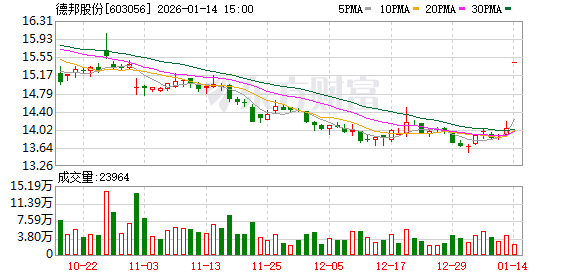
履行解决同业竞争承诺 德邦股份主动终止上市
Zheng Quan Ri Bao· 2026-01-14 15:45
Core Viewpoint - Debon Logistics Co., Ltd. is set to voluntarily delist its shares from the Shanghai Stock Exchange, transitioning to the National Equities Exchange and Quotations (NEEQ) for continued trading, in alignment with industry trends and to enhance resource integration with JD Logistics [2][3] Company Summary - Debon Logistics announced its decision to terminate its stock listing after a board meeting on January 13, with only four trading days remaining before suspension [2] - The company aims to better coordinate and integrate logistics resources within the JD Logistics ecosystem, addressing commitments made during its acquisition by Suqian JD Zhuofeng Enterprise Management Co., Ltd. to resolve industry competition [3] - Post-delisting, Debon Logistics will maintain its independent brand and operations while enhancing collaboration with JD Logistics to provide comprehensive and personalized logistics services [4] Industry Summary - The delisting of Debon Logistics is viewed as a strategic move to facilitate deeper integration of industry resources, signaling a shift in the logistics sector from expansion to efficiency enhancement [5] - The logistics industry is transitioning towards a model that emphasizes short delivery times and responsiveness, driven by the rise of instant retail, which is reshaping operational structures and market dynamics [6] - Industry experts suggest that the current consolidation trend is a necessary response to the evolving competitive landscape, allowing companies to enhance operational capabilities and long-term growth certainty [6]


巨头集体跑路,社区团购凉透了
商业洞察· 2026-01-14 09:29
Core Viewpoint - The article discusses the decline of community group buying in China, highlighting the shift in consumer demand from low-cost options to instant retail services that offer speed, reliability, and quality [5][7][30]. Group 1: Historical Context - In 2020, the pandemic-driven "stay-at-home economy" propelled community group buying into the spotlight, with major players like Didi, Meituan, and Pinduoduo investing heavily [9][10]. - The industry saw over 559 billion yuan in financing, with nearly 200 companies entering the market, leading to what was termed the "second group buying war" [9][10]. - By 2021, regulatory measures began to impact the market, leading to the collapse of many smaller platforms due to unsustainable business models reliant on subsidies [10][11]. Group 2: Current Landscape - As of 2025, only Pinduoduo's "Duoduo Mai Cai" remains in the community group buying space, having adapted its model to focus on high-frequency, durable goods rather than perishables [6][11]. - The GMV for Duoduo Mai Cai is projected to approach 300 billion yuan, achieved by shifting from a community group buying model to a "low-cost instant retail" approach [11][12]. Group 3: Reasons for Decline - **Reason 1: Hidden Costs** Community group buying is perceived as a "light asset" model, but it incurs significant hidden costs related to warehousing, logistics, and customer service, leading to unsustainable losses [14][15]. - **Reason 2: Quality Control Issues** Poor product quality and lack of supplier qualifications have led to numerous consumer complaints, damaging the reputation of community group buying platforms [17][19]. - **Reason 3: Slow Delivery** The lengthy delivery process, often taking over 24 hours, has resulted in customer dissatisfaction, as users prioritize reliability over low prices [20][21]. Group 4: Competition from Instant Retail - Instant retail has emerged as a formidable competitor, offering faster delivery times (within 30 minutes) and better quality control, which community group buying struggles to match [24][26]. - The ability of instant retail to provide a wide range of products and immediate availability has shifted consumer preferences away from community group buying [30].



即时配送行业点评:即时零售向更多品类发展,物流侧规模效应有望进一步凸显
Shenwan Hongyuan Securities· 2026-01-14 07:42
Investment Rating - The report gives an "Overweight" rating for the logistics industry, indicating a positive outlook for the sector compared to the overall market performance [2]. Core Insights - Alibaba's strategic upgrade of its Taobao Flash Purchase is expected to drive significant demand in the instant delivery sector, with a focus on becoming the absolute leader in the market. This shift is anticipated to foster healthy growth across all categories in instant delivery, especially under the current anti-monopoly regulations [2]. - The competition in instant delivery is likely to trigger a new "arms race" among brands and merchants, which will positively impact the logistics side, creating a virtuous cycle of growth [2]. - Third-party logistics service providers, such as SF Express, are expected to benefit from the competitive landscape, with significant growth in delivery volumes during peak periods like "Double Eleven" [2]. Summary by Sections Industry Overview - The instant delivery sector is evolving, with a shift from food and beverage categories to higher-ticket items, providing more growth opportunities for logistics [2]. - High-frequency subsidies have successfully cultivated consumer habits, which will directly increase the volume of instant delivery orders [2]. Company Analysis - SF Express has shown remarkable performance, with daily delivery volumes increasing by over 50% year-on-year during peak shopping events. The growth in non-food categories, such as beauty and jewelry, has also been notable [2][3]. - The report highlights the significant value of SF Express as a neutral third-party platform, benefiting from increased order volumes from various e-commerce platforms [2]. Investment Recommendations - The report recommends focusing on SF Express due to its consistent profitability and significant third-party value, while also keeping an eye on Flash Delivery [2].
6大趋势详解:谁说手机行业没有新东西了?
3 6 Ke· 2026-01-14 07:14
Group 1 - The core message of the articles highlights the ongoing transformation in the smartphone industry, driven by AI and new technologies, which poses a challenge to traditional smartphone growth as major companies shift focus towards AI-integrated devices [2][4][5] - Major brands like Honor, Samsung, and Infinix are introducing innovative products such as the AI-integrated ROBOT PHONE, a foldable OLED panel, and a smartphone with global satellite communication capabilities, respectively [2][4] - The global smartphone market is experiencing sluggish growth, with Apple, Samsung, and Xiaomi maintaining the top three positions, while Apple shows a strong recovery, surpassing Samsung for the first time in 14 years [5][7][8] Group 2 - Apple's resurgence is attributed to competitive product offerings and pricing strategies, with the iPhone 16e and iPhone 17 series performing well in the market, particularly in China where sales surged by 37% in October [7][8] - Samsung's stability is also linked to its pricing strategy, with a 7% decrease in average selling price and the introduction of high-value A-series products [10] - The Chinese smartphone market is characterized by volatility, with frequent shifts among the top five brands, and a notable decline in overall shipment volumes in the second quarter [13][15] Group 3 - The mid-range smartphone market is expanding, driven by consumer demand for high-quality, cost-effective products, with significant sales reported for models priced between 2000-2999 yuan [16][18] - High-end smartphones face challenges due to innovation stagnation, leading to a focus on system development and unique user experiences, with brands like Huawei and Xiaomi investing in proprietary operating systems [22][24] - AI is becoming a critical component in high-end smartphones, with brands leveraging AI to enhance ecosystem connectivity and user experience, as seen in Huawei's HarmonyOS and OPPO's AI features [27][30] Group 4 - Marketing strategies in the smartphone industry are evolving, with brands facing challenges in traditional marketing approaches, leading to a shift towards more relatable and engaging campaigns [33][36] - Instant retail is gaining traction, with brands like Apple and others adopting rapid delivery services to meet consumer demand for immediate gratification, significantly impacting sales during major shopping events [40][41] - The smartphone industry is undergoing significant changes, with AI, self-developed systems, and innovative marketing strategies driving a more dynamic and competitive landscape [45]



拼多多杀入商超零售赛道?
Hua Er Jie Jian Wen· 2026-01-14 05:52
Core Viewpoint - Pinduoduo is quietly testing a new business called "Billion Supermarket" within its app, focusing on essential consumer goods, while major competitors like Alibaba and Meituan are heavily investing in instant retail and AI technologies [2][4]. Group 1: Business Development - The "Billion Supermarket" initiative leverages Pinduoduo's established "Billion Subsidy" system, offering limited-time coupons and low-price subsidies, currently available to a select group of users [2][4]. - The service is integrated into the existing "Billion Subsidy" channel on the app, without a separate entry point, which may hinder user recognition of the supermarket as a distinct offering [9]. Group 2: Competitive Landscape - Pinduoduo's entry into the supermarket sector is seen as a strategic move to enhance user engagement and retention, especially in the fast-moving consumer goods (FMCG) market, where competition is intensifying [4][5]. - Competitors like Alibaba's Tmall Supermarket and Meituan are aggressively expanding their instant retail capabilities, with Tmall aiming to dominate the market by enhancing its delivery services [6][8]. Group 3: Market Challenges - The supermarket sector is crowded with established players, making it challenging for Pinduoduo to gain a foothold, especially as the focus shifts from simple traffic subsidies to supply chain efficiency and service quality [9][10]. - Pinduoduo's current offering lacks the depth of product variety and delivery speed compared to competitors, which could impede its ability to compete effectively in the supermarket space [9][10]. Group 4: Strategic Advantages - Pinduoduo's strengths lie in its cost control capabilities and a strong foundation in lower-tier markets, which could provide a competitive edge in the supermarket sector [10]. - The company has a skilled team experienced in community group buying, which may enhance its supply chain capabilities as it ventures into supermarket retail [10].

361度(01361):逆势下流水延续靓丽增长
HTSC· 2026-01-14 01:38
Investment Rating - The investment rating for the company is maintained as "Buy" with a target price of HKD 8.00 [1][9]. Core Insights - The company has demonstrated robust growth in retail sales, with both the main brand and children's clothing achieving approximately 10% year-on-year growth in 4Q25, continuing a steady growth trend despite high base effects [1][11]. - E-commerce sales recorded a high double-digit growth in 4Q25, indicating strong performance in online channels [7][11]. - The company is enhancing its brand power through innovative products and marketing strategies, including the introduction of "super stores" to upgrade channel efficiency and expand international presence [5][11]. Summary by Sections Operational Performance - In 4Q25, the main brand and children's clothing retail sales both achieved approximately 10% year-on-year growth, maintaining a steady growth trend [1][11]. - The e-commerce platform saw overall sales achieve high double-digit year-on-year growth, continuing a solid performance [7][11]. Product and Marketing Strategy - The company launched new products in various categories, including running, basketball, and outdoor gear, which have received significant market attention [6]. - The introduction of "super stores" is expected to enhance customer acquisition and sales efficiency, with a notable increase in new customer ratios [6]. Financial Projections - Revenue is projected to grow from RMB 10,074 million in 2024 to RMB 14,019 million by 2027, with a compound annual growth rate (CAGR) of approximately 10.30% [4]. - Net profit is expected to increase from RMB 1,149 million in 2024 to RMB 1,655 million by 2027, reflecting a steady growth trajectory [4]. Valuation Metrics - The company is assigned a target PE of 10.1x for 2026, with a target price of HKD 8.00, reflecting a discount compared to comparable companies due to its current brand scale and market share [9][13].
中经评论:即时零售之争有望走向有序
Zhong Guo Jing Ji Wang· 2026-01-13 23:42
Core Viewpoint - The State Council's Antitrust and Anti-Unfair Competition Committee has announced an investigation into the competitive landscape of the food delivery platform service industry, focusing on issues such as excessive subsidies, price wars, and traffic control that harm the real economy and exacerbate "involutionary" competition [1] Group 1: Regulatory Context - The investigation targets not competition itself but rather the unhealthy competition driven by subsidies, pricing, and traffic manipulation [1] - High delivery subsidies have led to consumers preferring to order food at home, negatively impacting overall consumption and the vitality of physical stores and shopping malls [1] Group 2: Company Responses - Meituan expressed "strong support" for the investigation, positioning itself as a victim of the "food delivery war" and advocating for the cessation of irrational competition [2] - JD's food delivery service stated it "firmly supports" the investigation while highlighting its strengths in supply chain innovation and rider rights, indicating a shift towards a more neutral stance [2] - Taobao Flash Delivery emphasized "maintaining fair and orderly competition," indicating its intent to continue aggressive competition while complying with regulations [2] Group 3: Market Dynamics - The competition among platforms is not just about food delivery but encompasses the broader instant retail market, including delivery of various consumer goods [3] - Consumer behavior is shifting towards a preference for home delivery, which is driving platforms to compete for instant demand, making it a critical survival issue [3] - The investigation aims to "regulate" rather than "kill" competition, with companies indicating a shift in focus towards long-term capabilities such as supply chain efficiency and digital empowerment for merchants [3]