
内需增长

Search documents
1-2月份社零增速回暖
Jianghai Securities· 2026-03-18 09:34
Investment Rating - The industry investment rating is maintained at "Overweight" [2] Core Insights - The report highlights a recovery in social retail sales in January-February 2026, with total retail sales reaching 8.6 trillion yuan, a year-on-year increase of 2.8%, slightly exceeding market expectations [6][9] - The government has prioritized domestic market construction and consumer promotion, allocating 100 billion yuan for fiscal and financial collaboration to stimulate domestic demand [9] - Online retail sales grew by 9.2% year-on-year, with online goods retail accounting for 24.2% of total retail sales [9] - Essential consumption categories showed better growth compared to discretionary categories, indicating a shift in consumer spending patterns [9] Summary by Sections Recent Industry Performance - The industry has experienced relative returns of -6.62% over the past month, -7.84% over three months, and -15.35% over twelve months compared to the CSI 300 index [3] Social Retail Sales Data - In January-February 2026, social retail sales excluding automobiles reached 8.0 trillion yuan, growing by 3.7% year-on-year [6] - The report notes that rural areas outperformed urban areas in retail growth, with rural retail sales increasing by 3.2% compared to 2.7% in urban areas [9] Consumer Behavior Trends - Essential goods such as food and beverages saw significant growth, with year-on-year increases of 10.2% and 6.0%, respectively [9] - Discretionary items like cosmetics and jewelry also showed growth, with jewelry sales increasing by 13.0% [9] Investment Recommendations - The report suggests focusing on companies in the service consumption sector, such as Huazhu Group and Jin Jiang Hotels, as well as those in the food supply chain like Anjuke Food and Haidilao [9]
代表团长专访|王铁:提质增效建设现代化产业体系
Xin Lang Cai Jing· 2026-02-01 02:48
Group 1 - The report by Governor Liang Huiling outlines clear tasks and measures for the province's development, emphasizing the importance of expanding domestic demand and investment [1] - The province aims to initiate over 300 key projects throughout the year, targeting a fixed asset investment growth of approximately 6% [1] - A special action plan will be implemented to boost consumption, with a focus on integrating agriculture, culture, commerce, tourism, and sports, aiming for tourism spending to reach 19 billion yuan and a retail sales growth of 5.5% [1] Group 2 - The province is focused on building a modern industrial system, prioritizing the transformation of traditional industries and the development of strategic emerging industries [2] - There is a goal to increase the local supply rate of key industries by over 8 percentage points, while also promoting the development of clusters in sectors like satellites, agricultural machinery, and new energy [2] - The province plans to convert over 130 technological achievements and advance digital transformation in 120 enterprises [2] Group 3 - The province is enhancing its high-level openness by improving port functions and expanding the variety of foreign trade imports and exports, with the annual cargo volume at the Tongjiang railway port exceeding 6.5 million tons [3] - There is an initiative to deepen the construction of border parks and attract processing and manufacturing enterprises in sectors such as energy and pharmaceuticals, adding 25 new trade entities [3] - The total foreign trade import and export volume is projected to grow by 5.5%, with a strong emphasis on developing cross-border e-commerce and exploring service trade in areas like healthcare and education [3]
聚力释放消费潜能:以民生导向激活内需增长新引擎
Qi Lu Wan Bao· 2026-01-01 01:38
Core Viewpoint - In 2026, Jining aims to enhance consumer spending and improve living standards by implementing targeted consumption initiatives, with a goal of achieving a 6% growth in total retail sales of consumer goods for the year, thereby driving high-quality economic development [1][2] Group 1: Consumer Demand and Policies - The city plans to stimulate consumer demand by promoting trade-in policies and collaborating with merchants to offer coupons and discounts, particularly in sectors like automobiles, home appliances, and digital products [1] - Over 200 promotional events titled "Canal City, Benefit Purchase Jining" will be organized to encourage consumption [1] Group 2: Housing Market Initiatives - Jining will accelerate the construction of high-quality residential properties and implement policies to facilitate the purchase of new homes through trade-in programs, including home buying festivals and group purchasing for key demographics [1] Group 3: Service Consumption Expansion - The city intends to tap into the potential of service consumption by expanding sectors such as dining, tourism, education, healthcare, and elder care, while also promoting new economic models like first-store economy and food economy [1] - Initiatives will include the development of smart business districts, unmanned stores, and the promotion of new retail formats such as instant retail and live-streaming e-commerce [1] Group 4: Infrastructure and Logistics Enhancement - Jining will focus on upgrading consumer platforms and expanding core commercial districts, while also enhancing the logistics network to improve rural consumption supply [2]
东南亚消费行业11月跟踪报告:通胀温和且分化,多数消费跑输指数
Haitong Securities International· 2025-12-19 00:47
Investment Rating - The report does not explicitly provide an investment rating for the Southeast Asia consumer sector, but it indicates that most consumer sectors are underperforming the index, suggesting a cautious outlook for investments in this area [1]. Core Insights - Inflation in Southeast Asia is described as moderate and uneven, with varying impacts across different countries. Indonesia's CPI increased by 2.72%, Thailand's decreased by 0.49%, Vietnam's rose by 3.25%, and the Philippines saw a 1.5% increase, indicating a controlled inflation environment conducive to consumer recovery [3][12][22][37]. - Consumer confidence is recovering in Indonesia, with the consumer confidence index rising to 124.0, reflecting optimism about economic prospects. In Thailand, the consumer confidence index increased to 50.9, driven by government stimulus and improved trade conditions [17][25]. - Retail sales in Indonesia and Vietnam show robust growth, with Indonesia's food and beverage retail index growing by 8.2% year-on-year, while Vietnam's retail sales increased by 7.1% [4][39]. Economic Data Summary - Indonesia's GDP growth for Q3 2025 was 5.04%, supported by strong consumer spending and investment, although it showed a slight slowdown compared to Q2 2025 [12]. - Thailand's GDP growth for Q3 2025 was 1.2%, driven by consumer spending and tourism, but overall growth remains moderate [20]. - Singapore's GDP grew by 4.2% in Q3 2025, primarily due to manufacturing and service sector recovery, indicating a stable economic environment [28]. - Vietnam's GDP growth reached 8.23% in Q3 2025, reflecting strong performance in industrial and service sectors, although challenges remain from external demand fluctuations [35]. Consumer Sector Performance - The consumer sector in Southeast Asia shows signs of resilience, with Indonesia's consumer confidence and retail sales indicating strong demand. However, the overall performance of consumer stocks has lagged behind the market index in several countries [4][11]. - In Thailand, consumer spending remains cautious, with inflation pressures being low, which may limit growth in consumer sectors [22]. - Malaysia's consumer sector is recovering, with GDP growth of 5.2% in Q3 2025, supported by domestic demand and investment [42].
中央财办:明年中国完全有条件推动内需实现持续增长
Zhong Guo Xin Wen Wang· 2025-12-16 14:48
Core Viewpoint - The Central Financial Office indicates that China is fully capable of promoting sustained growth in domestic demand next year, focusing on both consumption and investment strategies to stimulate economic activity [1][2]. Group 1: Consumption Strategies - The shift in consumer behavior from primarily goods consumption to a balanced focus on both goods and services is highlighted, with strong demand in sectors like cultural tourism, elderly care, and childcare [1]. - Plans to enhance residents' income and improve employment quality are set to boost consumer spending capacity, including increasing basic pensions for urban and rural residents [1]. - The government aims to expand the supply of quality goods and services, fostering new consumption growth points in sectors such as home services and health tourism [1]. Group 2: Investment Initiatives - There is a call to combine investments in physical infrastructure and human capital, emphasizing the need for effective investment in consumer infrastructure like parking lots and charging stations [2]. - The government plans to leverage various funding sources, including central budget investments and special bonds, to support significant projects and stimulate effective investment [2]. - Measures to invigorate private investment are outlined, encouraging private enterprises to engage in major projects in sectors like railways and nuclear power, while guiding investments towards high-tech and service industries [2].
【2025年三季报点评/中国重汽】Q3 业绩亮眼,重卡龙头利润强兑现
东吴汽车黄细里团队· 2025-11-02 13:43
Core Viewpoint - The company reported strong financial performance in Q3 2025, with significant revenue growth and a positive outlook for the heavy truck industry, benefiting from both domestic demand and export opportunities [3][4][8]. Financial Performance Overview - In Q3 2025, the company achieved revenue of 14.33 billion yuan, representing a year-on-year increase of 56% and a quarter-on-quarter increase of 8.1% [3]. - The net profit attributable to shareholders was 382 million yuan, up 21% year-on-year and 6.5% quarter-on-quarter, while the non-recurring net profit was 359 million yuan, reflecting a year-on-year increase of 30.9% and a quarter-on-quarter increase of 7.1% [3]. Sales Growth - The company benefited from a recovery in industry demand, with wholesale sales reaching 76,000 units in Q3 2025, marking a year-on-year increase of 53.9% and a quarter-on-quarter increase of 2.3% [4]. - Export sales were 41,000 units, with year-on-year growth of 55.1% and quarter-on-quarter growth of 10.2% [4]. - Domestic sales for heavy trucks were 22,000 units, showing a year-on-year increase of 53.3% and a quarter-on-quarter increase of 3.2% [4]. Profitability Metrics - The gross margin for Q3 2025 was 7.12%, down 1.2 percentage points year-on-year and 0.8 percentage points quarter-on-quarter, primarily due to changes in sales structure and increased competition in export markets [5]. - The net profit margin was 3.8%, down 0.6 percentage points year-on-year, while remaining stable quarter-on-quarter [5]. Expense Management - The operating expense ratio decreased to 2.35%, down 0.95 percentage points year-on-year, attributed to revenue growth diluting expenses [6]. - Research and development expenses increased by 63 million yuan quarter-on-quarter, driven by higher investment in axle research [6]. Industry Outlook - The heavy truck industry is at a turning point in a 3-5 year cycle, with leading companies expected to continue benefiting and realizing profits [7]. - Export growth is anticipated in non-Russian regions, with a focus on the pricing power of Chinese brands [8]. - Domestic demand is expected to grow under the influence of the National IV policy, with total domestic sales projected to reach 750,000 to 800,000 units this year [8]. Profit Forecast and Investment Rating - The company maintains profit forecasts for 2025-2027 at 1.658 billion, 1.894 billion, and 2.165 billion yuan respectively, with corresponding EPS of 1.41, 1.61, and 1.84 yuan [9]. - The company is rated as a "buy" due to its solid market position and low valuation, with PE ratios projected at 12.85, 11.25, and 9.84 for 2025-2027 [9].


经济学家姚洋:大量创新“不可规划” 需进一步完善资本市场支持体系
Xin Hua Cai Jing· 2025-09-18 13:56
Group 1 - The core viewpoint emphasizes the need for improved capital market construction to support the development of new productive forces in China [1][2] - Cross-border finance will be a key research focus, addressing the financial challenges faced by Chinese enterprises expanding overseas [2][3] - The current financial system in China is primarily bank-based, contrasting with the capital market-oriented system in the United States, which affects innovation financing [2] Group 2 - There is a significant lack of in-depth research on the financial needs of Chinese enterprises going abroad, particularly in offshore financial development [2] - The People's Bank of China announced a pilot reform for offshore trade finance services in the Lingang New Area, which aims to facilitate a "global order, overseas processing, Lingang settlement" model [2] - The focus on domestic demand growth and recovery is highlighted, with a call for increased attention to high-end service industry development as a means to boost consumption [3]
ETF盘中资讯|化工反攻号角吹响!政策+内需+低估值三箭齐发,机构密集看好行业修复空间!
Sou Hu Cai Jing· 2025-08-20 03:07
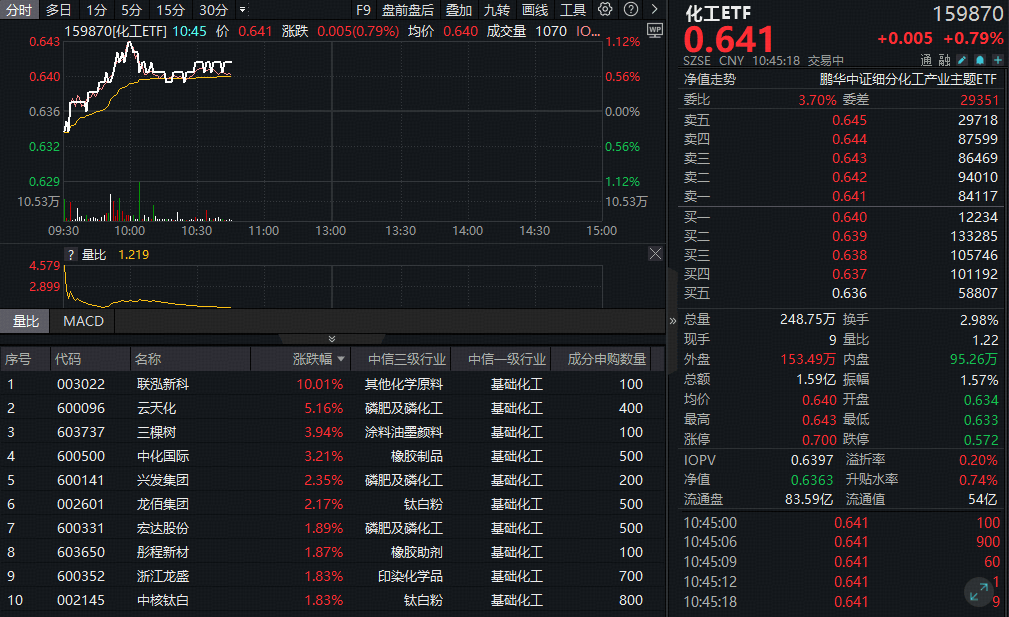
Group 1 - The chemical sector has regained momentum, with the chemical ETF (516020) opening strong and reaching a maximum intraday increase of 1.04%, closing with a gain of 0.79% [1] - Key stocks in the sector include Lianhong Xinke, which hit the daily limit, and Yuntianhua, which surged over 5%, along with significant gains from Sankeshu, Sinochem International, and others [1] - The ongoing promotion of the "old for new" consumption policy is expected to boost domestic demand, benefiting the chemical industry as a key upstream raw material sector [1] Group 2 - China Galaxy Securities anticipates that the effects of policy stimulus will gradually manifest, leading to a recovery in terminal industries and the release of domestic demand potential [3] - The chemical ETF (516020) is currently at a low valuation point, with a price-to-book ratio of 2.1, indicating a favorable long-term investment opportunity [3] - Midstream recovery is expected as the industry addresses issues of overcapacity and excessive competition, particularly in sub-sectors like pesticides, organic silicon, and polyester filament [3] Group 3 - Huazheng Securities notes a clear divergence in chemical product prices, with expectations for gradual price recovery as cost pressures ease [4] - The global chemical industry is experiencing a differentiated landscape due to energy transition and macro policy adjustments, with some sectors entering a recovery phase [4] - The chemical ETF (516020) provides a diversified investment approach, covering various sub-sectors and focusing on large-cap leading stocks [4]


兴全全球视野股票:2025年第二季度利润2015.93万元 净值增长率1.82%
Sou Hu Cai Jing· 2025-07-22 04:38
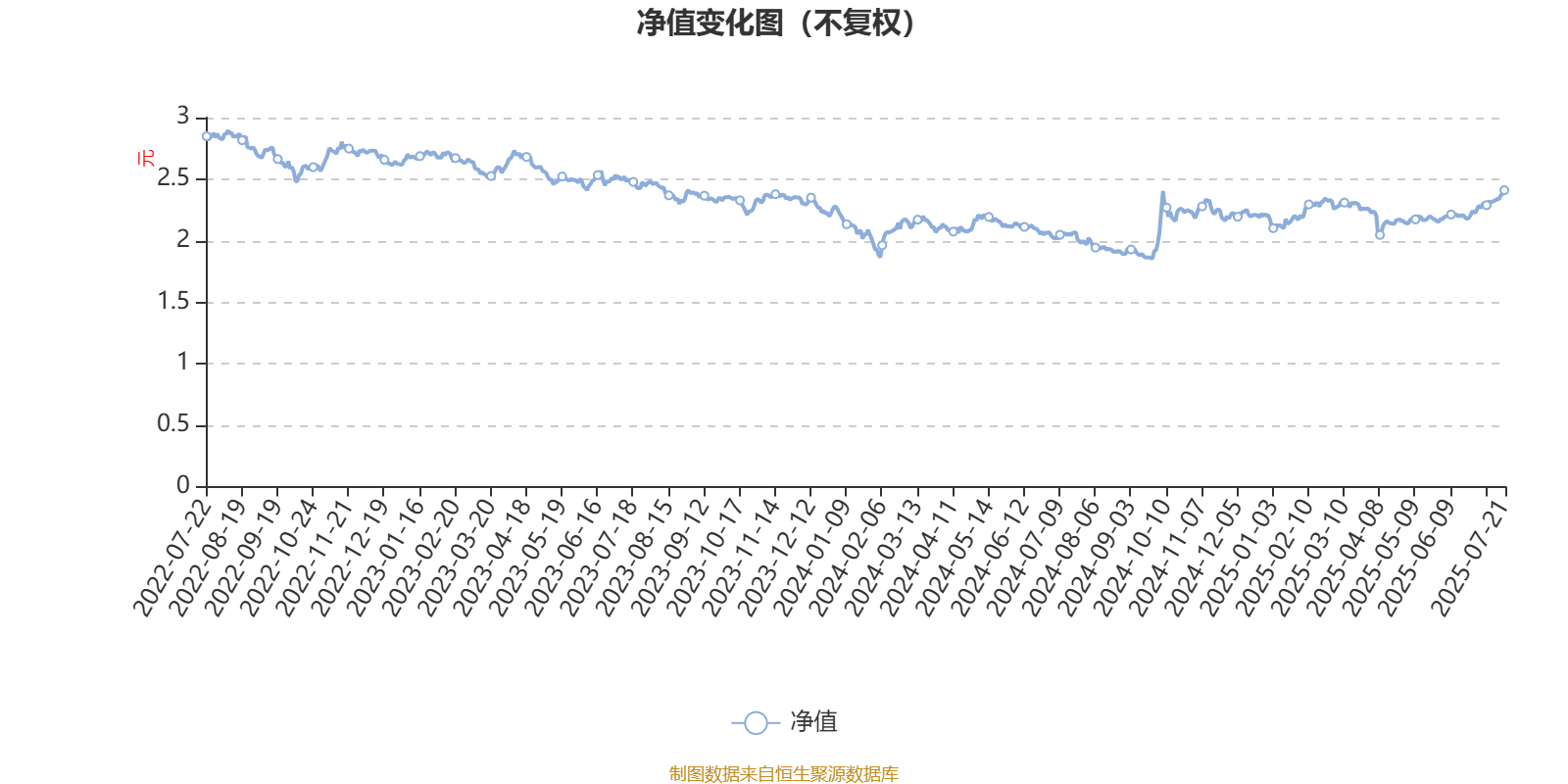
Core Viewpoint - The AI Fund Xingquan Global Vision Stock (340006) reported a profit of 20.16 million yuan for Q2 2025, with a net asset value growth rate of 1.82% and a fund size of 1.177 billion yuan as of the end of Q2 2025 [2][15]. Fund Performance - As of July 21, the fund's unit net value was 2.41 yuan [2]. - The fund's three-month net value growth rate was 11.43%, ranking 19 out of 61 comparable funds [4]. - The six-month net value growth rate was 9.46%, ranking 29 out of 61 comparable funds [4]. - The one-year net value growth rate was 16.73%, ranking 37 out of 61 comparable funds [4]. - The three-year net value growth rate was -15.60%, ranking 44 out of 60 comparable funds [4]. Risk and Return Metrics - The fund's three-year Sharpe ratio was -0.1241, ranking 45 out of 60 comparable funds [9]. - The maximum drawdown over the past three years was 35.97%, ranking 26 out of 59 comparable funds [11]. - The highest stock position was 92.23% at the end of H1 2020, while the lowest was 80.78% at the end of Q3 2022 [14]. Investment Focus - The fund management emphasized a focus on the technology sector, driven by government policies promoting technological innovation and new productivity [3]. - The fund aims to identify companies with high technological barriers and strong competitive advantages, particularly in sectors like smart driving, AI technology, and military electronics [3]. - The fund also seeks opportunities in companies that either reduce capital expenditures and increase cash dividends or actively develop new growth avenues to sustain performance [3]. Top Holdings - As of Q2 2025, the fund's top ten holdings included Ningde Times, Luxshare Precision, Sany Heavy Industry, Zijin Mining, Northern Huachuang, Aidi Pharmaceutical, Shandong Gold, Huaqin Technology, Electric Connection Technology, and Philips [19].
市场主流观点汇总-20250520
Guo Tou Qi Huo· 2025-05-20 10:48
Report Summary 1. Report Industry Investment Rating No industry investment rating is provided in the report. 2. Core Viewpoints The report objectively reflects the research views of futures and securities companies on various commodity varieties, tracks hot - spot varieties, analyzes market investment sentiment, and summarizes investment driving logics. It presents the market mainstream views on different asset classes, including their price trends, strategy viewpoints, and corresponding利多 and利空 logics [2]. 3. Summary by Related Catalogs 3.1 Market Data - **Commodities**: From May 12 to May 16, 2025, ethylene glycol had the highest weekly increase of 5.74% among commodities, while gold had the largest decline of 4.64%. Other commodities like iron ore, PTA, etc., also had different degrees of price changes [3]. - **Equities**: The NASDAQ Index had a significant increase of 7.15%, the Hang Seng Index rose 2.09%, while the CSI 500 decreased by 0.10% [3]. - **Bonds**: Chinese government bonds of 5 - year, 2 - year, and 10 - year terms all had price increases, with the 5 - year bond rising 4.06% [3]. - **Foreign Exchange**: The US Dollar Index increased by 0.56%, while the Euro - US Dollar exchange rate decreased by 0.76% [3]. 3.2 Commodity Views 3.2.1 Macro - Financial Sector - **Stock Index Futures**: Among 9 institutions' views, 2 are bullish, 1 is bearish, and 6 are neutral.利多 factors include successful Sino - US tariff negotiations, a relatively loose market capital supply, and growth in the social financing scale.利空 factors are net out - flow of industry funds, reduction in ETF shares, and conservative domestic policies [5]. - **Treasury Bond Futures**: Among 7 institutions' views, 0 are bullish, 2 are bearish, and 5 are neutral.利多 factors are the unchanged loose monetary policy and reduced expectations of fiscal stimulus.利空 factors are the recovery of market risk appetite and limited space for further interest - rate cuts [5]. 3.2.2 Energy Sector - **Crude Oil**: Among 9 institutions' views, 2 are bullish, 3 are bearish, and 4 are neutral.利多 factors are low global crude oil inventories, positive Sino - US negotiation results, and potential uncertainty in OPEC+ production increases.利空 factors are Iran's potential nuclear - deal signing and an increase in US crude oil inventories [6]. 3.2.3 Agricultural Products Sector - **Palm Oil**: Among 7 institutions' views, 1 is bullish, 2 are bearish, and 4 are neutral.利多 factors are the growth of Malaysian palm oil shipping data, increased export competitiveness, and potential replenishment demand in India.利空 factors are high inventory pressure and a decline in crude oil prices [6]. 3.2.4 Non - Ferrous Metals Sector - **Copper**: Among 7 institutions' views, 1 is bullish, 1 is bearish, and 5 are neutral.利多 factors are low copper concentrate TC, positive Sino - US tariff negotiations, and strong terminal demand.利空 factors are weak overseas demand and high inventory in China [7]. 3.2.5 Chemical Sector - **Soda Ash**: Among 7 institutions' views, 1 is bullish, 2 are bearish, and 4 are neutral.利多 factors are concentrated maintenance in May and high exports.利空 factors are high industry inventory, new production capacity, and weak downstream demand [7]. 3.2.6 Precious Metals Sector - **Gold**: Among 7 institutions' views, 1 is bullish, 0 are bearish, and 6 are neutral.利多 factors are the downgrade of the US sovereign credit rating and geopolitical uncertainties.利空 factors are the recovery of risk appetite and capital out - flow from gold ETFs [8]. 3.2.7 Black Metals Sector - **Iron Ore**: Among 7 institutions' views, 1 is bullish, 1 is bearish, and 5 are neutral.利多 factors are high molten iron production and low port inventory.利空 factors are expected increase in supply and weakening demand [8].