全球化

Search documents
技术构筑未来,重塑全球价值:福田汽车的2025“答卷” | 头条
第一商用车网· 2026-01-10 10:26
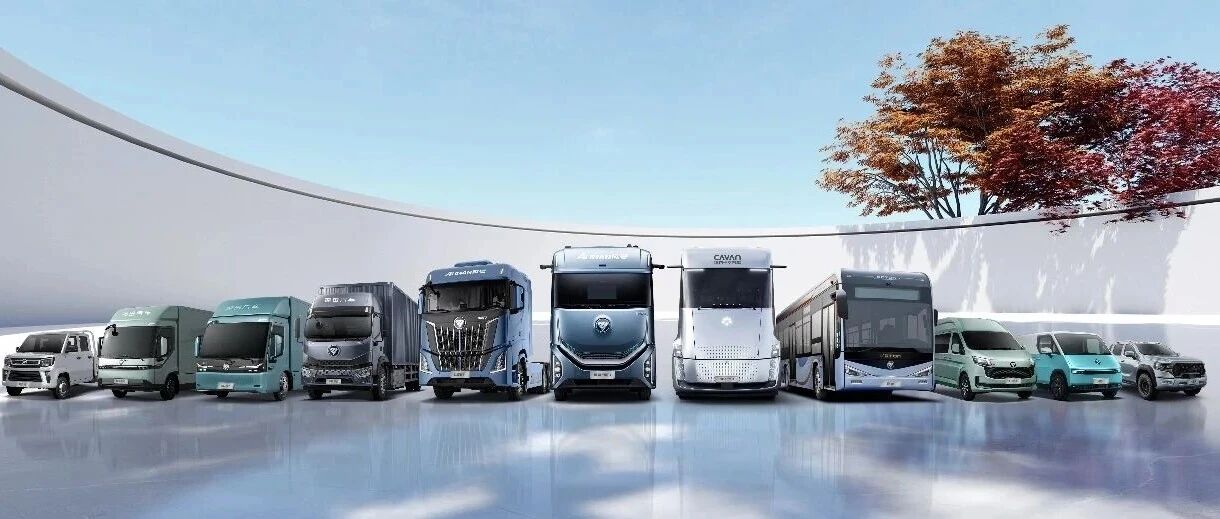
Core Viewpoint - In 2025, the commercial vehicle industry experienced a complex landscape of recovery and restructuring, with Foton Motor making significant strategic advancements, technological breakthroughs, and market actions that left a profound impact on the industry [1] Sales Performance - Foton Motor achieved annual sales of over 650,000 units in 2025, securing its position as the industry leader with a year-on-year growth of 5.85% [3] - The new energy segment saw sales reach 101,200 units, marking a substantial year-on-year increase of 87.21%, becoming a key driver of overall growth [5] - The light truck segment maintained its dominance with sales exceeding 446,100 units, while the heavy truck segment achieved sales of 142,200 units, a remarkable year-on-year increase of approximately 104% [5] Global Expansion - Foton Motor's "comprehensive internationalization" strategy made significant strides in 2025, transitioning from simple product trade to localized production and systematic operations [7] - Milestones included the production of the 2,000th heavy truck in Thailand and the first automatic AMT heavy truck in South Africa, showcasing the maturity of its global manufacturing network [8] - The company signed a memorandum for a localized factory in Saudi Arabia and entered the Libyan market, demonstrating its commitment to emerging markets [10] New Energy Strategy - Foton Motor's "30·50 strategy" aims for over 50% of its sales to be from new energy vehicles by 2030, with substantial progress made in 2025 [14] - The launch of a microgrid energy system and the establishment of a hydrogen power system factory are pivotal steps towards this goal [14] - The company achieved full certification for its low-carbon commercial vehicle products, enhancing its international competitiveness [14] Technological Innovation - Foton Motor invested 1.379 billion yuan in R&D in the first three quarters of 2025, focusing on core areas like new energy and intelligent technology [20] - The self-developed HWP highway navigation system became a highlight, significantly improving driving assistance and fuel efficiency [18] - The launch of the world's first dedicated electric light truck platform "Qimingxing" redefined the value standards for electric light trucks [20] Product Launches - 2025 marked a "product explosion" for Foton Motor, with a robust product matrix covering all scenarios and technology routes [24] - The expansion of the Ouman Galaxy family and the introduction of the new energy series targeted efficient transportation scenarios [24] - The company secured significant orders and deliveries in the domestic market, reflecting strong market recognition of its products [28] Marketing Innovation - Foton Motor shifted from traditional marketing to interactive IP events to deepen user engagement and convey brand value [30] - Activities like the "Ouman Galaxy Global Value Tour" and "Hundred Cities Flash" events effectively connected with diverse user needs [32] - These innovative marketing strategies helped establish a multi-dimensional brand image of technology, reliability, and user proximity [32] Conclusion - In 2025, Foton Motor's actions under the strategic guidance of "comprehensive internationalization, comprehensive electrification, and comprehensive intelligence" reflected the industry's shift towards green, intelligent, and globalized transformation [34]


四车齐发!何小鹏:今年小鹏汽车仍然会高速增长
Nan Fang Du Shi Bao· 2026-01-09 15:15
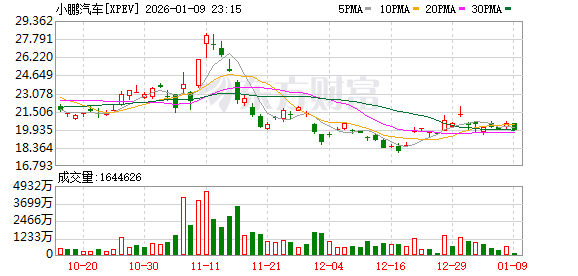
Core Insights - The launch of the new P7+ and G7 Super Extended Range models marks a significant advancement in Xpeng's technology, featuring the latest Kunpeng Super Extended Range technology that achieves a global record in range while maintaining price parity with pure electric models, allowing users to enjoy both long range and flexible refueling without additional costs [1][4][5] Product Launch and Features - On January 8, Xpeng officially unveiled four new models for 2026, including the P7+, G7 Super Extended Range, G6, and G9, emphasizing breakthroughs in dual energy and smart upgrades [2] - The G7 Super Extended Range features a leading 55.8 kWh battery and a 60L fuel tank, achieving a CLTC comprehensive range of 1704 km and a pure electric range of 430 km. The P7+ Super Extended Range boasts a pure electric range of 430 km and a comprehensive range of 1550 km, with energy consumption rates of 10.9 kWh/100 km in pure electric mode and 12.5 kWh/100 km in extended range mode, both leading in its class [4][5] Technological Advancements - The new models support a "pay to upgrade" option for enhanced AI capabilities, allowing users to experience the second-generation VLA technology, which includes options for different AI chip configurations to meet varying user needs [8] - The second-generation VLA model represents a breakthrough in physical AI, eliminating the "language translation" step and enabling direct generation of action commands from visual signals, positioning Xpeng as a leader in the industry with L4 capabilities [7][8] Global Strategy and Market Performance - Xpeng's global delivery volume reached 45,000 units in 2025, a 96% year-on-year increase, with plans to expand into more countries and regions, enhancing local R&D and manufacturing capabilities [8][9] - The company aims to launch four new global SUV models in 2026, further solidifying its presence in both left-hand and right-hand drive markets [9] Strategic Vision for 2026 - The year 2026 is identified as a pivotal year for Xpeng, focusing on the transition from "steady progress" to "strategic breakthroughs," with an emphasis on strengthening market foundations and advancing from software to AI paradigms [10][11] - The CEO expressed confidence in achieving significant growth in 2026, despite current market pressures, viewing the situation as an opportunity to focus on technological advancements and global expansion [11][12]
柳工:保持经营业绩和投资回报的可持续健康发展
Zheng Quan Ri Bao Wang· 2026-01-09 13:11
Core Viewpoint - LiuGong (000528) has successfully navigated the industry downturn since its overall listing in 2022, achieving steady growth in both revenue and net profit despite significant market challenges [1] Group 1: Financial Performance - The company has maintained robust growth in operating income and net profit during a challenging market environment [1] - Profitability, asset quality, and internal competitiveness have significantly improved over the period [1] - The company's stock performance was previously at a leading level [1] Group 2: Strategic Initiatives - LiuGong is committed to continuous innovation and transformation initiatives to enhance operational quality [1] - The company expresses confidence in sustaining healthy development of operational performance and investment returns under its new "three comprehensive" strategy: comprehensive solutions, comprehensive digitalization, and globalization [1] Group 3: Future Outlook - The company anticipates a positive outlook for 2026, following the challenges faced in 2025, indicating a potential turnaround [1]

高腾医药:中国药企的全球化新命题
Guo Ji Jin Rong Bao· 2026-01-09 13:06
Core Insights - GaoTeng Pharmaceutical is evolving from a traditional biopharmaceutical company to a technology-driven global platform, redefining the boundaries of pharmaceutical innovation [1] - The company employs a unique model of "technology empowerment + ecological collaboration," which integrates global standards with local practices to create a competitive edge in the pharmaceutical industry [1][5] Group 1: Company Overview - GaoTeng Pharmaceutical is characterized as a "possibility engine," continuously evolving and breaking boundaries in the pharmaceutical sector [1] - The company has established a comprehensive global supply network, integrating quality management systems for drug production and clinical trials, ensuring compliance and safety [2] - GaoTeng's rise is attributed to its team's global experience and innovative capabilities, rather than just capital investment, creating a structural advantage that is difficult to replicate [2] Group 2: Operational Efficiency - The company has localized production to reduce costs associated with international projects, achieving over 30% savings on production and packaging costs [3] - GaoTeng's operational model combines global standards with local resources, enhancing efficiency and responsiveness in the pharmaceutical supply chain [3][5] - The company has developed a smart system, OptiSupply, which utilizes AI to predict demand and optimize supply chain management [10][12] Group 3: Global Strategy - GaoTeng aims to serve global markets from its base in China, leveraging the country's vast pharmaceutical market and regulatory advantages [6] - The establishment of a 7,500 square meter global drug supply center in Shanghai is expected to reduce clinical drug delivery times by 50% and waste by 30% [6] - The company is positioned to transition from domestic leadership to global competitiveness, with a focus on creating a closed-loop operation of "global orders - local production - cross-border delivery" [9] Group 4: Future Prospects - GaoTeng plans to initiate an IPO or financing plan within three years, reflecting its rapid growth since its establishment [13] - The company is seen as an "invisible champion" in the industry, with aspirations to further its global presence and impact [14] - The ongoing transformation of Chinese enterprises from "followers" to "leaders" in the global market is exemplified by GaoTeng's strategic initiatives [14]
毛戈平(1318.HK):与路威凯腾达成战略合作 进一步迈向全球化
Ge Long Hui· 2026-01-09 12:31
Group 1 - The core point of the news is the strategic cooperation framework agreement signed between Mao Geping and L Catterton, focusing on global market expansion, acquisitions, strategic investments, capital structure optimization, talent introduction, and governance [1] - L Catterton, as the largest global consumer goods investment company, will leverage its investment network to assist Mao Geping in expanding overseas high-end retail channels and will co-establish a private equity fund focused on the global high-end beauty sector [1][2] - The partnership aims to enhance Mao Geping's global presence and capitalize on L Catterton's extensive experience in the beauty and personal care investment sector, managing approximately $39 billion in equity capital [1][2] Group 2 - Mao Geping has shown strong sales performance in the high-end beauty segment, with a reported 32% year-on-year sales growth across major platforms like Taobao, Douyin, and JD.com for the period from January to November 2025 [2] - The company is expected to maintain its high-end beauty positioning, with projected net profits of 1.21 billion, 1.58 billion, and 2.04 billion yuan for 2025 to 2027, and corresponding EPS of 2.46, 3.22, and 4.16 yuan [2] - The current stock price corresponds to a PE ratio of 32, 25, and 19 for the years 2025 to 2027, with a maintained "buy" rating for the company [2]
一口气发布4款新车,何小鹏向海外要增量
Xin Lang Cai Jing· 2026-01-09 10:00
Core Insights - Xiaopeng Motors launched four new models at the 2026 global product launch, including the 2026 P7+, G7, G6, and G9, expanding its range of extended-range vehicles [1][4] - The company is adopting a "large battery + large fuel tank + ultra-fast charging" strategy for its extended-range products, with the P7+ and G7 offering significant total ranges [1][3] - Xiaopeng's second-generation VLA (Virtual Large Model) technology is set to enhance its autonomous driving capabilities, with plans for public road testing of Robotaxi soon [2][3] Product Launch Details - The 2026 P7+ is priced between 186,800 to 198,800 yuan, while the G7 is priced between 195,800 to 205,800 yuan, and the G6 ranges from 176,800 to 186,800 yuan [1] - The G9 has three pure electric versions priced between 248,800 to 278,800 yuan [1] - The P7+ and G7 both have a pure electric range of 430 km, with total ranges of 1550 km and 1704 km respectively [1] Technology Advancements - The Ultra and Ultra SE versions of the new models feature self-developed second-generation VLA and advanced AI chips, enhancing their autonomous driving capabilities [2] - The second-generation VLA eliminates the "language translation" step, allowing for direct generation of action commands from visual signals [3] - The company aims to broaden the upper limits of technology while addressing the challenges faced in the past three years [3] Market Strategy - Xiaopeng's sales in overseas markets reached 45,008 units in 2025, a 96% increase, indicating a strong push for globalization [5][6] - The company has established a presence in 60 countries and regions, with local production projects in Germany, Indonesia, and Malaysia [6][7] - The strategy includes expanding into western and northern markets, as well as lower-tier markets in China [7][8] Future Plans - In 2026, Xiaopeng plans to introduce four new global SUV models and enhance its global supply chain management [7][8] - The company anticipates that its overseas growth rate will surpass domestic growth in the coming year [7]

跨入新年,海尔智家令人耳目一新
Quan Jing Wang· 2026-01-09 09:29
Core Viewpoint - Haier Smart Home showcases its global expansion and localization strategies through a recent video, emphasizing its broad and deep market presence across various regions [1][3][5] Group 1: Global Reach - The video highlights Haier's brand activities and performance across six major regions: Europe, North America, Australia/New Zealand, Southeast Asia, South Asia, and the Middle East/Africa, demonstrating extensive global coverage and deep localization [3] - In the mature European market, Haier ranks first among Chinese companies in overall market share for white goods, with top positions in major channels for heating and cooling [3] - In Southeast Asia, a high-potential emerging market, Haier also holds the number one position in overall white goods market share, with specific leadership in air conditioning in Thailand and its AQUA brand in Indonesia [3] Group 2: Depth of Localization - Each scene in the video reflects Haier's deep localization efforts, including sponsorships at major sporting events and community engagement through donations and disaster relief initiatives [3] - The brand's localized operations are supported by comprehensive branding strategies tailored to each market, showcasing a commitment to understanding and integrating into local cultures [3] Group 3: Globalization Strategy - Haier's approach to globalization encompasses ten capabilities, including sales, marketing, service, logistics, procurement, research and development, and manufacturing, rather than merely selling products globally [5] - The recent global launch of the three-tub washing machine exemplifies Haier's integrated global capabilities [5] - Haier has been recognized by Euromonitor as the world's leading brand in large home appliance retail volume for 17 consecutive years, reflecting its successful global strategy [5]


华测导航:2025年净利润同比预增14.84%-18.27%
Di Yi Cai Jing· 2026-01-09 08:34
Core Viewpoint - The company expects a net profit attributable to shareholders of 670 million to 690 million yuan for the fiscal year 2025, representing a year-on-year growth of 14.84% to 18.27% [1] Group 1: Business Strategy and Growth - The company adheres to a globalization strategy and focuses on developing explosive products, actively expanding industry applications for its products and solutions [1] - Rapid growth is observed in business areas related to robotics, autonomous driving, and geospatial information [1] Group 2: Market Performance - Despite facing temporary pressure in the domestic market and monitoring business, the company is concentrating resources to vigorously expand into overseas markets [1] - Revenue from overseas regions continues to grow rapidly, indicating significant future growth potential in international markets [1]
华测导航:2025年净利同比预增14.84%—18.27%
Zheng Quan Shi Bao Wang· 2026-01-09 08:32
Core Viewpoint - Huace Navigation (300627) expects a net profit attributable to shareholders of 670 million to 690 million yuan for 2025, representing a year-on-year growth of 14.84% to 18.27% [1] Group 1: Business Strategy and Performance - The company adheres to a globalization strategy and focuses on developing explosive products, actively expanding industry applications for its products and solutions [1] - Rapid growth is observed in business areas related to robotics, autonomous driving, and geospatial information [1] Group 2: Market Expansion - In the context of a temporary pressure on the domestic market and monitoring business, the company is concentrating resources to vigorously expand into overseas markets [1] - Revenue from overseas regions continues to grow rapidly, indicating significant future growth potential in international markets [1]
CES 2026:在全球市场谈智能化,长城汽车选择了哪些取舍
Tai Mei Ti A P P· 2026-01-09 08:00
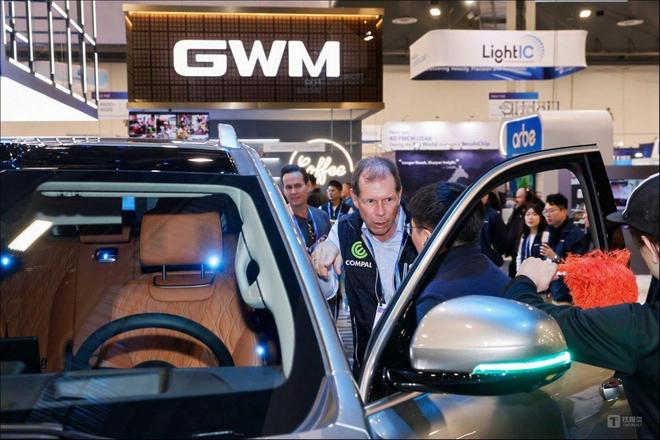
Core Insights - The article highlights the transformation of Chinese automotive companies, particularly Great Wall Motors, from mere participants to key players in the global narrative of smart and localized automotive solutions at CES 2026 [2][3]. Group 1: Globalization and Market Strategy - Great Wall Motors aims to achieve over 500,000 units in overseas sales by 2025, reflecting its strategic global expansion [4]. - The company is adapting its smart driving and cabin ecosystem to local market conditions, recognizing the differences in network infrastructure, regulations, and user habits across regions [4][5]. - Great Wall is implementing a phased approach to introduce its technologies in various markets, prioritizing regions with better network conditions and open ecosystems [4][5]. Group 2: Technology and Product Development - The Coffee OS and Coffee Pilot systems serve as the foundation for Great Wall's unified system logic, which will be adapted for local markets [4]. - Great Wall is developing Coffee G, an overseas version of its Coffee OS, to enhance user interaction and ecosystem integration [6]. - The company is focusing on creating a high degree of interaction and ecosystem compatibility, particularly in regions where existing solutions like CarPlay and Android Auto fall short [6][7]. Group 3: Research and Development - Great Wall has established local R&D teams in various regions to address market-specific needs, including regulatory compliance and rapid response to user demands [9]. - The company is also setting up advanced technology R&D centers in regions like North America and Europe to attract top talent and enhance its technological capabilities [9][10]. Group 4: Market Entry and Consumer Engagement - Great Wall is actively preparing to enter the Middle East market by December 2025, with plans for EU market entry by April 2026 [34]. - The company recognizes the cultural and brand recognition challenges in mature markets like the U.S., where established brands dominate [35]. - Great Wall aims to leverage feedback from potential users in the U.S. to optimize its products and strategies for future market opportunities [14]. Group 5: Smart Driving and User Experience - The company is advancing its smart driving capabilities with a focus on user experience, aiming to transition from traditional interaction models to proactive service models [21][22]. - Great Wall's ASL 2.0 intelligent system is designed to enhance user interaction by understanding user intent and providing seamless assistance [22][32]. - The company plans to launch its first mass-produced vehicle equipped with the ASL 1.0 system in mid-2026, marking a significant step in its smart driving strategy [24][32].