区域协调发展

Search documents
以金融活水浇灌大湾区产业创新沃土
Xin Lang Cai Jing· 2025-12-03 23:27
Core Insights - The conference held in Jiangmen, Guangdong, focused on state-owned enterprise reform, effective investment expansion, and the cultivation of new productive forces, exploring new paths for regional economic development [1][4] - The chairman of Caida Securities emphasized the company's commitment to supporting national development strategies and integrating its growth into local economic construction, particularly in the Guangdong-Hong Kong-Macao Greater Bay Area [1][5] Group 1: Financial Services and Market Position - Caida Securities has established a comprehensive service system covering bond underwriting, investment banking sponsorship, and mergers and acquisitions, enhancing its professional service capabilities [2][6] - The company ranks 20th in the market for major bond financing products, demonstrating its ability to provide customized financing solutions for local state-owned enterprises and industrial parks [2][6] Group 2: Role and Strategy - The company positions itself as a "capital enabler," "investment connector," and "decision-making advisor," creating a new paradigm for financial services [3][7] - As a "capital enabler," Caida Securities focuses on nurturing industries and meeting the full lifecycle funding needs of enterprises through innovative financing methods [3][7] - As an "investment connector," the company builds a comprehensive platform for local governments that integrates funding, projects, technology, and talent [3][7] Group 3: Future Development and Commitment - Caida Securities adheres to a deep collaboration model of "finance + industry + government," believing that capital empowerment for regional development requires a comprehensive and systematic approach [4][7] - The company is optimistic about future growth, planning to channel more capital, project, and intellectual resources into the Greater Bay Area as its construction progresses [4][7]

广西内外联动兴产业
Ren Min Wang· 2025-12-03 22:24
Core Insights - The integration of Guangxi into the Guangdong-Hong Kong-Macao Greater Bay Area is emphasized as a strategic move to enhance economic connectivity and development [2][4][7] - Guangxi's geographical advantages are highlighted, positioning it as a crucial hub for trade and logistics, particularly with Southeast Asia [2][5] - The region is experiencing significant economic growth, with a GDP increase of 5.3% year-on-year and a notable rise in high-tech manufacturing [7] Group 1: Economic Connectivity - The "Golden Waterway" linking the Pearl River and West River facilitates substantial cargo movement, with over 425 tons per minute through the Guangxi Wuzhou Changzhou Water Conservancy Hub [1] - The North Bay Economic Zone and the Pearl River-West River Economic Belt are being developed to enhance Guangxi's role as a strategic hinterland for the Greater Bay Area [2][4] Group 2: Infrastructure Development - Guangxi has established four railways, ten highways, and four air routes connecting with Guangdong, enhancing transportation efficiency [4] - The region aims to deliver over 15 million tons of high-quality agricultural products to the Greater Bay Area by 2024 [4] Group 3: Trade and Investment - The North Bay Port has opened new shipping routes to Vietnam and Singapore, facilitating rapid export of goods from Guangxi [5] - In 2024, Guangxi plans to attract 860 investment projects from the Greater Bay Area, with a total investment of 206.3 billion yuan, focusing on manufacturing [6] Group 4: High-Quality Development - Guangxi is fostering high-quality industrial development, with a focus on artificial intelligence and digital projects in collaboration with ASEAN countries [6] - The region's industrial output is showing robust growth, with a 7.6% increase in industrial value added and a 26% rise in high-tech manufacturing in the first ten months of the year [7]
专访国研中心刘云中:未来人口将向城市群、都市圈和中心城市集中
21世纪经济报道· 2025-12-03 10:42
Core Viewpoint - The article emphasizes the importance of optimizing regional economic layout and promoting coordinated regional development as a key task in the "14th Five-Year Plan" [1][5]. Group 1: Regional Economic Development - The "14th Five-Year Plan" highlights the need to leverage the "four strategies" to promote balanced development between the north and south, marking a significant strategic consideration [5][6]. - The trend of market focus and international trade shifting towards the south is expected to ease, leading to a more balanced distribution towards the north and central-west regions over the next 5 to 10 years [4][9]. Group 2: Key Strategies for Reducing Regional Disparities - Reducing regional disparities is identified as the core goal of coordinated regional development, with a focus on facilitating the free flow of factors, particularly population [2][11]. - Key pathways to reduce income level disparities include enhancing education and training to improve labor mobility and removing barriers to movement [2][11]. Group 3: Specific Regional Focus - For the western region, the focus should be on stabilizing and developing ethnic and border areas, while promoting the Chengdu-Chongqing economic circle for high-quality growth [7]. - The northeast region, despite structural pressures, is expected to gain new momentum from evolving international circumstances [7]. - The central region is positioned as a crucial hub, requiring infrastructure development and industrial upgrades to leverage its geographical advantages [7]. - The eastern region must focus on technological and industrial innovation to maintain its role as an economic powerhouse [7]. Group 4: Population Mobility Trends - Future population trends indicate a concentration towards urban clusters and central cities, with some areas experiencing population decline [12]. - Policies should prioritize comprehensive development needs, including health, education, and employment, to enhance the willingness and ability of populations to move across regions [12][11]. Group 5: Implementation Mechanisms - Effective implementation of regional strategies requires coordination among multiple government departments and the use of advanced technologies for spatial planning [6][13]. - The article discusses the importance of avoiding pollution transfer and low-level repetitive construction in the context of east-west industrial cooperation [13].


专访国研中心刘云中:未来人口将向城市群、都市圈和中心城市集中
2 1 Shi Ji Jing Ji Bao Dao· 2025-12-03 08:45
Core Viewpoint - The article discusses the strategic importance of optimizing regional economic layout and promoting coordinated regional development as a key task in China's 14th Five-Year Plan, emphasizing the need to narrow the economic gap between northern and southern regions [1][6]. Group 1: Regional Development Strategies - The 14th Five-Year Plan highlights the need to leverage the "four strategic" effects to promote balanced development between northern and southern regions, marking a significant shift in policy focus [1][3]. - The integration of regional coordination strategies, major regional strategies, functional area strategies, and new urbanization strategies aims to create a high-quality regional economic layout and spatial system [3][5]. - The article emphasizes the importance of a multi-dimensional approach to implement these strategies effectively, involving coordination among various government departments and utilizing advanced technologies for spatial planning [3][10]. Group 2: Key Areas for Development - The western region requires a focus on stability and development, particularly in ethnic and border areas, while promoting the Chengdu-Chongqing economic circle as a growth engine [4][5]. - The northeastern region has shown signs of revitalization but still faces structural pressures in population and industry, necessitating new momentum from evolving international dynamics [5][6]. - The central region is positioned as a crucial hub for connecting the east and west, with a strategic focus on logistics and infrastructure development to enhance its economic role [5][6]. Group 3: Population Mobility and Labor Flow - The article notes that while major cities like Beijing and Shanghai may not see continued population growth, there will be a trend of population concentration towards urban clusters and central cities [2][8]. - To address regional disparities, enhancing education and training to improve labor mobility and reducing barriers to movement are identified as critical pathways [2][9]. - The need for policies that prioritize comprehensive development in health, education, and employment is emphasized to facilitate population movement and regional coordination [9][10]. Group 4: Addressing Regional Disparities - The article identifies income levels and public service availability as key indicators of regional disparities, with fiscal transfers being a vital policy tool to bridge these gaps [8][9]. - The importance of creating a unified national market and promoting the free flow of factors, especially labor, is highlighted as essential for reducing regional income disparities [7][8]. - The article suggests that the government should enhance mechanisms for regional planning and collaboration to avoid pollution transfer and low-level repeated construction in the context of industrial cooperation [10][11].
优化布局统筹区域协调发展
Jing Ji Ri Bao· 2025-12-03 01:04
Group 1 - The implementation of regional coordinated development strategies is crucial for China's overall economic development, with significant strategies proposed since the 18th National Congress, including the Beijing-Tianjin-Hebei coordinated development and the Yangtze River Economic Belt development [1][2] - The 14th Five-Year Plan emphasizes optimizing the regional economic layout to promote coordinated development, addressing challenges in the current complex development environment [1][2] - The need for policy guidance and institutional construction is highlighted to facilitate the efficient allocation of resources and to mitigate regional development imbalances [2][3] Group 2 - Regional coordinated development is an inherent requirement of Chinese-style modernization, focusing on optimizing economic layouts and enhancing innovation-driven development [3][4] - The establishment of innovation communities is essential for fostering new regional development momentum, leveraging advancements in technology and industry [3][4] - Strengthening internal and external linkages is necessary to expand new spaces for regional coordinated development, emphasizing collaboration and resource sharing among regions [4][5] Group 3 - Key regions such as Beijing-Tianjin-Hebei, the Yangtze River Delta, and the Guangdong-Hong Kong-Macao Greater Bay Area are identified as important drivers for high-quality national development [5] - The focus is on enhancing the innovation capabilities and resource advantages of these regions to create a balanced and complementary development pattern [5]
王双:优化布局统筹区域协调发展
Jing Ji Ri Bao· 2025-12-03 00:01
Core Viewpoint - The implementation of regional coordinated development strategies is crucial for China's overall economic development, with significant strategies proposed since the 18th National Congress, including the Beijing-Tianjin-Hebei coordinated development and the Yangtze River Economic Belt development [1][2] Group 1: Regional Development Strategies - Major regional development strategies have been steadily implemented, optimizing China's regional spatial structure and enhancing economic growth [2][3] - The "14th Five-Year Plan" emphasizes optimizing the layout of major productive forces and constructing a high-quality regional economic layout [2] Group 2: Innovation and Development - Building innovation communities is essential for fostering new regional development momentum, with a focus on integrating technology and industry to enhance regional innovation capabilities [3][4] - The "14th Five-Year Plan" suggests improving the regional innovation system and establishing regional technology innovation centers [3] Group 3: Internal and External Linkages - Strengthening internal and external linkages is vital for expanding new spaces for regional coordinated development, emphasizing resource sharing and open development [4][5] - Initiatives like enhancing global technology cooperation in the Beijing-Tianjin-Hebei region and promoting international collaboration in the Yangtze River Delta are highlighted [4] Group 4: Regional Development Efficiency - Key regions such as Beijing-Tianjin-Hebei, the Yangtze River Delta, and the Guangdong-Hong Kong-Macao Greater Bay Area are identified as important sources of high-quality development, with a focus on enhancing innovation capabilities and resource allocation [5] - The development of central cities and urban agglomerations is crucial for improving overall regional economic efficiency [5]
未来5年什么工作最吃香?
Xin Lang Cai Jing· 2025-12-02 11:44
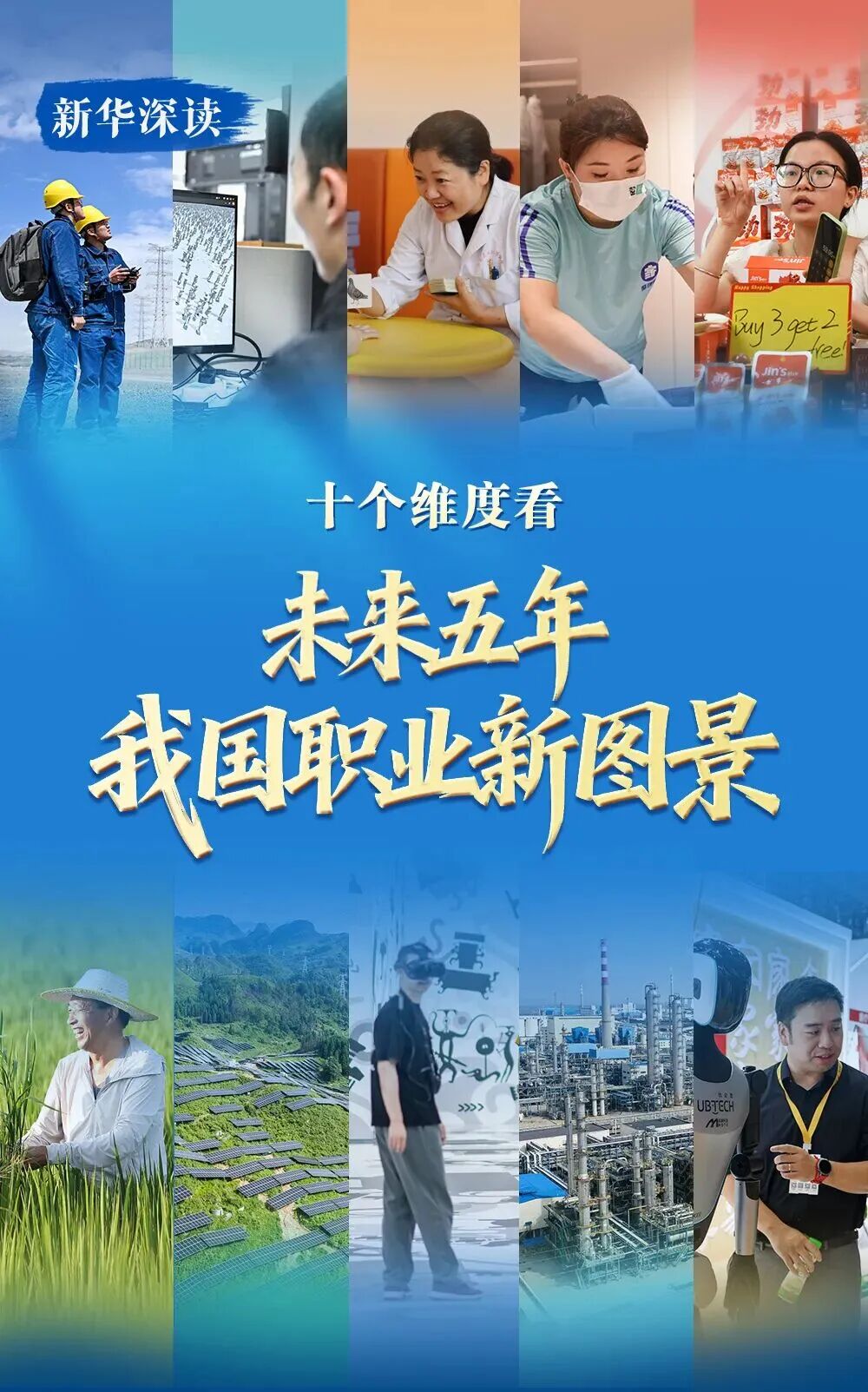
Core Insights - The article outlines the future job market in China over the next five years, emphasizing the impact of industrial upgrades, technological changes, and demographic shifts on employment opportunities [1][3][53] Emerging Industries - The "Suggestions" document highlights the cultivation of emerging industries such as new energy, new materials, aerospace, and low-altitude economy, which are expected to create new job opportunities across the entire industrial chain [6][56] - The low-altitude economy alone is projected to have a talent gap of 1 million for drone operators, with the market expected to exceed 1 trillion yuan by 2030 [6][57] - Various roles are identified across the low-altitude economy, including equipment designers, flight control engineers, and data analysts, reflecting a trend of integration between manufacturing and services [7][58] Digital Economy - The rise of AI and digital technologies is transforming traditional jobs, leading to the creation of high-value new roles while displacing repetitive labor [12][63] - The AI sector is expected to see significant growth, with job postings increasing by 3% and job seekers by 39% in the first three quarters of 2025 [12][63][64] - The demand for AI-related positions, such as AI product managers and engineers, is surging, with growth rates of 178% and 26% respectively [12][63] Service Sector - The service industry is anticipated to absorb more labor, particularly in health, elderly care, and domestic services, driven by rising consumer demand [15][66] - The elderly care sector is experiencing a job growth rate of 29.2%, with specific roles like caregivers and rehabilitation therapists seeing significant demand [15][66] - The service sector's employment share is expected to rise from over 48% to around 55% in the next five years, reflecting a shift towards more specialized and standardized service roles [17][67] Flexible Employment - The flexible employment landscape is diversifying, with over 84 million new employment forms emerging, providing opportunities for various skill levels [21][71] - The government is focusing on promoting high-quality employment and improving social security for flexible workers, including establishing protections for new employment forms [22][72] Cross-Border Employment - The expansion of cross-border e-commerce is creating diverse job opportunities, with a projected 45 million jobs created in this sector by 2030 [25][77] - There is a growing demand for talents proficient in international trade and local market knowledge, particularly in small and medium enterprises [25][77] Rural Revitalization - New agricultural entrepreneurs are emerging, driving innovation and income growth in rural areas, with significant contributions to local economies [30][81] - The government is promoting rural modernization and encouraging talent to engage in rural development, aiming to enhance local employment opportunities [30][81] Cultural Industry - The cultural sector is evolving, with a strong demand for talents who can blend cultural storytelling with technological skills, such as VR/AR developers and cultural creative engineers [34][35] - The cultural industry is projected to generate substantial revenue, with a focus on integrating technology and culture to create new job opportunities [34][35] Green Jobs - The green economy is expanding, with new roles in renewable energy and sustainability expected to grow significantly, including positions like energy storage operation managers [42][43] - The government is emphasizing the need for multi-disciplinary talents in the green sector, anticipating a doubling of job opportunities in this field [42][43] Regional Employment - Employment patterns are shifting from urban-centric to a more balanced regional distribution, with emerging cities attracting talent due to their industrial strengths [47][48] - The government's regional development strategies are expected to create a more equitable job market across various regions, promoting local employment opportunities [47][48][49]
山海携手筑链兴邦 枣庄和青岛六区联动共谱协同发展新篇章
Zhong Guo Fa Zhan Wang· 2025-12-02 07:11
Core Insights - The collaborative development between strong and weak counties in Shandong province is highlighted, focusing on resource complementarity and industrial synergy to achieve high-quality growth [1] Mechanism Foundation - A comprehensive collaborative mechanism has been established, with various districts creating tailored cooperation frameworks to support industrial assistance [2] - The integration of resources across different levels has been emphasized, with multiple departments and enterprises working together to ensure effective policy implementation [2] - The interaction between local government leaders has fostered a cooperative environment, leading to 14 mutual visits and 28 signed cooperation agreements by the end of October [2] Project Focus - Industrial transfer projects are being activated as new engines for upgrading industries, with successful examples including a textile processing facility that created over 280 local jobs [3] - The establishment of a food-grade ton bag production line is projected to generate an annual output value of 500 million yuan and tax revenue of 20 million yuan [3] - Collaborative projects between districts are enhancing local industries, such as the deep processing of pomegranates and semiconductor device manufacturing [3] Park Development - Industrial parks are identified as key platforms for industrial clustering and collaborative efforts, breaking regional barriers for project development [4] - New industrial parks are being developed to attract enterprises in lithium batteries and machinery manufacturing, exploring new models of social capital cooperation [4] - Collaborative initiatives have led to successful technology breakthroughs and enhanced integration of research and production [4] Livelihood Focus - The ultimate goal of industrial assistance is to improve the well-being of the local population, with significant financial support provided to local enterprises [5] - Cultural and tourism events have contributed to local economic growth, with a notable increase in visitor numbers and revenue generation [5] - The ongoing collaboration between Qingdao and Zaozhuang is seen as a model for regional coordinated development, promising a brighter future for the area [5]
领悟一个“重”字——武汉“十四五”发展启示录①
Chang Jiang Ri Bao· 2025-12-01 11:35
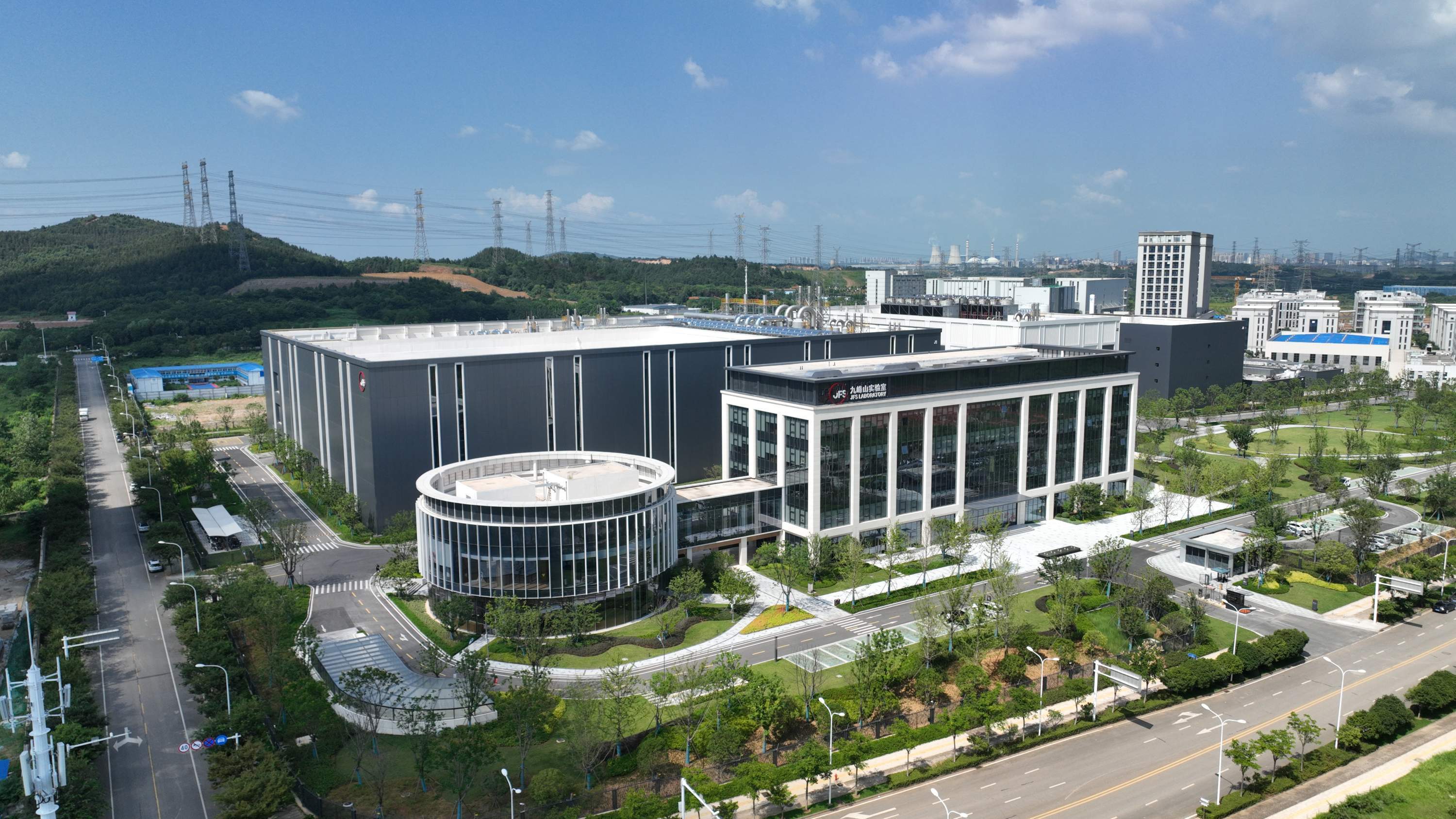
Core Insights - Wuhan is positioned as a key strategic hub in China's development, with a focus on high-quality growth and innovation in technology and industry [4][10][11] - The establishment of the Jiufengshan Laboratory aims to create a global center for advanced compound semiconductor research, reflecting the city's commitment to technological self-reliance and innovation [2][7][9] - The integration of industry, academia, and research is emphasized as a critical factor for Wuhan's technological breakthroughs and economic development [8][9] Group 1: Strategic Development - Wuhan is tasked with significant responsibilities in the national development strategy, aiming to be a leading force in the central region's rise [6][10] - The city is focusing on high-quality development practices during the 14th Five-Year Plan and is preparing for the 15th Five-Year Plan [4][6] - The economic output of the Wuhan metropolitan area is projected to exceed 3.6 trillion yuan in 2024, accounting for 29% of the Yangtze River middle reaches urban agglomeration [11] Group 2: Technological Innovation - The Jiufengshan Laboratory operates over 300 projects and has implemented a 24-hour work schedule to enhance delivery efficiency [7] - Wuhan's high-tech enterprises are expected to surpass 15,000, with technology contract transaction volumes exceeding 300 billion yuan by 2024 [11] - The city is recognized for its strong educational foundation, housing over 90 universities and 1.4 million students, contributing to its innovation capabilities [18] Group 3: Urban Development and Governance - Wuhan is implementing a community governance model that emphasizes proactive service delivery to residents, enhancing safety and community engagement [12][13] - The city is undergoing urban renewal projects that blend historical preservation with modern functionality, aiming for high-quality living standards [23][24] - The establishment of a digital public infrastructure platform is transforming urban governance and service delivery [12][13] Group 4: Logistics and Economic Integration - Wuhan has become a key logistics hub, facilitating direct shipping routes to Europe and reducing logistics costs by approximately 15% [19] - The city is enhancing its role in the national logistics network, with the establishment of multiple logistics hubs and international transport routes [19] - The integration of regional economies is being prioritized, with collaborative efforts to strengthen the Wuhan metropolitan area and its surrounding cities [11][19]
最新GDP!我国20大地级市洗牌:泉州逆袭南通,盐城增速6%,临沂首破5000亿!
Sou Hu Cai Jing· 2025-12-01 08:51
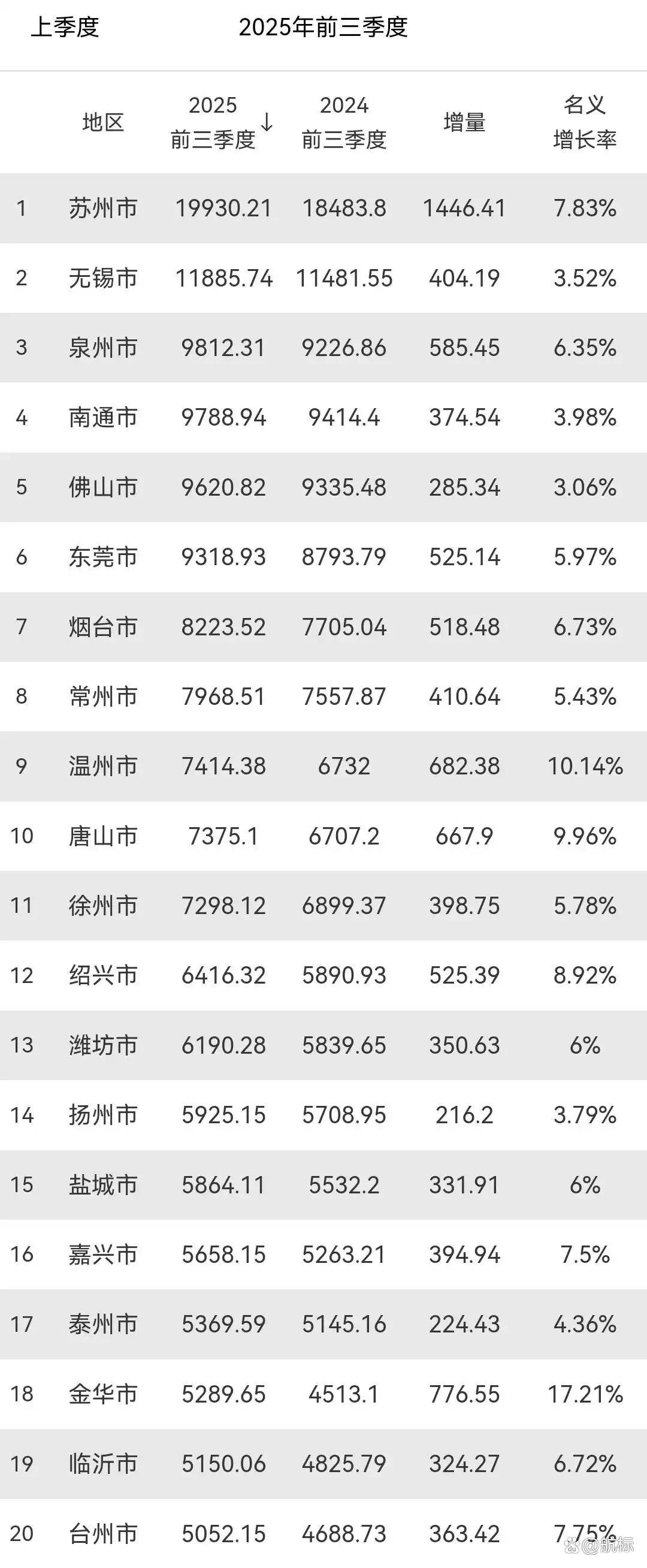
Core Insights - The economic landscape of China's prefecture-level cities is undergoing subtle adjustments, with notable changes in the GDP rankings for the first three quarters of 2025, driven by policies supporting regional coordination and new productivity cultivation [1][5] Group 1: GDP Rankings and Growth Rates - Suzhou remains the top city with a GDP of 19,930.21 billion, showing a growth rate of 7.83% compared to the previous year [3] - Quanzhou has surpassed Nantong to claim the third position with a GDP of 9,812.31 billion, achieving a growth rate of 6.35%, which is 2.37 percentage points higher than Nantong's 3.98% [4][5] - Linyi has reached a significant milestone by exceeding a GDP of 5,000 billion for the first time, recording 5,150.06 billion with a growth rate of 6.72% [5] Group 2: Key Drivers of Economic Growth - Quanzhou's growth is attributed to its strategic location as a core area of the Maritime Silk Road and advancements in the textile industry, including a project that improved order response speed by 40% [4] - Yancheng's 6% growth is driven by its position as the largest offshore wind power base in China, with a significant contribution from a local wind turbine manufacturer [5] - Linyi's economy is bolstered by a dual focus on commerce logistics and digital economy, with a robust online wholesale market and a comprehensive logistics network [5] Group 3: Other Notable Performers - Jinhua leads with a remarkable growth rate of 17.21%, fueled by the explosive growth of cross-border e-commerce in Yiwu [7] - Wenzhou and Tangshan also show double-digit growth, driven by innovation in the private sector and upgrades in traditional industries, respectively [7] - The rankings reflect the dynamic nature of local economies, emphasizing the importance of strategic positioning in terms of location, industry, and policy [7]