
悦己消费

Search documents
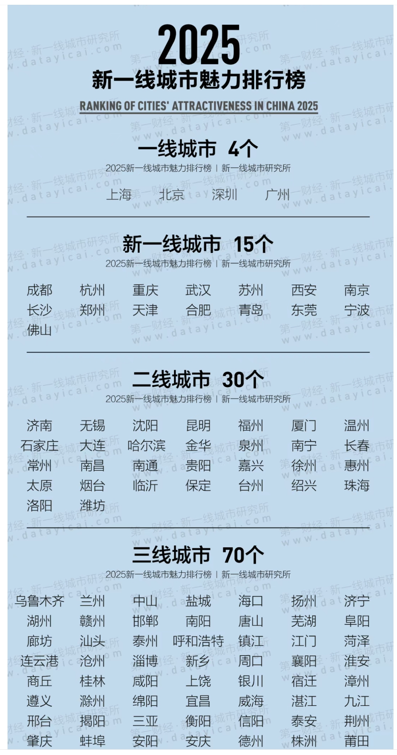
新一线城市榜单,临沂紧追烟台重回二线城市的信号
Qi Lu Wan Bao· 2025-05-31 07:59
Core Insights - The 2025 "New First-Tier Cities Charm Ranking" highlights the increasing differentiation among cities in China as they transition to a consumption-driven society, with cities like Linyi and Heze showing significant improvements in their rankings [1][9] - The ranking methodology emphasizes commercial consumption over traditional economic indicators like GDP, reflecting a shift in urban competitiveness [3][4] Group 1: Ranking Overview - Linyi has returned to the second-tier city status, ranking closely behind Yantai, and has jumped 8 places from the previous year, while Heze has surged 20 places [1] - The ranking includes 15 new first-tier cities and 30 second-tier cities, with Linyi and Heze being notable examples of cities that have improved their standings significantly [2] Group 2: Evaluation Criteria - The ranking system prioritizes third-sector activities, particularly commercial consumption, over industrial output, indicating a shift towards a more service-oriented urban economy [3][4] - New metrics introduced in the ranking include factors such as the scale of live-streaming influencers, online business diversity, and nighttime economic activity, reflecting the evolving nature of urban attractiveness [4][5] Group 3: Economic Indicators - Linyi's retail sales reached 343.38 billion yuan in 2024, ranking fourth in Shandong, while its economic output is significantly lower than Yantai's, indicating untapped consumption potential [6][7] - The city has a third-sector contribution of 51.2% to its GDP, which is comparable to other industrial cities, suggesting a balanced economic structure [7][8] Group 4: Urban Development Trends - The ranking reflects a broader trend where cities with strong service sectors and vibrant consumer markets are becoming more attractive, especially to younger populations [5][8] - Linyi's logistics and transportation infrastructure has facilitated economic dynamism, with a notable increase in online retail sales driven by live-streaming commerce [8][9] Group 5: Consumption as an Economic Driver - Consumption is increasingly recognized as a primary engine for economic growth in China, with consumer spending contributing 82.5% to GDP growth in 2023 [8][9] - The shift towards a consumption-oriented economy is evident as cities adapt to new consumer preferences and market dynamics, with Linyi's rise serving as a case study [9]

悦己消费大时代研究报告-财通证券
Sou Hu Cai Jing· 2025-05-30 09:34
Group 1: Evolution of Consumption Society in Japan and the U.S. - The generational shift has profoundly influenced the evolution of consumption societies in Japan and the U.S. [1] - In Japan, the Taisho and early Showa generations led the transition from the first to the second consumption society, followed by the New Human Generation and part of the Baby Boomer generation driving the third consumption society [1] - In the U.S., Baby Boomers focus on unique product advantages, Generation X prefers time-saving products, Generation Y is enthusiastic about energy-saving and green consumption, while Generation Z contributes significantly to digital and gaming consumption [1] Group 2: Current State and Potential of China's Consumption Society - The post-90s and post-95s generations in China have developed consumption concepts similar to Japan's New Human Generation and the U.S. Baby Boomers, emphasizing spiritual satisfaction and personalized consumption [2] - Compared to Japan and the U.S., China's service consumption currently stands at 46.1%, indicating significant room for growth in the service sector [2] Group 3: Characteristics of the Third Consumption Society and Self-Satisfaction Consumption Trends - In the third consumption society, consumers prioritize emotional and psychological factors over mere functionality when selecting products, leading to a shift in brand positioning from "leader" to "supporting role" [3][10] - Self-satisfaction consumption is emerging as a key trend, focusing on emotional resources, emotional resolution solutions, and legal emotional release [6][11] Group 4: Emotional Consumption Trends - Emotional resources include the pet economy, IP toys, and temple economy, catering to spiritual and emotional needs [6] - Emotional resolution solutions are found in beauty and personal care products, gold and jewelry, and new-style food and beverages that address appearance and safety anxieties [6] - Legal emotional release is represented by outdoor activities, light alcoholic beverages, and tobacco products, which help consumers manage stress [6]


新消费,火了!基金经理最新解读
天天基金网· 2025-05-27 06:49
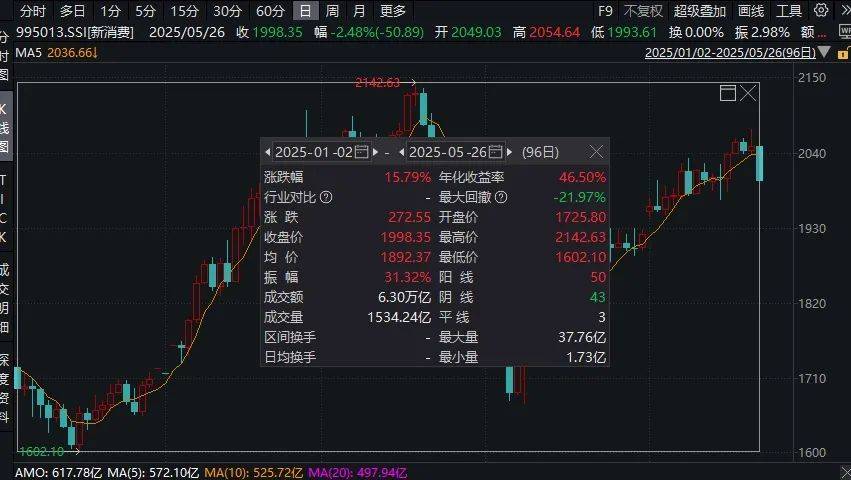
Core Viewpoint - The article discusses the rise of new consumption trends focusing on emotional value and self-satisfaction, highlighting the strong performance of related stocks and the emergence of multiple tenfold stocks in the market [1][3]. New Consumption Trends - New consumption is characterized by a shift from traditional needs to emotional and personalized experiences, with a focus on "self-satisfaction" rather than just material consumption [3][4]. - The new consumption sector includes emotional and spiritual consumption such as trendy toys, cultural tourism, IP, pets, and medical beauty, as well as a focus on high cost-performance ratio [3][4]. Market Performance - As of May 26, the new consumption index (995013) has seen a cumulative increase of 15.79% this year, outperforming the traditional consumption index (801273) [1]. - Recent strong performance in the new consumption sector includes beauty products, snacks, IP trendy toys, and the pet economy, which have attracted significant market attention [6]. Investment Opportunities - The new consumption sector is seen as having clear growth logic and strong performance, attracting both traditional and new funds [7]. - The current market environment, including government policies aimed at stimulating consumption, is expected to support the growth of new consumption companies [7][8]. Future Outlook - The article suggests that while the new consumption narrative is gaining traction, there may be risks of market volatility and potential bubbles in some newly listed companies [8]. - Investment strategies should balance traditional and new consumption opportunities, focusing on structural changes and consumer behavior shifts [10][11]. Key Focus Areas - Future investment in new consumption should target emotional consumption, cost-performance, and international expansion, with a focus on identifying quality companies in these segments [10][11]. - The article emphasizes the importance of adapting to generational changes in consumer preferences and the potential for new brands to emerge in the market [11].

新消费,火了!基金经理最新解读
Sou Hu Cai Jing· 2025-05-27 01:35
Core Viewpoint - The new consumption sector is gaining traction in the capital market, driven by trends such as emotional value and self-consumption, leading to significant stock performance and the emergence of multiple tenfold stocks [1][5]. New Consumption Trends - New consumption is characterized by supply-driven demand, focusing on opportunities that emerge from economic development and changing consumer preferences, particularly in emotional and quality-price ratio consumption [3][6]. - The rise of new consumption is attributed to younger consumers, particularly Generation Z, who prioritize individual experiences and quality over mere affordability [6][10]. Market Performance - The new consumption sector has shown strong performance, with notable stocks like Pop Mart reaching new highs and others like Old Puhuang and Mixue Ice City experiencing significant gains after their Hong Kong listings [5][8]. - The current market interest in new consumption is fueled by strong fundamentals and rapid earnings growth of related companies, attracting both traditional and new capital [9]. Investment Strategies - Investment in the consumption sector requires a balanced approach, focusing on both traditional and emerging consumption opportunities, with an emphasis on identifying alpha opportunities in niche markets [11][12]. - A "barbell strategy" is recommended, targeting high-growth areas in emotional and spiritual consumption while also securing stable cash flow from essential consumer goods [12][13]. Future Outlook - The new consumption sector is expected to continue benefiting from policy support, consumption upgrades, and technological innovations, with a potential for valuation recovery as the macroeconomic environment stabilizes [9][10]. - There is a recognition that while emotional and self-consumption trends will persist, their forms will evolve with generational changes, necessitating ongoing exploration and adaptation [10].
营收净利双下滑,香奈儿也不“香”了?消费投资从“高端”转向“悦己”
券商中国· 2025-05-25 14:31
奢侈品"越涨越买"法则失灵了? 近日,法国奢侈品牌香奈儿发布2024年财报,自2020年疫情期间门店关停以来,香奈儿首次出现营收与利润双 双下滑的情况。 从股价表现来看,今年以来,多家国际奢侈品牌巨头股价接连下跌,截至5月25日,开云集团、LVMH集团年 内股价跌超20%,普拉达港股年内股价跌超13%。 香奈儿营收首次下滑 近日,法国奢侈品牌香奈儿发布2024年财报。2024年,香奈儿全年营收同比减少5.3%,降至187亿美元(约合 人民币1347亿元)。营业利润和净利润分别下滑30%和28.2%,分别降至44.8亿美元和34亿美元。 财报显示,按地区分,香奈儿包括中国在内的亚洲市场销售额下降9.3%,美洲市场下滑4.3%,欧洲市场销售 收入则增长了1.2%。 此前除了2020年受疫情影响出现收入下滑,香奈儿自2017年首次对外发布业绩报告至2023年,年销售额均呈增 长状态。 对此,首席财务官Philippe Blondiaux表示,美国市场面临着相当困难的宏观经济环境,但公司仍看好其长期潜 力。同时,香奈儿计划在中国市场继续扩大销售网络,2025年将在中国再开设15家精品店,包括南京、成都等 城市。 为应 ...

纺织服饰行业周专题:Amer Sports 2025Q1业绩表现超预期
GOLDEN SUN SECURITIES· 2025-05-25 10:23
Investment Rating - The report recommends a "Buy" rating for several key companies in the textile and apparel sector, including Anta Sports, Steady Medical, and Bosideng, among others [12][36][37]. Core Insights - Amer Sports reported a strong performance in Q1 2025, with revenue growth of 23% year-on-year to $1.473 billion, driven by significant growth in the Asia-Pacific region [1][17]. - The Technical Apparel segment, led by the Arc'teryx brand, saw a revenue increase of 28% to $664 million in Q1 2025, with a notable profit margin improvement [2][21]. - The Outdoor Performance segment, centered around the Salomon brand, achieved a 25% revenue growth to $502 million, benefiting from new store openings and strong direct-to-consumer (DTC) sales [3][26]. - The Ball & Racquet segment, featuring Wilson, experienced a 12% revenue increase to $306 million, with a long-term growth forecast of low to mid-single digits [4][29]. - The report highlights the resilience of the sportswear sector, projecting a revenue growth of 15% to 17% for Amer Sports in 2025, with specific segments expected to outperform [1][17]. Summary by Sections Amer Sports Performance - Q1 2025 revenue increased by 23% to $1.473 billion, with regional growth of +12% in the Americas, +43% in Greater China, +12% in EMEA, and +49% in Asia-Pacific [1][17]. - Adjusted gross margin improved by 3.3 percentage points to 58%, and adjusted operating profit margin rose by 4.9 percentage points to 15.8% [1][17]. - Net profit for Q1 2025 was $135 million, a significant increase from $5 million in Q1 2024 [1][17]. Technical Apparel - Revenue for the Technical Apparel segment grew by 28% to $664 million in Q1 2025, with an adjusted operating profit margin of 23.8% [2][21]. - Direct-to-consumer sales increased by 31%, while wholesale revenue grew by 22% [2][21]. - The Asia-Pacific region led growth, followed by Greater China [2][21]. Outdoor Performance - The Outdoor Performance segment's revenue rose by 25% to $502 million, with an adjusted operating profit margin of 14.7% [3][26]. - DTC sales surged by 68%, driven by new store openings in Greater China and Asia-Pacific [3][26]. - The Americas region's performance was stable, primarily due to the divestiture of the Enve business [3][26]. Ball & Racquet - Revenue for the Ball & Racquet segment increased by 12% to $306 million, with an adjusted operating profit margin of 6.6% [4][29]. - The growth was supported by strong sales in racquets, golf products, and apparel [4][29]. - Long-term revenue growth is expected to be low to mid-single digits [4][29]. Industry Outlook - The report emphasizes the importance of focusing on companies with strong fundamentals and quality brands, anticipating performance recovery and valuation improvement in 2025 [5][34]. - The sportswear sector is expected to benefit from government policy support and increased participation in sports activities [5][34].
鹏华量化投资部基金经理张羽翔:当前悦己消费、情绪消费超过资本市场预期
Xin Lang Ji Jin· 2025-05-24 07:44
Group 1 - The 2025 Fund High-Quality Development Conference was held in Shenzhen, focusing on new paths for the high-quality development of the fund industry, gathering top experts and leaders from academia, private equity, and brokerage firms [1] - Zhang Yuxiang, a fund manager from Penghua Quantitative Investment Department, discussed the characteristics of new consumption, emphasizing the importance of product positioning, new channels, and precise targeting of consumer demographics [3] - New consumption trends are driven by self-indulgent and emotional spending, with significant growth in performance expected in 2024 and Q1 2025, often exceeding market expectations [3] Group 2 - New consumption aligns with the preferences of younger consumers, indicating a structural shift in consumption patterns that is likely to persist over the long term [3] - Traditional sectors, such as gold and jewelry, can also be redefined as new consumption if they adopt new positioning, channels, and models, reflecting the evolving consumer landscape [3]

“全球品牌中国线上500强”出炉 受年轻人欢迎的品牌增速更高
Zheng Quan Ri Bao· 2025-05-23 06:14
Core Insights - The "Global Brand China Online 500 Strong" list for Q1 2025 was released, with Apple ranking first, followed by Huawei and Xiaomi in second and third place respectively. Among the top 10 brands, 7 are domestic brands [1] - The research utilized consumer big data from e-commerce platforms like Taobao and Tmall, analyzing metrics such as traffic, search terms, transaction amounts, member transactions, and store ratings to create a comprehensive scoring model for brands [1] - Key drivers for brand growth identified include product innovation, scene segmentation, and "self-consumption" trends, with a significant percentage of Chinese consumers willing to pay more for innovative products and special experiences [1][2] Brand Characteristics - Emerging brands are focusing on precise scene positioning and exhibit significant product innovation capabilities, with 36 out of the fastest-growing 100 brands showcasing a clear "product innovation + scene focus" characteristic [2] - "Self-consumption" is becoming mainstream, with brands in personal care, gaming, and pet products catering to individual emotional experiences, exemplified by brands like Kérastase and domestic pet food brand MaiFuDi [2] - There is a high overlap between high-growth brands and those favored by consumers aged 18 to 24, indicating that attracting younger consumers is translating into brand growth [2] Market Trends - As market maturity increases, consumers are seeking more refined functional needs, making it difficult for single, mass-market products to meet diverse scene requirements. Product innovation around segmented scenes is crucial for differentiation and brand longevity [2] - The demand for self-value expression among users is rising, prompting brands to provide emotional connections and personalized experiences to win consumer favor [2]


上海政策“组合拳”释放消费潜力
Zhong Guo Xin Wen Wang· 2025-05-22 18:21
Core Viewpoint - Shanghai has launched a comprehensive plan to boost consumption, featuring 32 key measures aimed at reversing the decline in retail sales and stabilizing economic growth [2][8]. Group 1: Consumption Measures - The plan includes initiatives to cultivate new types of consumption, such as digital consumption, silver economy, and emotional consumption, reflecting a shift from material needs to emotional value [3][4]. - "Emotional consumption" is highlighted as a significant trend, where consumers prioritize emotional satisfaction over mere functionality, indicating a substantial market potential [4]. - Shanghai's approach to emotional consumption marks a transition in urban consumer behavior from material satisfaction to value realization, supporting the optimization of urban industrial structure [4]. Group 2: Economic Context - In the first quarter, Shanghai's retail sales of consumer goods fell by 1.1% year-on-year, necessitating urgent measures to stimulate consumption [2]. - The average disposable income for Shanghai residents reached 25,766 yuan in the first quarter, a 4.6% increase year-on-year, positioning it as the highest in the country [8]. - The plan emphasizes increasing residents' income and improving employment support, particularly for grassroots workers and small businesses, to ensure consumers have the financial capacity to spend [7][8]. Group 3: Broader Trends - Other major provinces in China are also enhancing consumption policies, focusing on new types of consumption, such as integrating artificial intelligence with consumer experiences [5]. - The overall strategy aims to create a sustainable consumption ecosystem that encourages spending through income growth, quality products, and innovative consumption scenarios [8].
悦己消费提速银发经济
Huafu Securities· 2025-05-22 05:14
Core Insights - The report highlights the shift in consumption patterns among the "new silver-haired" demographic in China, moving from a frugal approach to a focus on quality and self-indulgence in their spending habits [2][3] - This demographic, primarily consisting of individuals born in the 1960s and 1970s, is characterized by a stable income and a willingness to invest in experiences and products that enhance their quality of life [3][4] Consumption Trends - Travel has become a significant area of interest, with approximately 17.6% of older adults traveling more than three times a year, and 40.8% traveling once or twice a year, reflecting an increased focus on leisure and health [3] - The consumption of beauty and personal care products has also evolved, with a notable interest in high-quality, personalized, and technologically advanced products, as evidenced by the 2024 survey indicating that brands emphasizing safety and quality are gaining traction among older consumers [4] Service and Lifestyle Changes - The report notes a transition in lifestyle philosophies among the new silver-haired group, who are increasingly independent and exploring diverse retirement options, such as high-end retirement communities and smart home care solutions [4][5] - There is a growing trend of "buying time" through service-oriented consumption, with 25% of online grocery orders coming from individuals over 60, and a 36% year-on-year increase in delivery service orders, indicating a preference for convenience [5] Investment Recommendations - The report suggests investing in comprehensive wellness and travel communities that integrate medical and ecological resources to cater to the needs of the aging population [6] - It also recommends focusing on anti-aging medical aesthetics and biotechnology sectors, as well as accelerating the application of smart elderly care technologies to enhance community services and smart home ecosystems [6]