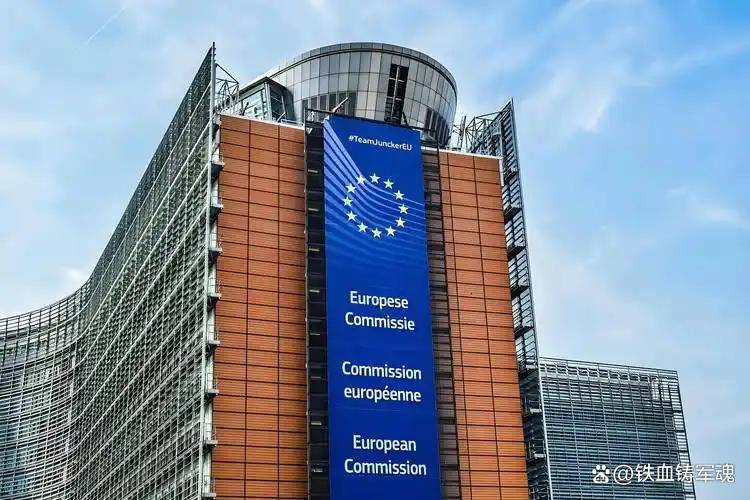
贸易保护主义

Search documents
国际机构密集上调增长预期 中国经济基本面被看好
Zhong Guo Xin Wen Wang· 2025-12-18 11:08
Group 1 - Multiple international institutions have raised their growth forecasts for China's economy, with the IMF increasing its 2025 growth prediction by 0.2 percentage points to 5% and the World Bank raising it by 0.4 percentage points [1] - Major investment banks like Goldman Sachs and Deutsche Bank have also adopted a positive outlook, with Goldman Sachs adjusting its 2025 growth forecast from 4.9% to 5.0% [1] - This upward revision occurs amidst a globally unstable economic environment, where the IMF projects a global growth rate of only 3.2% for 2025 [1] Group 2 - Resilience is a key theme highlighted by various institutions regarding China's economy, with the IMF noting significant resilience despite multiple shocks [2] - The World Bank states that China's economic performance has exceeded initial expectations for the year, particularly in exports [2] Group 3 - The resilience of China's economy is attributed to strong macroeconomic policies and the coordinated efforts of the "three drivers" of growth [3] - The Chinese government has prioritized expanding domestic demand, with policies like the trade-in program for consumer goods contributing to a recovery in consumer spending [3] - In the first three quarters, China's retail sales grew by 4.5% year-on-year, with final consumption contributing 53.5% to economic growth, an increase of 9 percentage points from the previous year [3] Group 4 - China's foreign trade remains robust, with a 4.0% year-on-year increase in total goods imports and exports in the first three quarters, and a 6.2% increase in trade with Belt and Road Initiative countries [3] - The World Bank emphasizes that the diversification of export markets is a crucial support for China's trade resilience [3] Group 5 - China's export competitiveness is no longer primarily reliant on price, as the country has established a strong presence in advanced industries such as electric vehicles and solar panels, allowing it to withstand moderate currency appreciation [4] - The Central Economic Work Conference has outlined a more proactive macroeconomic policy approach, emphasizing the importance of domestic demand and a strong domestic market for 2026 [4] Group 6 - The IMF's managing director expressed confidence in China's potential for stronger economic growth, projecting that China's contribution to global economic growth could remain around 30% in the coming years [6] - China's economic growth is seen as a stabilizing force for the global economy, benefiting not only its own development but also the broader world economy [6]
ZoomInfo Technologies Inc. (GTM) Seen Emerging From Down-Cycle Pressure, According to KeyBanc
Insider Monkey· 2025-12-18 10:24
Core Insights - Artificial intelligence (AI) is identified as the greatest investment opportunity of the current era, with a strong emphasis on the urgency to invest now [1][13] - The energy demands of AI technologies are significant, with data centers consuming as much energy as small cities, leading to concerns about power grid capacity and rising electricity prices [2][3] Investment Opportunity - A specific company is highlighted as a critical player in the AI energy sector, owning essential energy infrastructure assets that are poised to benefit from the increasing energy demands of AI [3][7] - This company is not a chipmaker or cloud platform but is positioned as a "toll booth" operator in the AI energy boom, collecting fees from energy exports [5][6] Financial Position - The company is noted for being debt-free and holding a substantial cash reserve, which is nearly one-third of its market capitalization, providing a strong financial foundation [8][10] - It is trading at less than 7 times earnings, indicating a potentially undervalued investment opportunity compared to its peers [10] Market Trends - The company is strategically aligned with several market trends, including the onshoring boom driven by tariffs, a surge in U.S. LNG exports, and a unique position in nuclear energy [14][7] - The influx of talent into the AI sector is expected to drive continuous innovation and advancements, further solidifying the importance of investing in AI-related companies [12] Future Outlook - The potential for significant returns is emphasized, with projections suggesting a possible 100% return within 12 to 24 months for investors who act now [15] - The company is positioned to capitalize on the disruption caused by AI, which is reshaping traditional industries and creating new opportunities for growth [11][12]



近期欧盟不断加大对华经贸限制力度,商务部:希望欧方克制审慎使用限制性经贸工具
Di Yi Cai Jing· 2025-12-18 08:17
Group 1 - The Ministry of Commerce of China urges the EU to immediately stop unreasonable suppression of foreign investment enterprises, including those from China [1][3] - The spokesperson highlighted that the essence of China-EU economic and trade relations is mutual benefit and complementarity, influenced by various factors such as economic development stages and market demand changes [1] - The EU has intensified trade restrictions against China, initiating 12 trade remedy investigations and 3 foreign subsidy investigations this year, which hindered several Chinese companies from participating in public procurement and greenfield investments in EU member states [1] Group 2 - The Ministry of Commerce expresses strong opposition to the EU's recent investigations under the Foreign Subsidies Regulation (FSR), which are seen as discriminatory and harmful to Chinese enterprises operating in Europe [2][3] - A report from the EU-China Chamber of Commerce indicates that 63% of surveyed Chinese companies in Europe have been affected by FSR, with 12% experiencing direct impacts and 51% reporting damage to their business image and confidence [2] Group 3 - Ongoing negotiations between China and the EU regarding electric vehicle tariffs and minimum price schemes are taking place, with China advocating for dialogue to resolve differences and create a stable market environment [4][5] - The Ministry of Commerce appreciates the EU's willingness to restart price commitment negotiations, emphasizing the importance of maintaining mutual trust and efficiency in discussions [5] - The use of trade defense tools by the EU, particularly the anti-subsidy investigation into Chinese electric vehicles, has introduced new uncertainties in China-EU economic relations, affecting Chinese automotive companies' market performance and business planning [5]

美港口货运量暴跌,特朗普关税回旋镖飞正中眉心:中美脱钩已成事实
Sou Hu Cai Jing· 2025-12-17 01:25
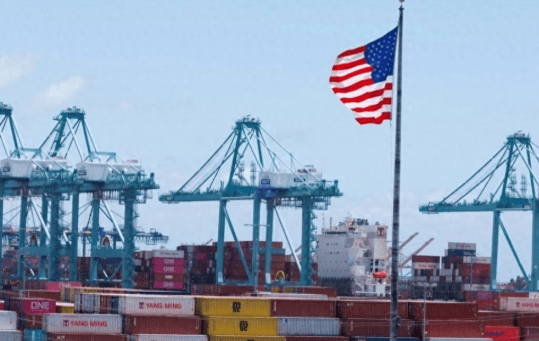
瞬息万变的国际经济环境中,政策波动对全球贸易脉络的影响愈发显著,美国作为全球经济巨头,其贸 易政策的摇摆正引发连锁反应。美国国家零售联合会(NRF)与哈克特协会联合发布的《全球港口追踪 报告》显示,美国主要集装箱港口进口量正遭遇断崖式下滑,一系列惊人数据揭开了全球供应链的深层 困境。 市场呈现的 "冰火两重天" 局面,折射出贸易政策的扭曲影响。美国零售联合会同时预测,2025 年假日 季销售额将首次突破 1 万亿美元大关,同比增长 3.7%-4.2%。这一数据与港口进口量的下滑形成强烈反 差,本质是零售商囤货策略的短期效应 —— 通过提前储备商品规避关税风险,暂时支撑了销售数据。 但这种平衡难以持续,随着库存逐渐消化,新货补充因关税压力受阻,物价上涨将不可避免,普通消费 者将面临"美元购买力缩水"的窘境,蛰伏的通胀压力可能再度抬头。 业内专家普遍共识,特朗普政府的关税政策是引发供应链危机的核心根源,其负面影响将持续发酵。自 特朗普政府推行 "关税战" 以来,美国对华及多个贸易伙伴加征的关税已累计覆盖数千亿美元商品,部 分品类税率高达 50%。这种以 "保护本土产业" 为名的贸易保护主义,实则严重扰乱了全球供应 ...
三大指数涨跌不一 Circle(CRCL.US)涨近10%
Zhi Tong Cai Jing· 2025-12-16 23:48
Market Overview - The U.S. stock market showed mixed results with the Dow Jones falling by 302.30 points (0.62%) to 48114.26, while the Nasdaq rose by 54.05 points (0.23%) to 23111.46 [1] - The S&P 500 index decreased by 16.25 points (0.24%) to 6800.26 [1] - In the European market, major indices such as Germany's DAX30 and the UK's FTSE 100 also experienced declines of 0.78% and 0.69% respectively [2] Employment Data - The U.S. added 64,000 jobs in November, recovering from a loss of 105,000 jobs in October [6] - The unemployment rate rose to 4.6%, the highest since 2021, up from 4.4% in September [6] Retail Sales - U.S. retail sales remained flat in October, with a 1.6% decline in auto sales impacting overall performance [7] - Excluding auto dealers and gas stations, sales increased by 0.5%, indicating some growth in other retail categories [7] Federal Reserve Insights - The potential candidates for the Federal Reserve chair position include current Fed Governor Waller and former Fed Governor Walsh, with Waller being favored for his clear arguments for rate cuts [8][9] - The outgoing Atlanta Fed President Bostic emphasized the need for continued focus on inflation, predicting it will remain above 2.5% through 2026 [9] Cryptocurrency Market - Bitcoin increased by 1.4% to $87,637.9, while Ethereum decreased by 0.6% to $2,948 [4] Commodity Prices - Spot gold fell by 0.07% to $4,302.46, while crude oil prices dropped significantly, with WTI down by $1.55 (2.73%) to $55.27 per barrel [5] Company News - Goldman Sachs is restructuring parts of its technology investment banking division to focus on AI infrastructure [13] - Morgan Stanley predicts that Tesla's Robotaxi fleet could expand to 1,000 vehicles by 2026, driven by advancements in technology and regulatory milestones [13]


虽迟但到!东大重拳出击扳回一局,欧盟被自己的“魔法”打败,真公平!
Xin Lang Cai Jing· 2025-12-16 14:02
Core Viewpoint - China has initiated anti-dumping duties on imported pork and pork products from the European Union (EU) to protect its domestic industry against low-priced imports [2][12]. Group 1: Anti-Dumping Measures - Starting December 17, China will impose anti-dumping duties on pork and related products from the EU, as announced by the Ministry of Commerce [2][10]. - The decision follows a thorough investigation process initiated in June 2024, which included preliminary rulings, hearings, and on-site verifications [4][12]. - The measures target fresh pork, frozen pork, and pig offal, addressing the issue of "low-price dumping" that has negatively impacted domestic pig farmers and slaughterhouses [4][12]. Group 2: EU's Anti-Dumping Practices - The EU has been actively conducting anti-dumping investigations against Chinese products across various sectors, including metals, smart devices, and chemicals, reflecting a trend of increasing trade tensions [5][13]. - The EU's concerns stem from China's competitive edge in sectors like solar energy and photovoltaic products, where it has achieved global leadership, prompting the EU to seek trade barriers to protect its own industries [5][13]. - The EU's approach is influenced by external pressures, including the trade protectionism exhibited by the Trump administration, which has led to a more cautious stance towards China [5][13]. Group 3: Trade Dynamics Between China and the EU - The anti-dumping measures from both sides represent a "rules contest" in global trade, highlighting the contradictions in the EU's stance, which claims market distortion while relying heavily on the Chinese market [6][14]. - China’s anti-dumping actions are characterized as defensive, adhering to legal procedures and aiming to ensure fair trade rather than outright protectionism [8][16]. - The imposition of duties on EU pork is seen as a means to encourage the EU to reconsider its trade strategies, focusing on quality competition rather than price undercutting [8][16].
中经评论:墨西哥提税或透支发展潜力
Jing Ji Ri Bao· 2025-12-16 00:05
Core Viewpoint - Mexico's recent proposal to increase import tariffs on products from countries without free trade agreements, including China, is seen as a short-term solution to economic pressures, potentially sacrificing long-term economic stability for immediate benefits [1][2][4]. Group 1: Economic Context - Mexico's economy is under increasing pressure, with the growth forecast for 2025 being revised down from positive to negative, and the central bank lowering the annual growth expectation from 0.6% to 0.3% [2]. - The proposed tariff increases are expected to generate an additional revenue of 70 billion pesos (approximately 3.76 billion USD) for the national treasury, addressing a fiscal deficit projected to reach 5.7% of GDP in 2024, the highest in decades [2]. Group 2: Tariff Details - The new tariffs will apply to approximately 1,400 product categories, including automobiles, toys, steel, textiles, and plastic products, with rates ranging from 10% to 50%, effective January 1, 2026 [1]. - Some adjustments were made to the initial proposal, reducing tariffs on certain automotive parts, light industrial products, and textiles, but the overall impact is expected to harm trade relations, particularly with China [1]. Group 3: Domestic Reactions - The proposal has sparked significant debate within Mexico, with supporters arguing it addresses unfair competition and reliance on imports, while opponents warn that increased tariffs will raise production costs and ultimately burden consumers [2][3]. Group 4: Long-term Implications - The reliance on tariffs as a solution is criticized for failing to address underlying economic issues, as Mexico's manufacturing sector is heavily dependent on global supply chains, which could be disrupted by increased costs [3][4]. - The shift in trade policy may deter foreign investment, undermining Mexico's image as a reliable production base and creating uncertainty for international capital [3][4]. - The approach of using protectionist measures to solve problems in an open economy may lead to Mexico's economic isolation, especially in the context of global supply chain restructuring [4].
墨西哥提税或透支发展潜力
Jing Ji Ri Bao· 2025-12-15 22:39
Core Viewpoint - Mexico's recent proposal to increase import tariffs on products from countries without free trade agreements, including China, is seen as a short-term solution to economic pressures, potentially sacrificing long-term economic stability for immediate benefits [1][4]. Group 1: Economic Context - Mexico's economy is under increasing pressure, with the growth forecast for Q3 2025 turning negative and the central bank lowering the annual growth expectation from 0.6% to 0.3% [2]. - The proposed tax increase is expected to generate an additional revenue of 700 billion pesos (approximately 37.6 billion USD) for the government, addressing a fiscal deficit projected to reach 5.7% of GDP in 2024, the highest in decades [2]. Group 2: Domestic Reactions - The proposal has sparked significant debate within Mexico, with supporters arguing it addresses unfair competition and reliance on imports, while opponents warn that increased tariffs will raise production costs and ultimately burden consumers [2][3]. Group 3: Supply Chain and Investment Risks - The reliance of Mexico's manufacturing sector on global supply chains means that increased tariffs could heighten the risk of supply chain disruptions, particularly given the limited domestic production capacity [3]. - The sudden shift in trade policy may deter foreign investment, undermining Mexico's image as a reliable production base and creating uncertainty for international capital [3][4]. Group 4: Long-term Implications - The protectionist measures are unlikely to enhance industrial competitiveness and may instead squeeze small and medium-sized enterprises due to rising raw material costs [4]. - Historical precedents indicate that short-term fiscal gains from tariffs may not compensate for long-term economic losses, as seen when Mexico had to retract tariffs on aluminum due to domestic production shortages shortly after their implementation [4].
前11个月一万亿美元顺差!是好事还是麻烦?普通人都能看懂的解读
Sou Hu Cai Jing· 2025-12-15 19:22
Group 1 - China's trade surplus reached $1.076 trillion in the first 11 months of the year, exceeding last year's total [1] - Exports totaled $3.41 trillion, a year-on-year increase of 6.2%, indicating strong performance despite a sluggish global economy [4] - The composition of exports has shifted from traditional goods to high-tech products, with new categories like electric vehicles and lithium batteries growing by 30% [8][10] Group 2 - Imports of bulk commodities increased in volume, but prices fell, leading to a modest increase in total import value [10] - The total import value increased by only 830 billion RMB compared to the previous year, highlighting that the surplus is primarily driven by exports [12] - The increase in trade surplus has bolstered foreign exchange reserves, which now exceed $3.2 trillion, enhancing the country's economic resilience [12][14] Group 3 - The trade surplus has contributed to GDP growth, helping to stabilize the annual growth target of around 5% [14] - The appreciation of the RMB has made studying abroad and travel cheaper, with tuition fees for top U.S. universities decreasing by approximately 2,800 RMB [15] - However, the high trade surplus has led to concerns from Western countries about unfair trade practices, potentially resulting in trade barriers [17] Group 4 - Traditional export businesses are facing challenges due to RMB appreciation, which reduces their profit margins [20] - The shift towards high-end products may lead to job losses in traditional manufacturing sectors, as fewer workers are needed to produce higher-value goods [22] - The slow growth in imports suggests that domestic consumption and investment demand are not fully recovering, indicating an over-reliance on exports [24][26]
中国出口持续增长,欧盟商会“供应链危机论”引发关税大战,欧洲保护主义抬头
Sou Hu Cai Jing· 2025-12-14 13:22
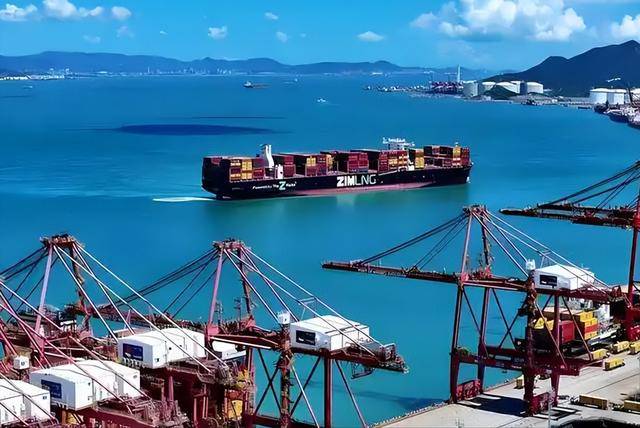
Core Viewpoint - The anxiety among EU businesses has been highlighted by the statement from the President of the China-EU Chamber of Commerce, indicating a strategic concern regarding dependency on Chinese raw materials, which is seen as a precursor to upcoming industrial protection measures in the EU [1][3]. Group 1: Trade Dynamics - The report indicates a significant shift in trade dynamics, with the ratio of China-EU container trade increasing from 1:2.7 in 2019 to 1:4 in the current year, reflecting China's manufacturing efficiency and scale expansion [3]. - Despite the EU Chamber of Commerce acknowledging China as the "only global manufacturing superpower," it frames the need for supply chain diversification as a forced response to China's dominance [3][4]. - China's exports to the EU increased by nearly 15% in the first 11 months of this year, contradicting claims of a "supply chain crisis" [3]. Group 2: Internal EU Discrepancies - There is a lack of consensus within the EU regarding a hardline approach towards China, as evidenced by the recent vote on tariffs for Chinese electric vehicles, where five countries opposed and twelve abstained [6]. - The EU Chamber of Commerce is intensifying its rhetoric around the "Chinese threat" to unify member states and justify more aggressive trade policies [6]. Group 3: Strategic Responses - Chinese companies are advised to prepare for potential "compliance investigations" from the EU, which have become a new tool for trade barriers [9]. - Diversifying dispute resolution strategies and leveraging internal EU contradictions can be effective, as demonstrated by China's anti-dumping investigations on brandy [10]. - The fundamental challenge lies in the EU's realization of its dependency on China, which contrasts with its historical position of dominance in the supply chain [11]. Group 4: Long-term Implications - A forced decoupling of global supply chains would negatively impact not only China but also European businesses, leading to long-term damage to the global industrial ecosystem [13]. - The EU is at a critical juncture, facing the choice between escalating protectionism or acknowledging the reality of global cooperation, with historical precedents suggesting that protectionist measures ultimately hinder progress [13].