智能化

Search documents
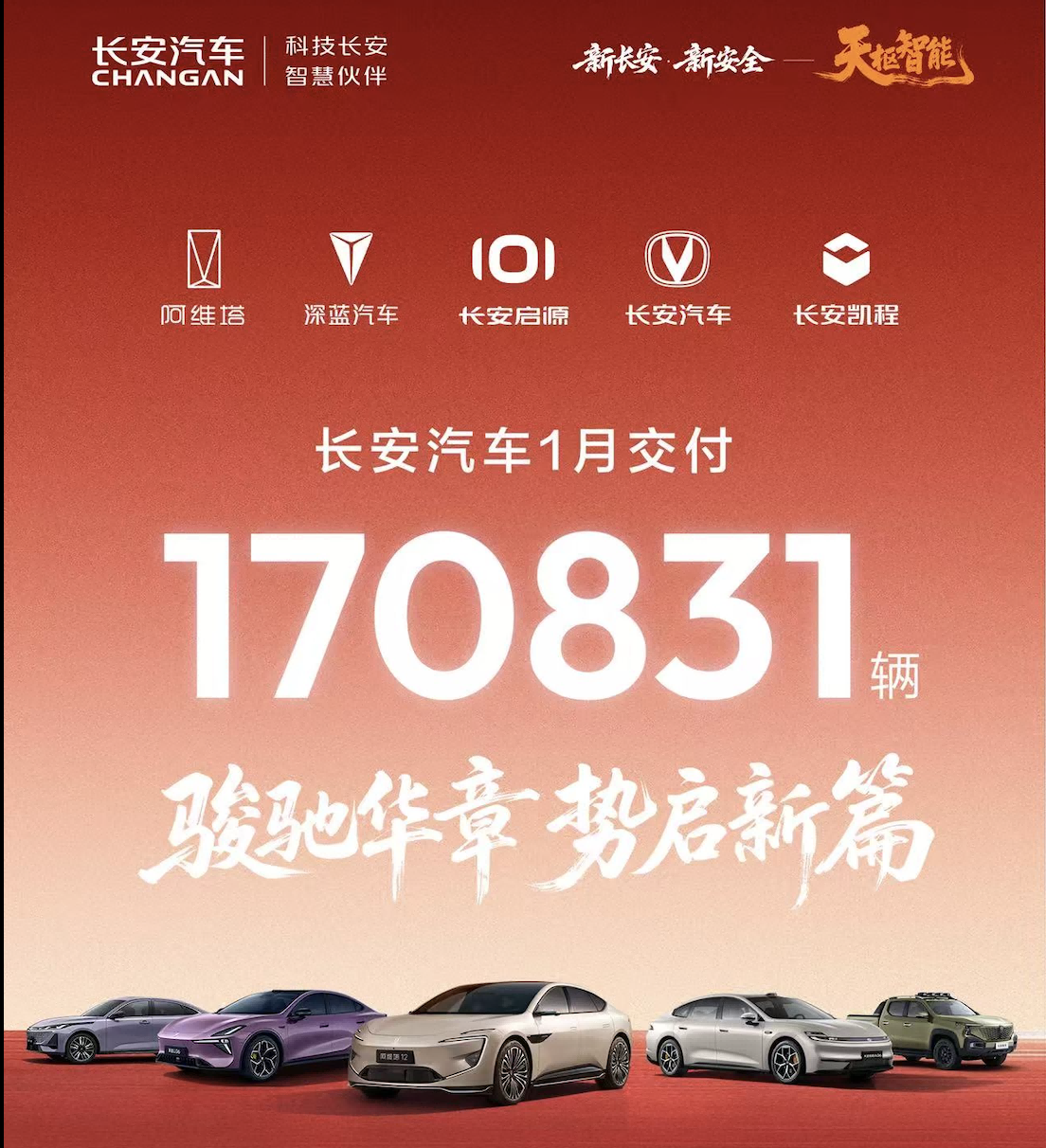
2026年稳健开局,长安汽车1月全球交付17万辆
Zhong Guo Qi Che Bao Wang· 2026-02-05 06:10
Core Insights - Changan Automobile achieved global deliveries of 170,831 vehicles in January 2026, demonstrating resilience in both classic and new energy product lines despite a traditionally slow season and internal adjustments [1][3][16] Group 1: Sales Performance - The Changan CS75 series, a flagship model, sold 17,822 units in January, marking an 11.6% month-on-month increase and surpassing 3 million cumulative sales, joining the "three million club" among domestic SUV brands [5] - The Changan Eado series sold 14,760 units in January, maintaining over 10,000 monthly sales for 11 consecutive months and becoming the top-selling domestic fuel sedan in 2025 [5] Group 2: New Energy Growth - The Deep Blue brand showcased strong performance with the Deep Blue S05 surpassing 170,000 cumulative sales, remaining a member of the "10,000 monthly sales club" [7] - The Changan Qiyuan brand delivered 14,759 units in January, with the AQ series seeing a significant year-on-year increase of 35.2% [7] - The Qiyuan A06 model quickly exceeded 21,460 cumulative deliveries, setting a record for the fastest delivery of a state-owned enterprise's new energy mid-size sedan [7] Group 3: Strategic Initiatives - Changan is advancing its "Shangri-La" plan for new energy, establishing a matrix of three global smart new energy brands: Avita, Deep Blue, and Changan Qiyuan, with solid-state batteries expected to enter vehicle verification by Q3 2026 [9] - The "Beidou Tianshu" plan for smart technology is being implemented, featuring a leading central network SDA platform and the launch of the "New Changan New Safety" brand, which emphasizes comprehensive safety [11] - The "Haina Baichuan" plan for global expansion has seen Changan's products sold in 117 countries, with 41 models launched and 19 overseas KD projects completed [14] Group 4: Future Outlook - 2026 is designated as the first year of the "14th Five-Year Plan," focusing on "steady progress and quality improvement," with a commitment to enhancing core competitiveness through systematic actions [16] - Changan aims to transform into a smart low-carbon mobility technology company, striving to become a world-class automotive brand driven by innovation and safety [16]


光伏告别出口退税后怎么办?王勃华:倒逼企业转向高质量高附加值竞争
Xin Lang Cai Jing· 2026-02-05 05:52
Core Insights - The Chinese photovoltaic industry will enter a new market-driven phase focused on technology, cost, and brand starting April 1, 2026, as it phases out the value-added tax export rebate [1][2][3] - This transition will compel companies to shift from low-price competition to high-quality, high-value competition, aiming to build sustainable global competitiveness [1][2] Industry Transformation - A significant transformation in development philosophy and logic is anticipated, moving from scale and price competition to value competition [3] - Two key areas for this transformation include: - Policy level: Implementing a combination of policies to promote industry upgrades and create a healthy development environment [3] - Corporate level: Companies need to explore second growth curves by building technological moats and fostering collaborative industry ecosystems [3] Manufacturing Development - The manufacturing sector should focus on three key directions: intelligent, green, and integrated development, which are interrelated and mutually reinforcing [2][3] - Intelligent development encompasses smart R&D, production, and operation of power plants, as well as contributing to societal smart transformation [2][3] - Green development involves promoting green energy use within the photovoltaic industry and advancing energy-saving and carbon-reducing technologies [2][3] - Integrated development includes deep integration with other industries and active participation in the electricity market [2][3]
中国钢铁四巨头,加起来还比不过日本制铁,凭什么?
Sou Hu Cai Jing· 2026-02-05 02:41
Group 1 - The core point of the article highlights that despite the large scale of Chinese steel companies, their profit margins remain weak, with significant revenue but low net profits per ton of steel produced [2][3][4] - In 2024, major Chinese steel companies reported revenues and net profits as follows: Baowu Group with 322.1 billion yuan and 7.362 billion yuan; CITIC Special Steel with 109.2 billion yuan and 5.126 billion yuan; Nanjing Steel with 61.8 billion yuan and 2.261 billion yuan; and Huazhong Steel with 14.46 billion yuan and 2.032 billion yuan, totaling over 16.7 billion yuan in net profit [2] - The article emphasizes that the product structure of Chinese steel, heavily reliant on low-margin ordinary products like rebar and wire rods, leads to lower profitability compared to Japanese steel companies that focus on high-end products [3][4] Group 2 - Japanese steel companies, such as Nippon Steel, have shifted their focus to high-value products, allowing them to sell steel at significantly higher prices, averaging over 1,500 USD per ton compared to China's 755 USD per ton [4][6] - The article notes that while Chinese companies are making efforts to develop high-end products, their overall proportion of high-end offerings still lags behind that of Japanese competitors, which impacts their profitability [8][9] - Strategic moves by Japanese companies, such as Nippon Steel's acquisition of U.S. Steel for 14.1 billion USD, are aimed at securing a stable market and capitalizing on low-carbon steel production advantages [11] Group 3 - Chinese steel companies are also taking steps towards modernization and sustainability, with projects like Baowu's hydrogen metallurgy and Nanjing Steel's focus on raw material stability, indicating a shift towards lower carbon emissions [13] - The article suggests that the future competitive landscape will be defined by low-carbon and intelligent manufacturing, with the potential for Chinese companies to leverage their scale and market advantages if they can effectively transition to higher-margin products [15] - The current disparity in profitability is framed as a reflection of different development stages and paths, with Chinese companies needing to convert their production advantages into profits more effectively [15]


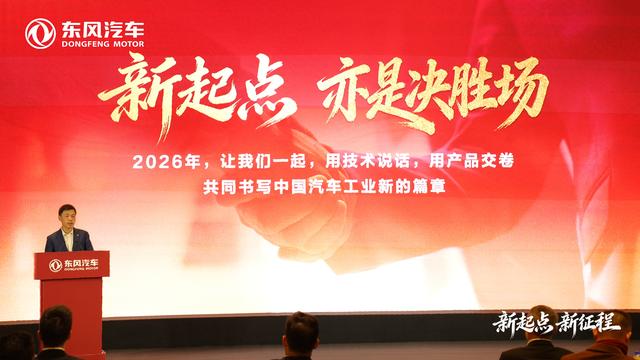
向新而行 加速跃迁 东风汽车全力奔赴智能化、绿色化、融合化新程
Bei Jing Ri Bao Ke Hu Duan· 2026-02-05 01:37
Core Insights - Dongfeng Motor is undergoing significant transformation and aims to achieve a new phase of development by focusing on self-controlled technology and innovation [1][3][9] Group 1: Sales and Market Performance - In 2025, Dongfeng Motor's new energy vehicle sales reached 1.05 million units, a year-on-year increase of 21%, with total sales of self-owned brands exceeding 1.5 million units, accounting for over 60% of total sales [1] - The company has set ambitious targets for 2026, aiming for total sales of 3.25 million vehicles, including 1.7 million new energy vehicles and 600,000 exports [5][9] Group 2: Technological Advancements - Dongfeng's R&D investment intensity reached 7.9%, with the mass production of the DF30 high-end MCU chip and a 67% localization rate for chips in self-owned brand vehicles [3] - The Mahle hybrid engine achieved a thermal efficiency of over 48%, setting a new industry record, and a new integrated die-casting production line with a capacity of 16,000 tons has been established [3] Group 3: Brand Strategy and Product Development - Dongfeng's brand strategy includes the launch of several new models, such as the U series from Dongfeng Warriors and high-end models from Dongfeng Lantu, focusing on intelligent driving and technology [5][7] - The company is collaborating with Huawei to launch the "Yijing" brand, which will debut globally in March 2026, emphasizing user-centric high-end smart vehicles [7] Group 4: Organizational Reforms - Dongfeng is empowering frontline business units with greater autonomy to enhance decision-making speed and responsiveness, which is crucial for its transformation efforts [9] - The company is committed to deepening reforms and leveraging technological innovation as a core engine for growth, aiming to lead the Chinese automotive industry towards high-quality development [9]

多元玩家入局 促进食品装备行业智能化提速
Zheng Quan Ri Bao· 2026-02-04 16:40
Group 1 - The food processing equipment industry is entering a critical phase of technological iteration and supply reconstruction, driven by the increasing demand for standardization, cleanliness, and flexibility in food production [1] - The market size is steadily expanding, with diverse players accelerating their entry into the sector, creating a new competitive ecosystem in the food equipment industry [1] - Ningbo Junpu Intelligent Manufacturing Co., Ltd. has successfully secured its first order in the food industry, providing a customized system for a subsidiary of a century-old German food giant, focusing on the automation of baked goods processing [1] Group 2 - Hangzhou Yongchuang Intelligent Equipment Co., Ltd. is advancing product iteration and capacity layout, leveraging its mature intelligent packaging technology to offer high-speed packaging solutions for dairy and snack food sectors [2] - The company has established a humanoid robot R&D department to accelerate the development of humanoid robots and their application in packaging technology [2] - Hangzhou Zhongya Machinery Co., Ltd. is making breakthroughs in high-end food packaging equipment, providing comprehensive automation solutions and successfully breaking the long-standing monopoly of foreign advanced enterprises [2] Group 3 - The competition between cross-industry entrants and established companies is expected to drive further technological integration and promote overall industry upgrades, while intensifying the competition in the mid-to-high-end market [2] - Key strategies for domestic companies to overcome bottlenecks and achieve globalization include implementing a dual circulation strategy and enhancing local service capabilities through mergers and acquisitions [2]


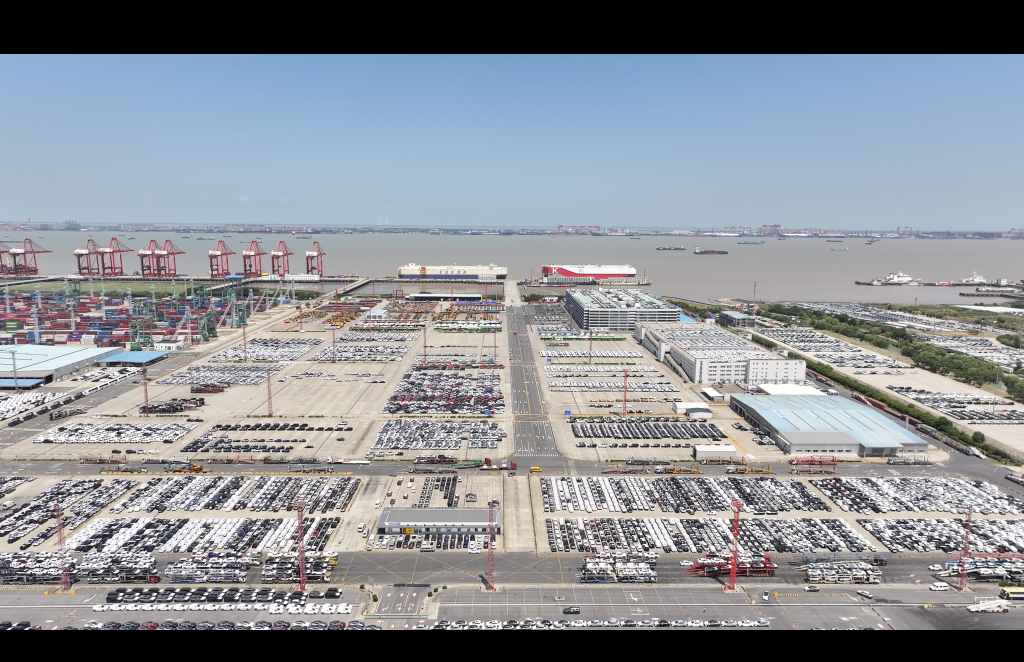
四中全会精神在基层丨不到30秒,一辆汽车出口!这座港口涌动“开放密码”
Xin Hua Wang· 2026-02-04 15:31
Core Insights - The article highlights the significant growth of the automotive export sector in Shanghai, particularly through the Haitong Automotive Roll-on/Roll-off Terminal, which is set to export 1.457 million vehicles by 2025, marking a 15% year-on-year increase [1] - Shanghai's total import and export volume reached 4.51 trillion yuan, a historical high, with exports increasing by 10.8% [1] Group 1: Terminal Operations and Growth - The Haitong Terminal has expanded its operations from a single port to a collaborative model involving two ports and three locations, increasing its vehicle handling capacity from 2.06 million in 2021 to 3.98 million by 2025, representing a growth of over 90% [3] - The export volume of vehicles from the terminal is projected to rise from 900,000 in 2021 to 2.74 million by 2025 [3] Group 2: Logistics and Infrastructure - The "Two Ports and Three Locations" model integrates resources and enhances logistics efficiency, addressing challenges such as tight shipping schedules and limited space [3] - The terminal has established 12 international automotive roll-on/roll-off shipping routes, covering 295 ports in 135 countries and regions, with a projected volume of over 200,000 for "water-water transport" by 2025 [3] Group 3: Future Development and Sustainability - The terminal aims to focus on green and intelligent development during the 14th Five-Year Plan, enhancing its green energy systems and achieving near-zero carbon emissions [4] - Plans include the implementation of a unified data platform, automated handling, and AI decision-making systems to transform port operations [4]
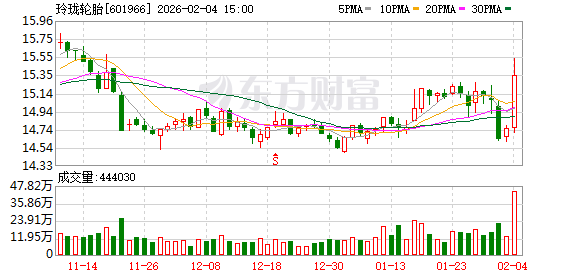
玲珑轮胎:公司持续推进“高端化、智能化、绿色化”转型,已推出新玲珑大师等高性能轮胎
Zheng Quan Ri Bao· 2026-02-04 14:06
Group 1 - The company is continuously advancing its transformation towards "high-end, intelligent, and green" products [2] - New product lines such as the new Linglong Master, Terminator series, and innovative materials like dandelion rubber and self-repairing silent tires are being introduced [2] - The second generation of the new Linglong Master is set to launch in 2026, along with an expansion of the Terminator series to enhance market recognition of new materials and products [2]

建科智能:目前公司尚未有自主研发产品的机械臂、减速器
Zheng Quan Ri Bao Wang· 2026-02-04 11:43
Core Viewpoint - The company, JianKe Intelligent (300823), is focused on the research, design, production, and sales of intelligent mid-to-high-end CNC rebar processing robots and supporting software, providing comprehensive solutions for intelligent rebar processing factories to meet customer automation needs [1] Group 1: Product and Technology - The company's products include various intelligent CNC rebar processing robots and related software [1] - The company has not yet developed its own robotic arms or reducers, relying instead on externally sourced components for some products [1] - The company plans to increase its investment in technological innovation to launch more intelligent rebar processing robot products suitable for smart construction [1] Group 2: Market Position and Strategy - The company aims to help clients improve work efficiency through automation and unmanned transportation capabilities [1] - The overall strategy includes providing integrated solutions for intelligent rebar processing factories to fulfill the growing demand for automation in the industry [1]
打造更宜居更美丽的幸福城区典范
Xin Lang Cai Jing· 2026-02-04 08:13
Group 1 - The core message emphasizes the need for Shanghai to implement the important speech by General Secretary Xi Jinping and to promote overall industrial system upgrades, aiming to create a more livable and beautiful urban area in Huangpu [1] - The city aims to expand domestic demand as a strategic foundation, striving to become a world-class consumption destination and enhance consumer experiences while driving economic growth [2] - During the "14th Five-Year Plan," the city successfully achieved its economic and social development goals, and now it is crucial for Huangpu to lead in consolidating and expanding economic stability [2] Group 2 - The focus is on building a modern industrial system centered around advanced manufacturing, with an emphasis on smart, green, and integrated development [2] - There is a strong commitment to enhancing people's livelihoods by addressing urgent public concerns and advancing urban renewal projects [2] - The city plans to leverage cultural resources and strengthen talent support to foster a youth-friendly development environment [2]
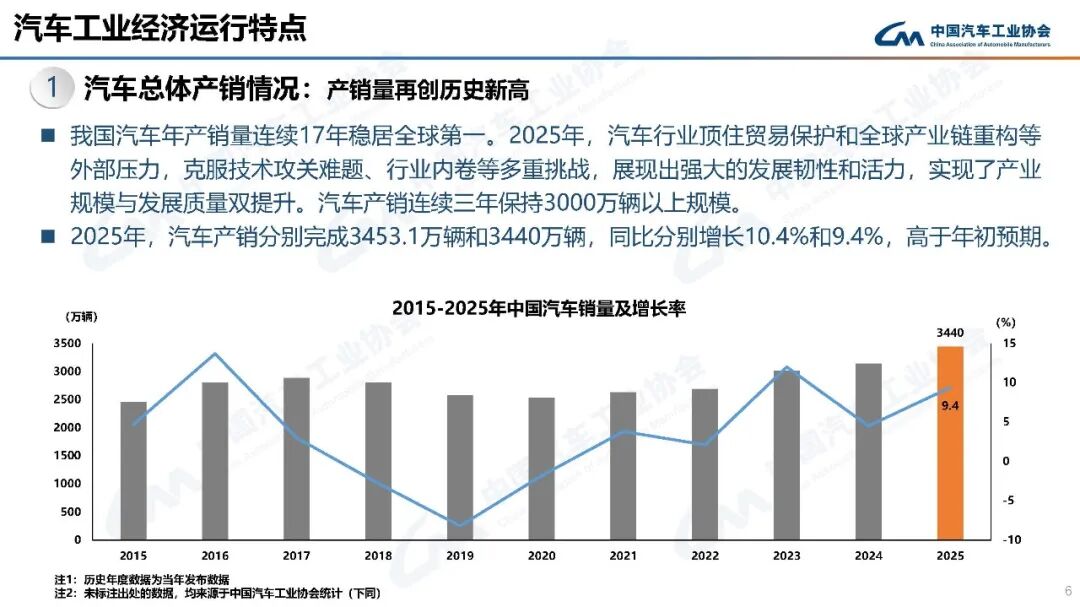
2025年度中国汽车产业盘点——销量篇 车企竞争进入深水区
Zhong Guo Zhi Liang Xin Wen Wang· 2026-02-04 06:51
Overall Market - In 2025, China's automotive industry achieved record production and sales, with 34.53 million vehicles produced and 34.40 million sold, marking year-on-year growth of 10.4% and 9.4% respectively, driven by policy support and market dynamics [1][5] - The market demonstrated strong resilience against global trade protectionism, supply chain restructuring, and intensified competition [1] Market Dynamics - The "Two New" policy expanded consumer goods categories and support for equipment upgrades, stimulating vehicle replacement demand, particularly in lower-tier cities [5] - The transition to electric vehicles (EVs) was facilitated by stable tax policies and improved charging infrastructure, lowering barriers for potential EV buyers [5] - Consumer preferences are shifting towards intelligent features and green travel, pushing the market towards higher quality development [5] Segmented Market - In 2025, new energy vehicles (NEVs) became the dominant growth segment, with production and sales reaching 16.63 million and 16.49 million respectively, reflecting year-on-year growth of 29% and 28.2% [6] - NEVs accounted for 47.9% of total new vehicle sales, a 7 percentage point increase from the previous year [6] - The traditional fuel vehicle market is undergoing structural adjustments, with demand for high-displacement, high-fuel-consumption models declining, while smaller, hybrid models remain popular [10] Market Structure - Domestic brands solidified their leading position, with their market share exceeding 60% for the first time, driven by strong performances from companies like BYD, Geely, and Changan [13][15] - BYD led the market with over 4.6 million units sold, benefiting from its technological advancements in NEVs [15] - Joint venture brands faced significant pressure, with declining market shares due to slow adaptation to the NEV market and product homogenization [16] Export Market - In 2025, China's automotive exports exceeded 7 million units, achieving a year-on-year growth of 21.1%, maintaining its position as the world's largest automotive exporter for three consecutive years [18] - Emerging markets in Southeast Asia, the Middle East, and South America remain key destinations for Chinese automotive exports, with NEVs becoming a significant export category [18] Sales Rankings - The top ten automotive brands in 2025 showcased a strong performance from domestic brands, with five spots occupied by them, and a combined market share of 37.3% [21] - BYD, Geely, and Changan maintained their positions through a dual strategy of fuel and NEV offerings [21] - Traditional joint venture brands like FAW-Volkswagen and SAIC Volkswagen continued to experience declines, unable to offset losses from fuel vehicle sales with NEV growth [21] Emerging Brands - New entrants like Leap Motor and Hongmeng Zhixing showed remarkable growth, with Leap Motor doubling its sales through self-developed technology and competitive pricing [23] - Traditional automakers' NEV sub-brands also performed well, rapidly capturing market share through targeted strategies [23] Consumer Trends - Successful models in 2025 aligned with market trends, focusing on price adaptability, user needs, and technological highlights [24] - Family and young consumers emerged as core target groups, with vehicles designed for spaciousness and smart features gaining popularity [26] - The integration of new energy and intelligent technologies became essential for popular models, addressing consumer concerns about range and charging [26] Future Outlook - The strong rise of NEVs indicates China's automotive industry is positioned advantageously in the global transformation of the sector [28] - Continued policy support for NEVs and smart vehicles is expected, alongside growing consumer demand for high-quality, intelligent products [28] - The industry is likely to see further integration across the supply chain, enhancing competitiveness [28]