
硬科技

Search documents
我国股票市场跨入新发展时代
Shang Hai Zheng Quan Bao· 2026-01-06 17:56
Core Insights - The transition of the stock market into a new development era is a milestone in China's economic and financial development, expected to have significant positive impacts on various sectors [1][19]. Group 1: Stock Market Growth and Support for High-Tech Enterprises - The stock market is anticipated to continue its growth, contributing more to high-quality economic development, with a projected market value exceeding 135 trillion yuan by 2026 [19]. - The acceleration of high-tech enterprise listings will activate the dual engines of financing and growth in the stock market, enhancing the market structure and valuation system [20]. - The rise of high-tech sectors is expected to optimize the stock market structure, with a significant shift of market funds towards high-quality technology assets [20]. Group 2: Asset Allocation and Financial Structure Changes - There is a notable structural change in asset allocation, with a decline in real estate investment and an increase in equity assets, driven by a low-interest environment and policy guidance [22][23]. - The shift towards direct financing is expected to rise, with capital markets becoming a focal point for monetary policy adjustments, enhancing the precision of funding allocation for high-risk, high-growth enterprises [23]. Group 3: Policy Support and Regulatory Environment - The government has been actively promoting a supportive environment for the stock market, with multiple policy signals aimed at enhancing investor confidence and market stability [12][13]. - Regulatory reforms are being implemented to protect investor rights and ensure a fair market environment, which is crucial for the healthy development of the stock market [13][14]. Group 4: Internationalization of the Renminbi - The development of a mature capital market is essential for the internationalization of the Renminbi, with increasing demand for Renminbi assets expected as the capital market expands [24].
今年首批IPO现场检查锁定11家企业,明星硬科技项目成焦点
2 1 Shi Ji Jing Ji Bao Dao· 2026-01-06 11:51
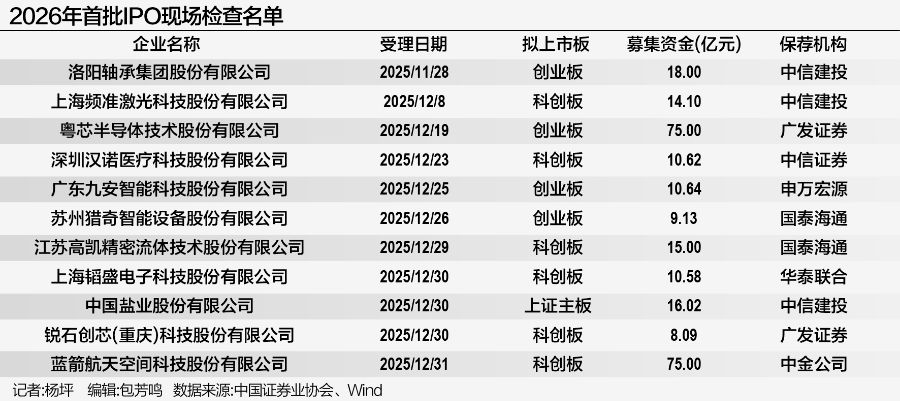
Core Insights - A new round of IPO现场检查 has begun in early 2026, with 11 companies selected for on-site inspections, primarily from the 科创板 and 创业板 sectors [2][5]. Group 1: IPO Inspection Details - The first batch of companies for现场检查 includes 6 from the 科创板, 4 from the 创业板, and 1 from the 上证主板, indicating a significant focus on technology and innovation [2][4]. - The number of companies accepted for IPOs has increased significantly, with 49 projects accepted in the fourth quarter of 2025, a notable rise compared to 2024 [2][3]. - The ratio of companies selected for现场检查 aligns with the acceptance rate, with a target of at least 1/3 of new applications undergoing inspections [3][8]. Group 2: Company Performance and Financials - Among the 11 selected companies, four are currently operating at a loss, including 蓝箭航天 and 汉诺医疗, which have significant negative net profits over recent years [5][6]. - 蓝箭航天, a commercial rocket company, has a pre-IPO valuation of 207 billion, with net profits of -8.04 billion in 2022 and -5.97 billion in the first half of 2025 [5][6]. - 汉诺医疗, specializing in medical devices, reported net losses of -6478.83 million in 2022 and -8227.32 million in the first half of 2025 [5][6]. Group 3: Fundraising and Market Trends - The total fundraising target for the 11 companies is 262.20 billion, with 蓝箭航天 and 粤芯半导体 each aiming to raise 75 billion [7]. - 中盐股份, the largest in terms of revenue, reported 2024 revenues of 70.44 billion and a net profit of 6.92 billion [7]. - The average net profit of the remaining seven companies is 1.69 billion, with average revenues of 20.13 billion [7]. Group 4: Regulatory Environment and Trends - The termination rate for IPO现场检查 has significantly decreased, with only 6.25% of companies withdrawing their applications in 2025, compared to much higher rates in previous years [8][10]. - Regulatory measures have been implemented to enhance the quality of IPO applications, including stricter oversight and accountability for both companies and intermediaries [10][11]. - The focus on compliance and thorough inspections is expected to increase the costs and complexity of the IPO process for companies [11].

青科基金结硕果,“纳百川”成功上市
Sou Hu Cai Jing· 2026-01-06 11:06
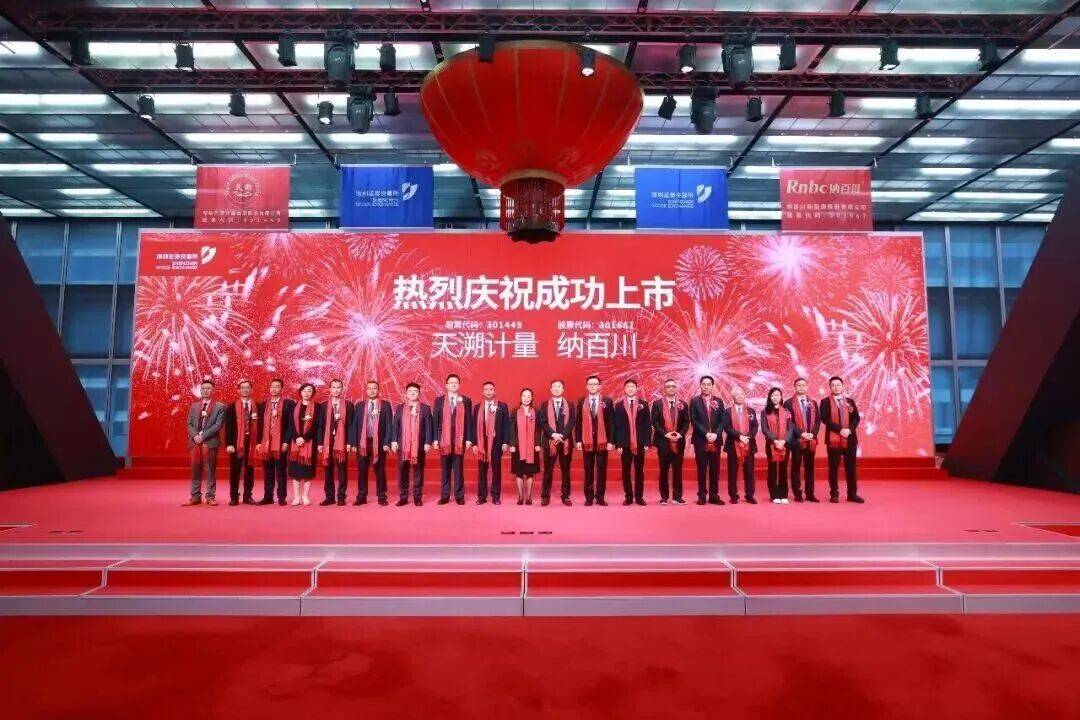
Group 1 - The core viewpoint of the news is the successful IPO of Nabichuan New Energy Co., Ltd., which marks a new journey in the capital market, supported by the World Young Scientist Entrepreneurship Fund [1] - Nabichuan New Energy was established in October 2007, with production bases in Wenzhou, Anhui Ma'anshan, and Anhui Chuzhou, covering over 200,000 square meters, and generating annual revenue exceeding 1 billion yuan [3] - The company specializes in the research, production, and sales of thermal management products for new energy vehicle power batteries, fuel vehicle power systems, and energy storage batteries, holding 203 core patents [3] Group 2 - The IPO price of Nabichuan was set at 22.63 yuan per share, with the opening price soaring to 60 yuan, reflecting a significant increase of 165.13% during trading [3] - The World Young Scientist Entrepreneurship Fund invested 150 million yuan in Nabichuan during its Series A funding round, alongside strategic investment from Fortune 500 company Qingshan Holding [5] - The fund has invested in dozens of hard technology projects and anticipates that three of its portfolio companies will go public by 2026 [7] Group 3 - The total scale of the World Young Scientist Entrepreneurship Fund is 2 billion yuan, with 60% contributed by government mother funds and 40% from listed companies and overseas Chinese merchants, focusing on strategic emerging industries in hard technology [8]
“野心”是一个创始人最核心的竞争力
创业家· 2026-01-06 10:10
每日金句 天时、地利、人和三者齐全永远是理想状态,99%的创业者在创业之初都极 为艰难。没有信心怎么办?创业者必须有决心,有强烈的愿望想要成功,想要 解决某个行业内的问题,想要为这个社会做点事情……梦想和"野心"是一个创 始人最核心的竞争力。 一个心怀梦想的人,会极其自律、昼度夜思、殚精竭 虑、不知疲倦,因为他不是想赢,而是必须赢。 吴世春 | 梅花创投创始合伙人 黑马加速导师 这里认真推荐你: 报名 「吴世春·西安出行活动」 1月22日-24日 , 吴世春将亲自带队 100家企业家 , 去陕西西安线下游学 , 走进科技制造 产业,打开万亿赛道蓝海。 你 在 创业路上遇到的问题和想法 , 都可以找吴老师聊聊 。 如果你是 优质的项目,吴老师也会果断投 你 。 希望所有支持吴老师的人 , 一如既往的相信他、支持他,大家 一起 加油! 活动详情如下 ↓↓↓ 吴世春导师亲自带队 | 2026.01.22-24 走进科技制造产业 升级数字文旅体验 探索产业生态协同 打开万亿赛道蓝海 車 I 安装花叉 新北料 新化 在 回你不留,对 11 17, 科技演费、Al+产生的创出者看过来! 你将收获 百位 硬核创业者同行 与 ...

一湘企2025年净利润或达30亿元
Chang Sha Wan Bao· 2026-01-06 09:29
Core Viewpoint - Over 60 companies in the A-share market have forecasted their 2025 performance, with more than 80% expecting positive results, driven by macroeconomic recovery and industrial upgrades [1][2]. Group 1: Company Performance Forecasts - Hunan-based company Hualing Steel expects a net profit of 2.6 billion to 3 billion yuan for 2025, representing a year-on-year growth of 27.97% to 47.66% [1]. - Zijin Mining anticipates a net profit of 51 billion to 52 billion yuan for 2025, reflecting a year-on-year increase of approximately 59% to 62%, primarily due to rising sales prices of gold, copper, and silver [1][2]. - Luxshare Precision forecasts a net profit of 16.52 billion to 17.19 billion yuan for 2025, with a growth rate of 23.59% to 28.59% [2]. - AVIC Heavy Machinery expects a net profit of 11.5 billion yuan for 2025, showing a year-on-year growth of 11.06% [2]. Group 2: Loss Forecasts - Moer Technology is projected to incur a loss of 116.8 million to 73 million yuan in 2025, while Muxi Co. anticipates a loss of 76.3 million to 52.7 million yuan [2]. - Both Moer Technology and Muxi Co. are newly listed on the Sci-Tech Innovation Board and are recognized as "domestic GPU first and second stocks," respectively, despite their current losses [2]. Group 3: Industry Trends - The performance of companies is concentrated in sectors such as materials and mining, new materials, electronic communications, and consumer services, indicating a trend towards hard technology enterprises benefiting from core technological barriers [1]. - The steel industry, represented by Hualing Steel, is undergoing a deep adjustment phase, focusing on "reduction development and stock optimization," with ongoing supply-demand contradictions [3].



上市大年,30+企业冲刺IPO背后的进与退
Sou Hu Cai Jing· 2026-01-06 08:40
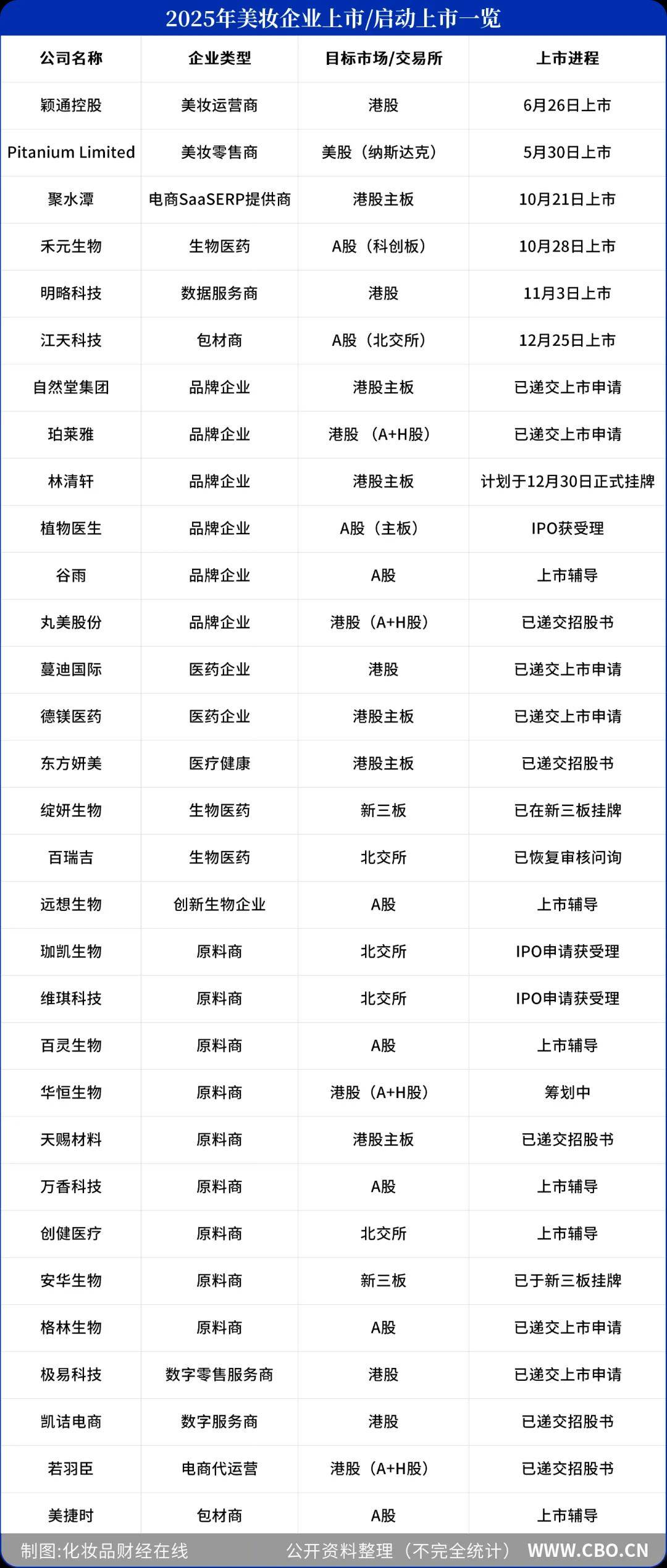
Core Insights - The Chinese beauty industry is undergoing a structural "migration" towards capital markets, with over 30 companies from the entire supply chain seeking listings on global exchanges by 2025, indicating a shift from marketing-driven growth to a focus on "hard technology" and globalization [1][6] Industry Overview - By the end of 2025, five beauty companies have successfully gone public, with over 25 others at various stages of the listing process, showcasing a comprehensive coverage of the entire supply chain [1] - The capital market is reassessing the value distribution in the beauty industry, shifting focus from marketing to upstream technology [3][11] Company Listings - A significant number of companies are targeting the Hong Kong Stock Exchange (HKEX) for their listings, with over half of the firms choosing this market due to its international characteristics aligning with their global ambitions [6][8] - Companies like Pitanium Limited have opted for the Nasdaq, focusing on high-end retail in Hong Kong, indicating a strategic choice based on business alignment and risk management [8] Capitalization Trends - The trend of companies seeking dual listings (A+H shares) reflects a complex capital strategy aimed at optimizing shareholder structure and facilitating cross-border mergers and acquisitions [8][11] - The average R&D investment for companies planning to go public has increased from less than 2% three years ago to 3-5% currently, with leading firms exceeding 5% [9][11] Supply Chain Dynamics - The focus on self-sufficient supply chains has become a priority, with companies recognizing the importance of controlling core raw materials in light of geopolitical changes and supply chain disruptions [11] - The emergence of raw material companies as pioneers in this capital wave indicates a response to industry pain points, aiming to reduce reliance on imported high-end active ingredients [11] Brand Strategies - Companies are increasingly establishing brand barriers through differentiated positioning to attract capital, with notable examples including谷雨 aiming to become the "first domestic whitening stock" and植物医生 targeting the "first single-brand beauty stock" in A-shares [5][11] - The trend of digital transformation in distribution channels is evident, with companies like聚水潭 and凯诘电商 reflecting the urgent need for enhanced operational efficiency and integrated channel systems [11] Sustainability and ESG Factors - Sustainable development and ESG considerations are beginning to influence the capital value of beauty companies, with eco-friendly packaging and green materials becoming competitive advantages [11]
一级市场募投近四年首回升
3 6 Ke· 2026-01-06 07:45
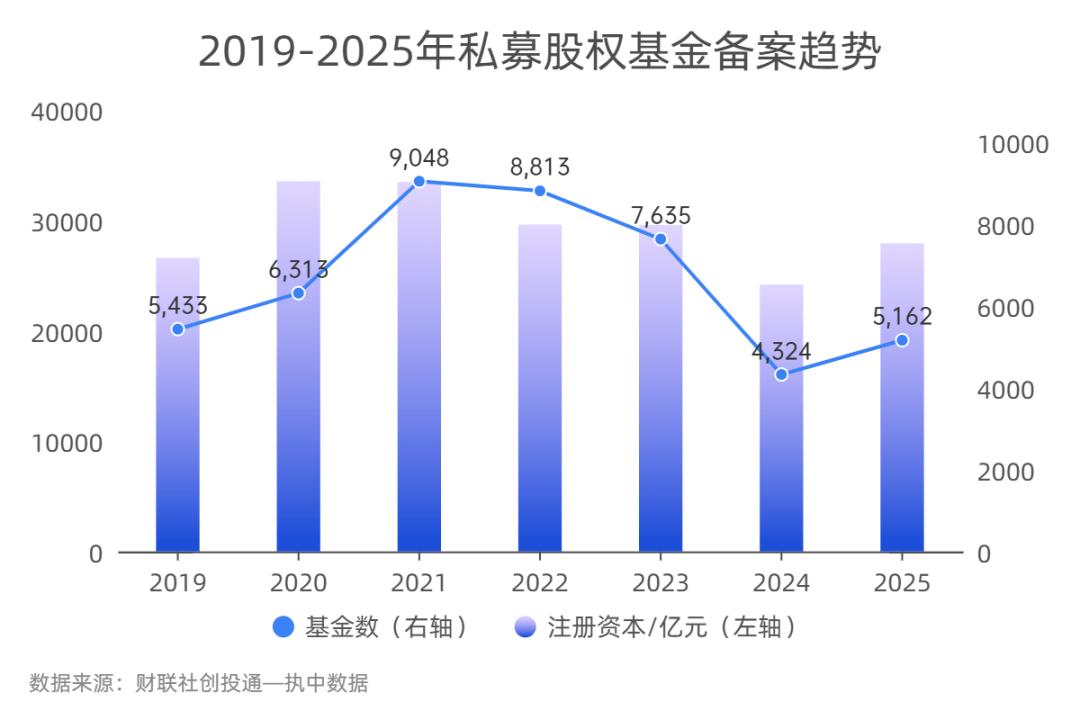
Group 1: Policy and Market Overview - The year 2025 is seen as a critical period for the interaction between policy and market, with significant support for hard technology and "AI+" sectors [1] - The release of policy dividends, including the State Council Document No. 1 and the establishment of large-scale national venture capital guidance funds, is expected to stimulate the market [1] Group 2: Fundraising Market - In 2025, a total of 5,162 new private equity investment funds were registered in China, with a total registered capital of approximately 2.79 trillion yuan, marking a year-on-year increase of 19.38% and 15.49% respectively [3] - The proportion of small-scale funds (with registered capital of 100 million yuan or less) increased to about 50.91%, while funds over 3 billion yuan decreased from 3.47% to 2.54% [4] - The number of entrepreneurial funds registered significantly outpaced other types, indicating a strong focus on early-stage investments [4] Group 3: Institutional LP Contributions - In 2025, institutional LP contributions reached approximately 1.65 trillion yuan, a year-on-year increase of 24.71%, with 3,717 new funds having institutional LP contributions [11] - Government funds accounted for 62% of the total LP contributions, with a total of 1.03 trillion yuan, reflecting a year-on-year growth of 24.74% [20] - The active regions for LP contributions were Zhejiang, Jiangsu, and Guangdong, with Zhejiang leading in the number of contributions [14] Group 4: Investment Market Activity - The number of investment events in the domestic primary market increased by 7.25% in 2025, with a total of 6,462 events, marking the first increase in four years [39] - The advanced manufacturing and healthcare sectors led in investment events, with 1,315 and 1,135 events respectively, while artificial intelligence rose to the top five sectors [42] - Early-stage investments (A-round and earlier) accounted for 67% of total investment events, indicating a strong focus on early-stage funding [47] Group 5: Active Investment Institutions - In 2025, Shenzhen Capital Group was the most active institution with 105 investments, followed by Lushan Chuangxing, which focused on early-stage projects [53] - Other notable institutions included Yida Capital, Qiji Chuangtan, and Sequoia Capital, each with over 50 investments [55]

盈利与流动性共同驱动港股行情,AI、硬科技或仍是主线
Sou Hu Cai Jing· 2026-01-06 06:41
Group 1 - The core viewpoint of the article highlights the active performance of the Hong Kong technology sector, with notable gains in stocks such as SenseTime-W, JD Health, and others, indicating a positive market sentiment [1] - The macroeconomic context includes the Federal Reserve's decision to lower interest rates as indicated in the December 2025 meeting minutes, alongside a rise in China's composite PMI output index to 50.7%, reflecting an expansion in production activities [1][13] - The net inflow of southbound funds exceeded 18.7 billion HKD on the first trading day of the year, while foreign capital showed a decreasing trend in outflows, with passive foreign capital inflows into Hong Kong and Chinese concept stocks reaching 900 million USD [1][13] Group 2 - GF Securities notes that the recent rise in Hong Kong stocks is supported by fundamentals, with signs of structural recovery in profitability expected to strengthen from the second half of 2024 due to stabilizing domestic and external demand [1][16] - The article mentions that the Hong Kong technology index consists of 30 leading tech companies selected based on high market capitalization, R&D investment, and revenue growth, with a flexible sample adjustment mechanism to maintain competitiveness [4] - The top five constituents of the Hong Kong technology index include Tencent Holdings, Alibaba-W, and Xiaomi Group, with significant weightings of 15.46%, 14.54%, and 13.50% respectively, indicating a high concentration in the index [9][7]


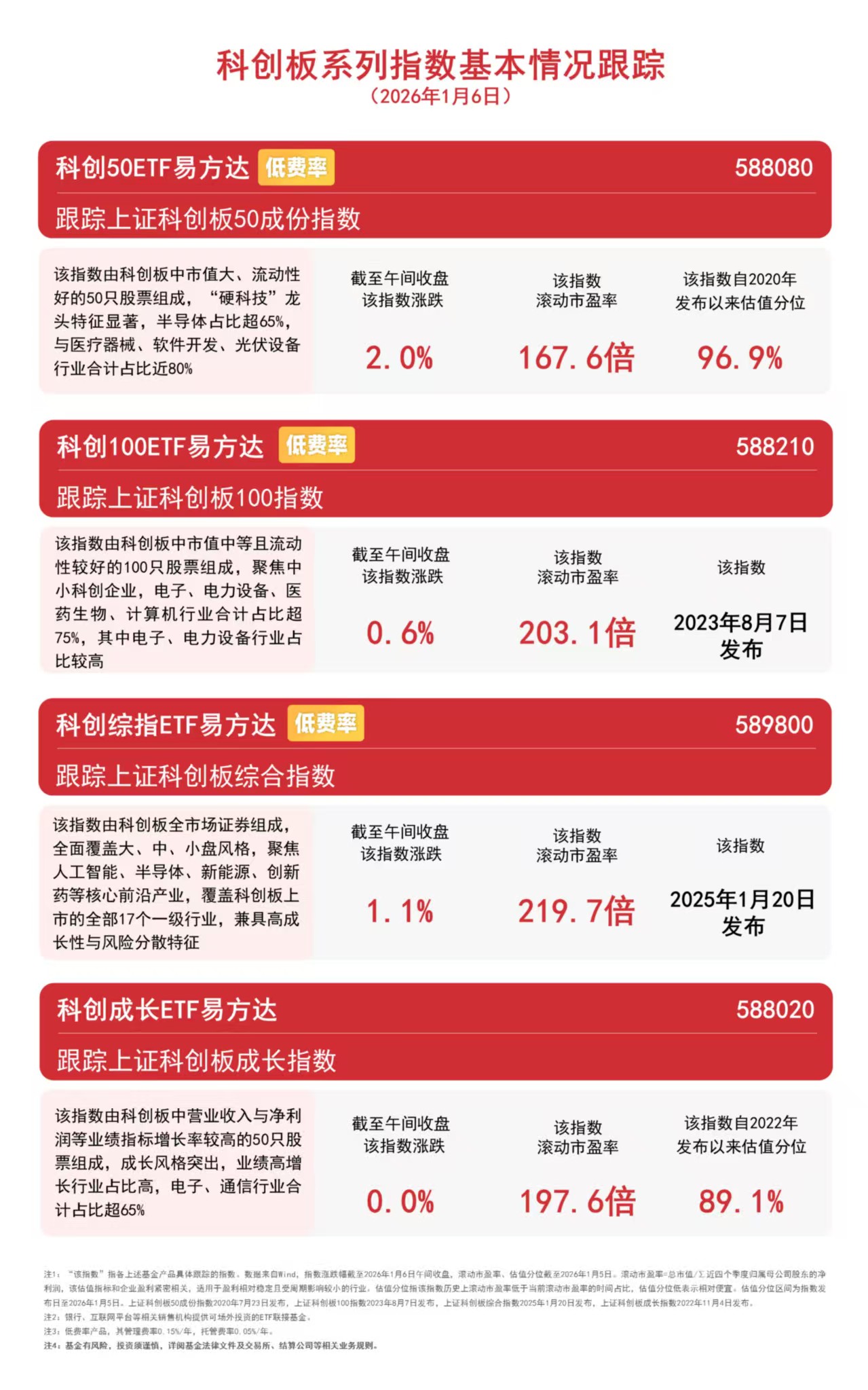
硬科技再度走强,科创50指数一度涨近3%,科创50ETF易方达(588080)半日成交额超13亿元
Mei Ri Jing Ji Xin Wen· 2026-01-06 05:37
Group 1 - The article discusses various ETFs tracking the Shanghai Stock Exchange Science and Technology Innovation Board indices, highlighting their focus on high-growth sectors such as semiconductors, medical devices, and software development [2][3] - The Science and Technology Innovation 50 ETF tracks the top 50 stocks with significant market capitalization and liquidity, with over 65% of its composition in the semiconductor sector [2] - The Science and Technology Innovation 100 ETF focuses on 100 mid-cap stocks, with over 75% in the electronics, power equipment, and pharmaceutical industries [2] - The comprehensive index ETF covers all market securities on the Science and Technology Innovation Board, focusing on core industries like artificial intelligence and new energy, with a rolling P/E ratio of 219.7 times [2][3] - The Growth Index tracks 50 stocks with high growth rates in revenue and net profit, with over 65% in the electronics and communication sectors, and a rolling P/E ratio of 197.6 times [3] Group 2 - The article mentions that the low fee rate for these ETFs is 0.15% per year for management fees and 0.05% per year for custody fees [4] - The indices mentioned have been published at different times, with the Science and Technology Innovation 50 Index launched on July 23, 2020, and the Science and Technology Innovation 100 Index on August 7, 2023 [4]
年度涨幅46.3% 科创综指成“硬科技”价值发现与配置核心渠道
Shang Hai Zheng Quan Bao· 2026-01-06 04:02
Core Insights - The total scale of ETFs related to the Sci-Tech Innovation Board is projected to reach approximately 300 billion yuan by December 31, 2025, with the number of products increasing to 106, which is three times that of the end of 2024 [1][5] - The Sci-Tech Innovation Composite Index (Sci-Tech Index) has shown a significant annual increase of 46.3% for the year 2025, outperforming major broad-based indices [1][4] - The Sci-Tech Index has been operational for nearly a year since its official launch on January 20, 2025, and is increasingly recognized for its role in representing market performance and guiding long-term capital allocation [1][2] ETF and Index Development - As of December 30, 2025, 46 fund managers have launched a total of 78 Sci-Tech Index funds, with a combined scale of 27.4 billion yuan, and the average return since listing has reached 43.7% [4][6] - The structure of investors has evolved, with institutional investors such as insurance funds, brokerages, and bank wealth management steadily increasing their holdings in Sci-Tech Index ETFs, reflecting confidence in the long-term investment value of the Sci-Tech Board [4][6] - The Sci-Tech Index has a sample size of 576 stocks, covering various types of securities and accounting for 96% of the total listed companies on the Sci-Tech Board, which has over 600 companies with a total market capitalization exceeding 10 trillion yuan [3][5] Market Trends and Future Outlook - The Sci-Tech Index is seen as a benchmark for capturing the pulse of technological growth and sharing the dividends of innovation, especially as China's technology sector continues to rise [2][7] - The index system for the Sci-Tech Board has been expanded to include various types of indices, effectively guiding social capital towards the development of new productive forces [5][6] - The introduction of thematic ETFs covering sectors such as artificial intelligence, new energy, and semiconductor materials indicates a growing trend towards index-based investment in key areas of technological innovation [7]