去美元化

Search documents
全球抛售,中国现有美国国债仅剩6826亿美元,美债光环正在消失
Sou Hu Cai Jing· 2026-02-15 04:30
Core Viewpoint - The U.S. Treasury bonds, once considered a safe haven for global investors, are currently facing an unprecedented trust crisis, marked by significant sell-offs and rising yields, indicating a shift in market perception towards U.S. assets [1][3]. Group 1: Market Dynamics - In April 2025, the U.S. stock market experienced a notable decline, while U.S. Treasury bonds, typically seen as safe assets, faced historic sell-offs, with the 10-year Treasury yield rising from below 3.9% to 4.51% and the 30-year yield surpassing 5% [1]. - The sell-off is attributed to high uncertainty in U.S. policies, particularly threats of "reciprocal tariffs," which have eroded the global credibility of the dollar and U.S. government [3]. - Analysts from Citigroup and Deutsche Bank suggest that this situation indicates a transformation in market dynamics, with U.S. Treasury bonds losing their traditional status as a safe haven during turbulent times [3]. Group 2: U.S. Debt Concerns - The U.S. federal government debt has exceeded $38 trillion and continues to grow rapidly, with net interest payments expected to surpass defense spending by 2025, becoming the third-largest budget item [3]. - The International Institute of Finance (IIF) reported that global debt reached $345.7 trillion by September 2025, with developed markets' outstanding debt hitting a historical peak of $230.6 trillion, largely driven by the U.S. [3]. - The Congressional Budget Office (CBO) projects that the fiscal deficit will expand from $1.9 trillion in 2025 to $2.5 trillion by 2035, raising concerns about the sustainability of U.S. debt [3]. Group 3: Dollar's Erosion - The credibility of the dollar as the world's primary currency is being undermined due to the U.S. government's frequent use of financial sanctions, which has prompted countries to recognize the risks of over-reliance on the dollar [5]. - The political polarization within the U.S. has hindered fiscal reforms, further shaking international investors' long-term confidence in dollar-denominated assets [5]. Group 4: Shift to Gold - A significant shift towards "de-dollarization" is underway, as evidenced by the decline of the dollar's share in global foreign exchange reserves to 56.32% by Q2 2025, the lowest in 30 years, while gold's share has risen to 20% [6]. - The World Gold Council reported that global central banks have purchased over 1,000 tons of gold annually from 2022 to 2024, with 634 tons acquired in the first three quarters of 2025 alone, indicating strong official demand for gold [8]. - Gold prices surged from approximately $2,600 per ounce at the beginning of 2025 to $4,500 per ounce by year-end, marking a cumulative increase of over 70% [8]. Group 5: International Trade and Currency Diversification - Efforts to reduce dependence on the dollar in trade settlements are gaining momentum, with ASEAN countries agreeing to enhance local currency usage in cross-border trade [9]. - China is actively promoting the internationalization of the yuan while reducing its holdings of U.S. Treasury bonds, employing strategies that include providing low-interest loans to high-debt countries to facilitate trade in yuan [9]. - As of November 2025, China's holdings of U.S. Treasury bonds have decreased to $682.6 billion, nearly half of the peak level of approximately $1.32 trillion in 2013, reflecting a tactical reduction in response to U.S. policy unpredictability [12]. Group 6: Global Monetary System Transformation - The international monetary system is undergoing profound changes, with a gradual decline in the dollar's dominance and a shift towards a diversified reserve system involving the dollar, euro, yuan, and gold [14]. - A survey by the World Gold Council indicated that 95% of central banks expect to continue increasing their gold reserves, with many anticipating a moderate to significant decline in the dollar's share of global reserves over the next five years [14]. - The current dynamics reflect a fundamental shift in reserve management logic, prioritizing security, liquidity, and geopolitical risk diversification over mere yield [14].

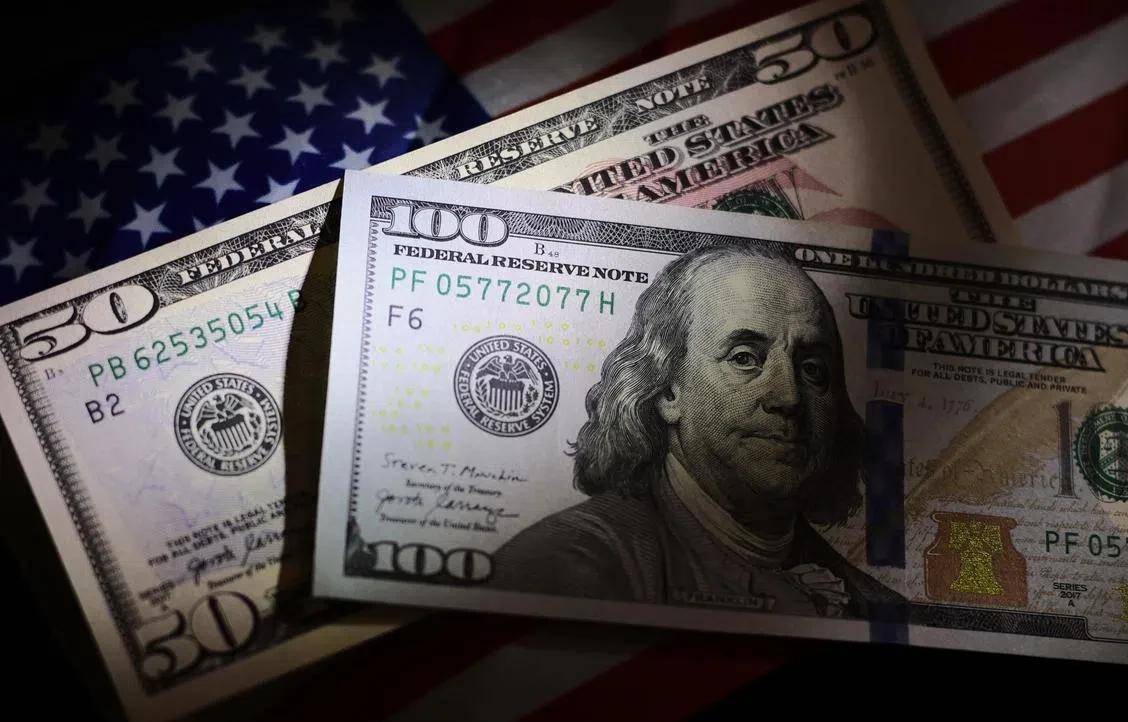
一夜暴涨超百美元!黄金市场大反转,5000关口轻松破,后续走势
Sou Hu Cai Jing· 2026-02-15 03:30
Core Viewpoint - The gold market has experienced extreme volatility in early 2026, with significant price fluctuations driven by macroeconomic factors and central bank activities [1][3][14]. Group 1: Market Dynamics - On February 14, 2026, gold prices saw a dramatic "V" reversal, dropping to $4877.75 before rebounding to over $5040, marking a daily increase of over 2.47% [1]. - The gold price had previously reached a historic peak of $5598.75 on January 29, 2026, followed by a sharp decline of over $1100, the largest single-day drop in 40 years [1][3]. - The volatility was exacerbated by the release of U.S. non-farm payroll data, which exceeded expectations, dampening market hopes for an imminent interest rate cut by the Federal Reserve [3]. Group 2: Central Bank Activities - As of January 2026, China's gold reserves reached 74.19 million ounces, marking the 15th consecutive month of increases [5]. - Global central banks are expected to maintain high levels of gold purchases, with an estimated 755 tons in 2026, significantly above historical averages prior to 2022 [5]. - Central banks have shifted from being net sellers to net buyers of gold, indicating a strategic long-term approach to gold accumulation as a defense against potential risks associated with the U.S. dollar [5][14]. Group 3: Investment Trends - The current gold market is characterized by a dual role: as a consumer good for jewelry and as an investment asset, with significant price discrepancies observed between retail gold jewelry and investment gold bars [11]. - Financial institutions are tightening regulations on gold investments to protect inexperienced investors from market volatility, raising the minimum investment amounts and risk assessment requirements [9]. - Analysts predict that gold prices will likely fluctuate within a range of $4900 to $5100 in the coming weeks, with the $5000 mark serving as a critical battleground for market participants [8]. Group 4: Long-term Outlook - The gold bull market, which began in September 2022, has seen a cumulative increase of over 246%, with 2025 being a pivotal year for price acceleration [14]. - The driving forces behind the current gold price dynamics have shifted from real interest rates to geopolitical tensions and a reassessment of the existing monetary credit system [14]. - Major financial institutions maintain a bullish long-term outlook for gold, with target prices ranging from $6100 to $6300 per ounce, driven by ongoing central bank demand and the anticipated easing of U.S. monetary policy [15].

本金翻倍VS高位“站岗”,金价还能涨吗?
经济观察报· 2026-02-15 02:55
Core Viewpoint - The article discusses the volatility in the gold market at the beginning of 2026, questioning whether it is still a good time to invest in gold and what investment strategies could mitigate risks while maximizing opportunities [2][4]. Investment Landscape - In 2025, the gold market experienced a significant surge, with the London spot gold price closing around $4,300 per ounce, marking a 65% increase for the year, the largest annual gain since 1979 [2][9]. - By early 2026, gold prices reached nearly $5,600 per ounce before experiencing a sharp decline, stabilizing around $5,000 per ounce [2][13]. - The article highlights the diverse experiences of investors during this period, with some achieving substantial gains while others faced losses due to high entry points [4][5]. Investor Experiences - An investor named Xuedi, who entered the market early, reported a significant return on investment, with his gold account value peaking at $5.6 million from an initial investment of 2.8 million yuan [4]. - In contrast, another investor, Shiyue, who entered the market at a high price, faced substantial losses and expressed anxiety over her investment decisions [5][6]. - A third investor, Tianrui, reflected on missed opportunities due to hesitation, illustrating the emotional impact of market timing on investment decisions [7]. Market Dynamics - The global gold demand reached a record high of 5,002 tons in 2025, driven by geopolitical risks and economic uncertainties, with total demand valued at $555 billion [9]. - Central banks contributed significantly to gold demand, purchasing 863 tons in 2025, although this was below the previous three-year average of over 1,000 tons [9][10]. - The pricing logic of gold has evolved, with a shift from being primarily influenced by U.S. Treasury yields to being more closely related to central bank purchases and global economic conditions [10][11]. Future Outlook - The article notes that the gold market is currently experiencing volatility, with predictions for gold prices to potentially rise to $6,300 per ounce by the end of 2026, and even $6,600 per ounce in 2027 according to optimistic forecasts [15]. - Analysts suggest that while the current market conditions are uncertain, the long-term outlook for gold remains positive due to ongoing geopolitical risks and economic pressures [13][14]. - Investment strategies such as dollar-cost averaging and careful position management are recommended to navigate the volatile market [16].
金银巨震,过年该“添金”吗?
Bei Ke Cai Jing· 2026-02-15 00:35
Core Viewpoint - The international gold price has entered a new round of volatile adjustment after a significant drop, with current prices around $5042 per ounce, reflecting a 2.42% increase. The market is expected to experience high volatility post-Spring Festival, driven by macroeconomic narratives and potential short-term declines [1][9]. Group 1: Market Trends - As of February 14, 2025, the spot gold price was reported at $5042 per ounce, having rebounded from a low of $4410 per ounce earlier in the month [1]. - Major jewelry brands have launched zodiac-themed gold jewelry for the Year of the Horse, with prices for gold jewelry exceeding 1500 yuan per gram [1][2]. - The China Gold Association forecasts a decline in gold consumption in 2025, with total consumption expected to be 950.096 tons, a 3.57% decrease year-on-year [5]. Group 2: Consumer Behavior - The demand for physical gold during the Spring Festival is primarily driven by rigid needs such as weddings, while investment demand may be suppressed by high prices [1][6]. - Young consumers preparing for weddings are opting for cash instead of traditional gold purchases due to high jewelry prices [5]. - The trend indicates that gold is increasingly viewed as part of asset allocation rather than just a traditional gift, supporting sales of both jewelry and gold bars [6]. Group 3: Investment Strategies - Investors are advised to adopt differentiated strategies, with leveraged traders being cautioned against holding positions during the Spring Festival due to potential market volatility [1][8]. - Non-leveraged investors may retain core positions in physical gold or ETFs but should avoid increasing exposure during price rebounds [8]. - The overarching principle is to prioritize risk management over short-term gains in a highly volatile market environment [8]. Group 4: Future Outlook - Post-Spring Festival, gold and silver prices are expected to enter a phase of high volatility, influenced by multiple factors including speculative positions and U.S. Federal Reserve policies [10][11]. - The long-term core logic supporting gold prices remains intact, driven by central bank demand, de-dollarization trends, and geopolitical uncertainties [10][11]. - The ability of gold prices to stabilize above $5000 per ounce is seen as a critical threshold for future market movements [11].

基金研究周报:市场结构性分化持续,成长强势(2.9-2.13)
Wind万得· 2026-02-14 22:20
Market Overview - The A-share market exhibited a structural upward trend last week, with the Shanghai Composite Index closing at 4082.07 points, remaining stable throughout the week [2] - The Growth sector performed strongly, with the STAR 50 Index surging by 3.37%, highlighting robust momentum in technology and innovation themes [2] - In contrast, the Value sector showed relative weakness, with the SSE 50 and CSI Dividend Index experiencing slight declines [2] - The U.S. stock indices collectively fell, with the S&P 500 down by 1.39%, while European markets saw moderate gains [4] - Asian markets performed strongly, with the Korean Composite Index soaring by 8.21% and the Nikkei 225 rising by 4.96% [4] Industry Performance - The Information Technology sector rose by 3.62%, and the Communication Services sector increased by 2.43%, demonstrating strong performance [12] - Conversely, the Consumer Staples sector declined by 2.45%, and the Financial sector fell by 1.41%, indicating weaker performance [12] - The rise of AI technologies has propelled the TMT (Technology, Media, and Telecommunications) sector, leading to accelerated sector rotation during the earnings forecast period [12] Fund Issuance and Performance - A total of 64 funds were launched last week, including 24 equity funds, 19 mixed funds, 8 bond funds, 2 QDII funds, and 11 FOF funds, with a total fundraising amount of 58.33 billion [17] - The overall fund performance showed the Wind All Fund Index rising by 0.79%, with equity funds significantly outperforming bond funds [7][17] - The Wind Ordinary Equity Fund Index increased by 1.40%, while the Mixed Equity Fund Index rose by 1.52%, indicating strong performance in equity-related funds [7]
中方公布黄金储备,中国要再抛美债,美元没救了?川普承认犯大错
Sou Hu Cai Jing· 2026-02-14 14:02
黄金储备创新高之际,中国持有的美债创新低,贝森特公开指责中国,直言中国存在所谓的市场投机行为,然而透过现象看本质,贝森特真正担忧的,是中 国掌握黄金的议价权,这对于美国来说,是不可承受的后果。 实际上,并不只有中国这么做,印度中央银行所持有的美国国债规模已缩减至近五年来的最低水平,相较于2023年的峰值水平,降幅达到了26%,此外,印 度央行持续大幅增持黄金,以推进其外汇储备结构的多元化进程。 巴西的举措则更为显著,其在一年内减持了高达611亿美元的美国国债,这一减持规模占其美债持有总量的27%。此外,巴西还在三个月内新增了43吨黄金 储备,其策略选择与中国呈现出高度一致性。 当前,中国官方黄金储备在外汇储备总额中的占比仅为8%至9%,这一比例显著低于全球主要经济体央行15%的平均水平,表明我国黄金储备规模仍有进一 步优化的空间,而从货币金融视角看,适度增持黄金储备有助于强化人民币的信用支撑体系,提升国际市场对人民币的信任度,进而促进更多国家在跨境交 易中采用人民币作为结算货币。 当前,东南亚地区已率先开展"人民币计价、黄金锚定结算"的跨境贸易试点机制,这一实践充分印证了黄金在推动人民币国际化进程中的战略价值 ...
黄金牛市悲喜:本金翻倍VS高位“站岗”,金价还能涨吗?
Jing Ji Guan Cha Wang· 2026-02-14 13:25
Core Viewpoint - The year 2025 marked a significant surge in gold prices, with London spot gold closing around $4,300 per ounce, a 65% increase, the largest annual gain since 1979. This trend continued into 2026, where prices peaked near $5,600 before experiencing a sharp decline, leading to investor uncertainty about future gold investments and strategies [1][8]. Investor Experiences - Different investor experiences highlight the complexities of the gold market. Some, like Xuedi, benefited from early investments, while others, such as Shiyue, faced anxiety after entering the market at high prices. Tianshui's regret over missed opportunities illustrates the emotional spectrum among investors during this volatile period [2][3][5]. Market Dynamics - In 2025, global gold demand reached a record high of 5,002 tons, driven by economic volatility and geopolitical risks, with total demand valued at $555 billion. Investment demand surged to 2,175 tons, with significant contributions from gold ETFs and physical gold investments [6][7]. - The pricing logic of gold has evolved, shifting from a negative correlation with U.S. Treasury yields to a more complex relationship involving U.S. debt levels and central bank purchases. This change reflects a diversified influx of investment sources, particularly from Asia and North America [7][10]. Future Outlook - As of early 2026, gold prices experienced volatility, with a peak above $5,600 followed by a drop exceeding 20%. Investor sentiment is mixed, with concerns about future price movements amid potential changes in U.S. monetary policy under the new Federal Reserve chair [9][10]. - Optimistic forecasts from institutions suggest gold prices could reach $6,600 per ounce by 2027, driven by sustained demand from central banks and investors. However, the end of the current bull market may hinge on U.S. economic conditions and Federal Reserve policies [11][12].
美元主动贬值300%!美债一夜清零,美国霸主地位难维系
Sou Hu Cai Jing· 2026-02-14 12:51
Group 1 - The core argument presented is the extreme proposal of a 300% devaluation of the US dollar to eliminate the national debt, which has reached a critical level of $38.5 trillion, exceeding 126% of GDP, and is growing at an unprecedented rate [2][3][10] - The pressure from debt is not only due to its size but also the unsustainable interest payments, with annual interest expenses projected to reach $1.3 trillion by 2025, surpassing defense spending and becoming the second-largest federal expenditure [5][10] - A significant portion of short-term debt, amounting to $9.3 trillion, is set to mature in 2025, necessitating daily repayments of approximately $25 billion, creating a vicious cycle of fiscal pressure [7][10] Group 2 - The US government is resorting to a "borrow new to pay old" strategy, increasing its debt capacity by nearly $5 trillion in July 2025, which may alleviate short-term pressures but ultimately raises the total debt burden and undermines confidence in US Treasury securities [8][10] - Major credit rating agencies have already downgraded the US to below AAA status, indicating a rapid decline in the creditworthiness of US debt [10][21] - The extreme devaluation proposal suggests that the US could print money and abandon currency controls to significantly reduce the dollar's value, theoretically wiping out $38.5 trillion in debt and reviving the manufacturing sector [12][14] Group 3 - The consequences of such a devaluation would be severe, leading to skyrocketing import prices, a doubling of living costs for American families, and a potential spike in unemployment rates, exacerbating economic recession [18][19] - A significant devaluation would also drastically reduce the value of dollar-denominated assets held by global central banks, leading to turmoil in international trade and potential regional economic crises [19][21] - The ongoing trend of "de-dollarization" is highlighted, with the dollar's share of global reserves dropping to 56.92%, the lowest since 1995, indicating a shift away from reliance on the dollar [21][34] Group 4 - The current trajectory of US debt management reflects a "soft devaluation" approach, with plans for the Federal Reserve to significantly increase its holdings of short-term Treasury bills, effectively monetizing the debt [24][26] - This strategy may stabilize interest rates in the short term but risks long-term inflation and further erosion of dollar credibility, creating a cycle of debt and economic decline [26][30] - The fundamental issue of the US debt crisis is not merely a lack of funds but a result of over-reliance on monetary dominance and a failure to implement necessary economic reforms [30][34]
金价:大家不用再等待了!接下来,金价很有可能将重演历史
Sou Hu Cai Jing· 2026-02-14 05:28
Core Insights - The gold market is experiencing a complex situation with international gold prices fluctuating around $5,060, while domestic prices remain stable at around 1,120 CNY per gram, leading to significant price disparities among different retailers [1][3][21] Price Disparities - Major brands like Chow Tai Fook and Lao Miao are pricing gold jewelry between 1,550 and 1,560 CNY per gram, while other stores like Cai Bai are offering prices as low as 1,528 CNY per gram, creating a price difference of up to 113 CNY per gram [3][4] - Bank gold bars are priced significantly lower, with Industrial and Commercial Bank's "Ruyi Gold Bar" at 1,138.47 CNY per gram, showing a difference of 350 to 420 CNY per gram compared to jewelry prices [3][4] Recovery Market Dynamics - The national gold recovery price is approximately 1,088 CNY per gram, indicating a substantial loss for consumers who purchase jewelry at higher prices, with potential losses of 462 CNY per gram for jewelry bought at 1,550 CNY [4][6] Consumer Behavior and Demand - The demand for gold jewelry is supported by traditional customs, with a 28.6% year-on-year increase in sales for the key retail enterprises leading up to the 2026 Spring Festival [7][9] - Consumers are increasingly viewing gold purchases as emotional investments rather than purely financial ones, leading to a phenomenon where rising prices attract more buyers [9][21] Central Bank Purchases - Central banks globally have increased their gold holdings, with a total of 863 tons added in 2025, indicating a strategic shift towards gold as a hedge against geopolitical and financial risks [10][12] - The People's Bank of China has also been increasing its gold reserves, reaching 2,306 tons by the end of 2025, which constitutes 8.5% of its total foreign exchange reserves [10][12] Market Sentiment and Predictions - Major financial institutions have issued bullish forecasts for gold prices, with predictions ranging from $5,400 to $6,300 per ounce, driven by expectations of interest rate cuts and ongoing geopolitical tensions [12][13] - The global demand for gold investment surged to 2,175 tons in 2025, with significant inflows into gold ETFs, particularly in China, where inflows reached 110 billion CNY [13][21] Strategic Recommendations - For consumers purchasing gold for traditional events, it is advisable to focus on value-for-money brands and avoid fixed-price gold, opting instead for products priced by weight [15][19] - Investors should consider a cautious approach, employing strategies like dollar-cost averaging to mitigate risks associated with high gold prices [16][18]

金价疯涨并不是牛市,而是警报!全球银行狂囤金,旧秩序正在碎裂
Sou Hu Cai Jing· 2026-02-14 05:14
Core Viewpoint - The surge in gold prices to $4,985 is not indicative of a bull market but rather a warning signal of the loosening global dollar credit system [1] Group 1: Price Volatility - Gold prices experienced extreme fluctuations, with a monthly increase of 13.01% in January 2026, reaching over $5,000, followed by a significant drop of over 9.25% on January 30, marking the largest single-day decline in 40 years [3] - The gold market saw a dramatic adjustment, with prices swinging nearly $700 within a week, prompting exchanges to raise margin requirements for precious metal trading [3][4] - The price discovery mechanism is chaotic, with different market participants (leveraged funds, ETF investors, and central banks) operating on different strategies, leading to amplified volatility [16] Group 2: Central Bank Behavior - Central banks are the primary buyers in the gold market, with China's gold reserves reaching 74.19 million ounces by the end of January 2026, marking a continuous increase for 15 months [3] - In Q4 2025, global central banks net purchased 230 tons of gold, a 6% increase from the previous quarter, with total purchases for 2025 reaching 863 tons [3][4] - The trend of central banks increasing gold holdings contrasts sharply with the erratic behavior of institutional investors [4] Group 3: Institutional Investor Activity - In January 2026, global gold ETFs saw inflows of approximately $19 billion, the highest monthly record, pushing total assets under management to $669 billion, a 20% increase [4][15] - Despite the record inflows, the behavior of institutional investors is characterized by instability, with rapid buying and selling patterns driven by market fluctuations rather than fundamentals [4][16] Group 4: Consumer Behavior - Ordinary consumers are purchasing smaller gold items, reflecting a trend of "light investment" as they seek psychological security amid uncertainty [6] - The retail gold market remains supported by traditional consumption patterns, particularly during the Chinese New Year [6] Group 5: Structural Changes in the Market - The foundation of dollar credit is weakening, with U.S. federal debt exceeding $38 trillion and the dollar's share in global foreign exchange reserves dropping to 56.92%, the lowest since 1995 [6] - The shift towards "de-dollarization" is evident as central banks increase gold holdings while reducing U.S. Treasury holdings [7][9] Group 6: Geopolitical Risks - Geopolitical tensions, such as the U.S.-Iran conflict and the Russia-Ukraine war, have transitioned from short-term market disturbances to long-term pricing factors for gold [7] - The market reacts to geopolitical news, with prices fluctuating based on expectations rather than actual events [7] Group 7: Future Outlook - Analysts have differing views on gold prices, with some predicting a rise to $6,000 by the end of 2026, while others expect short-term fluctuations between $4,800 and $5,200 [13][19] - The gold market is increasingly viewed as a strategic asset rather than a cyclical commodity, reflecting a loss of confidence in the current financial order [9][21]