
价值共生

Search documents
巴中市巴州区:聚链成势集群崛起 工业动能锻造区域发展硬支撑
Zhong Guo Jing Ji Wang· 2025-10-22 15:00
Core Viewpoint - The Baizhou District is focusing on building a modern industrial system with a strong emphasis on high-quality development, aiming to create billion-level intelligent manufacturing and food and beverage industry clusters through investment attraction and green industrial guidance [1][2]. Group 1: Industrial Development - The Baizhou District is transforming its industrial layout into a strong driving force for high-quality development, positioning industry as a backbone of regional growth [2]. - The district's industrial matrix is evolving from isolated operations to a "chain symbiosis" model, enhancing collaboration among enterprises [3]. - The Huahuo New Energy Technology Company launched new smart kitchen appliances in Baizhou, attracting 1,600 national distributors within three months of operation [3]. - Sichuan Gaoxian Technology expects its output to exceed 150 million yuan this year, up from 106 million yuan last year, showcasing significant growth in key industry sectors [3][4]. Group 2: Ecosystem and Collaboration - The Clejiang Industrial Park is described as an organic industrial ecosystem, with 30 companies currently operating and an expected total output of 620 million yuan for the year [4]. - The park has implemented a "service empowerment" model, providing a "Happiness Center" for enterprises that streamlines administrative processes and enhances operational efficiency [5]. - The park has organized over 40 enterprise-government interaction events and facilitated 62 administrative tasks since its opening [5]. Group 3: Policy and Value Creation - The industrial appeal of Baizhou is shifting from traditional policy incentives to deeper "value symbiosis," fostering collaboration between government and enterprises [7][8]. - The district is leveraging partnerships, such as with Chengdu University of Traditional Chinese Medicine, to promote standardized agricultural practices that benefit both industry and local farmers [8]. - Future plans include expanding smart manufacturing facilities and enhancing cross-regional cooperation to strengthen the industrial ecosystem [8].
差异化战略重塑兴蓝风电核心竞争力
中国能源报· 2025-10-22 08:45
Core Viewpoint - The article discusses how Hunan Xinglan Wind Power Co., Ltd. is navigating the challenges of the wind power industry through a differentiated strategy focused on "value symbiosis" and comprehensive system solutions, despite the increasing price wars and technological convergence in the sector [3][5]. Group 1: Differentiation Strategy - Xinglan Wind Power has adopted a unique development path post-equity restructuring, emphasizing a differentiated strategy to address customer pain points and enhance their advantages [3]. - The company has developed a comprehensive solution called "one base, two machines," which integrates various components of wind power systems, moving away from traditional single-unit sales to a full-stack wind power generation system [4][5]. - This approach allows for significant optimization in cost per kilowatt-hour, lightweight design, and enhanced survival capabilities in extreme environments, aligning closely with customer needs [4]. Group 2: Business Model Innovation - The company focuses on "deep binding and value symbiosis," creating a community of destiny with project owners to address the imbalance in value distribution within the wind power industry [5]. - By engaging in early project planning and economic assessments, Xinglan ensures project feasibility and offers customized solutions across various levels, breaking down traditional barriers of information asymmetry [5][10]. - This collaborative model enhances long-term profitability and resilience by extending value realization beyond equipment sales to project development and smart operations [5]. Group 3: Technological and Research Development - Xinglan Wind Power leads the establishment of a national key laboratory for offshore wind power equipment and efficient wind energy utilization, focusing on cutting-edge technologies [7]. - The company emphasizes a long-term perspective in its technological development, opting for robust designs that ensure reliability over short-term cost reductions [7][9]. - The firm has developed a digital intelligent operation and maintenance platform that transitions from reactive to predictive maintenance, significantly improving operational efficiency and reducing costs [9]. Group 4: Market Positioning and Future Outlook - Xinglan Wind Power has a clear product focus, promoting different wind power platforms tailored to specific regional needs, such as distributed wind power in the southeast and concentrated wind power in the northern regions [8]. - The company is well-positioned to leverage its reputation in the international market, particularly in Europe and the Shanghai Cooperation Organization countries, where its direct-drive permanent magnet wind turbines are highly regarded [8]. - Looking ahead, the company acknowledges the dual nature of opportunities and challenges in the wind power sector, emphasizing the need for refined management and operational strategies to build a resilient industry framework [9][10].


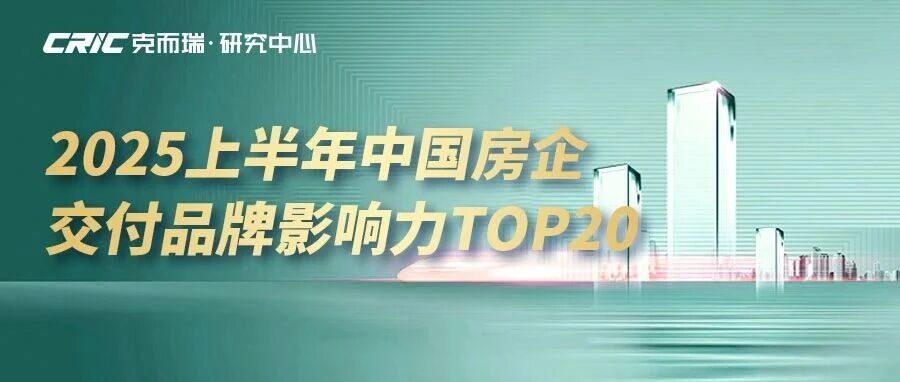
2025上半年中国房地产企业交付品牌影响力榜单发布
克而瑞地产研究· 2025-09-17 08:31
Core Viewpoint - In 2025, the Chinese real estate industry is accelerating its transition to a "quality era" amid deep adjustments, facing dual challenges of "scale reduction" and "quality upgrade" due to shrinking market sales [1] Group 1: Industry Trends - The overall delivery volume of the industry has declined year-on-year, with a 15.5% decrease in residential completion area in the first half of 2025, leading to some companies experiencing delivery declines exceeding 50% [10] - The market is increasingly polarized, with resources concentrating towards leading companies in core cities [10] - Delivery brand influence has become a core competitive advantage for real estate companies, reflecting their comprehensive strength and market trust [1] Group 2: Delivery Brand Influence Index System - The delivery brand influence index system consists of four primary dimensions and nine sub-items, including "delivery market share," "delivery promotion and communication," "industry awards and certifications," and "reputation and public opinion management" [2] Group 3: Delivery Scale and Innovation - Despite the overall decline in delivery scale, leading companies are focusing more on product innovation and full-cycle service capabilities, marking a shift from scale competition to a long-term development mechanism centered on quality, service, and innovation [11] - Companies are increasingly showcasing detailed service aspects during the delivery process, enhancing customer confidence and effectively communicating their delivery and service capabilities [14][15] Group 4: Customization and Differentiation - The rise of non-standardized delivery is helping companies shape differentiated delivery brands, with some firms offering personalized and exclusive delivery services, particularly for high-end projects [20] - Companies like Poly Developments have introduced innovative delivery standards, such as "protective film delivery," ensuring a pristine handover experience [21] Group 5: Customer Engagement and Trust - The transformation from "selling houses" to "creating lifestyles" is crucial for companies to earn long-term customer trust, emphasizing the importance of continuous service beyond the initial delivery [21]
做陪伴民营企业成长的长期主义者
Jin Rong Shi Bao· 2025-08-08 07:58
Core Insights - The article emphasizes the importance of long-termism and value co-existence in supporting private enterprises, particularly in the context of the financial sector's role in fostering growth and stability [1][9]. Group 1: Financial Support for Private Enterprises - The Suzhou Rural Commercial Bank has consistently prioritized support for private enterprises, embodying the principles of long-termism and value co-existence, and has been recognized as a leading enterprise in the production service industry for four consecutive years [1][2]. - As of the end of 2024, Suzhou Rural Commercial Bank's total assets reached 213.36 billion, with deposits at 170.25 billion and loans at 129.32 billion, with nearly 90% of loans supporting the real economy and over 60% directed towards private enterprises [2]. Group 2: Historical Context and Development - Since the 1990s, the Wujiang region has pioneered a new model for private economic development, with Suzhou Rural Commercial Bank being one of the first banks to support private enterprises by providing financial services and funding [3]. - The bank has played a crucial role in nurturing small and micro enterprises, particularly startups, by offering early-stage financing solutions since 2018 [4]. Group 3: Crisis Management and Support - During the textile industry's crisis from 2012 to 2014, Suzhou Rural Commercial Bank helped 664 enterprises overcome difficulties by maintaining stable credit policies and providing innovative loan services [6]. - The bank has also supported companies facing temporary liquidity issues by offering solutions such as non-repayment renewals of existing loans, ensuring their operational continuity [6]. Group 4: Strategic Partnerships and Growth - The partnership between Suzhou Rural Commercial Bank and Hengtong Group exemplifies mutual growth, with the bank facilitating Hengtong's financing needs and enhancing its business capabilities through strategic collaboration [7]. - The bank's involvement in the "Textile Industry Low Carbon Transition and Financial Innovation Guide" project highlights its commitment to supporting traditional industries in their transformation and green transition [9]. Group 5: Long-term Vision and Industry Development - The article advocates for a long-term perspective in financial operations, emphasizing the need to balance immediate actions with future goals to ensure sustainable growth [8][9]. - The bank's initiatives in green finance and industry transformation are positioned as essential strategies for adapting to changing economic landscapes and supporting the sustainable development of the textile industry [9].
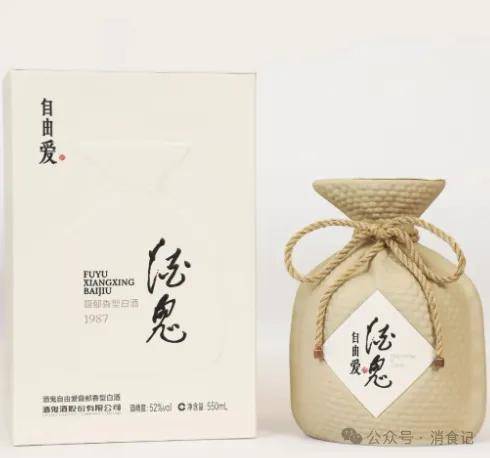
一瓶200元白酒引爆的商业逻辑
Sou Hu Cai Jing· 2025-08-06 06:06
Core Insights - The launch of "Jiu Gui Zi You Ai" by Jiu Gui Jiu and Pang Dong Lai has sparked a buying frenzy, highlighting a shift in the Chinese retail industry towards a consumption upgrade era [1][3] - The product's pricing strategy, which offers high-quality liquor at a lower price point, challenges traditional high-margin practices in the liquor industry [5][19] Product Quality and Innovation - "Jiu Gui Zi You Ai" features a revolutionary quality upgrade, utilizing a unique brewing process and high-quality ingredients, establishing a new standard in the industry [3][5] - Pang Dong Lai's involvement enhances quality control through stringent standards and transparency in production, allowing consumers to perceive the value behind the price [3][10] Pricing Strategy - The product's cost structure reveals a comprehensive cost of 168.26 yuan, resulting in a low gross margin of 15.87%, significantly below the industry average [5][19] - This "naked pricing" strategy reallocates channel profits to consumers, suggesting that high-end liquor can be offered at mid-range prices without sacrificing quality [7][19] Trust and Consumer Engagement - Pang Dong Lai's success is attributed to a "trust economy," where consumer trust is cultivated through employee satisfaction and transparent operations [8][10] - The willingness of consumers to pay a premium for "Pang Dong Lai products" reflects a deep-seated trust in the brand, transforming the product into a symbol of social trust [12][21] Cultural Resonance - The collaboration between Jiu Gui Jiu and Pang Dong Lai resonates culturally, with shared values of freedom and authenticity reflected in the product's branding and packaging [14][21] - The product's name and design embody a philosophy that transcends mere functionality, appealing to consumers' emotional connections [14][21] Business Model and Ecosystem - The partnership exemplifies a new business model where retail companies leverage their traffic to empower product innovation in collaboration with liquor brands [15][22] - Pang Dong Lai is evolving from a regional retail giant to a national commercial IP, with significant sales growth projected through strategic partnerships [19][22] Industry Implications - The phenomenon surrounding "Jiu Gui Zi You Ai" signals a broader call for value return in the Chinese consumer market, emphasizing quality and transparency [23] - The success of this product offers a blueprint for the industry, advocating for a shift from traditional profit models to a co-creation of value with consumers [19][22]

保险业“反内卷”进行时:告别价格战,走向价值共生
Bei Ke Cai Jing· 2025-08-04 14:37
Core Viewpoint - The insurance industry is experiencing "involution" competition characterized by illegal practices such as providing false materials, using unapproved insurance terms, and engaging in price wars, which reflects a lack of strategic direction and innovation capabilities among companies [1][3][4]. Group 1: Involution Competition - Involution competition in the insurance sector is marked by severe product homogeneity, intense channel competition, and price wars, leading to compressed profit margins [2][3]. - The root cause of this involution is an imbalance between supply and demand, with slowing premium growth and an increasing number of market players, compounded by economic downturns affecting asset returns [3][9]. Group 2: Regulatory Measures - Regulatory bodies are actively implementing policies to guide healthy competition, such as the "reporting and operation integration" approach and controlling commission fees to prevent disorderly competition [4][6]. - Various regional industry associations have introduced "anti-involution" charters, urging insurance companies to resist malicious price wars and focus on product and service innovation to build differentiated competitive advantages [5][7][8]. Group 3: Industry Self-Regulation - The insurance industry is adopting self-regulatory measures to maintain healthy competition, with associations emphasizing the need to avoid excessive competition and unethical practices [6][9]. - Specific guidelines have been established by associations in multiple regions to prevent practices like false advertising, excessive commissions, and other forms of malicious competition [7][8]. Group 4: Future Directions - To address the issue of involution, the industry needs to shift from zero-sum competition to value co-creation, leveraging data sharing and technological collaboration to reduce overall costs and achieve high-quality development [1][9].
视频 丨映宇宙集团执行总裁、总编辑夏晓晖金句
Zhong Guo Jing Ying Bao· 2025-07-31 08:25
Core Viewpoint - The company emphasizes the importance of high-quality content creation and value co-existence to enhance its localized overseas expansion capabilities [2] Group 1 - The company aims to utilize its own model to improve its systematic and localized approach to international markets [2] - The focus on quality content and value co-existence is seen as essential for sustainable growth and stability in the long term [2]
耐心资本与民企成长同频共振
Su Zhou Ri Bao· 2025-07-21 00:19
Core Viewpoint - Suzhou Rural Commercial Bank has established a long-term partnership with private enterprises, demonstrating a commitment to supporting their growth through various stages of development, from initial funding to overcoming operational challenges and facilitating generational transitions [1][2][3]. Group 1: Financial Performance - As of the end of 2024, Suzhou Rural Commercial Bank's total assets reached 213.36 billion, with deposits of 170.25 billion and loans of 129.32 billion [1]. - Nearly 90% of the bank's loans support the real economy, with over 60% directed towards private enterprises and more than 30% towards the manufacturing sector, maintaining the highest proportion of manufacturing loans among listed banks for several consecutive years [1]. Group 2: Support for Startups - The bank has a history of providing crucial initial loans, exemplified by a nearly 400,000 loan issued 28 years ago that helped a now-prominent enterprise in the silk industry [2]. - The concept of "patient capital" has been a long-standing practice for the bank, focusing on early, small, and growth-oriented loans to foster long-term relationships with businesses [2]. Group 3: Relationship with SMEs - Suzhou Rural Commercial Bank benefits from its familiarity with local businesses, resulting in high loyalty among SMEs, which is difficult for other banks to replicate [3]. - The bank maintains close ties with over 90% of the textile enterprises in the region, with more than 600 loan clients, including two Fortune 500 companies [3]. Group 4: Crisis Management - During the textile industry's crisis from 2012 to 2014, the bank played a crucial role in stabilizing the local economy by helping 664 enterprises navigate challenges through various financial solutions [5]. - The bank's proactive approach includes restructuring loans and providing tailored repayment plans to support businesses facing temporary financial difficulties [5]. Group 5: Generational Transition Support - The bank emphasizes the importance of supporting the transition of second-generation entrepreneurs, ensuring continuity and growth in family businesses [7]. - A recent project focused on low-carbon transformation in the textile industry showcases the bank's commitment to innovation and sustainability, helping local enterprises achieve international certification [8]. Group 6: Future Outlook - The bank aims to continue its role as a "benchmark bank" and "value bank," focusing on long-term partnerships and innovative financial solutions to support local economic development [8].
中国人民大学竞争法研究所所长杨东:平台经济亟需构建“价值共生”新范式
Xin Hua Cai Jing· 2025-07-17 09:26
Core Viewpoint - The sustainable development of platform economy relies on the design of scientific rules to create a "value symbiosis" ecosystem among multiple stakeholders [1][2]. Group 1: Value Creation and Distribution - The current model of platforms forcing merchants to lower prices can lead to unhealthy competition and squeeze the survival space of small operators [1]. - A new paradigm focusing on "value symbiosis" is essential for the healthy development of platform economy, as illustrated by the example of Taobao Flash Sale [1]. - The "platform-data-algorithm" triadic collaborative framework is proposed to establish a new value distribution mechanism [1]. Group 2: Role of Algorithms - Algorithmic innovation is crucial in avoiding "involution" and achieving value symbiosis, as demonstrated by Taobao Flash Sale [2]. - Optimizing supply chain scheduling algorithms can enhance fulfillment efficiency and improve user experience without cost-cutting [2]. - Innovative subsidy distribution algorithms can prevent inefficient blanket subsidies and avoid excessive concentration of resources on top merchants [2]. Group 3: Long-term Strategy and Social Responsibility - Platforms should move beyond short-term traffic thinking and embed social responsibility into rule and algorithm design [2]. - The core competitiveness of platforms in the digital economy era lies in the harmonious construction of the ecosystem, deep exploration of data value, and innovative application of algorithm technology [2]. - A fair, efficient, and sustainable value creation and distribution system is necessary to empower ecosystem partners and meet user needs, driving the platform economy towards high-quality development [2].
岚图汽车五年蝶变:重塑高端新能源车价值逻辑
Zheng Quan Ri Bao Wang· 2025-07-14 09:17
Core Insights - Lantu Automotive celebrates its fifth anniversary, having established itself in the high-end new energy vehicle sector with a user-centered strategy and continuous innovation in technology, ecosystem, and organizational mechanisms [1][2] User-Centric Strategy - The company has maintained a "user-centric" approach since its inception, evolving from merely meeting user needs to creating a sustainable value creation system [1][2] - All strategic decisions at Lantu must pass the "user value" test, ensuring that user needs are integrated into every aspect of the organization [2] Value Creation and Ecosystem - Lantu's understanding of user value has shifted from "product satisfaction" to "ecological symbiosis," involving users in product iterations and influencing corporate strategy [2][3] - The company aims to drive the transformation of the entire automotive value chain in Wuhan, transitioning from traditional fuel vehicle components to high-value areas like R&D and software [3] Long-Term Competitive Advantage - Lantu's strategy focuses on building a "technology moat" and "ecological synergy," balancing self-research and collaboration [4] - The partnership with Huawei exemplifies this approach, allowing for joint product definition and rapid market response [4] Product and Market Strategy - The product strategy has evolved from a "single-point breakthrough" to a "matrix synergy," covering a range of high-end market segments with a mix of hybrid and electric vehicles [5] - Lantu has introduced an innovative "direct sales + ecological agency" model to enhance user experience while optimizing channel efficiency [5] Future Outlook - The company emphasizes long-term sustainability over short-term gains, aiming to build a comprehensive ecosystem that extends beyond vehicle sales into smart mobility services [5]