
内需主导

Search documents
2025年12月宏观数据点评:生产提速,内需回落
Shanghai Securities· 2026-01-22 10:23
Group 1: Economic Performance - In December 2025, industrial production increased by 5.2% year-on-year, with a month-on-month growth of 0.49%[13] - The GDP growth rate for Q4 2025 was 4.5%, down 0.3 percentage points from Q3[29] - The annual GDP growth target of 5% was successfully achieved[32] Group 2: Investment Trends - Fixed asset investment (excluding rural households) decreased by 3.8% year-on-year, with a month-on-month decline of 1.13% in December[13] - Manufacturing investment grew by 0.6%, but the growth rate fell by 1.3 percentage points[20] - Real estate development investment dropped by 17.2% year-on-year, with the decline deepening by 1.3 percentage points[21] Group 3: Consumer Behavior - Social retail sales totaled 45,136 billion yuan in December, growing by 0.9% year-on-year, a decrease of approximately 0.4 percentage points from the previous month[23] - Retail sales excluding automobiles reached 39,654 billion yuan, with a growth of 1.7%[13] - Consumption in gold and jewelry, as well as traditional Chinese and Western medicines, saw significant declines[24]
郭春丽:新发展模式支撑中国经济行稳致远
Jing Ji Ri Bao· 2026-01-22 00:10
Core Viewpoint - The article emphasizes the importance of transitioning to an economic development model driven by domestic demand, consumption, and endogenous growth, as a strategic response to changing domestic and international conditions [1][2][3]. Group 1: Importance and Urgency - The need for a domestic demand-driven economic model is underscored by the increasing uncertainties in the global landscape and the inadequacies in domestic demand, which are seen as major constraints on economic growth [2][3]. - The shift towards a domestic demand-led model is viewed as essential for maintaining economic vitality and competitiveness in the face of external risks [2][3]. Group 2: Strategic Response to External Challenges - The article outlines that the global economic environment is facing significant challenges, including reduced growth momentum and rising protectionism, which necessitate a shift away from reliance on external demand [3]. - China's large domestic market, with over 1.4 billion people, presents a unique opportunity to leverage internal demand to counteract external uncertainties [3]. Group 3: High-Quality Development - Transitioning to a model driven by domestic demand is linked to the need for high-quality development, moving from factor-driven growth to innovation-driven growth [4]. - The article highlights the importance of adapting to changes in demand structure and investing in human capital to enhance economic quality [4]. Group 4: Economic Cycle and Supply-Demand Balance - A dynamic balance between supply and demand is crucial for the national economic cycle, with the current mismatch between strong supply and weak demand being a significant issue [5]. - The new economic model aims to align supply with demand more effectively, fostering a higher-level dynamic balance that promotes mutual reinforcement between supply and demand [5]. Group 5: Characteristics of Economic Development - The article notes that the transition to a domestic demand-driven model is a common trend in large economies, particularly after reaching a certain GDP per capita threshold [6][7]. - The contribution of domestic demand to economic growth is highlighted, with projections indicating that it will account for an average of 93.1% of economic growth from 2013 to 2024 [7]. Group 6: Consumption as a Growth Driver - Consumption is identified as a critical component of domestic demand, with its role in economic development expected to increase as GDP per capita rises [8]. - The article cites that from 2013 to 2024, final consumption expenditure is projected to contribute an average of 55% to economic growth, surpassing the contribution from capital formation [8]. Group 7: Endogenous Growth - The article emphasizes that sustainable economic growth in large economies relies on endogenous factors, such as innovation and productivity improvements, rather than external forces [9]. - It highlights the importance of enhancing innovation capabilities, with R&D investment expected to reach 2.68% of GDP by 2024, surpassing the EU average [9]. Group 8: Policy Recommendations - The article suggests that a comprehensive approach is needed to enhance economic vitality, balancing supply and demand while fostering effective investment [10][11]. - It advocates for policies that stimulate consumption and improve public services to create a favorable environment for consumer spending [12][13]. - The integration of technological innovation and reform is seen as essential for driving endogenous growth and adapting to new economic conditions [14].
新发展模式支撑中国经济行稳致远
Jing Ji Ri Bao· 2026-01-21 22:25
Core Viewpoint - The article emphasizes the importance of transitioning to an economic development model driven by domestic demand, consumption, and endogenous growth, as a strategic response to changing domestic and international conditions [1][2][3]. Group 1: Importance and Urgency - The need for a new economic development model is underscored by the increasing uncertainties in the international landscape and the internal challenges of insufficient effective demand [2][3]. - The shift towards a domestic demand-driven model is seen as essential for maintaining economic vitality and competitiveness in the face of external risks [2][3]. Group 2: Strategic Response to External Risks - The article highlights the global economic slowdown and rising protectionism, which necessitate a reduced reliance on external demand [3]. - China's large domestic market, with over 1.4 billion people, presents significant potential for internal demand, which can mitigate external uncertainties [3]. Group 3: High-Quality Development - Transitioning to a consumption-driven economy is crucial for high-quality development, moving from factor-driven growth to innovation-driven growth [4]. - The article notes that as China’s GDP per capita surpasses $13,000, the demand structure is evolving, necessitating investments in human capital and services [4]. Group 4: Economic Cycle and Supply-Demand Balance - The article stresses the importance of a dynamic balance between supply and demand, with a focus on addressing the current shortfall in domestic consumption [5]. - A new economic model should facilitate a higher-level dynamic balance where demand drives supply and vice versa [5]. Group 5: Characteristics of Domestic Demand-Driven Growth - The article outlines that a shift to domestic demand is a common trend for large economies, particularly after reaching a certain GDP per capita threshold [6][7]. - From 2013 to 2024, domestic demand is projected to contribute an average of 93.1% to economic growth, highlighting its increasing importance [7]. Group 6: Consumption as a Growth Driver - The article discusses the U-shaped trend of consumption rates in economic development, indicating that as economies mature, consumption becomes a more significant growth driver [8]. - From 2013 to 2024, final consumption expenditure is expected to contribute an average of 55% to economic growth, surpassing the contribution from capital formation [8]. Group 7: Endogenous Growth as a Pathway - The article posits that sustainable economic growth relies on internal dynamics rather than external forces, with innovation playing a key role in this process [9]. - By 2024, R&D investment intensity in China is projected to reach 2.68%, surpassing the EU average, which supports the shift towards endogenous growth [9]. Group 8: Policy Recommendations - The article suggests that effective investment strategies should combine physical and human capital investments to stimulate economic growth [11]. - It emphasizes the need for policies that enhance consumer confidence and spending, alongside structural reforms to support innovation and investment [12][14].
财政能为“开门红”增色几许?【华福宏观·陈兴团队】
陈兴宏观研究· 2026-01-21 14:44
Key Points - The fiscal policy in 2025 remains strong, but the effectiveness of fiscal expansion in driving economic growth has decreased, reflecting a lower "cost-effectiveness" of fiscal measures due to structural transformation, slow spending of special government bonds, and low price levels impacting fiscal efficiency [2][6][13] Group 1: Fiscal Strength and Effectiveness - The fiscal policy maintains a strong expansionary stance, with total fiscal expenditure as a percentage of GDP showing a recovery in 2025 after a decline from Q3 2022 to the end of 2024 [5][6] - The fiscal multiplier effect has weakened, with the fiscal effect coefficient dropping below 1, indicating that fiscal spending is less effective in driving GDP growth compared to 2024 [6][10] - Structural transformation has led to a shift in fiscal spending towards areas with higher capital retention and longer effectiveness cycles, reducing the expected impact on traditional infrastructure [7][10] Group 2: Changes in Policy Focus - The 2026 fiscal policy aims to maintain a stable budget deficit rate while expanding fiscal spending, with a focus on domestic demand, technological innovation, and strengthening social welfare [15][18] - The emphasis on domestic demand has shifted to a strategic priority of "domestic demand-led" growth, highlighting the importance of increasing residents' income [18][20] - The standardization of tools and policies is aimed at enhancing efficiency, with a focus on preventing local subsidy competition and creating a unified national market [20][21] Group 3: Government Debt and Financing - The issuance of government bonds in Q1 2026 is expected to remain stable compared to the previous year, with a slight increase in net financing scale [24][26] - Local government debt issuance is primarily focused on special refinancing bonds, with a more uniform pace of debt issuance anticipated in 2026 compared to 2025 [26] - The overall growth rate of government debt in Q1 2026 is expected to be lower than in the same period in 2025, indicating a more moderate approach to fiscal expansion [26]


问道2026——第一财经首席经济学家调研年度经济展望
Di Yi Cai Jing· 2026-01-21 12:50
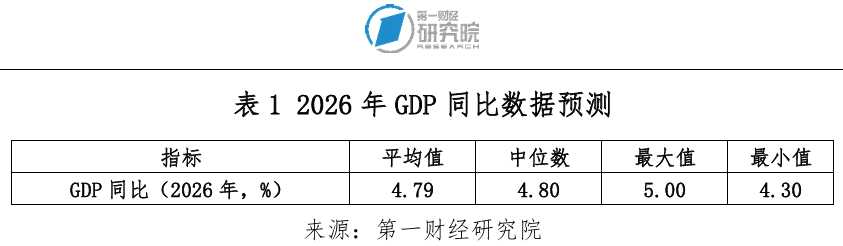
Economic Outlook - In 2025, China's GDP reached 140.19 trillion yuan, growing by 5.0% year-on-year, achieving the set target for the year [3] - Economists predict a GDP growth of approximately 4.79% for 2026, with a median forecast of 4.80% [2][3][4] - The focus for 2026 will be on enhancing internal demand and implementing new measures to stimulate growth [3][4] Inflation Trends - In 2025, the Consumer Price Index (CPI) showed no year-on-year change, while the Producer Price Index (PPI) decreased by 2.6% [6] - For 2026, CPI is expected to rise by 0.4%, while PPI is projected to decline by 1.1% [7][6] Industrial and Consumption Growth - The industrial added value is forecasted to grow by 5.14% in 2026, while retail sales of consumer goods are expected to increase by 4.05% [9][10] - Service consumption is anticipated to outpace goods consumption, reflecting a shift in consumer preferences [10][11] Investment Trends - Fixed asset investment is expected to recover slightly in 2026, with a projected growth rate of 2.17% [14] - The real estate market is predicted to remain in a downtrend, with a forecasted decline of 8.03% in real estate development investment [14][16] Foreign Trade - China's foreign trade is expected to maintain stable growth, with exports projected to increase by 3% to 4% in 2026 [20][21] - The trade surplus for 2026 is estimated at approximately $1.25 trillion [18] Key Economic Highlights - The economic highlights for 2025 include resilience in external demand and accelerated domestic industrial upgrades [21][22] - Future focus areas include expanding domestic demand and fostering innovation [21][22]
财政能为开门红增色几许?
Huafu Securities· 2026-01-21 11:27
Group 1: Fiscal Policy Effectiveness - The fiscal policy for 2025 remains strong, but the fiscal effect coefficient on economic growth has declined, indicating lower "cost-effectiveness" of fiscal expansion[3] - The central government's fund expenditure completion rate was only 53.7% of the budget in 2024, suggesting a slow spending pace that may continue into 2025[3] - The increase in fiscal deposits in 2025 is higher than in previous years, reflecting a phenomenon of "funds lying idle"[3] Group 2: Policy Focus Changes - The general public budget deficit rate for 2026 is expected to remain stable at around 4%, with an emphasis on expanding fiscal spending[4] - Domestic demand is prioritized as a strategic focus, with a shift to "domestic demand-led" growth[4] - There is a continued emphasis on enhancing residents' income and employment, reflecting a higher priority on social welfare[4] Group 3: Government Debt and Financing - The issuance of government bonds in Q1 2026 is expected to show slight growth compared to the previous year, with a stable issuance plan[5] - The scale of individual issued bonds has increased, with notable rises in 1Y, 2Y, 10Y, and 30Y bonds compared to last year[5] - The pace of local debt issuance in 2026 is expected to be more uniform, with a focus on special refinancing bonds[5]
国家发展改革委:促进形成更多由内需主导、消费拉动、内生增长的经济发展模式
Xin Hua Wang· 2026-01-20 06:39
新华社音视频部制作 1月20日,国务院新闻办公室举行新闻发布会,介绍落实中央经济工作会议精神,推动"十五五"实 现良好开局有关情况,并答记者问。国家发展改革委副主任王昌林表示,当前我国经济运行存在供强需 弱的问题,要扩大内需、优化供给,推动供需在更高水平上实现动态平衡和良性循环,促进形成更多由 内需主导、消费拉动、内生增长的经济发展模式。 【纠错】 【责任编辑:吴京泽】 ...
(经济观察)中国经济2025年向新向优 为“十五五”开局聚力
Zhong Guo Xin Wen Wang· 2026-01-19 13:54
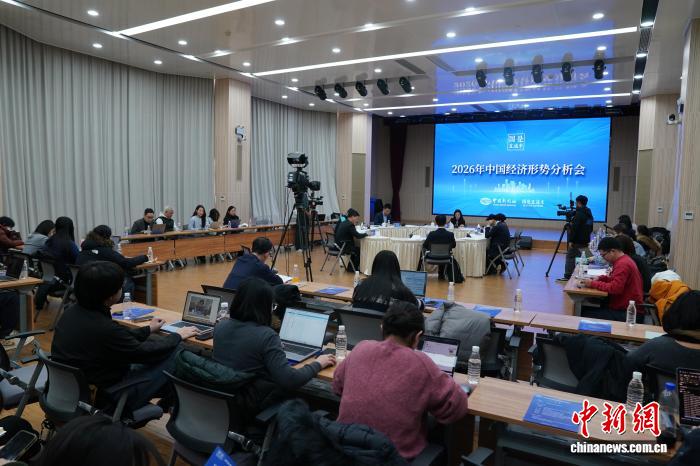
中新社北京1月19日电 题:中国经济2025年向新向优 为"十五五"开局聚力 中新社记者 陈康亮 中国经济2025年"成绩单"19日出炉:国内生产总值(GDP)同比增长5%,总量迈上140万亿元(人民币,下 同)新台阶。 在当天中新社国是直通车举行的"2026年中国经济形势分析会"上,与会专家认为,中国经济2025年顶压 前行、向新向优,圆满实现预期目标,为"十五五"开好局、起好步奠定坚实基础。 1月19日,中新社国是直通车在北京举行"2026年中国经济形势分析会"。 汪俐辰 摄 "这是一份沉甸甸的成绩单。"中国国际经济交流中心学术委员会副主任陈文玲在会上说,中国经济2025 年遭遇大国竞争加剧、国际格局重塑、贸易摩擦升温等多重压力,但仍顶压前行,实现预期经济目标, 并持续向新向优,可谓不容易、不平凡,"和全球一些大国比起来也不一般"。 中国银行研究院副院长周景彤认为,在中国经济2025年向新向优的过程中,新质生产力发挥重要作用, 并取得多项重大进展:产业结构向新向优更加凸显,出口商品竞争力优势持续强化,重点领域投资的支 撑作用愈发突出,新兴消费引领带动作用进一步显现。 针对备受关注的房地产领域,清华大学房地 ...
“内需主导”被列为年度经济工作重点任务之首 广州“先跑一步”
Guang Zhou Ri Bao· 2026-01-18 01:38
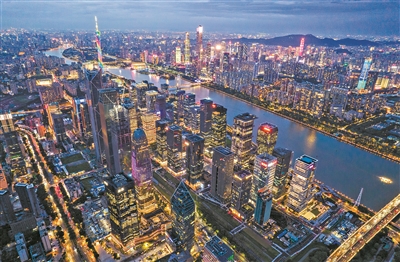
Core Viewpoint - Guangzhou is focusing on strengthening its internal capabilities to enhance both consumption and investment, aiming for a robust economic performance in the new year [2][10]. Consumption Renewal - The consumption market in Guangzhou is undergoing a transformation, showcasing a blend of local culture, Chinese aesthetics, and global influences [3]. - New commercial developments, such as the Sam's Club and the Taikoo Li shopping area, are attracting significant foot traffic and international brands, indicating a vibrant retail environment [3][4]. - The city is diversifying its commercial landscape, creating multiple shopping hubs to meet various consumer needs, thus breaking away from a previously centralized commercial model [3]. Investment Drive - Guangzhou is committed to investing in human capital to enhance living standards and stimulate consumption, as evidenced by the "33 measures" aimed at boosting consumer spending [6][10]. - The city has seen a significant increase in business registrations, with over 4.25 million entities, and is attracting foreign investment, with one in seven new foreign enterprises setting up in Guangzhou [7]. - Major projects, including the TCL Huaxing and HSBC training center, are indicative of an improved business environment and growing investor confidence [7]. Recruitment and Development - The "Ten-Hundred-Thousand Investment Project" aims to attract substantial investments, including 10 projects worth 10 billion, 100 projects worth 1 billion, and 1,000 projects worth 100 million [8]. - The establishment of a comprehensive ecosystem for cell and gene therapy in Nansha is a key example of Guangzhou's forward-looking industrial strategy [8]. Internal Demand Leadership - The central economic work conference emphasizes the importance of balancing consumption and investment, highlighting their interdependent relationship in driving domestic demand [9]. - Industrial investment in Guangzhou has shown resilience, with a 2.5% increase in industrial investment and significant growth in high-tech sectors [10]. Departmental Initiatives - The Guangzhou Development and Reform Commission is implementing measures to enhance investment efficiency and project management, ensuring timely execution of new and ongoing projects [11][12]. - The Guangzhou Commerce Bureau is focused on expanding quality consumer goods and services, enhancing the international consumption environment, and promoting local consumption initiatives [14][15]. Investment Development Actions - The Guangzhou Investment Development Committee is executing a comprehensive strategy to attract investments across various sectors, including biotechnology and new consumption industries [16][17].
透过这场座谈会,读懂山东国企如何做“时间的朋友”
Feng Huang Wang Cai Jing· 2026-01-18 00:22
Core Insights - The meeting held on January 16 in Jinan focused on the development of provincial state-owned enterprises, emphasizing the need for these enterprises to adapt to new economic conditions and trends [1][2] Group 1: Economic Trends - The shift from investment-driven growth to consumption-driven growth is highlighted as a key trend, with an emphasis on understanding consumer needs and preferences [3][6] - The success of local attractions, such as the immersive performances in Linyi, indicates a growing demand for quality cultural and tourism experiences, which state-owned enterprises should capitalize on [4][6] Group 2: Quality Over Quantity - There is a prevalent issue in traditional industries where production capacity exceeds effective demand, leading to a "strong supply, weak demand" scenario [7][8] - The meeting addressed the need for state-owned enterprises to focus on quality improvements rather than merely increasing production capacity, advocating for a shift towards high-end products [9][10] Group 3: Green Transition - The year marks a significant transition towards carbon emission control, requiring enterprises to integrate low-carbon development into their strategic planning [10][12] - Early adoption of green technologies, such as the supercritical CO2 power generation project, is seen as crucial for future competitiveness and sustainability [12] Group 4: Embracing New Technologies - The meeting underscored the importance of leveraging the existing manufacturing base in Shandong to foster new industries, particularly in artificial intelligence and other emerging sectors [13] - State-owned enterprises are encouraged to focus on core industries while also exploring new growth areas to ensure long-term viability and leadership in future economic developments [13]
