
收益率曲线

Search documents
S&P global U.S. services PMI comes in at 52.9 vs. 54.0 estimated
Youtube· 2025-12-16 15:15
Core Insights - December preliminary S&P global PMIs indicate a slowdown in manufacturing and services sectors, with manufacturing at 51.8%, down from 52.2% last month, marking the lowest since July [1] - Services PMI came in at 52.9%, lower than the expected 54 and last month's 54.1%, reflecting a similar trend of decline [1] - The composite PMI registered at 53, below the expected 53.9% and last month's 54.2%, indicating a general weakening across sectors [2] Industry Analysis - All three PMIs remain above the expansion threshold of 50, but they are all below market expectations, suggesting a potential slowdown in economic growth [3] - The yield curve is showing some steepness, influenced by recent job reports and slight weakening in the labor market, which is affecting two-year yields due to Federal Reserve implications [3] - Current 10-year yields are hovering around 4.18%, reflecting a one basis point increase, indicating ongoing volatility in the long end of the yield curve [3]


短端宽松托底长端博弈政策预期
Hua Lian Qi Huo· 2025-12-15 10:04
期货交易咨询业务资格:证监许可【2011】1285号 华联期货国债年报 短端宽松托底 长端博弈政策预期 从业资格号:F03117664 交易咨询号:Z0022772 审核:姜世东,从业资格号:F03126164,交易咨询号:Z0020059 请务必阅读正文后的免责声明。本报告的信息均来自已公开信息,关于信息的准确性与完整性,建议投资者谨慎判断,据此入市,风险自担。 20251215 作者:石舒宇 0769-22116880 请务必阅读正文后的免责声明。本报告的信息均来自已公开信息,关于信息的准确性与完整性,建议投资者谨慎判断,据此入市,风险自担。 年度观点及策略 请务必阅读正文后的免责声明。本报告的信息均来自已公开信息,关于信息的准确性与完整性,建议投资者谨慎判断,据此入市,风险自担。 年度观点 请务必阅读正文后的免责声明。本报告的信息均来自已公开信息,关于信息的准确性与完整性,建议投资者谨慎判断,据此入市,风险自担。 • 2025年货币政策基调延续"适度宽松" ,但更强调精准施策与预期管理,货币政策从总量刺激转向结构性支持与存量效能 释放,重点支持科技创新、普惠小微与消费领域,同时重申防范资金空转与汇率超调 ...
债券策略周报:当前债市策略的三个问题-20251215
Guolian Minsheng Securities· 2025-12-15 05:10
Group 1 - The report suggests that investors should focus on three key issues regarding the current bond market, particularly the strong exit sentiment after the 30-year interest rate recovery, which has risen from approximately 2.13% to 2.28%, with a correction of over 8 basis points from its peak [6][10][39] - It raises the question of whether the 10-year interest rate may experience a decline after the significant widening of the 30-10Y spread, predicting a potential rise to 1.9% or higher in the next 1-2 months due to low expectations for short-term easing and lower-than-expected allocation power [11][40] - The report recommends focusing on short-term opportunities, particularly in the 2-year and under credit bonds, 3-4 year perpetual bonds, and 5-year government bonds, given the current low funding rates and the potential for increased preference for short-term credits and mid-term government bonds [12][40][41] Group 2 - The bond market has shown a slight rebound recently, attributed to the significant adjustments in the long-term bonds and expectations of monetary easing following important meetings [19] - The report indicates that the current yield curve is not steep, with the 10-1Y spread maintaining around 45 basis points, and suggests that the long-end rates will continue to influence curve movements, although significant steepening is unlikely [41][37] - It highlights that the valuation of bonds is relatively low compared to equities, with the current 10-year government bond yield being at a lower percentile compared to historical data, indicating that bonds are not overvalued [28][31][39]
宏观看客:长期美债收益率可能挺高 但还没到诱人水平
Xin Lang Cai Jing· 2025-12-11 18:43
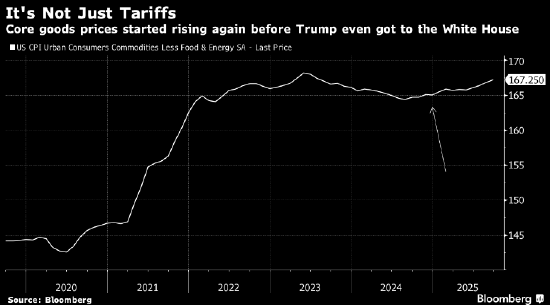
Core Viewpoint - The financial markets tend to interpret Federal Reserve policy decisions in a way that favors risk assets, reflecting a human tendency to believe in opportunities for significant profit [1][12] Group 1: Federal Reserve Policy and Market Reactions - The bond market is currently caught between the pressures of a steepening yield curve and the pursuit of yield, with the former expected to prevail [1] - The Federal Reserve's statements can be interpreted differently based on perspective, with recent economic forecasts appearing more hawkish compared to the previous year [12] - Powell's comments suggest that the Fed may wait for data to guide future policy actions as the policy rate approaches the upper end of the neutral rate range [12] Group 2: Inflation and Economic Indicators - Powell's assertion that current inflation is primarily a result of one-time tariff impacts is questioned, as core commodity prices began rising well before the tariffs were implemented [3][13] - Service inflation continues to decline, but high rents in Manhattan present a contrasting reality, indicating potential complacency from the Fed regarding inflation [5][15] - The long-term effects of tariffs on prices may manifest gradually over the coming quarters or years, rather than being a one-time event [5][15] Group 3: Long-term Bonds and Investment Considerations - The current yield on long-term bonds at 4.78% is attractive, especially as it aligns with investment-grade corporate bond yields [15] - Long-term bonds are relatively cheap compared to other securities in the credit market, but they are not cheap when compared to cash and cash equivalents [17] - Historical data suggests that the current yield levels of long-term bonds may not be as appealing as they seem, indicating caution for investors considering long-term bonds as a value trade [21][22]
分析师:鲍威尔承认劳动力市场走软是美国国债的一个驱动因素
Sou Hu Cai Jing· 2025-12-11 06:55
Core Viewpoint - The steepening of the U.S. Treasury yield curve highlights the impact of monetary policy measures, with long-term structural issues like inflation and fiscal deficits exerting ongoing pressure on the back end of the curve [1] Group 1: Monetary Policy Impact - Policy measures can significantly affect the front end of the yield curve [1] - The acknowledgment of a softening labor market by Federal Reserve Chairman Jerome Powell has led to increased buying in the bond market, reversing the initial decline in U.S. Treasury yields [1] Group 2: Future Expectations - Madison Investments anticipates a slowdown in further easing measures by the Federal Reserve [1] - The firm expects the central bank to remain inactive until the second quarter of 2026 [1]
Q3 employment cost index rises 0.8%
Youtube· 2025-12-10 14:08
Group 1 - The third quarter employment cost index increased by 0.8%, which is lower than the expected 0.9% and marks a decrease from the previous quarters that were consistently at 0.9% [1] - This is the lowest increase since the second quarter of 2021, indicating a potential easing in employment costs compared to the elevated levels seen in the past [2] - The all-time high for the employment cost index was 1.3% in the second quarter of 2022, coinciding with a period of high inflation at 9.1% [2] Group 2 - The current yield on the 10-year note is hovering around 4.20%, with potential for closing at 4.18% or higher, which would represent a three-month high yield close [3] - The 2-year yield is currently at 3.62%, remaining unchanged and also reflecting a one-month high yield close [3] - There is a suggestion that the long end of the yield curve is experiencing upward pressure, potentially leading to a steepening of the curve [5] Group 3 - The Job Openings and Labor Turnover Survey (JOLTS) data indicates that 63% of the releases since January 2024 have been higher than the current number, suggesting a strong labor market [4] - The current metrics do not align with the easing observed in the market, raising questions about the sustainability of this trend [4] - The Federal Reserve's target inflation rate of 2% is still far from being achieved, indicating ongoing challenges in the economic landscape [5]

市场的分歧在哪里?大摩回应客户对其“2026年展望”的质疑
美股IPO· 2025-12-08 04:35
Core Viewpoint - Morgan Stanley reaffirms that AI-driven investment demand will continue to grow, leading to an expansion in the credit market, with total investment-grade bond issuance expected to surge to $2.25 trillion, while credit spreads will only widen modestly [1][3]. Group 1: AI Investment and Credit Market Outlook - Morgan Stanley predicts that U.S. investment-grade bond issuance will reach $2.25 trillion in 2026, a 25% year-over-year increase, with net issuance expected to hit $1 trillion, reflecting a 60% year-over-year growth [7]. - The firm believes that credit markets will be the primary funding channel for the next wave of AI investments, which are expected to be relatively insensitive to macroeconomic conditions such as interest rates and economic growth [4]. - There is a divergence in client feedback regarding the growth expectations from AI capital expenditures, with some questioning why higher growth is not anticipated [5]. Group 2: Factors Stabilizing Credit Spreads - Morgan Stanley argues that several factors will help stabilize credit spreads despite the anticipated surge in bond issuance, including a majority of AI-related issuances coming from high-quality issuers (AA-AAA rated) [8]. - Continued policy easing, with expectations of three more rate cuts from the Federal Reserve, is also seen as a stabilizing factor [9]. - The firm anticipates a mild economic re-acceleration and ongoing demand from yield-seeking investors will further anchor credit spreads [9]. Group 3: Central Bank Policy Divergence - The Federal Reserve's policy path remains a focal point of market debate, with Morgan Stanley expecting a rate cut in December, despite mixed signals from the labor market [10]. - The firm also predicts that the European Central Bank will implement two additional rate cuts by 2026, contradicting the ECB's president's assertion that the anti-inflation process has ended [10]. Group 4: Yield Curve Dynamics - Morgan Stanley defines 2026 as a "transition year" for global interest rates, moving from synchronized tightening to asynchronous normalization, with a consensus on the yield curve maintaining a range-bound pattern [11]. - There is ongoing debate regarding the nature of the yield curve steepening, whether it will be driven by falling rates (bull steepening) or rising long-term rates (bear steepening) [11].


普京要人民币有大用处,俄罗斯准备把好钢用在刀刃上
Sou Hu Cai Jing· 2025-12-05 04:35
Core Viewpoint - The Russian government is strategically utilizing the issuance of RMB-denominated bonds, not primarily to fill budget deficits, but to establish a benchmark for future corporate borrowing in RMB [2][7]. Group 1: Issuance of RMB-Denominated Bonds - Russia's Ministry of Finance recently issued RMB-denominated sovereign bonds totaling 20 billion RMB, approximately 230 billion rubles at current exchange rates [2]. - The issuance is not intended to address the current budget deficit, which has reached unprecedented levels, with a fiscal deficit nearing 3.7 trillion rubles in the first half of the year, over five times that of the same period last year [2]. - The primary goal of issuing these bonds is to create a yield curve that will help clarify the pricing of RMB in Russia, facilitating future corporate bond issuance [7]. Group 2: Risks and Considerations - Borrowing in foreign currencies, including RMB, carries exchange rate risks, particularly as the ruble's value fluctuates against the RMB [4]. - The majority of investors purchasing these RMB bonds are domestic Russian banks and financial institutions, which raises questions about the necessity of issuing foreign currency debt when domestic ruble bonds could suffice [6]. - The current RMB market in Russia lacks sufficient scale and liquidity to support large-scale debt financing, limiting the issuance to small-scale pilot projects [9]. Group 3: Strategic Importance of RMB - The Russian government emphasizes the strategic value of RMB in trade settlements and market pricing, rather than merely as a tool for large-scale borrowing [9]. - The issuance of RMB bonds is seen as a way to ensure that the currency can be used effectively in trade, without compromising the liquidity needed for trade settlements [9].

如何看待目前债券市场短端和长端流动性的变化︱重阳问答
重阳投资· 2025-11-28 07:33
Group 1 - The bond market has experienced changes in liquidity, with short-term interest rates declining and long-term yields showing reduced volatility, indicating a steepening yield curve [2][3] - Short-term rates reflect market expectations for policy easing, driven by structural issues in China's economic growth, such as weak consumption and declining real estate sales, suggesting a continued need for a loose monetary environment [2][3] - The supply-demand dynamics for long-term bonds have shifted, with an increase in the issuance of ultra-long bonds, particularly local government bonds, leading to a significant rise in the proportion of long-term bonds in the market [3] Group 2 - Short-term liquidity easing is crucial for the stock market, as it indicates ongoing support for economic growth and can lower financing costs for leveraged funds, potentially increasing risk appetite among investors [4] - The decline in short-term interest rates may lead to a continued shift of household asset allocation towards the stock market, as high-yield assets become scarcer [4]

债券策略周报20251116:年内债券投资思路-20251116
Minsheng Securities· 2025-11-16 13:20
Group 1 - The report suggests that in the absence of strong expectations for short-term interest rate cuts, both long-term government bond yields and short-term deposit rates are unlikely to decline significantly. The market currently does not anticipate easing of short-term funds or a reduction in LPR [1][8][37] - It is recommended to focus on two strategies for portfolio construction: 1. Opt for slightly lower duration for defensive positioning, waiting for a rate adjustment of around 5 basis points before considering extending duration; 2. Maintain a market-neutral or slightly longer duration stance, with risk exposure suggested to be placed in active bonds where spreads can compress, such as government bonds and ultra-long government bonds [1][8][40] Group 2 - For bond selection, the report emphasizes prioritizing long-term interest rate bonds, particularly focusing on 250215. If there is a higher frequency demand for duration adjustment, 25T6 should be considered. For higher yield bonds like 25T5 and 25T3, attention should gradually decrease as spreads compress further [2][10][12] - In the context of credit bonds, the report notes that the spread between 3-5 year credit bonds and government bonds is already low, indicating limited room for further compression. It is suggested to focus on mid-term government bonds for short-term capital gains, while mid to long-term credit bonds may offer better value for long-term holding [3][13] Group 3 - The report indicates that the current overall IRR level of government bond futures is slightly higher than the funding rate, with most futures contracts being relatively expensive compared to cash bonds. The strategy of focusing on the compression of spreads between government bonds and government-backed bonds is recommended [4][14] - The report highlights that the bond market has maintained a volatile trend, with government bonds showing stronger performance. Despite weak financial and economic data in October, interest rates have not significantly declined, and the market sentiment towards bonds remains cautious [15][20]