
杠杆

Search documents
沪指创新高,2万亿存款大迁徙,慢牛格局下的投资机遇
Sou Hu Cai Jing· 2025-08-19 02:10
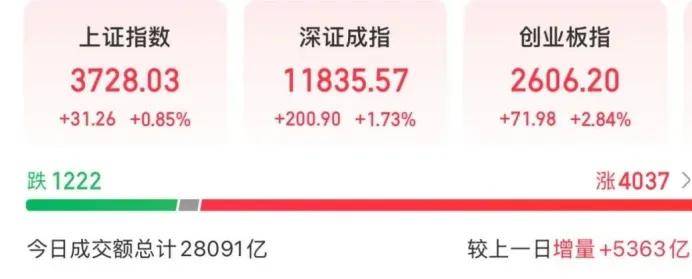
Market Overview - The A-share market has shown a strong performance, with all three major indices rising, and the Shanghai Composite Index reaching a nearly ten-year high [1] - The market's overall trading volume exceeded 2.8 trillion yuan, marking a new high for the year, with significant increases in daily trading volume [3] Market Characteristics - The current market trend is characterized as a "slow bull" market, with a moderate upward slope and healthy trading volume consistently between 1-2 trillion yuan [4] - The market is experiencing orderly rotation among key sectors such as finance, technology, and cyclical stocks, rather than indiscriminate broad-based increases [4] Fund Flow Dynamics - In July, there was a notable decrease in household deposits by 1.11 trillion yuan, while non-bank financial institutions saw an increase of 2.14 trillion yuan in deposits, indicating a shift of funds towards brokerage accounts [4][6] - The increase in non-bank deposits in July alone accounted for 83.9% of the total increase seen in the first half of the year, suggesting that the A-share market's profitability is attracting outside capital [6] Investor Sentiment - The current market uptrend is described as lacking the dramatic fervor of previous bull markets, reflecting a more rational and steady migration of funds from bank accounts to brokerage accounts [7] - This shift indicates a growing confidence among investors in the capital market, as the movement of funds is seen as a sign of a healthy slow bull market rather than a speculative frenzy [7] Investment Strategy - Investors are encouraged to focus on high-quality assets with solid fundamentals and long-term growth potential, as new capital is likely to seek out these core assets [8] - Caution is advised regarding the use of leverage, as historical lessons indicate that it can be a double-edged sword in bull markets [8] - Embracing a long-term investment perspective is essential, as the market may experience gradual upward movements with sector rotations becoming the main theme [8]

一口气了解期货
小Lin说· 2025-07-31 09:30
期货市场概述 - 期货市场是全球最大、最活跃的交易市场,成交面值甚至超过外汇市场 [1] - 期货合约是甲乙双方约定在未来特定时间以约定价格交易特定商品的合约 [1] - 期货最初用于商品供应商对冲风险,如小麦农商锁定未来卖出价,面粉厂锁定未来买入成本 [1] - 期货市场不仅追踪石油、大豆、黄金等大宗商品价格,还追踪股票、国债等虚拟资产和金融资产,甚至可以追踪股指等虚无指标 [1][2] 期货交易特点与应用 - 期货交易可用于对冲、投机,本质上是对未来价格的对赌,一切指标皆可期货化、交易化 [1][2] - 市场上绝大多数期货交易者不在交割日持有到期,而是在交割日前清仓 [2] - 期货产品主要包括利率类(如SOFR期货)、股票类(如股指期货)和大宗商品类 [2][3] - 期货交易具有高杠杆、易于做空和隐秘性三大特点 [3] 期货市场风险与案例 - 对冲基金利用期货市场进行投机,例如可可豆期货暴涨案例,对冲基金押注可可豆减产 [1] - 索罗斯利用期货做空英镑,通过期货市场放大攻击力,对现货市场产生压力,最终导致英镑崩盘 [4][5] - 亚洲金融危机中,空头们做空东南亚货币,与东南亚央行在外汇储备上进行博弈,核心战场也在期货市场 [5]

X @杀破狼 WolfyXBT
杀破狼 WolfyXBT· 2025-07-20 11:46
Market Sentiment - Trader expresses desire to leverage Ethereum due to price increase, but recalls past liquidation experience at $4,000 [1] - Trader reports being liquidated and declares "it's over" [1] Risk Management - Trader decides against leveraging, opting for spot trading to mitigate risk [1]
新手必知!股市融资融券是什么意思?不仅是加杠杆,这 2 个风险点比收益更重要
Sou Hu Cai Jing· 2025-07-19 10:30
Core Concept Analysis - Stock market margin trading consists of two related but opposite trading methods: margin financing and securities lending. Margin financing involves investors borrowing funds to buy specific stocks, using their own funds or securities as collateral, while securities lending involves borrowing stocks to sell and repurchasing them later at a lower price for profit. Both methods incur interest and are limited to designated stocks [1]. Key Operational Differences - Margin financing is a bullish strategy where investors expect stock prices to rise, borrowing funds to buy stocks and selling them later for profit. Conversely, securities lending is a bearish strategy where investors expect stock prices to fall, borrowing stocks to sell and repurchasing them at a lower price for profit. This creates a two-way trading mechanism [2]. Characteristics of Target Stocks - The stocks eligible for margin trading are determined by exchanges, typically including large-cap, liquid, and stable-performing stocks, such as those in the CSI 300 and CSI 500 indices. The list of eligible stocks is periodically adjusted, and stocks removed from the list cannot be traded through margin financing or securities lending [3]. Margin Requirements - Participants in margin trading must pay a margin, which can be cash or eligible securities. The margin ratio for both margin financing and securities lending is usually no less than 50%. For instance, with 1 million yuan of personal funds, an investor can borrow up to 1 million yuan under a 50% margin ratio, with specific ratios adjusted by institutions based on market conditions [4]. Interest and Fee Characteristics - The interest on margin financing and the fees for securities lending are calculated based on the actual number of days used, with annualized rates generally ranging from 6% to 8%. The financing interest is based on the amount borrowed, while the securities lending fee is based on the market value of the borrowed stocks, which must be accounted for in terms of cost and expected returns [7]. Risk Control Mechanisms - A maintenance margin ratio is enforced, calculated as (own funds + market value of held securities) ÷ (financing liabilities + securities lending liabilities). The warning line is typically set at 130%, and the liquidation line at 120%. If the ratio falls below the warning line, additional margin must be provided or positions reduced; if it falls below the liquidation line without timely remedy, institutions have the right to liquidate positions to ensure fund safety [8]. Characteristics of Applicable Groups - Margin trading is more suitable for investors with certain experience and a higher risk tolerance. Margin financing is appropriate for those predicting stock price increases, while securities lending suits those anticipating price declines. Both require investors to accurately grasp market trends and manage risks associated with price fluctuations, making them unsuitable for novice investors or those with conservative risk preferences [9]. Differences from Ordinary Trading - Ordinary trading allows only for buying before selling, with profits dependent on rising stock prices. Margin trading introduces a short-selling mechanism (securities lending), enabling profits in declining markets. Additionally, margin trading incorporates leverage, amplifying both potential returns and risks, while ordinary trading lacks such requirements, making it simpler and more direct [10].

X @憨巴龙王
憨巴龙王· 2025-07-13 05:57
Market Dynamics & Trading Behavior - OKX's pre-market trading of altcoins like Ape experiences significant leverage reduction, dropping from $2-3 million to less than $10 thousand [1] - Binance offers 5x leverage with a limit of $250 thousand for altcoins like Ape, contrasting with OKX's previous higher leverage [1] - The report suggests that high leverage (e.g., 20x) is often designed for liquidating user positions [1] OKX Pre-Market Promotion - OKX promotes its pre-market trading platform, encouraging users to trade before the broader market activity increases [1]
X @Yuyue
Yuyue· 2025-07-12 15:35
Risk Management Strategies for $PUMP Token - Suggests a relatively stable hedging strategy for $PUMP, considering uncertainties post-launch [1] - Recommends a 2x margin (0.5x leverage) with an initial 30% short position, gradually increasing to 43% via TWAP [1] - Emphasizes that hedging is for value preservation, not profit locking, advising against excessive hedging due to complexity [1] - A 43% hedge aims to prevent losses if the price drops to 0.0033 [1] Challenges in $PUMP Token Trading - Some users experienced difficulties in executing trades on certain exchanges [1] - Issues reported include problems with KYC completion and balance display on the official website [1]
2025年上半年回顾
Ge Long Hui· 2025-07-03 13:04
Group 1 - The overall investment returns in the past two years have exceeded expectations, primarily driven by luck [1] - The initial investment goal was set at a modest 10%, focusing on deep value stocks and long-term ROE [1] - The investment strategy has shifted towards companies with strong fundamentals and high dividend yields, particularly those offering over 6% [2] Group 2 - The current market sentiment suggests that many believe banks are overvalued, but this perspective may not hold when considering long-term performance and dividend yields [2] - The importance of not using leverage in investments is emphasized, regardless of market conditions [2] - The psychological aspect of handling gains and losses is a significant concern, highlighting the difficulty of managing emotions in investing [3]
2025年中期信用债展望:供求支撑下的波段与品种增厚
HTSC· 2025-06-06 10:52
Group 1: Credit Bond Strategy - The credit bond market is expected to continue in a volatile state, with a focus on interest rate strategies and band trading being more favorable than pure selection of varieties [5][38] - The strategy suggests focusing on short to medium-term credit bonds and high-grade long-term bonds to seek opportunities for interest rate compression [5][38] - The recommendation is to increase allocation in high-grade bonds from local government financing vehicles, real estate, and stable industries during market adjustments [5][38] Group 2: Local Government Financing Bonds - The transformation of local government financing vehicles is entering a complex phase, with potential pricing discrepancies as platforms adapt to new regulations [2][43] - The issuance of local government bonds is expected to remain low due to strict regulatory oversight and the ongoing transition of platforms [2][43] - Focus on short to medium-term bonds from regions with stable cash flows, particularly in Guangdong, Hubei, Jiangsu, and Henan, is recommended [2] Group 3: Financial Bonds and Varieties - High-grade perpetual bonds can be traded in response to interest rate fluctuations, but the trading space is limited and requires high trading standards [3][39] - The strategy includes focusing on high-grade bonds with a maturity of 3-5 years for stable institutions, while actively trading lower-grade bonds during market adjustments [3][39] - The expansion of TLAC non-capital instruments and their comparison with secondary capital bonds is highlighted as an area of interest [3][39] Group 4: Industrial Bonds - Industrial bonds have shown some recovery in profitability, but performance remains varied across sectors, with strong performance in automotive, machinery, and utilities, while real estate and construction sectors lag [4] - The recommendation is to focus on high-quality state-owned enterprises and stable private enterprises for medium-term investments [4] Group 5: Real Estate Bonds - The real estate sector is under pressure, with a recommendation to focus on high-grade bonds from state-owned enterprises while monitoring the recovery of the sector [4] - The potential for policy support in the real estate market could enhance recovery in core cities, but caution is advised for lower-tier cities [4] Group 6: Asset-Backed Securities (ABS) and Public REITs - The market for consumer finance ABS is expanding, with opportunities for variety exploration in a volatile market [3][39] - Public REITs are recommended to balance opportunities in both primary and secondary markets, focusing on stable projects [3][39]
刘刚:“对等关税”后的全球市场2025下半年投资机会前瞻
2025-05-30 16:09
Summary of Conference Call Minutes Industry or Company Involved - Focus on the global market impact of the "reciprocal tariff" policy Core Points and Arguments - The recent tariff reduction from 145% to 10% exceeded expectations, alleviating short-term market concerns, but medium to long-term risks related to trade restrictions need monitoring, particularly around key dates in July and August [1][2] - The U.S. effective tax rate has decreased to 16-17%, indicating a significant shift in market dynamics [2] - The performance of U.S. stocks, particularly in the tech sector, has rebounded quickly, suggesting that previous recession fears may have been overstated [4] - The current market is characterized by limited upward momentum and constrained downside potential, indicating a state of indecision [2] - The liquidity shock is viewed as an occasional event that presents buying opportunities, with central bank interventions typically proving effective [4] Other Important but Possibly Overlooked Content - The recommendation to focus on sectors with strong end-demand and technology innovation, while also capitalizing on short-term trading opportunities in Hong Kong stocks [1] - The expectation that the core Personal Consumption Expenditures (PCE) inflation rate will decline to 3.5-4% by year-end, with the Federal Reserve potentially lowering rates 1-2 times in Q4 [4] - The suggestion to wait for U.S. Treasury yields to rise to 4.8-5% before making long positions, as the current yield of 4.5% is deemed unattractive [5][8] - The impact of tariff adjustments on China's market is projected to reduce GDP influence from 3% to 1-1.5%, with Hong Kong's earnings being less affected than A-shares [7][9] - Recommendations for gold investment strategies include dollar-cost averaging or grid trading, given the high levels of market congestion [6][9]
为什么不要加杠杆?
Hu Xiu· 2025-05-28 07:50
Group 1 - The article discusses the potential risks and pitfalls of using leveraged ETFs, particularly those that aim to provide three times the daily return of the semiconductor index [1][2][3] - Leveraged ETFs do not create value and are not a low-risk, high-reward arbitrage tool, as they amplify both gains and losses [2][30] - The concept of "volatility drag" is introduced, explaining how daily resetting of positions can lead to significant losses over time, especially in volatile markets [3][6][24] Group 2 - A mathematical example illustrates that a 10% gain followed by a 10% loss results in a net loss for both the underlying asset and the leveraged ETF, highlighting the asymmetrical nature of returns [4][5] - The article emphasizes that leveraged ETFs have a "path dependency," meaning their final returns are highly influenced by the specific daily price movements [7][19] - The extreme risk of leveraged ETFs is underscored by the fact that a single-day drop of over 33.33% in the underlying index could theoretically render the ETF worthless [8][9] Group 3 - Historical performance data shows that while a specific three-times leveraged semiconductor ETF has had impressive annualized returns over various time frames, these returns are not guaranteed to continue [19][20][35] - The article warns that the high volatility and potential for significant drawdowns, as seen in 2022, make these products unsuitable for long-term holding [22][36] - It is suggested that such leveraged products are more appropriate for short-term trading or very small allocations due to their heightened risk compared to broad market indices [25][34] Group 4 - The article draws parallels between physics and finance, stating that relying solely on leverage for excess profits is akin to believing in a perpetual motion machine [13][15] - The high management fees associated with leveraged ETFs, such as a 0.75% fee for SOXL compared to 0.03%-0.2% for regular ETFs, further erode potential returns [17] - Regulatory warnings indicate that leveraged ETFs are not suitable for long-term investment strategies [18][34]