
棉花供需

Search documents
棉花:关注美国关税政策的影响
Guo Tai Jun An Qi Huo· 2025-07-06 10:36
1. Report Industry Investment Rating No relevant content provided. 2. Core Viewpoints of the Report - ICE cotton futures are in a low - level oscillating market. The overall financial market sentiment provides support, but the market is concerned about the results of the US tariff negotiations. Domestic cotton futures are oscillating strongly, following the financial market sentiment. The price is supported by concerns about tight domestic cotton inventories, but the poor downstream operating conditions limit the upward momentum. Overall, cotton futures are in an oscillating trend. To break through the 14,100 level, more supply - side drivers are needed, and attention should be paid to the financial market sentiment and international economic and trade situation. The risk points are downstream demand and import cotton policies [2][18]. 3. Summary According to the Directory 3.1 Market Data | Futures Variety | Opening Price | High Price | Low Price | Closing Price | Change | Change Rate (%) | Trading Volume (Lots) | Trading Volume Change (Lots) | Open Interest (Lots) | Open Interest Change (Lots) | | --- | --- | --- | --- | --- | --- | --- | --- | --- | --- | --- | | ICE Cotton Main Contract | 69.35 | 69.48 | 67.76 | 68.43 | - 0.89 | - 1.28 | 85,729 | - 38,686 | 148,946 | - 4,046 | | Zhengzhou Cotton Main Contract | 13,755 | 13,920 | 13,675 | 13,780 | 20 | 0.15 | 957,445 | - 84,936 | 546,129 | - 44,893 | | Cotton Yarn Main Contract | 20,125 | 20,245 | 19,950 | 20,000 | - 105 | - 0.52 | 42,604 | 2,676 | 22,872 | 1,012 | [5] 3.2 Fundamental Analysis 3.2.1 International Cotton Situation - **ICE Cotton**: It fell 1.28% this week, mainly due to the US Department of Agriculture's area outlook report on Monday. The 2025 US cotton planting area is 10.12 million acres, higher than the market estimate and the USDA's June forecast. Later, it fluctuated narrowly as the market awaited the US tariff policy deadline [1][6]. - **US Cotton Weekly Export Sales Data**: As of the week ending June 26, 2024/25 US upland cotton weekly contracts were 0.54 tons, down 13% week - on - week and 66% from the four - week average. 2025/26 US upland cotton weekly contracts were 2.42 tons. The total signed sales volume of US upland cotton and Pima cotton in 2024/25 is 2.7612 million tons, accounting for 110.45% of the annual forecast export volume, and the cumulative export shipment volume is 2.4 million tons, accounting for 87% of the total annual contracts [6]. - **Other Cotton - Producing and Consuming Countries**: - **India**: As of June 27, the cotton planting area was 5.46 million hectares, 9% lower than last year. Rainfall is generally beneficial for sowing, and the cotton inventory of the Cotton Corporation of India has decreased [7]. - **Turkey**: Cotton imports increased year - on - year, and clothing exports increased month - on - month but decreased year - on - year. Spinning mills face difficulties such as weak demand, thin profits, and high costs. The current operating rate is 60% - 65% and may decline further [8]. - **Pakistan**: Cotton import demand is weak. Crop growth is good, but late - sown cotton may be affected by monsoon rains. The domestic cotton price is expected to decline [9][10]. - **Bangladesh**: Spinning mills have few cotton inquiries. The government's 2% pre - withholding income tax on imports has raised concerns. The market is waiting for the results of the meeting between Bangladesh and the US on tariffs and trade [10]. - **Southeast Asian Textile Industry Operating Rates**: As of the week ending July 4, India's textile enterprise operating rate was 73%, Vietnam's was 64.5%, and Pakistan's was 61% [11]. 3.2.2 Domestic Cotton Situation - **Cotton Spot Market**: Spot trading is weak, and prices are stable. Spinning mills mainly make rigid - demand purchases. The sales basis of cotton spot is basically stable [12]. - **Cotton Warehouse Receipts**: As of July 4, there were 10,067 registered warehouse receipts and 262 pending warehouse receipts of Grade 1 cotton, totaling 10,329 receipts, equivalent to 433,818 tons [12]. - **Downstream Market**: - **Cotton Yarn Market**: Trading is average. The price of cotton yarn has increased slightly, but the actual increase is less than the quoted increase. Inland spinning mills are suffering large losses, and Xinjiang spinning mills are near the break - even point. The operating rate of inland spinning mills is declining, and inventory growth has slowed, while Xinjiang spinning mills' inventory is still accumulating rapidly [13]. - **Cotton Fabric Market**: Trading is light, prices have not continued to rise, the operating rate is low at 45%, and inventory is increasing. Both the domestic and foreign markets are lackluster, and fabric mills mainly make small - quantity and on - demand purchases of cotton yarn [13]. 3.3 Basic Data Charts The report provides charts on Xinjiang cotton cumulative processing volume, cotton commercial inventory (weekly), etc., but no specific data analysis is presented [15]. 3.4 Operation Suggestions - ICE cotton futures are in a low - level oscillating trend. The overall financial market sentiment is positive, but attention should be paid to the US tariff policy. Domestic cotton futures are oscillating strongly. To break through the 14,100 level, more supply - side drivers are needed, such as weather problems in Xinjiang. Attention should also be paid to the financial market sentiment and international economic and trade situation. The risk points are downstream demand and import cotton policies [18].
下半年国际棉花价格展望
Qi Huo Ri Bao Wang· 2025-07-03 01:04
Core Viewpoint - The cotton market is expected to experience a range-bound fluctuation between 65 to 80 cents per pound in the second half of 2025, lacking strong upward or downward driving forces [1][12]. Supply and Demand Analysis - The USDA's June global cotton supply and demand data indicates a slight decrease in the cotton stock-to-use ratio for the 2025/2026 season, down to 65.22%. Production is expected to decrease by 640,000 tons to 25.47 million tons, while consumption is projected to increase by 260,000 tons to 25.64 million tons. Ending stocks are down by 110,000 tons to 16.72 million tons, reflecting a limited decline in the overall stock-to-use ratio [2]. - The import and export dynamics remain balanced, with China, Turkey, and Bangladesh reducing their import volumes, while Pakistan's imports are expected to rise. Brazil and Australia are projected to increase their export expectations, while India's exports are expected to decrease [2]. - The planting and growth conditions for U.S. cotton show a slight delay, with planting rates at 92%, down 1 percentage point year-on-year. The quality of U.S. cotton remains low, with a good-excellent rate of 47%, down 9 percentage points from last year [3]. Export Dynamics - The signing of new contracts for U.S. cotton is cautious due to uncertainties surrounding tariff policies. As of June 12, 2025, the weekly signing volume for the 2025/2026 season was 62,300 tons, a year-on-year increase of 146%, but previous weeks had shown low activity due to tariff concerns [4]. - India's cotton planting area is increasing, with a reported 3.125 million hectares planted, up by 214,000 hectares from the previous year, driven by higher minimum support prices and favorable weather conditions [5][6]. - Brazil's cotton export momentum has slowed, with a 16% decrease in average daily exports compared to the previous year. The total cotton production for Brazil in the 2024/2025 season is projected at 3.913 million tons, with a slight increase in yield but a decrease in planted area [8][9]. Market Outlook - The global cotton market is characterized by a loose supply-demand balance, with uncertainties in tariff policies limiting demand growth. Consequently, significant price increases for U.S. cotton are unlikely without strong driving factors [12].

棉花周报:宏观氛围好转,郑棉短期或能延续强势-20250630
Guo Lian Qi Huo· 2025-06-30 05:29
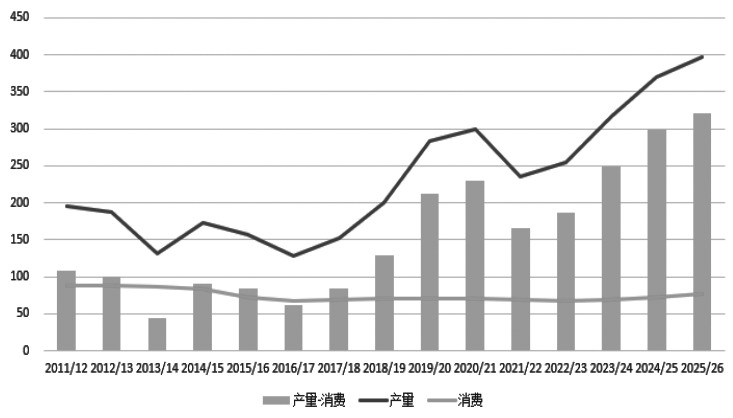
Report's Investment Rating for the Industry - The industry investment rating suggests the cotton market is "oscillating with a slight upward trend, and low-buying is advisable" [3] Core Viewpoints of the Report - The USDA's June global cotton supply and demand forecast shows that in the 2025/26 season, global cotton production is expected to be 25.65 million tons, a year-on-year decrease of 710,000 tons, while global consumption is expected to be 25.708 million tons, a year-on-year increase of 304,000 tons. The planting area of cotton in the US in 2025 has decreased by 12% year-on-year to 9.867 million acres, with an 8% reduction in the main producing area of Texas. The planting progress is slow, and the good and excellent rate is 49%, lower than the same period last year. The USDA predicts that the US cotton production in the 2025/26 season will be 3.18 million tons, a slight year-on-year increase of 1.3%, but the weather in the third quarter remains a key variable [3] - In Xinjiang, China, as the temperature rises, the cotton growth progress has accelerated, generally entering the early flowering stage, and pests have appeared in some cotton fields. The Xinjiang Meteorological Observatory forecasts that most areas in Xinjiang will experience continuous high temperatures above 35°C in the next week, with local short-term heavy precipitation, so the impact of weather changes on cotton growth needs continuous attention [3] - This week, the trend of cotton yarn has been relatively weaker than that of cotton. The spot transaction price has been relatively stable. The processing profit of inland spinning mills has remained around the cash flow. Downstream orders have decreased, and inventory has increased slightly. Spinning mills mainly make rigid-demand purchases and mostly adopt a wait-and-see attitude [3] - As of the end of May 2025, China's commercial cotton inventory was 3.459 million tons, a decrease of 694,000 tons from the end of April. The monthly decline has exceeded 600,000 tons for three consecutive months, and the de-stocking speed has reached a new high in the same period in recent years. If this pace continues, the inventory may drop to a low level before the new cotton is listed (September - October), intensifying market concerns about tight supply and supporting the futures price [3][32] - As of June 27, the registered warehouse receipts of Zhengzhou cotton were 10,302 lots, with 302 lots of valid forecasts. The total of warehouse receipts and valid forecasts was 423,800 tons, compared with 433,400 tons on June 20 [3] - The basis of 31-grade double-28 Xinjiang new cotton against the 05 contract is 950 - 980 yuan/ton, and that of double-29 cotton is 1,050 - 1,100 yuan/ton [3] - The overall average cost of ginning plants this year, converted to the official standard, is 14,700 - 14,800 yuan. Against the backdrop of the withdrawal of some ginning plant production capacity in northern Xinjiang and the poor overall demand outlook for the new season, the expected opening price is not expected to be high [3] - The ceasefire agreement between Israel and Iran shows fragility, but the short-term easing of the Middle East geopolitical situation has a positive impact on the market. Market expectations of a higher probability of the Fed cutting interest rates in September and China's timely introduction of incremental reserve policies have boosted market confidence in the short term through the expectation of monetary easing [3] - Recent cotton price rebounds are mainly due to crowded short-selling funds, low valuations, and the depletion of high-quality domestic cotton caused by reduced imports of cotton and cotton yarn this year, which has led to a continuous strengthening of the basis. However, the downstream is in a loss state, so in the short term, attention should be paid to the issuance of sliding-scale import quotas or even state reserve sales that may be triggered by the difficulties faced by spinning mills, which could effectively address the continuously decreasing cotton inventory [3] Summary According to the Directory Global Cotton Supply and Demand - The USDA estimates that the world will continue to accumulate cotton stocks. From the 2020/21 season to the 2024/25 season, the global ending inventory has generally increased, and the inventory-to-use ratio has also risen from 58.54% to 67.97% [5] - The new season is still expected to have an oversupply of cotton globally [8] US Cotton Exports - The export prospects of US cotton in the next season face significant challenges and uncertainties. The trade war poses a major risk to the supply chain, and textile-producing countries are very cautious about forward purchases of US cotton. If China's tariffs on US cotton continue, China's purchases of US cotton in the next season will also remain stagnant. Additionally, Brazil's record-high production will compete with US cotton in the supply market, and the export contracts for US cotton in the 2025/26 season are expected to be signed very slowly [14] Overseas and Domestic Market Conditions - Overseas cotton mill operating rates are relatively stable [18] - In China, the downstream operating rates have slightly rebounded, and the operating rates of weaving factories have steadily increased [21][24] - Chinese cotton spinning enterprises maintain rigid-demand restocking, with insufficient initiative for restocking [27] - In China, the raw material inventory of weaving factories has declined, while the finished product inventory has continued to accumulate [30] - The total volume of new cotton warehouse receipts in China remains high [34]
软商品专场 - 年度中期策略会
2025-06-26 14:09
Summary of Conference Call Records Industry Overview - **Sugar Industry**: The records primarily discuss the sugar industry, focusing on Brazil, India, Thailand, and China, along with insights into the wood industry in New Zealand. Key Points Brazil Sugar Production - **Cane Crushing and Sugar Production**: Brazil's sugarcane crushing volume and sugar production decreased by 11.85% and 11.64% year-on-year as of May 2025 due to heavy rainfall in April and early May. However, production improved in late May as rainfall decreased, leading to a recovery in sugar production [3][5][6]. - **Total Sugar Production Forecast**: Despite lower yields, the sugar production ratio increased, with total sugar production expected to exceed 40 million tons for the 2025 season [5][6]. - **Ethanol Market**: Ethanol sales in Brazil remained stable year-on-year, with a high market share of hydrous ethanol in the fuel market, indicating a surplus supply of sugarcane [7]. International Sugar Market - **India's Sugar Production**: For the 2025/26 season, India's sugar production is expected to increase significantly to between 32.3 million and 35 million tons due to favorable rainfall and increased procurement prices [11][12]. - **Thailand's Sugar Production**: Thailand's sugar production is expected to remain stable or slightly increase due to good rainfall and an increase in planting area [13]. Domestic Sugar Market (China) - **Production and Sales**: China's sugar production and sales are expected to increase for the 2024/25 season, with a significant reduction in imports. Sugar syrup and premix powder imports have also decreased, positively impacting domestic sugar prices [14][15]. - **Weather Impact**: The weather in Guangxi during the third quarter is crucial for sugarcane yields, with historical data indicating that rainfall during this period significantly affects final yields [16][19]. Wood Industry (New Zealand) - **Current Market Conditions**: The New Zealand wood industry is in a downturn, with low international demand leading to reduced production and exports. The domestic wood futures and spot prices are weak, and a surplus supply is expected in the next two years, followed by a reduction cycle starting in 2027 [4][20][24]. Price Trends and Market Outlook - **Sugar Price Trends**: The sugar prices are expected to remain weak and volatile in the near term due to strong production forecasts in major producing countries. The market is closely monitoring weather conditions that could impact yields [2][19]. - **Wood Price Trends**: The wood market is expected to see a slight rebound in prices, but overall, the market remains in a downtrend due to weak demand [20][31]. Additional Insights - **Export and Inventory Levels**: Brazil's sugar exports from January to May 2025 totaled 9.5381 million tons, a significant decrease year-on-year, with inventories at a low level of 2.8 million tons, down 35.37% [9]. - **Weather Predictions**: Future weather patterns in Brazil indicate potential challenges for sugarcane harvesting in June but favorable conditions from July to September, which could benefit sugarcane growth [10]. This summary encapsulates the critical insights from the conference call records, focusing on the sugar and wood industries, their production forecasts, market conditions, and price trends.
市场担忧巴西供应,白糖短期有所支撑
Xin Da Qi Huo· 2025-05-30 01:09
Report Industry Investment Ratings - Sugar: Oscillation [1] - Cotton: Oscillation [1] Core Views - Sugar: Sugarcane planting area has increased due to economic benefits, national policies, and support from sugar - making enterprises. However, early drought in Guangxi limited sugar production growth. Sugar consumption is expected to remain stable or increase slightly, the supply - demand gap is basically stable, and imports are expected to stay at 5 million tons. Short - term strategy is to wait and see [1]. - Cotton: The cotton target price subsidy policy in Xinjiang is stable, leading to a slight increase in planting area, while the planting area in inland areas continues to decline. The climate during sowing and emergence was good, with expected stable yield per unit area. Total cotton output is expected to be 6.25 million tons, a 1.4% increase from last year. Cotton consumption is expected to be weak due to US tariffs, with consumption expected to be 7.4 million tons, a decrease of 200,000 tons from last year, and imports to be 1.4 million tons, a decrease of 100,000 tons. Short - term strategy is to wait and see [1]. Data Summary Price Changes - **Outer - market Quotes**: On May 28 - 29, 2025, the price of US sugar increased by 0.77% from $16.91 to $17.04, and the price of US cotton decreased by 0.46% from $65.33 to $65.03 [3]. - **Spot Prices**: Sugar prices in Nanning and Kunming remained unchanged on May 28 - 29, 2025. The cotton index 328 decreased by 0.04%, and the price of cotton in Xinjiang decreased by 0.34% [3]. - **Spreads**: Different sugar and cotton spreads showed various changes on May 28 - 29, 2025, with the SR01 - 05 spread decreasing by 5.56%, the SR09 - 01 increasing by 1.65%, etc. [3]. - **Import Prices**: The cotton cotlookA price remained unchanged on May 28 - 29, 2025 [3]. - **Profit Margins**: The sugar import profit remained unchanged on May 28 - 29, 2025 [3]. Options and Warehouse Receipts - **Options**: The implied volatilities of SR509C5800, SR509P5800, CF509C13400, and CF509P13400 are 0.0801, 0.0811, 0.0978, and 0.0967 respectively [3]. - **Warehouse Receipts**: On May 28 - 29, 2025, the number of sugar warehouse receipts decreased by 0.32% to 31,481, and the number of cotton warehouse receipts decreased by 0.46% to 11,157 [3]. Company Information - **Company Overview**: CINDA Futures Co., Ltd. is a limited - liability company specializing in domestic futures business. It is wholly - owned by CINDA Securities Co., Ltd., with a registered capital of 600 million RMB. It is a well - regulated and high - reputation large - scale futures company in China [9]. - **Exchange Membership**: It is a full - settlement member of the China Financial Futures Exchange, a full - fledged member of the Shanghai Futures Exchange, Zhengzhou Commodity Exchange, and Dalian Commodity Exchange, and a member of the Shanghai International Energy Exchange and Guangzhou Futures Exchange [9].
长江期货棉纺产业周报:临近6月国际局势博弈,上行遇压-20250526
Chang Jiang Qi Huo· 2025-05-26 01:56
1. Report Industry Investment Rating - No information provided regarding the industry investment rating in the report. 2. Core Viewpoints of the Report - The domestic cotton supply is tight this year. By the end of August, the commercial inventory is expected to be 155 million tons, lower than 214 million tons in the same period last year and 163 million tons in 2023. The 09 contract is relatively strong. However, the new - cotton supply in 2001 contract is expected to be abundant, with an estimated output of 7.5 billion tons, which limits the price increase. In the short - to - medium term, the upside of cotton prices is restricted. Near June, international situation games and potential setbacks in Sino - US negotiations in July and August may cause price drops. The future cotton price increase is affected by the macro - situation. If the negotiation results are good and the Fed cuts interest rates, cotton prices may continue to rise after a decline, challenging 15000 - 15100. If the negotiation fails, prices will fall further. It is recommended to conduct hedging at the rebound high this year to prevent instability [3]. 3. Summary by Relevant Catalog 3.1. Weekly Viewpoints - The domestic cotton supply is tight this year due to factors such as limited quotas, reduced imported cotton, and high monthly consumption. The 09 contract is strong, while the 01 contract is restricted by the expected abundant new - cotton supply. Short - to - medium - term price increases are limited, and the future price trend depends on Sino - US negotiation results and the macro - situation [3]. 3.2. Market Review - This week, domestic cotton futures and spot prices fluctuated. The downstream industry's rigid demand has resilience, with no significant decline in the downstream operating rate and low finished - product inventory. However, the long - term downstream demand expectation is weak, and there is no strong driving force for cotton price increases. Attention should be paid to changes in downstream demand [5]. - The table shows the prices, weekly changes, and weekly change rates of cotton and related products, including cotton futures, cotton yarn futures, US cotton futures, etc. [6] 3.3. Macroeconomic Situation - In April, China's economy maintained stable growth. The added value of industrial enterprises above designated size increased by 6.1% year - on - year, the service industry production index rose by 6%, and social consumer goods retail sales increased by 5.1%. From January to April, national fixed - asset investment increased by 4% year - on - year, and after excluding real - estate development investment, it increased by 8%. The urban survey unemployment rate in April was 5.1%, a decrease of 0.1 percentage points from the previous month. From January to April, real - estate development investment decreased by 10.3% year - on - year, and the sales area of newly built commercial housing decreased by 2.8%. - China's latest LPR decreased. The 1 - year LPR dropped to 3%, and the over - 5 - year LPR dropped to 3.5%, both by 10 basis points. The six major state - owned banks and some joint - stock banks lowered RMB deposit interest rates, with a reduction of 5 to 25 basis points for current, time, and notice deposits. The large - certificate deposit interest rates of many state - owned banks also decreased, with some terms dropping by up to 35 basis points. Beijing and Shanghai lowered mortgage interest rates by 10 basis points following the LPR cut. - The preliminary value of the eurozone's manufacturing PMI in May improved slightly to 49.2, but the service industry PMI unexpectedly dropped significantly to 48.9, the worst performance in 16 months, dragging the composite PMI down from 50.4 in April to 49.5. The economic activity in France has contracted for 9 consecutive months, and the service industry activities in Germany and France have declined. The money market has increased bets on the European Central Bank to cut interest rates twice this year. - As of the week ending May 17, the number of initial jobless claims in the US decreased by 2000 to 227,000, a four - week low, indicating that the job market remains healthy despite trade - policy uncertainties [10]. 3.4. Industrial Chain - In April, China exported 124 tons of cotton, a 64.9% decrease from the previous month and a 97.7% decrease from the same period last year. From January to April 2025, the cumulative export was 2193 tons, a 72.0% decrease from the same period last year. In the 2024/25 season (from September 2024 to August 2025), the cumulative export was 12000 tons, a 22.3% increase from the same period last year. In April 2025, the export volume of cotton yarn was 29400 tons, a 6.17% decrease from the previous month but an 8.42% increase from the same period last year, ranking the highest among the same - period exports in the past five years. From January to April 2025, the cumulative export volume of cotton yarn in China was 114700 tons, a 27.25% increase from the same period last year, and the cumulative export value was 450 million US dollars, a 14.53% increase from the same period last year. - In April, the retail sales of clothing, footwear, and textile products were 108.8 billion yuan, a 2.2% increase from the same period last year but a 12.26% decrease from the previous month. From January to April, the cumulative retail sales were 493.9 billion yuan, a 3.1% increase from the same period last year. - As of the beginning of May, the new - cotton harvest in Brazil in 2025 had not started, and the total production forecast remained at a high level of 3.95 billion tons. In April 2025, Brazil exported 239,000 tons of cotton, basically the same as the previous month. Turkey, Pakistan, and Bangladesh were the main buyers. In this season (from August 2024 to July 2025), the cumulative export volume was 2.383 billion tons, remaining at a historical high level. As of the beginning of May, the processing and inspection of cotton in Brazil in 2024 (corresponding to the USDA 2024/25 season) had been completed. The sales progress was 94%, a 2 - percentage - point increase from the previous month. The sowing progress of new cotton in 2025 (corresponding to the USDA 2025/26 season) was 100%, and the pre - sale progress was 59%. - Affected by tariff panic in April, the textile and clothing exports in Pakistan decreased briefly. In April 2025, the export value of textile and clothing in Pakistan was 1.221 billion US dollars, a 1.35% decrease from the same period last year and a 14.64% decrease from the previous month. The export volume of cotton yarn was 14,000 tons, a 28.27% decrease from the same period last year and a 35.42% decrease from the previous month. The export volume of cotton cloth was 234 million tons, a 7.31% decrease from the same period last year and a 14.27% decrease from the previous month [12]. 3.5. Global Supply - Demand Balance Sheet - According to the USDA's May global cotton supply - demand forecast report, in the 2025/26 season, the global cotton production will decrease year - on - year but remain at the second - highest level in the past five years. Consumption will increase year - on - year, reaching the highest level in the past five years. The reduction in the ending inventory in the new season is limited, and it will still be at the second - highest level in the past five years. - In the 2024/25 season, the global cotton production is expected to increase slightly month - on - month, and the consumption expectation is slightly increased, with the increase in consumption greater than that in supply. The ending inventory this season will decrease slightly. The global cotton production is expected to be 26.36 billion tons, a 390,000 - ton increase from the previous month, an increase of 0.1%. The global consumption is expected to be 25.404 billion tons, a 143,000 - ton increase from the previous month, an increase of 0.6%. The global ending inventory is 17.071 billion tons, a 99,000 - ton decrease from the previous month, a decrease of 0.6% [13]. 3.6. Domestic Supply - Demand Balance Sheet - In the 2024/25 season, in terms of total supply, the beginning inventory and production are the same as last month. As of March, China's cumulative imported cotton was 820,000 tons. Due to factors such as tight import quotas and a significant narrowing of the domestic - foreign cotton price difference, the import volume is reduced by 500,000 tons to 1.25 billion tons, and the total supply is reduced by 500,000 tons to 14.91 billion tons. In terms of total demand, in April, affected by Trump's tariff increase, the orders of textile enterprises decreased, but the operating rate remained high, and the cotton consumption was maintained at a high level. In May, production and sales slowed down, but the overall consumption situation was good. After China and the US reached a consensus, the export expectation of textile and clothing improved, and the cotton - spinning consumption expectation is increased by 600,000 tons to 7.81 billion tons. - In the 2025/26 season, in terms of total supply, the beginning inventory is reduced by 1.1 billion tons to 6.7 billion tons. In terms of production, affected by factors such as the prominent cotton - planting income advantage in Xinjiang, the cotton - sowing area increases slightly, and the total output increases by 600,000 tons to 6.79 billion tons. In terms of imports, after the Sino - US economic and trade negotiation reached a consensus, the import volume remains at 1.6 billion tons, and the total supply is reduced by 500,000 tons to 15.09 billion tons. In terms of total demand, after the Sino - US consensus, the long - term export expectation of textile and clothing to the US improves, and the domestic demand market will remain stable under loose monetary policies and consumption - promotion measures. The cotton - spinning consumption expectation is increased by 600,000 tons to 7.74 billion tons [17]. 3.7. US Cotton Exports - From May 9th to May 15th, the net signing volume of US upland cotton in the 2024/25 season was 32,069 tons (including 34,723 tons of signing and 2654 tons of cancellation of previous signing), a 16% increase from the previous week and a 41% increase from the average of the past four weeks. The shipment volume of upland cotton was 57,039 tons, a 24% decrease from the previous week and a 27% decrease from the average of the past four weeks. The net signing volume of Pima cotton this season was 2200 tons, a 91% increase from the previous week, and the shipment volume was 1724 tons, a 21% decrease from the previous week. The signing volume of new - season upland cotton was 1678 tons, and there was no signing of new - season Pima cotton. - In the same week, China's net signing volume of upland cotton this season was 3016 tons (3039 tons of new signing and 23 tons of cancellation of previous signing), and the shipment volume was 1519 tons, a significant increase from the previous week. There was no signing or shipment of Pima cotton [21]. 3.8. Industrial and Commercial Inventories - At the end of April, the national commercial cotton inventory was 4.1526 billion tons, a decrease of 687,000 tons from the previous month, a decrease of 14.20%, and 183,300 tons lower than the same period last year, a decrease of 4.29%. - At the end of April, the industrial cotton inventory of cotton - textile enterprises showed a slightly decreasing trend. As of the end of April, the in - stock industrial cotton inventory of textile enterprises was 954,200 tons, a decrease of 5100 tons from the end of last month. The disposable cotton inventory of textile enterprises was 1.2884 billion tons, a decrease of 7300 tons from the end of last month. - The total industrial and commercial inventory was 5.1068 billion tons, a decrease of 135,400 tons from the same period last year and a decrease of 692,100 tons from the previous month [24]. 3.9. US Cotton Climate - In the Southwest Cotton Region, on Thursday, the weather in West Texas was sunny and hot, with the highest daytime temperature between 35 - 37°C. The soil - moisture evaporation rate accelerated, and this weather pattern will continue. Although there is no overall drought in the region, the bottom - layer soil moisture is still insufficient. However, it is expected that the probability of thunderstorms will increase in this region with the arrival of a cold air mass this weekend, and the expected precipitation is between 6 - 19mm. Therefore, cotton farmers in the High Plains region are seizing the time to complete sowing as much as possible before the rain. - In the South - Central Cotton Region, on Thursday, the weather in this region changed from cloudy to sunny, and the temperature was close to the seasonal level, with the highest daytime temperature around 27°C. Currently, the wet soil in the local area is gradually drying, and the sowing operation is resuming. The soil moisture content in the Delta region is close to saturation, and the local area urgently needs a period of sunny and warm weather to improve the growth conditions of cotton plants and allow cotton farmers to complete the sowing operation [27]. 3.10. Xinjiang Region - On the 23rd, there was light rain (snow in high - altitude areas) in some areas of the western part of Northern Xinjiang, Tacheng region, Tianshan Mountains, western mountainous areas of Southern Xinjiang, the northern slope of the Kunlun Mountains, and northern mountainous areas of Hami. Among them, there was moderate to heavy rain in some local areas of the Ili River Valley, western mountainous areas of Bortala Mongol Autonomous Prefecture, and southern mountainous areas of Kashgar. There were about level - 5 easterly winds in the northern part of Tacheng region, western part of Altay region, Urumqi, Changji Prefecture, and northern part of Hami. Among them, the wind force in the Laofengkou and Mayitas wind areas of Tacheng region, the Naohai wind area of Altay region, and the Wulapo and Hongyanchi wind areas of Urumqi reached level 7 - 8, with gusts of level 9. There were about level - 5 easterly winds in the Southern Xinjiang Basin, with gusts of level 7, accompanied by varying degrees of sand - dust weather. - From the 23rd to the 25th, there is a high possibility of short - term heavy precipitation, thunderstorms, gales, hail and other severe convective weather in some local areas of the mountainous areas of the Ili River Valley, Bortala Mongol Autonomous Prefecture, southern mountainous areas of Tacheng region, mountainous areas of Changji Prefecture, and northern mountainous areas of Bayingolin Mongol Autonomous Prefecture. Precautions should be taken against severe convective weather, mountain floods and geological disasters. - In the next three days, the strong winds in the wind gaps of Northern and Eastern Xinjiang and the sand - dust weather in Southern Xinjiang will have an adverse impact on tourism, agriculture and animal husbandry, and transportation. Precautions should be strengthened [29][31]. 3.11. Warehouse Receipts and Non - Commercial Positions - As of May 23rd in the 2024/25 season, the number of Zhengzhou cotton warehouse receipts was 11,359, with 327 valid forecasts, and the total warehouse receipts were 11,686, a decrease of 227 from the previous week. - As of May 13th, the net long position of non - commercial futures and options in the ICE cotton futures market was - 22,396 contracts, a decrease of 7850 from the previous week. The net long position of non - commercial futures only was - 17,543 contracts, a decrease of 7467. The net long position of the commodity - index fund was 60,702 contracts, an increase of 682 [34]. 3.12. Cotton and Cotton Yarn Basis - This week, cotton prices fluctuated within a narrow range, and cotton - yarn prices fluctuated. - The current cotton basis is 1198 yuan, an increase of 11 yuan from the previous week. - The current cotton - yarn basis is 870 yuan, a decrease of 30 yuan from the previous week [38]. 3.13. Domestic - Foreign Cotton and Cotton Yarn Price Differences - The domestic - foreign cotton price difference has narrowed.
长江期货棉纺产业周报:短期供应偏紧,期价震荡偏强-20250519
Chang Jiang Qi Huo· 2025-05-19 02:20
Report Industry Investment Rating No relevant information provided. Core View of the Report The current supply of cotton in China is tight in the short - to - medium - term, with the 09 contract showing a high probability of short - to - medium - term upward movement. However, the 01 contract may be restricted in its upward potential due to expected new cotton production increases. The cotton price is expected to rise in May and June, but caution is needed in July and August. The long - term price trend is affected by macro factors such as Sino - US negotiations and Fed policies [3]. Summary by Directory 1. Weekly View - The current supply of cotton in China is tight. By the end of August, commercial inventory is expected to be 155 million tons, lower than the same period last year and in 2023. The 09 contract is strong, with a high probability of short - to - medium - term upward movement. The 01 contract may be restricted by expected new cotton production increases in Xinjiang [3]. - The short - to - medium - term upward limit is 14,000 - 14,100. The cotton price is expected to rise in May and June due to Sino - US trade war easing and potential export rush, but caution is needed in July and August as Sino - US negotiations may be unstable [3]. - The long - term price trend is affected by macro factors. If the negotiation results are good and the Fed cuts interest rates, the cotton price may continue to rise after a decline, challenging 15,000 - 15,100. If the negotiations fail, the price may fall [3]. 2. Market Review - This week, domestic cotton futures and spot prices rose significantly due to the relatively smooth Sino - US talks in Geneva and the release of a joint statement on May 12. The pure cotton yarn market is in the traditional off - season, and the industrial transmission is not obvious [5]. - The cotton main contract price was 13,390, up 1,440 or 13.3%; the cotton yarn main contract price was 19,750, up 135 or 0.2%; the US cotton main contract price was 65.43, down 1.7 or 2.6% [6]. 3. Macroeconomic Aspect - The Sino - US economic and trade high - level talks in Geneva from May 10 - 11 were positive, with the two sides agreeing to establish a consultation mechanism and releasing a joint statement on May 12 [10]. - The US economic activity is slowing down, with April PPI falling 0.5% month - on - month, retail sales growing only 0.1% month - on - month, and manufacturing output falling 0.4% month - on - month. The May housing builder confidence index also dropped to the lowest level since late 2023 [10]. - The US initial jobless claims remained stable at 229,000, while the continued claims increased by 9,000 to 1.881 million [10]. - The Eurozone's Q1 economic growth was revised down, but the labor market remained strong with a 0.3% employment growth [10]. 4. Industrial Chain - In April 2025, China's cotton textile industry PMI was 34.11%, down 26.10 percentage points from the previous month, falling below the boom - bust line. New orders, production, and operating rates all dropped, cotton inventory decreased slightly, and cotton yarn inventory increased significantly [12]. - India's clothing exports in April 2025 were 1.371 billion US dollars, a 14.43% year - on - year increase and a 10.45% month - on - month decrease. From January to April, the total clothing exports were 6.043 billion US dollars, an 8.14% year - on - year increase [12]. - Brazil's 2024/25 cotton production is expected to be 3.905 million tons, a 5.5% year - on - year increase, due to an expected increase in planting area [12]. - India's 2024/25 cotton production is expected to be 5.002 million tons, a 9.5% year - on - year decrease, with consumption expected to be 5.712 million tons, a 5.2% year - on - year decrease [12]. 5. Global Supply - Demand Balance Sheet - In the 2025/26 global cotton supply - demand forecast, production is expected to decrease year - on - year but remain at the second - highest level in the past five years, consumption is expected to increase year - on - year to the highest level in the past five years, and the ending inventory will decrease slightly [13]. - In the 2024/25 forecast, global cotton production is expected to increase slightly month - on - month, consumption is expected to increase slightly, and the ending inventory will decrease slightly [13]. 6. Domestic Supply - Demand Balance Sheet - In the 2024/25 season, total supply decreased by 500,000 tons to 14.91 million tons due to a reduction in imports. Total demand increased by 60,000 tons to 8.21 million tons, mainly due to an increase in cotton consumption for spinning [16][17]. - In the 2025/26 season, total supply decreased by 500,000 tons to 15.09 million tons, with a decrease in beginning inventory and an increase in production. Total demand increased by 60,000 tons to 8.14 million tons [16][17]. 7. US Cotton Exports - From May 2 - 8, the net signing of US 2024/25 upland cotton was 27,715 tons, an 86% increase from the previous week and a 2% increase from the four - week average. The shipment was 74,661 tons, a 17% decrease from the previous week and a 5% decrease from the four - week average [20]. - China's net signing of current - year upland cotton was 0 tons, with a significant increase in shipment. There was no signing of Pima cotton and no signing of next - year's upland cotton [20]. 8. Industrial and Commercial Inventories - By the end of April, the national cotton commercial inventory was 4.1526 million tons, a 14.20% decrease from the previous month and a 4.29% decrease from the same period last year [23]. - By the end of April, the cotton industrial inventory of textile enterprises was 954,200 tons, a decrease of 5,100 tons from the end of the previous month. The disposable cotton inventory was 1.2884 million tons, a decrease of 7,300 tons from the end of the previous month [23]. - The total industrial and commercial inventory was 5.1068 million tons, a decrease of 135,400 tons year - on - year and a decrease of 692,100 tons month - on - month [23]. 9. Cotton Climate - In the Southwest Cotton Region, the weather is sunny, and the sowing operation is in progress. The soil moisture in the sub - surface layer is insufficient, and rainfall is needed [24]. - In the South - Central Cotton Region, the weather is warm, but there is a 40% - 50% probability of scattered thunderstorms in the future, which may delay outdoor operations [28]. 10. Xinjiang Region - On the 16th, there was light rain in parts of the southwestern mountainous areas of southern Xinjiang, and windy and high - temperature weather in parts of northern Xinjiang, eastern Xinjiang, etc. High - temperature weather is expected in parts of Junggar Basin, Tarim Basin, and eastern Xinjiang in the next three days, with a high fire risk level [32]. 11. Warehouse Receipts and Positions - As of May 16, the number of Zhengzhou cotton warehouse receipts was 11,548, with an effective forecast of 365, and the total warehouse receipts were 11,913, a decrease of 222 from the previous week [35]. - As of May 6, the non - commercial net long positions in ICE cotton futures and options increased by 1,452 to - 14,546; the pure futures non - commercial net long positions increased by 1,662 to - 10,076; the commodity index fund net long positions increased by 2,692 to 60,020 [35]. 12. Basis - The current cotton basis is 1,187 yuan, an increase of 15 yuan from the previous week; the current cotton yarn basis is 900 yuan, a decrease of 180 yuan from the previous week [39]. 13. Price Differences - The difference between domestic and foreign cotton prices has widened, currently at 1,222 yuan, an increase of 600 yuan from the previous week; the difference between domestic and foreign cotton yarn prices has widened, currently at - 1,368 yuan, an increase of 262 yuan from the previous week [43]. 14. Industrial Chain Load - The production enthusiasm of textile enterprises is fair, and the operating rate is relatively stable [45]. 15. Industrial Chain Inventory - The inventory of textile enterprises has decreased, and the overall yarn inventory has been transferred to traders [53]. 16. Industrial Chain Profits - Due to the significant increase in cotton prices compared to cotton yarn prices, inland textile enterprises currently have a small loss in immediate cash flow [55].
建信期货棉花日报-20250515
Jian Xin Qi Huo· 2025-05-15 02:43
Report Information - Industry: Cotton [1] - Date: May 15, 2025 [2] - Researchers: Yulan Lan, Zhenlei Lin, Haifeng Wang, Chenliang Hong, Youran Liu [3] Report Core View - Tariffs entered a relaxation period, Zhengzhou cotton filled the gap, but the overall weak fundamental pattern remained unchanged. It is recommended to focus on the performance of the upper resistance level and mainly conduct range operations [8] Summary by Directory 1. Market Review and Operation Suggestions - Spot cotton price index: The latest 328 - grade cotton price index was 14,484 yuan/ton, up 100 yuan/ton from the previous trading day [7] - Spot cotton basis quotes: In northern Xinjiang, the mainstream sales basis quotes for 2024/25 machine - picked cotton were above CF09 + 1000, with some high quotes above 1100; in southern Xinjiang's Kashgar, the basis for machine - picked 31 - grade double 29 cotton was above CF09 + 800, and some non - Kashgar high - quality lint was quoted around CF09 + 1000 [7] - Pure cotton yarn market: This week's trading was still average, with demand declining in the off - season. Spinning mills mostly raised prices, but downstream procurement decreased after the price increase, and inventory accumulated, with overall market confidence lacking [7] - All - cotton grey fabric market: It was sluggish, with a significant decline in order volume and shipping speed, and it is expected that the inventory of weaving factories will continue to increase [7] - Macro aspect: The tariff relaxation period took effect at 12:01 on May 14, and positive effects continued to be released [8] - Overseas market: The US Department of Agriculture's May global cotton supply - demand report was slightly bearish, and the outer market was under pressure within a wide - range shock range. Attention should be paid to the subsequent growth and signing of US cotton [8] - Domestic market: The overall planting of new cotton was good, the sown area was expected to increase steadily, and the overall growth was okay. The downstream was in a weak state in the off - season, with the finished product inventory gradually accumulating but the inventory pressure not high. The Ministry of Agriculture and Rural Affairs predicted that in the 2025/26 season, domestic cotton would still show a trend of increasing production and weak consumption [8] 2. Industry News - 2025/26 season: China's cotton sown area is expected to be 2,878 thousand hectares (43.17 million mu), a 1.4% increase from the previous year; the yield per hectare is expected to be 2,172 kg (144.8 kg per mu), the same as the previous year; the cotton output is expected to be 6.25 million tons, a 1.4% increase from the previous year [9] - Consumption and import: Affected by US tariffs, cotton consumption is expected to be weak, with consumption in the new season expected to be 7.4 million tons, a decrease of 200,000 tons from the previous year, and imports expected to be 1.4 million tons, a decrease of 100,000 tons from the previous year [9] 3. Data Overview - The report presented multiple figures related to cotton, including futures prices, basis changes, spreads, commercial and industrial inventories, and exchange rates, with data sources from Wind and the Research and Development Department of CCB Futures [16][20][22]
棉花周报:贸易情绪缓和助力反弹,关注谈判进展-20250512
Guo Lian Qi Huo· 2025-05-12 08:47
Group 1: Report Investment Rating - There is no information about the industry investment rating in the report. Group 2: Core Views - According to the USDA's April 2024/25 global cotton supply - demand forecast, global cotton production is expected to be 26.321 million tons, consumption is down 114,000 tons, imports and exports are slightly down, and ending stocks are up 115,000 tons. The overall sowing progress of cotton in Xinjiang as of May 5, 2025, is about 99.9%, and the emergence rate is 86.2% [3]. - This week, the futures price of pure - cotton yarn strengthened following Zhengzhou cotton, and the yarn price rose in a restorative manner. After the holiday, the market was stable overall. Affected by the off - season, market transactions slowed down, and new orders decreased. Most small and medium - sized textile enterprises mainly had short, scattered, and low - profit orders, while large and medium - sized enterprises maintained high operating rates, but some had moderately reduced production [3]. - The industrial inventory of cotton in cotton textile enterprises is decreasing. As of the end of March, the commercial inventory of cotton was 4.8396 million tons, and the industrial inventory of cotton in textile enterprises was 959,300 tons. The total industrial and commercial inventory is still at a high level [3]. - As of May 9, 2025, the registered warehouse receipts of Zhengzhou cotton were 11,282 (4.85 million tons), with 853 valid forecasts (370,000 tons), and the total of warehouse receipts and valid forecasts was 5.22 million tons, down from 5.31 million tons on April 30 [3]. - The basis of Class 31 double - 28 Xinjiang new cotton against the May contract is 800 - 850 yuan/ton, and that of double - 29 cotton is 900 - 950 yuan/ton [3]. - Xinjiang's ginneries this season purchase cotton according to the futures price. After the sharp decline of cotton futures after the National Day, the purchase price of seed cotton decreased, and the overall average cost converted to the official standard is 14,700 - 14,800 yuan [3]. - The Fed kept the federal funds rate target range unchanged at 4.25% - 4.5%. Domestically, on May 7, the central bank cut the reserve requirement ratio and interest rates and introduced a package of financial policies. As of May 10, the China - US economic and trade high - level talks started in Geneva, but no more information was released about the tariff negotiations [3]. - Given the global trade contraction, the rebound of cotton prices is expected to have limited amplitude and sustainability. The September contract faces significant hedging pressure at 13,200 - 13,400 yuan. The strategy is to short on rallies, mainly using the idea of short - term shorting and covering at lows [3]. Group 3: Summary by Directory Global Supply and Demand - The USDA estimates that the world will continue to accumulate cotton stocks in the 2024/25 season. Global ending stocks are expected to be 17.17 million tons, with an inventory - to - use ratio of 67.97%, up 3.10 percentage points year - on - year [6]. - In April, the USDA increased China's cotton production forecast for the 2024/25 season to 6.967 million tons, a year - on - year increase of 16.99%. Global production is expected to be 26.321 million tons, a 7.00% increase [9]. - The new - season global cotton market is still expected to have a supply surplus [11]. US Exports - As of April 24, 2025, the US had cumulatively signed net export contracts for 2.58 million tons of 2024/25 cotton, reaching 108.71% of the annual expected export volume, and had shipped 1.827 million tons, with a shipment rate of 70.84% [17]. Overseas and Domestic Conditions - Overseas cotton mill operating rates are relatively stable [22]. - In China, the downstream operating rate has slightly rebounded, with the weaving factory operating rate steadily increasing. However, downstream enterprises mainly replenish inventory on a just - in - time basis, and the initiative to replenish inventory is insufficient. The raw material inventory of weaving factories has decreased, while the finished - product inventory has continued to accumulate [25][31][34]. - The immediate profit of Chinese spinning mills has slightly rebounded as the futures price declined. The industrial and commercial cotton inventories in China are at their highest levels in recent years, and the total amount of new cotton warehouse receipts is still high [36][39][42].
棉花:现阶段供需双弱,后续重点观察消费
Wu Kuang Qi Huo· 2025-04-15 06:08
Report Summary 1. Report Industry Investment Rating No information provided. 2. Core Viewpoints - The current situation of the domestic cotton market is characterized by weak supply and demand. Although the inventory depletion rate has accelerated since March due to a significant decrease in imports, downstream consumption remains weak. The future trend of cotton prices depends on changes in downstream consumption. If consumption weakens significantly, cotton prices may fall; if consumption does not decline much, there is a possibility of a rebound in Zhengzhou cotton prices. Additionally, factors such as Sino - US trade negotiations and domestic cotton purchase and storage policies may also lead to a rebound in cotton prices [2][20]. 3. Summary by Related Contents Impact of US Tariff Policy on Cotton Prices - On April 2, 2025, the Trump administration announced a 10% "minimum benchmark tariff" on all trading partners and higher tariffs on some countries with large trade deficits. This led to a significant increase in textile and clothing costs for major cotton - importing and textile - exporting countries such as China, Vietnam, and Bangladesh, resulting in a decline in consumption and a sharp drop in domestic and international cotton prices. Subsequently, Sino - US tariffs increased in a spiral. However, on April 10, the US announced a 90 - day suspension of tariffs on more than 75 countries (excluding China), causing US cotton prices to rebound, while short - term domestic and international cotton price trends diverged [4]. Domestic Cotton Consumption - Despite being in the traditional peak season of "Golden March and Silver April," domestic cotton textile and clothing industry demand is weaker than in previous years. As of April 3, the mainstream spinning mill operating rate was 75.7%, a decrease of 6.7 percentage points compared to the same period last year, and the mainstream weaving mill operating rate was 43.7%, a decrease of 18.8 percentage points compared to the same period last year. Moreover, the spinning mill operating rate has been declining for three consecutive weeks since reaching its peak this year on March 6 [5]. Domestic Cotton Supply and Inventory - In the 2024/25 season, domestic cotton production increased significantly, with the national cotton inspection volume reaching 679 million tons as of April 9, an increase of 107 million tons year - on - year. However, imports decreased significantly, with cumulative imports from August 2024 to February 2025 only at 90 million tons, a decrease of 103 million tons year - on - year. It is expected that imports will remain at a low level in March and April. As a result, domestic supply - demand has shifted from loose to tight - balanced, and inventory depletion has accelerated since February. The national commercial cotton inventory decreased from 524 million tons on January 24 to 442 million tons on April 4 [9][12]. Future Outlook - In the short term, international cotton demand is expected to improve due to the 90 - day tariff suspension in most countries by the US. However, the domestic situation is uncertain. Although there is a possibility of resuming re - export trade, current domestic consumption is weak. With limited new import supply until May, the future trend of cotton prices depends on downstream consumption. If consumption is significantly affected by tariffs, prices may fall; otherwise, there is a chance of a rebound [20].