
美联储12月降息预期

Search documents
美联储12月降息预期升温支撑铜价:沪铜日评20251127-20251127
Hong Yuan Qi Huo· 2025-11-27 02:03
Report Summary 1. Report Industry Investment Rating No information about the report industry investment rating is provided in the given content. 2. Core View of the Report The report indicates that due to the weak employment performance in the US, the probability of the Fed cutting interest rates in December has increased, and there are production disturbances in multiple copper mines both at home and abroad. This may lead to a cautiously bullish trend in the price of Shanghai copper. The trading strategy suggests short - term light - position buying on dips for the main contract, with attention to support and resistance levels [2]. 3. Summary by Relevant Aspects Market Data - **Price**: On November 26, 2025, the closing price of the Shanghai copper futures active contract was 86590 (down 10 from the previous day), and the SMM 1 electrolytic copper half - average price was 86655 (up 45 from the previous day). The LME 3 - month copper futures closing price (electronic disk) was 10953 (up 120.5 from the previous day) [2]. - **Volume and Open Interest**: The trading volume of Shanghai copper on November 26, 2025, was 107213 lots (an increase of 20231 lots from the previous day), and the open interest was 204728 lots (an increase of 5146 lots from the previous day) [2]. - **Inventory**: The social inventory of Chinese electrolytic copper decreased compared to last week, while the inventory of LME electrolytic copper and COMEX copper increased compared to last week. The Chinese copper inventory on November 26, 2025, was 39825 tons (a decrease of 1140 tons from the previous day) [2]. Supply - Demand Analysis - **Supply**: There are production disturbances in multiple copper mines both at home and abroad, causing the Chinese copper concentrate import index to remain negative, leading to a tight supply - demand expectation for domestic copper concentrates. The supply of scrap copper has increased, and the processing fees for domestic crude copper or anode plates have risen. The maintenance capacity of copper smelters in November decreased compared to the previous month [2]. - **Demand**: The capacity utilization rates of refined copper rods, copper wires and cables, copper enameled wires, copper strips, copper tubes, and brass rods increased compared to last week, while the capacity utilization rate of recycled copper cups decreased compared to last week [2]. Trading Strategy - Short - term light - position buying on dips for the main contract. Pay attention to the support level around 82000 - 84000 and the resistance level around 88000 - 90000 for Shanghai copper. For LME copper, focus on the support level around 10300 - 10500 and the resistance level around 11000 - 11500. For US copper, note the support level around 4.5 - 4.8 and the resistance level around 5.2 - 5.5 [2].
【UNFX财经事件】政策转向与风险升温交织 黄金受到双重支撑
Sou Hu Cai Jing· 2025-11-25 06:42
Core Viewpoint - Gold prices are experiencing a stable upward trend, supported by expectations of a Federal Reserve rate cut in December and ongoing geopolitical tensions, particularly in Ukraine and the Middle East [1][2] Group 1: Federal Reserve and Economic Indicators - Market expectations for a December rate cut by the Federal Reserve have risen to approximately 80%, significantly higher than previous levels, following comments from several Fed officials [1] - New York Fed President John Williams indicated that short-term rate adjustments would not hinder the process of inflation reduction, while Fed Governor Christopher Waller noted that a weakening job market could prompt a 25 basis point cut in December [1][2] - Upcoming key economic data releases, including PPI, retail sales, and new home sales, may lead to adjustments in investor perceptions regarding the Fed's policy direction [2] Group 2: Geopolitical Tensions and Safe-Haven Demand - Renewed airstrikes by Russia on Kyiv and ongoing conflicts in Gaza have heightened regional tensions, sustaining demand for safe-haven assets like gold [1] - Despite stable performance in stock markets and other risk assets, some investors continue to favor holding gold, reflecting persistent safe-haven demand [1][2] Group 3: Technical Analysis and Market Dynamics - Gold prices found support at $4022, with technical indicators suggesting an upward trend, while resistance levels are identified at $4177–4180, $4200, and $4245 [2] - If gold stabilizes in the $4130–4132 range, bullish momentum may continue, although potential inflation rebounds could pressure gold prices [2] - The current market environment is characterized by a combination of policy expectations and geopolitical uncertainties, with gold's appeal as a risk hedge likely to remain strong [2]
广发期货《能源化工》日报-20251125
Guang Fa Qi Huo· 2025-11-25 03:09
1. Report Industry Investment Ratings No information regarding industry investment ratings is provided in the reports. 2. Core Views of the Reports Methanol Industry - The inland market will see a continuous increase in production. The marginal devices in the inland area are in a loss - making state. The market sentiment has improved due to some Iranian devices starting to shut down due to gas restrictions. The price and basis have both strengthened. It is expected to be volatile and slightly stronger in the short term [1]. Crude Oil Industry - Overnight oil prices rebounded due to the increasing expectation of the Fed's interest rate cut in December and the unsuccessful Russia - Ukraine negotiations. However, under the pressure of continuous production increase by OPEC+ and the record - high US crude oil production, the supply - demand pattern of crude oil remains weak. Brent crude oil is expected to fluctuate in the range of $60 - 66 per barrel in the short term [5]. Polyolefin Industry - For PP, there is a pattern of both supply and demand increasing. The supply has recovered due to fewer maintenance, and the inventory has decreased slightly. For PE, there is a situation of increasing supply and decreasing demand. Although the unplanned maintenance eases some supply pressure, the imported goods are abundant, and the demand is generally weak. The 01 contract is still under great pressure [8]. Glass and Soda Ash Industry - Soda ash has an overall surplus pattern. The weekly production has declined due to some devices reducing their loads, and the soda ash factories have reduced their inventory stage by stage. In the medium term, the demand for soda ash will continue the previous rigid - demand pattern. The supply - demand situation will be further pressured without actual capacity withdrawal or load reduction. Glass has a short - term positive performance driven by cold - repair benefits, but in the long term, it is still under pressure due to the weakening demand and the surplus pattern [9]. Styrene Industry - For pure benzene, the supply is generally loose, and the demand support is limited. The port inventory has increased significantly, and the supply - demand expectation is generally loose. The price may be adjusted due to the drag of oil prices in the short term. For styrene, the supply of goods is limited, and the demand support is expected to be limited. The rebound space is restricted [10]. Natural Rubber Industry - The supply cost is strongly supported, but the inventory is increasing seasonally, and the terminal demand support is insufficient. The downstream enterprise's operating rate is expected to decline further. The natural rubber market is expected to enter a range - bound consolidation [11]. PVC and Caustic Soda Industry - Caustic soda has certain supply - demand pressure, and the price is expected to be weak. PVC has a surplus supply - demand pattern, and the price is expected to continue the weak trend at the bottom [12]. Polyester Industry - PX has limited short - term drive but strong medium - term support. PTA's supply - demand expectation has been significantly repaired, but the rebound space is limited. Ethylene glycol is expected to fluctuate at a low level. Short - fiber's supply - demand is weak, and the processing fee is expected to be compressed. Bottle - chip's supply - demand is in a loose pattern, and the processing fee is expected to decline [13]. LPG Industry - The LPG price has declined, the inventory has increased, and the operating rates of upstream and downstream industries have changed. The overall market situation needs further attention [15]. 3. Summaries According to Relevant Catalogs Methanol Industry - **Price and Spread**: MA2601 and MA2605 prices increased, with increases of 3.64% and 2.81% respectively. The regional spread between Taicang and Inner Mongolia's northern line increased by 475.00% [1]. - **Inventory**: Methanol enterprise inventory, port inventory, and social inventory all decreased, with decreases of 2.86%, 4.16%, and 3.91% respectively [1]. - **Operating Rate**: The operating rate of domestic upstream enterprises decreased by 0.38%, while that of overseas upstream enterprises increased by 0.30%. The operating rate of downstream MTO devices remained unchanged [1]. Crude Oil Industry - **Price and Spread**: Brent and WTI crude oil prices increased, with increases of 1.29% and 1.34% respectively. The refined oil cracking spreads of different regions showed different changes [5]. Polyolefin Industry - **Price and Spread**: The closing prices of L2601, L2605, PP2601, and other contracts increased to varying degrees. The L15 and PP15 spreads increased by 14.75% and 12.82% respectively [8]. - **Operating Rate**: The PE device operating rate decreased by 0.51%, and the PP device operating rate decreased by 1.60% [8]. - **Inventory**: PE and PP enterprise inventories decreased, with decreases of 4.89% and 4.23% respectively [8]. Glass and Soda Ash Industry - **Price and Spread**: Glass 2601 price increased by 2.63%, and soda ash 2601 and 2605 prices increased by 1.11% and 1.20% respectively [9]. - **Operating Rate and Production**: The soda ash operating rate decreased by 4.85%, and the weekly production decreased by 4.86%. The float - glass daily melting volume decreased by 1.98% [9]. - **Inventory**: The glass factory's soda ash inventory days increased by 2.15%, and the soda ash factory's inventory decreased by 0.93% [9]. Styrene Industry - **Price and Spread**: The prices of upstream raw materials such as Brent crude oil and WTI crude oil increased. The price of styrene's EB2601 decreased by 1.1% [10]. - **Inventory**: The inventories of pure benzene and styrene in Jiangsu ports increased by 11.6% and 10.7% respectively [10]. - **Operating Rate**: The domestic pure benzene operating rate decreased by 1.7%, and the styrene operating rate decreased by 0.4% [10]. Natural Rubber Industry - **Price and Spread**: The price of Yunnan state - owned standard rubber increased by 1.36%, and the full - latex basis increased by 24.49% [11]. - **Production and Operating Rate**: The production of natural rubber in some regions decreased, and the operating rates of automobile tire factories decreased [11]. - **Inventory**: The bonded - area inventory and the warehouse - receipt inventory of natural rubber in the SHFE increased by 3.60% and 1.01% respectively [11]. PVC and Caustic Soda Industry - **Price and Spread**: The price of Shandong 32% liquid caustic soda decreased by 2.6%, and the price of East China calcium - carbide - based PVC increased by 0.5% [12]. - **Operating Rate**: The caustic soda industry operating rate increased by 0.6%, and the PVC total operating rate increased by 1.0% [12]. - **Inventory**: The liquid caustic soda inventory in East China and Shandong increased, while the PVC upstream factory inventory decreased by 2.1% [12]. Polyester Industry - **Price and Spread**: The prices of some polyester products such as POY150/48 decreased, and the price of CFR China PX increased by 0.2% [13]. - **Operating Rate**: The Asian PX operating rate increased by 1.5%, and the PTA operating rate decreased by 4.8% [13]. - **Inventory**: The MEG port inventory remained unchanged, and the arrival expectation decreased by 14.4% [13]. LPG Industry - **Price and Spread**: The prices of LPG futures contracts such as PG2512 and PG2601 decreased. The PG12 - 01 spread increased by 21.67% [15]. - **Inventory**: The LPG port inventory increased by 6.28%, and the port storage - capacity ratio increased by 6.29% [15]. - **Operating Rate**: The upstream main - refinery operating rate decreased by 3.35%, and the downstream PDH operating rate decreased by 2.93% [15].
黄金ETF持仓量报告解读(2025-11-21)12月降息预期 抑制金价走势
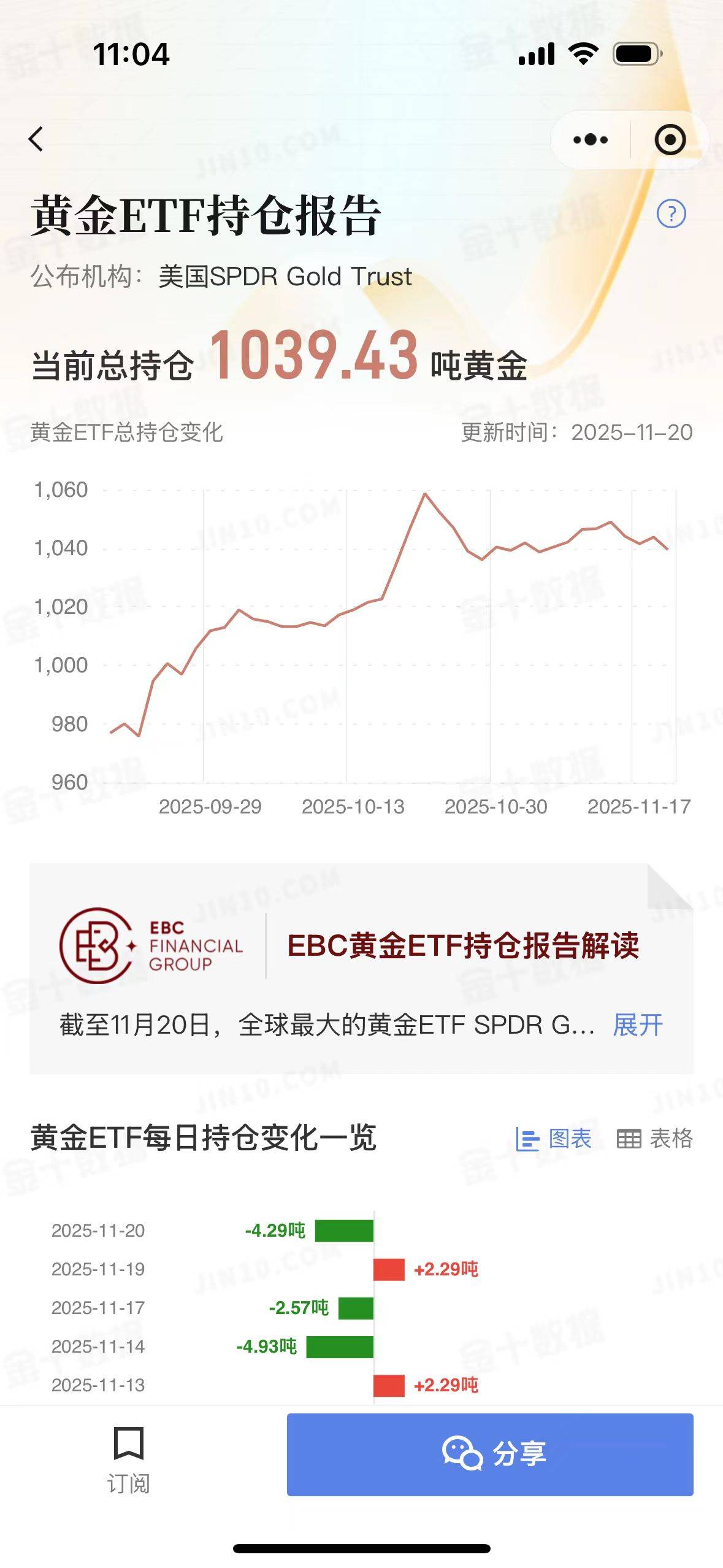
Sou Hu Cai Jing· 2025-11-21 04:09
Core Viewpoint - The SPDR Gold Trust, the world's largest gold ETF, reported a total holding of 1,039.43 tons of gold, reflecting a decrease of 4.29 tons from the previous trading day, amidst fluctuating gold prices and changing market expectations regarding U.S. monetary policy [5]. Group 1: Gold ETF Holdings - As of November 20, the SPDR Gold Trust's holdings were 1,039.43 tons, down by 4.29 tons from the previous day [5]. - The total holdings have fallen below the 1,040-ton mark, indicating a reduction in investor interest during a period of price volatility [5]. Group 2: Gold Price Movements - On November 20, gold prices experienced significant fluctuations, reaching a high of $4,110.03 per ounce and a low of $4,038.82 per ounce, ultimately closing at $4,077.17, down by $0.57 or 0.01% [5]. - The price adjustments were influenced by a decline in expectations for further monetary easing by the Federal Reserve, particularly ahead of key employment data releases [5]. Group 3: Federal Reserve Influence - The release of the September non-farm payroll report showed an increase of 119,000 jobs, exceeding expectations, but the unemployment rate rose to 4.4%, the highest in four years, complicating the Fed's decision-making for December [6]. - Hawkish comments from Federal Reserve officials have contributed to a decrease in rate cut expectations, impacting gold prices negatively [7]. Group 4: Technical Analysis - Technically, gold is showing a sideways consolidation trend, with the 20-day moving average remaining above the 100-day and 200-day moving averages, but the overall upward trend appears to be stalling [7]. - Key support is identified around the $4,050 level, while resistance is noted between $4,100 and $4,150, with a decisive break above $4,150 needed to regain bullish momentum [8].

美联储12月降息预期减弱,美元指数再上100点关口
Sou Hu Cai Jing· 2025-11-20 12:01
Group 1 - The likelihood of a Federal Reserve rate cut in December has significantly decreased due to the U.S. government shutdown affecting the release of the October non-farm payroll report [2] - The Federal Reserve's decision-makers are divided on whether to cut rates in December, with more members opposing a cut than supporting it, leading to a rise in the dollar index [2][3] - The updated release schedule for the non-farm payroll report means the Federal Reserve will lack key evidence to support a rate cut, further increasing divisions on inflation outlook among decision-makers [2] Group 2 - The dollar index has seen significant fluctuations this year, dropping from above 109 to around 96, primarily due to changing expectations regarding Federal Reserve rate cuts [3][4] - The recent rise in the dollar index has negatively impacted global risk asset prices, with major stock indices experiencing substantial gains throughout 2025 [4] - The strengthening dollar has led to declines in sensitive assets like Bitcoin and gold, as well as adjustments in high-valuation U.S. tech stocks, indicating a potential end to the current bull market in risk assets [5]

金晟富:11.20黄金持续拉锯扫荡!非农来袭如何布局?
Sou Hu Cai Jing· 2025-11-20 10:12
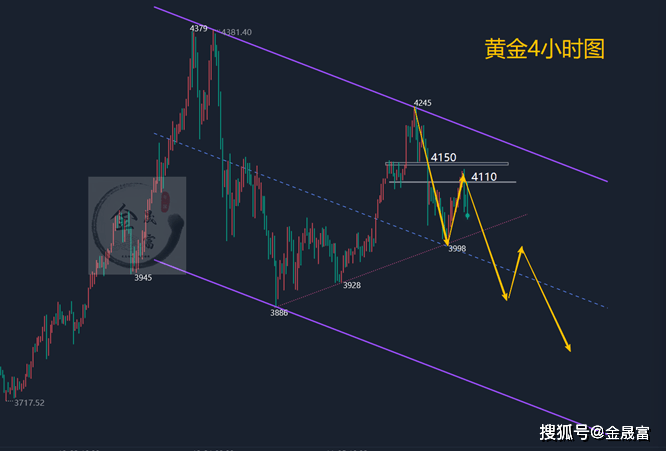
Core Viewpoint - The market is currently experiencing fluctuations in gold prices, influenced by various factors including U.S. economic data, Federal Reserve interest rate expectations, and global risk sentiment [1][2][4]. Market Analysis - Gold prices are hovering around $4060, with investors cautious ahead of the U.S. non-farm payroll report, reflecting increased sensitivity to macroeconomic uncertainties [1][2]. - The expectation of a December interest rate cut by the Federal Reserve has diminished, leading to a stronger dollar, which exerts pressure on non-yielding gold [2][4]. - Global stock markets are showing positive sentiment, reducing the demand for gold as a safe-haven asset [2][4]. Technical Analysis - Recent gold price movements have been characterized by volatility, with a focus on short-selling strategies around resistance levels near $4090 [4][5]. - The upcoming non-farm payroll data is highly anticipated, as it will provide insights into the U.S. employment market and influence future Federal Reserve monetary policy [2][4]. Trading Strategies - Suggested trading strategies include short positions on gold around $4090-$4100 with targets set at $4050-$4030, and potential long positions if prices retrace to $4000-$4005 [5][6]. - Emphasis on strict risk management and position sizing is highlighted to mitigate potential losses in a volatile market [5][6].
张尧浠:12月降息预期再反转、金价短期再待非农指引
Sou Hu Cai Jing· 2025-11-20 01:16
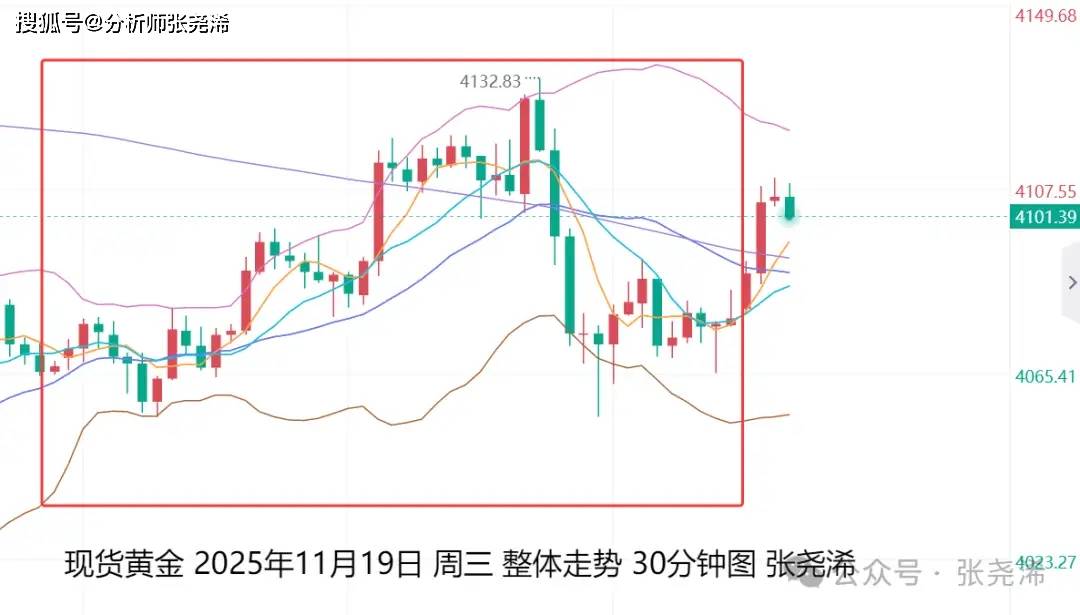
Core Viewpoint - The international gold price is expected to remain bullish despite short-term fluctuations, supported by the Federal Reserve's inclination towards a loose monetary policy as indicated in the meeting minutes [1][4][6]. Market Performance - On November 19, gold opened at $4066.08 per ounce, reached a low of $4055.54, and peaked at $4132.38 before closing at $4077.77, marking a daily fluctuation of $76.84 and a gain of $11.69, or 0.29% [1]. - The market reacted to the ADP employment data, which indicated ongoing employment weakness, initially boosting expectations for a Fed rate cut in December, but these expectations later diminished to 30% [4]. Future Outlook - The gold market is anticipated to experience volatility, with expectations of negative impacts from upcoming economic data releases, including non-farm payroll and initial jobless claims [4][6]. - The potential for a rebound in gold prices remains, particularly if the price approaches the support levels around $3800 or the 60-day moving average [6][8]. Technical Analysis - The weekly chart indicates that gold prices are currently under pressure but are supported by the 10-week moving average, suggesting a potential for future strength [8]. - The daily chart shows gold is in a triangular consolidation pattern, with key resistance at $4230 and support at $3930, indicating a range for trading strategies [10]. Support and Resistance Levels - Key support levels for gold are identified at $4085 and $4050, while resistance levels are at $4125 and $4145 [11]. - For silver, support is noted at $51.10 and $50.80, with resistance at $52.00 and $52.60 [11].
铜冠金源期货商品日报-20251114
Tong Guan Jin Yuan Qi Huo· 2025-11-14 02:34
Report Industry Investment Rating No relevant content provided. Core Viewpoints - Overseas, Fed officials' hawkish remarks have led to a convergence of the December interest - rate cut expectation, with the market - priced probability dropping from 60% to 50%. The end of the US government shutdown and other factors have affected the financial markets. Domestically, October's credit and social financing data were weak. The A - share market may reach new highs in the short term but faces adjustment risks, while the bond market is in a volatile and differentiated state [2][3]. - The recent rebound in precious metal prices has ended, and they will enter a new adjustment phase. Copper prices are expected to maintain high - level oscillations in the short term. Aluminum prices may undergo high - level consolidation due to short - term macro - mood changes. Alumina futures will continue to oscillate. Cast aluminum will mainly follow the high - level oscillations of primary aluminum. Zinc prices will oscillate weakly in the short term. Lead prices will undergo high - level adjustments. Tin prices will experience high - level adjustments with limited adjustment ranges. Industrial silicon prices will shift to oscillations in the short term. Lithium carbonate prices will fluctuate widely. Nickel prices have limited downside space. Soda ash and glass prices will maintain low - level oscillations. Steel prices will mainly oscillate and adjust. Iron ore prices will face pressure. Coking coal and coke prices will oscillate. Bean and rapeseed meal prices will oscillate and adjust. Palm oil prices will oscillate in the short term [4][7][8][10][11][12][14][15][17][19][21][23][24][25][26][29][31]. Summaries by Catalog Macroeconomics - Overseas: Fed officials are concerned about inflation stickiness. After two interest - rate cuts this year, the labor market has stabilized. The market - priced probability of a December interest - rate cut has dropped from 60% to 50%. Trump signed a bill to end the government shutdown, which caused about $1.5 trillion in losses. The US dollar index fell to 99.1, the US stock market fell by more than 2%, US bond yields rose, and gold, copper, and oil prices were affected [2]. - Domestic: In October, credit and social financing weakened. Government bond issuance declined, and real - economy financing demand was weak. The A - share market rose unilaterally, but there is a risk of subsequent adjustments. The bond market was volatile and differentiated, and long - term bond yields weakened [3]. Precious Metals - On Thursday, international precious - metal futures prices fell. COMEX gold futures dropped 0.93% to $4174.5 per ounce, and COMEX silver futures fell 2.30% to $52.23 per ounce. The reopening of the US government, Fed officials' hawkish remarks, and a decline in interest - rate cut expectations led to a correction in precious - metal prices [4]. Copper - On Thursday, SHFE copper prices strengthened, and LME copper prices rose and then slightly declined. The internal divergence between hawkish and dovish factions at the Fed is prominent, and the December interest - rate cut is still uncertain, which drags down market risk appetite. Globally, the tight supply situation at mines continues, domestic refined copper production decreases monthly, and emerging industries drive new demand. Copper prices are expected to maintain high - level oscillations in the short term, with attention to the $11000 resistance for LME copper [6][7]. Aluminum - On Thursday, SHFE aluminum prices rose, and LME aluminum prices fell. The change in short - term macro - mood may lead to high - level consolidation of aluminum prices. Domestically, aluminum social inventories decreased slightly this week, and overseas supply is expected to be disrupted due to power shortages, providing strong support for aluminum prices [8][9]. Alumina - On Thursday, alumina futures prices rose. The bearish effect of supply - demand balance and surplus continues to affect prices, but as spot prices approach costs and with the start of the heating season in the north, the expectation of production cuts is strengthening. The futures market is in a state of multi - empty game and will continue to oscillate [10]. Cast Aluminum - On Thursday, cast - aluminum alloy futures prices rose. The cost of scrap aluminum is tight, and copper and industrial silicon prices remain high, providing strong cost support. Supply is stable, and terminal automobile consumption is resilient. After reaching a new high, the position decreased slightly, and cast - aluminum prices are expected to follow the high - level oscillations of primary aluminum [11]. Zinc - On Thursday, SHFE zinc prices were volatile, and LME zinc prices strengthened. The end of the US government shutdown and Fed officials' cautious signals on interest - rate cuts weakened market sentiment, causing zinc prices to fall. Domestic zinc exports are being realized, and overseas liquidity pressure has eased, weakening the support for zinc prices. Domestic consumption has weakened, but there is support at the bottom due to pressure on processing fees. Zinc prices will oscillate weakly in the short term [12]. Lead - On Thursday, SHFE lead prices fell, and LME lead prices were narrowly oscillating. The spread between futures and spot prices widened, and the willingness of holders to deliver increased. Social inventories increased, and the contradiction between supply and demand was alleviated. Lead prices are expected to undergo high - level adjustments in the short term [13][14]. Tin - On Thursday, SHFE tin prices were volatile at a high level, and LME tin prices weakened. Market risk appetite declined, and SHFE tin prices decreased with reduced positions. Supply recovery is slow, and emerging demand has good prospects. Tin prices are expected to adjust at a high level with a limited adjustment range [15]. Industrial Silicon - On Thursday, industrial silicon prices oscillated. Supply has shifted to marginal contraction, and demand is cautious. The recent positive market sentiment has been realized, and prices are expected to shift to oscillations in the short term [16][17]. Lithium Carbonate - On Thursday, lithium carbonate prices fluctuated widely. Domestic policies support energy storage development, and industry leaders have signed large - scale orders, but the growth rate of new - energy vehicle sales has turned negative year - on - year, and there is an expectation of strong import resource growth. Lithium prices are expected to fluctuate widely in the short term [18][19]. Nickel - On Thursday, nickel prices oscillated weakly. Fed officials' hawkish remarks have reduced the expectation of a December interest - rate cut, but the Fed's bond - buying plan may ease dollar liquidity pressure. Philippine nickel ore prices are high, providing strong cost support. Nickel prices have limited downside space [20][21]. Soda Ash and Glass - On Thursday, soda - ash futures prices strengthened, and glass futures prices oscillated. Soda - ash production has decreased due to concentrated maintenance, and inventory has slightly declined. Glass demand is weak, and inventory has increased. Soda - ash and glass prices are expected to maintain low - level oscillations in the short term [22][23]. Steel - On Thursday, steel futures prices oscillated and rebounded slightly. This week, the supply of five major steel products decreased, inventory declined, and apparent consumption decreased slightly. Steel prices are expected to oscillate and adjust [24]. Iron Ore - On Thursday, iron - ore futures prices oscillated and rebounded. This week, port inventory increased, and downstream demand entered the off - season. Iron - ore prices are expected to face pressure [25]. Coking Coal and Coke - On Thursday, coking - coal and coke futures prices oscillated. Coal mine production has recovered, and the fourth round of coke price increases has partially taken effect. Downstream steel mills have increased maintenance, and demand for raw materials is expected to weaken. Coking - coal and coke prices are expected to oscillate [26]. Bean and Rapeseed Meal - On Thursday, bean - meal and rapeseed - meal futures prices rose. The US government shutdown has ended, and the USDA crop - yield assessment report is about to be released. The market has a bullish expectation, and external - market prices are rising, providing cost support. Bean and rapeseed meal prices are expected to oscillate and adjust [27][29]. Palm Oil - On Thursday, palm - oil, soybean - oil, and rapeseed - oil futures prices rose. The supply of rapeseed oil is expected to tighten, and it has shown strength. The supply of palm oil is loose, but the upcoming road test of Indonesia's B50 in December and its implementation in the second half of next year have boosted market sentiment. Palm oil prices are expected to oscillate in the short term [30][31].
澳元失守关键位 徘徊三周低位附近
Jin Tou Wang· 2025-11-07 03:07
Core Insights - The Australian dollar (AUD) is hovering near a three-week low against the US dollar (USD) at 0.6478, impacted by heightened tensions in AI trade between the US and China, alongside a recovery in global tech stock sell-offs, which dampens risk-sensitive AUD demand while boosting safe-haven USD appeal [1] - Australia's economic performance is better than many expected, with October PMIs showing mixed results: manufacturing dropped below 50 to 49.7 (from 51.4), while services slightly increased to 53.1 (from 52.4) [1] - Retail sales grew by 1.2% in June, and the trade surplus surged to AUD 3.938 billion in September, indicating some economic vitality despite a cooling labor market, with the unemployment rate rising to 4.5% in September (from 4.3%) and job growth slowing to 14.9K [1] - The USD index is experiencing a correction after a strong rebound, with market expectations for a Fed rate cut in December rapidly diminishing, which may limit the downside for the USD [1] Technical Analysis - The short-term outlook for AUD/USD has deteriorated, with the critical 200-day simple moving average (SMA) at 0.6450 being challenged, and a breach could lead to testing support levels at 0.6440 (October 14), 0.6414 (August 21), and 0.6372 (June 23) [3] - Momentum indicators remain bearish, with the Relative Strength Index (RSI) breaking below 40, suggesting potential further losses, while the Average Directional Index (ADX) above 16 indicates a lack of strong trend [3] Market Sentiment - The US government's prolonged shutdown, now officially the longest on record, is maintaining heightened risk sentiment with little sign of breakthrough [2]