
舱驾一体

Search documents
比亚迪杨冬生:向外部竞争,“没必要两个团队只干一件事”
Di Yi Cai Jing· 2025-07-29 12:11
Core Viewpoint - BYD is merging its cockpit and intelligent driving teams to address the trend of integrated cockpit and driving systems, highlighting its commitment to smart technology in the automotive sector [1][4]. Group 1: Internal Structure and Competition - The BYD New Technology Research Institute was established in 2017 to focus on cutting-edge technologies, including advanced driver assistance systems [3]. - The internal competition culture at BYD promotes rapid development in smart technology, with a "racehorse mechanism" that encourages teams to compete for the best technical solutions and user experiences [3][4]. - The merger of the cockpit and intelligent driving teams aims to enhance collaboration and accelerate the integration of hardware and software, transitioning from Ethernet to board/chip-level integration [4]. Group 2: Market Positioning and Strategy - BYD's research institute emphasizes competition with industry leaders like Tesla and Toyota, rather than just internal competition, to drive innovation and development [4]. - The focus is on achieving superior performance metrics and functionalities, with teams encouraged to pivot if initial efforts do not meet desired standards [4]. - Future plans for self-developed computing chips are not prioritized, as the company believes that data and algorithms will be more critical for competitive advantage in smart connected vehicles [5]. Group 3: Collaboration and Development - BYD will continue to collaborate with companies like NVIDIA and Horizon to optimize computing power deployment, focusing on "large model miniaturization" with a target of 500 TOPS computing power for BEV models [5]. - The organization structure of the New Technology Research Institute remains unchanged, with dual-mode technology and intelligent development departments working together [5].


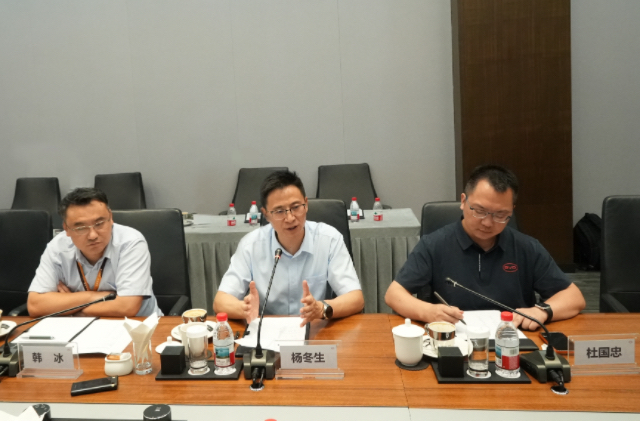
比亚迪辅助驾驶总负责人杨冬生:不减少辅助驾驶投入、不拆分动力部门
晚点Auto· 2025-07-29 06:42
Core Viewpoint - BYD is significantly expanding its autonomous driving capabilities, with a focus on self-research and development, aiming for mass production by September 2024 [4][11]. Group 1: Autonomous Driving Strategy - BYD's autonomous driving team has grown to 5,000 members, reflecting a strong commitment to this area [2][7]. - The company has categorized its autonomous driving system "Heavenly Eye" into three platforms (A, B, C) based on computing power and configuration, with the B platform expected to achieve mass production this year [4][11]. - The B platform will feature full-stack self-research capabilities, although short-term collaborations with external suppliers will continue [5][12]. Group 2: Market Acceptance and Consumer Behavior - The usage stickiness of urban navigation assistance has increased from approximately 10% to 20%, while high-speed navigation assistance peaks at over 90% [5][10]. - Consumers in the 100,000 yuan and below segment require time to accept autonomous driving features, but BYD plans to expand the application range of the B platform [10][14]. Group 3: Integration of Technologies - BYD emphasizes "intelligent-electric integration," with both electric and intelligent departments working closely together within the new technology research institute [9][10]. - The company is moving towards a unified architecture for cockpit and driving assistance systems, which is seen as a necessary evolution in technology [10][15]. Group 4: Competitive Landscape - BYD acknowledges the increasing competition in the electric vehicle market but remains confident in its ability to innovate and improve its hybrid technology [16]. - The company is committed to maintaining its leadership in the plug-in hybrid segment while adapting to market changes [16].
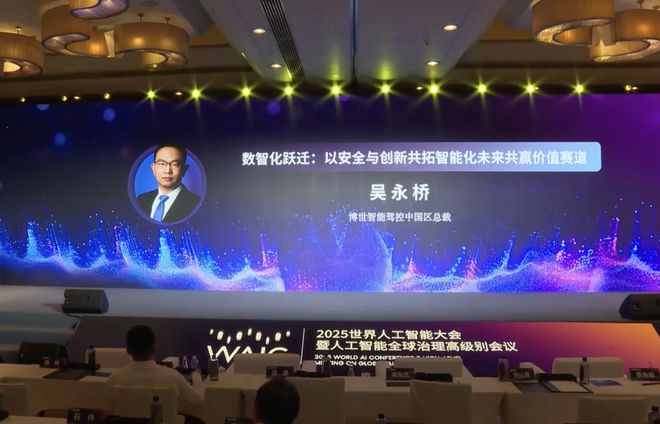
VLA上限更高,为何博世坚持“一段式端到端”,力赞特斯拉?
Guan Cha Zhe Wang· 2025-07-28 09:35
Core Insights - Bosch's President of Intelligent Driving in China, Wu Yongqiao, emphasized the shift in the relationship between Bosch and China, stating that "in the past, China needed Bosch, now Bosch needs China" [12] Group 1: Future of Intelligent Driving Technology - The future development of intelligent driving technology is focused on two main paths: Vision-Language-Action (VLA) and end-to-end models [3] - VLA is a multi-modal large model that integrates vision, language, and action decision-making, capable of understanding complex traffic scenarios and commands [3][4] - The end-to-end model simplifies the traditional modular architecture of autonomous driving into a single neural network that directly outputs driving commands from sensor data [3] Group 2: Challenges of VLA Implementation - Wu highlighted that while VLA is a promising direction, its implementation faces significant challenges, including difficulties in multi-modal feature alignment and data acquisition [6] - The requirement for large models (7B or 10B parameters) poses high demands on chip capabilities, which current intelligent driving chips cannot support [6][4] - Wu believes that it may take 3 to 5 years for chips capable of running large models to become available, making the deployment of VLA models currently impractical [6] Group 3: Bosch's Strategic Focus - Bosch is committed to refining the end-to-end model to achieve performance comparable to Tesla's Full Self-Driving (FSD) system, aiming for a highly human-like driving experience [9] - Wu acknowledged that while Huawei's ADS is also using an end-to-end architecture, it currently lags behind Tesla in data and computing power [9] Group 4: Future of Intelligent Driving as Standard Equipment - Wu predicts that intelligent driving will become standard equipment in vehicles, similar to seat belts and airbags, with differentiation shifting to the vehicle's cabin [12] - He noted that as intelligent driving becomes less of a differentiator, manufacturers will focus on creating unique cabin experiences to attract customers [12][14] Group 5: Bosch's Investment in Intelligent Mobility - Bosch is increasing its investment in intelligent mobility in China, with the intelligent mobility division becoming the largest business segment for Bosch in the country [12] - The sales revenue for Bosch's intelligent mobility group in China is projected to grow by 4% in 2024, reaching 116.6 billion RMB [12] - Wu stated that 65% of Bosch's new business in China over the next five years will be related to intelligent and electrification solutions [12]

智能驾驶SoC芯片:架构跃迁与生态重构下的国产化机遇
Ping An Securities· 2025-07-25 09:27
Investment Rating - The report maintains a "Strong Outperform" rating for the computer industry [1] Core Viewpoints - The report highlights the rapid development of domestic automotive-grade SoC chips, driven by architectural innovation and ecological restructuring, creating significant opportunities for localization in the smart driving SoC market [3][17] - The domestic automotive-grade SoC market is projected to reach CNY 102 billion by 2028, with a compound annual growth rate (CAGR) of 42% from 2019 to 2023 [3][19] - The report emphasizes the shift towards centralized integrated vehicle architectures, with the "One Chip" solution being viewed as the ultimate form of integration for cockpit and driving functions [28] Summary by Sections Current Status - The report discusses how the transition from traditional MCU chips to SoC chips is essential for meeting the increasing demands for data processing and throughput in smart connected vehicles [3][6] - The automotive chip market is experiencing a significant increase in value, with the automotive-grade SoC market in China reaching CNY 267 billion in 2023, growing at a CAGR of 42% from 2019 to 2023 [19] Trends - The report notes that the proliferation of smart driving technologies is releasing domestic potential, with policies and market forces driving the rapid rise of domestic SoC manufacturers [3][22] - The report predicts that by 2028, the penetration rate of autonomous passenger vehicles in China will reach 93.5%, with a total sales volume of 27.2 million units [19] Landscape - The smart driving SoC market is characterized by three competitive camps: dedicated smart driving SoC suppliers, general-purpose chip suppliers, and automotive OEMs developing their own solutions [3][17] - Domestic manufacturers like Horizon Robotics and Black Sesame Intelligence are rapidly gaining market share, with Horizon holding a 33.97% share in the domestic automotive-grade smart driving chip market in 2024 [3][19] Investment Recommendations - The report suggests that the smart driving SoC industry is undergoing a historic development opportunity, with strong recommendations for companies like Zhongke Chuangda and recommendations for Desay SV, Horizon Robotics, and Huayang Group [3][19]
清华女神要IPO了
投中网· 2025-07-12 06:30
Core Viewpoint - The article discusses the rise of Megia Technology, a "quasi-unicorn" company, as it prepares for an IPO in Hong Kong, highlighting the impressive achievements of its CEO, Zhuang Li, and the company's significant market position in the smart cockpit domain [3][4][18]. Company Overview - Megia Technology is valued at nearly $1 billion (over 6.6 billion RMB) and is set to go public on the Hong Kong Stock Exchange [3][4]. - The company has achieved a market share of 9.3% in the smart cockpit domain, making it the second-largest player in the industry [8][11]. Financial Performance - Megia's revenue has shown significant growth, with projections of 388 million, 1.513 billion, and 1.420 billion RMB for 2022, 2023, and 2024 respectively, reflecting a 153% increase in 2023 due to the launch of its first mass-produced model [11]. - The gross margin has improved from 19.0% in 2022 to 21.8% in 2024, indicating enhanced pricing power and operational efficiency [11]. - The company has invested heavily in R&D, with total expenditures reaching 910 million RMB over three years, resulting in a research intensity of 25.2% in 2024, significantly above the industry average [11]. Customer Base and Market Position - Megia has established partnerships with 12 major automotive manufacturers, including Chang'an, Dongfeng, Nissan, and Ford, and has 48 designated projects [8][12]. - The company has become a leader in delivering domain controllers, achieving over one million units delivered, and holds a significant share of the market for smart cockpits powered by Qualcomm's 8155 chip [8][12]. Investment and Financing - Megia has undergone five rounds of financing, with notable investments from various venture capital firms, including a $600 million seed round from Shanhang Capital in 2018 and a $306.9 million D+ round in 2024, raising its valuation to $930 million [17][18]. - The shareholder structure includes Zhuang Li with 44.85% ownership, followed by significant stakes from South Mountain Capital and Shanhang Capital [18]. Future Outlook - The company aims to expand globally by the end of 2025, leveraging its IPO as a critical stepping stone to reduce regional dependency [19]. - Megia aspires to integrate more functionalities into its domain control solutions, targeting the automotive technology market with ambitions to become "the Bosch of automotive technology in China" [20].

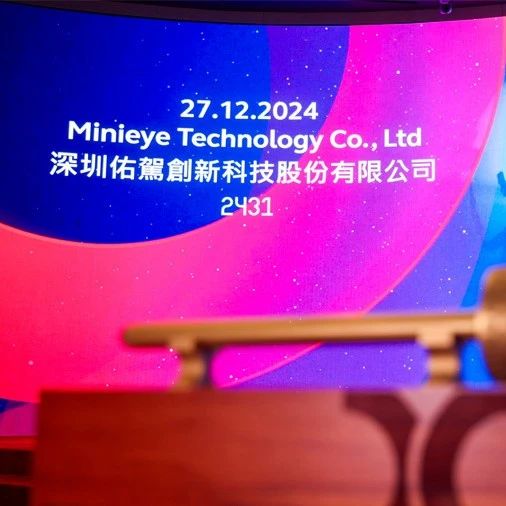
佑驾创新获IPO基石投资者不减持承诺,近期获多家投行一致看好
IPO早知道· 2025-06-26 02:35
Core Viewpoint - The article emphasizes the long-term value of Youjia Innovation Technology Co., Ltd. and highlights the commitment of cornerstone investor Kang Chengheng International Investment Co., Ltd. to hold shares without immediate reduction after the lock-up period, reflecting confidence in the company's technology and industry prospects [2][3]. Company Overview - Youjia Innovation is recognized as the "first stock of integrated cockpit and driving," focusing on intelligent assisted driving and smart cockpit fields, with capabilities ranging from L1 to L4 autonomous driving [4]. - The company has established partnerships with 35 major automotive manufacturers, including Chery, Changan, SAIC, and Volkswagen, for mass production of its solutions [4]. Financial Performance - For 2024, Youjia Innovation reported revenue of 654 million yuan, a year-on-year increase of 37.4%. The revenue from intelligent driving solutions was 484 million yuan, up 25.2%, accounting for 73.9% of total revenue. The intelligent cockpit solutions revenue surged to 104 million yuan, reflecting a growth of 467.8% [4]. Market Position and Growth Potential - Youjia Innovation's stock price has increased by over 50% this year, with a market capitalization exceeding 11 billion yuan. Recent reports from CITIC Lyon, Everbright Securities, and Guozheng International have rated the company positively, citing its comprehensive self-research capabilities in autonomous driving solutions [5]. - Guozheng International noted that Youjia Innovation's strong product lineup and customer matrix position it for significant performance elasticity in the future [5]. - CITIC Lyon projected a compound annual growth rate of 49% for total revenue from fiscal years 2024 to 2027, with a target price of 32.00 HKD [5]. Industry Outlook - According to a McKinsey report, the global intelligent driving market is expected to exceed 600 billion USD by 2027, with China's L2-level intelligent driving new car coverage surpassing 57%. The supportive policies for smart connected vehicles further enhance the growth potential of the intelligent driving sector [5].
汽车视点 | 10天内4家车企调整,汽车行业进入“大整合时代”
Zhong Guo Jin Rong Xin Xi Wang· 2025-05-19 02:48
Group 1: BYD's Strategic Moves - BYD has integrated its two self-developed teams for auxiliary driving, "Tianxuan" and "Tianlang," into a unified management framework, enhancing collaboration between auxiliary driving and smart cockpit systems [2] - The restructuring within BYD's New Technology Institute aims to clarify business divisions and concentrate resources, which is expected to improve user experience and reduce costs [2] - This move reflects a broader trend in the automotive industry towards consolidation, driven by the challenges of electrification, intelligence, and globalization [2] Group 2: Industry Consolidation Trends - Multiple automotive companies have initiated mergers and restructuring, with four companies making significant moves within just ten days in May [3] - GAC Group announced a restructuring plan to enhance its R&D capabilities by splitting its research institute into three major segments, aiming to reduce product development cycles from 26 months to 18-21 months and cut R&D costs by over 10% [3] - Geely plans to acquire all shares of Zeekr and privatize it, emphasizing the urgency of returning to a unified "One Geely" strategy to enhance internal resource integration [4][8] Group 3: NIO's Restructuring - NIO has integrated its sub-brands, Ladao and Firefly, into its main brand structure, marking a shift away from independent operations [5][9] - This restructuring is part of NIO's strategy to reduce financial pressure and aim for profitability in the fourth quarter [9][10] - NIO's CEO has reiterated a "reduction strategy" to streamline operations and eliminate redundancy in its brand and model matrix [10] Group 4: Cost Reduction and Efficiency - The automotive industry is undergoing a "cost reduction and efficiency revolution," with companies like Li Auto implementing strict internal spending controls [11] - The integration of resources is seen as essential, but challenges remain in achieving expected synergies due to existing organizational barriers and differences in technology and supply chains among brands [11][12] - Historical examples of failed mergers highlight the need for careful management of cultural and operational differences during consolidation efforts [12] Group 5: Future Industry Landscape - The Chinese automotive industry is expected to evolve into a "2+5" tier structure, with leading companies like BYD and Geely at the core, supported by five major groups formed through strategic restructuring [12][13] - The current fragmented state of the industry, with over 80 companies and 230 factories, indicates a need for increased concentration and competitiveness [12] - The ongoing consolidation is viewed as a critical step for Chinese automotive companies to achieve high-quality development and establish a dominant position in the global smart and connected vehicle market [13]





晚点独家丨比亚迪智能化业务新变动:廖杰重回地平线,辅助驾驶、座舱团队整合
晚点LatePost· 2025-05-16 13:33
Core Viewpoint - BYD's intelligent driving business has entered a relatively stable phase after over two years of adjustments, with significant organizational changes reflecting its strategic focus on smart driving technology [2][4]. Group 1: Organizational Changes - Recent personnel changes in BYD's intelligent driving division indicate a shift in strategy, with key figures such as Liao Jie and Tang Minxin leaving the company [4][6]. - The restructuring has led to the integration of two major self-research teams, "Tianxuan" and "Tianlang," into a single team to streamline operations and enhance resource allocation [6][7]. Group 2: Strategic Focus - BYD has elevated intelligent driving to one of its core strategies, with Chairman Wang Chuanfu emphasizing its importance in internal meetings [6]. - The company aims to replace supplier solutions with self-developed technologies to reduce overall vehicle costs, as demonstrated by the successful transition to self-researched solutions in the "Tianshen Zhi Yan C" platform [7]. Group 3: Market Position and Goals - As the world's highest-selling new energy vehicle manufacturer, BYD has set an ambitious sales target of 5.5 million vehicles for the year, balancing the desire for technological leadership with cost-effectiveness [7].

独家丨比亚迪智能化业务新变动:廖杰重回地平线,辅助驾驶、座舱团队整合
晚点Auto· 2025-05-16 10:50
Core Viewpoint - After more than two years of adjustments, BYD's intelligent business structure has entered a relatively stable phase, reflecting the company's strategic focus on intelligent driving and related technologies [2][3]. Group 1: Organizational Changes - Recent personnel changes at BYD's intelligent business unit highlight the company's strategic decisions and investments in intelligent driving, with key figures like Liao Jie and Tang Minxin leaving their positions [3][5]. - Liao Jie, who joined BYD in August 2023, was involved in the self-research of intelligent driving algorithms and has now returned to Horizon Robotics [3][5]. - The restructuring has led to a clearer division of responsibilities within the intelligent business unit, with a focus on integrating intelligent driving and cockpit functions under single management [6]. Group 2: Strategic Focus on Intelligent Driving - BYD has elevated intelligent driving to one of its core strategies, with significant investments and rapid recruitment aimed at catching up in the market [5][6]. - The company has formed two major self-research teams, "Tianxuan" and "Tianlang," which were later consolidated into a single team to streamline operations [5][6]. - The integration of intelligent driving and cockpit management is seen as a way to reduce costs and improve efficiency, aligning with the trend of combining these functionalities into a single computing chip [6]. Group 3: Technological Development and Market Position - BYD is focused on the self-research and mass production of the "Tianshen Zhi Yan B" platform, which aims to implement advanced driving features at a lower cost by replacing supplier solutions with in-house developments [6]. - The company has successfully validated this strategy with the "Tianshen Zhi Yan C" platform, demonstrating its capability to integrate advanced features into more affordable vehicle models [6]. - Unlike other emerging car manufacturers, BYD, as the world's top-selling new energy vehicle company, balances its desire for technological leadership with cost and return considerations, setting a sales target of 5.5 million vehicles for the year [6].

智能驾驶系列电话会议——芯片
2025-05-08 15:31
Summary of Conference Call on Intelligent Driving Chips Industry Overview - The domestic mid-tier intelligent driving chip market is primarily dominated by Horizon Robotics' Journey 6 series, which strikes a balance between performance and price, making it widely adopted by mainstream OEMs. Qualcomm and NVIDIA solutions are used less frequently [1][2] - The high-end market is mainly led by NVIDIA's Orin series chips, but Horizon has introduced a full-stack high-end solution, HSD, based on G6P, gaining some market share due to cost advantages and superior performance [1][2] - Qualcomm's 8,775 chip is positioned for the mid-to-low-end market, expected to be deployed in the second half of 2025, but OEMs show limited willingness to adopt it due to the challenges of simultaneous development of cockpit and intelligent driving systems [1][5] Key Insights - The domestic vehicle chip design sector has largely achieved independence, but the production side still relies on foreign foundries, limiting the localization rate of mid-tier and high-end chips. The future trend is to enhance design independence and seek more production collaborations [1][6] - NIO is making the fastest progress in self-developed chips, having implemented its self-developed ZAM chip in the ET9 model, improving computing power utilization and reducing costs, although it faces challenges in capacity and R&D costs [1][7] Market Dynamics - The domestic vehicle chip market can be segmented into low, mid, and high tiers. The low tier includes basic L2 functions, while the mid-tier has expanded to high-speed NOA, which has become mainstream following BYD's intelligent driving strategy [2] - The pricing trend for mainstream vehicle chips is generally declining, with low-tier chips around $20, mid-tier chips like Horizon's 6M at approximately $70, and high-end chips like NVIDIA's Orin X exceeding $300 [3][17] Competitive Landscape - The low-tier market is primarily led by Horizon, Mobileye, and Bosch, with Horizon's share expected to increase. The mid-tier market is dominated by the Journey 6 series, which is projected to capture a significant portion of the domestic OEM market in the next two years [18] - In the high-end market, NVIDIA still holds the largest share, with a small portion allocated to Qualcomm's 8,650 and Horizon's HSD solution [18] Self-Developed Chips - NIO is the fastest in self-development, with its ZAM chip already in use, while other companies like XPeng and Li Auto are at different stages of development. The advantages of self-developed chips include better software-hardware coupling and cost savings [7][9] - However, self-developed chips face disadvantages such as limited manufacturing capacity and high R&D costs, which could lead to higher costs compared to externally sourced chips if sales volumes are insufficient [8][9] Future Trends - The trend towards self-developed chips is not expected to be prevalent among traditional automakers like Geely and Chery due to their complex R&D systems and high investment risks. In contrast, emerging companies like NIO and XPeng are more inclined to pursue self-development as it aligns with their brand identity [9][10] - The integration of cockpit and intelligent driving functions is currently less common due to high performance requirements and rapid iteration speeds, with a trend towards separating these functions until higher-performance chips become available [15] Geopolitical and Regulatory Impact - Geopolitical factors and tariffs have limited effects on the vehicle chip industry, with few restrictions on chip exports from China to other countries, except the U.S. Companies like Horizon face slow overseas expansion due to insufficient data accumulation and mass production experience [20]