通胀粘性

Search documents
黄金,翻盘机会!
Sou Hu Cai Jing· 2025-11-03 09:25
Group 1: Gold Market - Last week, spot gold fell by $110.67, a decrease of 2.68%, closing at $4002.48, but it has seen a cumulative increase of 3.7% in October, marking the third consecutive month of gains [1] - Currently, gold is trading slightly higher around $4022 [1] Group 2: U.S. Government Shutdown - As of October 31, the U.S. government shutdown has lasted for a month, and if a temporary funding bill is not passed by November 5, it will break the record for the longest shutdown in U.S. history [4] - Approximately 42 million low-income individuals, disabled persons, and the elderly will lose access to food assistance programs starting November 1, exacerbating food security issues [4] - The ongoing political stalemate between the Democratic and Republican parties continues to hinder the passage of necessary funding legislation [4][5] Group 3: Federal Reserve Interest Rate Outlook - The Federal Reserve is experiencing increasing internal divisions regarding future interest rate cuts, with some officials advocating for a rate cut in December due to risks of slowing employment [6] - Market expectations for a rate cut in December have decreased, with the probability dropping from over 90% to approximately 63% [8] - Key economic data releases this week, including the ADP employment report and the ISM manufacturing index, will be closely monitored as they may influence the Fed's decision-making [9][11][12] Group 4: Economic Data and Market Sentiment - Economists predict that the October non-farm payrolls may show an increase of only about 50,000 jobs, with the unemployment rate potentially rising to 4.4% [11] - The ISM manufacturing PMI is expected to slightly rise to 49.5, but rising input costs and sales prices could heighten concerns about persistent inflation [12] - Overall, the stock market is in a delicate phase characterized by short-term optimism driven by earnings, while long-term risks remain [12]


通胀粘性掣肘 澳洲联储本周料按下降息“暂停键”
Zhi Tong Cai Jing· 2025-11-03 07:02
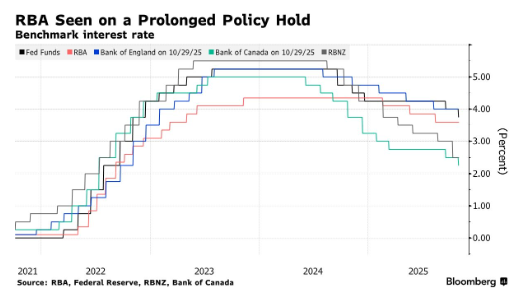
Core Viewpoint - The Reserve Bank of Australia (RBA) is expected to maintain the cash rate at 3.6% during its upcoming meeting, with no forward guidance anticipated due to increasing economic uncertainty [1][3]. Economic Indicators - The core inflation rate in Australia rose from a revised 0.7% in Q2 to 1% in Q3, reaching the upper limit of the RBA's target range of 2-3% [3]. - Domestic demand remains strong, driven by government tax cuts and energy subsidies, contributing to persistent inflation, particularly in services [3]. - Recent data indicates a rise in credit growth and record-high housing prices, suggesting that the financial environment is not overly tight [3]. Labor Market Conditions - The labor market shows signs of loosening, with employment growth slowing and the unemployment rate rising to 4.5%, the highest level since September 2021 [4]. - A report indicated that the number of private sector job advertisements fell for the fourth consecutive month, down 7.4% year-on-year, reflecting labor market weakness [4]. Future Projections - Some economists predict that Australia may face a situation similar to the U.S., where moderate economic growth and rising unemployment could lead to a cooling of prices, prompting the RBA to consider rate cuts [4]. - The RBA is expected to maintain its current policy until there is clear evidence of economic direction, with some forecasts suggesting two rate cuts in the next year, bringing the rate down to 3.1% [5].
美联储官员齐发声 12月降息路径现分歧
Sou Hu Cai Jing· 2025-11-01 02:53
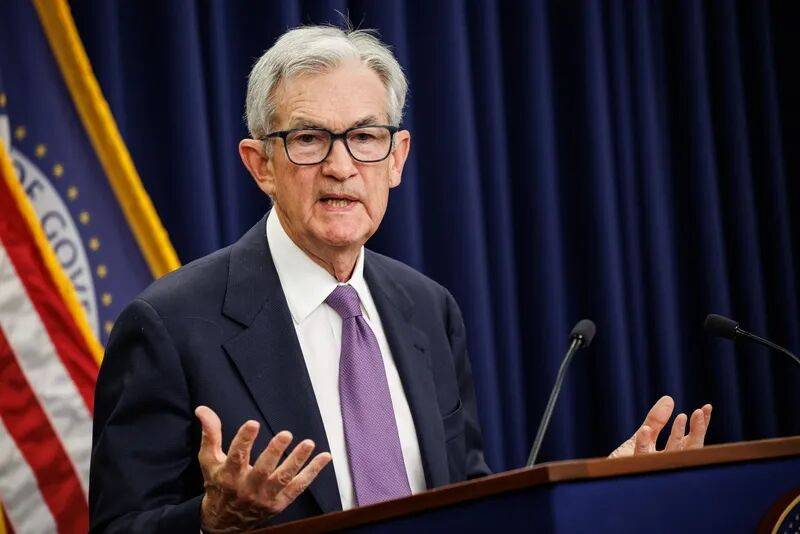
Core Views - The Federal Reserve officials are engaged in a heated debate regarding the direction of monetary policy, with notable divisions on the decision to lower interest rates [1][5] Group 1: Hawkish Perspectives - Dallas Fed President Lorie Logan and Cleveland Fed President Beth Hammack oppose the recent rate cut decision, emphasizing that inflation risks have not fully dissipated and cautioning against aggressive rate cuts [3][4] - Logan highlights that while overall inflation is declining, core service prices and wage growth exhibit "sticky" characteristics, warning that excessive rate cuts could accelerate inflation, forcing the FOMC to tighten policy again [3] - Hammack points out that the current policy stance is close to neutral but not fully achieved, citing that the November core CPI rose 3.3% year-over-year, with service price increases still above pre-pandemic levels [3] Group 2: Dovish Perspectives - Fed Governor Christopher Waller advocates for a gradual approach to rate cuts, stating that current rates remain significantly above neutral levels, and further cuts would not be a drastic measure but rather a moderation of policy [4] - Waller notes that the labor market has shifted from overheating to balance, but warns of potential upward pressure on unemployment due to reduced job creation by new businesses [4] - He also mentions uncertainties in fiscal policy, indicating that large-scale tariffs or fiscal expansion could raise short-term inflation, while long-term economic slowdown and debt burdens may limit policy flexibility [4] Group 3: Powell's Position and Market Reaction - Fed Chair Jerome Powell acknowledges significant internal disagreement on the path of rate cuts, stating that the recent 25 basis point cut to 3.75%-4.00% was a cautious choice balancing employment and inflation risks [5] - Powell emphasizes that the decision for December will depend entirely on economic data over the next six weeks, highlighting three uncertainties: government shutdown impacts on Q4 GDP, tariff policy effects on prices, and potential deterioration in the labor market [5] - Following these statements, market expectations for a December rate cut have decreased sharply from 80% to 55%, with the dollar index rising above 104, indicating a shift in market sentiment [5]
美联储官员齐发声 对过度降息表露谨慎立场
Sou Hu Cai Jing· 2025-10-31 17:55
Core Viewpoint - Federal Reserve officials expressed concerns regarding the possibility of interest rate cuts this week and in December, indicating that such decisions are not guaranteed [1] Group 1: Federal Reserve Officials' Concerns - Four Federal Reserve officials voiced their worries about the recent interest rate cut and the potential for another cut in December [1] - Kansas City Fed President Esther George voted against the 25 basis point cut, citing concerns over persistent inflation [1] - Cleveland Fed President Loretta Mester and Dallas Fed President Lorie Logan, both without voting rights this year, suggested they would oppose a rate cut if they had the opportunity [1] Group 2: Inflation and Monetary Policy - Mester emphasized the need to maintain a restrictive policy stance to bring inflation back to target levels [1] - Atlanta Fed President Raphael Bostic, while supporting the 25 basis point cut, highlighted the importance of ensuring that the policy stance remains tight amid stubborn inflation across various sectors [1] - Bostic noted that each rate cut makes the justification for further easing less clear, as rates approach a neutral level that may not effectively curb price increases [1]
美联储:9月核心通胀升0.2%,下周或降息25基点
Sou Hu Cai Jing· 2025-10-24 15:11
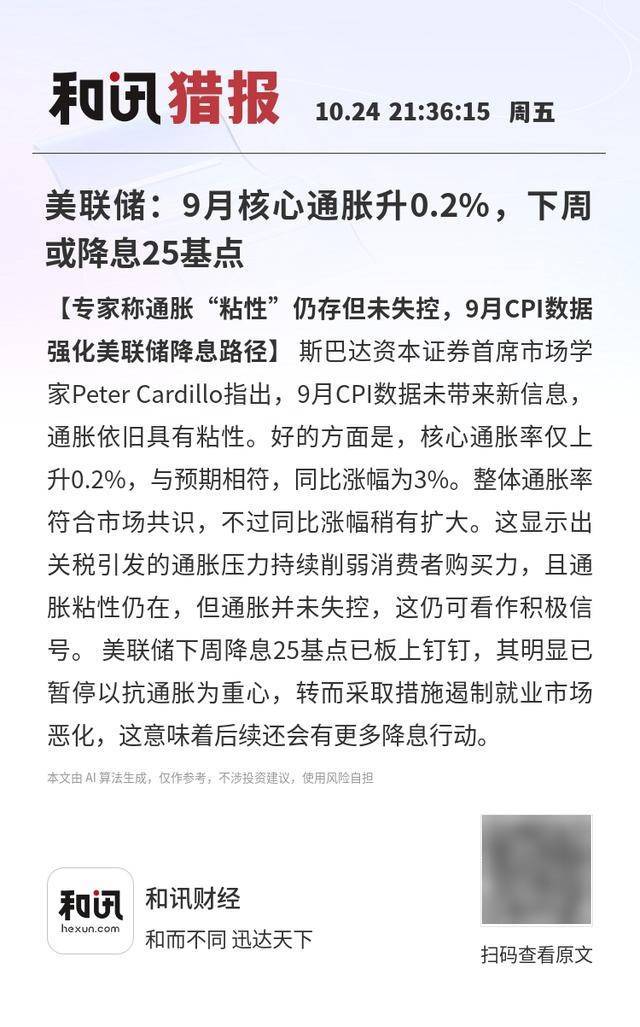
Core Insights - The September CPI data indicates persistent inflation, described as "sticky," but it is not out of control, which is viewed as a positive sign [1][2] - Core inflation rose by 0.2%, aligning with expectations, while the year-on-year increase stands at 3% [1][2] - Overall inflation rates met market consensus, although the year-on-year increase has slightly expanded, reflecting ongoing inflationary pressures from tariffs that are diminishing consumer purchasing power [1][2] Federal Reserve Actions - The Federal Reserve is expected to lower interest rates by 25 basis points next week, indicating a shift from focusing on combating inflation to addressing the deterioration of the job market [1][2] - This suggests that further rate cuts may be anticipated in the future as the Fed adjusts its monetary policy approach [1][2]
黄金急跌近2%,失守4060美元/盎司
21世纪经济报道· 2025-10-24 09:22
Core Viewpoint - The rapid decline in gold and silver prices is attributed to multiple factors including policy expectations, technical breakdowns, a stronger dollar, and reduced geopolitical risks. Citigroup has turned bearish on gold prices, predicting a drop to $4,000 within the next three months. However, medium to long-term support for gold remains due to global recession risks and central bank gold purchases, which are expected to exceed 1,000 tons by 2025. Investors should closely monitor the October CPI data and the Federal Reserve's meeting statements to gauge market direction changes [3]. Price Movements - As of October 24, gold prices fell below $4,060 per ounce, with a daily decline of over 1.85%. Silver prices also dropped, touching $47 per ounce, down more than 2% [1]. - Current prices include: - London Gold: $4,050.228, down $76.262 (-1.85%) - London Silver: $47.850, down $0.996 (-2.04%) - COMEX Gold: $4,071.3, down $74.3 (-1.79%) - COMEX Silver: $47.615, down $1.089 (-2.24%) [2]. Market Reactions - U.S. gold stocks fell in pre-market trading, with notable declines including a drop of over 4% for Coeur Mining and declines exceeding 2% for both Kinross Gold and Harmony Gold [2].

KVB PRIME:美国9月CPI数据即将公布,或成美元四季度走势关键
Sou Hu Cai Jing· 2025-10-23 02:59
Group 1 - The US dollar has shown a strong start in the foreign exchange market, supported by risk aversion due to the government shutdown and heightened attention on the upcoming September CPI data [1][2] - The government shutdown has led to a "data vacuum," increasing the appeal of the US dollar as a traditional global safe-haven asset, resulting in sustained buying support [2][6] - The September CPI data, set to be released soon, is crucial as it is one of the first significant data points post-shutdown and provides insight into the true inflation situation [4] Group 2 - Economists predict a year-on-year increase of 3.1% in the September CPI, which would be the highest level since May 2024, potentially impacting the Federal Reserve's policy path in 2026 [4][6] - There is an asymmetry in the market's response to the CPI data; if the data meets or falls below expectations, the dollar may only see minor fluctuations, but a higher-than-expected figure could drive the dollar significantly higher [6][8] - Recent Canadian inflation data exceeding expectations has raised caution among traders, suggesting that US inflation may also remain resilient [6] Group 3 - Despite a cumulative decline of about 7% in the Bloomberg Dollar Spot Index for 2025, most of the losses occurred in the first half of the year, with the dollar showing resilience in the latter half [7] - The options market indicates optimism, with traders favoring the purchase of bullish dollar options, reflecting a belief that the dollar will continue to strengthen in the next three months [7] - There is a growing perspective that the market may be underestimating the dollar's rebound potential, as the relative strength of the US economy could limit the Fed's rate-cutting capacity [8]
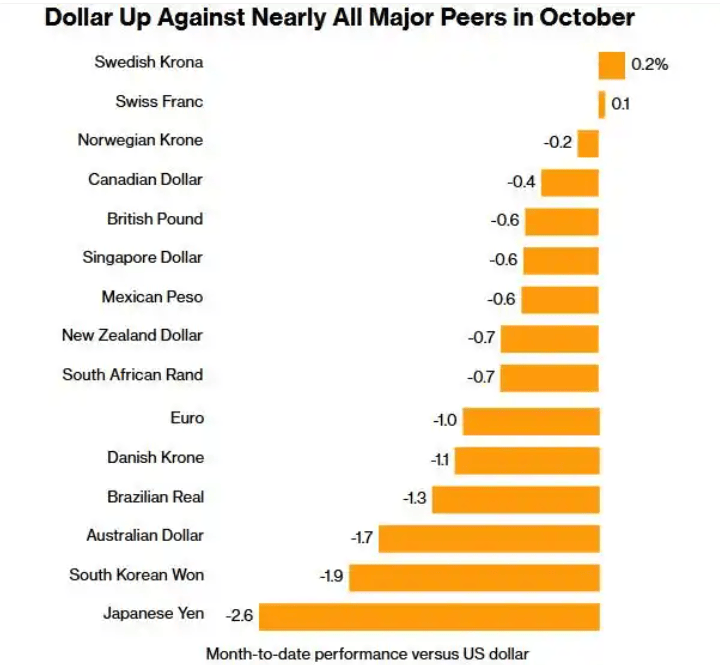
日法政治担忧缓解 美元复苏态势受阻
Jin Tou Wang· 2025-10-10 11:32
Group 1 - The US dollar index fell below 99.50, showing a slight decline after reaching a two-month high of 99.55, indicating a pause in its recent recovery trend [1][2] - The US government shutdown has entered its ninth day with no significant progress, as the Republican proposal to fund the government failed to secure enough votes in the Senate [1] - Trump's administration plans to use the government shutdown to permanently cut what he refers to as "Democratic projects," signaling a shift in focus towards reducing federal spending [1] Group 2 - The dollar index has shown strong performance this week, up 1.7% and on track for its best weekly performance in a year, despite the ongoing government shutdown [2] - The dollar index is expected to maintain a range between 99 and 99.5 ahead of employment data, with potential volatility depending on signals from Powell at the upcoming community bank meeting [2] - If Powell emphasizes "sticky inflation," it could push the index to break through the resistance level of 99.5 [2]
Gold’s on the verge of reaching $4,000. What’s behind its seemingly unstoppable rally.
Yahoo Finance· 2025-10-06 17:56
Core Insights - Gold prices have reached record highs, with futures touching $3,994.50 an ounce, indicating a strong upward trend towards the psychological level of $4,000 [1][5] - The rally in gold is attributed to five key factors: sticky inflation, geopolitical tensions, a weaker dollar, central bank demand, and investors hedging against market volatility [2] - The current market sentiment reflects a shift in confidence towards gold as a reliable asset, with commentary suggesting that it is reasserting its role as a fundamental store of value [3] Market Dynamics - Gold futures for December settled at $3,976.30 an ounce, marking the 42nd record-high finish of the year, with a notable increase of 1.7% on the day [5] - The advance in gold prices began prior to the current political climate but has been further propelled by recent events in Washington, including federal shutdown discussions [4] - The significant rise from $3,000 to nearly $4,000 demonstrates the rapid momentum that can build under favorable conditions in the market [2]
通胀粘性VS就业疲软,全球央行在紧缩与宽松间艰难求衡
Xin Hua Cai Jing· 2025-09-26 03:06
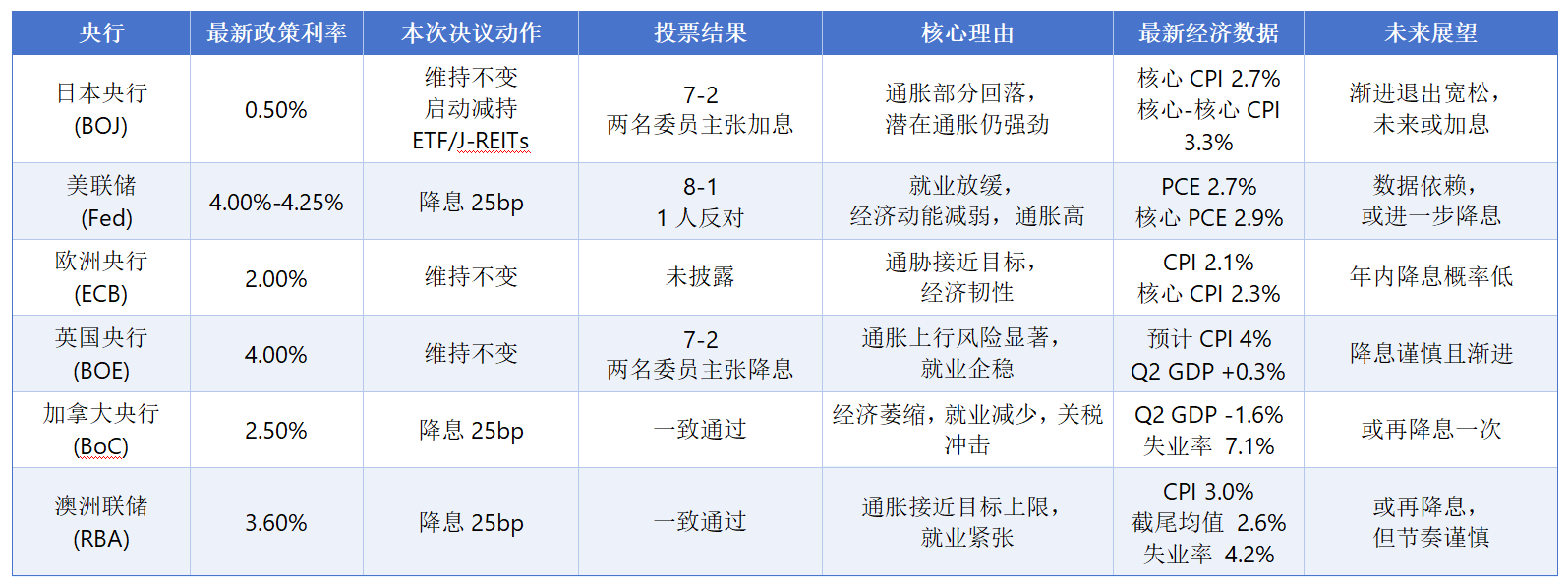
Core Viewpoint - Global central banks are entering a new phase of policy adjustment characterized by unprecedented divergence, with Japan initiating asset reduction, the Federal Reserve starting preventive rate cuts, while the European and UK central banks remain cautious amid persistent inflation pressures [1][18]. Central Bank Policy Summary Japan - The Bank of Japan (BOJ) maintained its policy rate at 0.50% while initiating a reduction plan for its large ETF and J-REITs holdings, starting with an annual reduction of approximately 620 billion yen (about 4.2 billion USD) [2][6]. - The decision reflects a significant step towards normalizing the ultra-loose monetary policy that has been in place for over a decade, despite the slow pace of asset reduction indicating a cautious approach [6][7]. United States - The Federal Reserve lowered the federal funds rate target range by 25 basis points to 4.00%-4.25%, citing economic slowdown and labor market cooling as key factors [3][4]. - Fed Chair Powell emphasized that the decision was a risk management measure, balancing the dual risks of a weakening labor market and persistent high inflation [3][4]. Europe - The European Central Bank (ECB) kept the deposit facility rate unchanged at 2%, indicating that current inflation is close to the medium-term target of 2% and that the eurozone economy shows resilience [9][10]. - There are internal divisions within the ECB regarding future actions, with some members advocating for rate cuts due to long-term deflation risks, while others believe current rates are sufficient to address multiple challenges [10][11]. United Kingdom - The Bank of England (BoE) maintained its rate at 4%, highlighting significant medium-term inflation pressures despite a slight GDP growth [11][12]. - The BoE plans to slow its quantitative tightening from £100 billion to £70 billion annually, reflecting concerns over long-term bond market pressures [12][13]. Canada and Australia - The Bank of Canada cut its benchmark overnight rate by 25 basis points to 2.50%, responding to economic shrinkage and employment declines due to U.S. tariffs [14][15]. - The Reserve Bank of Australia (RBA) has also reduced its cash rate to 3.60%, indicating a cautious shift towards easing while monitoring economic data closely [16][17]. Global Monetary Policy Landscape - The global monetary policy environment is marked by high uncertainty, with central banks facing complex challenges such as intricate inflation structures, external risks from trade policies, and political instability [18]. - The divergence in policy approaches among major central banks reflects a transition from a highly coordinated response during the pandemic to a more nuanced, differentiated strategy in response to evolving economic conditions [18].