
预期差

Search documents
透视康桥悦生活(02205.HK)中期业绩背后,被市场忽视的三重预期差
Ge Long Hui· 2025-08-29 03:05
Core Viewpoint - The article discusses the undervalued potential of Kangqiao Yuelife in the property management sector, highlighting three key areas of expectation that the market has overlooked, which are crucial for its valuation recovery. Group 1: Independence Advantage - Kangqiao Yuelife has a significant independence advantage, with approximately 36.2 million square meters (78.3%) of managed area coming from third-party developers, and about 55.7 million square meters (81.5%) of contracted area also from third-party sources, indicating strong market expansion capabilities [2][3]. Group 2: Differentiated Competitiveness and Non-Residential Layout - The company focuses on high-quality service as its core competitive advantage, achieving industry-leading satisfaction and renewal rates, which supports stable business and future expansion [4][5]. - Kangqiao Yuelife has expanded its services to 36 cities, managing 331 projects with a total managed area of approximately 46.2 million square meters, reflecting a year-on-year growth of 6.9% [4]. - The company has made significant progress in non-residential sectors, achieving revenue of 40.2 million yuan in urban services, a year-on-year increase of 7.3%, and has secured multiple large contracts in various sectors, enhancing its revenue and competitive edge [6]. Group 3: Financial Health and Industry Risk Clearance - Kangqiao Yuelife maintains a robust financial position with cash and cash equivalents of 136 million yuan and restricted cash of 213 million yuan, representing a growth of approximately 3.2% from the end of 2024 [7]. - The company's debt-to-asset ratio stands at 49.1%, indicating manageable debt risk, which supports its stability and future growth potential [7]. - The property management industry is experiencing a gradual clearance of operational risks, with reduced impairment pressures expected, which will benefit Kangqiao Yuelife in the valuation recovery process [8].
三大预期差引爆市场分歧!30年国债ETF博时(511130)1.92-1.95%或成攻防关键
Sou Hu Cai Jing· 2025-08-18 06:19
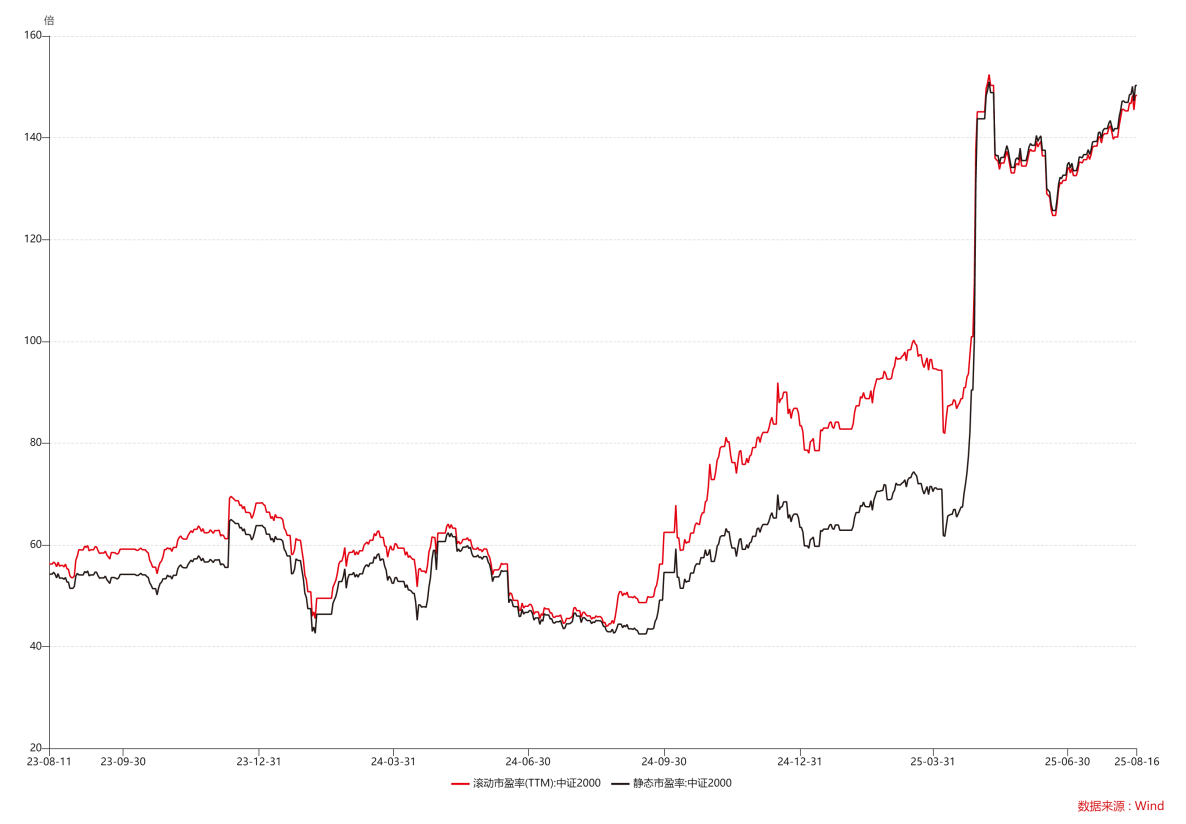
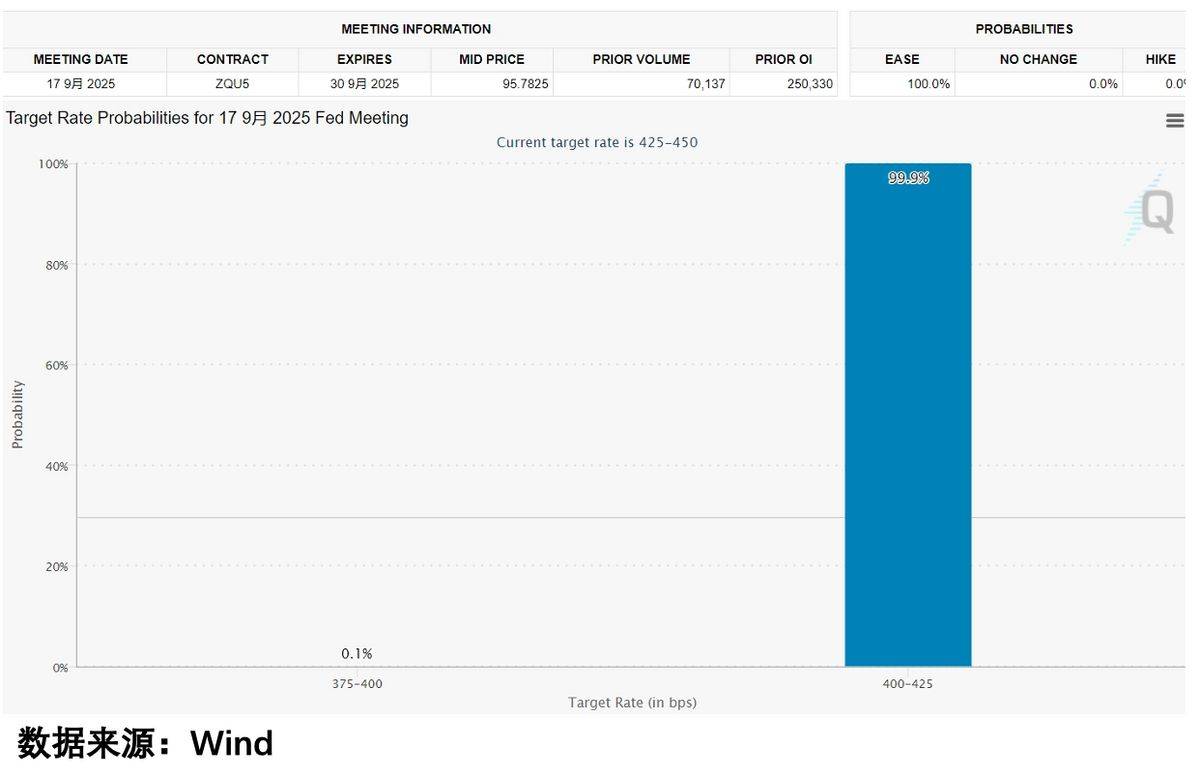
Group 1 - The core viewpoint of the articles indicates that the bond market is currently undergoing an adjustment phase rather than a reversal, with expectations of a potential configuration window for long-term bonds in the coming month and a half [1] - The recent adjustment in the bond market is attributed to the continuous rise in the equity market, leading to a poor performance of bonds in the first half of the year, which has caused a shift in investor sentiment and behavior [1][2] - The current bull market is characterized by a weak dollar since April, resulting in global liquidity easing, as evidenced by the rapid increase in the price-to-earnings ratio of the CSI 2000 index, which reached approximately 150 times on August 15, marking a historical high [1] Group 2 - The U.S. CPI data for July showed a decline, which, combined with weaker-than-expected non-farm employment data, has led to increased expectations for a rate cut by the Federal Reserve in September, causing a rapid rise in the equity market [2] - However, core CPI data suggests that inflation pressures in the U.S. have not eased, and the PPI data released on August 14 exceeded expectations, leading to a marginal weakening of the U.S. stock market [2] - In the A-share market, the recent rise has been primarily driven by retail investors, while institutional investors remain cautious due to the overall high valuation of equities, resulting in net outflows from broad-based ETFs [5] Group 3 - There are three notable expectation discrepancies in the current market: U.S.-China relations, Federal Reserve rate cut expectations, and the funding situation for September [9] - The U.S.-China trade negotiations remain uncertain, with the U.S. gaining more leverage in future discussions due to agreements with other major global powers [9] - The Federal Reserve faces a dilemma between the pressures of weak non-farm data and persistent inflation, leading to a lower probability of rate cuts in the fourth quarter [9][10] Group 4 - The bond market is expected to experience a temporary respite, with the potential for funds to flow back from equities to bonds as bond valuations improve [10] - The 30-year government bond yield is projected to have a lower limit of 1.92-1.95%, with potential upward resistance at 2.05-2.1%, while the fourth quarter may approach or break the annual low of 1.80% [10] - The 30-year government bond ETF, launched in March 2024, is one of the few long-duration bond ETFs in the market, tracking the performance of the Shanghai Stock Exchange 30-year government bond index [11]

创业板指创阶段新高,创业50ETF(159682)上午收涨近4%,机构:市场趋势向上依然具备确定性
2 1 Shi Ji Jing Ji Bao Dao· 2025-08-18 05:20
Group 1 - The A-share market experienced a strong performance on August 18, with the ChiNext Index rising by 3.63% and surpassing the 2600-point mark, breaking through last year's high of 924 [1] - The ChiNext 50 Index (399673.SZ) increased by 4.0%, with notable stocks such as Zhinan Compass and Mango Super Media hitting the daily limit, Tonghuashun rising over 15%, and Zhongji Xuchuang increasing by over 10% [1] Group 2 - The Chuangye 50 ETF (159682) rose by 3.83% with a trading volume of 164 million yuan, tracking the ChiNext 50 Index, which includes sectors like manufacturing, finance, and information technology [2] - East Wu Securities anticipates that the market will maintain relative strength in the short term due to liquidity, although it may experience volatility and consolidation as it attempts to break previous highs [2] - The mid-term outlook remains positive with factors such as policy support, asset scarcity, and the potential for a US dollar interest rate cut contributing to an upward market trend [2]

美联储降息在即,A股却集体跳水,真是见光死?
Sou Hu Cai Jing· 2025-08-14 07:43
Group 1 - The core viewpoint of the article revolves around the market dynamics influenced by the Federal Reserve's potential interest rate cuts and the contrasting reactions in the stock market [1][12] - The article highlights the disparity in stock performance despite similar news, emphasizing that not all investors benefit equally from market movements [3][4] - It discusses the concept of "expectation difference" as a key to profitability in the stock market, where information asymmetry leads to wealth redistribution [4][5] Group 2 - The article provides an example of the recent A-share mid-term report pre-increase trend, illustrating the varying performances of companies like "Shengtun Mining" and "Qifeng New Materials" [5][7] - It points out that the stock market is driven not by concepts but by pricing power, with institutional investors manipulating stock prices based on retail investors' perceptions [7][11] - The importance of quantitative data is emphasized, showing that significant trading behaviors leave traces in data, which can reveal the true market dynamics [8][11] Group 3 - The article advises investors to focus on understanding the real implications behind major news events, rather than reacting impulsively to market trends [12][13] - It suggests that the true advantage in the market lies in the ability to analyze and interpret data effectively, rather than merely having access to information [12][13] - Recommendations for investors include avoiding blind pursuit of news, validating market sentiment with data, and paying attention to the real movements of institutional funds [15]


做资产配置应该如何避免追涨?用科学的模型框架做多元化分散
雪球· 2025-08-10 13:04
Core Viewpoint - The article discusses the common misconception that asset allocation is synonymous with chasing rising assets, highlighting the cognitive trap that confuses market price phases with allocation logic [4][5][6]. Group 1: Investment Theory - The classic Markowitz portfolio optimization theory indicates that asset allocation is directly proportional to expected returns and inversely proportional to volatility [9]. - Historical data is often used to estimate future expected returns and volatility, leading to a "chasing" effect where assets with higher past returns receive higher allocation [10][12]. - The Black-Litterman model and other improved versions of portfolio optimization incorporate subjective investor expectations, yet still exhibit a tendency to chase rising assets due to cognitive biases [13]. Group 2: Behavioral Finance - The concept of "availability bias" in behavioral finance explains why investors tend to chase rising assets, as they rely on easily recalled information rather than comprehensive data [14]. - In the digital age, the prevalence of real-time information and social media amplifies this bias, leading to potentially detrimental investment decisions [14]. Group 3: Avoiding Chasing Behavior - Establishing an objective analysis framework is crucial for independent judgment and contrarian investing, as demonstrated by the analysis of U.S. inflation trends [16][21]. - Recommendations for avoiding chasing behavior include distinguishing between long-term logic and short-term variables, minimizing the pursuit of short-term performance, and diversifying asset allocation to create a richer "return stream" [23][24][25]. - Understanding the difference between style beta and alpha is essential for investors to avoid chasing funds based solely on past performance [28]. Group 4: Investment Strategy - The article advocates for a simplified investment strategy, such as the "Snowball Three-Part Method," which emphasizes diversification across global asset classes to mitigate volatility and enhance long-term returns [29][30].

美联储或有罕见举措,A股要成资产新贵!
Sou Hu Cai Jing· 2025-08-07 12:26
Group 1 - The unusual phenomenon in the U.S. Treasury market is highlighted, with the 5-year Treasury bond valuation at a historically high level, typically seen only during extreme periods when the Federal Reserve lowers rates to zero [3] - There is a significant divergence in the yield trends of different maturities of Treasury bonds, with the 5-year yield dropping by 60 basis points and the 2-year yield by 52 basis points, while the 30-year yield remains stable [3] - This divergence indicates a deep division in market expectations regarding future policy directions, suggesting a potential increase in the value of A-shares if such a scenario unfolds [3] Group 2 - The concept of "expectation difference" is emphasized as a key factor in financial markets, where institutional investors leverage information asymmetry to their advantage [4] - Historical examples illustrate that while retail investors may cling to surface-level phenomena, institutional investors often act based on underlying data trends, as seen during the 2015 stock market crash [4] Group 3 - Data analysis reveals that institutional investors often engage in active trading before a stock gains attention, showcasing their "first-mover" advantage [8] - Even in cases where stocks experience a downturn, institutional funds may remain active, indicating a strategy of "counter-trend positioning" [10] - Conversely, stocks that lack sustained institutional participation may underperform despite positive news, reinforcing the principle that "funding is more critical than favorable news" [12] Group 4 - The current anomalies in the U.S. Treasury market may reflect institutional investors' expectations regarding future policy changes, similar to observed patterns in the stock market [13] - Factors such as political pressure from the Trump administration, potential changes in Federal Reserve leadership, and implied rate cut expectations create a complex market landscape [13] Group 5 - Ordinary investors are advised to develop their own data analysis systems rather than blindly following market news, as this can help them navigate the complexities of the market [14] - The importance of recognizing and understanding the existence of expectation differences in the market is stressed, as it can lead to more informed investment decisions [14]

美联储降息在即,大A抢跑行情,但仍有一坎!
Sou Hu Cai Jing· 2025-08-06 08:48
Group 1 - The recent U.S. non-farm payroll data showed job additions significantly below expectations, leading to renewed discussions on interest rate cuts by Wall Street firms [3][5] - Major financial institutions like Goldman Sachs and Citigroup have increased their predictions for potential interest rate cuts, with Nomura Securities doubling the probability of four rate cuts within the year [3][5] - The current economic situation is compared to last year, but there are key differences, particularly regarding inflation trends [3][5] Group 2 - Market reactions often reflect expectations rather than reality, with poor economic data potentially leading to a bullish stock market as investors bet on Federal Reserve easing [5][13] - There is a noted disparity in information access between retail investors and institutions, with institutions often pricing in information months in advance [12][14] - Key indicators such as the three-month average job additions have fallen below 150,000, which are seen as leading indicators in quantitative models [13][16] Group 3 - The slowdown in wage growth and a significant reduction in temporary workers are additional indicators of economic trends [16] - The article emphasizes the importance of using quantitative tools to detect market movements and funding patterns, which can provide insights that are not immediately visible to average investors [14][15]

资管一线 | 中泰资管唐军:资产配置需建立稳定分析框架,重视多元配置丰富回报流
Xin Hua Cai Jing· 2025-08-05 10:08
Core Insights - The performance of FOF (Fund of Funds) products has been impressive this year, with over 90% achieving positive returns [1][4] - The asset allocation approach is described as having "no optimal solution," emphasizing the need for a stable analytical framework and diversified investments to avoid common pitfalls like "chasing gains and cutting losses" [1][3][6] Group 1: Asset Allocation Strategies - The manager, Tang Jun, advocates for a multi-faceted asset allocation strategy that includes objective standards and diversified returns to mitigate risks associated with market expectations [1][6] - Tang Jun's experience in quantitative investment has shaped his ability to identify market factors and adjust asset allocations dynamically based on market conditions [2][4] - The current allocation strategy has shifted towards A-shares, reflecting a responsive adjustment to market trends, with a notable increase in A-share allocation compared to Hong Kong stocks [4][5] Group 2: Market Insights and Tactical Adjustments - The positive performance of FOF products is attributed to effective diversification strategies, particularly during stable market conditions [4] - Despite uncertainties in external environments, domestic policy support is expected to provide a solid foundation for the A-share market, leading to a stable and potentially strong performance [5] - Tang Jun has actively engaged in tactical allocations within sectors like innovative pharmaceuticals and military industries, capitalizing on growth trends and market opportunities [5][6] Group 3: Behavioral Insights and Investor Guidance - The common mistake of "chasing gains and cutting losses" is highlighted, with recommendations for establishing an analytical framework based on objective standards to guide investment decisions [6][7] - Understanding "expectation differences" is crucial for avoiding impulsive trading decisions, as market consensus often serves as a contrary indicator [7] - Investors are advised to differentiate between returns driven by style beta and alpha when selecting funds, which aligns with Tang Jun's quantitative research background [7]
【笔记20250728— 商品在反内卷中 走完一年行情】
债券笔记· 2025-07-28 15:27
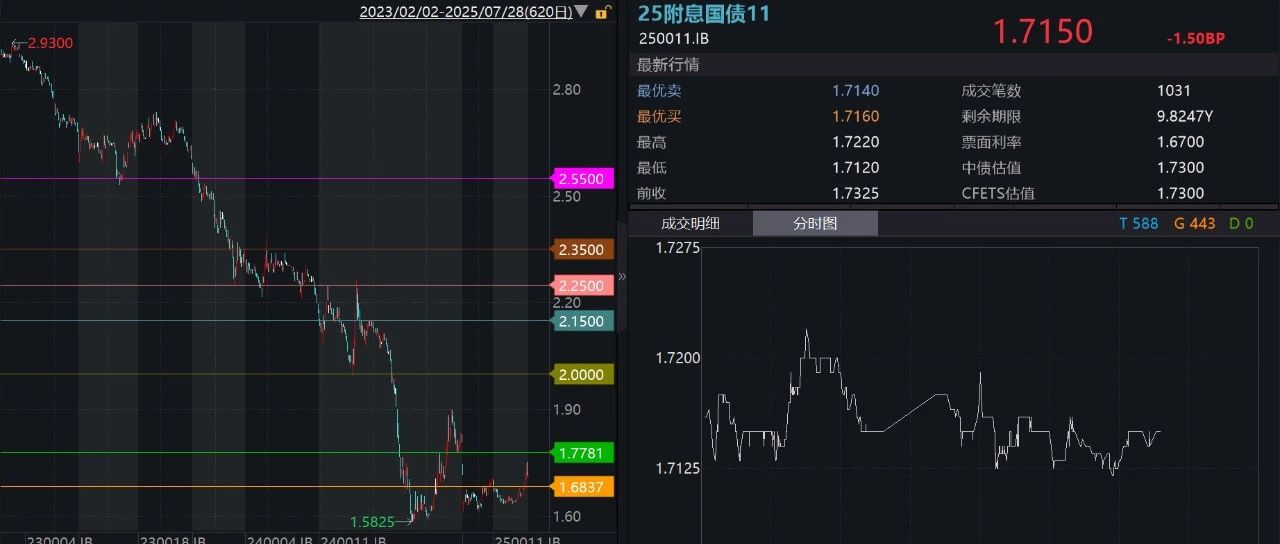
Core Viewpoint - The real risk faced by investors is the expectation gap between their predictions and market movements, which is highlighted by the phrase "risk is the difference between your expectations and market trends" [1] Monetary Policy and Market Conditions - The central bank conducted a 4,958 billion yuan reverse repurchase operation, with a net injection of 3,251 billion yuan after 1,707 billion yuan matured [2] - The funding environment is balanced and slightly loose, with funding rates continuing to decline; DR001 is around 1.46% and DR007 is around 1.58% [3] - The central bank's continued large net injections have led to a slight increase in the stock market, while commodities have seen significant declines and bond market rates have fluctuated downwards [4] Market Performance - The interbank funding rates have shown a downward trend, with R001 at 1.49% (down 6 basis points) and R007 at 1.63% (down 7 basis points), indicating a total transaction volume of 68,928.38 billion yuan [5] - The commodity market experienced a sharp decline, with various products hitting their daily limit down, while the bond market showed positive sentiment with the 10-year government bond yield fluctuating around 1.715% [5] Social Policy Impact - The introduction of a child-rearing subsidy policy, providing 3,600 yuan per child per year, marks a significant breakthrough in social policy aimed at improving birth rates [6]
固收专题:市场预期差修正,股债配置有望切换-250723-去水印
KAIYUAN SECURITIES· 2025-07-23 09:09
Report Overview - Report Title: "Market Expectation Gap Correction, Potential Switch in Stock-Bond Allocation" [2] - Report Date: July 23, 2025 - Research Team: Fixed Income Research Team - Analysts: Chen Xi, Liu Wei Report Investment Rating - Not provided in the report Core Views - In the second half of 2025, the economic cycle is in an upward phase, similar to 2016 - 2017, in the second half of the L-shaped cycle [5]. - The key to the market rally is the correction of the expectation gap. Currently, the pricing in the stock, bond, and commodity markets is weak, and the upward correction of the market expectation gap may drive the market up [6]. - With the economic expectation correction, there may be a switch between stocks and bonds. The bond yield and the stock market are expected to rise [9]. Summary by Relevant Catalog Economic Upward Trend in H2 2025 - The local debt resolution plan launched in November 2024 may drive the economy to recover continuously, as past debt rectification periods were followed by economic rebounds [5]. - After the digestion of policies from 2021 - September 2024 and structural transformation, the year - on - year growth rate of social financing stock has been rising since November 2024 [5]. - The supply - side anti - involution measure proposed on July 1, 2025, is conducive to the recovery of the PPI year - on - year rate, similar to the 2015 supply - side reform [5]. Market Expectation Gap and Its Impact - As of July 22, 2025, the equity risk premium rate of the Wind All - A Index was 3.14%, at the 72.1% percentile in the past 10 years; the 10 - year Treasury yield was 1.69%, at the 4.0% percentile in the past 10 years; the Nanhua Industrial Products Index was at the 43.2% percentile from 2022 to the present, indicating weak pricing in the market [6]. - The market's weak pricing is based on the view that the full - year GDP target of 5.0% is easy to achieve (with H1 GDP growth at 5.3%), leading to low expectations for H2 policies. However, there is a significant expectation gap in the market's pricing of the economic recovery [6]. - The all - around policies from July 2025 are expected to gradually realize the market's expectation of economic recovery, forming a positive feedback loop for market confidence and expectations [7]. Stock - Bond Switch - The economy is similar to that in 2016 - 2017, in the second half of the L - shaped cycle. The economic growth rate in H2 2025 is not expected to decline significantly, and with the solution of structural problems, there may be a switch between stocks and bonds, with bond yields and the stock market expected to rise [9].