长期投资

Search documents
择时靠谱吗?一个实验告诉你!
雪球· 2025-09-07 13:30
Group 1 - The article discusses the allure and misconceptions of market timing versus systematic investment strategies like dollar-cost averaging [4][5] - It highlights that most investors lack the ability to consistently time the market effectively, making long-term investment strategies more reliable [5][12] - The article presents a simulation of systematic investment in the CSI 300 index, showing varying returns based on different investment strategies over a 20.3-year period [6][8] Group 2 - The simulation results indicate that investing at the opening price yielded a total return of 51.77%, while the highest price, lowest price, and closing price strategies yielded 43.56%, 59.23%, and 50.49% respectively [7][8] - The average annual compound returns for these strategies were 2.08%, 1.80%, 2.32%, and 2.03% respectively, demonstrating that even the best timing strategies do not significantly outperform systematic investment [8][10] - The article concludes that while precise timing can enhance returns, its impact on long-term investment success is limited, reinforcing the value of a long-term investment approach [11][12]


公募基金费率改革收官 每年向投资者让利超500亿元
Zheng Quan Ri Bao· 2025-09-06 01:13
Core Viewpoint - The public fund industry in China is undergoing a significant fee rate reform, marking a crucial step towards high-quality development and cost reduction for investors [1][2]. Summary by Relevant Sections Fee Rate Reform Overview - The China Securities Regulatory Commission (CSRC) has initiated a public fund fee rate reform, which is divided into three phases aimed at gradually lowering the comprehensive investment costs for public funds [1][2]. - The new regulations, titled "Regulations on the Management of Sales Expenses for Publicly Raised Securities Investment Funds," consist of six chapters and 28 articles, focusing on reducing investor costs and optimizing sales practices [2][3]. Specific Fee Adjustments - The maximum subscription and purchase fees for equity funds have been reduced from 1.2% and 1.5% to 0.8%, while for mixed funds, they have been lowered from 1.2% and 1.5% to 0.5%. Bond funds see a reduction from 0.6% and 0.8% to 0.3% [3]. - The annual sales service fee cap for equity and mixed funds has been decreased from 0.6% to 0.4%, and for index and bond funds from 0.4% to 0.2% [3]. Encouragement of Long-term Investment - The reform encourages long-term holding by eliminating sales service fees for investors who hold equity, mixed, or bond funds for over a year, thus promoting a shift from short-term speculation to long-term value investment [4][5]. - The redemption fee structure has been revised to ensure that all redemption fees are allocated to the fund's assets, thereby increasing the cost of short-term trading for investors [4]. Institutional Investor Focus - The CSRC has established a direct sales service platform for institutional investors, aimed at enhancing the efficiency and effectiveness of direct sales in the public fund industry [5]. - The platform will standardize operations and reduce the high costs and risks associated with traditional direct sales methods, thereby improving service levels in the industry [5][6]. Regulatory and Industry Impact - The reform addresses long-standing issues in the industry, such as the allocation of interest on idle funds and dual charging in fund advisory services, thereby enhancing the integrity of the fund management process [6]. - The adjustments in fee structures are designed to support the development of equity funds while maintaining a balance with other fund types, promoting a stable and healthy growth trajectory for the industry [6].
证监会就《公开募集证券投资基金销售费用管理规定(征求意见稿)》公开征求意见 公募基金费率改革收官 每年向投资者让利超500亿元
Zheng Quan Ri Bao· 2025-09-05 16:07
Core Viewpoint - The public fund industry in China is undergoing a significant fee rate reform, marking a crucial step towards high-quality development and aiming to reduce investor costs while regulating the sales market [1][2]. Group 1: Fee Rate Reform Details - The China Securities Regulatory Commission (CSRC) has initiated a three-phase fee rate reform, which is expected to benefit investors by over 50 billion yuan annually [1]. - The revised regulations, now titled "Publicly Raised Securities Investment Fund Sales Expense Management Regulations," include a total of six chapters and 28 articles, focusing on reducing costs for investors and optimizing fund sales practices [2]. - Specific fee reductions include lowering the maximum subscription and purchase fees for equity funds from 1.2% and 1.5% to 0.8%, for mixed funds from 1.2% and 1.5% to 0.5%, and for bond funds from 0.6% and 0.8% to 0.3% [3]. Group 2: Encouragement of Long-term Investment - The reform encourages long-term holding by eliminating sales service fees for investors who hold equity, mixed, and bond funds for over one year [5]. - The redemption fee structure has been optimized to ensure that all redemption fees are allocated to the fund's assets, discouraging short-term trading behaviors [5]. - The reform aims to shift the focus of fund sales institutions from generating income through "traffic" to earning "retention" income by providing ongoing services [5][6]. Group 3: Development of Direct Sales Channels - The CSRC has launched the Fund Industry Institutional Investor Direct Sales Service Platform (FISP), which aims to streamline the direct sales process and improve service efficiency for institutional investors [6]. - The FISP platform is designed to address high operational costs and inefficiencies in traditional direct sales, providing a standardized and automated service for fund investments [6]. Group 4: Overall Impact on the Industry - The reform is expected to lead to an overall fee reduction of approximately 300 billion yuan annually, representing a 34% decrease in fees, thereby providing tangible benefits to investors [4]. - The adjustments in fee structures and the establishment of the FISP platform are anticipated to enhance the quality and stability of the public fund industry in the long term [7].
面对波动,怎么缓解焦虑情绪?
天天基金网· 2025-09-05 11:11
Core Viewpoint - The article discusses the recent fluctuations in the Shanghai Composite Index, emphasizing the importance of maintaining investment discipline and focusing on long-term value rather than short-term market volatility [3][6][10]. Market Analysis - The Shanghai Composite Index has experienced increased volatility as it surpasses key levels such as 3500, 3600, 3700, and 3800 points, with average daily fluctuations rising significantly [4][5]. - Historical data shows that market corrections often occur around these integer levels, driven by profit-taking behaviors from investors [5][10]. Long-term Investment Perspective - Over the past 20 years, the Wind All A Index has shown a cumulative increase of 807.99% with an annualized return of 12.01%, outperforming other asset classes like gold and bonds [8][9]. - The sustained growth of quality listed companies in China is a key driver behind these returns, highlighting the importance of long-term holding strategies [10]. Investment Strategy - The article advocates for a core-satellite investment strategy, which combines stable broad-based indices with high-potential assets to capture structural opportunities while managing overall portfolio volatility [11][12]. - Investors are encouraged to focus on asset allocation that reflects their risk tolerance, including exposure to broad indices like CSI A500 and Shanghai-Shenzhen 300 [12].

思想挑战,长期投资是不是应该全配置股票?
雪球· 2025-09-05 08:08
Group 1 - The traditional view suggests that individuals should adjust their investment strategy from stocks to bonds as they age, with a focus on capital preservation in retirement [5][6] - This conventional wisdom is challenged by recent research indicating that maintaining a high allocation to stocks throughout one's life may be more beneficial [8][9] - The study found that an optimal investment portfolio could consist of nearly 100% stocks, with a significant portion in international equities, while bonds could be minimized [9][10] Group 2 - The long-term returns on bonds are relatively low and susceptible to inflation, undermining the perceived safety of bonds over extended periods [10] - Surprisingly, a portfolio with nearly all stocks has a lower probability of running out of money in retirement compared to the traditional 60% stocks and 40% bonds strategy, with a bankruptcy probability of only 6.7% [10] - The research emphasizes that the real risk lies not in stock investments but in withdrawal strategies during market downturns, suggesting alternative methods for managing withdrawals to preserve capital [12][13] Group 3 - The study proposes that retirees should consider keeping several years' worth of living expenses in cash or money market funds to avoid selling stocks at a loss during market declines [12] - Dynamic withdrawal strategies, which adjust the amount withdrawn based on current asset values, can help sustain funds over the long term [12][13] - While the research presents a compelling case for a stock-heavy portfolio, it also highlights the importance of having a diversified investment approach to provide flexibility and security in extreme market conditions [14]

科技板块抢眼折射市场逻辑之变
Jing Ji Ri Bao· 2025-09-04 22:00
Group 1 - The recent surge in Cambricon's stock price, surpassing Kweichow Moutai, highlights a shift in economic growth dynamics and capital market narratives, emphasizing the impact of innovation-driven development [1] - The transition from traditional industries to emerging sectors like artificial intelligence, semiconductors, and new energy is accelerating, with significant investment opportunities arising from this shift [1][2] - The performance of the technology sector in the A-share market has been notable, with companies like Cambricon attracting substantial attention and investment due to their growth potential and innovation capabilities [2] Group 2 - The narrative in the capital market is increasingly focused on technology, with significant growth in sectors such as new energy vehicles and consumer electronics, indicating a shift in investor preferences towards high-growth technology firms [2] - Investors are redefining value, placing greater emphasis on future growth potential and R&D investment rather than just current profitability, as seen in the case of Cambricon [2][3] - The interplay between capital markets and technological innovation is fostering the emergence of strategic new industries, enhancing the overall competitiveness and attractiveness of the market [3]


资本市场“十五五”改革划重点 增强市场吸引力和包容性
Zheng Quan Shi Bao· 2025-09-04 18:52
Core Viewpoint - The China Securities Regulatory Commission (CSRC) is planning key reforms for the capital market during the "14th Five-Year Plan" period, focusing on enhancing market stability, promoting long-term and value investing, and integrating capital markets with technological development [1][4]. Group 1: Investment and Financing Reform - The CSRC emphasizes the importance of deepening investment and financing reforms as a means to drive capital market development, with a focus on balancing supply and demand for funds [2][3]. - Recent reforms have led to significant inflows of long-term capital into the A-share market, with over 200 billion yuan net purchases from social security, insurance, and pension funds this year [2][3]. - The CSRC is also enhancing the quality and investment value of listed companies, with over 46,000 merger and acquisition transactions disclosed from 2024 to August 2025, and record high dividends and buybacks [3][6]. Group 2: Market Attractiveness and Inclusivity - The CSRC aims to enhance the attractiveness and inclusivity of the capital market by improving investor protection and the quality of listed companies [4][5]. - There is a need for institutional innovation to address existing barriers in the capital market, particularly in supporting technology-driven enterprises [4][5]. - The goal is to create a modern financial system that efficiently allocates resources while balancing risks and returns [4]. Group 3: Advocacy for Investment Philosophy - The CSRC is advocating for long-term, value, and rational investment philosophies to stabilize the market and encourage prudent investment behavior [7]. - Investors are encouraged to focus on fundamental analysis and avoid emotional decision-making, aiming for a diversified investment portfolio that considers long-term growth potential [7].
终于等到大跌了!
Sou Hu Cai Jing· 2025-09-04 05:56
Group 1 - The technology sector has experienced a significant decline, with expectations that the market will test the support level of 3700 points [1] - The market has seen a surge in retail investor accounts, increasing by 166% year-on-year since August, indicating a rapid rise in market activity [1][2] - Regulatory bodies are taking measures to cool down the overheated stock market, as indicated by recent comments from the chairman of the China Securities Regulatory Commission [2] Group 2 - Historical context suggests that previous market fluctuations were influenced by government actions to control leverage, which could lead to significant losses for investors who entered the market at high points without establishing a base [3] - The current market is expected to undergo a period of adjustment lasting approximately three months, with potential for rebounds after initial declines [3] - The stock market is likely to experience differentiation, where companies without growth expectations may struggle, while those with sustainable growth prospects, such as innovative pharmaceutical companies, may still present investment opportunities [5]

长跑型投资老将的胜利:“时间的玫瑰”开在公募基金里
3 6 Ke· 2025-09-04 04:28
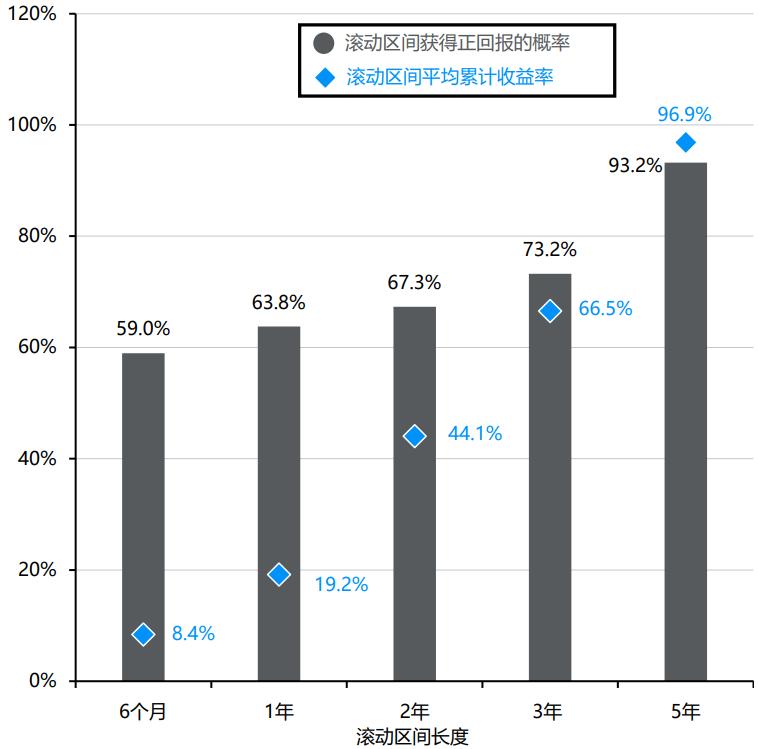
Group 1 - The core viewpoint of the article emphasizes the transition of the public fund industry from a "star model" to a "platform model," focusing on building a "platform-based, integrated, multi-strategy" investment research system [1] - Experienced fund managers with over ten years of management experience are showcasing unique value during this transition, as they have navigated multiple market cycles [1][2] - As of August 31, 2025, there are fewer than 100 fund managers in the public fund industry who have continuously managed the same active equity fund for over ten years, representing only about 5% of equity and mixed product fund managers [1][2] Group 2 - Fund managers with over 14 years of experience have demonstrated impressive performance, with annualized returns exceeding 10% for their representative funds [2] - Notable fund managers include Du Meng from Morgan Asset Management, with an annualized return of 15.7%, and others like Zhu Shaoxing and Li Wei, with returns of 15.4% and 14.8%, respectively [2] - The annualized return of the Shanghai Composite Index over the past 14 years is only 2%, indicating that experienced fund managers can generate substantial performance through long-term investment [2] Group 3 - Active investment has seen a significant performance rebound, with 30% of active stock and mixed funds achieving returns over 50% in the past year [3] - Fund managers with over ten years of experience have shown more stable performance, with Du Meng's managed funds yielding returns between 83% and 96% in the past year [3] Group 4 - Historical data indicates that longer holding periods lead to better investor returns, with a 93.2% positive return rate for holding equity funds for five years [4] Group 5 - The article highlights the importance of a supportive platform and culture for fund managers, with companies that have a deep understanding of equity investment fostering long-term management [8] - Morgan Asset Management has maintained a "long-distance" investment culture, with 80% of its global long-term funds outperforming the industry median over the past decade [8][9] Group 6 - The article concludes that the public fund industry is likely to see more fund managers who adhere to long-termism and leverage team intelligence and systematic methods, which is essential for high-quality development in the industry [9]
发挥长钱长投优势 险资系私募偏好大蓝筹
Zhong Guo Zheng Quan Bao· 2025-09-03 22:44
Group 1 - A new insurance-funded private equity firm, Hengyi Chiying, has registered with a fund size of 30 billion yuan, bringing the total number of insurance-funded private equity firms to seven, with a combined trial amount of 222 billion yuan [1][2] - The insurance capital long-term investment reform pilot was approved in October 2023, with China Life and Xinhua Insurance each contributing 25 billion yuan to establish a 50 billion yuan company fund [2] - The investment strategy of these funds focuses on long-term and value investments, particularly in leading companies in the energy and infrastructure sectors, such as China Petroleum and China Shenhua [1][2] Group 2 - Six insurance-funded private equity funds are currently operational, with significant holdings in major companies like China Petroleum and China Shenhua, indicating a strategic shift towards stable, blue-chip stocks [3][4] - The Honghu Zhiyuan Fund has reported substantial holdings, becoming a major shareholder in companies like Sinopec and Daqin Railway, with corresponding market values exceeding 17 billion yuan and 19 billion yuan respectively [3][4] - The funds emphasize a long-term investment approach, aiming to reduce short-term market volatility impacts on financial statements and promote sustainable investment returns [5][6] Group 3 - The total assets of the Honghu Zhiyuan Fund reached 57.11 billion yuan, with a net profit of 9.68 billion yuan in the first half of the year, showcasing the effectiveness of their investment strategy [5] - The insurance companies are committed to establishing private equity funds to leverage their long-term capital advantages, supporting the capital market and aligning with national strategies [6]