量子计算

Search documents
2025国内十大科技新闻解读
Ke Ji Ri Bao· 2025-12-25 01:00
Group 1: Artificial Intelligence Developments - The Chinese AI company DeepSeek launched the open-source model DeepSeek-R1, which has gained global attention due to its low training costs and high performance in tasks like mathematical reasoning and code generation [2] - DeepSeek-R1's core competitiveness lies in its systematic innovation in computational efficiency, achieving top-tier reasoning capabilities without the need for massive labeled data [2][3] - The model's open-source approach aims to break technological monopolies, allowing developers worldwide to participate in its ecosystem [2] Group 2: Nuclear Fusion Research - China's "artificial sun," the EAST device, achieved a world record by maintaining a plasma temperature of 100 million degrees Celsius for 1000 seconds, marking a significant step towards practical nuclear fusion [4] - The high-confinement operation mode is crucial for future fusion reactors, indicating that the experiment has successfully simulated the necessary conditions for sustained fusion [4] Group 3: Quantum Computing Advancements - The "Zu Chongzhi No. 3" superconducting quantum computing prototype was developed, demonstrating a computational speed that surpasses the fastest supercomputers by trillions of times [5][6] - This prototype achieved the highest level of quantum computing superiority, showcasing its potential for various applications in quantum error correction and simulation [6] Group 4: Material Science Innovations - A research team successfully created large-area two-dimensional metallic materials, marking a significant advancement in the field of material science [7] - This breakthrough allows for the production of ultra-thin metals, potentially opening new avenues for research in two-dimensional materials [7] Group 5: Brain-Computer Interface Trials - China initiated its first invasive brain-computer interface clinical trial, positioning itself as the second country globally to enter this phase of technology [8][9] - The trial utilizes flexible neural electrodes that minimize damage to brain tissue, enhancing the safety and effectiveness of the procedure [8] Group 6: Lunar Exploration Findings - The Chang'e 6 mission revealed the evolutionary history of the moon's far side, providing insights into volcanic activity and the moon's magnetic field [11][12] - This research fills a significant gap in lunar studies, highlighting the moon's geological history and the impact of large-scale collisions on its evolution [11][12] Group 7: Agricultural Biotechnology Breakthroughs - A research team unveiled the molecular mechanisms behind how a single plant cell can develop into a complete plant, addressing a long-standing scientific challenge [13] - This discovery could pave the way for advancements in agricultural biotechnology, particularly in overcoming regeneration bottlenecks [13] Group 8: Computing Architecture Innovations - Researchers developed a high-precision, scalable analog matrix computing chip, achieving precision comparable to digital computing systems [14][15] - This innovation addresses the challenges of computational efficiency in AI and 6G communications, marking a significant breakthrough in computing paradigms [15] Group 9: National Strategic Initiatives - The 20th Central Committee of the Communist Party of China emphasized the role of technological innovation in driving economic development in its 14th Five-Year Plan [16][17] - The plan outlines specific strategies to enhance original innovation and integrate technological advancements with industrial development [16][17] Group 10: Military Advancements - China's first electromagnetic catapult aircraft carrier, the Fujian, was commissioned, representing a leap in naval technology with its advanced launch capabilities [18] - This carrier enhances operational capabilities and signifies a transition to a new era in the Chinese navy, showcasing advancements in military technology [18]
2025国际十大科技新闻解读
Ke Ji Ri Bao· 2025-12-25 01:00
Group 1: AI Developments - DeepSeek's open-source model DeepSeek-R1 utilizes pure reinforcement learning, significantly reducing the dependency on labeled data while achieving top performance under limited computational power [2] - A new brain-computer interface developed by the University of Texas at Austin can decode thoughts into continuous text in about one hour, showcasing a significant leap in efficiency and applicability [3] - AI has been used to design complex serine hydrolases from scratch, marking a key advancement in computational biology and understanding life’s catalytic mechanisms [4][5] Group 2: Quantum Computing - Google achieved a significant breakthrough in quantum computing by demonstrating verifiable quantum advantage with its "Willow" quantum processor, completing a task 13,000 times faster than classical supercomputers [10][11] Group 3: Astronomy and Space Exploration - The Vera C. Rubin Observatory released its first test images, showcasing its capability to capture millions of distant stars and galaxies, marking a transformative step in astronomical observation [7] Group 4: Robotics in Medicine - A new intelligent robot successfully performed a complete gallbladder removal surgery autonomously, demonstrating a significant advancement in surgical robotics by integrating high precision with adaptive understanding [8][9] Group 5: Climate Change and Environmental Science - The Global Critical Points Report indicates that the world is approaching several catastrophic climate thresholds, with the first significant sign being the mass death of warm-water coral reefs due to temperature increases [13][14] Group 6: Neuroscience - A comprehensive cross-species mammalian brain cell development map was published, revealing critical insights into the development and function of brain cells, which could lead to better understanding and intervention for neurodevelopmental disorders [15][16]

国资拟入主!今起复牌
Zhong Guo Zheng Quan Bao· 2025-12-24 23:25
Group 1 - The People's Bank of China (PBOC) emphasizes the use of securities, funds, and insurance company swap facilities and stock repurchase loans to maintain capital market stability [2][4] - Beijing's housing policy adjustments allow non-resident families to purchase homes with reduced social insurance or income tax payment requirements [2][4] - The State-owned Assets Supervision and Administration Commission (SASAC) plans to enhance the quality and market value management of listed companies and promote strategic mergers and acquisitions [2][4] Group 2 - Lianchuang Electronics announces a change in its actual controller to Jiangxi State-owned Assets Supervision and Administration Commission, with stock resuming trading on December 25 [4] - Jiaheng Jiahua is planning a change in control, leading to a temporary suspension of its stock from December 25 [5] - UBTECH Robotics intends to acquire approximately 43% of shares in Fenglong Co., with stock resuming trading on December 25 [5] Group 3 - Huaqin Technology signs a framework procurement contract worth 254 million yuan for special functional materials for aircraft [6] - Chunguang Technology receives a robot product order worth 43.26 million yuan, expected to positively impact future earnings [6] - Enhua Pharmaceutical secures exclusive rights to promote and sell three long-acting antipsychotic products in mainland China, with a total payment of 20 million USD [7]


美国“创世纪”决战打响,24科技巨头签下“卖身契”,中国如何应对?
3 6 Ke· 2025-12-24 23:21
Core Insights - The "Genesis Project," led by the U.S. Department of Energy, aims to enhance foundational scientific research efficiency by integrating AI capabilities from major tech companies like Microsoft, Google, and NVIDIA with national laboratories [1][4][6] - This initiative is being compared to the Manhattan Project, reflecting a shift from corporate competition to a national-level scientific collaboration [3][7] - The project faces significant challenges, including the need for long-term investment patience from capital markets and the integration of energy infrastructure to support advanced computing needs [20][24] Group 1: Project Overview - The "Genesis Project" involves 24 tech giants collaborating with 17 national laboratories to focus on nuclear fusion, quantum computing, and new materials [1][4] - The initiative seeks to leverage AI to shorten research cycles and improve the efficiency of foundational scientific research [4][6] - The project represents a significant shift in the competitive landscape, moving from individual corporate efforts to a unified national strategy [3][7] Group 2: Challenges and Considerations - Key challenges include aligning the interests of competing tech companies and ensuring data security while fostering collaboration [18][24] - The project requires a long-term commitment from investors, as breakthroughs in fields like nuclear fusion and quantum computing may take a decade or more to materialize [20][21] - The success of the project is contingent upon the stability of political support and the ability to maintain a consistent research direction despite changing administrations [24][26] Group 3: Comparative Analysis - The "Genesis Project" is seen as a more open and market-driven approach compared to historical government-led initiatives, emphasizing systemic ambition [7][11] - In contrast, China's technological advancements are framed within a narrative of a "Chinese Manhattan Project," highlighting the global competition for defining technological innovation paths [9][12] - The U.S. initiative may exert systemic pressure on other nations, reshaping the global technological landscape [7][11]




二〇二五,科技创新再攀高峰
Xin Lang Cai Jing· 2025-12-24 20:50
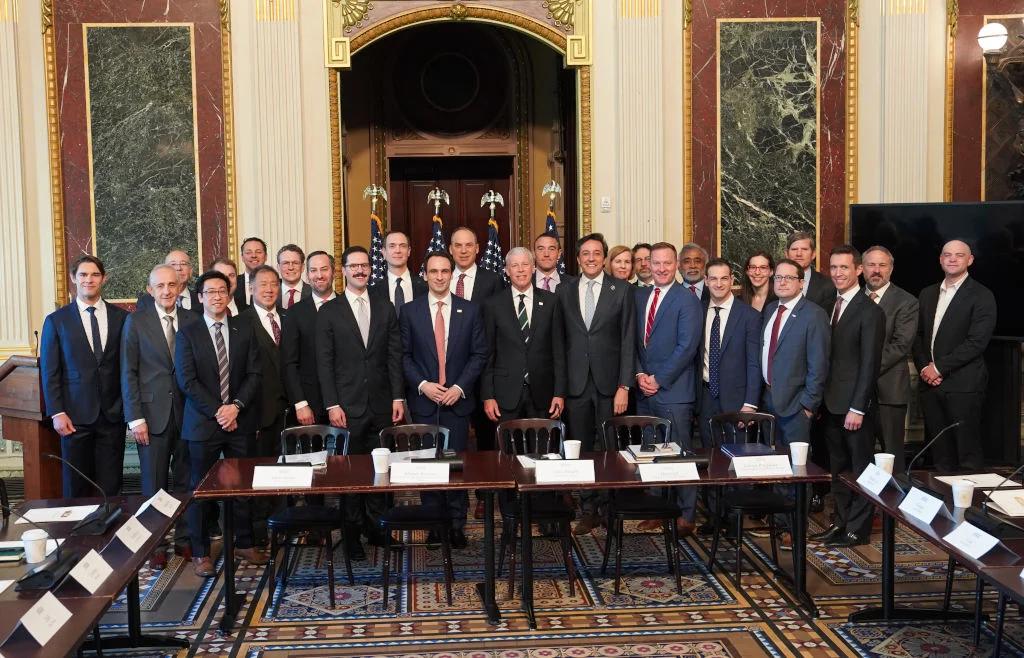
Core Achievements in Science and Technology - The EAST nuclear fusion experiment device achieved a world record by maintaining a high-confinement mode plasma operation at over one billion degrees Celsius for 1066 seconds, marking a significant step towards practical fusion energy [10] - The "Zuchongzhi No. 3" superconducting quantum computing prototype was released, featuring 105 readable qubits and 182 coupled qubits, outperforming the fastest supercomputers by 10^15 times and Google's superconducting processor by 10^6 times, establishing a new benchmark in quantum computing [10] - The Tianwen-2 probe was successfully launched, initiating China's first asteroid sampling and comet flyby mission, enhancing the country's capabilities in deep space exploration [11] - The Jiangmen Neutrino Experiment (JUNO) commenced operations, achieving unprecedented precision in measuring neutrino oscillation parameters, surpassing international standards by 1.5 to 1.8 times [12] Breakthroughs in Material Science and Engineering - A team successfully created two-dimensional metallic materials using a novel "atomic manufacturing" technique, filling a significant gap in the field and paving the way for advancements in low-power electronic devices [13] - A high-temperature superconductivity breakthrough was achieved with nickel oxide materials at ambient pressure, exceeding 40 Kelvin, which could revolutionize the understanding of superconductivity mechanisms [16] - A new adaptive full-bandwidth high-speed wireless communication chip for 6G was developed, capable of dynamically managing frequency resources across a wide range, achieving data transmission speeds exceeding 120 Gbps [16] Innovations in Transportation and Resource Management - The South-to-North Water Diversion Project has delivered over 80 billion cubic meters of water, benefiting 185 million people and supporting ecological restoration in northern China [18] - The CR450 high-speed train technology was showcased, achieving a record speed of 453 km/h for a single train and establishing a new standard for high-speed rail development [21] - The discovery of China's first large-scale gold mine, the Dadonggou mine, is expected to enhance the country's strategic gold reserves and provide a model for future mining projects [20]
软件与服务行业量子信息技术专题研究报告(二):科技巨头加速布局,量子产业前景可期-国元证券
Sou Hu Cai Jing· 2025-12-24 20:09
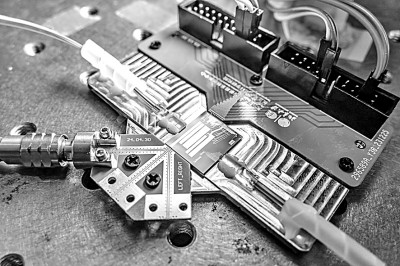
Core Insights - The report maintains an "Overweight" rating for the industry, focusing on three core areas: quantum communication, quantum computing, and quantum precision measurement, indicating that quantum technology is transitioning from frontier exploration to industrialization, with significant prospects for investment by 2026 [1] Group 1: Quantum Technology Development - Quantum technology is becoming a global strategic high ground, with its industrialization process exceeding expectations. The 2025 Nobel Prize in Physics will be awarded to scientists in the quantum field, further increasing attention on quantum technology [1][2] - The core advantages of quantum technology lie in utilizing quantum superposition and entanglement effects to break through the performance limits of classical information systems, thereby reconstructing computing, communication, and measurement systems [1] Group 2: Market Expansion - The global market for quantum communication is projected to reach $951 million in 2024 and is expected to grow to $10.5 billion by 2034, with a CAGR of approximately 28.3%. The Chinese market is anticipated to grow at a CAGR of 52.3% from 2025 to 2030 [2][34][39] - Quantum computing is expected to reach a global market size of $5.04 billion in 2024, with projections of over $800 billion by 2035, driven by its potential in material design and drug development [2][49] - The global market for quantum precision measurement is estimated to be $1.674 billion in 2024, with expectations to reach $4.497 billion by 2035, showing a growth rate exceeding 30% in China [2] Group 3: Technological and Application Breakthroughs - International giants are leading the industry development, with companies like Microsoft, Google, and IBM making significant advancements in quantum hardware and software. For instance, Microsoft has launched a topological qubit processor, while Google has achieved breakthroughs in quantum error correction [3][8] - Domestic companies are solidifying the industrial foundation, with Guoyi Quantum focusing on quantum precision measurement, Benyuan Quantum launching a quantum control system, and Guodun Quantum achieving mass production of single-photon detectors [3][9] Group 4: Policy and Industry Support - The Chinese government has included quantum technology in its "New Infrastructure" initiative, providing multi-dimensional support from top-level design to technological breakthroughs and application implementation, accelerating industry development [1]


美国“创世纪”决战打响!24科技巨头签下“卖身契”,中国如何应对?
首席商业评论· 2025-12-24 13:49
美国"收编"了全部AI巨头。 2025年末,美国能源部牵头启动的"创世纪计划"在全球科技界投下了一枚战略震撼弹。 微软、谷歌、英伟达、OpenAI等24家科技巨头罕见地站在同一阵线,与美国17个国家实验室签署合作协议,目标直指核聚变、量子计算、新材料等基础科学领 域。 图源:网络 在舆论场中,这一计划被迅速贴上"新曼哈顿计划""国家级 AI 联盟"等标签。 从此,竞争不再局限于模型参数或产品迭代,而是升级为国家科研体系之间的系统性对决。 但从商业与战略视角深究,其成功远非一纸协议那般简单。 如何让竞争多年的巨头真正共享核心能力?如何让资本市场接受长期投入的不确定性?如何保证能源 与电网等基础设施同步承载?在政治周期频繁更迭的现实下,国家科研方向又能否保持连续性? 这些,都是横亘在雄心与现实之间的结构性难题。 开启"创世纪计划",美国在想什么? 从目标上看,美国"创世纪计划"直指基础科研效率问题。 图源:网络 那么,为何由能源部主导这一计划? 过去十多年,美国在应用层和商业化层面持续领先,但在核聚变、材料、能源等"慢变量"领域,研发周期拉长、成本攀升、成果转化不确定性增加的问题日益突 出。 与此同时,大模型和算 ...

对话2026年关键词:科技篇
2025-12-24 12:57
Summary of Conference Call Records Industry Overview - The current static price-to-earnings (P/E) ratio of the A-share non-financial market is at 36 times, with the Sci-Tech Innovation Board (STAR Market) valuations also at high levels, indicating potential pressure on remaining liquidity [1][2] - M2 growth has increased from a year-on-year low of 6% to a peak of 8.8% in August, but social financing has not shown significant growth, suggesting that monetary easing policies are channeling funds more into financial markets rather than the real economy [2] - Small-cap stocks and the STAR Market have performed well, but the central bank's macroeconomic easing may weaken in the coming year, which could lead to a need for performance growth to alleviate valuation pressures [2][3] Key Insights on AI and Technology - AI technology has emerged as a significant highlight in the tech industry over the past year, with the potential for further valuation increases driven by performance growth [2][3] - The AI mobile phone, launched by Doubao, has attracted market attention, showcasing a new direction for integrating AI with consumer products, which could provide new monetization channels for cloud vendors [4][5] - The development of AI mobile phones is expected to revolutionize user interfaces, similar to the transition from DOS to Windows, and companies that fail to adapt may face obsolescence [4][5] Future Trends in AI and Computing - Over the next five years, the AI industry is anticipated to grow rapidly, with model vendors and cloud providers optimizing training to deliver higher-quality models [6] - The focus for 2026 is on overseas computing power sectors, particularly companies within the NVIDIA supply chain, which are expected to see explosive growth starting from Q3 2024 [7] - Key innovations in AI mobile phones will include advancements in main control chips (SoC), storage requirements, battery life, and motherboard specifications [8][9] Enterprise Applications and Market Dynamics - AI applications in enterprises are set to accelerate, transitioning from chat-based interactions to actionable insights across various sectors, including advertising, programming, decision-making, and vertical industries like industrial and medical [10] - The core focus remains on computing infrastructure, with significant attention on breakthroughs under Moore's Law and the progress of domestic production [11] - Quantum computing and commercial aerospace are highlighted as critical areas for development, with the need for rapid satellite deployment to secure space resources [11]
【央视网】中央广播电视总台发布2025年度国内、国际十大科技新闻
Yang Shi Wang· 2025-12-24 10:19
Group 1: Artificial Intelligence Developments - The State Council issued opinions on the implementation of the "Artificial Intelligence+" initiative, focusing on six key areas including scientific technology and industrial development, while promoting the construction of eight foundational support systems such as models, data, and computing power [3] - China's DeepSeek AI model has gained global attention for its low-cost and open-source characteristics, marking a significant breakthrough in the field of AI foundational models [8][9] Group 2: Space Exploration and Technology - The successful launch of the Tianwen-2 probe marks China's first mission to explore and sample an asteroid, aimed at deepening the understanding of the solar system's origins [4] - The Shenzhou-22 spacecraft achieved a historic milestone with its fully automated operation during an emergency launch, demonstrating advanced capabilities in space launch and control technology [13] Group 3: Energy and Quantum Computing - China's "artificial sun" EAST device achieved a record temperature of 100 million degrees Celsius for 1000 seconds, advancing the pursuit of controlled nuclear fusion [6] - The "Zuchongzhi-3" quantum computing prototype demonstrated processing speeds that are 10 trillion times faster than the fastest supercomputers, showcasing the immense potential of quantum computing in solving complex problems [11] Group 4: Renewable Energy Leadership - In 2025, China produced approximately 80% of the world's solar batteries, 70% of wind turbines, and 70% of lithium batteries, solidifying its position as a key player in the renewable energy sector [20][21] Group 5: Robotics and AI in Healthcare - The humanoid robotics sector in China has gained global attention with multiple competitions showcasing advancements in hardware, algorithms, and data [17] - An international team developed a microelectronic chip that provides "form vision" to blind patients, successfully restoring sight to individuals suffering from late-stage age-related macular degeneration [25]

特朗普要“确保太空优势”,美国“太空股”会成为下一个“量子科技”吗?
美股IPO· 2025-12-24 09:24
Core Viewpoint - The article discusses the significant revaluation of the U.S. space industry following President Trump's executive order aimed at establishing a lunar base strategy, alongside the appointment of Jared Isaacman as NASA Administrator, which has led to a surge in the stock prices of space-related companies [1][3]. Group 1: Executive Order and Market Impact - Trump's executive order, signed on December 18, outlines priorities for U.S. space policy, emphasizing the expansion of commercial participation to achieve national security and economic goals [5]. - The U.S. space sector has seen a collective surge in stock prices, with the total market capitalization of leading space companies nearly tripling over the past year, reaching approximately $131 billion by the end of 2025, up from $45 billion [10]. - Goldman Sachs analysts view the executive order as a significant positive for launch service providers and defense contractors, indicating a bullish outlook for the commercial space economy [3][5]. Group 2: Specific Goals and Timelines - The executive order sets a timeline for returning to the Moon and establishing a base, with plans to return astronauts by 2028 and create a permanent lunar outpost by 2030 [6]. - A target of increasing $50 billion in investments in the U.S. space market by 2028 is established, alongside promoting private sector pathways to replace the International Space Station by 2030 [7]. - The order also mandates the development of next-generation missile defense technologies by 2028 to address threats from low Earth orbit and lunar space [8]. Group 3: Key Catalysts and Future Outlook - The appointment of Jared Isaacman, a close ally of Elon Musk, as NASA Administrator is seen as a catalyst for closer collaboration between NASA and commercial space companies, reducing uncertainty about NASA's future direction [13]. - SpaceX is expected to conduct its initial public offering (IPO) next year, which is anticipated to further ignite investor interest in space assets, marking a significant event in the ongoing space investment frenzy [13].