
固定资产投资

Search documents
31省份经济半年报:多省经济增长超预期,消费投资增速差异大
经济观察报· 2025-07-29 11:12
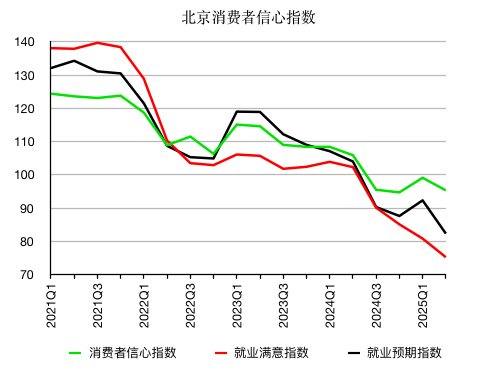
Core Viewpoint - The economic performance of various provinces in China during the first half of 2025 shows significant disparities, with some provinces exceeding growth expectations while others, particularly in major cities like Beijing and Shanghai, are experiencing declines in consumer spending and employment satisfaction [4][6][10]. Economic Growth Performance - Among the top eight economic provinces, all except Guangdong achieved GDP growth rates above the national average of 5.3%, with rates ranging from 5.6% to 6.2% [3][4][7]. - In total, 21 provinces reported GDP growth rates exceeding their initial annual targets, indicating a strong foundation for achieving these goals [4][6]. Consumer Spending Trends - The retail sales growth in Beijing and Shanghai was notably low, with Beijing experiencing a decline of 3.8% in retail sales, while Shanghai's growth was only 1.7%, placing them among the lowest in the country [13][24]. - Nationally, final consumption expenditure contributed 52% to economic growth in the first half of 2025, with 19 provinces exceeding the national average retail sales growth of 5% [10][11]. Employment and Consumer Confidence - Beijing's employment satisfaction index fell to a historical low of 75.2, reflecting a decline in consumer confidence, which has remained below the critical threshold of 100 for four consecutive quarters [17][19][23]. - The consumer confidence index in Beijing was reported at 95.3, indicating weak consumer sentiment primarily driven by employment expectations [17][18]. Fixed Asset Investment Trends - Several major provinces, including Guangdong and Jiangsu, reported negative growth in fixed asset investment, with Guangdong's investment declining by 9.7% and Jiangsu by 3.9% [27][29]. - The downturn in real estate development investment significantly impacted overall fixed asset investment, with Guangdong's real estate investment dropping by 16.3% [28][29]. Regional Economic Disparities - While some provinces like Hubei and Hebei showed strong economic performance, with Hubei's GDP growth at 6.2% and Hebei's real estate investment increasing by 2.0%, others struggled with negative growth [8][34]. - The overall economic landscape indicates a need for targeted policies to stimulate consumer confidence and investment, particularly in regions facing economic challenges [32][34].


GDP ↑ 3.4%,中山上半年经济数据出炉
Nan Fang Du Shi Bao· 2025-07-29 10:03
Economic Overview - In the first half of 2025, the GDP of Zhongshan reached 197.465 billion yuan, with a year-on-year growth of 3.4% at constant prices [2] - The primary industry added value was 3.663 billion yuan, growing by 6.3% year-on-year; the secondary industry added value was 101.509 billion yuan, with a growth of 3.3%; the tertiary industry added value was 92.292 billion yuan, also growing by 3.3% [2] Agricultural Sector - The total output value of agriculture, forestry, animal husbandry, and fishery in Zhongshan was 7.651 billion yuan, increasing by 6.3% year-on-year [2] - Agricultural output value was 2.595 billion yuan, with a year-on-year growth of 4.2%; fishery output value was 4.741 billion yuan, growing by 7.3% [2] Industrial Performance - The added value of large-scale industries in Zhongshan grew by 4.4% year-on-year [3] - Manufacturing sector increased by 5.0%, while the electricity, heat, gas, and water production and supply sector saw a decline of 5.9% [3] - Advanced manufacturing added value grew by 8.3%, accounting for 52.6% of large-scale industries; high-tech manufacturing increased by 19.4%, making up 18.2% of large-scale industries [3] Service Sector - The added value of the service industry increased by 3.3% year-on-year [3] - Information transmission, software, and IT services grew by 8.8%; leasing and business services increased by 6.2%; accommodation and catering services rose by 4.6% [3] - From January to May, the revenue of large-scale service industries grew by 3.6% year-on-year [3] Investment and Consumption - Fixed asset investment in Zhongshan decreased by 22.2% year-on-year [4] - Industrial investment fell by 10.1%, accounting for 49.1% of total fixed asset investment [4] - The total retail sales of consumer goods remained stable at 81.6 billion yuan, unchanged from the previous year [4] - Online retail through public networks grew by 5.7% year-on-year [4] Price Levels and Income - The Consumer Price Index (CPI) in Zhongshan remained stable, unchanged from the previous year [5] - The per capita disposable income of residents was 33,570 yuan, with a year-on-year growth of 2.5% [5] - Urban residents had a per capita disposable income of 34,697 yuan, growing by 2.2%, while rural residents had 25,485 yuan, increasing by 4.3% [5]

31省份经济半年报:多省增长超预期,京沪消费增速垫底
Jing Ji Guan Cha Wang· 2025-07-29 09:04
Economic Performance Overview - As of July 28, 2025, 31 provinces (excluding Hong Kong, Macau, and Taiwan) reported their economic performance for the first half of the year, with significant growth in major economic provinces, although some provinces experienced fluctuations in their economic data [1] - Among the top eight economic provinces, all except Guangdong achieved GDP growth rates exceeding the national average of 5.3%, with growth rates of 5.6% and above [1][2] - Guangdong's GDP growth rate was 4.2%, ranking it among the bottom three provinces [1] Provincial GDP Growth - In the first half of 2025, 21 provinces exceeded their annual GDP growth targets set at the beginning of the year, indicating a solid foundation for achieving their full-year goals [1] - Notably, Tibet, Gansu, and Hubei had the highest GDP growth rates, all above 6% [2] - Hubei's GDP growth rate reached 6.2%, surpassing the national average by 0.9 percentage points [2] Consumption Trends - Nationally, final consumption expenditure contributed 52% to economic growth in the first half of 2025, with 19 provinces reporting retail sales growth above the national average of 5% [2] - The "old-for-new" policy significantly boosted consumption in several provinces, with retail sales of wearable smart devices and related products in Henan growing over 85% [3] Retail Sales Performance - Beijing and Tianjin reported negative growth in retail sales, with Beijing's retail sales declining by 3.8% in the first half of 2025, primarily due to significant drops in automotive and communication equipment sales [4][5] - Shanghai's retail sales growth was 1.7%, ranking it among the lowest in the country [4] Fixed Asset Investment - Despite strong economic growth, several provinces, including Guangdong and Jiangsu, experienced declines in fixed asset investment, with Guangdong's investment dropping by 9.7% [9][10] - The decline in real estate development investment was a major factor affecting fixed asset investment growth in these provinces [10] Consumer Confidence - Consumer confidence in Beijing remained low, with the consumer confidence index below 100 for four consecutive quarters, indicating weak consumer sentiment [6][8] - The employment satisfaction index in Beijing hit a historical low of 75.2 in the second quarter of 2025, reflecting concerns over job security and income [5][6] Investment Opportunities - Some provinces, such as Beijing, reported strong fixed asset investment growth of 14.1%, driven by significant increases in equipment purchase investments [12] - Hebei's real estate development investment grew by 2.0%, supported by ongoing urban development projects [13]
股指可考虑防守观望,国债关注止盈
Chang Jiang Qi Huo· 2025-07-28 13:06
1. Report Industry Investment Rating No relevant content provided. 2. Core Views of the Report 2.1 Stock Index Strategy - A-share broad-based indices had positive weekly gains, with the Science and Technology Innovation 50 having the largest cumulative increase of 4.63% and the CSI 500 rising over 3%. The US and the EU reached a trade agreement, and the US June durable goods orders had a sharp decline. China's June industrial enterprise profits showed a narrowing decline, and the CSRC aimed to consolidate the market. Considering the market sentiment cooling and high technical indicators, the stock index's slow bull trend remains unchanged, but there may be a near-term correction, so a defensive wait-and-see approach is advisable [12]. 2.2 Treasury Bond Strategy - In the bond market, funds are flowing out, and with macro events concentrated at the end of July and early August, the bond market may experience an adjustment in a volatile pattern. Whether to participate on the left side or wait for the release of position pressure depends on the investor's position, duration, and tolerance. It is recommended to focus on taking profits [13]. 2.3 PMI - In June, the manufacturing PMI rose to 49.7%, better than expected, with both supply and demand improving. However, there were structural differences, such as small enterprises' contraction intensifying and the high-tech manufacturing industry remaining flat. Only 7 out of 15 sub - industries had better sentiment than in May [20]. 2.4 Inflation - In May 2025, the CPI had a slight year - on - year decline, and the PPI also decreased year - on - year. The current price situation shows "food differentiation and services stronger than goods," and the core inflation momentum is still insufficient. The decline in PPI is affected by international and domestic factors, but there are also positive changes in some areas [29][32]. 2.5 Industrial Enterprise Profitability - In May, the year - on - year growth rate of profits of industrial enterprises above designated size declined, mainly due to the decline in volume, price, and profit margin, with the profit margin having the most significant impact. Enterprises may adopt a strategy of reducing prices to clear inventory [35]. 2.6 Fiscal Situation - From January to May, the national general public budget revenue decreased slightly year - on - year, while the expenditure increased. The tax revenue recovery margin slowed down, and the real - estate - related tax drag increased. The fiscal expenditure rhythm slowed down marginally, and the government fund revenue decline widened while the expenditure slowed down [38][41]. 2.7 Industrial Added Value - In May, the year - on - year growth rate of industrial added value declined, while the service industry added value increased. The production - sales imbalance persists, and export - related production is weak. The GDP growth rate in the second quarter is expected to exceed 5% [44]. 2.8 Fixed - Asset Investment - From January to May, the year - on - year growth rate of fixed - asset investment declined. Investment in infrastructure, manufacturing, and real estate all decreased. Although the real - estate physical volume was not weak this month, the real - estate investment was still under pressure in terms of funds [47]. 2.9 Social Retail Sales - In May, the year - on - year growth rate of social retail sales increased, mainly driven by the early start of the 618 promotion and the strong performance of the May Day holiday in driving offline consumption [50]. 2.10 Social Financing - In May, the new social financing was 2.3 trillion yuan, with government bonds being the main support. Although the social financing growth rate is expected to rise in the second and third quarters, there is still pressure for it to rise and then fall in the second half of the year [53]. 2.11 Import and Export - In May, China's exports and imports continued to grow, with exports performing well. The central region led the national foreign trade growth. Due to the Sino - US trade relationship and the leading growth rate of processing trade, exports are expected to maintain resilient growth in June [59]. 2.12 US Non - Farm Payrolls - In May 2025, the US labor market showed resilience, with more new jobs than expected. However, there were internal structural differences. The service industry had employment growth, while the commodity production sector was weak. The wage growth exceeded expectations, strengthening inflation concerns and giving the Fed more reason to stay on the sidelines [62][65]. 2.13 US CPI - In May, the US CPI and core CPI increased year - on - year as expected. The inflation pressure on core commodities and services was controllable. The Fed maintained the interest rate target range and emphasized high uncertainty, so it tended to stay on the sidelines [68]. 2.14 US PMI - In June, the US Markit manufacturing PMI was stable at 52, and the service industry PMI was slightly lower. The manufacturing growth was mainly driven by inventory, and the inflation pressure increased significantly. The current US economy shows a "weak expansion + high inflation" characteristic, and the growth momentum may further weaken [71]. 3. Summaries According to the Catalog 3.1 Financial Futures Strategy Recommendations 3.1.1 Stock Index Strategy - **Strategy Outlook**: Adopt a defensive wait - and - see approach [11]. - **Trend Review**: A - share broad - based indices had positive weekly gains [12]. - **Technical Analysis**: The RSI indicator shows a potential correction risk for the market index [12]. 3.1.2 Treasury Bond Strategy - **Strategy Outlook**: Focus on taking profits [13]. - **Trend Review**: The bond market was volatile, and the treasury bond futures showed a downward trend [13]. - **Technical Analysis**: The KDJ indicator shows that the T main contract may operate weakly in a volatile manner [13]. 3.2 Key Data Tracking 3.2.1 PMI - In June, the manufacturing PMI rose, with both supply and demand improving. However, there were structural differences among different enterprise sizes, industries, and sub - industries [20]. - The price and inventory situation also showed different characteristics at the industry level, with some industries replenishing inventory and others reducing inventory through price cuts [23]. - The non - manufacturing PMI rose, mainly due to the increase in the construction industry PMI, while the service industry PMI declined [26]. 3.2.2 Inflation - In May 2025, the CPI had a slight year - on - year decline, with food price differentiation and service prices being more resilient. The PPI decreased year - on - year, mainly affected by international and domestic factors, but there were positive changes in some areas [29][32]. 3.2.3 Profitability of Industrial Enterprises above Designated Size - In May, the year - on - year growth rate of profits declined, mainly due to the decline in volume, price, and profit margin. Enterprises may be adopting a strategy of reducing prices to clear inventory [35]. 3.2.4 Fiscal - From January to May, the national general public budget revenue decreased slightly year - on - year, and the expenditure increased. The tax revenue recovery margin slowed down, and the real - estate - related tax drag increased. The fiscal expenditure rhythm slowed down marginally, and the government fund revenue decline widened while the expenditure slowed down [38][41]. 3.2.5 Industrial Added Value - In May, the year - on - year growth rate of industrial added value declined, while the service industry added value increased. The production - sales imbalance persisted, and export - related production was weak [44]. 3.2.6 Fixed - Asset Investment - From January to May, the year - on - year growth rate of fixed - asset investment declined. Investment in infrastructure, manufacturing, and real estate all decreased. Although the real - estate physical volume was not weak this month, the real - estate investment was still under pressure in terms of funds [47]. 3.2.7 Social Retail Sales - In May, the year - on - year growth rate of social retail sales increased, mainly driven by the early start of the 618 promotion and the strong performance of the May Day holiday in driving offline consumption [50]. 3.2.8 Social Financing - In May, the new social financing was 2.3 trillion yuan, with government bonds being the main support. The social financing growth rate is expected to rise in the second and third quarters but may face pressure to rise and then fall in the second half of the year [53]. 3.2.9 Import and Export - In May, China's exports and imports continued to grow, with exports performing well. The central region led the national foreign trade growth. Exports are expected to maintain resilient growth in June [59]. 3.2.10 US Non - Farm Payrolls - In May 2025, the US labor market showed resilience, with more new jobs than expected. There were internal structural differences, and wage growth exceeded expectations, strengthening inflation concerns [62][65]. 3.2.11 US CPI - In May, the US CPI and core CPI increased year - on - year as expected. The inflation pressure on core commodities and services was controllable, and the Fed tended to stay on the sidelines [68]. 3.2.12 US PMI - In June, the US Markit manufacturing PMI was stable at 52, and the service industry PMI was slightly lower. The manufacturing growth was mainly driven by inventory, and the inflation pressure increased significantly [71]. 3.2.13 Weekly Focus - There are important economic indicators and events to be released in the coming week, including the US GDP, FOMC interest rate decision, and China's official and Caixin manufacturing PMIs [73].
省属企业上半年完成固投超224亿元
Hai Nan Ri Bao· 2025-07-28 01:14
Group 1 - Hainan provincial state-owned enterprises completed fixed asset investment of 22.42 billion yuan in the first half of the year, achieving 52.45% of the annual investment plan, successfully meeting the "half-time, half-task" goal [1] - Key projects such as the expansion of Phoenix Airport and Boao Airport have progressed over 60%, while projects like the Hainan Police Academy and Hainan University dormitory have exceeded 80% of their annual investment plans [1] - The provincial state-owned assets supervision and administration commission has arranged 71 key projects with an annual investment of 30.506 billion yuan, completing 16.676 billion yuan in the first half, which is 54.99% of the annual plan [1] Group 2 - In the "Strengthening Marine" sector, Hainan enterprises are planning multiple projects in deep-sea aquaculture and marine new industries [2] - In the "Strengthening Sky" sector, projects related to commercial aerospace are being developed, including enhancements to the Hainan commercial space launch site [2] - In the "Strengthening Green" sector, key water resource projects have completed investments of 2.013 billion yuan, achieving 55.2% of the annual plan [2] - The provincial state-owned assets commission aims to improve project implementation rates and support enterprises in overcoming challenges to accelerate project construction [2]
成都上半年经济运行情况公布 GDP达12108.2亿元 同比增长5.8%
Si Chuan Ri Bao· 2025-07-25 07:26
Economic Overview - Chengdu's GDP for the first half of the year reached 12,108.2 billion yuan, with a year-on-year growth of 5.8% at constant prices [1] - The primary industry added value was 186.7 billion yuan, growing by 2.7% [1] - The secondary industry added value was 3,267.4 billion yuan, growing by 5.3% [1] - The tertiary industry added value was 8,654.2 billion yuan, growing by 6.0% [1] Industrial Growth - The industrial added value for large-scale enterprises in Chengdu increased by 7.8% year-on-year [2] - Among 37 major industries, 25 experienced positive growth, with non-ferrous metal smelting and rolling processing, automotive manufacturing, and electronic equipment manufacturing showing significant increases of 41.7%, 23.6%, and 17.3% respectively [2] - High-tech manufacturing added value grew by 12.1% [2] - Key industrial products saw substantial production increases, including new energy vehicles (352.2%), smartwatches (119.2%), and lithium-ion batteries (45.8%) [2] Service Sector Performance - The service sector's added value grew by 6.0% year-on-year [2] - Notable growth was seen in leasing and business services (10.7%), information transmission and software services (10.7%), and transportation and storage (7.4%) [2] - By the end of June, financial institutions reported a 9.8% increase in deposits and a 10.4% increase in loans [2] Investment Trends - Fixed asset investment in Chengdu grew by 6.0% year-on-year [3] - Investment in the primary industry increased by 15.3%, while the secondary industry saw a 40.7% increase, with industrial investment specifically rising by 41.3% [3] - The tertiary industry investment declined by 0.8%, with real estate development investment down by 2.8% [3] - High-tech industry investment surged by 37.4%, with high-tech manufacturing investment growing by 59.1% [3] Consumer Market Insights - The total retail sales of consumer goods reached 5,622.3 billion yuan, reflecting a year-on-year growth of 6.1% [3] - Urban retail sales amounted to 4,928.6 billion yuan (6.0% growth), while rural retail sales were 693.7 billion yuan (6.6% growth) [3] - Key consumer categories showed varied growth, with telecommunications equipment retail sales increasing by 64.5% and home appliances by 34.5% [3] - New energy vehicles saw a growth of 21.0% within the automotive category [3]
吉林省:上半年地区生产总值6823.28亿元,同比增长5.7%
Zheng Quan Shi Bao Wang· 2025-07-24 00:51
Economic Overview - In the first half of 2025, Jilin Province's GDP reached 682.33 billion yuan, with a year-on-year growth of 5.7%, an increase of 0.2 percentage points compared to the first quarter [1] - The industrial sector showed steady progress, with the added value of above-scale industries growing by 7.8%, surpassing the national average by 1.4 percentage points [1] Agricultural Sector - The agricultural, forestry, animal husbandry, and fishery sectors saw an overall growth, with an added value of 37.48 billion yuan, reflecting a year-on-year increase of 4.3%, which is 0.4 percentage points higher than the national average [1] - Specific growth rates for major agricultural products included 7.0% for crops, 10.2% for forestry, 3.6% for animal husbandry, and 9.6% for fisheries [1] Industrial Sector - The equipment manufacturing industry experienced a significant increase, with an added value growth of 19.5%, accounting for 10.9% of the province's above-scale industrial output [2] - Key industries such as information technology, pharmaceuticals, and electricity production achieved double-digit growth rates of 21.5%, 16.8%, and 10.3% respectively [1] Service Sector - The service sector's added value grew by 5.6%, contributing 63.8% to the province's GDP, with a contribution rate increase of 11.3 percentage points compared to the first quarter [2] - The information transmission, software, and IT services sectors saw a growth of 7.2%, while scientific research and technical services grew by 13.0% [2] Investment and Consumption - Fixed asset investment (excluding rural households) increased by 1.0%, with the second industry investment rising by 8.8% and the third industry by 1.9% [3] - The total retail sales of consumer goods reached 211.72 billion yuan, marking a year-on-year growth of 4.8%, with significant increases in furniture and home appliances retail sales [3]
核心指标释放积极信号 经济复苏态势渐显
Jing Ji Guan Cha Wang· 2025-07-23 08:47
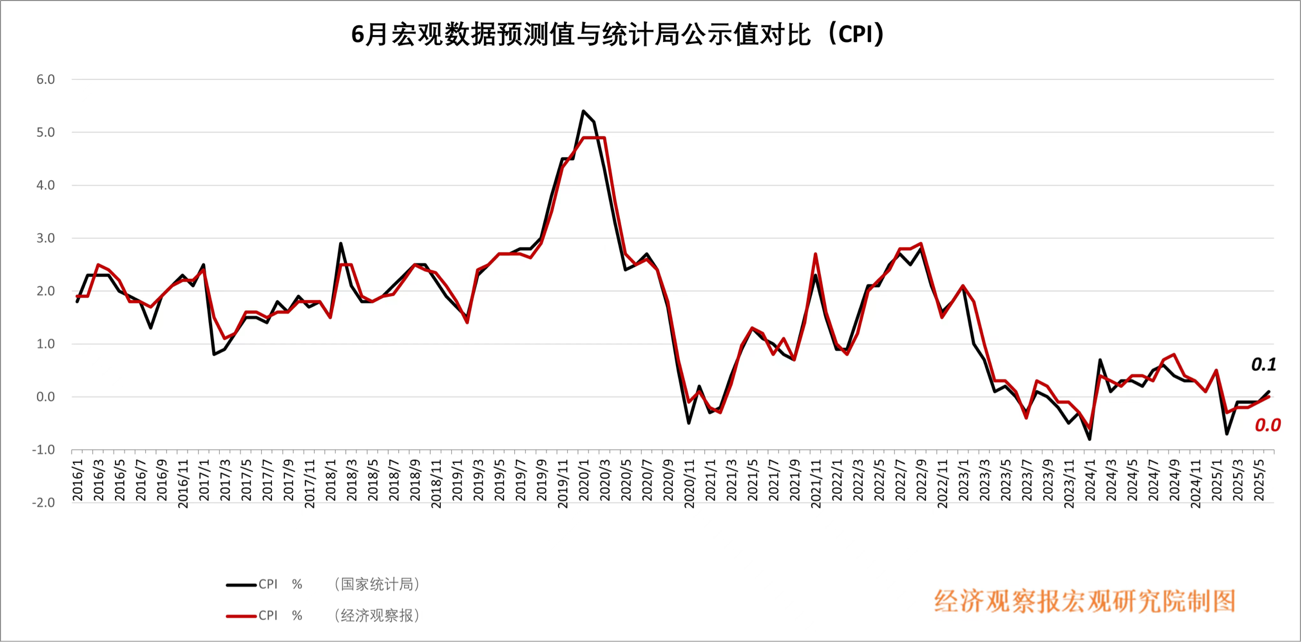
Group 1: Economic Indicators - The core price level is gradually recovering, with financial support for the real economy increasing, indicating a gradual accumulation of internal economic momentum under policy support [1] - In June 2025, the CPI rose from -0.1% to 0.1%, while the PPI decreased from -3.3% to -3.6% [1] - The manufacturing PMI increased from 49.5% to 49.7%, showing slight improvement in manufacturing activity [1] Group 2: CPI Analysis - The core CPI growth has been continuously recovering, with a year-on-year increase of 0.7% in June, the highest in nearly 14 months [4] - Factors contributing to the core CPI recovery include rising gold prices, the "old-for-new" policy supporting durable goods prices, and a moderate rebound in service prices [4] Group 3: PPI Analysis - The PPI fell by 3.6% year-on-year in June, with the decline widening by 0.3 percentage points compared to the previous month [7] - The decrease in PPI is attributed to slower construction in real estate and infrastructure, as well as an oversupply of industrial raw materials [7] Group 4: PMI Insights - The PMI for June was reported at 49.7%, a 0.2 percentage point increase from the previous month, indicating seasonal recovery [10] - Among 21 surveyed industries, 11 are in the expansion zone, reflecting improved manufacturing sentiment [10] Group 5: Fixed Asset Investment - Fixed asset investment in June showed a year-on-year increase of 2.8%, down from 3.7% in May, with real estate development investment declining by 12.9% [13] - The decline in real estate sales and investment growth is contributing to a negative feedback loop with falling housing prices and PPI [13] Group 6: Credit Performance - New RMB loans in June amounted to 22.4 billion yuan, significantly higher than the previous month's 6.2 billion yuan [16] - The strong credit performance is driven by multiple factors, including seasonal increases in lending and effective financial policies [16] Group 7: M2 Growth - M2 growth accelerated to 8.3% in June, the highest in nearly 15 months, with a notable narrowing of the M1-M2 gap [20] - The increase in M2 and M1 indicates improved financial support for the real economy, although M1 growth remains relatively low [20]
早盘提示-20250723
Ge Lin Qi Huo· 2025-07-23 01:35
Group 1: Report Industry Investment Rating - There is no clear report industry investment rating provided in the content [1] Group 2: Core Views of the Report - On Tuesday, most of the opening prices of the main contracts of treasury bond futures were slightly higher, but they declined in the morning and accelerated the decline in the afternoon, closing at a low level. The 30 - year, 10 - year, 5 - year, and 2 - year treasury bond futures main contracts (TL2509, T2509, TF2509, TS2509) fell by 0.40%, 0.09%, 0.05%, and 0.01% respectively [1] - The short - term interest rate in the inter - bank capital market on Tuesday was lower than the previous trading day. The weighted average of DR001 was 1.31% (1.36% the previous day), and the weighted average of DR007 was 1.47% (1.49% the previous day) [1] - The closing yields of inter - bank treasury bond cash bonds on Tuesday were higher than the previous trading day. The yields of 2 - year, 5 - year, 10 - year, and 30 - year treasury bonds increased by 0.26 BP, 1.38 BP, 1.33 BP, and 2.20 BP respectively [1] - In June, the growth rate of fixed - asset investment, infrastructure investment, and manufacturing investment was lower than expected and lower than that in May. The year - on - year increase in total retail sales of consumer goods was also lower than expected. However, export growth and industrial added value exceeded expectations [1] - Recently, domestic real estate sales and prices continued to decline, and China's economic growth in the second half of the year faces challenges, requiring continuous efforts to expand domestic demand [1] - The progress of the U.S. tariff negotiation postponed to August 1 is an important factor affecting the global financial market. The Ministry of Industry and Information Technology announced on July 18 that multiple anti - involution and stable - growth policies will be introduced, which short - term increased market risk preference [1] - The stock index may adjust at any time after a short - term rapid increase, and the treasury bond futures main contract prices may rebound after a continuous significant decline. Short - term long - term treasury bond futures contracts may fluctuate widely, and short - term contracts may remain stable [1] Group 3: Summary by Related Catalogs Market Review - On Tuesday, most of the opening prices of the main contracts of treasury bond futures were slightly higher, with a decline in the morning and an accelerated decline in the afternoon. The 30 - year (TL2509), 10 - year (T2509), 5 - year (TF2509), and 2 - year (TS2509) treasury bond futures main contracts fell by 0.40%, 0.09%, 0.05%, and 0.01% respectively [1] Important Information - Open market: On Tuesday, the central bank conducted 214.8 billion yuan of 7 - day reverse repurchase operations, with 342.5 billion yuan of reverse repurchases and 120 billion yuan of treasury cash fixed - term deposits maturing [1] - Capital market: The short - term interest rate in the inter - bank capital market on Tuesday was lower than the previous trading day. The weighted average of DR001 was 1.31% (1.36% the previous day), and the weighted average of DR007 was 1.47% (1.49% the previous day) [1] - Cash bond market: The closing yields of inter - bank treasury bond cash bonds on Tuesday were higher than the previous trading day. The yields of 2 - year, 5 - year, 10 - year, and 30 - year treasury bonds increased by 0.26 BP, 1.38 BP, 1.33 BP, and 2.20 BP respectively [1] Market Logic - In June, the growth rate of fixed - asset investment, infrastructure investment, and manufacturing investment was lower than expected and lower than that in May. The year - on - year increase in total retail sales of consumer goods was also lower than expected. However, export growth and industrial added value exceeded expectations [1] - Recently, domestic real estate sales and prices continued to decline, and China's economic growth in the second half of the year faces challenges, requiring continuous efforts to expand domestic demand [1] - The progress of the U.S. tariff negotiation postponed to August 1 is an important factor affecting the global financial market. The Ministry of Industry and Information Technology announced on July 18 that multiple anti - involution and stable - growth policies will be introduced, which short - term increased market risk preference [1] - The stock index may adjust at any time after a short - term rapid increase, and the treasury bond futures main contract prices may rebound after a continuous significant decline. Short - term long - term treasury bond futures contracts may fluctuate widely, and short - term contracts may remain stable [1] Trading Strategy - Traders should conduct band operations [2]
上半年金华市经济运行稳进向好
Sou Hu Cai Jing· 2025-07-22 02:56
7月21日,金华市上半年"经济成绩单"出炉:根据浙江省地区生产总值统一核算结果,上半年,金华市 实现地区生产总值3456.11亿元,按不变价格计算,同比增长6.4%,分别高于全国、全省1.1和0.6个百分 点,排名全省第五位。 张益晓 "增"是关键词,如工业生产较快增长、现代服务业增势良好、以旧换新相关商品快速增长、居民消费支 出增速较快等。上半年,金华市规模以上工业增加值同比增长8.6%,高于全国、全省平均2.2、1.0个百 分点。分三大门类看,采矿业增长22.6%,制造业增长9.4%,电力热力燃气及水生产和供应业下降 0.5%。分行业看,33个行业大类中,21个行业增加值实现增长,增长面63.6%。规模前十大行业"八增 二降",其中汽车制造、计算机通信、电气机械等行业增加值分别增长61.1%、23.0%和9.6%。新兴产业 有力拉动,战略性新兴产业、高端装备制造业、高技术产业增加值分别增长21.5%、19.4%和16.9%。 "金"字招牌持续擦亮。一方面,固定资产投资持续快增,投资结构持续优化。上半年,金华市固定资产 投资增长16.4%,高于全国、全省平均13.6、15.0个百分点。分产业看,第一产业投资 ...