
AI泡沫

Search documents
瑞银证券熊玮:现阶段中国出现“AI泡沫”可能性不大
Xin Hua Cai Jing· 2025-12-05 11:27
Core Viewpoint - UBS Securities analyst Xiong Wei believes that by 2026, the application cases of AI in China will become more abundant and the monetization pace will accelerate, indicating a low likelihood of an "AI bubble" in the current stage [1]. Group 1: AI Development in China - By 2025, investor interest and recognition of AI development in China are expected to increase due to advancements in large model technology, computing infrastructure, and the widespread adoption by enterprises and consumers [1]. - In 2026, domestic large model capabilities are anticipated to rapidly iterate, catching up with their American counterparts, while both China and the U.S. will follow similar monetization paths in AI applications, particularly in cloud services and advertising [1]. - The localization of computing power is expected to continue, with breakthroughs in chip performance, leading to supernodes taking a larger share of inference and training workloads [1]. Group 2: Factors Mitigating AI Bubble Risks - The limited cycle of financing is a key reason for the low likelihood of an "AI bubble," as leading AI model developers are funded by internal cash flows from parent companies rather than third-party financing [1]. - Major Chinese internet companies are adopting a pragmatic approach to AI investments, focusing on return on investment and operational efficiency rather than excessive initial spending [1]. - The stability of the Internet Data Center (IDC) deployment rate and regulatory control over new supply, including strict management of electricity quotas by the National Development and Reform Commission, help prevent overbuilding [1]. Group 3: AI Disruption in Vertical Industries - The discussion around AI's potential to disrupt vertical industries is increasing among investors, but the pace of disruption in China may remain slow due to a more fragmented landscape of AI chatbots compared to the dominance of ChatGPT and Gemini in the U.S. [2]. - Vertical industry companies are actively integrating AI and intelligent agents into their applications, but the high entry barriers in sectors like online travel agencies (OTA) and online music content and user operations make it difficult for AI to easily replace existing capabilities [2].
研究称中国出现AI泡沫可能性不大,科技大厂资本支出约为美国1/10
Di Yi Cai Jing· 2025-12-05 09:09
Group 1 - The core viewpoint of the articles suggests that concerns about an "AI bubble" in China are less pronounced compared to the U.S., primarily due to limited domestic financing and cautious capital expenditure [1] - UBS's report indicates that major Chinese cloud service providers' capital expenditures are significantly lower than their U.S. counterparts, with an estimated capital expenditure of approximately 400 billion yuan for 2025, about one-tenth of that of U.S. peers [2] - The IDC shelf rate in China remains stable, with regulatory controls on new supply contributing to this stability, indicating a steady migration of clients driven by genuine AI workloads [2] Group 2 - Citic Securities predicts a 60% probability of OpenAI facing operational challenges and a slowdown in AI investment, while breakthroughs in AI algorithms and unexpected inflation are considered low-probability events [2] - Alibaba's CEO discussed the AI bubble, asserting that there is a high demand for AI resources, and the planned investment of 380 billion yuan in AI infrastructure may be insufficient [3] - UBS forecasts that by 2026, domestic large model capabilities will rapidly iterate to catch up with U.S. counterparts, with AI use cases becoming more diverse and monetization accelerating [3] Group 3 - The integration of apps into ChatGPT by OpenAI has sparked discussions about AI's potential to disrupt vertical industries, but UBS believes that the pace of disruption in China may be slower due to a more fragmented landscape [4] - Vertical companies are actively adding AI and intelligent agent features to their apps, but the entry barriers in these sectors remain high [4]
资金追逐价值股的最佳体现:医疗与金融领涨欧洲 奢侈品与汽车拖累法德股市
Zhi Tong Cai Jing· 2025-12-05 07:49
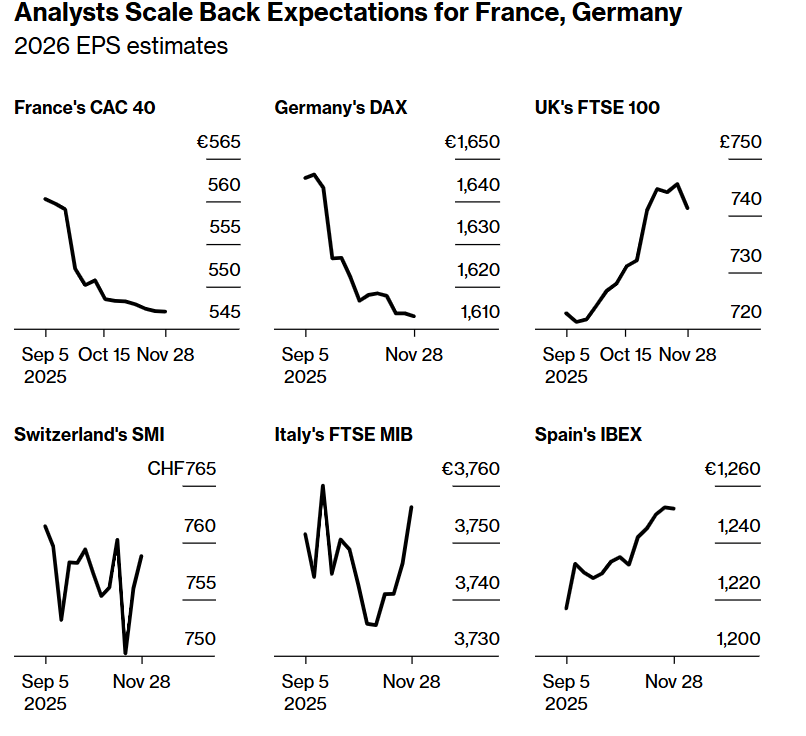
原本有望由汽车和奢侈品牌复苏主导的法国和德国企业利润全面回升,如今看起来正面临愈发严峻的风险。Bloomberg Intelligence汇编的统计数据显示,近期市场对今年以来屡创历史新高的法国CAC40指数和德国DAX指数明年的盈利预 期持续下调,而对欧洲其他区域性基准股票指数的盈利预期则在上调,这也解释了为何上半年屡创新高的法德基准股 指自10月以来持续回调,但是其他欧洲基准股指仍处于上行轨迹。 据了解,与医疗保健权重较高的瑞士SMI指数以及金融板块主导的西班牙IBEX指数相比,法国和德国的基准指数在成 分结构上,对非必需消费与工业板块的权重更高——这两个行业在明年恐怕难以完全兑现市场给出的高预期,而医疗 与金融这两大长期以来的股票市场价值板块近期表现非常强劲,且分析师对于瑞士和西班牙市场的预期持续上修,带 动瑞士与西班牙股市在11月大幅跑赢法德以及欧洲股市基准股指——斯托克600指数。 来自德意志银行的分析师Adam Cochrane表示:"股价修复的速度以及投资者对新任CEO将带来的业绩大幅改善前景都 令人印象深刻,但也存在一种风险,即市场一致预期可能跑得过快。"他补充表示,预计在该公司明年公布中长期 ...

震荡中关注防御板块,自由现金流ETF(159201)连续20日合计“吸金”超21亿元,把握政策与资金双重确定性
Mei Ri Jing Ji Xin Wen· 2025-12-05 07:05
Group 1 - The core viewpoint of the news highlights the strong performance of the Free Cash Flow ETF (159201), which has seen a 1.26% increase and a trading volume exceeding 4.4 billion yuan, leading its category [1] - The ETF has experienced continuous capital inflow for 20 consecutive trading days, totaling a net inflow of 2.106 billion yuan, indicating growing investor interest [1] - The current size of the Free Cash Flow ETF (159201) has reached 7.615 billion yuan with 6.405 billion shares, both marking all-time highs since its inception [1] Group 2 - According to Everbright Securities, the recent rise in the A-share market is driven by multiple favorable factors, including expectations of a Federal Reserve rate cut in December and easing concerns over the AI bubble in the US stock market [1] - The market is expected to remain in a bull phase, but the duration of the bull market may be more significant than the magnitude of the increase, as guided by national policies promoting a "slow bull" [1] - In terms of asset allocation, short-term focus should be on defensive and consumer sectors, as previously lagging sectors may perform better during market fluctuations, particularly high dividend and consumer stocks [1][2]
大佬Gave警告:明年美债或先崩,亚洲货币升值将终结黄金牛市
3 6 Ke· 2025-12-05 06:42
Core Viewpoint - Louis-Vincent Gave predicts a convergence of the Federal Reserve and the U.S. Treasury, leading to a potential collapse of the U.S. bond market, drawing parallels with Japan's bond market deterioration and a "Turkey scenario" where bond and currency values are sacrificed for nominal GDP growth [1][3][4]. Group 1: U.S. Bond Market and Economic Implications - The bond market is expected to be the first to collapse among stocks, the dollar, and bonds, with Japan's current bond market situation serving as a warning sign [3][4]. - The Federal Reserve's policies, whether they involve rate cuts in December or in 2026, indicate a long-term trend towards the merging of the Fed and Treasury [4][5]. - The current environment of zero interest rates is driving investors towards riskier assets, as capital value is eroded [6][7]. Group 2: Gold and Asian Currencies - Gave emphasizes that gold's future is tied to the performance of Asian currencies, particularly the undervalued Japanese yen, suggesting that a potential appreciation of these currencies in 2026 could reduce demand for gold [1][8]. - The significant increase in gold and silver prices, with gold rising 55% and silver 100% this year, highlights their role as hedges against zero interest rates rather than inflation [6][7]. Group 3: AI Market and IPO Concerns - The potential IPO of AI companies like Anthropic raises concerns about a shift in market dynamics from rewarding spending to rewarding asset divestiture, indicating a possible bubble in the AI sector [9][10][12]. - Historical patterns suggest that capital-intensive bull markets eventually face scrutiny, as seen with Oracle's recent capital expenditure announcement and its subsequent market reaction [11][12]. - The AI sector's valuation challenges are underscored by the need for substantial revenue growth to justify current investment levels, with estimates suggesting AI must generate $2 trillion in annual revenue to align with its capital expenditures [13][14].
暗讽OpenAI?Anthropic CEO发泡沫警告:有些公司投资风险太高
Feng Huang Wang· 2025-12-05 05:30
Group 1 - The CEO of Anthropic, Dario Amodei, highlighted that some AI companies are taking excessive risks by committing billions of dollars to develop and support AI systems, creating a "real dilemma" in the industry [1] - There is a significant long-term investment required for data centers, which can take years to build, while the growth rate of AI's economic value remains uncertain [1] - Amodei expressed concerns that some participants in the AI sector are taking risks too far, although he did not specify any companies [1] Group 2 - Major AI companies like OpenAI, Meta, and Google have significantly increased their investments in data centers and chips to develop advanced AI systems, raising concerns about an AI bubble [1] - OpenAI has committed to investing $1.4 trillion in AI infrastructure projects, while Anthropic plans to invest $50 billion in building its first custom data center in multiple locations across the U.S. [1] - Anthropic, founded in 2021 by former OpenAI employees, aims to be a more responsible AI manager and focuses primarily on enterprise business rather than the consumer market [2]

任正非的一席话,会不会戳破英伟达AI芯片的泡沫?
Sou Hu Cai Jing· 2025-12-05 05:04
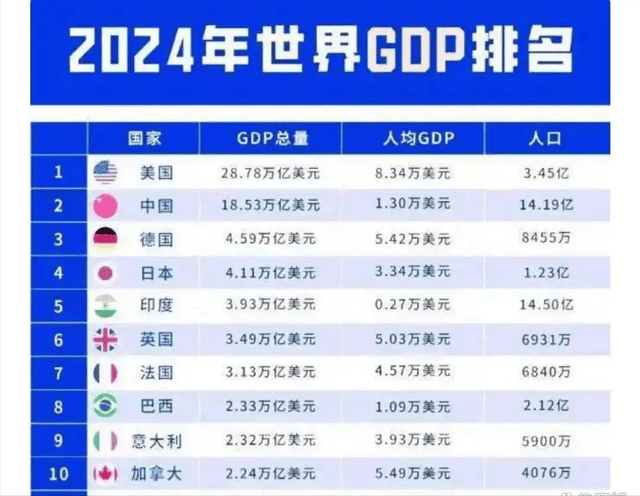
目前全球市场最高的企业是英伟达,4.46万亿美元的市值,比全球99%以上的国家一年的GDP还要高。 如下图所示,以2024年全球GDP来看,英伟达的市值只比美国、中国、德国这三个国家要低了,比其它 所有的国家一年的GDG还要高。 | | | | 2024年世界GDP排名 | | | | --- | --- | --- | --- | --- | --- | | | | 国家 | GDP总量 | Y Hag Db | 人口 | | I | | 美国 | 28.78万亿美元 | 8.34万美元 | 3.45亿 | | 2 | | 中国 | 18.53万亿美元 | 1.30万美元 | 14.19亿 | | 3 | | 德国 | 4.59万亿美元 | 5.42万美元 | 8455万 | | 4 | | 日本 | 4.11万亿美元 | 3.34万美元 | 1.23亿 | | 5 | 1 | 印度 | 3.93万亿美元 | 0.27万美元 | 14.50亿 | | 6 | 하 | 英国 | 3.49万亿美元 | 5.03万美元 | 6931万 | | 7 | . | 法国 | 3.13万亿美元 | 4.57万美元 | 6 ...

瑞银证券:现阶段中国出现“AI泡沫”的可能性不大
Di Yi Cai Jing· 2025-12-05 04:39
瑞银证券中国互联网行业分析师熊玮近日发表中国AI智见报告,其中提到现阶段中国出现"AI泡沫"的可 能性不大。一方面循环融资有限:领先的AI模型开发商由母公司内部现金流提供资金,而非第三方融 资;其次是审慎的资本支出,中国互联网龙头以务实的态度开展AI投资,注重ROI和运营效率,而非前 期大量烧钱。瑞银估计2025年中国互联网龙头的合计资本支出约为4000亿元,约为美国同业的十分之 一,同时开发出性能相当的大模型。 (文章来源:第一财经) ...
AI泡沫有多大?
虎嗅APP· 2025-12-05 00:23
Core Viewpoint - The article discusses the current AI investment landscape, highlighting the significant contributions of AI to the stock market and the economy, while addressing concerns about potential bubbles in the market [4][5][6]. Group 1: AI Investment and Market Performance - Since the release of ChatGPT on November 30, 2022, major U.S. stock indices have seen substantial increases, with the Dow Jones, S&P 500, and Nasdaq rising by 40%, 73%, and 112% respectively over three years [4]. - The AI sector has been a major driver of profits and stock price increases in the U.S. market, with the "Magnificent Seven" stocks rising approximately 280%, while other S&P 500 components showed limited growth [5]. - AI investments have significantly impacted the U.S. economy, with computer equipment and software investments rising from 2.9% to 3.3% of nominal GDP, contributing about 60% to GDP growth in the first half of the year [10][45]. Group 2: Understanding Bubbles - The article distinguishes between two types of bubbles: industrial investment bubbles and secondary market bubbles, emphasizing the importance of understanding supply and demand in the context of AI investments [9][50]. - Historical data suggests that the probability of a market crash following a significant rise is low, with only a 6.9% chance of a market halving within a year after doubling [7]. - The current AI investment landscape is characterized by strong profitability among leading tech companies, with dynamic price-to-earnings (P/E) ratios generally between 25-35, contrasting with the inflated ratios seen during the 2000 internet bubble [14][48]. Group 3: Economic Cycles and Trends - The U.S. economy is currently experiencing a unique convergence of three cycles: AI technology innovation, physical investment, and a Federal Reserve interest rate reduction cycle, providing a robust foundation for market performance [23][54]. - The article predicts that the next five years will see significant commercialization of AI applications, which will enhance operational efficiency and expand market demand [24]. - The article also notes that the current economic environment is favorable for investment, as historical patterns indicate that market downturns can present buying opportunities when the macroeconomic fundamentals remain strong [22][56]. Group 4: Investment Strategies - Investors are encouraged to participate in the AI investment trend, as both U.S. and Chinese tech companies are heavily investing in AI, making it essential for investors to engage in this sector [30]. - The article suggests a long-term investment strategy focused on major tech companies and index ETFs, particularly in the U.S. market, which has a strong foundation in value investing driven by multinational corporate profits [32][33]. - It emphasizes the importance of not chasing high prices and instead taking advantage of market corrections to buy into quality assets [33].

中信证券:亚洲股市更需聚焦基本面线索变化带来的结构性配置机会
Xin Lang Cai Jing· 2025-12-05 00:22
Core Viewpoint - Asian stock markets should focus on fundamentals due to improved liquidity, geopolitical disturbances, and short-term AI bubble concerns [1] Group 1: A-shares - A-shares require a fundamental breakthrough beyond expectations, with recommendations to focus on resource and traditional manufacturing sectors for pricing power reassessment and companies going abroad, while paying attention to less crowded and dividend-paying stocks [1] Group 2: Hong Kong Stocks - Hong Kong stocks are expected to benefit from both internal and external catalysts, with suggestions to emphasize five major directions: technology, healthcare, and resource products [1] Group 3: South Korean Stocks - South Korean stocks are driven by fundamentals, policies, and liquidity, with a focus on semiconductor and AI industries for reassessment opportunities [1] Group 4: Indian Stocks - Indian stocks have potential for catch-up growth, with recommendations to prioritize interest rate-sensitive companies and consumer sectors under a backdrop of loose monetary policy, while taking a contrarian view on IT services [1] Group 5: Japanese Stocks - Japanese stocks are benefiting from governance dividends and increased foreign investment, with a focus on industry consolidation and asset reassessment [1] Group 6: Southeast Asian Stocks - Southeast Asian markets are showing signs of recovery, with specific recommendations for Malaysia to focus on AI and data center supply chains, Indonesia on consumption and new energy vehicles, and Thailand on consumer and tourism sectors, while closely monitoring macro variables and policy trends [1]
