
新能源

Search documents
科创新能源ETF(588830)涨超1.1%,北美光伏储能需求激增,成分股普涨带动指数上扬
Xin Lang Cai Jing· 2026-02-25 02:24
Group 1 - North American power supply tightness is driving Tesla and SolarCity to accelerate their deployment of photovoltaic and energy storage solutions, with Tesla planning to increase solar panel production capacity to 1GW, and a projected 30% growth in distributed photovoltaic deployment in 2023, leading to a North American installed photovoltaic capacity of 40GW by 2025 [1] - Analysis of the OBBB Act's energy storage details indicates that projects starting before August 2025 will not be assessed for non-PFE ratios, while MACR requirements for energy storage stations/systems will gradually increase to 55%-85% after 2026, suggesting that Chinese energy storage companies may need to expand their supply chains to include non-PFE battery suppliers [1] - As of February 25, 2026, the Shanghai Stock Exchange Sci-Tech Innovation Board New Energy Index (000692) rose by 1.24%, with constituent stocks such as Gaoce Co., Ltd. up 11.01%, Wenkang New Energy up 9.67%, and Jiayuan Technology up 5.23%, indicating strong market performance [1] Group 2 - Dongwu Securities highlights that photovoltaic installation growth in the Middle East will remain robust, with MESIA forecasting new installations in the region to increase from 5GW in 2024 to 35GW by 2030, prompting domestic Chinese photovoltaic leaders like JinkoSolar and TCL Zhonghuan to accelerate local production [2] - HJT technology is noted to have a cost advantage in the U.S. due to its simpler production process compared to TOPCon, resulting in lower overall costs suitable for the U.S. production environment; Tesla plans to deploy approximately 100GW of ground-mounted solar by 2028 to support AI computing power expansion and to promote integrated production from silicon wafers to modules to mitigate high tariff risks [2] - The Sci-Tech Innovation New Energy ETF closely tracks the Shanghai Stock Exchange Sci-Tech Innovation Board New Energy Index, which selects 50 large-cap stocks in photovoltaic, wind power, and new energy vehicles to reflect the overall performance of representative new energy companies in the Sci-Tech Innovation Board market [2]
英大证券电力能源行业周报-20260225
British Securities· 2026-02-25 02:04
Investment Rating - The investment rating for the industry is "Outperform the Market" [1][57]. Core Insights - The report highlights the recent issuance of the "Implementation Opinions on Improving the National Unified Electricity Market System" by the State Council, marking a significant step in the market-oriented reform of the electricity sector [10][11]. - The report indicates that the electricity market reform has transitioned from regional trials to a systematic nationwide approach, aiming for a unified market by 2030 where 70% of electricity consumption will be market-based [10][11]. - The renewable energy sector has seen historic breakthroughs, with renewable energy accounting for 83% of new installed capacity in 2025, surpassing traditional coal power for the first time [12]. Industry Events - On February 11, 2026, the State Council released a document outlining the framework for a unified electricity market, emphasizing the need for a coordinated national approach to electricity market reforms [10][11]. - The National Energy Administration reported that in 2025, new renewable energy installations reached 45.2 million kilowatts, a 21% increase year-on-year, with wind and solar power contributing significantly to this growth [12]. Market Performance - During the period from February 9 to February 15, 2026, the Shanghai and Shenzhen 300 Index rose by 0.36%, while the electricity equipment index increased by 1.13%, outperforming the broader market by 0.77 percentage points [13][15]. - Among the sub-sectors of the electricity industry, transmission and transformation equipment, other power equipment, and grid automation equipment saw the highest increases, with respective gains of 5.24%, 5.22%, and 3.98% [19]. Electricity Industry Operations - In December 2025, the total electricity consumption reached 908 billion kilowatt-hours, reflecting a year-on-year growth of 2.77%. The cumulative electricity consumption for the entire year was 10,368.2 billion kilowatt-hours, marking a 5.00% increase [20][22]. - The total installed capacity of new power generation in 2025 was 546.17 million kilowatts, representing a year-on-year increase of 26.07% [22][24]. New Power System Developments - As of December 2025, the cumulative installed capacity of energy storage projects in China reached 213 GW, a 54% increase year-on-year, with new energy storage installations growing by 85% [40]. - The total number of charging infrastructure units in China reached 20.092 million by the end of December 2025, showing a year-on-year growth of 56.75% [49].
国泰君安期货商品研究晨报:绿色金融与新能源-20260225
Guo Tai Jun An Qi Huo· 2026-02-25 01:58
2026年02月25日 国泰君安期货商品研究晨报-绿色金融与新能源 | 观点与策略 | | --- | | 镍:沪镍投机情绪仍存,持续关注镍矿矛盾 | 2 | | --- | --- | | 不锈钢:成本支撑重心上移,淡季累库约束弹性 | 2 | | 碳酸锂:供需偏紧,价格表现较坚挺 | 4 | | 工业硅:处于相对低估值区间 | 6 | | 多晶硅:情绪或提振盘面 | 6 | 国 泰 君 安 期 货 研 究 所 请务必阅读正文之后的免责条款部分 1 期货研究 商 品 研 究 2026 年 2 月 25 日 镍:沪镍投机情绪仍存,持续关注镍矿矛盾 不锈钢:成本支撑重心上移,淡季累库约束弹性 张再宇 投资咨询从业资格号:Z0021479 zhangzaiyu@gtht.com 2)根据钢联,印尼镍矿商协会 (APNI) 透露,能源和矿产资源部(ESDM)将于 2026 年初修订镍矿商 品的基准价格公式,修订要点之一是政府将开始将镍的伴生矿钴视为独立商品并征收特许权使用费。 3)SMM 报道印尼林业工作组披露了多家企业违规占用林地,面临的潜在罚款约 80.2 万亿印尼盾,部 分受影响的矿山正与政府部门进行积极协商 ...
四大利好突袭!磷化工16股集体涨停,竟是美国一纸停令?社保独宠这一龙头
Sou Hu Cai Jing· 2026-02-25 01:15
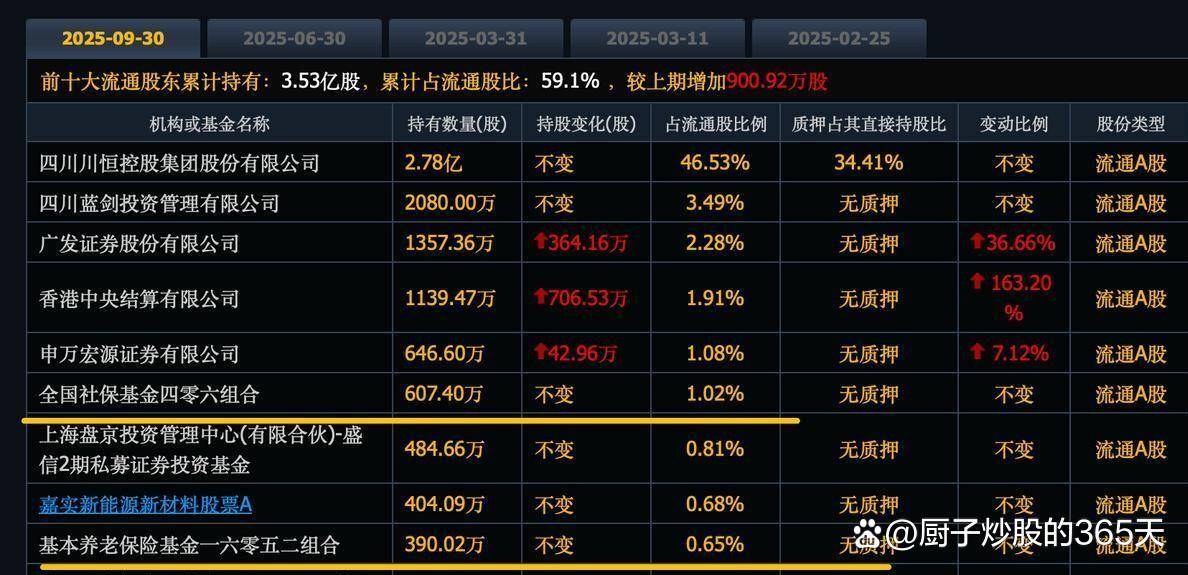
Core Viewpoint - The A-share market experienced a significant surge on the first trading day of the Year of the Horse, particularly in the phosphorus chemical sector, which saw a nearly 7% increase in the phosphorus chemical index, driven by a U.S. executive order designating phosphorus as a critical defense material [1][4][12]. Group 1: Market Reaction and Performance - On February 24, 2026, the Shanghai Composite Index rose over 1%, while the ChiNext Index surged by 1.76%, with the phosphorus chemical sector being the standout performer [1]. - A total of 16 leading phosphorus chemical stocks saw price increases exceeding 9% on the same day, indicating a collective surge in the sector [3]. - The main capital inflow into the phosphorus chemical sector exceeded 8 billion yuan in a single day, reflecting strong market interest [4]. Group 2: Policy Impact - On February 18, 2026, U.S. President Trump signed an executive order that classified phosphorus and glyphosate as critical defense materials, highlighting the strategic importance of these substances [6][7]. - The order revealed that the U.S. currently relies on imports for over 6 million kilograms of phosphorus annually, indicating a hollowing out of its domestic production capacity [9][10]. - This policy shift effectively ended the era of free trade in phosphorus chemicals, elevating phosphorus to the status of a strategic resource alongside rare earths and lithium [12]. Group 3: Price Dynamics - Following the U.S. executive order, domestic phosphorus ore prices surged, with the price of 30% grade phosphorus ore stabilizing above 1,020 yuan per ton, marking a significant increase from around 970 yuan per ton in January 2026 [13][14]. - The price of yellow phosphorus also saw an upward trend, with prices maintaining a high level around 23,300 to 23,600 yuan per ton [16]. - The price of industrial-grade phosphoric acid ranged from 6,200 to 6,400 yuan per ton, while monoammonium phosphate was priced between 3,250 and 3,300 yuan per ton, indicating a clear upward price trajectory across the industry [17]. Group 4: Demand Drivers - The demand for phosphorus is being driven not only by traditional agricultural needs but also by the burgeoning energy sector, particularly in lithium iron phosphate batteries, which require significant amounts of phosphorus [19][20]. - The expected increase in demand for phosphorus from the energy storage sector is projected to reach 4.31 million tons in 2026, with lithium iron phosphate contributing 4.07 million tons [19]. - The dual demand from agriculture and new energy sectors is creating a robust growth environment for the phosphorus chemical industry [20]. Group 5: Investment Opportunities - The reclassification of phosphorus companies from cyclical stocks to strategic resource stocks has led to a significant reevaluation of their market value, enhancing their pricing power [23][24]. - Companies with integrated phosphorus supply chains are positioned to benefit from rising prices and increasing demand, leading to expanded profit margins [23][29]. - The focus of institutional investors has shifted towards companies with strong resource bases and growth potential, as evidenced by the concentrated investments in specific phosphorus chemical firms [30][32]. Group 6: Company Spotlight - Chuanheng Co., which holds 530 million tons of phosphorus ore reserves and has an annual production capacity exceeding 3 million tons, has become a focal point for institutional investment [37][38]. - The company has established a strong market position in its traditional business segments and is also expanding into the lithium iron phosphate market, securing contracts with leading battery manufacturers [40]. - In the first three quarters of 2025, Chuanheng Co. reported revenues of 5.804 billion yuan, a year-on-year increase of 46.08%, and a net profit of 966 million yuan, reflecting its strong performance in a favorable market environment [42][43].



光大期货:2月25日有色金属日报
Xin Lang Cai Jing· 2026-02-25 01:15
Copper - Copper prices showed a strong fluctuation overnight, with domestic refined copper import windows briefly opening. The uncertainty surrounding the 10% global tariffs imposed by the Trump administration has increased global economic uncertainty [2][11] - LME copper inventory increased by 1,350 tons to 243,175 tons, while Comex copper inventory rose by 1,024 tons to 545,736 tons. Domestic social inventory increased by over 150,000 tons to 508,500 tons during the holiday period [2][11] - The core logic driving copper prices upward remains unchanged, with insufficient global copper mine capital expenditure leading to a supply gap, alongside increased demand from new energy and AI infrastructure. A potential short-term deep correction in copper prices could present a golden opportunity for long-term bullish positions [2][11] Nickel & Stainless Steel - LME nickel rose by 3.64% to $17,915 per ton, while SHFE nickel increased by 1.65% to 140,330 CNY per ton. LME inventory decreased by 378 tons to 287,328 tons [3][12][13] - The approved nickel ore production quota in Indonesia is between 260 million to 270 million tons, significantly lower than last year's targets. Supply tightness and maintenance issues are expected to impact production by 30,000 to 40,000 tons per month [3][12][13] - Despite a temporary weakening in demand, cost support remains solid, and ongoing disturbances in Indonesia's regulatory environment may lead to further supply concerns [3][12][13] Alumina, Electrolytic Aluminum & Aluminum Alloys - The first trading day after the holiday saw alumina prices weaken, with AO2605 settling at 2,837 CNY per ton, down 0.39%. SHFE aluminum also showed a decline, with AL2603 at 23,550 CNY per ton, down 0.55% [5][14] - Overseas alumina prices have risen, and domestic electrolytic aluminum plants are stockpiling raw materials for winter. However, social inventory pressures and the expiration of warehouse receipts are suppressing alumina price increases [5][14] - The overall space for aluminum price recovery is limited, and the extent of inventory accumulation will determine the rebound pace. Attention should be paid to overseas news and the pace of downstream resumption of work [5][14] Industrial Silicon & Polysilicon - Industrial silicon prices showed a slight increase, with the main contract at 8,410 CNY per ton, up 0.54%. However, polysilicon prices weakened, with the main contract at 47,000 CNY per ton, down 4.03% [6][15] - Supply-side support exists for industrial silicon, but demand constraints limit upward price movement. The market is currently in a wait-and-see mode regarding downstream demand recovery and new policy signals [6][15] - The market is expected to continue its weak adjustment, with potential risks if policy and demand expectations do not materialize [6][15] Lithium Carbonate - Lithium carbonate futures rose by 10.56% to 164,120 CNY per ton, with battery-grade lithium carbonate prices increasing by 8,250 CNY to 152,000 CNY per ton [7][16] - Supply-side production is expected to decrease by 16.3% in February, while demand for ternary materials and lithium iron phosphate is also projected to decline [7][16][17] - The first trading day after the holiday saw significant price increases for lithium carbonate, driven by expectations of continued inventory decline, which may provide substantial bullish support [7][16][17]

刘强东砸50亿进军游艇行业,称让游艇像汽车一样进入千家万户
Sou Hu Cai Jing· 2026-02-25 01:09
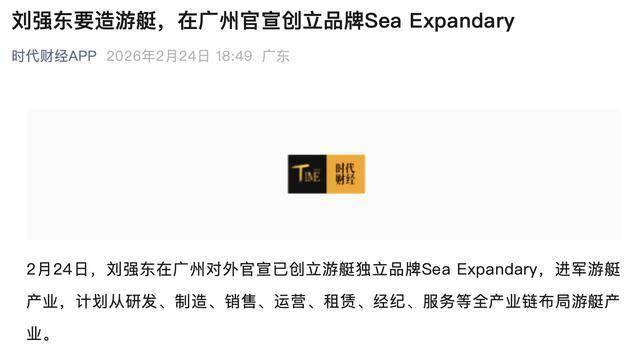
刘强东表示,将个人投资50亿元,以此作为与欧美顶级游艇制造公司同台竞争的底气。该投资为个人投 资,他本人不会直接参与运营管理,绝大部分时间和精力依然放在京东集团。 瑞财经 吴文婷新年伊始,刘强东又有大动作。 2月24日,据媒体报道,京东集团创始人刘强东宣布已创立游艇独立品牌Sea Expandary,进军游艇产 业,计划从研发、制造、销售、运营、租赁、经纪、服务等全产业链布局游艇产业。 同时,他还称,希望把整个游艇的产业重新定义,造百分之百绿色环保的新能源游艇,希望能够造出10 万元、空间足够大的好游艇,让游艇像汽车一样走进千家万户,让普通的工薪阶层也能用得起游艇。 布局方面,Sea Expandary与深圳、珠海等地政府签署了战略合作协议,预计将在珠海投资建设游艇制 造基地,在深圳建设游艇事业中国总部,参与深圳多座码头及配套设施的建设运营。 此外,该品牌还将在大湾区布局研发创新中心、游艇运营服务中心、保税维修中心等一系列配套机构。 在业内人士看来,Sea Expandary的成立,不仅填补了中国高端游艇制造的产业空白,更依托新能源、 智能化的技术优势,打破了海外巨头对游艇市场的长期垄断。 ...
刘强东50亿元入局游艇行业,有望重塑市场对“游艇概念”的认知逻辑
Sou Hu Cai Jing· 2026-02-25 00:30
近期国内围绕游艇产业密集发布了不少鼓励性政策。1月底,国务院办公厅印发《加快培育服务消费新 增长点工作方案》,首条政策便大篇幅部署"促进游艇消费高质量发展";随后国新办发布会上,交通运 输部明确表示,正加快研究制定《扩大游艇消费的若干措施》。在此之前,多部委已连续出台《关于加 快邮轮游艇装备及产业发展的实施意见》等多项支持文件。 据官网介绍,Sea Expandary定位为全球领先的绿色智能游艇全产业生态,将面向全球市场,构建集研 发设计、制造、全球销售、游艇会服务及海洋科考综合服务为一体的全链条游艇产业,为全球游艇客户 提供顶级产品与服务。 据介绍,中国游艇消费的发展空间非常大。中国服务零售从2023年20%的同比增速快速回落到2025年8 月份的5.1%左右,释放服务消费潜力需要尽快找到新的抓手。而根据交通运输协会邮轮游艇分会的数 据,2024年中国游艇保有量在4.5万艘左右(含未登记注册的钓鱼艇、帆船),游艇泊位近1.5万个,远 低于美国的1167万艘,未来游艇消费市场的潜力极大。 近日,刘强东宣布已经创立独立游艇品牌Sea Expandary,将在广东投资50亿元布局游艇产业。刘强东 表示希望未来能造 ...
巨亏252亿,“特斯拉杀手”Rivian跌下神坛
阿尔法工场研究院· 2026-02-25 00:03
Core Viewpoint - The article highlights the inflated valuations of AI companies, drawing parallels with the electric vehicle company Rivian, which experienced a significant drop in market value after failing to meet performance expectations [3][4][11]. Group 1: Rivian's Journey - Rivian raised $2.85 billion through four rounds of financing in 2019 before going public in November 2021, achieving a valuation of $120 billion, making it one of the largest IPOs in U.S. history [6]. - After its IPO, Rivian's market value soared to over $150 billion, surpassing established automakers like Daimler and Volkswagen, but subsequently plummeted by 80% within four months [6][10]. - As of now, Rivian's market value has decreased by over 90%, resulting in a loss of more than $130 billion in total market capitalization [3][10]. Group 2: Financial Performance - In Q4 2025, Rivian reported revenues of $1.286 billion, a year-over-year decline of 25.84%, with automotive revenue dropping 45% to $839 million [13]. - For the full year 2025, Rivian achieved total revenues of $5.387 billion, an 8.39% increase from $4.97 billion in the previous year, but incurred a net loss of $3.646 billion, a 23.19% increase from the prior year's loss [15]. - The software and services segment showed significant growth, with revenues increasing by 222% to $1.557 billion in 2025 [15]. Group 3: Strategic Partnerships and Future Plans - Rivian received a total investment of $5.8 billion from Volkswagen, which included the establishment of a joint venture to develop next-generation electric vehicles [8]. - The company plans to launch the R2 model in Q2 2026, which is expected to be a critical turning point for demonstrating long-term profitability [16]. - Rivian anticipates quarterly deliveries to rise significantly in the second half of 2026, with expected cash inflows of $2 billion from the joint venture with Volkswagen [16]. Group 4: Market Context and Implications - The article emphasizes that the current AI wave has generated even larger capital inflows compared to the previous electric vehicle boom, with major tech companies like Google, Meta, Microsoft, and Amazon collectively spending $650 billion this year [12]. - The narrative surrounding AI companies is compared to that of Rivian, suggesting that without solid products and technology, companies may struggle to sustain their inflated valuations [11][17]. - The conclusion drawn is that while Rivian's losses are decreasing, the timeline for achieving profitability remains uncertain, and the company must reach a break-even point to ensure its survival [17].
财经观察:庞大商务团开启中德经贸合作新赛道
Huan Qiu Shi Bao· 2026-02-24 22:52
Core Viewpoint - The visit of German Chancellor Merz to China, accompanied by a large business delegation, highlights the importance of the Chinese market for Germany's economy, especially amid rising trade tensions with the U.S. [1][4] Group 1: Business Delegation and Economic Cooperation - Merz's delegation includes around 30 senior representatives from major German companies such as Bayer, Volkswagen, Siemens, and BMW, marking the largest economic delegation since the Merkel era [2][4] - The visit aims to strengthen economic cooperation between Germany and China, mitigating risks from U.S. tariff policies [1][4] Group 2: Importance of the Chinese Market - China is projected to surpass the U.S. as Germany's largest trading partner by 2025, emphasizing its critical role in Germany's economic strategy [1][4] - German companies view the Chinese market as stable and a valuable investment opportunity, leading to increased investments and the establishment of R&D centers in China [4][9] Group 3: Technological Collaboration and Innovation - The visit focuses on fostering collaboration in high-tech sectors such as robotics and artificial intelligence, with German industries recognizing the need to adapt to China's technological advancements [9][10] - German firms are increasingly learning from China's manufacturing capabilities and innovation potential, which are seen as essential for maintaining global competitiveness [4][8] Group 4: Strategic Significance of the Automotive Sector - The automotive industry, including companies like Volkswagen and BMW, relies heavily on the Chinese market for profitability and global competitiveness [10][11] - The German government has introduced a €3 billion subsidy plan for new energy vehicles, indicating a commitment to enhancing cooperation with Chinese automotive manufacturers [11]
向上攀登、务实作为勇当价格改革“先锋队”“排头兵”
Xin Lang Cai Jing· 2026-02-24 22:23
Core Viewpoint - Hubei Province's Development and Reform Commission is actively implementing various reforms in pricing and energy sectors to enhance economic development and improve living standards, receiving recognition from provincial authorities [1][2][3] Group 1: Pricing Reforms - The commission is promoting market-oriented reforms in electricity pricing, optimizing the structure of transmission and distribution prices, and establishing a pricing mechanism for coal power capacity [1] - A total of 56 counties and cities have established residential price linkage mechanisms, while 63 have set up non-residential price linkage mechanisms to alleviate pricing discrepancies [1] Group 2: Support for Economic Development - The commission is working with energy departments to ensure stable and reasonable industrial and commercial electricity prices, significantly enhancing the sense of gain for the real economy [2] - Policies have been introduced to optimize time-of-use electricity pricing, including commercial and residential charging station pricing, to help businesses and consumers benefit from lower electricity costs [2] - The implementation of cross-subsidy policies for self-owned power plants is expected to save various users approximately 100 million yuan annually [2] Group 3: Focus on Livelihood and Environmental Protection - The commission is closely monitoring grain prices and has developed a purchase plan for wheat and rice to stabilize market conditions [2] - Efforts are being made to improve environmental fee management and establish a charging mechanism for urban waste treatment [2] Group 4: Party Building and Business Integration - A dual-driven mechanism for party affairs and business operations has been established to enhance organizational effectiveness and service quality [3] - The commission is fostering a learning-oriented and innovative environment within its branches to strengthen operational capabilities [3]