
内卷式竞争

Search documents
避免“内卷式”竞争,促进平台经济健康有序发展
Di Yi Cai Jing· 2025-06-15 13:00
Core Viewpoint - The Chinese food delivery market is experiencing "involutionary" competition, where platforms and merchants are increasing investments without significant improvements in overall market efficiency, leading to resource misallocation and waste [1][2]. Group 1: Market Dynamics - The food delivery industry exhibits typical network economy characteristics, where larger platforms can reduce average delivery costs through increased order and rider density, but this leads to a "subsidy arms race" among competitors [2][3]. - Recent estimates indicate that daily order volume in the food delivery market has peaked at 140 million, significantly up from 100 million year-on-year, with a notable shift towards lower-priced items like beverages [3][4]. Group 2: Economic Theories - The "lemon market" theory explains how information asymmetry leads consumers to rely on price as a primary decision factor, resulting in a market distortion where low-quality offerings prevail [4][5]. - The "disease of cost disease" theory highlights how excessive reliance on subsidies distorts market competition, leading to resource misallocation and inhibiting innovation and quality improvements [6][7]. Group 3: Challenges for Small Merchants - Small merchants face a "prisoner's dilemma" in the price war, where participating may yield short-term sales but create long-term low-price expectations, making it difficult to return to reasonable pricing [7][8]. - The competitive pressure forces small merchants to cut costs, often compromising quality and service, which can damage brand reputation and customer loyalty over time [7][8]. Group 4: Social Costs - The negative impacts of "involutionary" competition extend beyond business, leading to irrational consumption patterns and potential health issues due to increased intake of sugary beverages [9]. - Employment quality is declining as businesses reduce labor costs, affecting workers' rights and job security, while overall market resources are wasted in unproductive competition [9][10]. Group 5: Path to Resolution - To break the cycle of "involutionary" competition, the industry needs to focus on infrastructure improvements and regulatory frameworks that promote sustainable practices rather than relying solely on price subsidies [10][11]. - Enhancing operational efficiency through better logistics and inventory management, along with fostering innovation and quality service, is essential for long-term industry health [10][11].

协力整治“内卷式”竞争
Jing Ji Ri Bao· 2025-06-13 20:57
Group 1 - The phenomenon of "involution" in competition is squeezing normal profit margins and damaging the healthy development of industries [1] - In industries with slowing demand growth and relative overcapacity, companies tend to imitate rather than innovate, leading to homogeneous low-price competition and irrational market share grabbing [1] - To resolve "involution" competition, it is necessary to optimize and expand market space while effectively governing market order through collaboration among enterprises, industry associations, and government departments [1] Group 2 - Promoting inclusive industry development requires innovation leadership, encouraging companies to increase innovation investment and leveraging the role of industry associations [2] - Industry associations should facilitate communication and cooperation among companies, enhance the sense of responsibility for maintaining industry health, and share industry development trends [2] - Establishing self-regulatory rules within industries can help eliminate violations, protect intellectual property, and encourage latecomers to learn from leading companies [2] Group 3 - Regions should strengthen research on industry life cycles, value chains, and organizational forms to create regional industrial brand characteristics and alleviate "involution" competition among enterprises [3] - Local industries should be developed based on resource endowments, avoiding blind expansion and focusing on cultivating industries with comparative advantages [3] - Promoting advanced industrial organization involves effective collaboration between large "chain leader" enterprises and supporting small and medium-sized enterprises to avoid low-level competition [3]
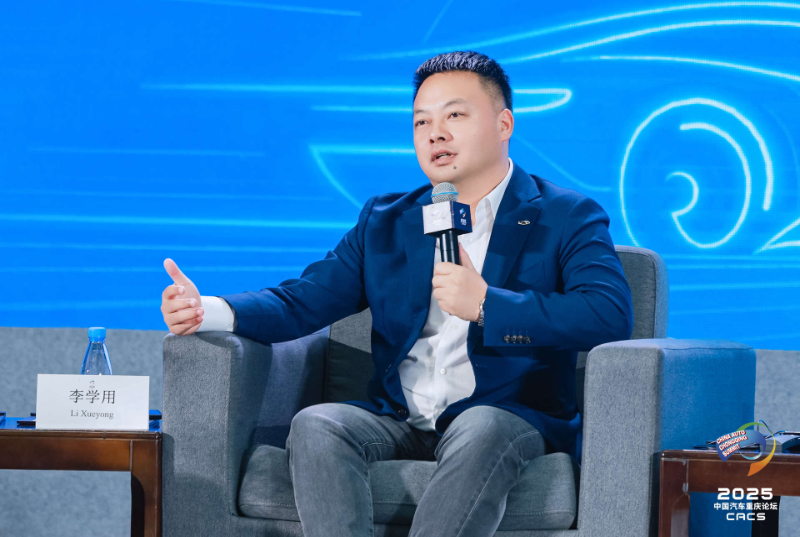
2025中国汽车重庆论坛:破解“内卷式”竞争,车企有话说
Xin Hua Wang· 2025-06-13 10:39
Group 1 - The discussion at the "2025 China Automotive Chongqing Forum" focused on how to address "involutionary" competition in the automotive industry [1] - Chery Automobile emphasizes a user-centric transformation, aiming to understand consumer needs better and innovate in design [3] - Chery has exported nearly 5 million passenger vehicles and established over 30 subsidiaries in 115 countries, highlighting its global strategy [3] Group 2 - BYD's strategy to counter "involution" is centered on technological innovation, with a commitment to building a world-class automotive brand through technology [5] - BYD has over 120,000 technical personnel and invested 54.2 billion yuan in R&D over the past year, resulting in numerous patents and advanced technologies [5] - The company believes that technology is the best form of branding and aims to create a strong identity for Chinese new energy vehicles [5] Group 3 - Continental Group warns that price wars in the automotive industry lead to more losers than winners, suggesting that such competition harms the entire automotive ecosystem [7] - The company advocates for a return to healthy competition, where the best products are offered at reasonable prices rather than the lowest prices for unsafe products [7] - Continental is undergoing significant changes to adapt to the shift from fuel vehicles to smart cars that integrate driving enjoyment, entertainment systems, and intelligent driving [7]

车圈没有恒大,内卷没有赢家|财经峰评
Tai Mei Ti A P P· 2025-06-13 10:11
Core Viewpoint - The automotive industry is facing concerns over high leverage expansion and chaotic competition, with a call for regulatory measures to address "involution" in the sector [2][8] Group 1: Industry Concerns - Weijianjun's statement about the automotive industry having a "Hengda" reflects worries about high leverage and disordered competition [2] - The Ministry of Industry and Information Technology has announced plans to intensify efforts to regulate "involution" in the automotive sector [2] - The term "next Hengda" is seen as a sensationalist narrative, while the real issue is the involutionary competition affecting the automotive and other industries [2][8] Group 2: Financial Comparisons - Li Yunfei from BYD refuted the "car circle Hengda" claim by comparing financial metrics of domestic and international car manufacturers, emphasizing the differences in financial structures [3] - The financial reports of car manufacturers and real estate companies are fundamentally different, making direct comparisons unprofessional [4][6] - The automotive industry operates on a cash flow model primarily from vehicle sales, contrasting with the high-leverage financing model of real estate [6][7] Group 3: Price Wars and Profitability - The automotive industry is experiencing a price war, leading to a decline in industry profit margins from 4.3% in 2024 to 3.9% in Q1 2025, below the average for manufacturing [8] - The prevalence of price wars has resulted in a significant number of models being sold at reduced prices, with 70% of over 60 discounted models being driven by homogenous competition [8] - The ongoing price competition is reminiscent of the solar industry, which faced similar challenges leading to widespread losses [8][9] Group 4: Innovation and Market Dynamics - The rapid diffusion of technology in the automotive sector is creating an "innovator's dilemma," where advancements are quickly replicated, undermining competitive advantages [9][10] - The automotive industry must shift from price competition to value competition to build sustainable competitive advantages and avoid overcapacity [10] - Protecting innovation and moving away from involution is increasingly recognized as essential for the industry's future [10]

陆铭专栏丨综合整治平台经济“内卷式”竞争
Sou Hu Cai Jing· 2025-06-11 18:11
Core Viewpoint - The article discusses the challenges posed by "involutionary" competition in the platform economy, particularly in the food delivery sector, highlighting the need for regulatory intervention to promote healthy competition and sustainable development [2][3][4]. Group 1: Current State of Competition - The rapid expansion of the platform economy has led to practices such as "choose one from two" and price wars, resulting in resource waste and unhealthy competition [2]. - Since April 2025, a new round of subsidy and price wars has emerged in the food delivery sector, affecting over 10 million delivery riders and involving millions of restaurants, making it a priority for regulatory action against "involution" [2][3]. Group 2: Impact on Industry Stakeholders - The reliance on high subsidies among platform companies has created a competitive environment that negatively impacts merchants, consumers, and delivery riders, leading to economic fluctuations and resource waste [4][5]. - Large brand merchants can absorb short-term low margins to gain market share, while small merchants face a dilemma of either matching subsidies or risking loss of visibility on platforms, potentially leading to closures [5][6]. Group 3: Long-term Sustainability Challenges - The current competition has led to irrational and homogeneous expansion in supply, particularly in the beverage sector, with a 37.5% increase in new openings in May 2025 compared to April [6]. - Continuous high subsidies are altering consumer price perceptions, leading to a cycle of low-price and low-quality offerings, which could harm the overall market and consumer trust [7][8]. Group 4: Recommendations for Healthy Development - Regulatory bodies are encouraged to implement measures to halt unfair competition driven by high subsidies, including penalties for platforms engaging in such practices [8][9]. - Strengthening the regulatory environment to combat false advertising and other market-distorting behaviors is essential for maintaining fair competition [9]. - Encouraging platforms to focus on innovation and global expansion rather than low-quality competition is vital for the long-term stability of the industry [9].

汽车行业整治“内卷”进行时,工信部加强事中事后监管
2 1 Shi Ji Jing Ji Bao Dao· 2025-06-11 13:00
至此,已有17家重点汽车生产企业作出相关承诺,除上述4家外,还有中国一汽、东风汽车、广汽集 团、赛力斯(601127)、吉利汽车、长安汽车(000625)、比亚迪(002594)、奇瑞汽车、小鹏汽车、 小米汽车、长城汽车(601633)、零跑汽车、上汽集团(600104)。 6月11日,北汽集团、蔚来、理想汽车、江汽集团等多家汽车生产企业陆续发表声明,承诺"支付账期不 超过60天"。 "'价格战'没有赢家,更没有未来。"5月底,针对中国汽车工业协会发布《关于维护公平竞争秩序促进 行业健康发展的倡议》,工业和信息化部相关负责人公开做出回应。 此前,中国汽车工业协会曾发布《关于维护公平竞争秩序,促进行业健康发展的倡议》(以下简称《倡 议》),倡议所有企业严格遵从公平竞争原则,依法依规开展经营活动等。 《倡议》提到,5月23日以来,某车企率先发起大幅降价活动,多家企业跟进效仿,引发新一轮"价格 战"恐慌。新能源汽车是新质生产力的典型代表,正引领汽车产业加速转型升级,维护行业健康发展十 分重要。希望全行业同心协力,共同维护公平竞争秩序,促进行业健康、可持续发展。 对于破除汽车行业"内卷式"竞争,汽车工业协会原常务副会 ...





成材:缺乏驱动震荡调整
Hua Bao Qi Huo· 2025-06-11 09:58
1. Report Industry Investment Rating - Not provided in the content. 2. Core View of the Report - The report suggests treating the situation with a strategy of trying short positions on rebounds [4]. 3. Summary According to Related Contents Industry News - The China Iron and Steel Association issued an article on the 9th, calling on the steel and automobile industries to work together to break through "involution" and promote the healthy and sustainable development of the industrial chain through technological innovation [3]. - From June 2nd to June 8th, the total transaction (signing) area of newly - built commercial housing in 10 key cities was 1.2967 million square meters, a month - on - month decrease of 26.9% and a year - on - year decrease of 17.5%; the total transaction (signing) area of second - hand housing was 1.8519 million square meters, a month - on - month decrease of 11.8% and a year - on - year decrease of 9.5% [3]. - In May, the China Construction Machinery Industry Association reported that 18,202 excavators of various types were sold, a year - on - year increase of 2.12%. Among them, domestic sales were 8,392 units, a year - on - year decrease of 1.48%, and exports were 9,810 units, a year - on - year increase of 5.42% [3]. Market Performance and Strategy - The finished products continued to consolidate yesterday with little overall fluctuation, showing narrow - range fluctuations with small K - lines in the past three trading days [3]. - Currently in the off - season of demand, there is little chance of effective improvement in downstream demand in the short term, and there is still room for further decline. Based on the current situation, it is recommended to try short positions on rebounds [3].
突发!广汽、一汽、小米、理想等10余家车企官宣
Jin Rong Shi Bao· 2025-06-11 08:06
从6月10日晚间开始,多家汽车企业陆续发文表示,对供应商账期不超过60天! 6月10日晚间20点,广汽集团(601238)在其官方微信公众号发布《关于供应商账期的郑重承诺》,表示坚持以不超过60天的供应商账 期,保障供应链资金高效周转。消息一经发出迅速引发关注,截至目前,记者发现该条消息浏览量已经突破十万。 之后不久,中国一汽在其官方公众号发布公告,明确付款期限和支付方式,将"60天付款"作为所属单位付款期限要求,加强资金监督 和过程管理。此外,中国一汽还提到要"加强采购、财务等部门内部协同,进一步精简审批环节,确保付款流程畅通无阻;充分利用数 字化云工作台,实现对合同执行、发票匹配、付款申请等全流程节点的实时监控,确保每一笔应付款项按期支付。" 广汽集团发布消息约半个小时后,东风汽车也在官方微信公众号宣布,将支付账期统一至60天内,助力产业链良好协同发展。 10日约21时,重庆重头车企赛力斯(601127)发布消息称,一直以来,赛力斯按照与供应商的合同约定付款,正常货款账期60天,实 现主机厂与供应商双赢。 11日以来,汽车巨头"官宣"的态势进一步持续。 11日凌晨,比亚迪(002594)宣布跟进,表示将供 ...


【财闻联播】“苏超”火了,“粤超”来了!关于光伏行业,天合光能董事长最新发声
券商中国· 2025-06-10 12:31
★ 宏观动态 ★ 中办、国办印发《关于深入推进深圳综合改革试点 深化改革创新扩大开放的意见》 为深入推进深圳综合改革试点、深化改革创新扩大开放,中办、国办印发《关于深入推进深圳综合改革试点 深化改革创新扩大开放的意见》。意见部署,统筹推进教育科技人才体制机制一体改革,推进金融、技术、数 据等赋能实体经济高质量发展,建设更高水平开放型经济新体制,健全科学化、精细化、法治化治理模式。意 见明确,在更高起点、更高层次、更高目标上深化改革、扩大开放,创造更多可复制、可推广的新鲜经验,更 好发挥深圳在粤港澳大湾区建设中的重要引擎作用和在全国一盘棋中的辐射带动作用,为全面建设社会主义现 代化国家作出贡献、提供范例。 市场监管总局就《直播电商监督管理办法》公开征求意见 为加强直播电商监督管理,促进直播电商健康发展,市场监管总局在充分调研和广泛征求意见的基础上,会同 国家网信办研究起草了《直播电商监督管理办法(征求意见稿)》(以下简称《办法》),今日正式向社会公 开征求意见。《办法》明确了直播电商平台经营者在违规处置、资质核验、信息报送、培训机制、分级管理、 动态管控、信息公示等方面的责任。要求平台经营者建立健全平台协议规则 ...

车圈大乱斗,谁说内卷无赢家?
3 6 Ke· 2025-06-10 11:48
Group 1 - The automotive industry in China is experiencing intense competition, with major players engaging in public disputes and accusations, highlighting the severity of "black PR" tactics used against competitors [1][2][3] - BYD's rapid growth from 730,000 units in 2021 to over 3 million units in 2023 has positioned it among the top ten global automakers, causing tension with rivals like Great Wall Motors [3][4] - Great Wall Motors has chosen not to engage in price wars, achieving a revenue of 200 billion yuan in 2024, but its sales only increased by 0.2%, indicating a struggle in the domestic market [3][4] Group 2 - The price war in the automotive sector is escalating, with over 200 models experiencing price cuts in 2024, and more than 60 models already discounted in the first four months of 2025 [4][5] - A significant percentage of dealers (84.4%) are selling vehicles at a loss, with 60.4% facing losses exceeding 15% per vehicle, leading to an industry profit margin dropping below 4% [5][6] - The Chinese government is addressing the issue of "involution" in the industry, with multiple ministries calling out the detrimental effects of excessive competition [6][7] Group 3 - Companies are exploring three main strategies to break through the current challenges: technological advancement, high-end market transformation, and international expansion [7][8] - BYD is focusing on technological innovation with its blade battery and DM-i hybrid technology, while Great Wall Motors is pursuing high-end branding despite declining sales in other segments [7][8] - The automotive industry is at a critical juncture, with warnings that without proper cost control and technological barriers, it risks repeating the mistakes of the solar industry, which faced severe losses due to similar competitive pressures [8][9]