
产品迭代

Search documents
低价产品串货,电商低至73元/瓶,旧版台源酒宣布停产,茅台急推新品补位
3 6 Ke· 2025-08-07 04:53
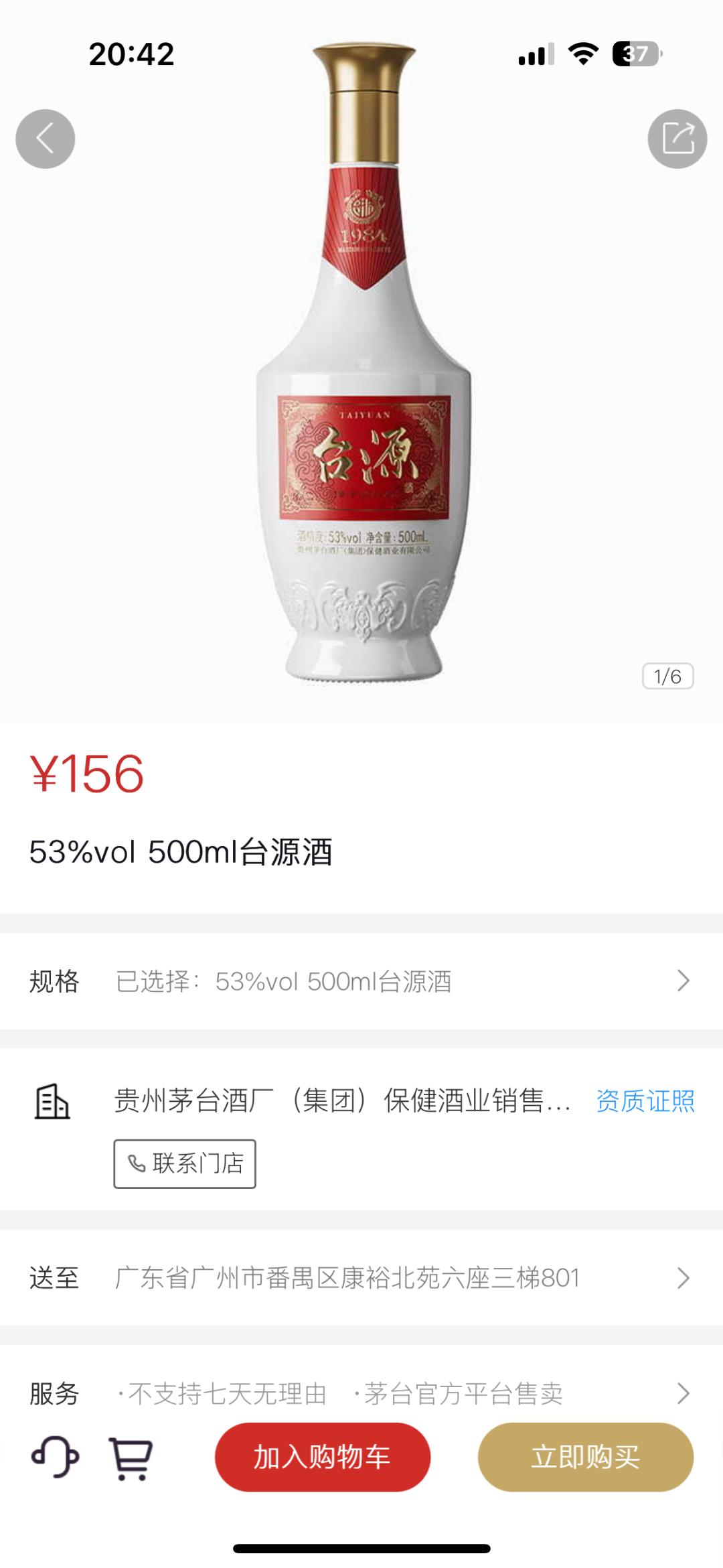
Core Viewpoint - The official confirmation of the discontinuation of the "Taiyuan Wine" product by Moutai Health Wine Company aims to optimize product structure and enhance market service capabilities, with a new product "Taiyuan Red" launched on August 4, 2023 [1][5]. Group 1: Product Changes - The old version of "Taiyuan Wine" was officially discontinued on August 6, 2023, with the new product "Taiyuan Red" introduced, which is tailored for banquet scenarios and comes in two alcohol content options: 53 degrees and 43 degrees, maintaining the same price range of around 100 yuan [1][5]. - The old version of "Taiyuan Wine" is still available for sale on various platforms, with prices ranging from 122 yuan to 156 yuan per bottle, indicating ongoing market activity despite the discontinuation announcement [1][6]. Group 2: Market Dynamics - "Taiyuan Wine" achieved sales exceeding 1 billion yuan in its first year, with significant year-on-year growth in product movement and opening rates noted in 2023 [6]. - The company has faced challenges such as low demand in the liquor market and severe price inversions, leading to issues with low-price parallel trading [7][8]. - To address market irregularities, the company has intensified efforts to regulate the market for "Taiyuan Wine," focusing on maintaining stable pricing and developing targeted distribution strategies [7][8]. Group 3: Strategic Direction - The chairman of Moutai Health Wine Company, Feng Cheng, emphasized the commitment to developing products within the 100 to 500 yuan price range, with "Taiyuan" and "Moutai Chun" identified as long-term strategic products [8][9]. - The company plans to enhance its core terminal focus, strengthen promotional activities, and cultivate a network of 50 core distributors while implementing a mechanism to optimize distributor numbers [9].

房地产行业周度观点更新:产品迭代与增量机遇-20250720
Changjiang Securities· 2025-07-20 10:13
Investment Rating - The report maintains a "Positive" investment rating for the real estate industry [13]. Core Insights - The policy goal of stabilizing the market has somewhat boosted market expectations, but marginal downward pressure has increased since April. The rapid decline in volume and price may have passed, with structural highlights in core areas and quality properties [6][10]. - The report identifies a significant gap in quality housing due to a high proportion of old residential buildings in key cities and the impact of price controls on the quality of new homes. This creates a foundation for product iteration and potential volume growth [3][10]. - The loosening of price controls is expected to lead to a revaluation of property prices, particularly for mid-to-high-end products, which could enhance product pricing power and profitability for developers with regional advantages and manageable inventory levels [3][10]. Market Performance - The Yangtze River Real Estate Index decreased by 1.94% this week, underperforming the CSI 300 by 3.03%, ranking 32 out of 32 industries. Year-to-date, the index is down 0.81%, with a cumulative underperformance of 3.95% compared to the CSI 300 [7][17]. - The report notes that the real estate sector has shown poor performance this week, primarily driven by declines in development stocks, while property management and rental stocks exhibited mixed results [7]. Policy Developments - The Central Urban Work Conference outlined seven key tasks, emphasizing the transition from rapid urbanization to stable development, focusing on optimizing urban systems and enhancing living conditions [8][21]. - Local policies in cities like Qingdao and Changsha are being optimized to support housing exchanges and stimulate market activity through various measures, including subsidies for home purchases and revitalizing existing land [8][21]. Sales Trends - New home and second-hand home transaction volumes in sample cities are experiencing low-level fluctuations. For instance, the transaction area for new homes in 37 cities decreased by 18.1% year-on-year, while second-hand homes in 19 cities saw a decline of 7.2% [9][22]. - Year-to-date, new home transaction areas in 37 cities are down 3.9%, while second-hand homes in 19 cities have increased by 16.3% [9][22]. Investment Opportunities - The report highlights that the real estate downcycle requires three conditions for a trend reversal: the cycle must reach a bottom, economic feedback must be positive, and policies must be sufficiently strong. Currently, these conditions are challenging to meet in the short term, with investment opportunities primarily in policy expectations and structural segments [10]. - The potential for product iteration and stable cash flow in the real estate sector is emphasized, particularly for developers with regional advantages and low inventory pressure, which may yield long-term alpha and stable profit returns [3][10].




割草机器人能否复刻扫地机器人的路?
新财富· 2025-07-01 07:23
Core Viewpoint - The article discusses the evolution and market potential of robotic vacuum cleaners and lawn mowers, highlighting the technological advancements and market dynamics that drive their adoption and growth. Group 1: Product Evolution - The development of robotic vacuum cleaners can be divided into two phases: from 2010 to 2017, where the introduction of laser radar and SLAM algorithms transitioned them from toys to practical household appliances, and post-2017, where companies focused on mass production and price competition [3][4]. - Robotic lawn mowers have a similar trajectory, with the first model introduced in 1995 using a random collision method. The introduction of boundary-free mowers in 2021 marked a significant advancement, utilizing RTK technology for precise navigation [5][6]. - The current state of the lawn mower industry resembles that of robotic vacuum cleaners in 2017, with various companies launching mature innovative products, indicating a phase of rapid penetration and increased average prices [6][7]. Group 2: Demand Analysis - The demand for lawn mowers in Europe and the U.S. is rigid, driven by regulations that require residents to maintain their lawns, with approximately 72% of the global private garden market located in these regions [9]. - The global outdoor power equipment market grows at about 5% annually, while the robotic lawn mower market is expected to grow at around 20%, indicating significant potential for market penetration [9]. - The price reduction of robotic lawn mowers from €1500 to below €1000 is seen as a catalyst for increased adoption, with projections suggesting a stable sales volume of over 5 million units annually [10]. Group 3: Competitive Landscape - The competitive landscape for robotic lawn mowers includes traditional garden equipment companies, service robot companies, and numerous startups, with established brands like Husqvarna and Bosch currently holding about 75% of the market share [12][13]. - Domestic brands face challenges in surpassing established foreign leaders due to the complexity of distribution channels and the need for localized services in diverse European markets [14][15]. - The coexistence of wired and boundary-free robotic mowers is expected, as the former remains cost-effective despite lower efficiency [15]. Group 4: Product Maturity - The robotic lawn mower market is still in its product iteration phase, with ongoing improvements needed to address existing pain points such as edge cutting and environmental adaptability [16][17]. - Current technologies face limitations in accurately identifying obstacles and handling complex terrains, indicating a need for further innovation and refinement [18][19]. - The overall penetration speed of robotic lawn mowers is anticipated to be slower than that of robotic vacuum cleaners due to the increased complexity of the product [20].

中信证券:注射类增速快于医美整体 关注产品迭代突破及龙头持续领先主线
Zhi Tong Cai Jing· 2025-06-20 01:55
Core Viewpoint - The report from CITIC Securities highlights the significant growth potential in China's medical aesthetics industry, driven by increasing awareness and an aging customer base, with injectable products expected to outpace overall industry growth due to supply-side improvements [1] Market Growth - Despite short-term pressures, the long-term outlook for the medical aesthetics market is positive, with a projected terminal scale exceeding 230 billion yuan in 2023 and a CAGR of 10%-15% from 2024 to 2027; injectables are expected to grow at a CAGR of 20%-30% over the next five years [1] - The report indicates that the number of medical aesthetic treatments per thousand people in South Korea, Japan, and China are 91 (2019), 71 (2023E), and 34 (2023E) respectively, suggesting significant room for growth driven by increased awareness and an aging population [1] Development Trends - The competitive landscape for products is expected to evolve into a U-shaped pattern, with initial high concentration due to regulatory barriers, followed by increased competition, and ultimately a return to higher concentration as operational capabilities differentiate companies [2] - The medical aesthetics industry is characterized by "limited innovation," making operational capabilities increasingly important; leading companies are expected to benefit from their established operational strengths [2][3] Investment Recommendations - There are opportunities for product breakthroughs, particularly in non-hyaluronic acid materials, with over 110 approved injectable products in China, and limited competition in other categories; new product approvals, especially in botulinum toxin and other innovative materials, are anticipated to drive market growth [2] - The report emphasizes the importance of comprehensive operational capabilities, with leading companies expected to maintain their competitive edge in a market characterized by limited innovation [3]

特斯拉自救进行时
Zhong Guo Qi Che Bao Wang· 2025-06-17 01:08
Core Viewpoint - Tesla is facing significant challenges in the Chinese market, with sales declining for eight consecutive months, necessitating urgent measures to reverse this trend [2][3][5]. Sales Performance - In May, Tesla's wholesale sales in China were 61,662 units, a year-on-year decrease of 15%, marking the eighth consecutive month of decline [2]. - Although there was a slight month-on-month increase of 5.5% from April, the year-on-year comparison showed a 6% drop, indicating a worsening sales situation [3]. - The price reduction strategy initiated by Tesla at the beginning of 2023 has led to a "domino effect" in the industry, with many local brands launching competitive low-cost models, diminishing Tesla's price advantage [3][4]. Competitive Landscape - Domestic brands are rapidly iterating and launching new models, contrasting with Tesla's stagnation in product updates since the introduction of Model 3 and Model Y over five years ago [4]. - The increasing consumer interest in new technologies and stylish designs has made Tesla's relatively unchanged offerings less appealing [4][10]. Brand Influence and Global Strategy - Tesla's brand image has been affected by controversies involving its executives and technical issues, leading to a decline in consumer trust [5]. - Sales in major markets outside China, including the UK, Germany, France, and the US, have also seen significant year-on-year declines, indicating a broader global sales challenge [5]. Recovery Measures - Tesla is implementing various strategies to boost sales, including a new referral reward program and limited-time insurance subsidies for Model 3 [6]. - The introduction of a lower-priced version of Model Y, expected to be priced between 150,000 to 180,000 yuan, aims to attract budget-conscious consumers [6]. - Tesla's inclusion of Model 3 and Model Y in the 2025 New Energy Vehicles Down to the Countryside initiative is seen as a potential growth opportunity in lower-tier markets [7]. Market Potential and Infrastructure - To effectively penetrate lower-tier cities, Tesla must address the lack of charging infrastructure, which is a significant barrier to adoption [8][9]. - Enhancing product positioning and brand image to resonate with local consumers is crucial for Tesla's success in the evolving market landscape [9]. Innovation and Product Development - Continuous technological innovation and faster product iterations are essential for Tesla to keep pace with the rapidly changing market [10]. - Introducing new models, such as the highly anticipated Cybertruck, and integrating popular local applications into its smart cockpit could help Tesla regain consumer interest [10].


足力健,老人早不爱了
3 6 Ke· 2025-06-13 11:29
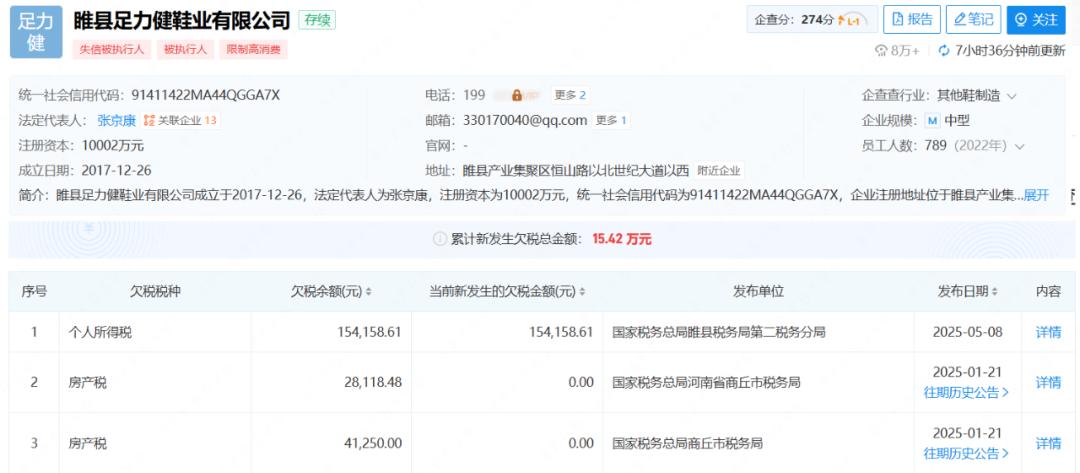
Core Viewpoint - The article highlights the operational difficulties faced by the well-known brand "Zuli Jian," revealing a stark contrast between its past success and current challenges, including tax debts and quality issues [1][3][17]. Company Overview - Zuli Jian is associated with Suixian Zuli Jian Footwear Co., Ltd., which has a tax debt of 154,158.61 yuan, indicating financial strain [1][2]. - The company was founded on December 26, 2017, with a registered capital of 100.02 million yuan and employs 789 people as of 2022 [2]. Historical Performance - Zuli Jian experienced significant success a decade ago with the launch of the "Six Super Elderly Shoes," selling 500,000 pairs and rapidly expanding to over a thousand stores [3]. - The brand's marketing strategy heavily relied on advertising, spending 200 million yuan over eight years on CCTV ads, which initially boosted its recognition [12]. Product Development and Innovation - Zuli Jian claims to have developed shoes tailored for the elderly by studying foot shape changes, resulting in multiple patents, primarily for design and accessories [4][6]. - However, only 31 out of its numerous patents are related to technology, raising questions about the actual innovation in its products [7]. Quality Issues and Brand Reputation - The brand has faced multiple quality control issues, including non-compliance in product testing, leading to negative publicity and legal challenges [17][19]. - Complaints about misleading advertising regarding the safety of its shoes have significantly impacted consumer trust, with over 60% of complaints related to false claims about anti-slip features [21]. Market Position and Competition - Zuli Jian's market position has weakened due to emerging competitors like Skechers, which offer innovative designs and effective marketing strategies targeting younger consumers [15][16]. - The brand's shift in target demographics is evident, with over 70% of online buyers being younger consumers purchasing for their elderly relatives [25]. Strategic Shifts and Future Challenges - The company is attempting to adapt its marketing strategy by engaging younger audiences through new endorsements and social media campaigns, including using pets as brand ambassadors [27][28]. - The transition to a younger marketing approach faces internal conflicts between traditional marketing strategies and modern consumer expectations, highlighting a critical challenge for the brand's future [22][28].
“好房子硬杠二手房 核心15城40个四代宅相对周边溢价幅度达16%
Jing Ji Guan Cha Bao· 2025-06-10 06:24
Core Insights - The concept of "Good Housing" has gained prominence, with the government aiming to enhance housing quality and promote green and smart transformations [2] - The rise of "Fourth Generation Housing" is closely linked to policy direction, with expectations for future properties to focus on low density, high usable area, and larger units [2][10] - The introduction of supportive policies in over 50 cities, including Beijing and Chongqing, is accelerating the implementation of Fourth Generation Housing [3] Market Trends - The supply of Fourth Generation Housing is projected to grow, with over 70 new projects expected by 2025, particularly in cities like Nanjing and Xi'an [7] - The premium of Fourth Generation Housing over surrounding properties in 15 core cities has reached 16%, indicating strong market demand [8] - The average absorption rate for newly launched Fourth Generation Housing is 43%, surpassing the overall absorption rates of 25%-42% in core cities [8] Construction and Cost - The construction cost of Fourth Generation Housing is approximately 650-700 yuan per square meter higher than traditional housing, but its high premium and rapid sales can mitigate cost pressures [9] - Innovative features such as high ceilings and outdoor spaces are contributing to higher usable areas, with some projects achieving over 90% usable space [4] Industry Dynamics - The shift from concept trials to widespread adoption of Fourth Generation Housing is being driven by both policy incentives and market demand [10] - The emergence of Fourth Generation Housing is expected to disrupt the existing market, particularly affecting the second-hand housing sector [10][11] - Real estate companies that can continuously innovate their products are likely to gain a competitive edge in the market [11]
良信股份(002706) - 2025年5月14日投资者关系活动记录表
2025-05-15 06:26
Group 1: Smart Distribution Business - The smart distribution business is a strategic investment area for the company, focusing on industrial and commercial building sectors [2] - The company is enhancing its smart distribution products in terms of materials, manufacturing, processes, and electrical performance to remain competitive [2] - Future breakthroughs will involve personalized smart distribution solutions tailored to different customer electricity usage scenarios [2] Group 2: Data Center Business - The data center business focuses on power distribution, smart monitoring, and intelligent operations, including integrated smart distribution systems and low-voltage solutions [3] - The company maintains a competitive edge in operator procurement tenders and collaborates closely with major domestic clients to develop customized products [3] - The company is actively working on import substitution and enhancing its core technology system in overseas markets [3] Group 3: Financial Performance - The improvement in gross margin for Q1 2025 is attributed to product structure optimization, cautious price control, and better cost reduction effects compared to the previous year [3] - The fastest-growing sectors in Q1 2025 include renewable energy, electricity, and data center industries, with a focus on creating value through technological innovation and scenario-based solutions [3]

申万宏源证券晨会报告-20250430
Shenwan Hongyuan Securities· 2025-04-30 02:17
Group 1: Ninebot Company (689009) - The company reported a strong performance in Q1 2025, with revenue of 5.112 billion yuan, a year-on-year increase of 99.5%, and a net profit of 456 million yuan, up 236.2% year-on-year [10] - The forecast for net profit for 2025-2027 has been raised to 1.898 billion, 2.700 billion, and 3.600 billion yuan respectively, reflecting growth rates of 75.1%, 42.2%, and 33.3% [10] - The current market valuation corresponds to a PE ratio of 24X, 17X, and 13X for 2025, 2026, and 2027 respectively, maintaining a "buy" rating [10] Group 2: Kweichow Moutai (600519) - The company achieved a revenue of 43.56 billion yuan in Q1 2025, a year-on-year increase of 9.7%, with a net profit margin of 52.2% [15][13] - The forecast for net profit for 2025-2027 is set at 93.96 billion, 99.14 billion, and 104.71 billion yuan, with growth rates of 9.0%, 5.5%, and 5.6% respectively [11][12] - The company maintains a strong brand presence and cash flow quality, with a current PE ratio of 21X, 20X, and 19X for the respective years [12][13] Group 3: Caibai Co., Ltd. (605599) - The company reported a net profit forecast for 2025-2027 of 804 million, 877 million, and 949 million yuan, with corresponding PE ratios of 13, 12, and 11 [19] - The increase in gold prices has driven demand for investment products, leading to an upward revision of profit forecasts [19] - The company continues to expand its direct store network and enhance its online sales channels, achieving significant growth in e-commerce sales [16][19] Group 4: Bull Group (603195) - The company reported a revenue of 16.831 billion yuan in 2024, a year-on-year increase of 7.2%, and a net profit of 4.272 billion yuan, up 10.4% [18] - The forecast for net profit for 2025-2027 has been adjusted to 8.04 billion, 8.77 billion, and 9.49 billion yuan, maintaining a "buy" rating [19] - The company is focusing on channel expansion and brand recognition to drive long-term sustainable growth [19] Group 5: Shanxi Fenjiu (600809) - The company achieved a revenue of 36.011 billion yuan in 2024, a year-on-year increase of 12.79%, with a net profit of 12.243 billion yuan, up 17.29% [21] - The forecast for net profit for 2025-2027 is set at 12.99 billion, 14.02 billion, and 15.29 billion yuan, with growth rates of 6.1%, 7.9%, and 9.1% respectively [21] - The company maintains a strong market presence with a diversified product range and solid management capabilities [21] Group 6: Yili Group (600887) - The company reported a total revenue of 115.78 billion yuan in 2024, a year-on-year decrease of 8.24%, with a net profit of 8.453 billion yuan, down 18.94% [26] - The forecast for net profit for 2025-2027 is set at 11.377 billion, 12.138 billion, and 12.815 billion yuan, reflecting a growth rate of 35%, 7%, and 6% respectively [28] - The company continues to focus on high-end product penetration and market share expansion in the dairy sector [28]



从"卷量"转向"质取" 厨房小家电苦练"内功"拥抱市场
Zhong Guo Chan Ye Jing Ji Xin Xi Wang· 2025-04-27 00:47
Core Viewpoint - The kitchen small appliance industry is experiencing significant performance differentiation among companies, driven by varying progress in diversification and internationalization [1] Market Trends - The "stay-at-home economy" boosted kitchen small appliance sales in 2020-2021, but demand has since slowed, leading to a decline in sales in 2022 [2] - In 2023, some brands like Bear Electric and Supor saw sales recover due to new live-streaming e-commerce channels, but others continued to experience declines [2] - The overall retail sales of kitchen small appliances reached 60.9 billion yuan last year, a year-on-year decrease of 0.8% [2] - There is a notable price decline in the small appliance sector, attributed to weakened market demand and intense price competition [2][3] International Expansion - To overcome growth challenges, small appliance companies are increasingly looking to international markets, with exports showing positive trends [4] - In the past year, kitchen small appliance exports reached 19.9 billion USD, a year-on-year increase of 9.1% [4] - Supor's domestic revenue fell by 1.21% to 14.925 billion yuan, while foreign trade revenue grew by 21.07% to 7.502 billion yuan [4] - New Treasure and Bear Electric also reported declines in domestic revenue but increases in foreign revenue [4] Competitive Landscape - The small appliance industry is characterized by intense competition, with companies needing to innovate and adapt to survive [5] - Analysts note that the domestic market is largely saturated, prompting companies to seek growth in overseas markets [5] Product Innovation - Companies are focusing on rapid product iteration to meet changing consumer demands, with some launching over 80 new products annually [6] - The unique attributes of small appliances require manufacturers to quickly adapt to consumer preferences and trends [7] - There is a shift from single-function products to multi-functional product development to enhance value and growth potential [7][8] Consumer Preferences - Consumers are increasingly willing to pay for smart appliances with practical functions, indicating a trend towards mid-to-high-end products [8]