
企业国际化

Search documents
前三季度港交所IPO融资额全球居首,深企积极赴港上市加速国际化
Xin Lang Cai Jing· 2025-10-07 00:28
Core Viewpoint - There has been a significant influx of overseas capital into emerging markets this year, with Hong Kong stocks becoming a popular choice for companies looking to go public, as evidenced by the leading financing figures in global exchanges [1] Group 1: Market Trends - In the first three quarters of this year, the Hong Kong Stock Exchange ranked first globally with over 180 billion HKD in financing [1] - The rising valuations of Hong Kong stocks have attracted numerous companies, particularly from Shenzhen, to consider listing in Hong Kong [1] Group 2: Company Strategies - Shenzhen companies are leveraging the opportunity of H-share issuance to attract international investors [1] - These companies are actively promoting their globalization strategies through listings in Hong Kong [1]

前三季度港交所IPO融资额全球居首 深企积极赴港上市加速国际化
Xin Lang Cai Jing· 2025-10-07 00:04
Core Insights - There has been a significant influx of overseas capital into emerging markets this year, with Hong Kong stocks becoming a popular choice for companies looking to go public [1] - According to Deloitte, the Hong Kong Stock Exchange ranked first globally in terms of fundraising, with over 180 billion HKD raised in the first three quarters [1] - A total of 66 new stocks were listed in Hong Kong during the first three quarters, raising over 180 billion HKD, a substantial increase compared to only 45 new stocks raising less than 60 billion HKD in the same period last year [1] - The increase in fundraising is attributed to the concentration of large new stock issuances from mainland China, with CATL's H-share raising 41 billion HKD, making it the largest new stock issuance globally this year [1] Company Highlights - Among the successful companies that went public in Hong Kong, four are from Shenzhen: Chow Tai Fook, Peak Technology, Daheng New Epoch Technology, and Health 160 [1] - Peak Technology successfully issued shares to establish an "A+H" dual listing structure, becoming the first stock in the Hong Kong semiconductor industry focused on motor drive control chips [1] - Peak Technology raised a total of 2.259 billion HKD, which will enhance its research and development capabilities and expand its overseas sales network, thereby increasing its competitiveness in the global market [1]


临工集团:迈入企业国际化新征程,与世界共建工程机械新生态
Qi Lu Wan Bao Wang· 2025-09-30 14:26
Core Insights - The article discusses Shandong Lingong's new internationalization strategy, emphasizing a shift from product sales to comprehensive global operations, including R&D, marketing, and service [1][2] - The company aims to achieve a revenue target of over 100 billion yuan by 2030, with a significant increase in overseas revenue [2][3] Group 1: Internationalization Strategy - Lingong's strategy focuses on "comprehensive promotion and key breakthroughs," targeting the top 20 countries that account for 80% of the global market share [2] - The company plans to establish overseas production bases and subsidiaries, create an international financing platform, and localize talent and services to build a complete overseas industrial ecosystem [2] Group 2: Business Growth and Structure - Lingong has evolved from a single engineering machinery manufacturer to a diversified and international industrial group, with 83 subsidiaries and 17 member enterprises [2] - The company covers nine major product lines, including loaders, excavators, road machinery, and new energy equipment [2] Group 3: Talent Development - Talent is identified as a core support for internationalization, with a dual strategy of recruiting high-end domestic talent and accelerating the localization of overseas talent [3] - By 2030, the company aims for foreign employees to make up about one-third of its total workforce, promoting a truly international talent structure [3]
全球粤商齐聚这5场专题会,碰撞出哪些智慧火花?
Sou Hu Cai Jing· 2025-09-29 14:48
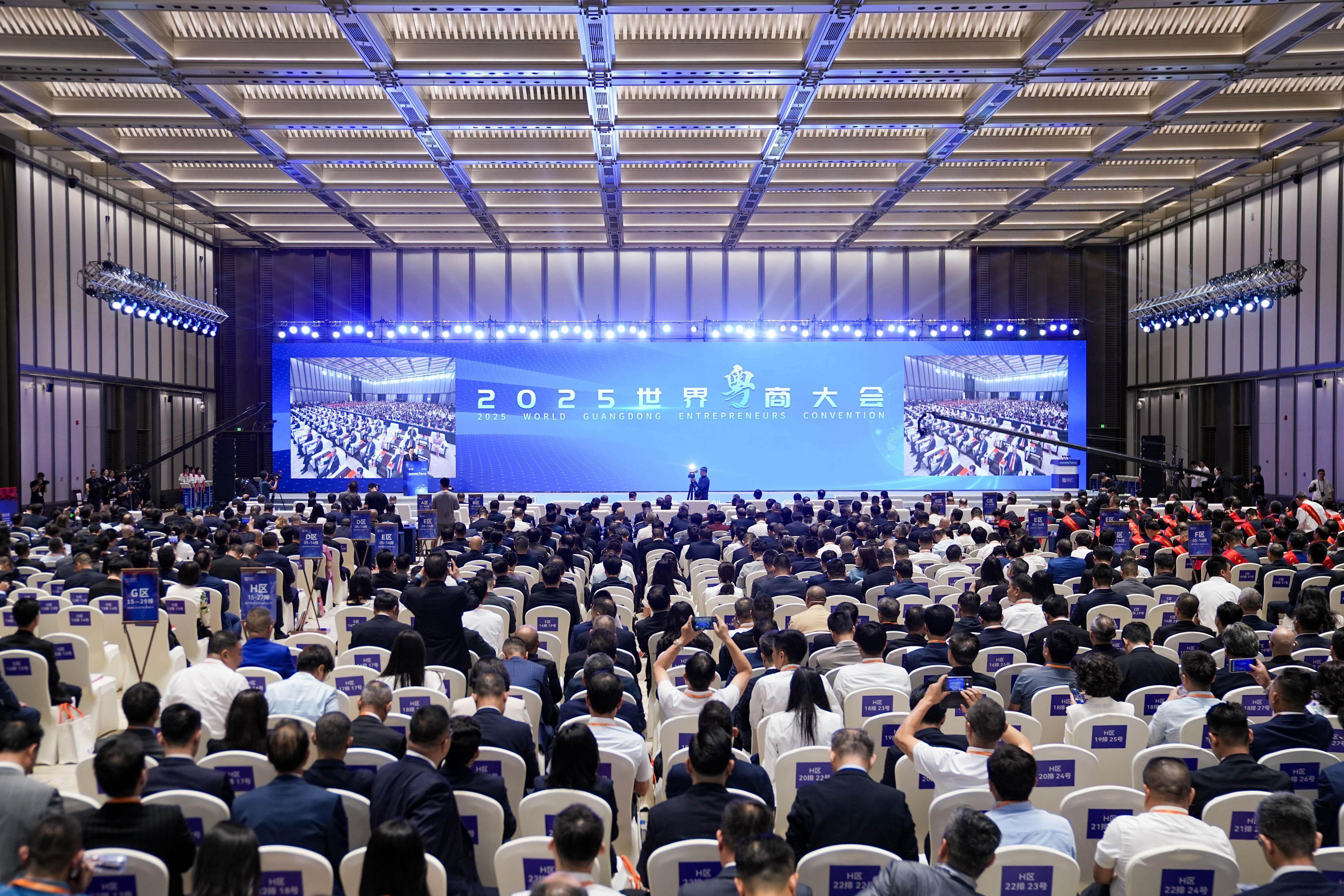
Group 1: Core Themes of the Conference - The 2025 World Cantonese Business Conference focused on modern industrial system construction, high-quality development projects, international cooperation, youth innovation, and financial support for development [1][4][8] - The conference gathered renowned Cantonese business leaders, experts, and scholars to discuss industrial upgrading and open cooperation opportunities [1][4] Group 2: International Cooperation and Global Market Expansion - Cantonese businesses have historically played a significant role in China's internationalization, evolving from product exports to global supply chain establishment [4][5] - The need for innovation and unique technological capabilities is emphasized for Cantonese businesses to remain competitive in the changing international landscape [5][6] - Businesses are encouraged to integrate local economic development with their operations when expanding internationally, fostering collaboration and cultural respect [5][6] Group 3: Modern Industrial System Development - Guangzhou's economic output has surpassed 3 trillion yuan, with six advanced manufacturing clusters and seven service industry clusters each exceeding 100 billion yuan [6][7] - The city is focusing on five future industrial sectors, including intelligent vehicles, biomedicine, new displays, low-altitude economy, and artificial intelligence [6][7] - Systematic policies and strong support for resources are crucial for the elevation of industrial capabilities in Guangdong [6][7] Group 4: Financial Support for High-Quality Development - Guangdong's financial system is actively supporting the transformation and upgrading of industries, with a significant increase in loans to private and small enterprises [7][8] - As of August, the loan balance for private enterprises reached 8.68 trillion yuan, with a year-to-date increase of 275.9 billion yuan [7][8] Group 5: Youth Engagement and Innovation - The conference highlighted the role of youth in driving innovation and contributing to high-quality development in the Greater Bay Area [11][12] - Young Cantonese entrepreneurs are encouraged to build collaborative platforms to share resources and enhance collective strength in supporting national strategies [11][12] Group 6: Regional Development and Cultural Integration - Cantonese businesses are actively participating in regional development initiatives, such as supporting industries in Tibet through resource development and cultural preservation [12] - The integration of local culture and economic activities is seen as vital for sustainable development and community engagement [12]


想把粽子卖给“外国人”,五芳斋的国际化行得通吗?
Sou Hu Cai Jing· 2025-09-29 11:48
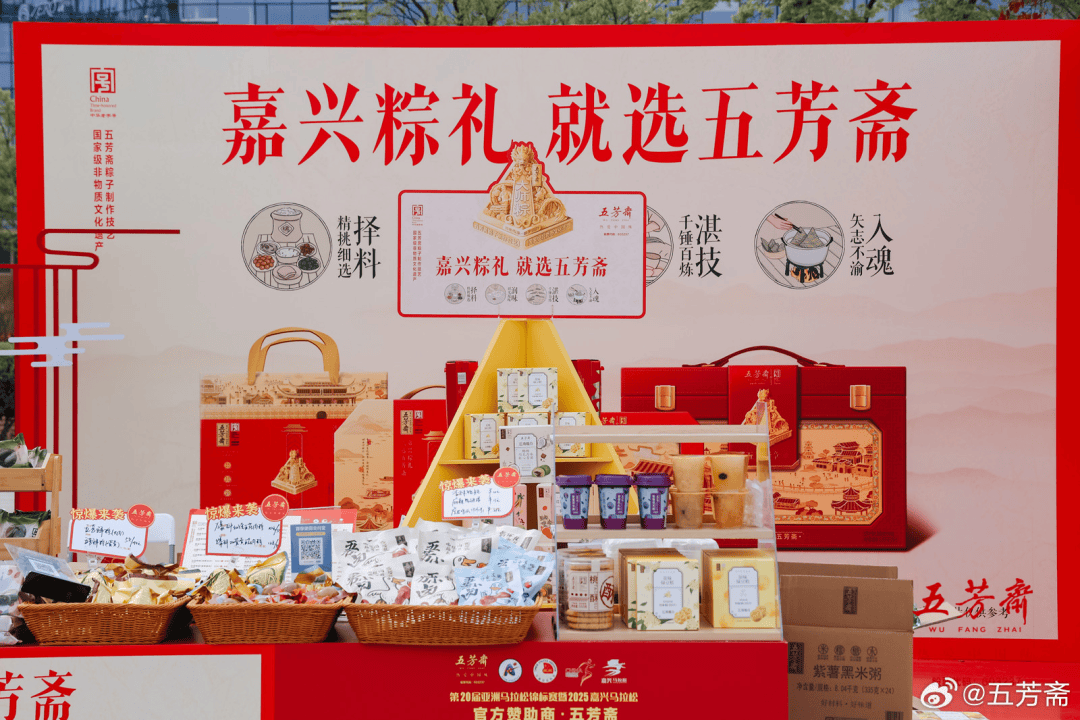
Core Viewpoint - Zhejiang Wufangzhai Industrial Co., Ltd. is planning to list H-shares in Hong Kong to accelerate its international strategy and enhance its overseas business presence [1][6] Group 1: Company Overview - Wufangzhai, established in 1921, is recognized as a "Chinese Time-honored Brand" and became the first publicly listed company in the zongzi (sticky rice dumpling) sector three years ago [1][3] - The company operates in both food production and restaurant services, with its main revenue derived from glutinous rice products, including zongzi, mooncakes, and other rice-based items [3][4] Group 2: Financial Performance - In the first half of the year, Wufangzhai reported a revenue of 1.592 billion yuan, a year-on-year increase of 0.66%, and a net profit of 195 million yuan, reflecting a decline of 16.7% [3][4] - The main business revenue was 1.556 billion yuan, with zongzi contributing 1.331 billion yuan, accounting for over 85.53% of total revenue [3][4] Group 3: Market Challenges - The zongzi business is facing increasing competition due to diversified consumer demands, leading to a decline in profitability [6][4] - The number of distributors decreased by 42 to 620, with distributor revenue declining by 4.55% year-on-year [4][6] Group 4: International Expansion Strategy - Wufangzhai aims to expand its overseas market presence, having successfully entered new markets such as South Korea, UAE, and Thailand, and obtained export qualifications for non-zongzi products [6][7] - The company has established subsidiaries in countries like Singapore, France, Japan, and Australia to facilitate its international strategy [6][7] Group 5: Consumer Demographics - The primary target demographic for Wufangzhai's international expansion is overseas Chinese, as zongzi is a traditional festive food that may not appeal to foreign consumers [6][7] - The company recognizes the potential of its restaurant offerings, which include a variety of Chinese dishes, to attract a broader customer base in international markets [9]

“粽子第一股”五芳斋再闯港股
Bei Jing Shang Bao· 2025-09-28 15:23
Core Viewpoint - Wufangzhai, known as the "first stock of zongzi," plans to list on the Hong Kong Stock Exchange to accelerate its international strategy and enhance its overseas business layout, aiming for high-quality development and diversified capital operations [1] Group 1: Company Overview - Founded in 1921, Wufangzhai is one of the first "Chinese Time-honored Brands" and was listed on the Shanghai Stock Exchange in August 2022 [1] - The company primarily engages in the research, production, and sales of glutinous rice-based foods, with a product range that includes zongzi, mooncakes, tangyuan, pastries, egg products, and other rice-based items [1] Group 2: Financial Performance - In 2024, Wufangzhai reported a revenue of 2.251 billion yuan, a year-on-year decrease of 14.57%, and a net profit attributable to shareholders of 142 million yuan, down 14.24% [1] - The core zongzi product line generated revenue of 1.579 billion yuan in 2024, reflecting an 18.64% decline year-on-year [1] - For the first half of 2025, the company achieved a revenue of 1.592 billion yuan, a slight increase of 0.66%, while the net profit attributable to shareholders was 195 million yuan, down 16.7% [1] Group 3: International Expansion Strategy - Wufangzhai aims to enhance its international strategy and overseas business layout, with plans to establish a presence in markets such as Singapore, France, Japan, South Korea, UAE, and Thailand [2][3] - The company has already set up a Singapore investment company and a restaurant company, and has received export qualifications for non-zongzi products [2] Group 4: Challenges in International Markets - Currently, Wufangzhai's revenue from overseas markets is relatively small, accounting for approximately 0.7% of total revenue in 2024 and decreasing to about 0.4% in the first half of 2025 [3] - The company faced challenges with its mooncake products being rejected in South Korea due to non-compliance with local standards, highlighting the need for careful navigation of international regulations and market conditions [4]
广东不必学江苏经济模式,也难以复制|微观视界
Jing Ji Guan Cha Wang· 2025-09-28 01:13
Economic Overview - In 2024, Guangdong's GDP reached 14.16 trillion yuan, while Jiangsu's GDP was 13.7 trillion yuan, narrowing the gap to 462.6 billion yuan. Jiangsu's real growth rate of 5.8% significantly outpaced Guangdong's 3.5% [2] - By the first half of 2025, Jiangsu's GDP was 669.68 billion yuan, and Guangdong's was 687.25 billion yuan, further reducing the economic gap to 175.76 billion yuan, the smallest in nearly six years [2] Infrastructure Investment - Since 2019, Jiangsu has shown a clear upward trend in infrastructure investment growth, while Guangdong's investment has been declining. In 2024, Jiangsu's infrastructure investment growth was 13.3%, compared to Guangdong's mere 0.2% [2][3] - Jiangsu's county-level state-owned enterprises (SOEs) have significantly larger financing scales compared to Guangdong, with Jiangsu's county SOEs financing 8.54 trillion yuan through 481 enterprises, while Guangdong's 49 enterprises financed only 1.54 trillion yuan [3] Development Models - Jiangsu's development model is characterized by "government-led, park-driven, and debt-supported," while Guangdong's model emphasizes "market-led, private enterprise-driven, and global layout" [5] - Jiangsu's unique fiscal system allows county-level governments significant financial autonomy, enabling them to mobilize resources effectively, unlike Guangdong, where only a few cities have similar fiscal arrangements [5][8] Financing Mechanisms - Jiangsu has a special financial support mechanism for county-level investment companies, allowing them to obtain funds at costs below 3%, creating a sustainable funding loop for infrastructure projects [6] - In contrast, Guangdong's financing relies heavily on government special bonds, raising concerns about its future economic sustainability [3][6] Cultural and Risk Factors - The cultural differences between Jiangsu and Guangdong affect their economic governance, with Jiangsu's model being more reliant on government intervention, while Guangdong's market-oriented approach fosters greater entrepreneurial spirit [9][10] - Guangdong's historical financial issues have led to a more cautious approach to debt, limiting its ability to replicate Jiangsu's high-leverage investment strategies [10][19] Consumer Market Potential - Guangdong's large domestic market, with a retail sales total of 4.79 trillion yuan in 2024, provides significant opportunities for industrial development, emphasizing the importance of building a consumer market [11][12] - The province's manufacturing sector is diverse, with a complete industrial chain, making it well-positioned to transition from "Made in Guangdong" to "Brand from Guangdong" [11][14] Internationalization and Reform - Guangdong needs to enhance its internationalization efforts, drawing lessons from Japan's overseas investment strategies to support its manufacturing sector [15][17] - The province should explore institutional reforms to enhance its role as a "co-legislator" in national policy-making, particularly in areas like cross-border finance and professional services [18][19]

黄东文:品牌出海需从“大”到“强”,凤凰是国际化传播首选平台
Feng Huang Wang Cai Jing· 2025-09-23 09:15
Group 1 - The "Phoenix Bay Area Finance Forum 2025" was held in Guangzhou, focusing on the theme "New Pattern, New Path" to explore development opportunities amidst changing circumstances [1] - Huang Dongwen, Vice President of Media Operations at Phoenix Satellite Television, discussed the internationalization of Chinese brands and the launch of the integrated service brand "Phoenix Goes Global" [3] - China has maintained its position as the world's leading trading nation for seven consecutive years, with a total import and export volume increase of approximately 2 trillion yuan last year, equivalent to the foreign trade volume of a medium-sized country [3] Group 2 - Despite the expansion in scale, the quality of brands remains a critical issue for Chinese enterprises in the internationalization process, with Chinese companies' average profit levels being only about 40% of those of U.S. companies [4] - The Brand Finance data indicates that U.S. brands account for 52.9% of the value in the global top 500, while Chinese brands only account for 15%, highlighting the need for improvement in brand value and global operational efficiency [4] - Huang emphasized that true international brands must transcend their cultural origins and establish deep connections with consumers from diverse backgrounds, citing McDonald's as an example of successful localization [4] Group 3 - Phoenix Satellite Television aims to promote Chinese culture and facilitate international exchanges, positioning itself as a key channel for China's national image dissemination [5] - The company seeks to collaborate with more enterprises as "brand partners" to explore new chapters in global development [5]

第三届亚洲愿景论坛在新加坡开幕
Ren Min Ri Bao· 2025-09-11 22:00
Group 1 - The third Asia Vision Forum, themed "Opportunities in the Era of Change," opened in Singapore with over 400 participants from 12 countries and regions, including government representatives, UN officials, scholars, and business leaders [1] - The three-day forum features more than 30 activities, including keynote speeches, roundtable discussions, and site visits, focusing on Asia's new positioning in the global economy [1] - Key topics of discussion include geopolitical issues, financial markets, corporate internationalization, and critical growth drivers such as artificial intelligence, biotechnology, energy transition, and advanced manufacturing [1] Group 2 - The Asia Vision Forum, initiated by Caixin International and supported strategically by the Singapore government, has become an influential international exchange platform in the region since its inception in 2023 [1]
增长动能减弱?珀莱雅拟赴港上市
Sou Hu Cai Jing· 2025-09-01 11:53
Group 1 - The core point of the article is that Proya has announced its intention to list in Hong Kong while revealing its semi-annual report, which has attracted significant attention in the capital market [1][2] - Proya's revenue for the first half of the year reached 5.362 billion yuan, a year-on-year increase of 7.21%, while net profit attributable to shareholders was 799 million yuan, up 13.80% year-on-year [3] - The growth rates of revenue and net profit have significantly slowed compared to the previous year, indicating that Proya has entered a period of more moderate growth [4] Group 2 - The main brand "Proya" reported a slight decline in revenue of 0.08% year-on-year, marking the first negative growth in five years [4] - Proya's marketing expenses have increased, with total sales expenses reaching 2.659 billion yuan, accounting for 49.59% of revenue, which is significantly higher than the revenue growth rate [6] - The company has experienced significant internal personnel changes, including the departure of several core executives and the introduction of new executives with international backgrounds [7][8] Group 3 - Proya's plan to list in Hong Kong aims to accelerate its international strategy and overseas business development, although its current overseas sales account for less than 5% of total revenue [12][13] - The company faces challenges in expanding its overseas market presence, particularly in saturated markets like Europe and North America, where established brands dominate [15] - Proya's reliance on online channels for 90% of its domestic revenue poses a challenge for its international expansion, where offline channels remain crucial [15]

