先进封装

Search documents
透过ASML 2025全年财报,看增长背后的结构变化
3 6 Ke· 2026-02-10 03:09
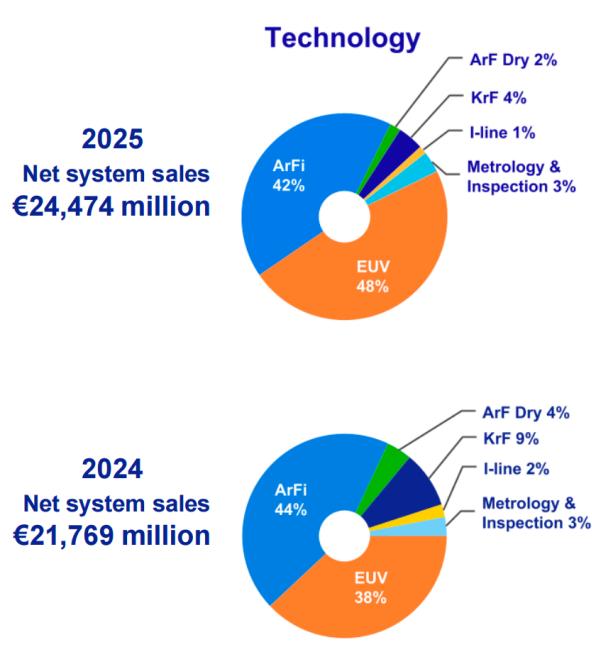
Core Viewpoint - The semiconductor industry is transitioning from a traditional cycle dominated by mobile and PC devices to a multi-driven evolution represented by "AI computing infrastructure" as of early 2026. The demand for logic chips and HBM (High Bandwidth Memory) in data centers is surging due to the explosion of generative AI applications in 2025, driving a new wave of investment in advanced processes and mature processes alike [1]. Group 1: ASML's Financial Performance - In 2025, ASML achieved a net sales of approximately €32.7 billion, a gross margin of about 52.8%, and a net profit of around €9.6 billion, marking a record-breaking performance [2]. - ASML's order backlog reached approximately €38.8 billion by the end of 2025, providing high visibility for revenue growth in 2026 and beyond [2]. - The sales of ASML's EUV (Extreme Ultraviolet) systems reached €11.6 billion in 2025, a year-on-year increase of 39%, with EUV accounting for 48% of the company's system revenue [2]. Group 2: Equipment Types and Market Dynamics - EUV's share in revenue structure is increasing, while DUV (Deep Ultraviolet) remains a core device in semiconductor manufacturing, fulfilling the majority of lithography tasks [4]. - ASML emphasizes that DUV lithography machines will continue to play a crucial role in the industry, with high-end DUV systems evolving to meet advanced process requirements [4]. - DUV's application is expanding from "front-end wafer manufacturing" to "advanced packaging and 3D integration," indicating a dual-track growth structure supported by both EUV and DUV technologies [5]. Group 3: Demand Drivers in China - ASML's net system sales in China accounted for 33% of total sales in 2025, demonstrating strong resilience and demand in the Chinese market despite export control concerns [6]. - The growth in demand for DUV equipment in China is driven by the expansion of mature processes (28nm and above) in automotive electronics, industrial automation, IoT, and home appliance chips [6]. - AI's demand is creating a "spillover effect," with significant needs for supporting chips produced mainly by DUV processes, further driving orders for DUV equipment [7]. Group 4: Advanced Packaging and System Performance - The acceleration of 2.5D/3D packaging line construction in Chinese foundries is enhancing system-level performance, aligning with ASML's investments in advanced packaging equipment [8]. - ASML expects its revenue share from China to stabilize around 20% in 2026, reflecting a return to "normalization" rather than a decline in demand [8]. Group 5: ASML's Strategic Transformation - ASML is transitioning from a "cyclical equipment vendor" to a "structural platform company," providing comprehensive solutions around lithography [9]. - The revenue from installed base services reached approximately €8.2 billion in 2025, indicating a shift towards a balanced revenue structure that includes lifecycle services [10]. - ASML's ambition to reach €60 billion in revenue by 2030 is supported by the increasing demand for AI-related infrastructure and services [13]. Group 6: Stock Buyback and Future Outlook - ASML announced a stock buyback plan of up to €12 billion, reflecting management's confidence in future cash flow strength while continuing significant R&D investments [14]. - The company is positioned as an essential infrastructure platform in the digital civilization landscape, providing "manufacturing certainty" beyond merely selling lithography machines [16].


未知机构:TEL3QFY26业绩承压但符合预期客户交期提前或推动4Q反弹上调全年指引-20260210
未知机构· 2026-02-10 02:20
Company and Industry Summary Company Overview - **Company**: TEL - **Fiscal Quarter**: 3QFY26 - **Revenue**: JPY 552.0 billion, down 15.7% year-over-year, missing expectations by 10% [1] - **Operating Profit**: JPY 116.1 billion, down 41.8% year-over-year, missing expectations by 27% [1] - **Net Profit**: JPY 118.5 billion, down 24.6% year-over-year, missing expectations by 12% [1] - **Main Reason for Performance**: Traditional off-season and pressure on mature process business demand, with some equipment orders not yet converted to revenue [1] Business Segmentation - **Revenue Breakdown**: - SPE New Equipment: JPY 385.1 billion, down 24.6% year-over-year - Field Solutions: JPY 161.6 billion, up 14.2% year-over-year - Revenue Contribution: 70% from SPE New Equipment and 30% from Field Solutions [1] Regional Performance - **China Market**: Revenue share declined in 3Q, expected to stabilize in 2026 - **Mainland China**: Revenue down 31% quarter-over-quarter, accounting for 32% of total revenue - **Taiwan**: Revenue down 6.5% quarter-over-quarter, accounting for 20% of total revenue - **Investment Focus**: 2025 primarily on storage investments, shifting to logic investments in 2026 [2] Forward Guidance - **4QFY26 Revenue Guidance**: Expected to be JPY 154.4 billion, exceeding expectations by 3% [2] - **Full Year FY26 Revenue Guidance**: Revised up by 1.3% to JPY 2,410 billion, year-over-year flat, meeting expectations [2] - **Operating Profit Guidance**: Revised up by 1.2% to JPY 593 billion, down 15.0% year-over-year, missing expectations by 4% [2] - **Net Profit Guidance**: Revised up by 12.7% to JPY 550.0 billion, up 1.1% year-over-year, exceeding expectations by 10% [2] Market Outlook - **WFE Market Growth**: Expected to grow by over 15% in CY2026 [3] - **Capital Expenditure Guidance**: R&D and Capex expected to be JPY 290.0 billion and JPY 240.0 billion respectively, with increases of 16.0% and 48.2% year-over-year [3] - **Product Sales Expectations**: Prober business expected to exceed JPY 100 billion in FY27; Bonder and laser-related tools expected cumulative sales over JPY 500 billion in the next five years [3]
透过ASML 2025全年财报,看增长背后的结构变化
半导体行业观察· 2026-02-10 01:14
Core Viewpoint - The semiconductor industry is transitioning from a traditional cycle dominated by mobile and PC devices to a multi-driven evolution represented by "AI computing infrastructure" as of early 2026 [1] Group 1: ASML's Financial Performance - In 2025, ASML achieved a record net sales of approximately €32.7 billion, a gross margin of about 52.8%, and a net profit of around €9.6 billion [4] - ASML's order backlog reached approximately €38.8 billion by the end of 2025, providing high visibility for revenue growth in 2026 and beyond [4] - The sales of ASML's EUV systems reached €11.6 billion in 2025, a year-on-year increase of 39%, with EUV accounting for 48% of the company's system revenue [4] Group 2: Equipment Demand Dynamics - EUV systems are becoming the core production tool for advanced processes, while DUV systems remain essential in the semiconductor manufacturing ecosystem [7] - DUV systems are expected to continue playing a major role in the industry, with significant demand for high-end DUV systems like the latest ArF immersion lithography machine [7][8] - DUV applications are expanding from "front-end wafer manufacturing" to "advanced packaging and 3D integration," indicating a dual-track growth structure for ASML [8] Group 3: Market Resilience in China - ASML's net system sales in the Chinese market accounted for 33% of total sales in 2025, exceeding previous expectations [9] - The strong demand in China is driven by the growth of mature processes (28nm and above) and the urgent need for domestic chip production [10] - AI's demand is creating a "spillover effect," with many supporting chips produced using DUV processes, further driving ASML's orders [11] Group 4: Advanced Packaging and System Performance - The acceleration of 2.5D/3D packaging production lines in China is enhancing system-level performance, aligning with ASML's investments in advanced packaging equipment [12] - ASML expects its revenue share from China to stabilize around 20% in 2026, reflecting a return to "normalization" rather than a decline in demand [12] Group 5: Transition to a Platform Company - ASML is evolving from a "cyclical equipment vendor" to a "structural platform company," providing comprehensive solutions around lithography [14] - The company's measurement and inspection systems saw a 28% year-on-year increase in sales, indicating a shift towards a balanced revenue structure [15] - ASML's installed base revenue reached approximately €8.2 billion in 2025, becoming the second-largest revenue source after system sales [15] Group 6: Future Growth Projections - ASML projects net sales for 2026 to be between €34 billion and €39 billion, with a gross margin maintained at 51%-53% [18] - The company aims to reach total revenues of €44 billion to €60 billion by 2030, with AI as a key driver of future growth [18] - A significant stock buyback plan of up to €12 billion has been announced, reflecting management's confidence in future cash flow [19]
Amkor Technology(AMKR) - 2025 Q4 - Earnings Call Transcript
2026-02-09 23:02
Financial Data and Key Metrics Changes - Q4 2025 revenue was $1.89 billion, down 5% sequentially but up 16% year-on-year, with EPS at $0.69, outperforming guidance [5][12] - Full year 2025 revenue grew 6% to $6.7 billion, with net income of $374 million and EPS of $1.50 [14][15] - Gross profit for Q4 was $315 million, with a gross margin of 16.7% [13] - Full year gross margin was 14%, impacted by the ramp-up of the Vietnam facility [15] Business Line Data and Key Metrics Changes - Communications revenue grew 28% year-on-year in Q4, with a 1% increase for the full year [12] - Computing revenue increased 6% year-on-year in Q4 and 16% for the full year, driven by AI-related devices [12] - Automotive and industrial revenue rose 25% year-on-year in Q4 and 8% for the full year, supported by advanced automotive content [12] - Consumer revenue declined 10% year-on-year in Q4 but grew 9% for the full year [13] Market Data and Key Metrics Changes - The computing segment is expected to grow over 20% in 2026, driven by AI and HPC demand [10][11] - Communications and automotive markets are also projected to see strong growth in 2026 [16] Company Strategy and Development Direction - The company aims to elevate technology leadership, expand geographic footprint, and enhance strategic partnerships [8] - Focus on advanced packaging platforms, including HDFO and test, critical for AI and HPC [9] - Construction of the Arizona campus is underway, with significant capital expenditures planned for 2026 [10][11] Management's Comments on Operating Environment and Future Outlook - Management expressed confidence in navigating market shifts and geopolitical challenges, positioning the company for growth [5][6] - The outlook for Q1 2026 revenue is between $1.6 billion and $1.7 billion, reflecting a 25% year-on-year increase [16] - The effective tax rate for 2026 is expected to be around 20% [16] Other Important Information - Capital expenditures for 2026 are projected to be between $2.5 billion and $3 billion, with a significant portion for facility expansion [17] - The company held $2 billion in cash and short-term investments at year-end, with total liquidity at $3 billion [16] Q&A Session Summary Question: CapEx guidance and investment changes - Management clarified that the high CapEx guidance includes significant spending for the Arizona facility and equipment for advanced packaging [19][21] Question: Government incentives and CapEx - The CapEx number is net of government incentives, which will come in after the investment periods [24][25] Question: Computing segment growth and data center programs - The computing segment is expected to see a significant ramp in data center HDFO programs, with one program anticipated to reach high volume [27][29] Question: Communication segment outlook - Management noted relative strength in the Android segment and positive expectations for iOS in Q1 [46][48] Question: Partnership with TSMC - The partnership with TSMC is ongoing, focusing on technology and manufacturing needs for the U.S. supply chain [49][50] Question: Balance sheet management and cash needs - The company can operate comfortably with $500 million on the balance sheet and expects a decrease in interest expense despite potential debt increases [58][59]

日月光(2311):CY25Q4业绩点评及法说会纪要:ATM先进封装接近满载,EMS转型光电CPO,共筑AI全栈护城河
Huachuang Securities· 2026-02-09 08:08
Investment Rating - The report does not explicitly state an investment rating for the company Core Insights - The company reported a consolidated revenue of NT$177.91 billion for Q4 2025, representing a year-over-year increase of 9.6% and a quarter-over-quarter increase of 5.5% [1][2] - The gross margin for Q4 2025 was 19.5%, up 3.1 percentage points year-over-year and 2.4 percentage points quarter-over-quarter, driven by high capacity utilization in the ATM factories, product mix optimization, and favorable currency effects [2][9] - The company achieved a net profit attributable to shareholders of NT$14.71 billion in Q4 2025, reflecting a 58% increase year-over-year [10] Financial Performance Overview Q4 2025 Performance - Revenue reached NT$1779.15 billion, with a gross margin of 19.5% [1][2] - Net profit attributable to shareholders was NT$14.71 billion, with a basic earnings per share of NT$3.37 [10][11] Full Year 2025 Performance - Total revenue for 2025 was NT$6453.88 billion, a year-over-year increase of 8.4% [3][11] - The gross margin for the year was 17.7%, with a net profit of NT$40.66 billion, up 25% year-over-year [3][11] Business Segment Revenue Summary Semiconductor Packaging Division (ATM) - Q4 2025 revenue was NT$1097.07 billion, a year-over-year increase of 24.2% [13][18] - The gross margin for this segment was 26.3%, benefiting from strong demand for advanced packaging and testing solutions [13][14] Electronic Manufacturing Services (EMS) - Q4 2025 revenue was NT$689.91 billion, down 7.9% year-over-year [20][24] - The gross margin was 9.0%, with a focus on transitioning towards AI and related applications [20][24] Performance Guidance Q1 2026 Guidance - The company expects a mild revenue decline of 5%-7% quarter-over-quarter due to seasonal factors [4][25] - The gross margin is anticipated to decrease by 0.5-1 percentage points [4][25] Full Year 2026 Guidance - The company forecasts continued revenue growth, with ATM revenue expected to outperform the logic semiconductor market [4][26] Market Outlook and Strategic Layout - The industry is in a long-term upward cycle driven by AI, with growth extending to edge devices [5][30] - Capital expenditures for 2026 are projected to approach US$4.9 billion, with significant investments in advanced capacity [5][30] - The company is expanding its operations in Penang, Malaysia, to meet global manufacturing demands [5][31]
行业聚焦:全球球形二氧化硅行业头部生产商市场份额及排名调查(附核心企业名单)
QYResearch· 2026-02-09 06:59
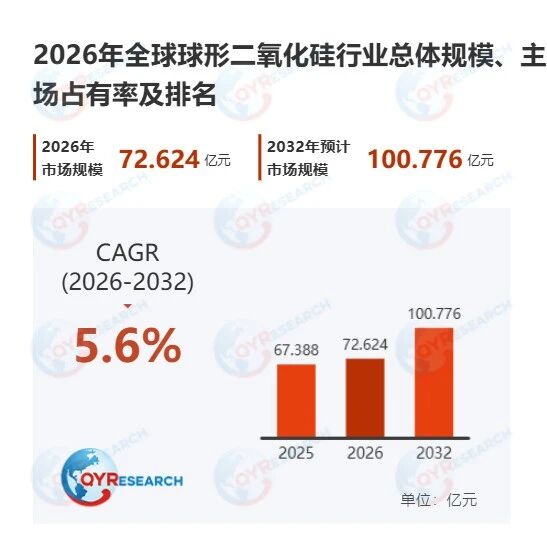
Core Insights - The global spherical silica market is projected to reach $1.48 billion by 2032, with a compound annual growth rate (CAGR) of 5.6% over the coming years [3] - The production of spherical silica is aimed at achieving higher packing density and more stable rheological properties compared to irregularly shaped silica [2] Market Overview - The estimated global production of silica is approximately 239,000 tons, with an average market price of $4,154 per ton [2] - The leading manufacturers in the spherical silica market include Denka, Admatechs, NIPPON STEEL Chemical & Material, and others, with the top ten companies holding about 61.0% market share by 2025 [5] - The primary product type in the market is 10 μm-20 μm, accounting for approximately 53.6% of the market share [7] Application Segmentation - The main demand source for spherical silica is epoxy molding compounds, which represent about 55.1% of the market [10] - Spherical silica is predominantly used in applications related to electronic materials, particularly in epoxy encapsulation [16] Industry Drivers - Significant investments in the semiconductor ecosystem in Asia, such as China's $150 billion chip initiative, are driving local material supply and increasing demand for electromagnetic compatibility (EMC) materials [17] - The rise of advanced packaging technologies is increasing the demand for fillers, with a projected CAGR of 8-10% [18] - The explosive demand for high-performance computing and 5G devices is a major driver for the need for high-quality packaging materials [19] Challenges - Rising compliance and operational costs due to stringent regulations on crystalline silica are impacting production costs [20] - The high concentration of raw material supply, particularly high-purity quartz, poses a risk of supply disruptions [20] - Long certification cycles in the semiconductor industry slow down the adoption of new filler technologies [21] Opportunities - The adoption of silane coupling agents for surface treatment of silica particles is enhancing resin adhesion and moisture resistance, which is becoming a standard process in advanced EMC fillers [22] - There is a growing demand for low-alpha fillers, particularly in memory and aerospace applications, which is opening new market opportunities [22] - The increasing need for thermal management and dimensional stability in automotive and industrial electronics is accelerating the application of silica fillers in composite laminates [24]
日本芯片,“复仇”韩国?
3 6 Ke· 2026-02-09 05:13
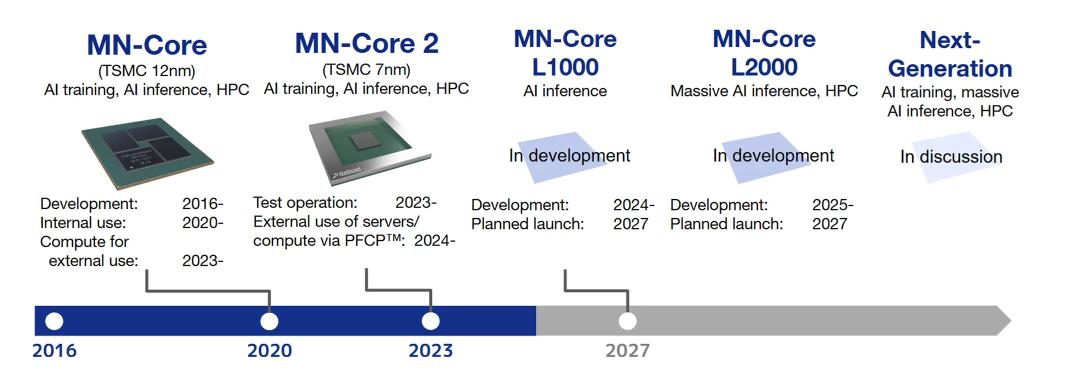
Group 1 - The global storage industry has undergone a significant power shift over the past thirty years, with Japan losing its dominance in the DRAM market to South Korean manufacturers [1][2][10] - In the 1980s, Japanese companies held over 50% of the global DRAM market share, benefiting from a strong manufacturing base and government support for semiconductor development [3][4][8] - The decline of Japanese DRAM dominance began in the 1990s due to economic challenges, structural changes in the DRAM industry, and increased competition from South Korean firms like Samsung and SK Hynix [8][9][10] Group 2 - High Bandwidth Memory (HBM) has emerged as a critical component in AI computing, with South Korean manufacturers capitalizing on their expertise in DRAM technology to dominate this market [12][13] - Japan's current presence in the HBM market is minimal, primarily limited to materials and equipment, lacking significant production capacity or technological advancements [13][14] - The introduction of SAIMEMORY, a subsidiary of SoftBank, aims to innovate in memory technology with the development of Z-Angle Memory (ZAM), which seeks to overcome limitations of current memory architectures [15][16][18] Group 3 - Japan's semiconductor strategy has shifted from attempting to regain past dominance to focusing on securing positions in key technological areas, such as advanced logic processes and packaging technologies [19][20][30] - The establishment of Rapidus represents Japan's effort to maintain a foothold in advanced semiconductor manufacturing, collaborating with IBM and ASML to ensure technological relevance [19][20] - Japanese companies are also investing in AI chip development, with firms like PFN and EdgeCortix leading initiatives to create specialized AI processors for various applications [21][26][28] Group 4 - The overall strategy for Japan's semiconductor industry is to avoid direct competition with South Korea and the U.S. by focusing on niche markets and innovative technologies rather than scale [30][31] - Japan's renewed focus on semiconductor technology reflects a strategic re-evaluation of its position in the global market, aiming to redefine its role in the evolving landscape of AI and memory technologies [29][30]
A股午评:三大指数高开高走!创业板指涨超3%,光伏、算力硬件与AI应用股现涨停潮,化工及商业航天概念股活跃
Jin Rong Jie· 2026-02-09 03:37
Market Overview - The Dow Jones Industrial Average has historically surpassed 50,000 points, driven by a "buy the dip" sentiment in the U.S. stock market [1] - Asian markets, particularly Japan and South Korea, opened higher following this sentiment [1] - The A-share market saw all three major indices open and rise, with the Shanghai Composite Index up 1.17% at 4,113.28 points, the Shenzhen Component up 2.07% at 14,194.23 points, and the ChiNext Index up 3.11% at 3,337.03 points [1] Trading Volume and Market Activity - The total trading volume in the Shanghai and Shenzhen markets reached 1,490.98 billion yuan, an increase of 106.8 billion yuan compared to the previous trading day [1] - Over 4,400 stocks in the market experienced gains [1] Sector Performance - The photovoltaic sector saw significant activity, with several stocks hitting the daily limit, including GCL-Poly Energy with a four-day consecutive limit-up [1] - The computing power hardware sector also performed strongly, with Tianfu Communication hitting a daily limit and reaching a historical high [1] - The AI application sector was notably active, with multiple stocks such as Rongxin Culture and Zhongwen Online hitting the daily limit [1] - The chemical sector showed robust performance, with companies like Runtu Co. and Jihua Group hitting the daily limit [1] - The commercial aerospace concept also saw gains, with stocks like Top Group and Hangxiao Steel Structure hitting the daily limit [1] - Conversely, the oil and gas sector showed weakness, with stocks like Tongyuan Petroleum and Potential Energy experiencing declines [1] Institutional Insights - CITIC Construction believes that external shocks have limited impact, and market sentiment has been fully released, suggesting holding stocks through the holiday [4] - GF Securities highlights a favorable configuration timing, noting that small-cap stocks have a high probability of rising from the Spring Festival to the Two Sessions [4] - Huajin Securities emphasizes that the spring market is not over, recommending holding stocks through the holiday and focusing on high-growth sectors like electronics and media [4] - Tianfeng Securities suggests narrowing investment themes to three directions: AI technology, strong cyclical stocks, and industries with potential for bottom reversal [4]

万和财富早班车-20260209
Vanho Securities· 2026-02-09 01:33
Group 1: Macro News Summary - The State Council is planning to implement major initiatives and projects to achieve breakthroughs in developing new productive forces, strengthening domestic circulation, and promoting income growth for residents [4] - The tenth plenary session of the State Council discussed the draft government work report and the outline of the 14th Five-Year Plan [4] - Eight departments, including the People's Bank of China and the China Securities Regulatory Commission, jointly issued a notice to further prevent and manage risks related to virtual currencies, indicating a tightening regulatory stance [4] Group 2: Industry Updates - Tesla is reportedly expanding its solar battery manufacturing footprint by planning to build factories in multiple states in the U.S. Related stocks include Aotewi (688516) and Jiejia Weichuang (300724) [6] - AI is driving the expansion of advanced packaging, with TSMC facing supply tightness in CoWoS, and FOPLP gaining attention. Related stocks include Changdian Technology (600584) and Tongfu Microelectronics (002156) [6] - Qianwen's "30 billion free drinks" promotion during the Spring Festival has led to a surge in store traffic and employee workload, highlighting the impact of AI shopping on county-level consumption. Related stocks include Sanjiang Shopping (601116) and Xinhua Duh (002264) [6] Group 3: Company Focus - Yiwang Yichuang (300792) plans to acquire 100% equity of Beijing Lianshi Chuanqi Network Technology Co., Ltd., furthering its layout in AI smart marketing [8] - Xinhua Medical (600587) has terminated its acquisition of a 36.19% stake in the New Third Board-listed company Zhongzhi Biology, with no breach of contract [8] - Fulede (301297) is currently investing in a washing factory in Kumamoto, Japan, and its wholly-owned subsidiary Fulehua has established business relationships with several overseas clients [8] - Jiejia Weichuang (300724) reports that its current orders are primarily for TOPCon, with overseas orders continuing to grow and their proportion increasing [8] Group 4: Market Review and Outlook - On February 6, the A-share market experienced a low opening followed by a rebound and subsequent decline, with all three major indices slightly down at the close. The number of stocks rising slightly exceeded those falling, with 2,749 stocks rising in total [10] - The total trading volume in the two markets was approximately 2.16 trillion, showing a slight decrease compared to the previous trading day. The market sentiment was relatively stable without a clear directional trend [10] - The day's hot sectors included chemicals, oil and gas, electric equipment, and traditional Chinese medicine, driven by BASF's price increase for TDI and a global supply shortage [10] - The technical outlook indicates that the Shanghai Composite Index faces significant resistance around 4,100 points, with a potential continuation of a low-volume oscillation pattern as the Spring Festival approaches [11] - Looking ahead, it is expected that after the Spring Festival, the market may seek clearer performance certainty and industry trends for a breakout direction [11]
日本芯片,“复仇”韩国?
半导体行业观察· 2026-02-07 03:31
被韩国改写的存储史 日本曾是DRAM的代名词。 上世纪 80 年代,日本的几家存储企业合计占据全球 DRAM 市场过半份额。DRAM几乎等同于日本 半导体工业的名片。当时的日本,正处在制造业全球扩张的巅峰期。汽车、家电、精密仪器、机床、 消费电子几乎在所有工业品门类中都具备国际竞争力,而半导体则是这套工业体系中技术密度最高、 附加值最高的一环。 公众号记得加星标⭐️,第一时间看推送不会错过。 过去三十年,全球存储产业版图完成了一次残酷而彻底的权力更替。 20世纪80–90年代,日本企业几乎垄断DRAM市场;进入21世纪后,这一王座被韩国厂商夺走,并由 此建立起横跨技术、规模与资本的长期统治。今天,HBM 成为 AI 算力体系中最稀缺、最赚钱的核 心器件之一,韩国厂商坐享红利,而日本却基本缺席。 然而,就在大家以为日本存储已经"躺平"时,一家极具野心的本土企业正浮出水面。 在此我们再来老生常谈下,日本是如何成为DRAM霸主的。1970–80 年代,日本政府通过 MITI(通 产省)主导了一系列国家级半导体联合研发计划:包括超大规模集成电路(VLSI)国家项目、企业 之间共享基础工艺成果、大企业联合高校与研究机构 ...