
国潮文化

Search documents
新中产万象:2025消费心智群像与品牌增长指南(高净值人群洞察)
Sou Hu Cai Jing· 2025-12-06 01:43
Core Insights - The report "New Middle Class Phenomenon: Consumer Mindset Portrait and Brand Growth Guide" focuses on the evolving characteristics of the new middle class in China and the opportunities for brand growth within this demographic [1][2] - The study is based on a user data system built from over 1 billion devices and 2000 valid survey responses, revealing key trends and commercial opportunities in the new middle class consumer market [1][2] Consumer Characteristics - The new middle class in China is diverse, including high-net-worth women in first-tier cities, pragmatic new elites in new first-tier cities, and fashionable groups in second and third-tier cities [1][2] - Core values of this demographic are health (35%), family happiness (33%), and personal development (32%), indicating a shift towards higher quality of life pursuits [1][2][20] Consumption Patterns - Monthly consumption among the new middle class ranges from 10,000 to over 50,000 yuan, forming three tiers: middle, upper-middle, and high consumption [2] - Interests are varied, with common areas of focus including technology, travel, and current events, while specific groups also show interest in fashion, environmental causes, and wellness [2] Brand Engagement - The development of the HarmonyOS ecosystem provides brands with critical support, enabling them to capture user behavior and preferences effectively [2][9] - Brands can leverage this ecosystem to understand consumer needs and build long-term trust through personalized recommendations [2] Market Dynamics - The high-end consumer market in China has shifted from "incremental expansion" to "quality competition," with brand growth now centered around "people, content, and technology" [2] - Successful case studies, such as the user community model created by HarmonyOS, demonstrate how encouraging user participation in brand co-creation can enhance loyalty and belonging [2] Consumer Mindset Evolution - The new middle class is increasingly viewing consumption as a long-term investment rather than immediate expenditure, focusing on experiences and quality [19][36] - Key spending priorities include travel (61%), children's education (59%), and health and wellness (54%), reflecting a long-term investment mindset [19] Value Orientation - The top three values for the new middle class are health, family, and self-improvement, which form the foundation of their personal development [20][21] - Mid-tier values include self-actualization and career wealth, indicating a balance between personal fulfillment and material success [20] Behavioral Trends - The report identifies a trend towards experience-based consumption, where consumers prioritize value and experiences over mere ownership of goods [27] - Emotional consumption is also on the rise, with younger generations willing to invest in products that express their identity and emotional needs [33] Investment in Growth - More than 60% of consumers are willing to invest in education, skills training, and smart devices, viewing these expenditures as essential for maintaining competitiveness [36] - Brands that offer products with both functional and growth value are increasingly favored by the new middle class [36]


《大学生国潮文体生活报告(2025)》发布 爱奇艺多部作品备受喜爱
Xin Hua Wang· 2025-12-01 05:21
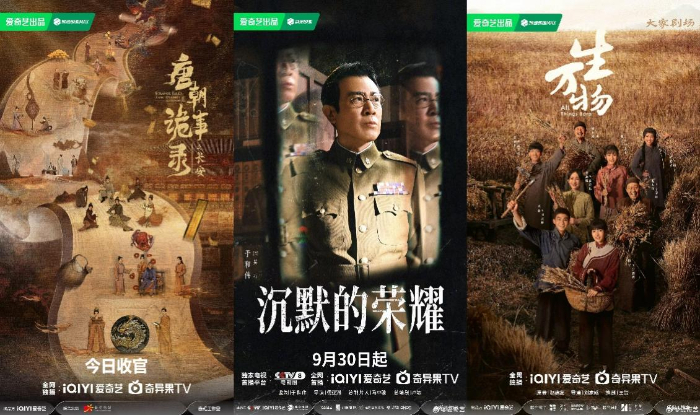
Core Insights - The report highlights that the "Guochao" culture has deeply integrated into the daily lives of contemporary youth, with film and television works being the most popular medium at 73.21% [1] - The report indicates that Guochao films and dramas serve as dual carriers of cultural confidence and emotional resonance, with major themes being revolutionary subjects (54.44%), contemporary urban themes (48.85%), and ancient legendary themes (47.72%) [1] - iQIYI's productions have sparked widespread discussions among the youth, with specific titles like "Tang Dynasty Mystery" and "My Alashan" gaining significant attention [1] Film and Television Performance - iQIYI's dramas such as "Tang Dynasty Mystery" have integrated elements of Tang architecture and art into suspenseful narratives, achieving over 100 million interactions on bullet screens [1] - "My Alashan" has resonated with audiences through its portrayal of Kazakh nomadic culture, contributing to a tourism boom in Xinjiang [1] - "Love You" introduces traditional Chinese medicine culture, educating young viewers about herbal medicine through its episodic structure [1] - "Life of All Things" reflects the changing fate of farmers in China, showcasing local cultural practices during traditional festivals [1] Variety Show Success - Guochao variety shows have also performed well, with historical interpretation (53.24%), music competition (51.87%), and cultural exploration (46.18%) genres being particularly popular [3] - iQIYI's variety show "Let's Farm 3" promotes rural revitalization by engaging in local agricultural activities, instilling a sense of resilience and teamwork among contemporary youth [3] - "Ha Ha Ha Ha" showcases China's infrastructure capabilities and cultural output through a special episode on the China-Laos Railway [3] - "A Journey of Blossoms 2" presents a panoramic view of China's cultural landscape, fostering a healing journey through cultural dialogue [3] Audience Engagement and Cultural Connection - iQIYI's Vice President Wang Xiaoyan emphasized that young viewers are not just consumers but co-creators, with 52.59% of respondents discussing Guochao elements through bullet screens and comments [5] - The interactive model allows for continuous revitalization of content based on audience feedback, enhancing viewer engagement [5] - The popularity of Guochao dramas is attributed to creators' thoughtful innovation and transformation of traditional culture, making it relevant to modern life [5] - iQIYI's commitment to delivering quality content has successfully established a deep connection between Guochao culture and young users [5]

双十一线上狂潮叠加业绩硬核支撑,周六福(06168.HK)20%升幅领涨港股消费赛道
Ge Long Hui· 2025-11-11 01:36
Core Insights - The 2025 "Double Eleven" shopping festival saw explosive growth in online consumption of gold and jewelry, with Tmall's gold vouchers selling out instantly and IP collaboration jewelry products frequently sold out, indicating a shift in consumer behavior with the post-95 generation becoming a significant force in gold purchases [1][3] Group 1: Stock Performance - During the "Double Eleven" period, the stock price of Zhou Li Fu (06168.HK) surged over 20%, rising from HKD 42.12 to HKD 51.20, reflecting strong market confidence in the company's consumption potential [2] - The stock's performance significantly outpaced the Hang Seng Index, which only increased by 3.06% during the same period, highlighting Zhou Li Fu's strong alpha performance [2] Group 2: Online Sales and Product Popularity - Zhou Li Fu's 5D hard gold pendants topped the gold sales rankings on Tmall during the "Double Eleven" event, with overall gold category sales increasing by 68% year-on-year within the first hour of the event [3] - The company's focus on lightweight gold products and IP collaboration series has resonated well with younger consumers, with over 60% of online exclusive products driving significant revenue growth [3][4] Group 3: Revenue Growth and Brand Strategy - In the first half of 2025, Zhou Li Fu's online channel revenue reached CNY 1.63 billion, a 34% year-on-year increase, marking the first time online revenue surpassed 50% of total revenue [4] - The company has established a diversified brand ecosystem, including a main brand targeting the mass market and sub-brands like "CHAOJIN" focusing on trendy designs for the Z generation, which enhances its market reach [5] Group 4: Market Outlook - Analysts project that the Chinese jewelry market will reach CNY 937 billion by 2029, with significant room for concentration as the current CR5 stands at only 41% [5] - Zhou Li Fu is expected to continue capturing market share due to its supply chain advantages, early positioning in online channels, and differentiated brand strategy, with projected EPS of CNY 1.82, 1.97, and 2.18 for 2025-2027 [5]
十大典型案例——美图公司:数字技术激发国潮活力
Jing Ji Ri Bao· 2025-11-09 05:49
Core Insights - Meitu has launched the "Digital Communication Project for Chinese Traditional Culture," aiming to enhance young people's recognition and participation in traditional culture through digital technology [1] - The project has achieved over 2 billion transmissions and created more than 100 sets of "Guochao" (national trend) patterns [1] - The "Meitu Guochao Pattern Plan" revitalizes traditional patterns, infusing new vitality into Guochao culture among the younger generation [1] Summary by Categories - **Project Overview** - Meitu's initiative focuses on transforming traditional patterns into creative materials such as filters and stickers using digital technology [1] - **Impact and Reach** - The project has reached over 2 billion transmissions, indicating significant engagement and interest [1] - More than 100 sets of Guochao pattern materials have been developed, showcasing the breadth of the project [1] - **Cultural Significance** - The initiative aims to foster a sense of identity and participation in traditional culture among young people, thereby revitalizing Guochao culture [1]
小小“娃衣”,悄然走红
Ren Min Ri Bao Hai Wai Ban· 2025-11-05 01:01
Core Insights - The "doll clothing" market, a derivative of the toy industry, is rapidly expanding and becoming a standard for "raising dolls" among various consumer groups, including young consumers and families [2][3][4] Group 1: Market Growth - The sales of doll clothing are projected to grow by over 117.08% year-on-year in 2024, with monthly sales exceeding 10 million yuan in May [2] - The global潮玩 (trendy toy) market is expected to grow from $20.3 billion in 2020 to $41.8 billion in 2024, and reach $52 billion by 2025, indicating significant growth opportunities for the doll clothing economy [5] Group 2: Consumer Behavior - Consumers find emotional value in dressing dolls, which serves as a form of relaxation and social interaction, particularly among busy parents and young adults [3][4] - The trend of dressing dolls has led to a community where consumers share experiences and tips, enhancing social connections through doll clothing [3] Group 3: Product Innovation - Merchants are innovating by introducing various styles of doll clothing, including custom designs with high-end embroidery and unique cultural elements, catering to diverse consumer preferences [4] - The incorporation of traditional cultural elements into doll clothing design is gaining attention in international markets, enhancing the appeal of domestic brands [4]
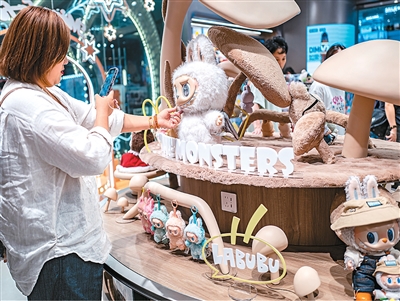
“AI+国风”推动新型玩具出口订单大幅增长
Zheng Quan Ri Bao· 2025-11-03 16:08
Core Insights - The Chinese toy industry is experiencing a significant transformation driven by AI technology and cultural innovation, leading to a strong wave of exports [1][5][6] - AI toys, particularly those integrating programming education, are seeing a substantial increase in export orders, with some companies reporting over 200% growth in export volume [1][2] - The market demand for AI toys is expected to continue growing, with projections indicating a sales revenue of over 300 billion yuan in the first half of 2025, representing a 65% year-on-year increase [2][6] Industry Trends - The demand for AI toys has led companies to increase R&D investments and expand production capacity, with some firms doubling their production lines and workforce dedicated to AI development [3][4] - The integration of Chinese cultural elements into AI toys is becoming a notable trend, enhancing their appeal in international markets [5][6] - Policy support and technological advancements are crucial for the rapid development of AI toys, with specific goals set for the industry in Guangdong province by 2027 [6][7] Company Developments - Companies like Guangdong Qimeng Toy Industry Co., Ltd. and Shenzhen Lanlang Innovation Technology Co., Ltd. are reporting significant increases in export orders and production capacity due to the popularity of AI toys [1][2][3] - Listed companies are strategically positioning themselves in the AI toy market, with firms like Aofei Entertainment establishing dedicated AI toy divisions and collaborating with educational institutions [3][4] - Guangdong Gaole Co., Ltd. is accelerating its AI toy layout through acquisitions and integrating technology with traditional toy manufacturing [4][6]
双十一珠宝消费观察:周大生“黄金文玩”引领高端消费新趋势
Sou Hu Cai Jing· 2025-10-29 05:27
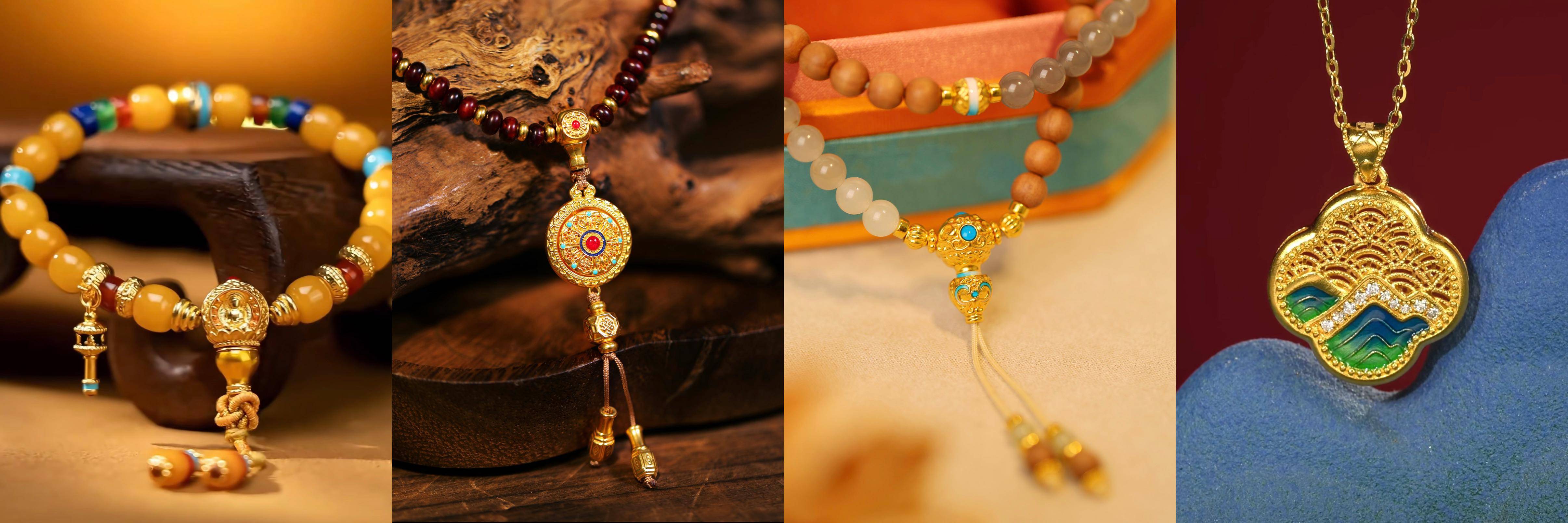
Core Insights - The initial phase of the Double Eleven shopping festival has seen a continuous rise in gold prices, leading to a consumer buying frenzy and significant market attention [1] - Zhou Dasheng has introduced a new category of "golden cultural crafts" to break through during Double Eleven, showcasing strong momentum and leading a new trend in gold consumption [1][2] Product Innovation - Zhou Dasheng has launched innovative products in the golden cultural crafts category, leveraging cultural heritage and craftsmanship to meet consumer demand [2] - The company has developed four cultural IPs: "Auspicious Potala," "Peaceful Taishan," "Auspicious Putuo," and "Fortune National Treasure," creating a differentiated product matrix [2][4] Craftsmanship and Design - The "Auspicious Potala" series incorporates Tibetan cultural symbols and ancient silk painting techniques, presenting an elegant and ancient aesthetic [4] - The "Peaceful Taishan" series embodies the spirit of Taishan, while the "Auspicious Putuo" series draws inspiration from lotus flowers and bamboo groves, utilizing traditional weaving techniques [4] - The "Fortune National Treasure" series revitalizes traditional culture, showcasing a creative evolution [4] Strategic Collaborations - Zhou Dasheng has partnered with national treasure artisans to create the "Fortune Lu Sheng Hua" product, combining cloud brocade weaving techniques with ancient gold craftsmanship [6] - The company has also collaborated with the French National Museum to launch the Monet Garden series, featuring innovative techniques that enhance consumer perception of gold products [6] Marketing Strategy - Zhou Dasheng has implemented a multi-channel marketing strategy, including a strategic partnership with Wuyou Media to create a live-streaming ecosystem [8] - The company has sponsored the "Wuyou Night 2025" event, leveraging celebrity appearances to enhance brand exposure and drive sales during Double Eleven [8][10] Brand Positioning - Zhou Dasheng aims to elevate brand value through product innovation and integrated marketing, seeking to achieve breakthroughs in both brand value and sales performance during the competitive Double Eleven period [17]
轻工制造行业快评报告:9月工业企业利润加快恢复,超半数消费制造行业利润端有所改善
Wanlian Securities· 2025-10-28 08:17
Investment Rating - The industry investment rating is "Outperform the Market," indicating an expected increase of over 10% in the industry index relative to the market over the next six months [9]. Core Insights - In the first nine months of 2025, the total profit of industrial enterprises above designated size reached 537.32 billion yuan, a year-on-year increase of 3.2%, with a growth acceleration of 2.3 percentage points compared to January-August [2]. - In September alone, the profit of these enterprises increased by 21.6% year-on-year, reflecting continuous improvement in industrial profits [2]. - The revenue for the same period was 1,020,846.7 billion yuan, showing a year-on-year growth of 2.4% [2]. Summary by Relevant Sections Consumer Goods Manufacturing - Among 13 major categories in consumer goods manufacturing, six industries, including agricultural and sideline food processing, food manufacturing, and beverages, reported positive profit growth from January to September. Notably, the beverage and agricultural processing industries saw profit growth rates exceeding 10%, at +14.4%, +12.5%, and +10.7% respectively [3]. - Conversely, seven industries experienced negative profit growth, with six of them declining over 10%. The furniture manufacturing industry faced a decline of -19.1%, while textiles and apparel saw a drop of -16.2% [3]. - Compared to January-August, profit growth in agricultural processing and food manufacturing further expanded, while the printing and chemical fiber industries turned from negative to positive growth [3]. Investment Recommendations - The report suggests focusing on sectors benefiting from macro policies and low base effects from the previous year. Key recommendations include: 1. **Food and Beverage**: The liquor industry is seen as bottoming out, with low valuations and high dividends providing strong support. The market is expected to see an upward turn ahead of financial reports as channel inventories clear [4]. 2. **Social Services**: As a core driver of consumption, sectors like tourism, duty-free, hotels, and restaurants are expected to benefit from policy support [4]. 3. **Retail**: In the context of a changing global trade environment, gold jewelry is highlighted as an attractive investment due to its status as a safe-haven asset [4]. 4. **Light Industry**: With policies promoting real estate recovery and "old-for-new" subsidies, demand for home and appliance products is anticipated to rise [4].
港股异动 | 周六福(06168)午后涨超5% 金银珠宝类零售额快速增长 公司为黄金珠宝领先品牌
智通财经网· 2025-10-28 06:48
Core Viewpoint - The retail sales of gold, silver, and jewelry in China showed significant growth, with a year-on-year increase of 9.7% in September 2025 and a cumulative growth of 11.5% from January to September, outperforming overall retail sales growth [1] Group 1: Industry Performance - The jewelry retail sector's strong performance is attributed to the rise in gold prices compared to the previous year [1] - The influence of national cultural trends has led consumers to be more willing to pay a premium for product craftsmanship [1] Group 2: Company Insights - Chow Tai Fook (周六福) saw its stock price increase by over 5%, closing at 43.82 HKD with a trading volume of 74.53 million HKD [1] - As a leading jewelry enterprise, Chow Tai Fook is optimizing its business model by adjusting product structure based on market demand and exploring both lower-tier and high-end markets [1] - The company is enhancing its online channel strategies to capture e-commerce traffic benefits, which is expected to drive profit growth as brand strength deepens [1]
2025新国货CoolTop100品牌榜:新国货的硬核内功与软叙事:千骑卷平冈
EqualOcean· 2025-10-20 06:33
Investment Rating - The report does not explicitly provide an investment rating for the industry Core Insights - The domestic consumption potential is accelerating, with a shift from price-performance ratio to quality-price ratio, and a clear trend towards scenario-based consumption [5][20] - The "Two New, Two Heavy" and domestic substitution policies are injecting strong momentum into the development of new domestic products, facilitating their transition from product output to value output [5][21] - The report aims to analyze the new journey, trends, and movements of new domestic products, identifying excellent brands and product cases to help them find direction in a competitive market [5][6] Summary by Sections New Journey of Domestic Products - The new domestic products are experiencing a new opportunity for development under the continuous empowerment of the "Two New, Two Heavy" and domestic substitution policies [8][21] - The domestic consumption market is undergoing structural changes, with a focus on quality and scenario exploration [20][25] - The report discusses the risks and opportunities faced by domestic products in overseas markets [20][49] New Movements of Domestic Products - Brand building is crucial, with a significant increase in global recognition of domestic brands, driven by a shift from product output to value output [60][71] - Technological innovation and supply chain intelligence are essential supports for domestic brands [58][77] - The integration of national cultural elements into products is becoming a key factor for breaking into overseas markets [58][86] New Trends of Domestic Products - The report highlights the upward transfer of industrial value driven by technology and the emergence of value-based consumption as a new premium point [5][58] - The internal market is seeing innovations in consumption scenarios, while the external market is focusing on regional layouts [5][58] - The report emphasizes the importance of balancing domestic deep cultivation and overseas expansion for new domestic brands [50][54] CoolTop Series Rankings - The report includes a ranking system for new domestic products, identifying the top 100 brands and top 10 products [6][4] - The evaluation criteria for the rankings are based on various indicators that reflect brand performance and market impact [6][4] Brand Stories of New Domestic Products - The report provides case studies of outstanding new domestic brands, showcasing their successful strategies and market positioning [6][4]