
地缘政治动荡

Search documents
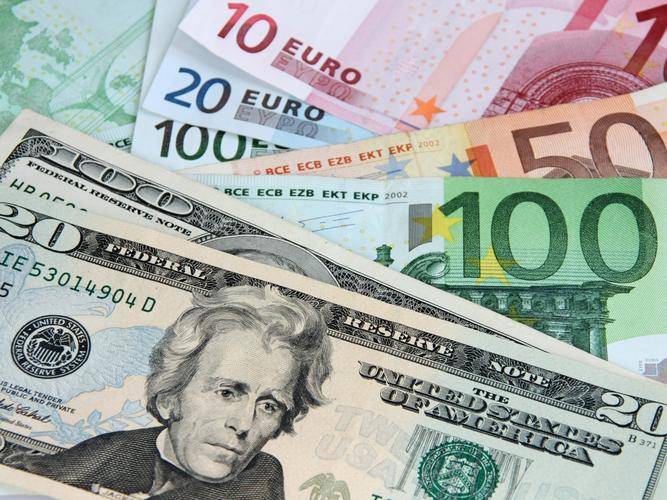
IC外汇平台:美元成为焦点,但盘整模式仍在延续
Sou Hu Cai Jing· 2025-10-10 04:03
Core Viewpoint - The geopolitical risks surrounding the Eurozone, particularly due to the ongoing situation in France, are negatively impacting the Euro/USD exchange rate, which has been under pressure for four consecutive days [2] Group 1: Political Situation in France - The political situation in France remains unstable, with President Macron facing significant electoral challenges [2] - The current political turmoil in France is overshadowing the temporary government shutdown in the United States [2] Group 2: Economic Implications - The latest developments in Europe are adversely affecting the Euro, which is currently trading slightly below the critical level of 1.16, indicating potential for further dollar appreciation [2] - The Federal Reserve's recent meeting minutes revealed ongoing concerns among several committee members regarding inflation, which raises questions about future monetary policy despite the possibility of two rate cuts [2] Group 3: Market Sentiment - The IC Forex platform remains cautious about the strong bullish outlook for the Euro as predicted by several large investment firms, suggesting a likelihood of consolidation around current levels [2] - The inability to access key statistical data due to the U.S. government shutdown is being closely monitored by the Federal Reserve [2]

国际能源署报告:供过于求仍是国际石油市场隐忧
Jing Ji Ri Bao· 2025-09-14 23:47
Core Insights - The International Energy Agency (IEA) report highlights that the international oil market is currently influenced by geopolitical tensions and concerns over oversupply [1][2] - The report indicates that while geopolitical concerns are rising, the actual impact of sanctions on oil supply from Iran and Russia has been limited so far [1][2] - The report anticipates a significant increase in global oil production, driven by both OPEC+ and non-OPEC+ countries, with a projected rise of 2.7 million barrels per day in 2025 [3] Geopolitical Factors - Geopolitical tensions, particularly regarding Russia and Ukraine, are causing market anxiety, with fears of new sanctions leading to potential supply shortages [1] - The EU's decision to ban imports of refined products from Russian oil starting in 2026 may significantly alter international oil trade dynamics [1] Supply and Demand Dynamics - The report notes that the oversupply remains a critical concern, with OPEC+ countries planning to increase production by 137,000 barrels per day in October, which is part of a longer-term strategy to unwind previous production cuts [2] - Non-OPEC+ countries, including the U.S. and Canada, are maintaining production levels near historical highs, contributing to the overall supply increase [2] Production Forecasts - Global oil production is expected to rise by 2.7 million barrels per day in 2025, reaching 105.8 million barrels per day, with further increases projected for 2026 [3] - OPEC+ countries are expected to increase production by 1.3 million barrels per day in 2025, aligning closely with the increases from non-OPEC+ countries [3] Refining Capacity and Trends - Global refinery crude processing surged by 400,000 barrels per day in August, reaching a record 85.1 million barrels per day, but is expected to decline in October due to seasonal maintenance [4] - The report projects that global refinery throughput will average 83.5 million barrels per day in 2025, with a growth of 580,000 barrels per day [4] Inventory Levels - Global oil inventories increased by 26.5 million barrels in July, with a total increase of 187 million barrels since the beginning of the year, although they remain below the five-year average [4]
国际能源署报告显示—— 供过于求仍是国际石油市场隐忧
Jing Ji Ri Bao· 2025-09-14 22:36
Core Insights - The International Energy Agency (IEA) report highlights that the international oil market is currently influenced by geopolitical tensions and concerns over oversupply [1][2] - Geopolitical concerns are exacerbated by the diminishing hopes for a peace agreement between Russia and Ukraine, alongside potential new sanctions from Western countries against Russia and Iran [1] - The report indicates that despite a decrease in oil exports from Iran and Russia, the impact of sanctions on supply and trade flows has been relatively limited so far [1][2] Supply and Demand Dynamics - The report notes that oversupply remains a significant concern in the current international oil market, with OPEC+ countries planning to increase production by 137,000 barrels per day in October [2] - Since the beginning of 2025, OPEC+ countries have only increased production by 1.5 million barrels per day, which is significantly lower than the previously announced target of 2.5 million barrels per day [2] - Non-OPEC+ countries, particularly the U.S. and Canada, are maintaining production levels close to historical peaks, contributing to the overall supply increase [2][3] Production Forecasts - Global oil production is expected to rise by 2.7 million barrels per day this year, reaching 105.8 million barrels per day, with further increases projected for 2026 [3] - Non-OPEC+ countries are anticipated to increase production by 1.4 million barrels per day in 2025 and slightly over 1 million barrels per day in 2026, while OPEC+ countries are expected to increase production by 1.3 million barrels per day in 2025 and 1 million barrels per day in 2026 [3] Refining and Inventory Trends - Global refinery crude processing surged by 400,000 barrels per day in August, reaching a record 85.1 million barrels per day, but is expected to decline by 3.5 million barrels per day in October due to seasonal maintenance [4] - Global oil inventories increased by 26.5 million barrels in July, with a cumulative increase of 187 million barrels since the beginning of the year, although they remain 67 million barrels below the five-year average [4]
弃美债投黄金,全球央行储备已迎来重大调整?
Jin Shi Shu Ju· 2025-09-05 02:38
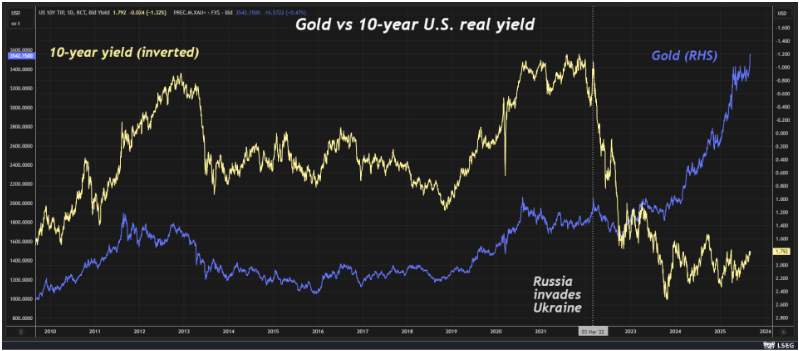
Core Viewpoint - The rising share of gold in central bank reserves is becoming unstoppable, driven by concerns over inflation, deteriorating U.S. fiscal health, debates over Federal Reserve independence, and geopolitical turmoil [1] Group 1: Market Dynamics - There is a significant divergence in the performance of gold and U.S. Treasury bonds this year, with gold prices reaching historical highs while long-term Treasury yields have surged to multi-year peaks [1] - The demand for gold has accelerated, leading to a substantial increase in central bank holdings, which now total 36,000 tons globally [8] Group 2: Reserve Composition - Gold has surpassed the euro to become the second-largest reserve asset globally, now accounting for a higher share in central bank reserves than U.S. Treasury bonds for the first time since 1996 [6][7] - The current market value of gold held by central banks is approximately $4.5 trillion, significantly exceeding the $3.5 trillion in U.S. Treasury holdings [8] Group 3: Historical Context - The last time gold's share in global reserves exceeded that of U.S. Treasury bonds was in 1996, a period characterized by low inflation and stable economic growth [9] - The current macroeconomic environment is markedly different, favoring gold as a strategic reserve asset amid rising inflation and geopolitical shifts [9] Group 4: Future Outlook - The shift in reserve management towards gold is seen as a significant milestone, indicating a deeper, long-term structural change in global reserve composition [10] - While the possibility of gold reclaiming its historical peak share of 75% in central bank reserves is low, the trend of increasing gold holdings is likely to continue in the near term due to persistent inflationary pressures and geopolitical risks [11]
国投期货综合晨报-20250903
Guo Tou Qi Huo· 2025-09-03 07:15
Report Industry Investment Ratings No relevant content provided. Core Views - The report analyzes multiple industries and commodities, including energy, metals, chemicals, agricultural products, and financial derivatives, providing insights into market trends, supply - demand relationships, and investment strategies for each sector [2][3][4] Summary by Commodity Energy - **Crude Oil**: Overnight international oil prices rose, with Brent 11 contract up 1.34%. In the third quarter, the oil market supply - demand was balanced. Considering OPEC+ output increase in September and post - peak demand decline, there is a risk of inventory build - up. Look for shorting opportunities when SC11 rebounds above 495 yuan/barrel [2] - **Fuel Oil & Low - sulfur Fuel Oil**: Singapore and Chinese ship - fuel sales declined year - on - year, but domestic refinery production was also low. Due to geopolitical premium and delayed supply pressure, LU rebounded and FU strengthened [22] - **Liquefied Petroleum Gas**: After the gas off - season, it shows some resilience. Supported by rising import costs and domestic demand, the civil gas price increased. The high - basis difference pattern persists, and the short - term market is strong in the near term and weak in the long term [24] - **Asphalt**: In the traditional peak season, demand increases seasonally, and supply - demand tightens. The 10 - contract is supported at 3500 yuan/ton, and it is expected to oscillate strongly in the short term [23] Metals - **Precious Metals**: Overnight, the US manufacturing PMI was slightly lower than expected, increasing the expectation of a Fed rate cut. Maintain a long position and focus on the US non - farm payroll data on Friday [3] - **Copper**: Overnight, copper prices broke through integer thresholds. In the short - to - medium term, it is affected by the Fed rate cut, domestic refined copper consumption substitution, and capital resonance. Hold short - term long positions based on the MA5 moving average [4] - **Aluminum**: Overnight, Shanghai aluminum oscillated strongly. Downstream开工率 has increased seasonally for four weeks. It is expected to test the resistance at 21,000 yuan in the short term [5] - **Alumina**: Production capacity is at a historical high, with rising inventory and supply surplus. It is running weakly, and pay attention to the support at 2830 - 3000 yuan [6] - **Zinc**: In September, refinery maintenance may reduce output. In the short term, it rebounds, but in the medium term, maintain a short - allocation strategy [8] - **Nickel and Stainless Steel**: Due to political unrest in Indonesia, prices rebounded. Short - term short positions are suspended, and a wait - and - see approach is adopted [10] - **Tin**: Overnight, Shanghai tin recovered some losses. There is a shortage of concentrates, and short - term long positions can be held based on 271,000 yuan [11] - **Manganese Silicon**: Production is increasing, and inventory has not accumulated. In the long term, manganese ore is expected to accumulate inventory [19] - **Silicon Iron**: Supply is increasing, demand is okay, and inventory is slightly decreasing [20] Chemicals - **Carbonate Lithium**: Futures prices declined, and the market was quiet. The overall sentiment is low, and a wait - and - see approach is adopted [12] - **Polysilicon**: It oscillated below 52,000 yuan/ton. Before new policy details are disclosed, the PS2511 price is expected to face pressure at 53,000 yuan/ton [13] - **Industrial Silicon**: Futures prices rose slightly. In September, supply surplus will intensify, and there is a risk of a price decline after the current up - trend [14] - **Methanol**: Coastal available supply is abundant, and inventory is accumulating. But with the improvement of downstream device economics, the market is expected to strengthen [26] - **Pure Benzene**: Oil prices rebounded, and benzene prices stopped falling. In the third quarter, supply - demand may improve [27] - **Styrene**: Crude oil and pure benzene provide little support. Supply - demand contradiction is increasing, and the fundamentals are weak [28] - **Polypropylene, Plastic, and Propylene**: Propylene production enterprises have controllable inventory pressure, but downstream acceptance of price increases is limited. Polyethylene demand is okay, while polypropylene supply pressure is increasing [29] - **PVC and Caustic Soda**: PVC supply pressure is high, and it may oscillate weakly. Caustic soda prices are relatively firm but may also oscillate widely [30] - **PX and PTA**: Prices are oscillating at a low level. Demand is improving, but the actual improvement is limited [31] - **Ethylene Glycol**: Prices fluctuate around 4350 yuan/ton. Supply - demand is weakening, and there are both long and short factors in the medium term [32] Agricultural Products - **Soybeans and Soybean Meal**: There is uncertainty in Sino - US trade. In the short term, it may oscillate, and in the long term, there is a cautious bullish view on domestic soybean meal [37] - **Soybean Oil and Palm Oil**: Prices rebounded. In the long term, consider buying at low prices, but pay attention to volatility risks [38] - **Corn**: Dalian corn futures were weak at night. After the new - grain purchase enthusiasm fades, it may continue to run weakly at the bottom [40] - **Pigs**: Spot prices are mixed, and futures prices are weak. There is downward pressure on prices under large supply [41] - **Eggs**: Spot prices are stable, and futures prices rebounded. Consider long positions in far - month contracts for next year [42] - **Cotton**: US cotton prices fell, and Zhengzhou cotton may continue to oscillate. Consider buying on dips [43] - **Sugar**: US sugar prices are trending down, and domestic sugar prices are expected to oscillate [44] - **Apples**: Futures prices are oscillating at a high level. In the short term, prices may rise, but in the long term, there is limited upside [45] - **Timber**: Futures prices are oscillating. Supply may remain low, and a wait - and - see approach is adopted [46] - **Paper Pulp**: Futures prices rose slightly. Supply is relatively loose, and a wait - and - see or range - trading approach is recommended [47] Financial Derivatives - **Container Shipping Index (European Route)**: MSC announced empty - sailing plans for the Golden Week. Spot prices are under pressure, and the market is expected to oscillate [21] - **Stock Index**: The market is adjusting, and there is short - term macro uncertainty. Increase allocation to technology - growth sectors [48] - **Treasury Bonds**: Futures prices oscillated flat. Pay attention to the opportunity for curve steepening in short - term multi - variety hedging [49]
法国总理公布2026年度财政预算计划 聚焦缓解财政赤字危机
news flash· 2025-07-15 15:25
Core Viewpoint - The French government aims to save €43.8 billion over four years to alleviate the fiscal deficit crisis and restore public finance stability in the 2026 budget plan [1] Budget Measures - The budget plan includes measures such as freezing certain government expenditures, reducing the number of civil servants, cutting social welfare, shortening public holidays, and imposing temporary taxes on high-income earners [1] Additional Budget Considerations - The budget plan is complicated by President Macron's proposal to add €3.5 billion for national defense, which adds further complexity to the already challenging fiscal strategy [1] - The budget also takes into account various uncertain factors, including the reinstatement of tariffs by the U.S. government affecting international trade and geopolitical tensions arising from the Russia-Ukraine conflict [1] Government Coordination - Prime Minister Borne has had multiple discussions with President Macron regarding the budget plan and held a coordination meeting with relevant ministers to address this issue [1]
欧洲认为他不靠谱,准备从华尔街运回黄金,什么情况?
Sou Hu Cai Jing· 2025-06-27 13:49
Group 1 - European countries feel insecure about the reliability of the U.S. government under the current administration, leading to discussions about repatriating gold stored in Wall Street [1][4] - The total value of gold stored by European countries in the U.S. is approximately one trillion dollars, raising concerns about the safety of these assets [1] - The U.S. holds the largest gold reserves globally at 8,133.5 tons, significantly surpassing other countries, with Germany and Italy following at 3,351.5 tons and 2,451.8 tons respectively [2] Group 2 - There is a growing sentiment in Germany and Italy to repatriate gold reserves due to dissatisfaction with U.S. policies and actions, which are perceived as aggressive and self-serving [4][5] - Despite proposals to return gold to their home countries, Germany and France have faced refusals from the U.S., with no clear reasons provided for these denials [5] - The current geopolitical climate and trade tensions have exacerbated feelings of distrust among European nations towards the U.S. administration [2][4]
中东紧张局势升级 华尔街缘何冷对“防御股”?
智通财经网· 2025-06-20 11:24
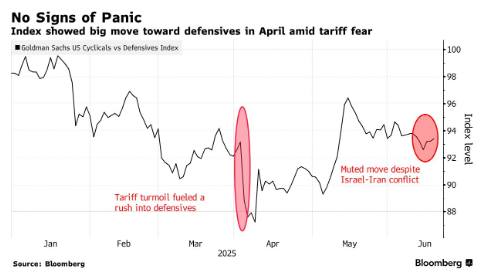
Group 1 - The article highlights that U.S. stock market investors are surprisingly neglecting traditional safe-haven assets amid escalating tensions in the Middle East, with analysts warning that unexpected developments in the Israel-Iran conflict could catch the market off guard [1][4] - Despite the anxiety, there has only been a slight inflow of funds into defensive sectors such as utilities, consumer staples, and healthcare, even as the S&P 500 index is only 2.7% away from its all-time high [1][4] - Defensive sectors' influence on the benchmark index is currently at a 35-year low, indicating that these safer stocks have been overlooked by the market recently [1][4] Group 2 - Goldman Sachs' pair trade basket, which involves going long on cyclical stocks and short on defensive stocks, has seen a slight increase since Israel's airstrikes on Iranian nuclear projects, suggesting that if traders were to rush for safety, this basket would decline [3] - UBS data shows that the impact of geopolitical events on the stock market is often short-lived, with the S&P 500 index averaging only a 0.3% decline one week after major geopolitical events, and a 7.7% increase after 12 months [4] - Some market professionals are beginning to recommend increasing exposure to defensive stocks, particularly in the utilities sector, which is seen as a hedge against market volatility and economic risks [7]
霍尔木兹海峡会被关闭吗?伊以冲突愈演愈烈,石油大佬齐发警告
凤凰网财经· 2025-06-18 13:42
Core Viewpoint - The ongoing conflict between Israel and Iran poses significant risks to global energy supply and prices, with industry leaders warning of potential severe consequences for critical energy infrastructure [1][4][10]. Group 1: Current Situation - The Israel-Iran conflict has escalated, entering its sixth day with ongoing military strikes and mutual attacks [2]. - Recent attacks have targeted oil and gas facilities, but critical energy infrastructure and crude oil flow have not yet been significantly affected [3]. Group 2: Industry Concerns - Executives from major oil companies, including Shell and Total, express deep concerns about the safety of their employees and the potential impact on oil facilities due to the conflict [5][6][7]. - Shell's CEO highlighted the uncertainty and geopolitical turmoil affecting the global energy system, emphasizing the need for careful management in the coming days [4]. Group 3: Supply and Price Implications - ExxonMobil's CEO stated that the global oil market has sufficient supply to withstand any disruptions from Iranian exports, which amount to approximately 1.6 million barrels per day, less than 2% of global demand [8]. - However, if export infrastructure or shipping through the Strait of Hormuz is affected, it could lead to significant price increases, potentially reaching $100 per barrel [8][9]. Group 4: Strategic Importance of the Strait of Hormuz - The Strait of Hormuz is a critical chokepoint for global oil transport, with an average of 20% of global oil consumption passing through it, equating to about 21 million barrels per day [13]. - Any disruption in this waterway could lead to soaring energy prices and severe supply delays [14]. Group 5: Shipping Industry Response - Global shipping companies are beginning to avoid the Strait of Hormuz due to the escalating conflict, with reports indicating a decrease in the number of vessels passing through [15]. - The threat of conflict has raised concerns within the shipping industry, prompting some companies to alter their routes [15].
美股能源股、国防股走强,航空股走弱
news flash· 2025-06-13 14:45
Group 1 - Energy stocks and defense stocks strengthened, while airline stocks weakened due to geopolitical tensions following Israel's attack on Iran [1] - Energy ETFs and the S&P 500 Energy Index both rose over 1% as oil prices surged [1] - Airline stocks declined amid concerns that supply chain bottlenecks could lead to soaring fuel costs [1] Group 2 - Defense stocks saw an increase, with Lockheed Martin leading the gains [1] - The uncertainty in U.S. domestic policy and geopolitical turmoil is impacting both the oil market and broader risk premiums [1]