房地产新模式

Search documents
上半年净利预亏超百亿!万科:深表歉意
Nan Fang Du Shi Bao· 2025-07-14 13:52
Core Viewpoint - Vanke expects a significant net profit loss for the first half of 2025, primarily due to decreased project settlement scale, increased asset impairment provisions, and lower transaction prices for major assets [2][3]. Financial Performance - The projected net profit loss for the period is between 10 billion to 12 billion yuan, with a loss of 9.5 billion to 11.5 billion yuan after excluding non-recurring items [2]. - Basic earnings per share are expected to be a loss of 0.8433 to 1.01 yuan [2]. - The company achieved sales of 69.11 billion yuan with a repayment rate exceeding 100% [2]. Operational Highlights - Vanke delivered over 45,000 housing units on schedule and completed significant transactions, including 6.43 billion yuan in bulk trading [2]. - The company has revitalized 64 projects since the beginning of 2023, with a total saleable value of approximately 78.5 billion yuan [2]. Strategic Initiatives - Vanke is focusing on operational improvement through strategic focus, management enhancement, and technology empowerment to optimize business layout and structure [3]. - The company has seen strong sales in new projects across multiple cities, with some projects achieving over 80% sales rates [3]. Business Segments - The long-term rental apartment business leads the industry in scale and efficiency, with an occupancy rate exceeding 93% and a gross operating profit margin close to 90% [3]. - Vanke's commercial business is experiencing steady growth in foot traffic and sales, providing services to well-known institutional owners [3]. Asset Management and Development - The company is accelerating the establishment of asset exit channels, including asset securitization, and has made progress with the Pre-REIT fund [4]. - Vanke is enhancing collaboration with its major shareholder, Shenzhen Metro Group, to leverage resources and create a new urban service ecosystem [4].


2025楼市半年考:地方数百条政策“稳市”,核心城市出现企稳迹象
Di Yi Cai Jing· 2025-07-01 07:58
Core Viewpoint - The real estate market in China is experiencing a stabilization phase in the first half of 2025, supported by a series of government policies aimed at boosting demand and managing risks [2][3][4]. Policy Measures - Approximately 170 provinces and cities have introduced over 340 policies in the first half of 2025, maintaining a high frequency of policy implementation [2][4]. - Key policy areas include inventory reduction, demand expansion, new models, and risk mitigation, with a focus on supporting housing demand through various measures such as lowering mortgage rates and promoting urban renewal [4][5]. - The central government has consistently emphasized the need to stabilize the real estate market, with significant policy announcements made in March, April, and June [3][4]. Market Performance - The first half of 2025 saw a notable performance in core cities, with new residential sales in Beijing and Shanghai increasing by approximately 4%, while Guangzhou experienced a 16% increase and Shenzhen saw over 30% growth [7]. - In Shenzhen, a total of 51,104 residential units were signed in the first half of 2025, representing a year-on-year increase of 38.8% [7]. - The sales performance of major real estate companies indicates that 47.8% of their sales came from second-tier cities, while first-tier cities contributed 40% of sales, reflecting a shift in market dynamics [8]. Price Trends - The average price of new homes in 100 cities increased by 0.97% from January to May 2025, indicating a structural price increase driven by improved housing quality [9]. - The second-hand housing market has shown a decline in prices, with a cumulative drop of 2.88% from January to May 2025, as the market continues to adjust [11]. Future Outlook - The overall sales volume in the real estate market is expected to remain under pressure, with an estimated total of 900 million square meters of new residential sales for the year [10][11]. - The market is likely to continue experiencing a divergence in performance across different cities and projects, influenced by policy measures, supply-demand dynamics, and urban effects [10].
影响土地市场的五大因素|资本市场
清华金融评论· 2025-06-24 10:29
Core Viewpoint - The real estate market shows a clear recovery trend in the first quarter of this year, with the future heat of the land market dependent on five key factors: improvement of the financing environment, stability of new housing transaction volume, effective inventory reduction, transformation of sales models under new real estate paradigms, and optimization of land supply rules [1][2][4]. Group 1: Financing Environment - The financing environment directly influences the willingness of real estate companies to acquire land, with a relatively loose financing environment currently aiding market stabilization [6]. - The real estate financing landscape has undergone significant adjustments, transitioning from a high-leverage model to a more regulated environment, with a focus on standardized financing methods [6][7]. - As of the end of April 2024, the balance of real estate development loans was 13.56 trillion yuan, showing a year-on-year increase of 3.2%, supported by both the extension of existing financing and new investments from the urban real estate financing coordination mechanism [7]. Group 2: New Housing Market Transaction Volume - The new housing market serves as a barometer for the land market, with a notable recovery in the first quarter of 2025, where new housing transaction area in major cities increased by 6% year-on-year [8]. - However, the momentum in the new housing market weakened in the second quarter, leading to potential pressure on the land market's continued growth [8][9]. - In the first five months of 2025, cities like Guangzhou and Shenzhen saw significant year-on-year increases in new housing transaction areas, with growth rates of 13% and 106%, respectively [8]. Group 3: Real Estate Market Inventory - The total inventory of commercial housing remains high, with a pending sale area of 77.427 million square meters as of May 2025, although it has decreased by 7.15 million square meters over three months [10]. - Different cities exhibit varying inventory clearance cycles, with cities like Hangzhou and Shanghai having a clearance cycle of less than 12 months, indicating a more active land market [10]. Group 4: New Sales Models - The implementation of a current housing sales system is a crucial reform aimed at enhancing product quality and optimizing market supply-demand dynamics [11][12]. - The shift towards current housing sales is expected to lower purchasing risks for buyers and test the financial strength and product quality of real estate companies [12]. Group 5: Land Supply Rules - Land supply is being adjusted through total volume reduction, structural optimization, and innovative rules to align with market changes and promote high-quality industry development [13][14]. - Many cities have significantly reduced land supply plans, with some cities like Dongguan and Yantai seeing reductions exceeding 40% [13]. - Innovations in land transaction rules, such as flexible payment options and streamlined approval processes, are being piloted in various regions to enhance the attractiveness of land development [14].
国海证券晨会纪要-20250619
Guohai Securities· 2025-06-19 01:35
Group 1: Global Gas Turbine and Aerospace Engine Demand - The demand for gas turbines is expected to surge, with GE Vernova projecting a backlog of 60GW by the end of 2025, with orders signed until 2028 [3][4] - In Q1 2025, GE Vernova added 7.1GW in new gas turbine orders, a 44.9% year-on-year increase, primarily from heavy-duty gas turbine orders [3][4] - The aerospace engine market is experiencing robust demand, with Boeing reporting a net addition of 300 aircraft orders in May 2025, raising its backlog to 5943 aircraft [5][6] Group 2: High-Temperature Alloy and Chromium Salt Industry - The growth in gas turbine and aerospace engine demand is driving the need for high-temperature alloys, with domestic manufacturers poised to benefit from supply chain constraints [9][13] - Companies like Zhenhua Co. and Sry New Materials are expanding their production capabilities and reporting significant revenue growth from overseas markets [9][10] - The high-temperature alloy sector is rated as "recommended" due to the increasing demand for core components amid supply chain shifts towards China [13] Group 3: Coal Industry Dynamics - In May 2025, China's industrial raw coal production reached 400 million tons, a year-on-year increase of 4.2%, indicating a recovery in the coal supply [15][18] - The industrial electricity generation in May 2025 showed a positive shift, with coal-fired power generation increasing by 1.2% year-on-year, reversing a previous decline [19][22] - The coal market is witnessing a gradual improvement in supply-demand dynamics, with coal prices stabilizing and inventory levels decreasing [21][23] Group 4: Real Estate and Land Market Factors - The land market's performance is influenced by five key factors, including financing environment, new housing market stability, inventory reduction, sales model changes, and land supply rules [24][27] - The first quarter of 2025 showed a significant recovery in the real estate market, with new housing transactions positively impacting land market activity [29][30] - The land market is entering a "dual concentration" phase, with significant activity concentrated in major cities and among top real estate firms [25][26] Group 5: Company-Specific Developments - Xiaogoods City (600415.SH) is leveraging its position in Yiwu to enhance its global trade capabilities, with a projected revenue growth of 25% from 2025 to 2027 [36][39] - Huayi Group is diversifying its operations across five core business areas, reporting a revenue increase of 9.3% in 2024 [40]
如何打造房地产新模式
2 1 Shi Ji Jing Ji Bao Dao· 2025-06-17 16:48
Core Viewpoint - The recent State Council meeting has outlined a new development model for the real estate sector, focusing on transitioning from rapid growth to high-quality development, emphasizing quality over quantity in housing projects, and ensuring a coordinated approach among various stakeholders in the housing market [1][2]. Group 1: New Development Model - The new model aims to shift the real estate industry from high-speed growth to high-quality development, encouraging companies to focus on project quality rather than mere expansion [1]. - The transition involves a gradual shift from addressing the basic need for housing to enhancing the quality of housing, with an emphasis on creating safe, comfortable, green, and smart homes [1][2]. - A key aspect of the new model is the establishment of a mechanism that links the elements of people, housing, land, and finance, ensuring that housing supply meets the evolving demands of residents [2]. Group 2: Institutional Reforms - Comprehensive reforms are required across the entire real estate chain, including land supply, development, sales, financial management, market regulation, and lifecycle safety management [2]. - The land supply system will adapt to inventory clearance and demand characteristics, with new land being allocated based on net land transfer and synchronized planning with public facilities [2][3]. - The housing finance system will shift from a collateral-based credit approval model to one that focuses on sustainable cash flow generation, such as sales revenue and rental income [3]. Group 3: Housing Quality and Urban Renewal - The meeting emphasized the importance of promoting the construction of "good houses" as part of urban renewal efforts, integrating planning, land, finance, and policy support [4]. - The concept of "good houses" extends to improving old and outdated housing, necessitating a unified approach to area-wide updates that enhance living conditions [4][5]. - The introduction of standards like the "Residential Project Norm" will facilitate the improvement of living environments and promote a balanced housing supply structure [5]. Group 4: Market Stability and Policy Measures - A series of new policies aimed at stabilizing the market are being developed, including measures to manage land reserves, control construction approvals, and enhance the utilization of existing housing stock [5]. - The focus will be on improving the efficiency of supply and demand matching, particularly in addressing public service shortfalls and promoting the renovation of existing projects [5].
申万宏源建筑周报:国常会提出更大力度推动地产止跌回稳,关注地产政策发力效果-20250615
Shenwan Hongyuan Securities· 2025-06-15 05:43
Investment Rating - The industry investment rating is "Overweight" indicating a positive outlook for the sector compared to the overall market performance [3][29]. Core Insights - The report highlights the government's commitment to stabilizing the real estate market and enhancing construction policies to stimulate demand and optimize supply [4][13]. - The construction industry is currently experiencing weak overall performance, but regional investments are expected to gain momentum as national strategies are implemented [4][15]. - Key companies such as China Electric Power Construction and Zhi Te New Materials have secured significant contracts, indicating potential growth opportunities [15][19]. Industry Performance Summary - The construction sector's weekly performance showed a decline of 1.41%, underperforming against major indices like the Shanghai Composite Index [5][6]. - The best-performing sub-industry was Professional Engineering with a slight increase of 0.09%, while the International Engineering sector saw a decline of 1.67% [6][10]. - Year-to-date, the Ecological Landscaping sub-industry has shown the highest growth at 15.38%, followed by Decoration Curtain Wall at 11.63% [6][10]. Key Company Developments - Zhi Te New Materials signed a strategic cooperation agreement with PREMIUM INFINITE VENTURES INC. valued at approximately 420 million USD, equivalent to about 3 billion RMB [15][19]. - China Electric Power Construction won a bid for a major offshore wind power project in Liaoning with a contract value of approximately 10.77 billion RMB [15][19]. - Other notable companies include ST Baili, which saw a weekly increase of 22.89%, and Libaite with a 19.1% increase [11][12]. Market Trends and Changes - The report notes significant government initiatives aimed at enhancing the construction sector, including the integration of real estate development into urban renewal mechanisms [4][13]. - The focus on high-quality economic development through financial, technological, and data empowerment is emphasized as a key driver for the industry [13][14]. Company Valuation and Earnings Forecast - The report provides a detailed valuation table for key companies in the construction sector, indicating projected earnings per share (EPS) and price-to-earnings (PE) ratios for the coming years [22][24]. - For instance, China Railway has an estimated EPS of 1.13 for 2024, with a PE ratio of 4.9, while China Electric Power Construction is projected to have an EPS of 0.70 with a PE of 7.0 [22][24].
Wind风控日报 | 国常会研究优化药品和耗材集采有关举措
Wind万得· 2025-06-13 22:41
Group 1 - The State Council's executive meeting emphasized the importance of constructing a new model for real estate development to promote stable, healthy, and high-quality growth in the real estate market, focusing on long-term strategies and systematic policy support [3] - Guangzhou plans to optimize real estate policies by fully canceling purchase restrictions, sales restrictions, and price limits, while also lowering down payment ratios and interest rates to better meet housing consumption needs [4] - The People's Bank of China announced a 400 billion yuan reverse repurchase operation to maintain ample liquidity in the banking system, with a term of six months [5] Group 2 - In May, new RMB deposits exceeded 2 trillion yuan, with experts attributing the differences in deposit and loan growth to the diversification of financial institutions' assets and changes in financing structures [6] - The China Securities Regulatory Commission published the "Procedures for Programmatic Trading in the Futures Market (Trial)," which will take effect on October 9, 2025, to enhance the regulation of programmatic trading [29] - The State Council meeting reviewed measures to optimize the collection of drugs and medical supplies, aiming to promote standardized and institutionalized procurement practices [34] Group 3 - The Ministry of Industry and Information Technology held a meeting to address the prevention and governance of telecom network fraud, emphasizing a comprehensive approach to tackle the issue [35] - The market supervision authority announced ongoing efforts to strengthen the recall of defective consumer goods sold online, ensuring consumer rights and market order [37] - Nezha Automobile has officially entered bankruptcy reorganization procedures, indicating a significant development in the company's financial status [38][39]

房地产行业统计局数据点评:销售环比下滑,基本面压力仍大
ZHONGTAI SECURITIES· 2025-06-07 07:15
Investment Rating - The report maintains an "Overweight" rating for the real estate industry [1] Core Insights - The real estate market is experiencing a sales decline, with a year-on-year decrease of 2.8% in sales area and 3.2% in sales amount for the first four months of 2025. However, there are signs of marginal recovery as policies aimed at stabilizing the market take effect [5][14] - The overall investment in real estate development has decreased by 10.3% year-on-year, indicating continued pressure on the investment front, with new construction and completion rates also showing weakness [30][38] - Financing conditions remain tight, with a 4.1% year-on-year decline in funds available to real estate developers, although there are indications of potential improvement as policies to support financing are implemented [38][40] - The report highlights that the central government's policies are focused on stabilizing sales and funding, which is expected to lead to a gradual recovery in the industry [49] Summary by Sections 1. Industry Macro Data Summary - In the first four months of 2025, the total sales area of commercial housing was 28,262 million square meters, down 2.8% year-on-year, while the sales amount reached 27,035 billion yuan, a decrease of 3.2% [11][12] 2. Sales Recovery and Policy Effects - Sales area and amount showed slight improvements compared to the previous months, with policies aimed at reducing down payments and interest rates contributing to market stabilization [5][14] 3. Investment Pressure and Construction Trends - Real estate investment fell by 10.3% year-on-year, with new construction area down 23.8% and completion area down 16.9% [30][38] 4. Funding and Financing Conditions - Funds available to developers decreased by 4.1% year-on-year, but domestic loans and foreign investment showed positive growth, indicating potential for future improvement [38][40] 5. Policy Relaxation and Price Trends - The report notes a continued easing of policies, with a gradual stabilization of housing prices expected as market conditions improve [40] 6. Leading Companies and Valuation Recovery - The report suggests that leading real estate companies are showing signs of recovery, with an expectation of valuation improvement as market conditions stabilize [47]
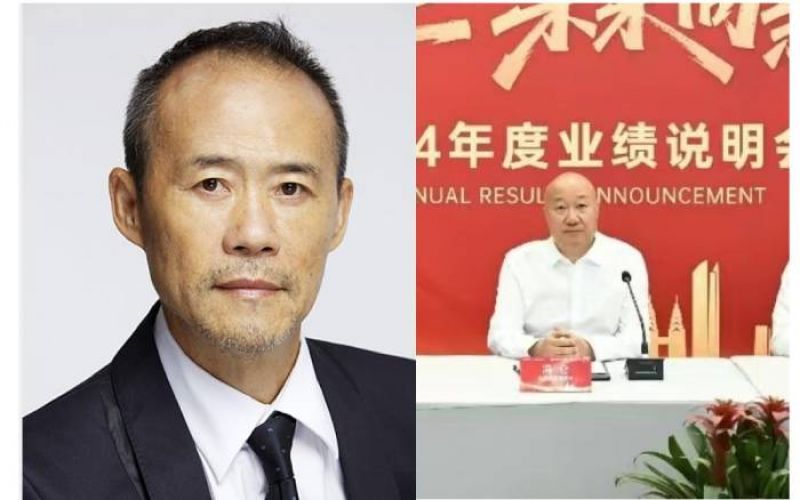
王石、冯仑发声背后:初代掌舵者眼里地产转型关键期的情怀与商机
Hua Xia Shi Bao· 2025-06-05 11:21
Core Viewpoint - The real estate industry is transitioning into a "post-development era," presenting significant opportunities for new business models as indicated by industry leaders like Wang Shi and Feng Lun [3][4][9]. Group 1: Industry Transition - Wang Shi emphasizes the need for smooth transitions within Vanke to protect investors and employees [3]. - Feng Lun describes the end of large-scale real estate development, suggesting a shift towards operational models rather than traditional development [4]. - The overall sales area of new commercial housing in China decreased by 2.8% year-on-year in the first four months of the year, indicating a slowdown in the market [4]. Group 2: Policy and Market Response - Recent financial policies, including a reduction in housing provident fund loan rates, aim to stimulate market demand and restore confidence [5][8]. - The central bank's actions, such as lowering the reserve requirement ratio and policy interest rates, are part of a broader strategy to stabilize the real estate market [5][8]. Group 3: New Business Models - Feng Lun outlines a new operational model for Jin Ke, focusing on technology innovation and asset management, moving away from traditional development and sales [9][10]. - The restructuring of Jin Ke will involve four main business areas: investment management, development services, operational management, and special asset management [10]. - The exploration of new development models will require enhancing operational capabilities and aligning real estate with the needs of the economy [10][11].


房地产,要换一种活法了!
大胡子说房· 2025-05-30 11:52
Core Viewpoint - The focus of the real estate market should shift towards establishing a new financing system that aligns with the new development model of real estate, rather than merely relying on interest rate cuts and reserve requirement ratio reductions [3][4][10]. Financing System and New Model - The recent announcement emphasizes the need for a financing system that supports the new real estate model, marking a significant shift from passive financial support to proactive adaptation of financing mechanisms [10][11]. - The new real estate model is expected to be established from the funding and institutional levels, indicating a long-term mechanism for stability in the real estate market [16]. Characteristics of the New Real Estate Model - The traditional model of "high leverage + high turnover + high expectations" is deemed unsuitable for the current market, necessitating a transition to a new model that stabilizes the market without excessive stimulation [19][20]. - The new model will not focus on broad market stimulation but rather on maintaining a stable foundation through structural tools, such as a dual system of commercial and affordable housing [22][23]. Market Dynamics and Future Outlook - The real estate market is expected to experience "slow growth + stability + structural adjustment," with continued demand in core urban areas and a focus on affordable housing [24][25]. - Recent policies are seen as a prelude to further measures aimed at reinforcing market stability, with significant adjustments in public housing loan rates and other financing tools [26][27]. Local Government Initiatives - Various cities are beginning to implement policies to acquire second-hand homes as part of their affordable housing strategies, indicating a broader trend towards institutionalized financing for housing [33][34]. - The potential for a structured financing approach in the acquisition of second-hand homes could provide strong confidence to the market [36]. Conclusion on Market Sentiment - The core of the current policy is not to "restart the old game" but to "initiate a new order," focusing on stabilizing the market and rebuilding buyer confidence through structural support [37][38]. - The future opportunities in the real estate market will not be about overall growth but rather about structural adjustments, emphasizing the importance of location and property characteristics in investment decisions [43].