
绿电

Search documents
年协电价落地释压,1 月新能源差价补贴最高 6.17 分/度
GOLDEN SUN SECURITIES· 2026-01-04 11:28
Investment Rating - The industry investment rating is maintained as "Increase" [4] Core Insights - The annual negotiated electricity price has been established, leading to a significant drop in trading prices in Jiangsu and Zhejiang for 2026, with a decrease of 16.5% and 16.4% respectively. The new energy price subsidy in January is at a maximum of 6.17 cents per kilowatt-hour [3][13] - The electricity market is undergoing a restructuring with the full entry of new energy sources, which is expected to bring about a new equilibrium in electricity pricing sooner than anticipated [3] - The report highlights the performance of various sectors within the electricity industry, noting a general decline in stock prices for most listed companies in the power and utilities sector [6][63] Summary by Sections Industry Overview - The average trading price for electricity in Jiangsu for 2026 is 344.19 yuan per megawatt-hour, down 16.5% year-on-year, while in Zhejiang it is 344.85 yuan per megawatt-hour, also down 16.4% [13] - The total transaction volume in Jiangsu's electricity market for 2026 is 272.481 billion kilowatt-hours, with a weighted average price of 344.19 yuan per megawatt-hour [13] - The report indicates that the electricity prices in 28 regions have been adjusted downwards, with reductions ranging from 0.65% to 24.68% [3][13] Market Performance - The Shanghai Composite Index closed at 3968.84 points, up 0.13%, while the CSI 300 Index closed at 4629.94 points, down 0.59%. The CITIC Power and Utilities Index closed at 3042.43 points, down 2.35%, underperforming the CSI 300 Index by 1.76 percentage points [6][63] - Most stocks in the power and utilities sector experienced declines, with notable drops in companies such as Guodian Power and Huaneng International [67] Investment Recommendations - The report suggests focusing on high-dividend coal-fired power leaders and companies with stable electricity prices and coal-electric integration, such as Huaneng International, Huadian International, and Guodian Power [3] - It also recommends investing in flexible coal-fired power transformation leaders and companies in the wind and solar sectors, such as Xintian Green Energy and Longyuan Power [3] - For the gas sector, it highlights quality leaders like Chengran and New Hope Energy, which are expected to recover profits while maintaining stable dividends [3]



如何将绿电的供给优势转化为绿色转型动能?
Jing Ji Ri Bao· 2026-01-01 23:34
Core Viewpoint - The expansion of green electricity application is a clear requirement from the Central Economic Work Conference, aimed at achieving carbon neutrality goals and enhancing industrial green competitiveness [1] Group 1: Current Status and Trends - As of October 2025, the total installed capacity of renewable energy in China is expected to reach 2.22 billion kilowatts, accounting for nearly 60% of the national total installed capacity [1] - In the first half of 2025, the national green electricity trading volume reached 154 billion kilowatt-hours, a year-on-year increase of 49.3%, indicating a rapid marketization and scaling of green electricity trading [1] - Regions like Guangdong have seen green electricity trading volumes increase by over 60% year-on-year in the first half of 2025, showcasing positive development momentum [1] Group 2: Challenges and Issues - The flexibility of the power system has shortcomings, with insufficient scale of flexible resources like pumped storage and new energy storage, leading to challenges in matching supply and demand during high output periods of renewable energy [2] - The market mechanism for green electricity needs standardization, as the relationship between electricity, certificates, and emission reduction effects requires further quantification [2] - There is structural differentiation in application scenarios and consumption motivation, with high-energy-consuming industries showing more urgent demand for green electricity compared to small and medium enterprises and public service sectors [2] Group 3: Strategic Recommendations - A coordinated planning approach should be adopted to advance large-scale development of renewable energy alongside the main grid and cross-province transmission channels, focusing on a diversified regulation system [3] - The establishment of a unified national trading platform for green electricity and certificates is essential to enhance efficiency in cross-province and cross-region electricity trading [3] - Public institutions and state-owned enterprises should lead the way in green electricity consumption by signing long-term procurement agreements, while government policies should incentivize key enterprises to join zero-carbon supply chains [4]
电力行业2026年度投资策略
2025-12-31 16:02
Summary of Key Points from the Conference Call Industry Overview - The conference call focuses on the **electric power industry** and its investment strategies for 2026, particularly in the context of coal-fired power, nuclear power, and renewable energy sectors [1][2][3]. Core Insights and Arguments Coal-Fired Power - The **price mechanism reform** initiated in 2021 has broken the previous constraints on electricity prices, allowing for potential increases, which is expected to enhance the competitiveness of coal-fired power [2][3]. - The performance of coal-fired power is typically stronger in the first half of the year, influenced by annual trading negotiations and coal price trends [3]. - Future competitiveness will be bolstered by the implementation of capacity compensation and auxiliary service markets over the next couple of years [1][3]. - Key investment considerations include **cost, region, and dividend yield** [3][4]. Nuclear Power - Nuclear power assets are characterized by high quality and significant growth potential, with a projected compound annual growth rate (CAGR) of nearly 10% over the next 5-6 years [2][10]. - Short-term challenges include high market transaction ratios and price reductions in coastal regions, which have already impacted revenue per kilowatt-hour [10][11]. - Long-term growth potential remains strong, making nuclear power a focus for investment despite short-term market risks [11]. Renewable Energy - The **dual carbon goals** have led to large-scale renewable energy projects, but issues with adjustment and transmission capabilities have resulted in increased curtailment of wind and solar energy [4][5]. - Market pressures have caused a decline in electricity prices for mainstream renewable companies, affecting both new and existing projects [5]. - Despite fundamental pressures, Hong Kong-listed renewable companies benefit from policy support, which attracts investment [5][6]. - Investment strategies in renewable energy include targeting regions with less market pressure and selecting undervalued state-owned enterprises, particularly in wind energy [7][8]. Additional Important Content - The **15th Five-Year Plan** emphasizes green development, with measures such as price mechanism reforms and the inclusion of high-energy-consuming industries in mandatory consumption systems [6]. - Recent subsidies have alleviated cash flow issues related to renewable energy, but the pace of policy implementation remains uncertain, keeping green energy investments speculative [6]. - Water power investments can be approached through two strategies: short-term opportunities in small hydropower companies and capturing the dividend value of leading companies like Changjiang Power and Guotou [9]. Investment Recommendations - For coal-fired power, focus on companies with integrated cost advantages and strong dividend yields, particularly in northern regions [12]. - In nuclear power, while short-term observation is advised, long-term positioning is recommended due to substantial growth potential [11]. - Water power investments are currently more favorable due to lower valuations and less impact from market pressures [12]. - In renewable energy, consider stable coastal entities or leading companies in Hong Kong for undervalued opportunities [12].
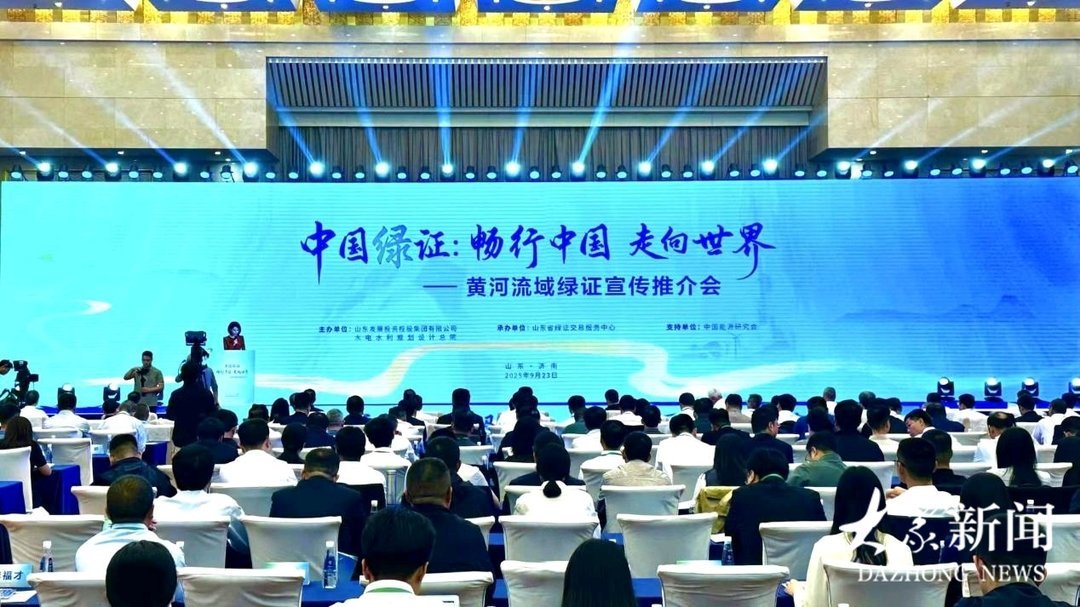
绿电逆袭记:一张绿色“身份证”如何照亮山东制造的未来?
Feng Huang Wang Cai Jing· 2025-12-30 00:01
Core Viewpoint - The establishment of the Shandong Green Certificate Trading Service Center marks a significant transformation in the certification of "green identity" in China, creating the first provincial-level green certificate trading hub in the country [1]. Group 1: Background and Challenges - The introduction of green certificates addresses a critical issue in China's manufacturing exports, where the source of electricity (green or gray) is often unclear, leading to challenges in demonstrating environmental value to overseas clients [3]. - Once electricity enters the grid, it becomes indistinguishable, trapping the environmental value of green power and preventing it from translating into competitive advantages for businesses [3]. Group 2: Green Certificate Mechanism - The green certificate serves as an "identity card" for each kilowatt-hour of green electricity, with one certificate corresponding to 1,000 kilowatt-hours of green power, featuring unique blockchain coding for traceability and tamper-proofing [5]. - The previous system required companies in Shandong to purchase green certificates through distant national platforms, creating long processes and limiting the flexibility of green electricity transactions across regions [6]. Group 3: Policy and Market Dynamics - High-energy-consuming enterprises face increased costs when purchasing green certificates, but national policies are increasingly emphasizing the importance of renewable energy consumption, expanding the mandatory green certificate consumption to industries like steel, cement, and data centers [8]. - Shandong's innovative regional trading platform allows power generation companies to sell green certificates independently, enabling electricity consumers to enhance their product's "green content" without altering supply lines [8]. Group 4: Market Impact and Data - The establishment of the center led to the signing of purchase intentions for 7.18 million green certificates on its opening day, facilitating data sharing and market connectivity among the nine provinces along the Yellow River [10]. - As of August this year, the nine provinces along the Yellow River sold 188 million green certificates, accounting for 41% of the national total, while purchasing 121 million certificates, representing 26% of the national total [11]. - By the end of November, Shandong's non-fossil energy power generation capacity reached 135 million kilowatts, making up 53.6% of the total power generation capacity, with solar power leading nationally for eight consecutive years [11].

——申万公用环保周报(25/12/22~25/12/26):二三产拉动11月用电全球气价小幅震荡-20251229
Shenwan Hongyuan Securities· 2025-12-29 10:36
Investment Rating - The report provides a positive investment outlook for various sectors within the energy industry, particularly recommending companies involved in coal power, hydropower, nuclear power, green energy, and gas [1]. Core Insights - The report highlights that in November 2025, the total electricity consumption reached 835.6 billion kWh, marking a year-on-year increase of 6.2%. The growth contributions from the primary, secondary, and tertiary industries, as well as residential consumption, were 2%, 49%, 29%, and 19% respectively [4][6]. - The secondary industry remains the largest contributor to electricity consumption, accounting for over 60% of the total, with significant growth in high-tech and equipment manufacturing sectors [5][6]. - Natural gas prices have shown fluctuations, with the U.S. Henry Hub spot price at $3.31/mmBtu, reflecting a weekly decline of 7.30%. The report notes that the domestic LNG ex-factory price is 3915 yuan/ton, down 2.85% week-on-week [1][16]. Summary by Sections Electricity Sector - In November 2025, the electricity consumption by the first, second, and third industries grew by 7.9%, 4.4%, and 10.3% respectively, while residential consumption increased by 9.8% [4][6]. - The high-tech and equipment manufacturing sectors saw a 6.7% increase in electricity consumption, with automotive manufacturing leading at a 10% growth rate [5][6]. Natural Gas Sector - The report indicates that global gas prices are experiencing slight fluctuations, with the U.S. market showing a significant drop in spot prices. The report anticipates that the demand for natural gas will increase as winter approaches, potentially stabilizing prices [1][16]. - Recommendations include focusing on integrated gas companies and those benefiting from cost reductions and improved profitability due to lower oil prices [39][40]. Investment Recommendations - For coal power, companies like Guodian Power and Inner Mongolia Huadian are recommended due to their diversified revenue sources [1]. - Hydropower companies such as Yangtze Power and State Power Investment Corporation are favored due to expected improvements in profit margins from reduced capital expenditures [1]. - Nuclear power firms like China National Nuclear Power and China General Nuclear Power are highlighted for their stable cost structures and growth potential [1]. - In the green energy sector, companies like Xintian Green Energy and Longyuan Power are recommended for their stable returns and increasing operational value [1]. - The report also suggests investment in gas companies like Shenzhen Energy and Kunlun Energy, which are expected to benefit from cost reductions and improved market conditions [1][39].




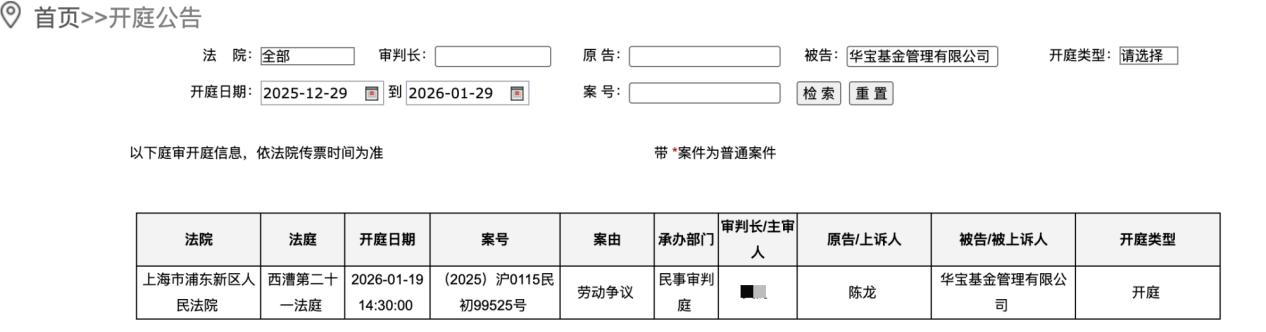
重亏近50%遭解聘?基金经理将华宝基金告上法庭
Feng Huang Wang Cai Jing· 2025-12-29 09:15
Group 1 - Huabao Fund has been sued in court due to a labor dispute, with the case set to be heard on January 19, 2026 [1][4] - The plaintiff, Chen Long, is linked to a former fund manager at Huabao Fund, who served as a senior analyst and managed multiple funds before leaving [5][7] - Chen Long's performance as a fund manager was poor, with returns of -46.75% for the Huabao Competitive Advantage Mixed Fund and -54.80% for the Huabao Green Theme Mixed Fund during his tenure [7][8] Group 2 - After Chen Long's departure, the Huabao Competitive Advantage Mixed Fund saw a significant increase in returns, achieving 63.07% since 2025, ranking in the top 10% of similar products [8][9] - The current fund manager, Shi Jian, has shifted the fund's focus towards domestic semiconductor investments, which have recently experienced a market surge [8][9] - As of September 30, Huabao Fund's total management scale reached 379.1 billion yuan, ranking 28th in the industry [9]
海博思创董事长张剑辉:打破“黑科技”神话 推动技术从量变到质变
Zheng Quan Ri Bao Wang· 2025-12-25 07:40
Core Viewpoint - The Chinese energy storage industry is at a critical transformation point, with explosive growth in overseas orders and advancements in solid-state battery technology, raising questions about the sustainability of China's leading position in the lithium battery sector and future growth drivers [1]. Group 1: Industry Trends - The development of green electricity combined with energy storage is seen as a potential ultimate solution for energy needs, with clean energy sources like wind and solar facing challenges due to their instability, making energy storage technology increasingly important [1]. - The domestic energy storage industry has experienced "involution," where technological advancements have led to cost reductions, resulting in price wars due to a lack of differentiation between high-quality and ordinary products [2]. - The introduction of the "136 Document" in 2025 is expected to shift the market focus from price-driven to value-driven, with independent energy storage stations entering the market and a transition towards profitability in energy storage operations [2]. Group 2: Technological Advancements - The evolution of energy storage technology is characterized by gradual improvements rather than sudden breakthroughs, with both existing technology upgrades and the development of next-generation solid-state batteries being essential for industry growth [3]. - Semi-solid batteries are being commercialized as a transitional technology, enhancing the safety of energy storage stations, while safety technologies from liquid battery research are being integrated into solid-state battery production [3]. - China's lithium battery industry is expected to maintain its competitive edge in the solid-state battery era due to significant R&D investments and a rich array of application scenarios, ensuring a smooth transition from liquid to solid-state batteries [3]. Group 3: Future Outlook - The development of energy storage technology is anticipated to fundamentally reshape energy usage scenarios, with visions of large-scale energy storage systems that could provide stable power for extended periods, alleviating electricity anxiety for consumers [3].
从“西电东送”到“西电西用”:协同破局西北绿色转型
Huan Qiu Wang· 2025-12-25 03:38
Core Viewpoint - The article emphasizes the need for coordinated efforts in the energy transition of Shaanxi and Gansu provinces, highlighting the importance of regional collaboration, policy support, and market mechanisms to achieve efficient resource utilization and low-carbon industrial upgrades under the "dual carbon" goals [1][2]. Group 1: Renewable Energy Development - Shaanxi and Gansu provinces have significant wind and solar resources, with a combined renewable energy installed capacity expected to exceed 100 million kilowatts by the end of 2024 [2] - By 2060, the share of renewable energy installed capacity in Shaanxi and Gansu is projected to surpass 88% and 92%, respectively, with wind and solar power becoming the dominant energy sources [2] - The current industrial ecosystem in Northwest China has formed a collaborative system that includes core manufacturing, power generation operations, and supporting services, showcasing a "complementary competition" dynamic between the two provinces [2] Group 2: Strategic Energy Transition - The "West-to-East Power Transmission" strategy is undergoing a green transformation, shifting from coal-based power to a higher proportion of renewable energy [3] - Differentiated development strategies are recommended for the two provinces: Shaanxi should focus on becoming a self-sufficient power adjustment base, while Gansu should prioritize becoming a major hub for renewable energy exports [3] - Gansu's electricity export volume is expected to reach 400 billion kilowatt-hours by 2060, accounting for 38% of the province's total power generation, with a green electricity share of 95% [3] Group 3: Regional Coordination and Infrastructure - Enhancing the transmission capacity between Shaanxi and the Northwest main grid from 9 million kilowatts to 15 million kilowatts could add 20 billion kilowatt-hours of green electricity consumption during the 14th Five-Year Plan, representing 7.7% of the province's total electricity consumption [4] - The establishment of a new "West-to-East Power Transmission" system is crucial to avoid issues such as "power generation without transmission" and to promote a virtuous cycle of green electricity supply, industrial development, and energy consumption [4][5] - The integration of hydrogen energy, particularly green hydrogen, is identified as a key pathway for low-carbon transformation in Shaanxi's chemical industry, with a focus on developing a comprehensive hydrogen energy manufacturing system [5] Group 4: Market Mechanisms and Policy Recommendations - To achieve a successful green transition in Northwest China, it is essential to strengthen regional coordination and improve market mechanisms, including pilot projects for smart microgrids and flexible resource utilization [6] - Recommendations include balancing the pace of renewable energy development with consumption capacity and establishing a three-tier electricity market mechanism to highlight the value of flexible resources [6] - The article suggests promoting employment transition tools and innovative green financial products to attract more social capital into renewable energy projects and infrastructure development [6]
每3度电就有1度是绿电,我们怎样做到?
Ren Min Ri Bao· 2025-12-24 02:47
Core Insights - China's total electricity consumption is expected to exceed 10 trillion kilowatt-hours this year, marking a global first and doubling the consumption from 2015, surpassing the total consumption of the EU, Russia, India, and Japan combined [1] Group 1: Renewable Energy Development - China has established the world's largest renewable energy system since the 14th Five-Year Plan, with one-third of electricity consumption coming from green energy [1] - The share of renewable energy generation capacity is projected to increase from 40% to around 60% during the 14th Five-Year Plan, with significant growth in wind and solar power installations [2] - Major projects such as the Baihetan Hydropower Station and advanced nuclear power plants have been completed, enhancing the supply capacity of green electricity [2] Group 2: Power Grid Enhancements - New ultra-high voltage transmission projects have been launched, enabling rapid delivery of green electricity across long distances, with a projected increase of 70% in clean energy transmission by 2024 compared to the end of the 13th Five-Year Plan [3] - The integration of distributed solar power and energy storage in microgrids has significantly improved local consumption rates of renewable energy [3] Group 3: Energy Regulation and Management - The variability of wind and solar power necessitates improved energy storage and management solutions, with new energy storage installations surpassing 100 million kilowatts, representing over 40% of the global total [4] - Innovations in green certificate trading mechanisms and direct electricity pricing policies are enhancing the consumption of green energy [5] Group 4: Future Projections - By 2030, it is anticipated that renewable energy generation capacity will exceed 50% of total installed capacity, with non-fossil energy sources meeting the majority of new energy demand [6]
申万公用环保周报(25/12/15~25/12/19):11月发电增速环比放缓进口LNG现货价格继续下跌-20251222
Shenwan Hongyuan Securities· 2025-12-22 07:46
Investment Rating - The report does not explicitly state an overall investment rating for the industry, but it provides specific recommendations for various sectors within the energy industry, indicating a positive outlook for certain companies and sectors [2][3]. Core Insights - The report highlights a slowdown in electricity generation growth in November 2025, with total generation at 779.2 billion kWh, a year-on-year increase of 2.7%. The growth was primarily driven by hydropower and wind power, while thermal power saw a decline [5][6]. - Natural gas prices in the U.S. and Europe have shown slight fluctuations, with U.S. Henry Hub spot prices at $3.58/mmBtu, reflecting a 12.1% weekly decline. Northeast Asia's LNG prices have also decreased, reaching $9.50/mmBtu, marking a 5% drop [18][19]. - The report emphasizes the increasing contribution of renewable energy sources, particularly wind and solar, to the overall electricity generation mix, with significant year-on-year growth rates [6][12]. Summary by Sections 1. Electricity Generation - November 2025 saw total electricity generation of 779.2 billion kWh, up 2.7% year-on-year. Thermal power generation decreased by 4.2% to 497.0 billion kWh, while hydropower increased by 17.1% to 96.7 billion kWh. Wind power grew by 22.0% to 104.6 billion kWh, and solar power rose by 23.4% to 41.2 billion kWh [5][7]. - From January to November 2025, total electricity generation reached 88,567 billion kWh, a 2.4% increase year-on-year, with significant contributions from hydropower, nuclear, wind, and solar energy [12][13]. 2. Natural Gas Market - As of December 19, 2025, U.S. Henry Hub spot prices were $3.58/mmBtu, down 12.1% from the previous week. European gas prices showed slight increases, with the Dutch TTF price at €28.10/MWh, up 2.0% [18][19]. - The report notes that the supply of natural gas remains high, with U.S. production at historical levels, contributing to the downward pressure on prices [18][19]. 3. Investment Recommendations - For thermal power, companies like Guodian Power and Inner Mongolia Huadian are recommended due to their integrated coal and power operations. For hydropower, companies such as Yangtze Power and State Power Investment Corporation are highlighted for their potential in the upcoming winter and spring [16][38]. - In the nuclear sector, China National Nuclear Power and China General Nuclear Power are suggested as key players due to their stable cost structures and growth potential [16][38]. - Renewable energy operators like Xinneng Green Energy and Longyuan Power are recommended as the market for green certificates and environmental values continues to grow [16][38].