货币超发

Search documents
银行行长透露:房子和车子都会贬值,未来手握这“两样”让人安心
Sou Hu Cai Jing· 2025-07-21 08:06
Group 1: Economic Overview - The future expectation is that cash will depreciate rapidly due to severe domestic currency overproduction, with M2 reaching 330 trillion, double that of the US and more than the combined total of Europe and Japan [2] - Despite the expectation of inflation, the economy is currently in a deflationary cycle, with CPI down 0.1% year-on-year in the first half of the year, indicating a trend of stable but declining prices [2] - The lack of rapid depreciation of currency is attributed to two main reasons: insufficient confidence among businesses and consumers leading to a shrinking loan market, and a weak real economy causing reduced consumer income and spending power [2] Group 2: Real Estate Market - Since 2022, domestic housing prices have entered a long-term adjustment phase, with declines observed in second and third-tier cities, and first-tier cities like Shanghai and Shenzhen also experiencing price drops [5][7] - In Shanghai, housing prices have fallen from over 90,000 yuan per square meter to over 60,000 yuan, a decline exceeding 30%, with expectations of further decreases as prices return to reasonable levels [5][7] - The decline in housing prices is driven by three factors: extensive real estate regulation since 2016, reduced consumer income and purchasing power, and a prolonged decline in prices leading to a lack of investment appeal [7] Group 3: Automotive Market - The automotive market is experiencing a price drop, with some models from brands like Honda and Chevrolet seeing reductions of over 60,000 yuan, while domestic brands like Geely and BYD are also engaging in price promotions [6][9] - Average price reductions in the automotive sector range from 20,000 to 30,000 yuan, with some models dropping from 220,000 yuan to 180,000 yuan, indicating a continuing price war in the coming years [6][9] - Factors contributing to the decline in automotive prices include an oversupply due to the influx of electric vehicles, reduced purchasing plans among middle-income consumers, and increased competition from tech companies entering the automotive sector [9]

通缩来了,手里有大量现金的人,都要偷偷乐了,原因有这4点
Sou Hu Cai Jing· 2025-07-16 02:08
Group 1 - The core issue is the paradox of high money supply (M2 over 326 trillion, up 7% year-on-year) leading to deflation rather than inflation, as evidenced by the CPI data showing a 0.2% month-on-month and 0.1% year-on-year decline [1][3][4] - The first reason for the low prices is that the excess money is not circulating in the economy but is stuck in banks and financial institutions, similar to water flowing in pipes without reaching the fields [3] - The second reason is that consumers are hesitant to spend due to a challenging economic environment, leading to reduced demand and price drops as businesses try to clear excess inventory [4] Group 2 - Cash holders benefit from increased purchasing power during deflation, as prices for goods like pork and cars have significantly decreased, allowing them to buy more with the same amount of money [6][12] - Cash provides a hedge against investment risks, as many have faced significant losses in stocks and funds, making bank savings a safer option despite lower interest rates [8][12] - Having cash allows individuals to respond to emergencies or job losses without immediate financial pressure, providing a buffer during uncertain times [10][12] Group 3 - Cash holders can take advantage of potential investment opportunities when asset prices return to reasonable levels after deflation, positioning themselves for future gains [12] - The economic landscape is dynamic, and while cash is valuable now, it is essential to plan for future changes and diversify asset allocation to navigate different economic conditions effectively [14]

社会因为缺钱,已出现这5个明显的变化,你有没有注意到?
Sou Hu Cai Jing· 2025-07-08 15:31
Core Insights - The domestic economy is experiencing a paradox where there is significant monetary overproduction, with M2 balance reaching approximately 325 trillion yuan, double the GDP, while all sectors of society are facing a cash shortage [1] - The lack of confidence in various markets is leading to a prolonged recovery period for restoring trust in the economy [1] Changes in Economic Behavior - Change 1: Government and public sector jobs are no longer seen as a "safe haven," with plans to reduce non-staff personnel by 20% annually in Heilongjiang Province and salary cuts in various regions due to declining fiscal revenues [3][5] - Change 2: The number of homebuyers is decreasing despite various market stimulus policies, as falling property prices and reduced incomes lead to a pessimistic outlook on future housing prices [3][7] - Change 3: More individuals are choosing to save money in banks, with new deposits reaching 9.22 trillion yuan in the first quarter of 2025, driven by a desire to prepare for uncertainties like unemployment and health issues [3][9] - Change 4: There is a noticeable downgrade in consumer spending, with high-end goods seeing reduced sales while demand for low-cost options in dining and entertainment is increasing due to stagnant or declining incomes [3][11] - Change 5: Marriage and birth rates are experiencing a sharp decline, with marriage registrations dropping to 1.81 million pairs in the first quarter of 2025, a decrease of 159,000 pairs year-on-year, and birth rates falling to 1.95 million, the lowest in nearly a decade [3][14][15]

通缩来了,现在手握大量现金的人,已经在偷偷乐了,原因有这4点
Sou Hu Cai Jing· 2025-06-24 01:33
Group 1 - The current economic environment is characterized by deflation despite significant monetary expansion, with M2 surpassing 326 trillion and a year-on-year growth of 7% [1][3] - The contradiction between monetary expansion and deflation is attributed to the fact that much of the money remains within the financial system and does not circulate into the economy, coupled with reduced consumer purchasing power due to income loss and unemployment [3][4] - Prices of essential goods and assets have decreased significantly, indicating that cash is becoming more valuable in a deflationary environment, with examples such as pork prices dropping from 28 yuan to 17 yuan per jin and car prices falling from 250,000 yuan to 180,000 yuan [6][4] Group 2 - Holding cash provides a hedge against investment risks, as many individuals have faced substantial losses in stock markets and other investment vehicles, with average losses for stock investors reaching 140,000 yuan last year [8][10] - Cash reserves are crucial for emergencies, allowing individuals to manage unexpected situations such as job loss or medical emergencies without financial strain [10] - Cash holders are positioned to seize investment opportunities when market conditions improve, as they can wait for asset bubbles to deflate before making strategic investments [12][10]
到2030年,房价将是现在4-5倍?真的还是假的?
Sou Hu Cai Jing· 2025-06-19 05:45
Core Viewpoint - The Chinese real estate market has undergone significant adjustments since 2022, with average national housing prices dropping approximately 30%, and declines in some third and fourth-tier cities exceeding 50% [1] Group 1: Current Market Conditions - The initial price corrections began in second and third-tier cities, with first-tier cities like Shanghai and Shenzhen joining the trend in 2023 [1] - Experts predict that by 2030, housing prices could increase to four to five times their current levels, driven by factors such as excessive money supply, favorable government policies, and anticipated economic growth [1] Group 2: Counterarguments to Price Predictions - The likelihood of housing prices quadrupling or quintupling in the next five years is considered extremely low due to the ongoing long-term downward trend in prices [3] - Achieving a fivefold increase in housing prices by 2030 would require annual doubling, which is deemed nearly impossible [3] - Economic growth and money supply do not guarantee rising housing prices, as the market is currently experiencing significant bubbles and investment risks [3] Group 3: Factors Supporting Price Stabilization - Residents' income levels are insufficient to support high housing prices, with many facing reduced incomes and cautious future income expectations [4] - There is an oversupply of housing in the market, with approximately 6 billion existing homes, enough to accommodate 30 billion people, leading to a long-term supply-demand imbalance [4] - The construction of affordable housing is accelerating, which will further alleviate housing supply pressures and help regulate the market [5] Group 4: Overall Market Outlook - Considering macroeconomic conditions, purchasing power, and housing supply, the potential for significant price increases in the next five years is very low, with a likelihood of continued adjustments towards rationality [6]

2025年,因为缺钱,社会或将迎来5大变化,提前做好准备!
Sou Hu Cai Jing· 2025-06-17 05:13
Economic Trends in China - In 2025, China is undergoing significant economic changes, characterized by five major trends: declining deposit rates, falling but still high housing prices, a growing flexible employment sector, a rise in the trend of not marrying or having children, and the diminishing allure of stable jobs [1] Banking and Savings - Despite continuous reductions in deposit rates since 2024, with rates reaching historical lows, the enthusiasm for savings among the public remains strong. This is attributed to losses in stock markets and other investment channels, leading people to prefer bank deposits for capital preservation [3] Real Estate Market - Since 2022, the real estate market has seen an average price decline of over 30% in some regions by 2025. However, owning a home remains out of reach for many due to persistent high prices and economic pressures such as declining incomes and unemployment. In cities like Shanghai and Shenzhen, the price-to-income ratio exceeds 40, indicating significant purchasing pressure [6] Employment Trends - The flexible employment sector has expanded significantly due to the impact of the pandemic, with 240 million individuals now engaged in flexible jobs such as delivery workers and freelancers. This trend reflects a shift in the job market towards more adaptable employment options [8] Social Trends - The rates of marriage and childbirth in China have been declining, primarily due to high costs associated with weddings and child-rearing. The financial burden of housing and the overall cost of living are major deterrents for young people considering marriage and family [9] Fiscal Challenges - The stability of traditional job security is eroding, particularly in local governments facing reduced fiscal revenues due to a sluggish real estate market. Experts suggest the introduction of property taxes to create new revenue streams for local governments [11] Monetary Policy and Economic Conditions - By 2025, China's broad money supply (M2) has surpassed 304.8 trillion yuan, more than double the GDP, indicating severe monetary overexpansion. Despite this, there is a widespread perception of a cash shortage among citizens, businesses, and governments, leading to a deflationary economic cycle. The core issue lies in the lack of confidence in the market, preventing the effective circulation of money into the real economy [11]

复盘白酒行业,真的是不断在萎缩吗
雪球· 2025-06-13 06:15
Core Viewpoint - The article argues that the decline in China's liquor production is often misinterpreted, suggesting that while production has decreased from its peak in 2016, it has actually increased by 33.02% compared to 20 years ago, indicating that the industry is not necessarily in decline but rather adjusting to market realities [2][4]. Production Trends - In 2016, China's liquor production peaked at 1,358 million tons, but by 2024, it is projected to drop to 414.5 million tons, a decline of approximately 69.48% [2]. - When comparing the production in 2024 (414.5 million tons) to 20 years prior in 2004 (311.6 million tons), it shows a growth of 33.02%, contradicting the narrative of a declining industry [2][3]. Demand and Consumption - The article highlights that the demand for liquor is limited by human consumption capacity, unlike other beverages that can see increased consumption with lifestyle changes [3]. - The population growth from 1.299 billion in 2004 to 1.408 billion in 2024 (an increase of about 8.4%) indicates that per capita liquor consumption has not significantly decreased [2]. Market Dynamics - The rapid increase in liquor production from 2004 to 2016 was driven by a favorable economic environment post-WTO accession, leading to a proliferation of local liquor brands [4]. - The oversupply and intense competition in the market have led to a decline in production since 2016, with many mid to low-end brands losing market share [4]. Revenue Growth - Despite the decline in production, the total sales revenue of the liquor industry has surged from 61.23 billion in 2004 to 796.384 billion in 2024, a twelvefold increase [4][5]. - The increase in revenue is attributed to rising prices rather than increased consumption, with the sales revenue continuing to grow even as production declines [5]. Monetary Influence - The growth in liquor sales revenue aligns closely with the increase in the money supply (M2), which rose from 25.32 trillion in 2004 to 313.53 trillion in 2024, an increase of 11.38 times [5]. - The article posits that the driving force behind the liquor industry's growth is not public spending or real estate demand, but rather the effects of monetary expansion [5].

现在手握大量现金的人,现在要偷笑了,原因有这4点
Sou Hu Cai Jing· 2025-05-16 05:23
Group 1 - The core argument is that cash is becoming more valuable in a deflationary environment, as the purchasing power of money increases due to falling prices [3][5][11] - The broad money supply (M2) in China reached 326.06 trillion yuan, growing by 7% year-on-year, indicating a significant increase in money supply relative to GDP [1] - Bank deposit interest rates have decreased, with state-owned banks offering rates below 2% for three-year fixed deposits, leading to reduced income for savers [1] Group 2 - In a deflationary context, having cash allows individuals to navigate economic uncertainties, such as job loss or medical emergencies, without panic [7][11] - Cash holders can wait for new investment opportunities, especially as many investors face losses in stock and fund markets, making cash a safer option for the time being [9][11] - The potential for acquiring distressed assets, particularly in the real estate sector, is highlighted, with examples of wealthy individuals preparing to invest in undervalued properties as market conditions worsen [9][11] Group 3 - Cash can provide liquidity to struggling businesses, allowing them to survive during economic downturns, which is crucial for maintaining operations until the market stabilizes [11] - The sentiment among business owners is shifting, recognizing cash as essential for survival rather than a liability, especially in challenging economic times [11]
现在手握大量现金的人,要偷笑了,原因有这4点
Sou Hu Cai Jing· 2025-05-01 11:55
Core Viewpoint - The current economic environment in China is characterized by significant monetary expansion leading to potential inflation, yet consumer prices are experiencing deflation, creating a paradox for cash holders who may benefit from increased purchasing power [1][3]. Group 1: Economic Context - The M2 money supply reached 326.06 trillion yuan in Q1, with a year-on-year growth of 7%, indicating severe monetary overexpansion [1]. - Despite the monetary expansion, the consumer price index (CPI) fell by 0.4% year-on-year in Q1, suggesting a deflationary trend in the economy [1][3]. - The deflation is attributed to two main factors: funds not flowing into the goods market and a decline in consumer demand due to economic downturns, leading to significant inventory accumulation [3]. Group 2: Advantages of Holding Cash - Cash holders are experiencing increased purchasing power, as prices for goods such as pork have dropped from 26-28 yuan per jin to 18-20 yuan per jin, and mid-range cars have decreased in price from 250,000 yuan to 160,000-180,000 yuan [5]. - Holding cash allows individuals to avoid risks associated with financial markets, where stock market losses have averaged 140,000 yuan per investor in 2024, and public funds have seen losses of 20-30% [7]. - In times of economic uncertainty, having cash provides a safety net against unemployment and unexpected expenses, allowing individuals to navigate financial difficulties more comfortably [9]. - Cash holders are positioned to seize new investment opportunities as asset prices decline during the deflationary cycle, enabling them to acquire undervalued assets in the future [11].
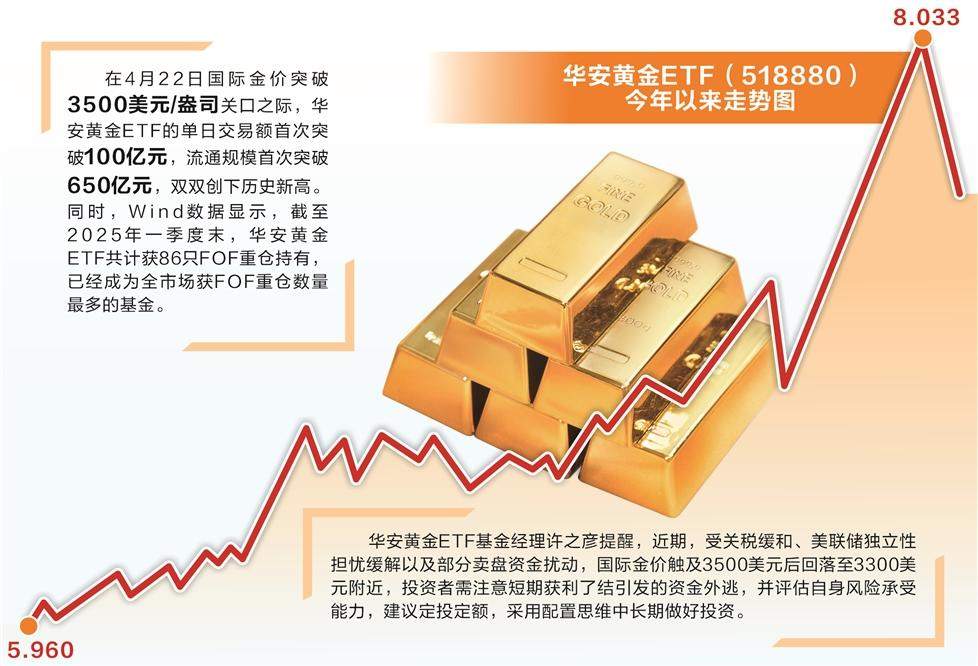
黄金资产多空大碰撞 基金经理有的清仓有的忙加仓
Zheng Quan Shi Bao· 2025-04-27 22:00
Core Viewpoint - The gold market is experiencing significant volatility due to the "de-dollarization" trend and geopolitical tensions, with prices recently reaching a historical high of $3,500 per ounce before dropping to around $3,330, marking a nearly 7% decline in just three trading days [1] Group 1: Fund Manager Actions - Notable divergence in fund managers' strategies regarding gold stocks, with some, like Dong Chen from Huatai-PB, significantly reducing their positions in gold stocks after years of heavy investment [2] - Dong Chen's fund, which had a strong focus on gold stocks, has shifted to other sectors, indicating a strategic pivot based on company quality and market conditions [2] - Conversely, other fund managers, such as Yuan Weide from China Europe Fund, have increased their investments in gold stocks, highlighting a split in market sentiment [3] Group 2: Market Consensus and Trends - There is a growing consensus that gold price volatility may increase due to profit-taking by investors and the potential for a short-term decline in risk premiums [4] - Significant inflows into gold ETFs have been observed, with nearly 70 billion yuan in net inflows this year, indicating strong investor interest despite recent price fluctuations [4] - The Huazhong Gold ETF reached a record trading volume of over 10 billion yuan on April 22, coinciding with the peak gold price [4] Group 3: Future Outlook and Factors Influencing Gold Prices - Fund managers anticipate increased volatility in gold prices due to factors such as the Federal Reserve's monetary policy, global economic uncertainties, and geopolitical tensions [6] - Long-term gold pricing is expected to be influenced more by monetary factors, particularly the weakening of the US dollar and trends in currency issuance [7][8] - The interplay between US debt expansion and fiscal pressures is seen as a critical factor affecting gold's long-term value, with gold being viewed as a hedge against currency devaluation [8]