出口管制

Search documents
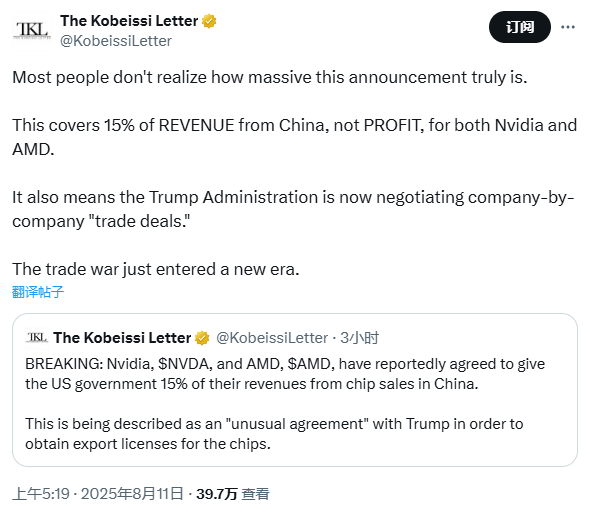
报道称:英伟达和AMD上缴15%的中国AI芯片收入,换取特朗普“放行”
Hua Er Jie Jian Wen· 2025-08-11 00:47
Core Insights - Nvidia and AMD have agreed to pay 15% of their sales revenue from chip sales in China to the U.S. government as a condition for obtaining semiconductor export licenses, marking a significant shift in U.S. export control policy [1][2] - Nvidia is expected to generate approximately $23 billion in revenue from the sale of 1.5 million H20 chips in China by 2025, which could result in over $3 billion in payments to the U.S. government [1][2] - This unprecedented arrangement indicates that the Trump administration is negotiating "trade agreements" on a company-by-company basis, suggesting a new era in the trade war [2] Company-Specific Developments - Nvidia received export licenses for H20 chips shortly after CEO Jensen Huang's meeting with President Trump, indicating a direct link between political discussions and business operations [3] - AMD has also begun receiving export licenses for its chips, although the company has not publicly commented on the arrangement [1][3] Government and Regulatory Context - The U.S. Department of Commerce has started issuing export licenses for H20 chips, coinciding with a broader strategy to encourage domestic investment and job creation while imposing tariffs on imports [3][4] - The Chinese government has expressed opposition to U.S. export controls, emphasizing the need for cooperation and fair competition in the semiconductor market [4]


【有色】行业对价利好频出,稀土企业有望受益——稀土行业动态跟踪报告(王招华/张寅帅)
光大证券研究· 2025-08-10 23:07
Supply of Light Rare Earths - The biggest variable in the supply of light rare earths is the mining quota set by the Ministry of Industry and Information Technology, which has not yet been disclosed for 2025 [3] - Baotou Steel's 2024 annual report indicates a 3.4% increase in rare earth concentrate production for 2025, but overall supply growth is expected to be limited due to export controls on medium and heavy rare earths and a 6.45% decrease in tungsten quotas [3] Demand for Light Rare Earths - In the first half of 2025, China's total production of new energy vehicles increased by 40.61%, with a penetration rate of 44.13% [4] - Wind power installations in China saw a significant increase, with a 104.64% year-on-year growth in new installed capacity during the same period, reaching 26.3 GW in May 2025 [4] Heavy Rare Earths Production - China dominates global rare earth smelting and separation capacity, accounting for approximately 88.56% of the total 407,000 tons (REO) expected in 2024 [5] - It is projected that by 2029, global rare earth smelting and separation capacity will rise to 560,000 tons (REO), with China's share decreasing to 64.17% [5] Strategic Metal Resource Management - China has implemented four rounds of export controls on strategic metal resources in 2023, with an increasing number of metals being controlled and faster implementation times [6][7] - The latest measures have included a broader range of metals, indicating a growing emphasis on managing strategic resources [6][7] Price Trends Post-Export Controls - Historical data shows that export controls typically lead to a short-term increase in metal prices and export volumes before stabilizing [8] - Following the recent export controls on tungsten and medium-heavy rare earth elements, a price increase is anticipated in the coming months as export volumes recover [8] Company Performance Elasticity - An elasticity analysis of four rare earth listed companies indicates that a 1% price increase in rare earth products could significantly impact their performance, particularly for companies focused on ion-adsorption type rare earth mines [9]
再再再call锑:反转在即,重视底部布局机会
2025-08-06 14:45
Summary of Conference Call on Antimony Market Industry Overview - The antimony market is significantly influenced by the demand for photovoltaic (PV) glass, with prices rising from 40,000 RMB per ton in 2020 to 80,000-90,000 RMB in 2021, and stabilizing between 220,000-230,000 RMB due to increased PV installations and inventory depletion [1][2][3]. Key Points Antimony Price Dynamics - Antimony prices have experienced notable fluctuations, primarily driven by three phases: 1. Pre-2020: Prices were influenced by the overall macroeconomic environment, with major applications in flame retardants (50-60%), polyester catalysts (10%), and lead-acid batteries (5-10%) [2]. 2. 2020-2024: Prices surged due to PV glass demand, with a significant increase in installations [2][3]. 3. Post-September 2024: Prices are now heavily impacted by export conditions, with export controls leading to near-zero exports for extended periods, reducing demand by 40% [3][4]. Export Control Impact - Export controls have drastically reduced domestic demand elasticity, with actual exports dropping to 5-10% of last year's levels during May-June [4][5]. - The recent easing of export controls for state-owned enterprises and the lifting of restrictions on private enterprises indicate a potential recovery in exports, which could increase demand by approximately 20% if external demand returns to early 2024 levels [6][7]. PV Glass Production and Demand - PV glass production has decreased from nearly 600,000 tons in early May 2025 to about 510,000 tons, reflecting a 15-16% decline [5]. - Inventory days for PV glass have decreased from 34 days to 29 days, indicating low accumulation of downstream inventory [5]. Supply and Profitability of Antimony Producers - Antimony production has significantly declined due to raw material shortages, with many smelters operating at a loss even at prices of 180,000 RMB [8]. - Environmental regulations are expected to lead to a continued supply contraction over the next two to three years, particularly affecting small to medium-sized enterprises in major production regions like Guangxi, Hunan, Jiangxi, and Yunnan [9]. Companies to Watch - Companies such as Huaxi and Huayu are highlighted as key players in the current antimony market, benefiting from strong tin inventory support and successful gold mining projects [11][14]. - Hunan Gold is also noted for its dual focus on gold and antimony, which positions it well to capitalize on rising antimony prices [11][14]. Market Outlook - Antimony prices are projected to rise from 180,000 RMB to above 200,000 RMB, with expectations of maintaining around 250,000 RMB in the long term [10]. - The macroeconomic sentiment has caused stock fluctuations, but the outlook remains positive due to stable domestic demand and declining supply, with an anticipated annual demand growth of 3-4% [15]. Additional Insights - The ecological environment ministry's five-year heavy metal pollution inspection plan is expected to have long-term impacts on supply [8]. - The overall sentiment in the macro environment is stabilizing, which could lead to a recovery in related stocks, particularly those of Huaxi, Huayu, and Hunan Gold, which are expected to show strong performance [15].
美国计划给AI芯片植入跟踪功能
半导体行业观察· 2025-08-06 02:00
Core Viewpoint - The Trump administration is seeking better methods to track the location of semiconductor chips to prevent advanced AI accelerator hardware from falling into the hands of competitors [2][3]. Group 1: Government Initiatives - Washington aims to equip semiconductors with location tracking capabilities and is eager to collaborate with the industry to achieve this goal [2]. - Legislation proposed in May by the U.S. Senate and House requires the Department of Commerce to mandate certain advanced chips to have "location verification mechanisms" to detect if goods are transferred after export [2][3]. - The proposed tracking system lacks specific operational details, but companies are responsible for reporting any violations to the U.S. Department of Commerce if the tracking system is tampered with [2]. Group 2: Concerns Regarding China - The U.S. is increasingly complex in its attempts to curb China's advancements in AI technology, believing that China is only one to two years behind the U.S. in this field [3]. - Reports indicate that despite strict export controls, approximately $1 billion worth of high-end Nvidia GPUs have entered the black market [3]. - U.S. Senators have urged the government to maintain strict regulations to prevent companies from outsourcing their AI infrastructure, emphasizing that AI is fundamentally infrastructure [4]. Group 3: Legal Actions - Two Chinese nationals were arrested for allegedly violating U.S. export restrictions by shipping Nvidia's advanced AI chips worth tens of millions of dollars to China [5]. - The individuals are accused of exporting sensitive technology, including Nvidia's H100 AI accelerators, without the necessary government approvals [6]. - Nvidia stated that this case highlights the futility of smuggling and emphasized that all sales comply with U.S. export control regulations [6].

AMD第二季度营收增长32% 超出预期
Zheng Quan Shi Bao Wang· 2025-08-06 00:13
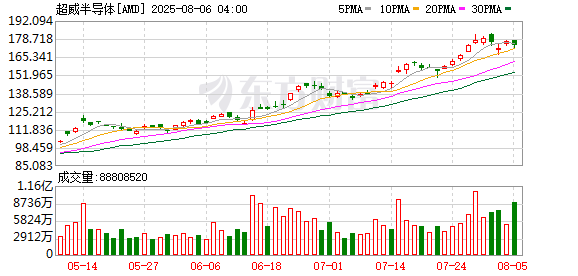
Core Insights - AMD's Q2 revenue reached $7.685 billion, a 32% year-over-year increase, setting a quarterly record and exceeding analyst expectations [2] - Due to U.S. export restrictions, sales of the MI308 chip to China were limited, resulting in a 30% year-over-year decline in EPS and a drop in gross margin to 43% [2] - Data center revenue grew 14% year-over-year, with a slowdown attributed to MI308 export limitations [2] - Client business (PC chips) showed strong performance with a 67% year-over-year revenue increase, marking three consecutive quarters of record highs [2] - Gaming business reversed its declining trend, achieving a 73% year-over-year revenue growth [2] - AMD's Q3 revenue guidance midpoint is $8.7 billion, a 27.9% year-over-year increase, indicating a slowdown but still above analyst expectations [2] - Q3 gross margin is expected to rebound to 54% [2] - AMD has commenced early production of the new MI350 chip and plans to launch the MI400 series next year [2]
在稀土领域,“世界仍在苦追昨日,中国轻舟已过万重山”
Sou Hu Cai Jing· 2025-08-05 11:31
Core Viewpoint - China's control over the rare earth supply chain provides it with leverage in the trade war with the United States, as it dominates global production and processing of rare earth elements [1][3]. Group 1: China's Dominance in Rare Earths - China accounts for approximately 60% of global rare earth mining, over 85% of processing, and more than 90% of permanent magnet production, placing the U.S. and other Western countries at a disadvantage [1]. - The complexity of establishing alternative supply chains is highlighted, with experts noting that Western countries may struggle to close the gap with China even in the long term [1][3]. Group 2: International Efforts to Diversify Supply Chains - The U.S. and its allies have been seeking to diversify rare earth supplies for years, but these efforts face significant challenges, including the need for long-term investments and technical expertise [3][4]. - Initiatives such as the "Mineral Security Partnership" (MSP) and G7's new action plan on critical minerals have been launched, but analysts believe these diplomatic efforts may not be sufficient to challenge China's dominance [3][4]. Group 3: Emerging Players in the Rare Earth Market - Developing countries with rare earth resources, such as Vietnam, are becoming key players in the competition for rare earths, with Vietnam signing agreements with the U.S. to enhance its rare earth industry [4]. - Myanmar is also noted as a significant rare earth producer, with discussions in the U.S. government about changing policies to reduce China's influence in the global rare earth supply chain [5]. Group 4: Impact on U.S. Defense Industry - The U.S. defense industry is experiencing significant price increases for materials needed for military applications, with some prices rising to five times their pre-restriction levels [6]. - The dependency on Chinese rare earths is underscored, as U.S. companies struggle to find economically viable alternatives for certain rare elements [6]. Group 5: China's Export Control Policies - China's recent export control measures are aimed at regulating rather than prohibiting exports, promoting compliance and trade rather than severing commercial ties [7]. - The emphasis is on understanding and adapting to China's governance regulations to ensure the continued availability of critical resources for global technological advancement [7].
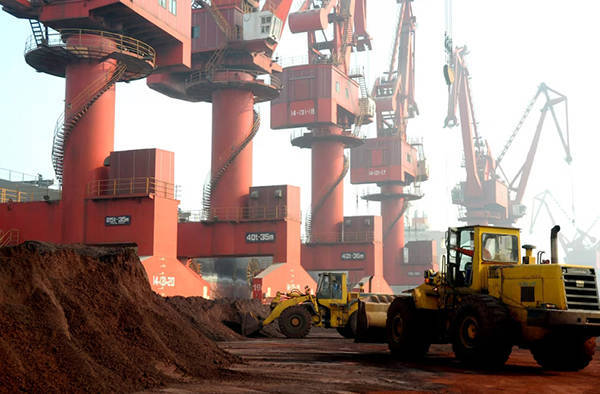
“美出口审批机构趴窝,企业界急喊:中国订单要飞了”
Guan Cha Zhe Wang· 2025-08-02 10:57
Core Viewpoint - The article discusses the increasing dysfunction within the U.S. Department of Commerce's Bureau of Industry and Security (BIS), which is causing significant delays in the approval of export licenses, particularly for high-tech products like chips, impacting U.S. companies and their market share in China [1][2]. Group 1: Export License Delays - The current backlog of export license applications is the longest in over 30 years, with the average processing time reaching 38 days in the fiscal year 2023 [2]. - Thousands of applications, including those from U.S. companies seeking to export to China, have been stalled, leading to concerns about lost market share [1][2]. Group 2: Impact on Companies - NVIDIA's application for exporting H20 chips to China has not been approved, despite previous assurances from the Trump administration that it would be [4][5]. - NVIDIA has placed an order for 300,000 H20 chips with TSMC to meet strong demand in China, indicating a shift from relying solely on existing inventory [5]. Group 3: Internal Issues at BIS - The BIS has faced internal turmoil under Secretary Gina Raimondo, with significant staff turnover and a lack of communication with industry representatives [1][6]. - The leadership of Deputy Secretary Jeffrey Kessler has been criticized for failing to effectively manage the agency and for limiting communication with industry stakeholders [6][8]. Group 4: Industry Reactions - Industry leaders express frustration over the lack of progress and predict that delays will result in U.S. companies losing market share to foreign competitors [8][9]. - The U.S.-China Business Council highlights the urgency of the situation, noting that companies are exploring alternative suppliers due to the uncertainty surrounding license approvals [8].
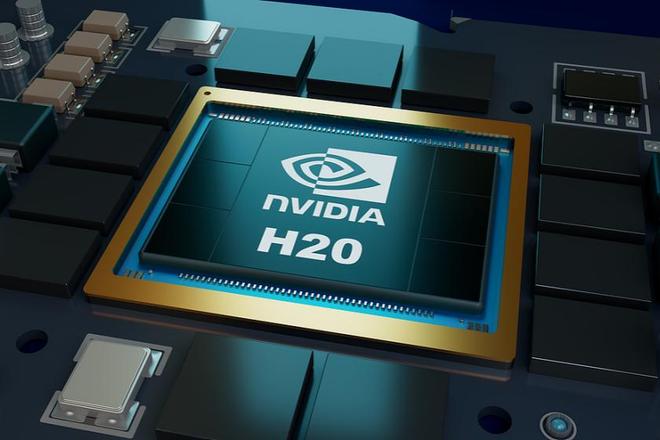
美国商务部内部混乱,数千份出口许可被积压,包括英伟达芯片
Hua Er Jie Jian Wen· 2025-08-02 05:12
Core Points - The U.S. Department of Commerce's Bureau of Industry and Security is facing its most severe export license backlog in nearly 30 years, with thousands of applications, including those for high-value products like NVIDIA's AI chips, pending approval [1][2] - The backlog is attributed to internal management issues within the Bureau, which has failed to issue new regulations and has restricted communication with industry representatives, leading to a decline in efficiency and loss of expertise [1][3] Group 1: Export License Backlog - The current backlog of export license applications is the worst in over 30 years, with an average processing time of 38 days for each application in fiscal year 2023, totaling 37,943 applications processed and a rejection rate of 2% [2] - Delays in license approvals are putting U.S. companies at a competitive disadvantage globally, raising concerns among those advocating for stricter export controls and companies seeking overseas sales opportunities [1][2] Group 2: Management Issues - Jeffrey Kessler, the Deputy Secretary of the Bureau, has been criticized for micromanaging and lacking effective communication, which has further hampered the Bureau's operations [3] - Restrictions on communication with industry representatives and the requirement for meeting records have negatively impacted the Bureau's efficiency [3] Group 3: Regulatory Delays - The Bureau has delayed implementing regulatory changes, including the withdrawal and replacement of restrictions on AI chip exports, which were announced in May but have yet to be acted upon [3][4] - Other proposed rules, such as extending export restrictions to subsidiaries of companies already banned from receiving U.S. controlled exports, have also not been released [4]
刚刚,EDA巨头Cadence对华出口违规,遭重罚!
是说芯语· 2025-07-29 01:43
Core Viewpoint - Cadence Design Systems, Inc. has agreed to plead guilty and pay over $140 million to resolve criminal charges related to violations of export controls, specifically for illegally selling EDA hardware, software, and IP to a Chinese military university listed on the U.S. Entity List [1][2]. Group 1: Case Background and Violations Overview - The case involves Cadence, its Chinese subsidiary Cadence Design Systems Management (Shanghai) Co., Ltd., the Chinese military university NUDT, and a related Chinese chip company [2]. - Cadence committed 61 violations, primarily through its subsidiary Cadence China, which engaged in 56 illegal sales or loans to CSCC, a known alias for NUDT, totaling approximately $45.3 million from September 2015 to September 2020 [3][4]. Group 2: Details of Violations - The core violation involved unauthorized exports to NUDT via CSCC, with a total value of about $45.3 million, including $31.88 million in EDA hardware, $2.62 million in EDA software, and $10.79 million in semiconductor IP [5][6]. - The violations occurred over five years, with the first recorded illegal export shortly after NUDT was placed on the Entity List [6]. - All export activities were initiated by Cadence China, with evidence indicating that the actual use and support occurred at NUDT's campus in Changsha, Hunan Province, China [6][7]. Group 3: Systemic Violations and Other Entities - Cadence was also found to have allowed three other companies on the Entity List to download EDA software due to systemic gaps in its compliance processes [10]. - These violations included unauthorized downloads by JSC Mikron, a Chinese telecommunications giant, and a top Chinese chip manufacturer during various periods from 2016 to 2021 [10]. Group 4: Penalty Decisions - Cadence faces a civil penalty of up to $95.31 million, with an initial payment of $47.66 million due within 30 days of the order, and the remaining amount contingent on fulfilling obligations under the criminal plea agreement [12][14]. - The order mandates comprehensive internal audits of Cadence's export control compliance program, including oversight of its operations in China, with strict timelines for reporting [13][14]. - Future export licenses and privileges for Cadence will be contingent upon compliance with the settlement agreement and timely payment of penalties [14].


涉中国客户,Cadence认罪,支付1.4亿美元罚款
半导体行业观察· 2025-07-29 01:14
Core Viewpoint - Cadence Design Systems has agreed to plead guilty and pay over $140 million to resolve charges related to unlawful export of sensitive semiconductor design technology to a restricted university in China [2][3]. Group 1: Criminal Charges and Penalties - Cadence has been charged with conspiracy to violate export control laws and has agreed to pay nearly $118 million in criminal fines as part of a plea agreement with the U.S. Department of Justice [2]. - In addition to the criminal charges, Cadence has reached a civil settlement with the U.S. Department of Commerce, agreeing to pay over $95 million in civil fines [3]. - The total amount Cadence will pay, after coordination between the Department of Justice and the Department of Commerce, exceeds $140 million in criminal and civil penalties [3]. Group 2: Compliance and Responsibility - Cadence has acknowledged its responsibility for illegally exporting sensitive semiconductor design tools to a restricted university in China and has implemented a robust export compliance program to prevent further illegal dissemination of U.S. technology [3]. - The U.S. authorities emphasized the importance of protecting advanced technology knowledge to safeguard national security, particularly in Silicon Valley, which is a hub for breakthrough innovations [3].