物理AI

Search documents
移芯通信递表港交所 出货量位居中国蜂窝通信芯片行业第一
Zhi Tong Cai Jing· 2025-12-01 04:38
Company Overview - Shanghai Yixin Communication Technology Co., Ltd. (referred to as Yixin Communication) has submitted an application for listing on the Hong Kong Stock Exchange, with CITIC Securities International as the sole sponsor [1][27]. - Yixin Communication specializes in the research, development, architecture, and commercialization of cellular communication chips, enabling devices to communicate via cellular LTE/5G networks [3][6]. Product Offering - The company's chip product matrix covers low, medium, high, and ultra-high wireless transmission speeds, optimizing the balance of power, performance, and area/cost (PPA) [3]. - Yixin Communication's chips support a wide range of real-world applications, forming the foundation of the Internet of Things (IoT) ecosystem, facilitating seamless data exchange for smart meters, vehicles, and industrial equipment [3][4]. - The product series includes NB-IoT, 4G Cat.1bis, and 5G RedCap, catering to various market demands [5][10]. Market Position - According to Frost & Sullivan, Yixin Communication ranks first in China and third globally in the cellular communication chip industry by shipment volume [5][10]. - The company has maintained a leading position in the global market for NB-IoT products and ranks second for Cat.1bis products [5][10]. Financial Performance - Revenue for Yixin Communication was approximately RMB 409.7 million in 2022, projected to grow to RMB 552.4 million by 2024 [9]. - The company reported a net loss of RMB 98.04 million in 2022, with expectations of turning a profit of RMB 12.4 million by 2024 [10][12]. - Gross profit margins are expected to improve from -3.6% in 2022 to 22.3% by 2024 [12]. Industry Overview - The global cellular communication chip market is experiencing rapid growth, with shipments expected to increase from 343 million units in 2020 to 572 million units by 2024, representing a compound annual growth rate (CAGR) of 13.6% [17]. - The Chinese cellular communication chip market is also expanding significantly, with shipments projected to rise from 189 million units in 2020 to 367 million units by 2024, achieving a CAGR of 18.0% [19]. - The shift towards "super connectivity" and "intelligent interaction" is reshaping the industry landscape, making cellular communication chips essential for enabling smart applications [13][14].


人形机器人成本结构巨变!半导体占比将激增至24%,聚焦“大脑+视觉+传感”三大核心赛道
Hua Er Jie Jian Wen· 2025-12-01 04:17
Core Insights - Humanoid robots are emerging as the next disruptive technology following generative AI, with a potential market size of $5 trillion by 2050 and a cumulative deployment of 1 billion units, equating to approximately one humanoid robot for every ten people [1][4]. Market Potential - The humanoid robot market is expected to experience slow penetration until 2035, followed by significant acceleration towards the end of the 2030s, driven by a complex ecosystem involving tech giants, startups, and traditional industrial players [2]. Cost Analysis - The average Bill of Materials (BOM) cost for a humanoid robot is projected to decrease from approximately $131,000 to $23,000 by 2045, making humanoid robots economically viable compared to the annual salaries of most workers in developed markets [3][5]. Semiconductor Role - Semiconductors are becoming increasingly critical in the value chain of humanoid robots, with the semiconductor market for humanoid robots expected to reach $305 billion by 2045, representing 49% of the global semiconductor Total Addressable Market (TAM) in 2024 [8]. Key Technologies - The report identifies three core areas for investment opportunities in humanoid robotics: 1. Brain Technology, which includes AI software and semiconductors [10] 2. AI Vision, which enables robots to interpret visual information [10] 3. Sensing Technology, which involves sensors that allow robots to perceive their environment [10]. Leading Companies - Morgan Stanley has identified a list of 25 leading companies in humanoid robotics, including Nvidia, Texas Instruments, Infineon, STMicroelectronics, Sony, and Samsung Electronics, which are expected to play pivotal roles in the market [11].

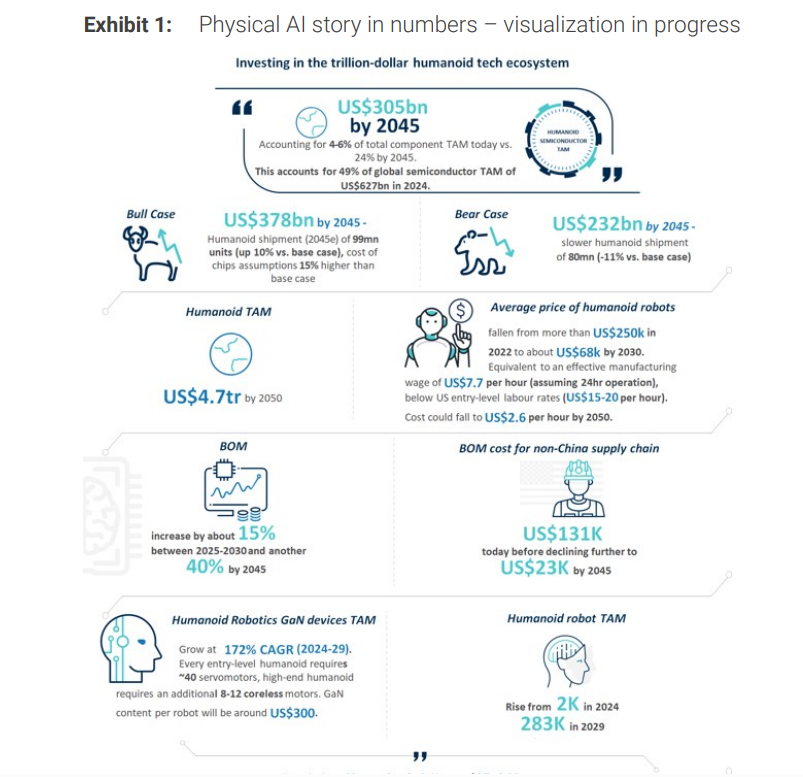
CES2026超前瞻:AI是核心议题,中国企业或将再度霸展
3 6 Ke· 2025-12-01 04:09
Core Insights - CES 2026 is set to showcase significant advancements in AI technology, with major companies like Siemens, Caterpillar, AMD, and Lenovo focusing on AI in their presentations [5][8][19] - The event will highlight a variety of AI hardware products, including AI glasses, AI PCs, AI smartphones, and humanoid robots, indicating a strong trend towards AI integration in consumer electronics [18][19] - Chinese brands are expected to dominate CES, showcasing their technological innovations across various categories, reflecting their growing influence in the global market [40][41] AI as the Central Theme - AI will be the overarching theme of CES 2026, with confirmed keynote speeches from industry leaders emphasizing its importance [5][19] - Companies like Siemens will demonstrate how AI and digital twin technology can transform manufacturing and infrastructure [8] - Lenovo plans to unveil innovations related to AI-driven experiences, including applications in sports and personalized user interactions [11] PC and Gaming Innovations - Intel, AMD, and NVIDIA are anticipated to launch new products, including Intel's Panther Lake mobile processors and AMD's R9 9950X3D processor with enhanced cache capabilities [19][21] - The introduction of new gaming processors and graphics cards is expected to attract significant attention from the gaming community [21][22] Display Technology Competition - Major TV manufacturers, including TCL and Hisense, are expected to showcase advancements in RGB display technology, competing with international brands like LG and Samsung [25][26] - The CES 2026 will feature a variety of display technologies, including Micro RGB LCD and Mini LED, highlighting the competitive landscape in the display sector [25][26] Smart Cleaning Devices - Chinese smart cleaning brands are set to unveil new products, including robotic vacuums and lawn mowers, reinforcing their leadership in the global smart cleaning market [27][30] - The focus will be on comprehensive cleaning solutions that leverage AI and advanced navigation technologies [30] Accessory and Audio Innovations - Accessory brands like Baseus and Ugreen are expected to expand their product lines beyond traditional charging devices, venturing into audio and smart home solutions [31][34] - The introduction of high-end audio products and smart home security devices will be a key focus for these brands at CES 2026 [36] AI Glasses and New Hardware - AI glasses are anticipated to be a major highlight, with various brands competing in this emerging category [38] - The presence of established players and new entrants in the AI hardware space will create a dynamic showcase of innovative products [39] Chinese Brands' Dominance - Chinese companies are projected to play a pivotal role at CES, with a significant share of exhibitors and a focus on technological innovation rather than just cost competitiveness [40][41] - The event serves as a platform for Chinese brands to demonstrate their rapid product development and engineering capabilities across multiple tech sectors [40][41]



新股消息 移芯通信递表港交所 出货量位居中国蜂窝通信芯片行业第一
Jin Rong Jie· 2025-12-01 01:03
Core Viewpoint - Shanghai Yixin Communication Technology Co., Ltd. (Yixin Communication) has submitted its application for listing on the Hong Kong Stock Exchange, with CITIC Securities International as its sole sponsor [1] Company Overview - Yixin Communication specializes in the research, development, architecture, and commercialization of cellular communication chips, enabling devices to communicate via cellular LTE/5G networks [1] - The company's chip product matrix covers low, medium, high, and ultra-high wireless transmission speeds, optimizing the balance of power, performance, and area/cost (PPA) [1] - The chips form the foundation of the IoT ecosystem, facilitating seamless data exchange for smart meters, vehicles, and industrial equipment [1] - The chips also enhance device intelligence through vector-augmented edge AI and Open CPU technology, supporting a wide range of applications from smart sensors to industrial automation [1] Product Categories - Cellular communication chips are categorized into low-speed (e.g., NB-IoT), medium-speed (e.g., 4G Cat.1bis), high-speed (e.g., 5G RedCap), and ultra-high-speed (e.g., 5G eMBB) based on technical characteristics and application scenarios [2][9] - The product series includes various models for NB-IoT and Cat.1bis, catering to the evolving demands of the IoT market [2] Financial Performance - Revenue for Yixin Communication was approximately 410 million RMB, 533 million RMB, 552 million RMB, and 337 million RMB for the fiscal years ending June 30 in 2022, 2023, 2024, and the first half of 2025, respectively [4] - The company reported losses of 98.04 million RMB, 159 million RMB, 12.39 million RMB, and 16.85 million RMB for the same periods [5] - Gross margins were approximately -3.6%, 8.9%, 22.3%, and 22.8% for the respective fiscal years [6] Industry Overview - The cellular communication chip market is experiencing rapid growth, with global shipments expected to rise from 343 million units in 2020 to 572 million units in 2024, reflecting a compound annual growth rate (CAGR) of 13.6% [10] - The Chinese market is expanding significantly, with shipments projected to grow from 189 million units in 2020 to 367 million units in 2024, achieving a CAGR of 18.0% [10] - By 2024, Yixin Communication is expected to rank first in China and third globally in terms of cellular communication chip shipments, with a global market share of 15.3% [11]
四季度盈利概率99.999%!从血海里游出来的小鹏,靠增程翻身了?
电动车公社· 2025-11-29 16:04
Core Insights - Xiaopeng Motors is experiencing a series of positive developments, including the introduction of a humanoid robot and record-high third-quarter financial results, aiming for profitability in the fourth quarter [1][3][4] - The company is transitioning from a pure automotive focus to a broader technology-driven approach, emphasizing AI and autonomous driving [3][30] Financial Performance - In Q3 2025, Xiaopeng Motors reported total revenue of 20.38 billion yuan, marking a year-on-year increase of 100% [4] - The company has set a delivery guidance of 125,000 to 132,000 units for Q4, indicating confidence in maintaining a monthly delivery level of 42,000 units [7] - The gross margin for Q3 reached a historic high of 20.1%, surpassing Tesla's 18%, although the automotive business gross margin remains at 13.1% [23][24] Product Strategy - Xiaopeng introduced its first super-extended range model, the X9, which achieved record pre-sale orders, particularly in northern regions [10][11] - The company plans to launch three extended range versions of existing electric models in Q1 2026, aiming to boost sales and profitability [12][14] - The extended range models are designed with a large battery and fuel tank to maximize user convenience and address regional sales challenges [17][20] Technological Advancements - Xiaopeng's R&D expenses have significantly increased, reaching 2.43 billion yuan in Q3, a 48.7% rise from the previous year, focusing on electronic architecture and AI technology [28] - The company is leveraging its technology sales, generating 2.33 billion yuan in revenue with a profit margin of 74.6%, primarily from collaborations with Volkswagen [25][27] - Xiaopeng's second-generation VLA model is expected to revolutionize its software capabilities, applicable across various intelligent hardware, including autonomous vehicles and humanoid robots [34][36] Future Outlook - The company is optimistic about achieving profitability in Q4, with a high probability of success, and anticipates improvements in automotive gross margins thereafter [30] - Xiaopeng's long-term vision includes significant growth in the humanoid robot market, projecting sales to exceed 1 million units by 2030 [36][40] - The competitive landscape in the automotive market is expected to intensify in 2026, prompting Xiaopeng to focus on technological advancements to secure its future [40]


小鹏、理想能不能成为中国特斯拉?
Xin Lang Cai Jing· 2025-11-28 11:11
Core Viewpoint - Tesla has transformed from a manufacturing company to a technology company, leveraging its AI capabilities to develop ambitious projects like FSD, Robotaxi, and humanoid robots, resulting in a significantly higher P/E ratio compared to traditional automakers like Toyota [1] Group 1: Transition to Technology Companies - The automotive foundation is essential for supporting AI ambitions, requiring new players to demonstrate sustainable sales and profits to upgrade to technology stock status [3] - Scale leadership serves as a stepping stone, with domestic companies relying more on scale and cost advantages for rapid market penetration rather than solely on technological innovation [3][11] Group 2: Strategic Shifts in New Players - Li Auto's recent earnings call emphasized a strategic shift towards becoming a "embodied intelligence company," indicating a broader vision beyond just automotive products [4] - Xiaopeng Motors is also diversifying its focus, showcasing projects like Robotaxi and flying cars, aiming to integrate AI into physical products [5] Group 3: Financial Performance and Challenges - Li Auto reported a revenue of 27.365 billion yuan in Q3, a year-on-year decline of 36.2%, and adjusted net profit turned to a loss of 360 million yuan due to recall costs [7] - Xiaopeng faced a 1.2 percentage point decline in gross margin to 13.1% in Q3, below market expectations, highlighting the challenges in maintaining profitability [8] Group 4: Competitive Landscape and Differentiation - The automotive market is becoming increasingly homogeneous, making it crucial for new players to establish differentiated competitive barriers to sustain profit margins [9] - Both Li Auto and Xiaopeng have seen their differentiation advantages diminish as competition intensifies, necessitating a focus on unique product offerings [9][10] Group 5: Commercialization and Market Strategy - Achieving scale is likely a necessary condition for Li Auto and Xiaopeng to transition into technology stocks, as the domestic market favors rapid penetration through scale and cost advantages [11][13] - The path to monetization in the domestic market is more certain through scale effects rather than software services, which face significant challenges [12]


展望2026,AI行业有哪些创新机会?
3 6 Ke· 2025-11-28 08:37
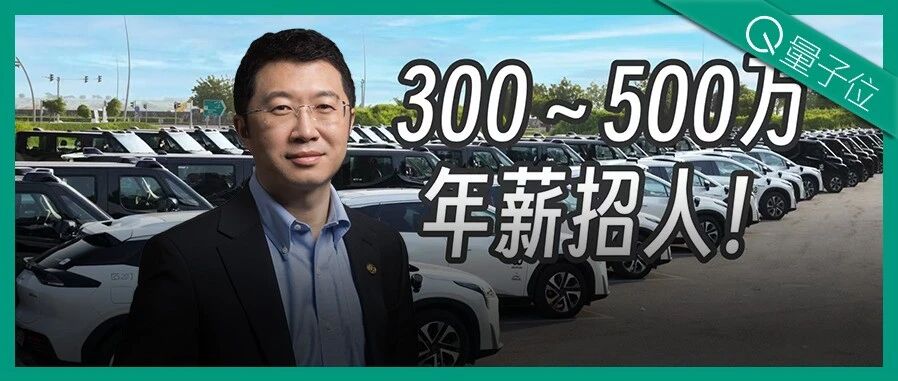
Core Insights - The AI industry is entering a rapid change cycle, with 2025 being a pivotal year for the development of large models, particularly with the emergence of DeepSeek, which is reshaping the global landscape and promoting open-source initiatives [1][10][18] - The dual-core driving force of AI development is characterized by the United States and China, each following distinct paths, with key technologies accelerating towards engineering applications [1][10][11] - Despite advancements in model capabilities, challenges in real-world application remain prevalent, indicating a shift in focus from "large models" to "AI+" [1][10][19] Group 1: Global Large Model Landscape - The global large model development is driven by a dual-core approach, with the U.S. leading in closed-source models and China focusing on open-source models [10][11][13] - OpenAI, Anthropic, and Google represent the leading trio in the large model arena, each adopting differentiated strategic paths [17] - DeepSeek's emergence marks a significant breakthrough for China's large model development, showcasing the potential of open-source models [18][19] Group 2: Key Technological Evolution - The evolution of large models is marked by four major technological trends: native multimodal integration, reasoning capabilities, long context memory, and agentic AI [22][24] - Native multimodal architectures are replacing text-centric models, allowing for seamless integration of various modalities [23] - Reasoning capabilities are becoming a core feature of advanced models, enabling them to demonstrate their thought processes [24][26] Group 3: Industry Chain and Infrastructure - The AI infrastructure is still dominated by Nvidia, with a slow transition towards a multi-polar ecosystem despite the emergence of alternatives like Google’s TPU and AMD’s chips [47][48] - The AI industry is shifting from reliance on a few cloud providers to a more collaborative funding model, with Nvidia and OpenAI acting as dual cores driving the ecosystem [51][52] Group 4: Application Layer Opportunities - Large model companies are positioning themselves as "super assistants" while also aiming to control user entry points through various products and services [53][54] - Independent application companies can find opportunities in vertical markets that require deep industry understanding and complex workflow integration [55][56] - The evolution of AI applications is moving towards intelligent agents capable of autonomous operation, indicating a significant shift in application development paradigms [61][62]



对话韩旭:双重上市后,英才校招300万起步
量子位· 2025-11-28 08:30
Core Viewpoint - The article highlights the transformation of Han Xu, CEO of WeRide, who has shifted focus from competition to attracting top talent after the company's dual listing on the Hong Kong Stock Exchange, emphasizing the importance of recruiting the best individuals for future success [1][6][72]. Group 1: Company Overview - WeRide has achieved significant milestones, including being recognized as the "first global Robotaxi stock" and operating autonomous taxis in eight countries, making it one of the largest Robotaxi fleets globally [1]. - The company has undergone a challenging yet rewarding journey, with Han Xu's leadership marked by a focus on market feedback rather than competitive positioning [3][4]. Group 2: Talent Recruitment Strategy - Han Xu has initiated a talent recruitment plan called the "Talent Plan," offering salaries starting from 3 million to 5 million RMB, which aligns with Silicon Valley standards for AI PhD graduates [8][9]. - The emphasis on recruiting top talent is seen as crucial for WeRide's success, with Han Xu believing that hiring the best individuals will lead to the company becoming the best in the industry [10][11]. Group 3: Company Culture and Environment - WeRide is characterized by an open and transparent culture that encourages innovation, which Han Xu believes is essential for attracting and retaining top talent [23][24]. - The company aims to create an environment where talented individuals can thrive, emphasizing the importance of a fair evaluation system and minimal management for high-performing employees [12][21]. Group 4: Industry Context and Future Outlook - The article discusses the current state of the autonomous driving industry, indicating a competitive landscape where only a few players will succeed, likening it to a historical transition from the Spring and Autumn period to the Warring States period in ancient China [39][42]. - Han Xu asserts that autonomous driving remains a cutting-edge field with immense potential for societal impact, countering the notion that it has lost its appeal [31][32].
智能汽车ETF(159889)涨超1.1%,市场关注科技属性重估
Mei Ri Jing Ji Xin Wen· 2025-11-28 07:44
Core Viewpoint - The core theme is the focus on technology attributes and emerging growth directions in the automotive industry, particularly highlighted during the Guangzhou Auto Show [1] Group 1: Industry Trends - Multiple automakers unveiled new models for 2026 during the Guangzhou Auto Show, indicating a strong push towards innovation [1] - GAC and Huawei's collaborative brand "Qijing" achieved over 18,000 pre-orders within 175 days, showcasing significant market interest [1] - The year 2026 is anticipated to be pivotal for new vehicle launches from Huawei, marking a significant year for the company [1] Group 2: Technological Advancements - Companies like Xpeng, GAC, and Changan showcased self-developed robotic products, indicating a trend towards integrating robotics with automotive technology [1] - The automotive and robotics sectors are expected to experience a turning point in industry trends, driven by advancements in technologies such as Tesla's FSD V14, Robotaxi, and Optimus [1] - The technological attributes of vehicles may undergo a reassessment as these innovations gain traction [1] Group 3: Investment Opportunities - The Smart Car ETF (159889) tracks the CS Smart Car Index (930721), which selects listed companies involved in smart technology, automotive parts, and services [1] - This index aims to reflect the overall performance of listed companies related to smart vehicles and the development trends of the industry [1]
不止于造车:小鹏正在重构其估值逻辑
Tai Mei Ti A P P· 2025-11-28 05:25
Core Insights - Xiaopeng Motors has demonstrated a significant turnaround, achieving a revenue of 20.38 billion yuan in Q3, a year-on-year increase of 100%, and a record delivery of 116,000 vehicles, with a gross margin of 20.1% [2] - The company has evolved from a struggling new energy vehicle manufacturer to a global provider of physical AI infrastructure, indicating a shift in its business model and market perception [2] Financial Performance - Q3 revenue reached 20.38 billion yuan, doubling from the previous year [2] - The delivery volume of 116,000 units marks a historical high for the company [2] - The gross margin of 20.1% signifies a transition to a more stable and profitable business model [2] Valuation Perspective - Major investment banks are adopting the Sum of the Parts (SOTP) valuation method for Xiaopeng, recognizing its diverse business segments beyond traditional automotive metrics [3][4] - The company is now viewed as a technology entity rather than just an automotive manufacturer, similar to how Tesla was re-evaluated in the past [5] Business Segments - Xiaopeng's operations are divided into four key segments: 1. Automotive business, providing stable cash flow [4] 2. AI chips, which support future AI computing needs [4] 3. Robotaxi services, representing a recurring revenue model [4] 4. Humanoid robots and flying cars, seen as the ultimate form of embodied intelligence [4] Strategic Moves - The introduction of the Kunpeng Super Range Extender is a tactical decision to expand market reach and data collection capabilities, addressing range anxiety for consumers [6][9] - The company is focusing on building a comprehensive data network through its vehicles to enhance AI model training [9] Technological Advancements - Xiaopeng is developing a self-research Turing AI chip, which serves as a universal brain for various intelligent terminals, including cars and robots [10] - The second-generation VLA model allows for a more intuitive AI driving experience, reducing costs and enhancing the feasibility of Robotaxi services [12] Ecosystem Development - Xiaopeng is shifting towards an ecosystem approach, collaborating with major players like Volkswagen and opening its Robotaxi and humanoid robot SDKs to the industry [14][16] - The company aims to position itself as a foundational technology provider in the physical AI space, similar to Android in the software domain [16] Global Expansion - Xiaopeng's overseas strategy has evolved to include local production and R&D in Europe, with Q3 overseas sales doubling, indicating a successful adaptation to global markets [16] Future Outlook - The company is poised for significant developments by 2026, with plans for Robotaxi trials, humanoid robot production, and flying car deliveries, potentially transforming its revenue streams [13] - Xiaopeng's vision of becoming a global embodied intelligence company is supported by its strong cash reserves and technological advancements [18]