财政赤字

Search documents
五矿期货文字早评-20250521
Wu Kuang Qi Huo· 2025-05-21 02:43
Report Industry Investment Ratings No relevant content provided. Core Views - The stock market's risk appetite has gradually recovered, and it is recommended to buy long IH or IF index futures related to the economy on dips, or buy long IC or IM futures related to "new - quality productivity" opportunistically [3]. - The bond market faces short - term adjustment pressure, and it is advisable to wait for opportunities after the correction and mainly enter the market on dips [6]. - For precious metals, it is recommended to buy long gold on dips, and temporarily observe silver [8]. - For various non - ferrous metals, different trading strategies are proposed according to their supply - demand fundamentals and price trends [10][11][14]. - For black building materials, the short - term demand for steel plates and exports may strengthen, but the long - term demand is still under pressure; the prices of other varieties are also affected by supply - demand and external factors [21][22]. - For energy and chemical products, different trading strategies are given based on factors such as supply - demand, inventory, and cost [37][38]. - For agricultural products, different trading strategies are recommended according to the supply - demand situation and price trends of each variety [48][49]. Summary by Related Catalogs Stock Index - Index performance: The Shanghai Composite Index rose 0.38%, the ChiNext Index rose 0.77%, etc. The total trading volume of the two markets was 1169.7 billion yuan, an increase of 83.2 billion yuan from the previous day [2]. - Macro news: From January to April, the national general public budget revenue decreased by 0.4% year - on - year, and the expenditure increased by 4.6% year - on - year; the four major banks announced a reduction in deposit interest rates, and the LPR rate in May decreased by 10 basis points; the EU significantly lowered its economic growth forecast due to tariff impacts [2]. - Capital situation: The margin trading balance increased by 3.597 billion yuan; the overnight Shibor rate decreased by 2.80bp to 1.5090%; the credit spread decreased by 1.73bp to 135bp; the Sino - US interest rate spread decreased by 0.57bp to - 276bp [2]. - Trading logic: After the policy support, the risk appetite of the stock market has recovered. It is recommended to buy long IH or IF index futures on dips, or buy long IC or IM futures opportunistically [3]. - Trading strategy: It is recommended to buy long IF index futures on dips, and no arbitrage strategy is recommended [4]. Treasury Bonds - Market conditions: On Tuesday, the TL main contract fell 0.03%, the T main contract rose 0.03%, the TF main contract fell 0.04%, and the TS main contract fell 0.03% [5]. - News: The LPR decreased by 10 basis points in May; the six major banks announced a reduction in deposit interest rates [5]. - Liquidity: The central bank conducted 357 billion yuan of 7 - day reverse repurchase operations, with a net investment of 177 billion yuan [6]. - Strategy: The bond market faces short - term adjustment pressure. It is advisable to wait for opportunities after the correction and mainly enter the market on dips [6]. Precious Metals - Market performance: Shanghai gold rose 2.11%, Shanghai silver rose 1.68%; COMEX gold rose 0.30%, COMEX silver rose 0.43% [7]. - Market outlook: Due to Trump's statements, the US fiscal deficit expectation has changed, driving the prices of gold and silver to strengthen. It is recommended to buy long gold on dips and temporarily observe silver [7][8]. Non - Ferrous Metals - Copper: The price rebounded after a decline. The supply of copper raw materials is tight, but the support for copper prices is weakening. It is expected that the rebound of copper prices will not be smooth [10]. - Aluminum: The price recovered. The inventory of aluminum ingots is expected to continue to decline, but the seasonal weakness of consumption will limit the upward space of aluminum prices. The short - term price is expected to be volatile [11]. - Zinc and Lead: After the Sino - US economic and trade talks, the short - term sentiment of commodities has improved. The medium - term price of lead is expected to fluctuate within a range, and the short - term price shows a relatively strong fluctuation [12][13]. - Nickel: The cost of nickel is expected to loosen, and the spot demand is weak. The inventory may return to the accumulation trend, and the price is expected to be bearish [14]. - Tin: The supply of tin is currently tight but is expected to loosen. If the downstream demand remains weak, the center of tin prices may move down [15]. - Lithium Carbonate: The supply - demand side lacks strong driving forces. The price is at the cost - intensive area, and it is likely to fluctuate at the bottom [16]. - Alumina: There are continuous disturbances in the ore and supply ends. It is recommended to observe in the short term [17]. - Stainless Steel: The short - term market is expected to maintain a weak and volatile pattern [18]. Black Building Materials - Steel: The price of finished products showed a weak and volatile trend. The demand for steel plates and exports may strengthen in the short term, but the long - term demand is still under pressure [20][21]. - Iron Ore: The price is expected to fluctuate in the short term. It is necessary to pay attention to macro progress and changes in fundamental demand [22]. - Glass and Soda Ash: The price of glass is expected to be weak in the medium term; the supply of soda ash is expected to decrease due to maintenance, but the medium - term supply is still loose, and the price is expected to be weak [23][24]. - Manganese Silicon and Ferrosilicon: It is recommended to observe for both. The demand for manganese silicon is expected to weaken, and the price of ferrosilicon may still face pressure [25][26]. - Industrial Silicon: The industry has obvious over - capacity, and the price may continue to decline. It is not recommended to buy on dips prematurely [30][31]. Energy and Chemicals - Rubber: There is an expectation of rubber storage and production reduction, but the demand is in the off - season. It is recommended to have a neutral or bearish mindset and operate in the short - term [33]. - Crude Oil: The current oil price is in the high - valuation range, and it is recommended to short on rallies [36][37]. - Methanol: The price is expected to remain weak. It is recommended to short on rallies and pay attention to the anti - arbitrage opportunity after the spread rises [38]. - Urea: The market presents a pattern of both supply and demand being strong. It is recommended to observe and consider buying on dips after a significant correction [39]. - PVC: The supply is strong and the demand is weak, and the price is expected to be weakly volatile [40]. - Ethylene Glycol: The industry is in the inventory - reduction stage. There are risks in the short term due to the large - scale repair of the valuation [42]. - PTA: The supply is in the maintenance season, and the price is expected to be supported. Attention should be paid to risks due to the short - term rise of valuation [43]. - PX: It is in the maintenance season and is expected to reduce inventory in the second quarter. Attention should be paid to risks due to the short - term rise of valuation [44]. - Polyethylene PE: The valuation has limited upward space. The price is expected to be volatile in the long - term [45]. - Polypropylene PP: The price is expected to be volatile and bearish in May [46]. Agricultural Products - Live Pigs: The short - term price may be stable, and the long - term trend is pessimistic. It is recommended to sell on rallies in the medium - term [48]. - Eggs: The supply is sufficient, and the price is expected to be under pressure. It is recommended to sell on rallies for near - month contracts [49]. - Soybean and Rapeseed Meal: The short - term supply of domestic soybeans is large, and the price is expected to be weakly volatile [50][52]. - Oils and Fats: The price is expected to be weakly volatile due to factors such as the recovery of palm oil production and the uncertainty of the US biodiesel policy [53][55]. - Sugar: The international market supply is expected to increase, and the domestic sugar price is likely to weaken [56][57]. - Cotton: The short - term price is expected to be strongly volatile due to the improvement of market confidence and the acceleration of inventory reduction [58][59].
LPR迎来年内首降,以色列准备袭击伊核设施
Dong Zheng Qi Huo· 2025-05-21 00:45
1. Report Industry Investment Ratings No specific industry investment ratings are provided in the report. 2. Core Views of the Report - Geopolitical risks, such as Israel's potential attack on Iranian nuclear facilities and Iran's leader's strong stance on nuclear negotiations with the US, have led to increased market risk aversion, affecting the prices of gold, the US dollar index, and oil [1][3][17]. - The reduction of LPR this year has boosted the stock market, with heavy - weighted stocks rising significantly and market sentiment turning optimistic [2]. - In the commodity market, different products show various trends. For example, steel prices are in a weak and volatile pattern due to unimproved domestic real - estate and infrastructure demand; copper prices may be weak in the short term due to concerns about fundamental weakening; and the prices of some agricultural products are affected by factors such as import volume changes and weather conditions [4][5]. 3. Summary by Directory 3.1 Financial News and Comments 3.1.1 Macro Strategy (Gold) - Gold prices rose strongly due to geopolitical risks, once regaining the $3300 mark, but the sustainability of geopolitical risks is uncertain, and a new upward trend has not been confirmed. The Fed is waiting and watching, and there is a lack of incremental positive factors in the short term. It is recommended to reduce positions in the short term [13][14]. 3.1.2 Macro Strategy (Foreign Exchange Futures - US Dollar Index) - The discovery that Israel is preparing to attack Iranian nuclear facilities has increased market risk aversion, causing the US dollar index to fluctuate. It is expected that the US dollar index will fluctuate in the short term [17][18]. 3.1.3 Macro Strategy (Stock Index Futures) - The reduction of LPR and the government's emphasis on financial support for the real economy have led to a rise in risk appetite in the stock market, with heavy - weighted stocks rising significantly. In the short term, retail investors' entry may be the reason for the continuous increase in funds. It is recommended to allocate assets evenly [21][22]. 3.1.4 Macro Strategy (US Stock Index Futures) - Moody's downgrade of the US sovereign credit rating, the impasse of the Trump tax - cut bill, and Google's disappointing developer conference have led to a decline in market risk appetite. The US stock market is still in a volatile pattern, and the upside space is limited after approaching the upper limit of the volatile range [26][27]. 3.1.5 Macro Strategy (Treasury Bond Futures) - The reduction of deposit rates and LPR, and the central bank's reverse - repurchase operation. The problem with going long on long - term treasury bonds is the lack of odds. It is recommended to go long in the medium term but choose the right time and collect low - priced chips as much as possible [30][31]. 3.2 Commodity News and Comments 3.2.1 Agricultural Products (Corn Starch) - The spot price of corn starch is stable. Due to high raw material costs and losses, the number of停产 or减产 enterprises is increasing, and the supply pressure is easing. It is expected that the operating rate will remain low and volatile to digest inventory [32][33]. 3.2.2 Agricultural Products (Corn) - Corn prices have fallen. The increase in warehouse receipts and the weakening of the futures market have made the spot market pessimistic. It is necessary to pay attention to whether the decline in spot inventory can drive the continuous strengthening of spot prices and support the futures market [34]. 3.2.3 Black Metals (Steam Coal) - Steam coal prices continue to decline. Although the daily consumption of thermal power has improved in May, it is still in the off - season. The market is waiting for the recovery of demand in June to support prices, and attention should be paid to the support at the 600 - yuan level [35]. 3.2.4 Black Metals (Iron Ore) - The inventory of iron ore in major ports in Australia and Brazil has increased slightly. The market is waiting for new orders in June - July. It is recommended to wait and see temporarily and arrange a small number of positive spreads at low prices [36][37]. 3.2.5 Agricultural Products (Soybean Meal) - ANEC has raised the forecast of Brazil's soybean exports in May. Due to bad weather in Argentina and the US, and increased domestic soybean meal transactions, the futures price is expected to be volatile, and the pressure on the spot market remains [38][39]. 3.2.6 Agricultural Products (Soybean Oil/Rapeseed Oil/Palm Oil) - China's palm oil imports in April decreased month - on - month, while Malaysia's palm oil exports from May 1 - 20 increased month - on - month. The oil market rebounded, but it still lacks the driving force for a sharp rise. Attention should be paid to the determination of the US RVO obligation in 2026 [40][41]. 3.2.7 Black Metals (Coking Coal/Coke) - The price of coking coal in the northwest market is weakly stable. The coking coal futures market is in a downward trend, and the supply is stable while the demand is expected to weaken. The first round of coke price cuts has been implemented, and the price is expected to be weakly volatile in the short term. It is recommended to be bearish in the medium - to - long term [42][43]. 3.2.8 Agricultural Products (Pigs) - From a long - term, medium - term, and short - term perspective, the supply of pigs is still under pressure. It is recommended to short on rebounds [44][45]. 3.2.9 Agricultural Products (Cotton) - Domestic cotton imports in April continued to decline, and the import of cotton yarn was relatively stable. The sowing of US cotton has accelerated but is still slower than normal. The demand for upstream cotton is limited, and Zhengzhou cotton is expected to be volatile in the future. Attention should be paid to the progress of domestic cotton inventory reduction and Sino - US trade negotiations [50][51]. 3.2.10 Black Metals (Rebar/Hot - Rolled Coil) - Thailand has cancelled incentives for the steel manufacturing industry, and Australia has launched an anti - dumping sunset review on Chinese wire rods. Steel prices are in a weak and volatile pattern, and it is expected that they will continue to fluctuate in the near future. It is recommended to hold a light position in the short term and use the spot for hedging on rebounds [52][55]. 3.2.11 Non - Ferrous Metals (Alumina) - A medium - sized alumina plant in Shanxi is about to enter the roasting furnace maintenance stage. The spot price of alumina has risen. It is recommended to wait and see [56][58]. 3.2.12 Non - Ferrous Metals (Lead) - A lead - zinc mine in Russia will not suspend operations as planned. The terminal demand for lead is weak, and there is a risk of a short squeeze overseas. The short - term price of lead is expected to be weakly volatile, and attention can be paid to the positive spread between domestic and foreign markets [60]. 3.2.13 Non - Ferrous Metals (Zinc) - In April, the import of zinc concentrates increased significantly, and the export of zinc alloys increased month - on - month. The pattern of near - strong and far - weak for zinc remains unchanged. It is recommended to short on rallies with a safety margin in the medium term and pay attention to positive spread opportunities [61][65]. 3.2.14 Non - Ferrous Metals (Copper) - In April, China's imports of copper concentrates increased, while imports of refined copper decreased. The production of refined copper and copper products increased. Macro factors have a neutral impact on copper prices in the short term, and the market is worried about the weakening of fundamentals. It is recommended to conduct band trading [66][70]. 3.2.15 Non - Ferrous Metals (Polysilicon) - The average winning bid price of photovoltaic modules has decreased. The silicon material enterprises' joint production - cut action is still under discussion. It is recommended to focus on arbitrage strategies rather than unilateral operations [71][73]. 3.2.16 Non - Ferrous Metals (Industrial Silicon) - In April, the export of industrial silicon increased month - on - month, and the import decreased. The demand is not improving significantly. It is not recommended to go long on the left side, and attention should be paid to shorting opportunities on rebounds and the cash - flow risk of large enterprises [74][76]. 3.2.17 Non - Ferrous Metals (Lithium Carbonate) - Supply is still in excess, and the cost support is moving down. Although there is potential marginal positive news for overseas energy - storage demand, the market is still weak. It is recommended to control short positions and pay attention to potential supply disturbances [80][81]. 3.2.18 Non - Ferrous Metals (Nickel) - In April, China's imports of refined nickel increased significantly. The price of nickel is in a range - bound pattern. It is recommended to focus on band trading in the short term and long on dips in the medium term [82][83]. 3.2.19 Energy Chemicals (Crude Oil) - API crude oil inventory has increased, and gasoline and refined oil inventories have decreased. Geopolitical conflicts in the Middle East may lead to price fluctuations. Oil prices are expected to be volatile in the short term [84][85]. 3.2.20 Energy Chemicals (Carbon Emissions) - The EU and the UK have connected their ETS systems, which will improve trade and cooperation and increase market liquidity. European carbon prices are expected to be volatile in the short term [86][88]. 3.2.21 Energy Chemicals (PTA) - The spot price of PTA has decreased, and the basis has declined rapidly. Due to supply disturbances and marginal strengthening of demand, PTA valuation has been repaired, but it has recently adjusted due to demand - side rumors. It is expected to be in a short - term adjustment [89][90]. 3.2.22 Energy Chemicals (Caustic Soda) - The price of caustic soda in Shandong has increased. The supply is stable, and the demand from alumina is good. The rise in the caustic soda market is indirectly affected by the alumina market and is unlikely to have a significant increase [91][92]. 3.2.23 Energy Chemicals (Pulp) - The spot price of imported wood pulp is mainly stable. The paper mill's willingness to purchase pulp is not strong. The pulp market is expected to be volatile [93][94]. 3.2.24 Energy Chemicals (PVC) - The spot price of PVC powder is in a narrow - range adjustment. The market is in a wait - and - see state, and the PVC market is expected to be volatile [95]. 3.2.25 Energy Chemicals (Styrene) - The trading volume of styrene in Shandong has decreased. An enterprise's device may return soon, which will relieve the short - term supply shortage. The styrene - benzene spread is expected to narrow [96][97]. 3.2.26 Energy Chemicals (Bottle Chips) - The export quotes of bottle - chip factories have decreased. The raw material cost has decreased, and the supply pressure is increasing. The processing fee of bottle chips is expected to fluctuate at a low level following the cost [98][100]. 3.2.27 Energy Chemicals (Soda Ash) - The price of soda ash in North China is in a narrow - range fluctuation. The supply is low due to ongoing maintenance, and the demand is average. It is recommended to short on rallies in the medium term [101]. 3.2.28 Energy Chemicals (Float Glass) - The price of float glass in the Shahe market is stable. The futures price is slightly volatile, and the spot price is weak. The glass market is expected to operate in a low - level range, and attention should be paid to real - estate policy changes [102][103]. 3.2.29 Shipping Index (Container Freight Rate) - The Houthi rebels have blockaded two Israeli ports. The market sentiment may be supported, but the upside space of the EC2506 contract is limited. The short - term market is expected to be strongly volatile, and attention should be paid to the risk of spot prices falling short of expectations [104][105].
标普:若罗马尼亚财政赤字超出预期,可能会下调其信用评级。罗马尼亚财政政策面临的挑战仍然“巨大”。
news flash· 2025-05-20 12:39
标普:若罗马尼亚财政赤字超出预期,可能会下调其信用评级。罗马尼亚财政政策面临的挑战仍然"巨 大"。 ...
高盛:美国经济分析-大幅度的减税仍无法抵消关税的拖累
Goldman Sachs· 2025-05-20 05:38
19 May 2025 | 8:51AM EDT US Economics Analyst A Slightly Larger Tax Cut Still Won't Offset the Drag From Tariffs (Phillips) Jan Hatzius +1(212)902-0394 | jan.hatzius@gs.com Goldman Sachs & Co. LLC Alec Phillips +1(202)637-3746 | alec.phillips@gs.com Goldman Sachs & Co. LLC David Mericle +1(212)357-2619 | david.mericle@gs.com Goldman Sachs & Co. LLC Ronnie Walker +1(917)343-4543 | ronnie.walker@gs.com Goldman Sachs & Co. LLC Manuel Abecasis +1(212)902-8357 | manuel.abecasis@gs.com Goldman Sachs & Co. LLC Inv ...
美国主权信用评级再遭下调 债务隐患撼动市场信心
Zhong Guo Xin Wen Wang· 2025-05-20 03:27
美国,再一次"被降级"。 近日,国际评级机构穆迪将美国主权信用评级从AAA下调至AA1,终结了其自1917年以来对美国维持 的最高评级。至此,美国在三大评级机构中的最高信用评级已悉数失守。 穆迪给出的降级理由并不陌生——财政赤字持续扩大、债务利息攀升、预算灵活性有限,这与此前标普 和惠誉的判断如出一辙。 "这进一步证明美国债务过高。国会必须自律,要么增加收入,要么减少支出。"斯坦福大学金融学教 授、前穆迪董事会成员达雷尔·达菲说。 目前,美国联邦政府债务总额突破36万亿美元,其中约四分之一将在2025年陆续到期。为了"借新还 旧",美国政府将不得不发行更多国债,伴随美债收益率上行,这一模式正变得更加昂贵和脆弱。 穆迪在报告中警告,美国持续的大规模财政赤字将进一步推高政府债务和利息支出负担,财政状况很可 能会恶化。 2024年,美国联邦财政赤字占GDP比例为6.4%。穆迪预测,这一比例将在2035年升至9%,与美国财长 贝森特所期望的"赤字占比降至3%"目标背道而驰。 美国的"财政掣肘"并非虚言。 更棘手的是,美国国内政治极化日益加剧,导致财政改革难以推进。 2023年惠誉下调美国信用评级时,多名民主党政府官员 ...
美元债双周报(25年第20周):评级下调加剧美债中长期压力
Guoxin Securities· 2025-05-20 00:50
Investment Rating - The report assigns a neutral rating to the industry, indicating a cautious outlook on investment opportunities [1]. Core Insights - The report highlights that U.S. inflation data for April has continued to cool, with the Consumer Price Index (CPI) rising by 2.3% year-on-year, the lowest level since February 2021. Core CPI has also dropped to 2.8%, marking the first time it has fallen below 3% [1]. - Moody's has downgraded the U.S. credit rating from Aaa to Aa1, reflecting concerns over the worsening government deficit. The report anticipates that the federal deficit will approach 9% of GDP by 2035, with federal debt reaching 134% of GDP [2]. - The report notes that U.S. Treasury yields have risen across the board, with the 10-year and 2-year yields recorded at 4.43% and 3.99%, respectively. The yield spread between 10-year and 2-year bonds has narrowed to 44 basis points [3]. Summary by Sections U.S. Macroeconomic and Liquidity Analysis - April's inflation data shows a significant decline in prices for food, used cars, and air transportation, contributing to the overall slowdown in inflation. However, housing costs remain a major driver of inflation, accounting for over half of the CPI increase [1]. - The report emphasizes the potential lagging effects of trade tariff adjustments, which may not yet be fully reflected in the market, suggesting that future tariff increases could lead to a rebound in core commodity prices [1]. Credit Rating Actions - Moody's recent downgrade of the U.S. credit rating has intensified market concerns regarding fiscal sustainability, potentially limiting the scope for monetary policy easing. The market expects the first interest rate cut to occur in September, with an anticipated reduction of approximately 50 basis points over the year [2][3]. - The report indicates that the recent downgrade, while anticipated, may still impact risk appetite in the short term, urging investors to adopt a cautious approach towards long-duration bonds [3]. Important Events and Data - The report advises monitoring upcoming U.S. economic indicators, including April's real estate sales data, April's Personal Consumption Expenditures (PCE), and May's Purchasing Managers' Index (PMI) data [3].
穆迪下调美国主权信用评级!外交部回应
第一财经· 2025-05-19 15:05
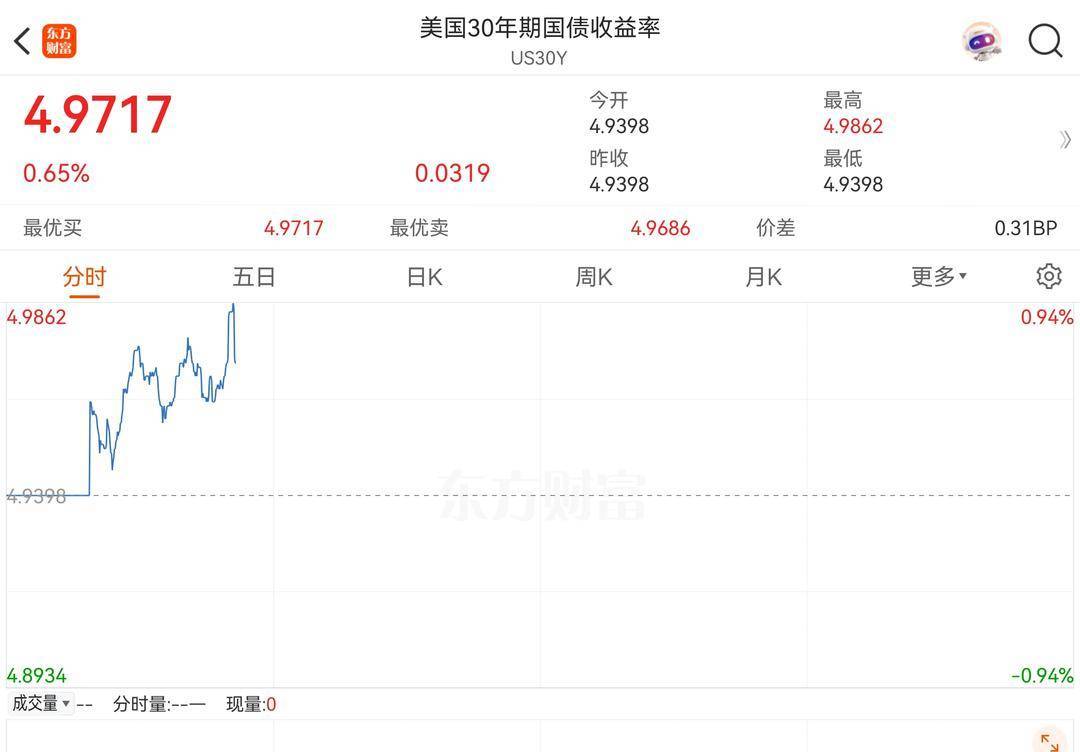
Core Viewpoint - The downgrade of the U.S. credit rating by Moody's has raised concerns among investors regarding the reliability of U.S. Treasury bonds as a safe-haven asset, leading to increased yields on U.S. government bonds [1][3]. Group 1: Credit Rating Downgrade - Moody's downgraded the U.S. sovereign credit rating from Aaa to Aa1, citing rising government debt and interest payment ratios significantly higher than similar sovereign nations [3][5]. - This downgrade aligns with previous actions by other major rating agencies, including Standard & Poor's and Fitch, which also lowered the U.S. rating in recent years [3][4]. Group 2: Market Reactions - Following the downgrade, the yields on 30-year, 10-year, and 2-year U.S. Treasury bonds increased, with the 30-year yield surpassing 5% for the first time since October 2023 [1][3]. - U.S. stock futures indicated a decline, with the Dow Jones Industrial Average futures dropping nearly 300 points, and the volatility index rising by 13% [1]. Group 3: Fiscal Concerns - The House Budget Committee approved a tax and spending proposal from the Trump administration, which is expected to increase the deficit by trillions of dollars, exacerbating concerns over U.S. debt [6][7]. - Moody's expressed skepticism about the current fiscal proposals' ability to significantly reduce spending and deficits in the long term, predicting that mandatory spending will rise from approximately 73% of total spending in 2024 to about 78% by 2035 [7]. Group 4: Default Risk - The cost of U.S. government debt default insurance, measured by credit default swaps (CDS), has slightly increased, indicating a rise in perceived risk among investors [8].



美元债双周报(25年第20周):评级下调加剧美债中长期压力-20250519
Guoxin Securities· 2025-05-19 14:07
证券研究报告 | 2025年05月19日 美元债双周报(25 年第 20 周) 中性 评级下调加剧美债中长期压力 美国 4 月通胀数据再度回落,核心物价触及疫情后低点,关税影响或将滞后 显现。4 月美国通胀数据继续降温,CPI 同比增长 2.3%,为 2021 年 2 月 以来最低水平;核心 CPI 同比 2.8%,首次跌破 3%。食品、二手车和航 空运输价格显著下降,带动通胀放缓。尽管油价回落,能源分项因电力 和天然气上涨环比上升 0.7%;住房成本仍是通胀主要支撑,占 CPI 涨幅 的一半以上。结构上,超级核心 CPI(核心服务剔除住房通胀)同比降 至 3.0%,但核心服务环比略升 0.2%,显示服务类通胀黏性。商品通胀 回归正区间,同比仅增 0.1%。然而,贸易关税调整的滞后效应尚未全面 反映,企业去库存延缓成本传导,未来加征关税可能引发核心商品补涨。 穆迪下调美国信用评级至 Aa1,担忧政府赤字恶化。穆迪评级公司周五盘 后宣布将美国信用评级从最高的 Aaa 下调至 Aa1,并将评级展望从"负 面"调整为"稳定"。这一决定反映了美国政府债务与利息支付比例在 过去十多年中持续攀升,且多届政府未能就削减财政 ...
失去最后一个AAA评级后 美国再现债市杀
Sou Hu Cai Jing· 2025-05-19 08:14
Group 1 - Moody's downgraded the U.S. credit rating from Aaa to Aa1, marking the first time all three major rating agencies have downgraded the U.S. [1] - The downgrade raises concerns about the U.S.'s status as the world's premier sovereign borrower, putting pressure on U.S. dollar assets [1][3] - Following the downgrade, U.S. stock futures, Treasury futures, and the dollar index weakened, with the 30-year Treasury yield approaching 5%, the highest since mid-2007 [1] Group 2 - The rise in bond yields, including a 10-year Treasury yield reaching 4.49%, increases the debt repayment burden for the U.S. government and threatens to weaken the real economy by raising loan rates [2][5] - Moody's indicated that the U.S. government's debt-to-interest payment ratio has been rising for over a decade, significantly higher than other sovereign nations with similar ratings [4] - The agency expects the fiscal deficit to widen due to growing welfare expenditures, with a deteriorating fiscal performance compared to other high-rated countries [5]
穆迪下调美国信用评级,金价触底反弹再度走高
Sou Hu Cai Jing· 2025-05-19 06:40
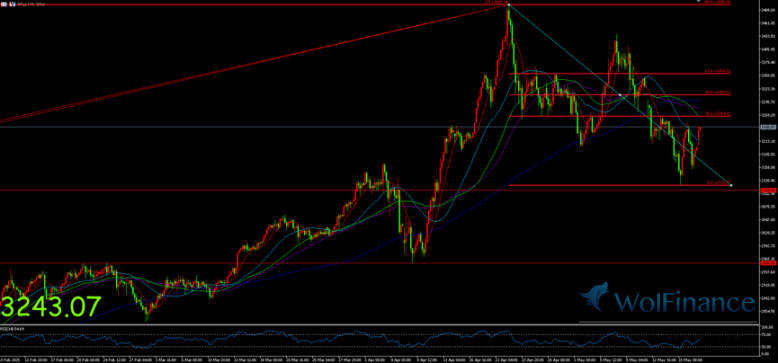
行情回顾: 国际黄金周五(5月16日)震荡收跌,开盘价3219.78美元/盎司,最高价3252.11美元/盎司,最低价3154.20美元/ 盎司,收盘价3183.50美元/盎司。 消息面: 特朗普表示,印度已提出削减对美国商品的所有关税,但他淡化了与世界第四大经济体达成贸易协议的紧迫 感。特朗普在接受采访时,把印度当作要削减壁垒的例子。"他们让人几乎无法做生意。你知道他们愿意为美 国削减100%的关税吗?"特朗普说。但在达成协议的可能性上,特朗普发出了不同的信号,他说:"很快就会 达成。我不着急。听着,每个人都想和我们做交易。"他补充说,他不打算"与所有人达成协议"。特朗普此番 言论表明,美国只会就许多国家将面临的关税做出单方面决定。星期五早些时候,特朗普表示,他计划在"未 来两到三周内"为贸易伙伴设定新的进口税率。 美国财政部长贝森特周日表示,若各国在 90 天关税暂停期内未达成贸易协议,关税税率将很快恢复至 "对等" 水平。"特朗普总统已警告他们,若不以诚意谈判,关税将回升至 4 月 2 日的水平。" 贝森特在 节目中称。贝 森特透露,美国正重点与 18 个 "重要" 贸易伙伴敲定协议,但未说明关税恢复 ...