
消费升级

Search documents
解码2026“国补”新政
Jing Ji Wang· 2026-01-14 02:24
Group 1: National Subsidy Policy - The new "National Subsidy" policy, with an initial funding of 62.5 billion yuan, aims to boost consumption upgrades and improve livelihoods by focusing on large-scale equipment updates and trade-in programs for consumer goods [2][4] - The 2026 subsidy rules have been optimized compared to 2025, with specific adjustments for automobiles and home appliances, including a 15% subsidy for energy-efficient products and a cap of 1,500 yuan per item [2][7] - The inclusion of smart glasses in the subsidy program reflects the government's support for the smart wearable industry and aligns with the trend of consumption upgrades [3][4] Group 2: Smart Glasses Market - Smart glasses are transitioning from niche products to practical tools for various scenarios, including education, workplace efficiency, and fitness monitoring, which is attracting attention from major tech companies [5][6] - The domestic retail market for smart glasses is expected to recover significantly this year, with companies like VITURE expanding their presence in key urban areas [3][6] - The smart glasses segment is projected to experience substantial growth, with the global AI glasses market expected to reach 6.653 billion yuan in 2025 and 18.209 billion yuan in 2026 [5] Group 3: Home Appliances and Environmental Focus - The 2026 subsidy policy emphasizes energy-efficient home appliances, with a focus on products meeting level 1 energy or water efficiency standards, which is expected to enhance the market share of green products [7][8] - The policy changes are anticipated to accelerate the elimination of outdated production capacities and drive companies to invest more in R&D for high-end, eco-friendly products [7][8] - The shift towards level 1 energy-efficient products is expected to significantly reduce carbon emissions, reinforcing the social value of green consumption [8] Group 4: Market Dynamics and Consumer Behavior - The adjustment in subsidy policies is likely to lead to a decline in sales for lower-efficiency products while promoting higher-efficiency alternatives, thus influencing consumer purchasing behavior [9][10] - The smart consumer electronics sector is experiencing high growth, with online retail sales of smart wearables increasing by 23.1% from January to October 2025, indicating a strong demand for intelligent and experiential products [10]

第一批反季来中国的老外,最爱哈尔滨与三亚
3 6 Ke· 2026-01-14 02:17
Core Insights - The influx of Russian tourists to Sanya has significantly increased, surpassing visitors from other countries, leading to a shift in local hospitality practices and language training for staff [1][2] - Sanya has become a preferred destination for Russian travelers due to its favorable climate and cultural familiarity, while Harbin attracts Southeast Asian tourists seeking unique winter experiences [4][10] - The changing demographics of tourists are prompting local businesses to adapt their services and offerings to meet new consumer preferences [25][26] Group 1: Russian Tourists in Sanya - Russian tourists now dominate the visitor demographic in Sanya, with hotel staff learning Russian to cater to this market [1] - The demand for Russian-speaking tour guides has surged, with wages reaching 500 yuan per day, comparable to Japanese guides [1] - The number of Russian tourists booking trips to China has increased by 3.5 times since the introduction of visa-free entry, with Sanya accounting for 88% of bookings [2][3] Group 2: Changes in Tourist Behavior - Russian visitors are not just looking for leisure; they are interested in cultural experiences, leading to a rise in demand for local cultural activities and wellness services [20][21] - The average stay for Russian tourists has lengthened, with many opting for longer-term accommodations that allow for a more local lifestyle [19] - Approximately 35% to 40% of Russian families are traveling with children, increasing the demand for family-friendly activities in Sanya [20] Group 3: Southeast Asian Tourists in Harbin - Southeast Asian tourists are increasingly visiting Harbin, with a 57% year-on-year increase in bookings for winter tourism products [3] - Direct flights from Southeast Asia to Harbin have made travel more accessible, allowing tourists to experience winter activities without lengthy layovers [12] - Harbin is enhancing its service offerings to cater to the needs of Southeast Asian visitors, including providing warm amenities and language support [23][24] Group 4: Economic and Service Adaptations - The growth in Russian and Southeast Asian tourism is prompting local businesses to adjust their service protocols to better meet the needs of these new demographics [25][27] - The integration of local payment systems and services has improved the overall experience for Russian tourists, with 80% of transactions now conducted in local currency [9] - The hospitality industry is witnessing a shift from traditional Western markets to neighboring countries, highlighting the importance of regional tourism dynamics [16][26]

供需错配下的新蓝海:新兴城市消费上涌与一线品牌“双向奔赴”
Guan Cha Zhe Wang· 2026-01-14 00:50
Core Insights - Hema's CEO announced that the company expects a revenue growth rate exceeding 40% by 2025, with its annual GMV projected to surpass 100 billion yuan [1] - The growth is driven by Hema's expansion into 40 emerging cities, achieving high initial sales performance in these locations [1] - Other brands like Starbucks and Lululemon are also accelerating their presence in non-first-tier cities, indicating a broader market shift [1] Group 1: Market Dynamics - There is a significant shift in China's urban development, with a reversal of the traditional trend of population influx into first-tier cities, leading to increased consumer activity in emerging cities [3] - The 2024 migration index for second-tier cities and above shows a decline, with more individuals choosing to stay in their hometowns for work [3] - Over 130 cities are projected to experience net population growth by the end of 2025, with 17 of the top 30 cities being second-tier or below [3] Group 2: Consumer Behavior - The influx of new residents, including internet professionals and entrepreneurs, is driving higher income levels and consumer willingness in emerging cities [5] - The fast-moving consumer goods market is stabilizing, with three to five-tier cities contributing 80% of the market's growth [5] - A significant majority of non-first-tier cities reported positive retail sales growth, with many third-tier cities exceeding the national average [5] Group 3: Supply and Demand Mismatch - Despite rising consumer demand, the supply chain in emerging cities has not kept pace, leading to a mismatch [7] - Consumers face challenges in accessing high-quality products, as local supermarkets primarily offer traditional goods [7] - The lack of modern retail experiences in emerging cities limits consumer engagement and frequency of purchases [7][9] Group 4: Brand Strategies - Major brands are capitalizing on the supply-demand gap by expanding into emerging cities, offering established product lines and service models [10] - Hema's strategy includes leveraging a national supply chain to provide high-quality products directly to consumers in these cities [12] - Other brands, such as Haidilao and Luckin Coffee, are also expanding their presence in lower-tier cities, indicating a trend towards market saturation in these areas [12][14] Group 5: Future Outlook - Emerging cities are becoming essential markets for brands, transitioning from experimental zones to critical battlegrounds for growth [14] - There is significant potential for continued consumer growth in these areas, necessitating brands to tailor their offerings to local demands [14] - The development of local policies and infrastructure will be crucial in unlocking the full consumer potential in emerging cities [14]

济南山姆会员商店会籍办理工作正式启动
Feng Huang Wang Cai Jing· 2026-01-13 23:45
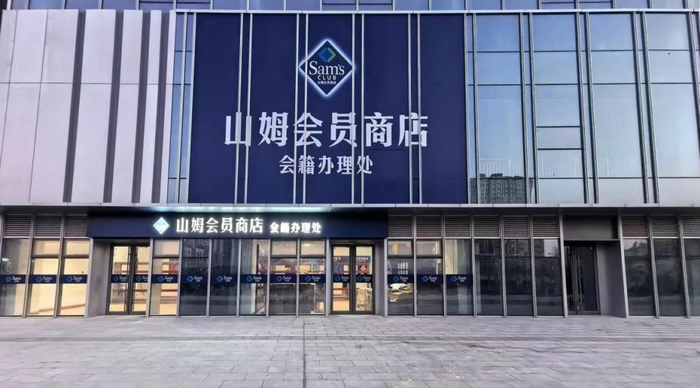
Group 1 - The Jinan Sam's Club has established a temporary membership processing office at 1288 Huayuan East Road, which will officially start operations on January 16, along with online and offline membership channels [1] - The Jinan Sam's Club is located at the intersection of Phoenix North Road and Phoenix Road, covering a total area of approximately 80,500 square meters, with a total investment of 830 million yuan, and is a key project for urban renewal in Jinan High-tech Zone [3] - The expected annual revenue after opening is projected to reach 3 billion yuan, and Walmart plans to establish multiple cloud warehouses in Jinan to further boost online consumption [3] Group 2 - The construction of the Jinan Sam's Club is nearing completion, with decoration and outdoor projects progressing rapidly, and the store has fully entered the opening preparation phase [5] - Once operational, the project will effectively enrich the consumption landscape in Jinan, promote quality upgrades in consumption, and collaborate with surrounding commercial entities to create a "commercial uplift zone" along Jinan Industrial South Road [6] - This development aims to better meet the demand for high-quality and diverse consumption from residents of the泉城 and surrounding urban groups, injecting strong momentum into the high-quality development of Jinan's trade industry [6]

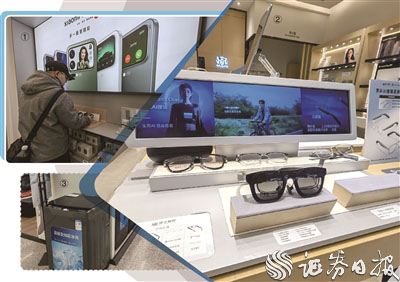
解码2026“国补”新政:撬动数码活力 赋能家电升级
Zheng Quan Ri Bao· 2026-01-13 17:05
Group 1: National Subsidy Policy Overview - The new round of "National Subsidy" policy has been implemented with an initial allocation of 62.5 billion yuan in special long-term government bonds to stimulate consumption and improve livelihoods [1] - The policy focuses on large-scale equipment updates and the replacement of old consumer goods, covering key areas such as automobiles, home appliances, and digital smart products, while also addressing public concerns like installing elevators in old residential areas and equipping elderly care facilities [1][6] - Compared to 2025, the subsidy rules for 2026 have been optimized, with specific subsidies for automobiles based on price and a 15% subsidy for energy-efficient home appliances, with a cap of 1,500 yuan per item [1][6] Group 2: Digital and Smart Products - The 2026 subsidy policy has expanded to include smart glasses, reflecting government support for the smart wearable industry and aligning with trends in consumption upgrades [2] - Smart glasses are transitioning from niche products to practical tools for various applications, including real-time translation for students and efficiency enhancement for professionals [3] - The inclusion of smart glasses in the subsidy program is expected to accelerate market growth and meet consumer demand for high-tech products [2][3] Group 3: Impact on Home Appliances - The 2026 subsidy policy emphasizes energy efficiency, with support limited to first-level energy-efficient or water-efficient products, thereby promoting green consumption [6][8] - The policy aims to increase the market share of energy-efficient products, with over 90% of home appliances updated to first-level efficiency during the previous years [7] - The adjustment in subsidy categories is expected to drive companies to enhance their R&D efforts towards high-end and green production [6][8] Group 4: Market Trends and Consumer Behavior - The smart wearable market, particularly AI glasses and smartwatches, has shown significant growth, with online retail sales increasing by 23.1% from January to October 2025 [8] - The subsidy adjustments are designed to align with current consumer preferences for high-quality and intelligent products, effectively stimulating new consumption potential [8] - The changes in subsidy policy are anticipated to create a positive cycle of hardware proliferation, ecosystem prosperity, and user growth in the digital consumption market [4][5]
婴童食品企业“爷爷的农场”港交所递表,依靠代工大量扩品
Xin Jing Bao· 2026-01-13 11:33
Core Viewpoint - The company "爷爷的农场" is expanding its product line from baby food to family food in response to declining birth rates and slowing growth in the baby food sector, while facing challenges related to product quality management due to reliance on OEM production [1][4][7]. Group 1: Business Performance - "爷爷的农场" ranked second in the domestic baby food market with a market share of approximately 3.3% and first in the organic segment with a market share of about 23.2% in 2024 [3]. - Revenue for "爷爷的农场" was 6.22 billion yuan in 2023 and is projected to reach 8.75 billion yuan in 2024, with a year-on-year growth of 23.2% to 7.8 billion yuan in the first three quarters of 2025 [2]. - The gross margin for the baby food business is close to 60%, while the family food business has a gross margin of over 44%, contributing to an overall gross margin exceeding 57% [2]. Group 2: Market Trends - The baby food market in China has been experiencing a decline in growth rates, with the growth rate dropping from over 15% in 2018 to less than 7% in 2022, directly linked to changes in birth rates [3][4]. - The family food market is seen as a more sustainable growth opportunity, with "爷爷的农场" expanding its offerings to include products like buffalo milk and organic condiments, aiming to capture a larger share of this market [6][8]. Group 3: Product Strategy - "爷爷的农场" plans to increase its SKU count from 158 at the end of 2023 to 269 by the end of the third quarter of 2025, with a significant focus on family food products [6]. - The company relies heavily on OEM production for nearly all its products, raising concerns about quality control and management of manufacturing partners [7]. Group 4: Consumer Insights - There is a growing demand among new parents for "natural, healthy, and functional" food products, with over 70% of millennial parents willing to pay a premium for high-quality items [10]. - The children's food market is projected to grow significantly, with the baby food market expected to reach 559.1 billion yuan in 2024 and the children's food market around 2.14 trillion yuan, potentially exceeding 3 trillion yuan by 2027 [9].
西南证券:26年家电行业仍将处于恢复期 建议关注三大主线
Zhi Tong Cai Jing· 2026-01-13 09:13
Core Viewpoint - The home appliance industry in China is expected to remain in a recovery phase in 2026, influenced by high base effects and demand being pre-consumed, while facing a new normal due to "national subsidies" and "tariffs" [1][4] Group 1: 2025 Review - The Shenwan Home Appliance Index rose by 9.1% in 2025, ranking 24th among Shenwan industries [1] - In the first half of 2025, the national subsidy policy was seamlessly extended, enhancing convenience in the online market, leading to a performance alignment with the CSI 300 [1] - In the second half of 2025, the home appliance index lagged behind the market due to a decline in domestic subsidies and uncertainties regarding export tariffs [2] Group 2: 2026 Outlook - Domestic demand is expected to be impacted by high base effects until mid-2026, but a turning point may emerge later [3] - Export-oriented home appliance companies are likely to experience valuation recovery despite uncertainties in Sino-U.S. trade relations [3] - The supply side remains stable, but overseas capacity construction may pressure domestic capacity utilization, leading to potential oversupply in 2026 [3] Group 3: Investment Themes - **Theme One: Focus on Leading Companies** Leading companies are expected to demonstrate resilience in adversity, with high dividend yields becoming attractive as competition intensifies [5][6] - **Theme Two: Focus on Overseas Expansion** Chinese home appliance companies are enhancing their global presence, with traditional markets becoming less sensitive to tariff impacts and emerging markets offering significant growth potential [7] - **Theme Three: Long-term Consumption Upgrade** The trend of consumption upgrade continues, with a focus on innovative product categories and enhanced consumer experiences, despite a temporary slowdown in economic growth [8]

政策聚力活力涌,消费蓝海起新潮
Xin Lang Cai Jing· 2026-01-13 08:23
Group 1 - The core viewpoint of the articles emphasizes the transformative impact of the "National Subsidy" policy on consumer behavior and market dynamics, shifting from traditional consumption to a more experience-driven and value-oriented approach [1][2][3] - The "National Subsidy" policy targets major consumer sectors such as automobiles and home appliances, while also extending to new markets like smart wearables and products for the elderly, facilitating access to high-quality goods at more affordable prices [2] - The policy is designed to create a virtuous cycle where demand drives supply and vice versa, encouraging companies to innovate in green technology and smart products while making it easier for consumers to upgrade their goods [2][3] Group 2 - The integration of various sectors such as culture, tourism, sports, and technology is reshaping the consumer landscape, leading to a more immersive and comprehensive shopping experience [3] - The "National Subsidy" policy is seen as a catalyst for unlocking consumer potential, which in turn stimulates economic growth by enhancing the domestic circulation of goods and services [3] - The combination of policy incentives and market innovations is expected to ignite a significant surge in consumer activity, contributing to high-quality economic development in China [3]
【好评中国】政策聚力活力涌,消费蓝海起新潮
Xin Lang Cai Jing· 2026-01-13 08:23
Group 1 - The core viewpoint of the articles emphasizes the transformative impact of the "National Subsidy" policy on consumer behavior and market dynamics, shifting from traditional consumption to a more experience-driven and value-oriented approach [1][2][3] - The "National Subsidy" policy targets major consumer sectors such as automobiles and home appliances, while also extending to new markets like smart wearables and products for the elderly, facilitating access to high-quality goods at more affordable prices [2] - The policy is designed to create a virtuous cycle where demand drives supply and vice versa, encouraging companies to innovate in green technology and smart products while making it easier for consumers to upgrade their goods [2][3] Group 2 - The integration of various sectors, such as "consumption + culture and tourism" and "consumption + technology," is reshaping the consumer landscape, allowing for deeper cultural experiences and making smart home devices more accessible [3] - The "National Subsidy" policy is seen as a catalyst for unlocking consumer potential, which in turn stimulates economic growth by connecting production, distribution, and consumption [3] - The combination of policy incentives and market innovations is expected to ignite a significant surge in consumer activity, contributing to high-quality economic development in China [3]
家电行业2026年投资策略:基数承压,希冀仍存
Southwest Securities· 2026-01-13 03:32
Core Insights - The home appliance industry is expected to remain in a recovery phase in 2026 due to high base effects and pre-consumed demand, but it also faces a new normal influenced by national subsidies and tariff policies [7][9] - The domestic demand is anticipated to experience a turning point in the second half of 2026, despite being impacted by earlier demand exhaustion [6][9] - Export-oriented appliance companies are likely to see valuation recovery and improved performance due to low base effects from 2025 [6][9] Review of 2025 - The Shenyin Wanguo Home Appliance Index rose by 9.1% in 2025, ranking 24th among all industries, but underperformed the broader market in the second half due to declining domestic subsidies and uncertainties in export tariffs [4][17] - The domestic demand for home appliances is expected to require a longer recovery period due to the exhaustion of demand and changes in consumer habits [4][6] - The home appliance industry faced a weak overall fundamental performance in the second half of 2025, with leading white goods companies showing dividend attributes but lacking investor interest due to market competition and rising costs [4][6] Outlook for 2026 - The supply side of the home appliance industry is expected to remain stable, but increased overseas production capacity may lead to domestic overcapacity under weak demand assumptions [6][9] - Cost pressures are anticipated to gradually increase in 2026, particularly for leading companies that possess better pricing power [6][9] - The home appliance industry is projected to experience a consolidation of market structure, with weaker brands and OEMs likely to exit the market [6][9] Investment Themes - Focus on leading companies with high dividend yields and strong fundamentals, as they are better positioned to withstand industry challenges [9] - Attention to companies expanding overseas, as they adapt to tariff changes and enhance their global manufacturing and R&D capabilities [11] - Consideration of consumer upgrades and innovative product categories, as the demand for home appliances continues to evolve [13] Key Recommendations - The report suggests monitoring leading home appliance companies that demonstrate high cost-performance ratios and increasing dividend rates, especially as public funds show a growing preference for high-dividend sectors [9] - Emphasis on the potential of export-oriented companies that are becoming desensitized to tariff impacts and are expected to benefit from improved operational efficiencies [11] - Recognition of the long-term trend of consumer upgrades, with a focus on innovative categories that enhance lifestyle quality [13]