财政政策

Search documents
【财经分析】土耳其央行“稳中偏紧”控通胀 政策协同或成关键变量
Xin Hua Cai Jing· 2025-11-13 09:34
Core Viewpoint - The Turkish central bank has maintained its mid-term inflation target for 2026 while raising the end-of-2025 inflation forecast range, signaling a cautious monetary policy stance amid ongoing price pressures [1][2]. Inflation Forecasts - The end-of-2025 inflation forecast range has been adjusted from 25%-29% to 31%-33%, while the mid-term inflation target for 2026 remains at 16% [2]. - Recent inflation rates have exceeded previous forecasts, primarily driven by rising food prices and persistent core price pressures in housing, utilities, and services [2][3]. Monetary Policy Adjustments - The central bank has slowed its interest rate cuts, reducing the policy rate by 100 basis points to 39.5% in October, while warning of rising inflation risks that could delay the disinflation process [3]. - The finance minister acknowledged the challenges in achieving the end-of-year inflation forecast, indicating potential further tightening of monetary policy if inflation deviates significantly from targets [3]. Market Reactions - Following the release of the latest inflation report, the Turkish lira depreciated slightly against the dollar, and the Istanbul Stock Exchange's banking index fell by 3.4%, reflecting market skepticism regarding the feasibility of the central bank's inflation targets [4]. - Analysts predict that the current policy rate may be insufficient to meet the 2026 target, with expectations of a 150 basis point rate cut in December and a projected inflation rate of 22.5% by the end of 2026, with upward risks [4]. Policy Coordination - The continuity and coordination of monetary and fiscal policies are deemed crucial for effective inflation control and market stability [4]. - The Turkish government has implemented tight monetary policies and fiscal discipline, alongside subsidies for essential goods and structural reforms, to alleviate cost pressures on citizens and enhance economic resilience [4].
上半年财政政策亮点:精准发力稳增长 提质增效惠民生
Zhong Guo Jing Ying Bao· 2025-11-12 23:33
Core Viewpoint - Since 2025, China's fiscal policy has become more proactive in response to a complex external environment, focusing on stabilizing employment, enterprises, markets, and expectations, while promoting sustained economic recovery [1] Fiscal Performance - In the first half of 2025, China's fiscal operations were generally stable, with total public budget revenue at 11.56 trillion yuan, a year-on-year decrease of 0.3%, but the decline was narrower than in the first quarter [2] - Tax revenue was 9.29 trillion yuan, showing a downward trend year-on-year, but began to recover in the second quarter [2] - Public budget expenditure reached 14.13 trillion yuan, a year-on-year increase of 3.4%, with central government expenditure growing by 9% [2] - Key areas such as social security, employment, and education received strong funding support, with social security and employment expenditure increasing by 9.2% [2] Domestic Demand Activation - Special long-term government bonds are becoming a core tool for expanding domestic demand, with 300 billion yuan allocated to support consumption upgrades, leading to sales exceeding 1.6 trillion yuan and a 5% year-on-year increase in retail sales of consumer goods [3] - The central government allocated 7.279 billion yuan for service industry development, supporting county-level commercial construction and modern trade systems [3] County-Level Commercial Development - A comprehensive commercial service network has been established in Zhuozhou, enhancing county-level commercial capabilities and contributing to rural revitalization and high-quality economic development [4] - The county's market consumption accounted for 38.9% of total retail sales of consumer goods, indicating a strong performance in county and township markets [5]
第三季度中国货币政策执行报告发布 金融总量合理增长,融资成本处于低位
Mei Ri Jing Ji Xin Wen· 2025-11-12 14:09
Core Viewpoint - The People's Bank of China (PBOC) has maintained a moderately loose monetary policy in 2023, with significant growth in financial metrics and a focus on optimizing credit structure to support key sectors and economic transformation [1][2]. Financial Metrics - As of September, the total social financing stock and broad money supply (M2) grew by 8.7% and 8.4% year-on-year, respectively, with the RMB loan balance reaching 270.4 trillion yuan [1]. - The net financing of government bonds in 2024 has reached 1.1 trillion yuan, with expectations to exceed 1.2 trillion yuan for the year [1][5]. Credit Structure Optimization - The report indicates a continuous improvement in credit structure, with significant year-on-year growth in technology loans (11.8%), green loans (22.9%), inclusive loans (11.2%), elderly care industry loans (58.2%), and digital economy loans (12.9%), all surpassing the overall loan growth rate [1]. - The trend of "wide credit" is becoming evident, with social financing growth maintaining above 8%, reflecting the shift towards direct financing methods such as corporate bond issuance [2]. Economic Transition - The transition from high-speed growth to high-quality development necessitates a focus on the quality of credit rather than merely increasing loan volumes, as emphasized by the central bank [3]. - The current RMB loan balance stands at 270 trillion yuan, with total social financing stock at 437 trillion yuan, indicating a natural decline in financial growth rates as the economy matures [3]. Policy Coordination - The effective coordination between monetary and fiscal policies has been highlighted, with measures taken to stabilize the financial environment and support government bond issuance [5]. - The collaboration between fiscal departments and the central bank has led to the issuance of special government bonds to enhance bank capital, thereby improving the banks' ability to support the real economy [5]. Support for Key Sectors - The PBOC's structural monetary policy tools have a balance nearing 4 trillion yuan, aimed at incentivizing financial institutions to support national strategies and key economic sectors [8]. - The growth rate of loans in sectors such as elderly care and technology has significantly outpaced overall loan growth, indicating a targeted approach to financing [9].
财政部《报告》显示 上半年2万亿债务置换完成90%
Zhong Guo Jing Ying Bao· 2025-11-11 07:30
Group 1 - The report indicates that local government debt risk prevention and resolution have been effectively implemented in the first half of the year [1] - A total of 2 trillion yuan of local government debt limit was arranged to replace hidden debts, with 1.8 trillion yuan of related replacement bonds issued, completing 90% of the 2025 quota [1] - The average interest cost of the replaced debt has decreased by over 2.5 percentage points [1] Group 2 - The report emphasizes the need to strengthen budget constraints and prohibits the addition of hidden debts as a strict discipline [2] - It calls for a comprehensive management mechanism for hidden debt accountability, utilizing various methods such as auditing and inspections to identify and address new hidden debts [2] - The report advocates for a lifelong accountability system for government borrowing and a mechanism for tracing debt issues [2]
日本财政大臣为何对预算前景三缄其口?背后藏着什么难言之隐
Sou Hu Cai Jing· 2025-11-11 04:06
Group 1 - The Japanese Finance Minister, Shunichi Suzuki, expressed uncertainty about achieving a primary budget surplus by 2025, indicating a complex fiscal situation [1] - Japan's government is caught between the commitment to "responsible active fiscal policy" and a national debt that has reached 260% of GDP, with the Finance Minister emphasizing the need to gradually reduce the net debt-to-GDP ratio without providing a clear path [3] - The core CPI in Japan has risen for 49 consecutive months, with a 2.9% increase in September, while social security expenditures are increasing by approximately 1 trillion yen annually due to an aging population [3] Group 2 - The U.S. Treasury Secretary's praise for Japan's expansionary fiscal policy complicates the situation, as it contrasts with the Finance Minister's call for stable exchange rates amid a depreciating yen [5] - The Bank of Japan's decision to maintain a 0.5% benchmark interest rate highlights the structural challenges in the Japanese economy, where fiscal policy requires coordination with monetary policy to avoid significant exchange rate fluctuations [5] - The fragile nature of the ruling coalition, described as a "vase held together with tape," makes reform efforts difficult, with predictions suggesting a potential interest rate hike in January 2026, or earlier if the yen continues to depreciate [7]


芦哲:备战中选,迎接双宽——2026年度展望海外政策
Sou Hu Cai Jing· 2025-11-11 03:40
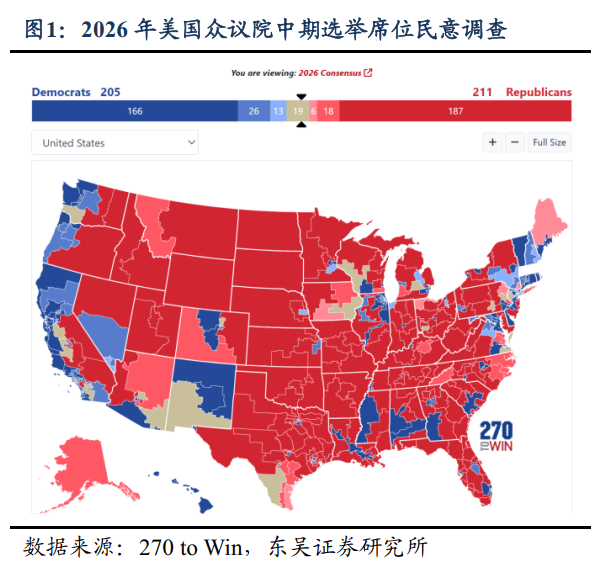
Core Viewpoint - The global market trading focus will shift from Trump's election victory to preparations for the midterm elections, with the outcome of the 2026 midterm elections directly impacting the political landscape for Trump and the Republican Party [2]. Group 1: Midterm Elections - Trump's 2026 Policy Line - The midterm elections are crucial for Trump, as they may represent the last significant electoral battle of his political career, with a high likelihood of increased political resistance if he loses [4][22]. - Historical data shows that the president's party typically loses seats in midterm elections, with an average loss of 25.7 seats in the House and 3.3 seats in the Senate over the last 20 elections [16][20]. - The significance of the midterm elections is heightened for Trump, as a defeat could severely limit his political ambitions during the final years of his presidency [21][22]. Group 2: Trade Policy - Continued Uncertainty and Conflict - Trump's trade policy is expected to remain unpredictable, with potential for renewed tariff conflicts as a means to rally voter support and shift internal political pressures outward [4][33]. - The Supreme Court's upcoming decision on Trump's use of the International Emergency Economic Powers Act (IEEPA) to impose tariffs may lead to alternative legal strategies for implementing tariffs if the ruling is unfavorable [34][38]. - The anticipated increase in tariff revenue could help alleviate fiscal pressures and support Trump's broader economic agenda leading up to the midterm elections [47]. Group 3: Monetary Policy - More Rate Cuts and Lower Credit Quality - The new Federal Reserve chair, expected to take office in May 2026, is likely to implement more aggressive rate cuts than the market anticipates, with projections of at least four rate cuts by the end of next year [5][61]. - Lower interest rates are seen as essential for stimulating economic growth and supporting stock markets, particularly in light of the negative impacts of tariffs [49][51]. - The anticipated shift in monetary policy could lead to a weaker dollar and increased credit challenges, impacting overall market sentiment [48][56]. Group 4: Fiscal Policy - Necessity and Feasibility of Expansion - There is a pressing need for expanded fiscal policies to stimulate demand and counteract the negative effects of tariffs as the midterm elections approach [66][68]. - Increased tariff revenues and reduced fiscal pressure from lower interest rates could provide the necessary funding for expanded fiscal measures without resorting to excessive borrowing [68]. - The experience from the 2018 midterm elections suggests that failure to maintain fiscal expansion could lead to adverse market reactions [68]. Group 5: Foreign Policy - Return to "America First" and Strong Geopolitical Stance - Trump's foreign policy is expected to focus on pragmatic interest exchanges, emphasizing "America First" while managing geopolitical conflicts with limited intervention [69][79]. - Efforts to mediate conflicts such as the Russia-Ukraine situation and the Middle East will continue, with a strong emphasis on leveraging economic and military pressure to achieve peace [70][73]. - The approach to foreign policy will likely involve a mix of negotiation and coercion, potentially increasing geopolitical tensions and impacting market risk appetite [79].
政策双周报(2025年第8期):乘势而上,因势利导-20251111
Yin He Zheng Quan· 2025-11-11 03:08
Group 1: Policy Overview - The "14th Five-Year Plan" proposal has been approved by the Fourth Plenary Session of the Central Committee[6] - The plan emphasizes addressing the North-South economic disparity for the first time[5] - The guiding principles of the "14th Five-Year Plan" include "1 guarantee," "2 promotions," "5 focuses," and "6 persistences"[20] Group 2: Fiscal Policy - From January to September 2025, fiscal revenue growth turned positive for the first time this year, with a growth rate of 0.3%[45] - Expenditure growth is stabilizing at a high level, with a rate of 7.9%[45] Group 3: Monetary Policy - The central bank continues to maintain a moderately loose monetary policy[4] - The Loan Prime Rate (LPR) remains unchanged as of July 2025[4] Group 4: Economic Indicators - The GDP growth target for 2025 is set at 5.0%[9] - The report indicates a steady recovery in fiscal operations, with balanced expenditure rhythms[4]
普徕仕:料关税带来的美国通胀压力明年减退 关注国际价值股及小型股
Zhi Tong Cai Jing· 2025-11-11 03:06
Group 1 - The core viewpoint indicates that the clarity of U.S. President Trump's trade and fiscal policies is increasing, prompting investors to assess the impact of these policies on inflation, the economy, and monetary policy [1] - The actual tariff rates between the U.S. and its major trading partners are projected to be between 10% and 20%, a significant increase from 2.5% at the beginning of 2025 [1] - Although tariff increases have not yet significantly impacted the U.S. economy, they may dampen consumer spending, economic growth, and corporate profits [1] - Inflationary pressures from tariffs are expected to ease next year, while economic activity remains robust with only slight declines in real-time economic indicators [1] - AI-related spending is strong, offsetting the ongoing weakness in the manufacturing and real estate sectors [1] - Factors such as tariff increases, corporate tax rate cuts, and strict immigration policies are keeping inflation expectations high, raising concerns about rising prices affecting corporate earnings and consumer sentiment [1] - The job market is a point of concern, particularly for small businesses that account for over 70% of U.S. employment but have weaker pricing power and are sensitive to economic and interest rate changes, potentially facing layoffs [1] Group 2 - Investment opportunities are focused on international value stocks and small-cap stocks, especially in regions with increased fiscal spending and accommodative monetary policies [2] - European and UK stock markets appear attractive, while U.S. growth stocks may benefit from the AI boom, providing a buffer if the economy weakens due to their solid fundamentals [2] - Stocks linked to real assets, such as energy and metals, have historically served as effective hedges against inflation [2] - The development of AI and rising electricity demand may stimulate industrial metal demand, with some metals facing supply constraints [2] - The issuance of U.S. Treasury bonds to address deficit spending may put upward pressure on yields [2] - Due to inflation concerns and the level of U.S. public debt, there is a cautious stance on long-duration U.S. Treasuries as a hedge during economic downturns [2] - In fixed income investments, there is a preference for shorter-duration assets and short-term Treasury Inflation-Protected Securities (TIPS) [2]
国债期货日报:通胀优于预期,国债期货大多收涨-20251111
Hua Tai Qi Huo· 2025-11-11 03:03
Report Industry Investment Rating No relevant content provided. Core View of the Report The bond market is oscillating between stable growth and easing expectations. It is affected by the stock market, the continued expectation of a Fed rate cut, and the increased uncertainty of foreign capital inflows due to rising global trade uncertainties. Short - term attention should be paid to the policy signals at the end of the month [3]. Summary by Directory 1. Interest Rate Pricing Tracking Indicators - **Price Indicators**: China's monthly CPI increased by 0.20% both month - on - month and year - on - year, while the monthly PPI rose 0.10% month - on - month and decreased 2.10% year - on - year [9]. - **Monthly Economic Indicators**: The social financing scale was 437.08 trillion yuan, with a month - on - month increase of 3.42 trillion yuan (+0.79%); M2 year - on - year was 8.40%, down 0.40% (-4.55%); the manufacturing PMI was 49.00%, down 0.80% (-1.61%) [9]. - **Daily Economic Indicators**: The US dollar index was 99.62, up 0.05 (+0.05%); the offshore US dollar to RMB exchange rate was 7.1203, down 0.004 (-0.05%); SHIBOR 7 - day was 1.48, up 0.06 (+3.94%); DR007 was 1.50, up 0.09 (+6.11%); R007 was 1.51, down 0.02 (-1.24%); the 3 - month interbank certificate of deposit (AAA) was 1.57, up 0.00 (-0.24%); the AA - AAA credit spread (1Y) was 0.08, up 0.00 (-0.24%) [9]. 2. Overview of the Treasury Bond and Treasury Bond Futures Market No specific content provided other than the title. 3. Overview of the Money Market Funding Situation The main term repo rates (1D, 7D, 14D, and 1M) were 1.479%, 1.478%, 1.492%, and 1.525% respectively, and the repo rates have recently rebounded. On November 10, 2025, the central bank conducted a 7 - day reverse repurchase operation of 119.9 billion yuan at a fixed rate of 1.4% [2]. 4. Spread Overview No specific content provided other than the title. 5. Two - Year Treasury Bond Futures No specific content provided other than the title and related chart descriptions. 6. Five - Year Treasury Bond Futures No specific content provided other than the title and related chart descriptions. 7. Ten - Year Treasury Bond Futures No specific content provided other than the title and related chart descriptions. 8. Thirty - Year Treasury Bond Futures No specific content provided other than the title and related chart descriptions. Market Analysis - **Macroeconomic Policy**: In October, there were multiple events including the US adding Chinese entities to the export control list, China's response on ship special port fees, Trump's tariff threat, the central bank's open - market treasury bond trading operation, and the consensus reached by the China - US economic and trade teams on three aspects. The State Council Tariff Commission announced to continue suspending the 24% additional tariff on the US for one year and retain the 10% tariff [1]. - **Inflation**: In October, the CPI increased by 0.2% year - on - year [1]. - **Fiscal Policy**: In the first half of the year, the fiscal operation was generally stable, with revenue gradually recovering and key expenditures effectively guaranteed. Super - long - term special treasury bonds and special bonds were accelerating their implementation. Policies such as consumer goods replacement, effective investment, and technological innovation had a synergistic amplification effect, and people's livelihood inputs continued to increase. In the next stage, active fiscal tools will continue to be used to balance stable growth, people's livelihood protection, and risk prevention [2]. - **Central Bank Operation**: On November 10, 2025, the central bank conducted a 7 - day reverse repurchase operation of 119.9 billion yuan at a fixed rate of 1.4% [2]. - **Market Conditions**: On November 10, 2025, the closing prices of TS, TF, T, and TL were 102.47 yuan, 105.94 yuan, 108.49 yuan, and 116.28 yuan respectively, with price changes of 0.00%, 0.02%, 0.01%, and 0.22% respectively. The average net basis of TS, TF, T, and TL was - 0.008 yuan, - 0.015 yuan, - 0.044 yuan, and - 0.275 yuan respectively [2]. Strategy - **Unilateral Strategy**: With the rebound of the repo rate and the oscillation of treasury bond futures prices, the 2512 contract is neutral [4]. - **Arbitrage Strategy**: Pay attention to the decline of the 2512 basis [4]. - **Hedging Strategy**: There is medium - term adjustment pressure, and short - side investors can use far - month contracts for appropriate hedging [4].
上海汇正财经:财政政策情况报告,继续提振消费行动
Sou Hu Cai Jing· 2025-11-10 12:12
Core Viewpoint - The Chinese Ministry of Finance released a report on the execution of fiscal policy for the first half of 2025, outlining six key areas of focus for future fiscal policy implementation [1]. Group 1: Fiscal Policy Implementation - The report emphasizes the need for a more proactive fiscal policy, including actions to boost consumer spending through targeted financial subsidies for personal loans in key sectors [3]. - Support for employment and foreign trade is prioritized, with measures to promote job creation and assist businesses in maintaining operations and expanding markets [4]. - The report highlights the importance of fostering new growth drivers by advancing core technologies and promoting emerging industries, while ensuring equal treatment for all business entities [4]. Group 2: Consumer Trends - High-end consumption is showing signs of recovery, with notable improvements in sectors such as Macau gaming and luxury goods, driven by wealth effects and supply optimization [6]. - The luxury market is experiencing growth, with companies like LVMH and Hermès reporting improved sales in China, indicating a positive trend in consumer sentiment [6]. - New consumption sectors, particularly in the tea beverage industry, are expected to see significant profit growth, with leading brands benefiting from strong market positions [8]. Group 3: Policy Support for Consumption - The government is taking steps to enhance service consumption by relaxing entry barriers and removing unreasonable restrictions, which is expected to boost consumer willingness to spend [7]. - Recent policy changes in the duty-free sector aim to improve shopping experiences and increase consumer engagement in duty-free shopping [7].