碳达峰碳中和

Search documents
碳市场系列研究报告之四:中国碳市场:市场扩容,创新产品激发市场活力
Shenwan Hongyuan Securities· 2025-10-22 03:11
1. Report Industry Investment Rating No relevant information provided. 2. Core Views of the Report - The carbon market construction has entered an expansion and development period. In March 2025, the steel, cement, and aluminum smelting industries were included in the national carbon market, and in May 2025, four specific measures were proposed to strengthen carbon market construction [3]. - As of October 20, 2025, the cumulative trading volume of the national carbon market was 742 million tons, with a turnover of 50.461 billion yuan. Trading volume increases near the annual compliance period, and bulk trading is the main method. Carbon price declined in 2025, and the 2023 - year quota settlement was completed with a significant drop in emission intensity [3]. - Among the pilot carbon markets, Guangdong has the most regulated enterprises and is the most active in terms of trading volume. Except for Tianjin, carbon prices in other pilot areas have declined [3]. - Pilot carbon markets have innovative mechanisms. Hubei established the first provincial "electricity - carbon - finance" linkage market; Beijing refined quota repurchase principles; Chongqing realized the "carbon market - carbon offset - carbon inclusive" linkage mechanism [3][4]. - The Guangzhou Carbon Exchange promotes low - carbon development in the Guangdong - Hong Kong - Macao Greater Bay Area. It has a policy framework of government guidance, market operation, and public participation, develops 5 carbon financial products, tightens the proportion of free carbon quotas, and promotes the construction of the Greater Bay Area carbon market [4]. - The "Qin Carbon Star" in the Hengqin - Macao Cooperation Zone is an innovative product that encourages individuals to participate in low - carbon activities through carbon credits [4]. 3. Summary According to the Table of Contents 3.1 Carbon Market Construction: Entered the Expansion and Development Period - **National Carbon Market Expansion and Policy Issuance**: Since 2024, a series of carbon footprint management policies have been issued, and the national carbon market has expanded to cover steel, cement, and aluminum smelting industries. The government has set goals for the future expansion of the carbon market, aiming to basically cover major industrial emission industries by 2027 and build a complete carbon market by 2030 [6][7]. - **Revisions of Pilot Carbon Market Management Measures**: Starting from May 2024, relevant regulations required pilot areas to improve carbon market management systems. Each pilot area has successively formulated carbon emission and trading management measures [12][13]. - **Development Stages of the Carbon Market**: From 2011 - 2013, China launched carbon emission trading pilot projects; from 2014 - 2019, it established the overall framework of the national carbon market; since 2020, the national unified carbon market has been officially launched, and in March 2025, the market expanded for the first time [15]. 3.2 National + Pilot Carbon Markets: Guangdong is the Most Active - **Trading Volume and Turnover**: As of October 20, 2025, the cumulative trading volume of the national carbon market was 742 million tons, with a turnover of 50.461 billion yuan. Trading volume increases near the annual compliance period, and bulk trading is the main method [26]. - **Carbon Price**: In 2024, the carbon price rose, with an average of 91.82 yuan/ton. In 2025 (from January 1 to October 20), the carbon price declined, with an average of 76.73 yuan/ton [28][29]. - **Achievements**: The 2023 - year quota settlement was completed, and the carbon emission intensity decreased significantly. The carbon market has achieved good emission reduction results [33]. - **Pilot Areas**: In 2024, Guangdong had the most regulated enterprises. Except for Tianjin, carbon prices in other pilot areas declined, and Guangdong was the most active in terms of trading volume [38][40]. 3.3 Carbon Market Innovation Mechanisms: Stimulate Market Vitality - **Hubei's "Electricity - Carbon - Finance" Linkage Market**: In May 2024, relevant parties in Hubei signed a coordinated agreement. The background was that the carbon emissions of regulated enterprises were calculated without deducting the green electricity part. This mechanism allows regulated enterprises to obtain low - interest loans to buy green electricity, reducing compliance costs [47][50]. - **Beijing's Refined Quota Repurchase Principles**: In 2024, Beijing issued relevant management measures to regulate market supply and demand through measures such as quota repurchase, aiming to address carbon price fluctuations and supply - demand imbalances [52][53]. - **Chongqing's "Carbon Market - Carbon Offset - Carbon Inclusive" Linkage Mechanism**: In 2024, Chongqing established the "Carbon - Friendly" voluntary emission reduction system and platform. By May 2025, it had attracted over 3.7 million participants, with more than 30 low - carbon application scenarios for residents and over 208 registered enterprise users [47][56]. 3.4 Guangzhou Carbon Exchange: Promote Low - Carbon Development in the Greater Bay Area - **Development History**: The Guangzhou Carbon Exchange has a long - standing development history, from the initial establishment to the launch of various platforms and business expansions [59]. - **Policy Framework**: It follows a policy framework of government guidance, market operation, and public participation, and has established a multi - industry quota trading system and innovative carbon financial tools [60]. - **Transaction Volume and Carbon Price**: The trading volume and carbon price in the Guangdong carbon market have been affected by factors such as the postponement of compliance time and the expansion of the national carbon market [67][71]. - **Carbon Financial Products**: The Guangzhou Carbon Exchange has developed 5 carbon financial products, with carbon quota repurchase having the highest trading volume and turnover [72][73]. - **Promotion of the Greater Bay Area Carbon Market**: The Guangzhou Carbon Exchange actively promotes the construction of the Greater Bay Area carbon market, conducts cooperation and exchanges with Hong Kong and Macao, and participates in relevant research projects [76][77]. - **Carbon Inclusive Mechanism**: The "Qin Carbon Star" in the Hengqin - Macao Cooperation Zone encourages individuals to participate in low - carbon activities through carbon credits and has attracted the participation of many low - carbon businesses [81][83].
数说“十四五”:中国能源转型的“绿”与“新”
Sou Hu Cai Jing· 2025-10-22 02:21
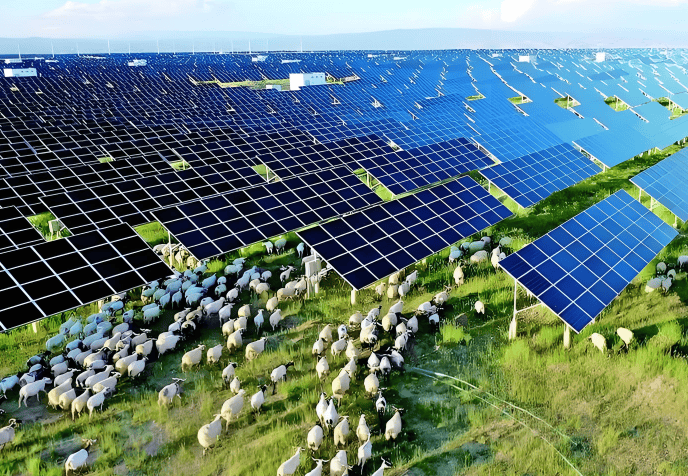
(来源:江苏现代能源微网) 两个"1/3"、一个"1/5",向世界宣告了我国在能源转型方面取得的不凡成就。2024年,全国发电量超10万亿千瓦时,占全球总发电量的1/3,能源生产总量 折合约50亿吨标准煤,占比超全球1/5;全社会每消费3度(千瓦时)电,其中就有1度源自太阳能、风能等清洁能源。 来源:市场资讯 能源,被喻为"工业的粮食",是我国推进碳达峰碳中和的重要战场。"十四五"以来,我国建成了全球规模最大的电力基础设施体系,构建起全球最大、发 展最快的可再生能源体系,能源供给能力不断提升、结构持续优化。以"逐绿向新"为重要特点,这5年,我国能源转型跑出"加速度"。 国家能源局局长王宏志透露,"十四五"以来,我国能源事业取得突破性进展和历史性成就,"十四五"规划纲要提出的能源综合生产能力和非化石能源占比 等主要指标将如期完成,"我国成为世界能源转型的重要推动者"。 底色越来越"绿" 可以说,"十四五"时期是我国能源绿色低碳转型最快的5年。 一组来自国家能源局的数据印证了变化:"十四五"开局以来,我国的能源消费中,非化石能源占比每年增加1个百分点,煤炭的占比则每年减少1个百分 点。华电集团绿色金融研究中心首席 ...

激活绿色贸易新动能,培育国际竞争新优势
Xin Hua She· 2025-10-21 07:07
Core Viewpoint - Developing green trade is a crucial measure to optimize trade, achieve carbon peak and carbon neutrality goals, and accelerate the construction of a strong trading nation [1] Group 1: Policy and Institutional Framework - The State Council meeting emphasized the need to accelerate the improvement of the green trade policy system and enhance the green and low-carbon development capabilities of foreign trade enterprises [1][2] - Strengthening the coordination of policies related to industry, technology, finance, and taxation is essential for creating a favorable environment for green trade development [1] Group 2: Market Trends and Growth - In the first three quarters of this year, China's exports of high-end equipment closely related to new quality productivity increased by 22.4%, with double-digit growth in green products such as wind turbine units and railway electric locomotives [1] - The development of green trade is becoming a new trend in international trade, contributing to sustainable economic development [2] Group 3: Role of Enterprises - Enterprises play a vital role in the green trade development process, with a focus on enhancing their green and low-carbon development capabilities [2] - The proposed measures will empower foreign trade enterprises in areas such as information acquisition, production operations, and market expansion, particularly benefiting small and medium-sized enterprises [2] Group 4: International Standards and Competitiveness - Expanding the import and export of related products and technologies, and establishing a green low-carbon product, technology, and service standard system in line with international practices are crucial for enhancing core competitiveness [2] - Adapting quickly to changes in overseas market demands by increasing the supply of green products will help activate new momentum in green trade and enhance the resilience of China's foreign trade development [2]
把二氧化碳“锁”回深海(“十四五”,我们见证这些硬核突破②)
Ren Min Ri Bao Hai Wai Ban· 2025-10-20 22:53
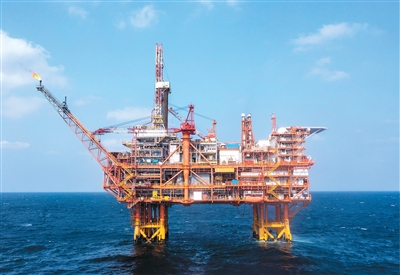
Core Viewpoint - China National Offshore Oil Corporation (CNOOC) has successfully implemented its first offshore carbon capture, utilization, and storage (CCUS) project at the Enping 15-1 oil field, achieving a milestone of over 100 million cubic meters of carbon dioxide (CO2) stored, equivalent to the carbon offset of planting 2.2 million trees, showcasing the maturity of China's offshore CO2 storage technology and capabilities [6][9][15] Group 1: Project Overview - The Enping 15-1 oil field is China's first high CO2 content oil field located in the South China Sea, where CO2 is typically released during oil extraction, contributing to environmental concerns [7][8] - The CCUS project at Enping 15-1 was launched in May 2023, marking a significant step in China's efforts to accelerate offshore CO2 storage and utilization [8][12] - The project aims to achieve dual objectives: CO2 storage and enhanced oil recovery, with a projected CO2 injection of over 1 million tons and an increase in oil production by 200,000 tons over the next decade [9][15] Group 2: Technical Details - The CCUS process involves capturing CO2 from oil and gas production, purifying, compressing, and injecting it into geological formations for long-term storage [8][10] - The project utilizes a complete set of domestically developed equipment with a 100% localization rate, ensuring efficient operation and monitoring of CO2 injection [12][14] - Advanced technologies, including real-time monitoring systems and intelligent gas injection techniques, have been implemented to optimize CO2 injection and enhance oil recovery [12][11] Group 3: Industry Implications - The successful implementation of the Enping 15-1 project is expected to serve as a replicable model for green and low-carbon development in offshore oil and gas fields across China [9][12] - China's offshore CCUS industry is poised for growth, with significant potential for CO2 geological storage estimated at 25.8 billion tons, providing a robust foundation for large-scale applications [14][15] - CNOOC is also developing a comprehensive offshore CCUS industrial chain, including a major carbon capture and storage project in Guangdong, aimed at enhancing oil recovery and contributing to national carbon neutrality goals [15]

把二氧化碳“锁”回深海(“十四五”,我们见证这些硬核突破)
Ren Min Ri Bao· 2025-10-20 20:47
Core Viewpoint - China National Offshore Oil Corporation (CNOOC) has successfully implemented the country's first offshore carbon dioxide (CO2) storage demonstration project at the Enping 15-1 oil field, achieving a cumulative CO2 storage of over 100 million cubic meters, equivalent to the carbon absorption of 2.2 million trees, indicating the maturity of China's offshore CO2 storage technology and capabilities [1][2][3]. Group 1: Project Overview - The Enping 15-1 oil field is the first high CO2 content oil field in the eastern South China Sea, where CO2 is typically released during conventional oil extraction, contributing to increased emissions and corrosion of offshore facilities [2][4]. - The project utilizes Carbon Capture, Utilization, and Storage (CCUS) technology, which involves capturing CO2 from emission sources, utilizing it as a resource, and storing it in geological formations to prevent atmospheric release [2][3]. - CNOOC's CCUS demonstration project is a key initiative under the "14th Five-Year Plan" aimed at energy conservation and carbon reduction, with over 10 domestic pioneering technologies developed over four years of research [2][3]. Group 2: Technical Implementation - The CO2 storage process involves two main steps: first, capturing and storing CO2, with an annual storage capacity exceeding 40 million cubic meters; second, upgrading to CO2 utilization, which enhances oil recovery by injecting supercritical CO2 into underground reservoirs [3][5]. - The project has been operational for over 15,000 hours, with peak injection rates reaching 210,000 cubic meters per day, demonstrating a successful model for green and low-carbon development in offshore oil fields [3][5]. Group 3: Equipment and Technology - CNOOC has developed a complete set of engineering equipment for CO2 capture and storage, achieving a 100% localization rate for the equipment used in the project [4][5]. - The project employs advanced technologies such as real-time monitoring systems and intelligent gas injection techniques to ensure precise control over CO2 injection and prevent leakage [6][7]. Group 4: Industry Implications - The project positions China as a leader in offshore CCUS technology, with significant potential for scaling up CO2 storage capabilities, estimated at 25.8 billion tons in China's offshore areas [8]. - CNOOC is also initiating a large-scale CCUS cluster project in Guangdong, aiming to capture CO2 emissions from various enterprises and store them in the Pearl River Estuary, thereby forming a competitive offshore CCUS industry chain [8][9].
国务院常务会议解读|激活绿色贸易新动能,培育国际竞争新优势
Xin Hua She· 2025-10-17 17:06
Core Viewpoint - The development of green trade is essential for optimizing trade, achieving carbon neutrality goals, and building a strong trade nation [1][2] Group 1: Green Trade Policy and Development - The State Council meeting emphasized the need to improve the green trade policy system and enhance the green low-carbon development capabilities of foreign trade enterprises [1] - There is a significant global consensus on green development, with Chinese foreign trade enterprises increasing the supply of high-quality green products [1][2] - In the first three quarters of this year, exports of high-end equipment related to new production capacity grew by 22.4%, with double-digit growth in green products like wind turbine components and electric locomotives [1] Group 2: Role of Enterprises in Green Trade - Enterprises play a crucial role in the green trade development process, and the meeting proposed enhancing their green low-carbon development capabilities [2] - The initiatives discussed will empower foreign trade enterprises in areas such as information access, production operations, and market expansion, particularly benefiting small and medium-sized enterprises [2] - The expansion of related product and technology imports and exports, along with the establishment of international standards for green low-carbon products, is vital for enhancing core competitiveness and improving the quality of foreign trade [2]
赛力斯康波:2030碳达峰2045碳中和,问界交付80万辆
Xin Lang Ke Ji· 2025-10-17 15:11
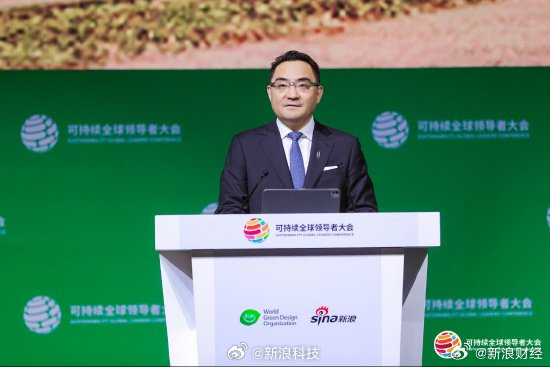
Core Viewpoint - The company aims to establish a new paradigm for green transformation in the electric vehicle industry through "electrification + intelligence + circularity" by embedding sustainable development into its corporate DNA and setting ambitious carbon neutrality goals for 2030 and 2045 [1] Group 1: Sustainability Goals - The company has set a target to peak carbon emissions by 2030 and achieve carbon neutrality in production and operations by 2045 [1] - The company has received a 3A ESG rating from MSCI, highlighting its commitment to sustainable practices [1] Group 2: Technological Innovations - The company has delivered over 800,000 units of its Wenjie series, showcasing its leading range extension technology in the industry [1] - The super factory has generated 190 million kWh of solar power, resulting in a reduction of 160,000 tons of carbon emissions [1] Group 3: Green Manufacturing Practices - The super factory is built according to national green factory standards and utilizes a "photovoltaic + vehicle manufacturing" model with a rooftop photovoltaic grid capacity of 173 MW [1] - The company has implemented an AI detection system to achieve 100% automation in key processes, significantly enhancing resource utilization efficiency across the entire industry chain [1] Group 4: Ecological Collaboration - The company has created the industry's first zero-carbon smart logistics port, utilizing unmanned electric heavy trucks to achieve zero emissions in logistics [1] - An innovative "factory within a factory" supply chain model has been developed, establishing a comprehensive green layout for "manufacturing + supply chain" [1]

绿色产业五年增五亿元,把握“十五五”发展要求
2 1 Shi Ji Jing Ji Bao Dao· 2025-10-17 11:41
Group 1 - The global warming has surpassed the critical threshold of 1.5 degrees Celsius, marking the first climate tipping point, with significant coral reef deaths as a notable indicator [1] - The "14th Five-Year Plan" period has seen a comprehensive acceleration in China's green transition, establishing green as the foundation for high-quality economic development [2][3] - By 2025, the value added of the green industry is expected to increase by 5 trillion yuan compared to 2020, driven mainly by new energy, green transportation, and green finance sectors [2] Group 2 - China's green transition is reflected in multiple key areas, including the establishment of green factories and supply chains, with green factories accounting for 20% of manufacturing output [3] - The country has built the world's largest clean steel production system and renewable energy infrastructure, with one-third of electricity consumption coming from green sources [3] - China has effectively protected 90% of terrestrial ecosystem types and 74% of key wildlife species, achieving significant progress in ecological civilization construction [3] Group 3 - As of mid-2025, the balance of green loans in China reached 42 trillion yuan, and the balance of green bonds exceeded 2.2 trillion yuan, supporting the green transition [4] - The innovation in new energy technologies has led to a significant reduction in global wind and solar power generation costs, contributing to global emission reductions [5] Group 4 - The period from the "15th Five-Year Plan" to 2035 is crucial for China's modernization, presenting both challenges and opportunities for green low-carbon transition [6] - The transition faces structural pressures and high carbon characteristics in the energy structure, with significant challenges in balancing high-quality development and high-level protection [6][7] - The improvement of the green institutional framework and the enhancement of public awareness of low-carbon living are seen as foundational supports for the green transition [7] Group 5 - The traditional pollution control and environmental management models are evolving, with a focus on new environmental quality requirements and risk management [8] - Recommendations include leveraging existing experiences, innovating governance models, and enhancing market mechanisms supported by artificial intelligence [8] Group 6 - There is a need for better data support and monitoring for sustainable development indicators, with a significant portion lacking effective tracking [9] - Suggestions include aligning China's ecological civilization indicators with the United Nations Sustainable Development Goals for better international understanding [9][10]
碳市场周报-20251017
Jian Xin Qi Huo· 2025-10-17 10:09
Group 1: Report General Information - Report name: Carbon Market Weekly Report [2] - Date: October 17, 2025 [2] Group 2: Research Team - Energy and Chemical Research Team includes researchers for different areas such as crude oil and fuel (Li Jie, CFA), PTA/MEG (Ren Junchi), industrial silicon/polycrystalline silicon (Peng Haozhou), polyolefins (Peng Jinglin), and pulp (Liu Youran) [3] Group 3: Carbon Market Weekly Overview - In the third week of October, the national carbon market carbon quota price continued to decline. The weekly price was 53.99 yuan/ton, with a weekly decline of 7.23% [4] - The expected buying price of national carbon emission allowances (CEA) in October 2025 is 55.39 yuan/ton, the selling price is 60.63 yuan/ton, and the mid - price is 58.00 yuan/ton [4] - The expected buying price of national carbon emission allowances (CEA) in December 2025 is 62.10 yuan/ton, the selling price is 70.45 yuan/ton, and the mid - price is 66.28 yuan/ton [4] - The expected buying price of China Certified Emission Reduction (CCER) in October 2025 is 69.00 yuan/ton, the selling price is 76.83 yuan/ton, and the mid - price is 72.92 yuan/ton [4] Group 4: Market News - On September 24, 2025, at the China Carbon Market Conference, Deputy Minister Li Gao of the Ministry of Ecology and Environment released the "National Carbon Market Development Report (2025)", introducing the progress and achievements of the national carbon market since 2024. The Ministry will speed up the construction of a unified national carbon market, improve the system, expand the coverage, enhance market vitality, enrich trading varieties, and strengthen international cooperation [6] - Minister Huang Runqiu reported on China's work on climate change response, carbon peaking, and carbon neutrality. Although significant achievements have been made, challenges remain in green and low - carbon transformation. Some localities are still blindly launching "two high" (high - energy - consuming and high - polluting) projects, which is contrary to the goal of carbon peaking by 2030 [6]
【政策综述】关于2025年版《乘用车燃料消耗量评价方法及指标》标准的分析
乘联分会· 2025-10-16 08:40
Core Viewpoint - The article discusses the revision of the national standard for passenger car fuel consumption evaluation methods and indicators, emphasizing its significance in supporting China's carbon peak goals by 2030 and promoting high-quality development in the automotive industry [4][6][9]. Revision Background and Implementation Significance - The revision of the standard is crucial for achieving the carbon peak target by 2030, as the automotive industry must take on corresponding carbon reduction responsibilities [7]. - The implementation of the new standard will help eliminate high-emission products and promote the application of advanced energy-saving technologies, thereby supporting the automotive industry's transition to a low-carbon future [8]. - The increasing number of vehicles in China, which reached 453 million by the end of 2024, has led to a surge in oil demand, making it essential to tighten fuel consumption standards to ensure national energy security [9][10]. Main Content of the New Standard - The new standard sets a target of 3.3 L/100 km for average fuel consumption by 2030, incorporating electric consumption into the calculation for the first time [12][13]. - The annual compliance requirements will gradually tighten from 2026 to 2029, with specific multipliers applied to the 2030 target [14]. - The standard introduces incentives for low-fuel consumption vehicle fleets, allowing for a 3% relaxation of targets for companies meeting certain criteria [14]. - The new standard aligns with international benchmarks, with China's target being competitive compared to the EU and the US [15]. Technical Changes in the New Standard - The new standard expands its applicability to include vehicles over 3500 kg, ensuring comprehensive coverage of passenger car models [17]. - It modifies the methods for determining fuel consumption for various vehicle types, including hybrid and electric vehicles, to enhance accuracy and consistency [17][19]. - The standard introduces new definitions and calculation methods for average fuel consumption and CO2 emissions for enterprises, promoting transparency and accountability [18][19].