
贸易保护主义

Search documents
中美贸易战引爆全球海运危机!美国宣布对中国港口设备征收100%至150%关税
Sou Hu Cai Jing· 2025-10-13 01:49
Core Points - The U.S. Trade Representative's Office announced punitive tariffs of 100% to 150% on Chinese port equipment, effective November 9, marking a significant escalation in the trade conflict [1] - The Chinese Ministry of Transport responded with countermeasures, imposing special port fees on U.S.-owned or operated vessels starting October 14, with fees increasing over four years [1][9] Group 1: Tariffs and Countermeasures - The new tariffs specifically target shore cranes, container chassis, and parts, with shore cranes facing a 100% tariff [1] - The special port fees for U.S. vessels will start at 400 RMB per net ton and increase to 1120 RMB over four years [9] Group 2: Impact on U.S. Ports and Shipping Industry - The Port of Houston faces a dilemma with an additional cost of $300 million due to a 270% composite tariff on eight shore cranes ordered from China [4] - The American Association of Port Authorities estimates that U.S. ports will incur an additional loss of $7 billion due to the crane tariffs [4] - Analysts warn that reciprocal charges between the U.S. and China could increase global shipping costs by 20%, prompting shipping companies to reroute through Southeast Asian ports [4] Group 3: Broader Implications for Global Trade - The conflict highlights the struggles of the U.S. shipbuilding industry, which produces less than 2% of the world's commercial vessels, indicating a reliance on foreign manufacturing [6] - The trade war is expected to delay U.S. port equipment upgrades by five years, impacting global supply chains [6] - The situation is described as a potential chokehold on globalization, with consumers likely to feel the financial impact as tariffs take effect [8]


意大利起泡酒崛起,冲击法国传统香槟市场
Huan Qiu Shi Bao· 2025-10-12 22:46
Core Insights - Italian sparkling wine production has nearly doubled compared to 20 years ago, significantly impacting the traditional champagne market in France [1] - The global wine market remains sluggish, but sparkling wine, particularly Prosecco from Italy, is gaining popularity [1] - Italy is the leading producer of sparkling wine, accounting for one-third of the global market share, with a projected 12% increase in export volume in 2024 [1] Industry Trends - The share of sparkling wine in traditional wine regions like Bordeaux is rapidly increasing, with sparkling wine production now exceeding half of the total output in the region [1] - Italian sparkling wine producers are targeting the price range of €9 to €15, which has been abandoned by champagne producers, and are actively expanding exports to the UK and US [1] - The taste of sparkling wine has gained widespread acceptance among younger consumers, contributing to its rising popularity [1] Market Challenges - The French champagne industry is experiencing a decline in both production and sales, leading to concerns from the Champagne Producers Association regarding the impact of trade protectionism and competition from sparkling wines [1]
一顿分析猛如虎,涨跌全靠特朗普!下周的风险与机会!
Qi Lu Wan Bao· 2025-10-12 06:43
Core Viewpoint - Trump's threats to impose additional tariffs on Chinese goods have triggered significant market turmoil, leading to substantial losses in global stock markets, particularly in the U.S. [1][2] Tariff Policy Overview - The Trump administration has implemented a multi-layered tariff system since 2025, with recent tariffs including a 100% tariff on brand and patent drugs, 50% on steel and aluminum products, and an additional 100% on all Chinese goods effective November 1 [1][2][3] - The automotive sector is particularly affected, with tariffs aimed at reshaping the North American automotive supply chain [4] Industry Policy Direction - The pharmaceutical industry is targeted with a 100% tariff to promote domestic production [3] - The steel, aluminum, and copper industries face a 50% tariff to support the revival of the U.S. steel industry [3] Risk Sectors - The consumer electronics sector is identified as a major risk area due to potential supply chain disruptions [4] - The semiconductor industry faces dual challenges from tariffs and technology restrictions, significantly increasing production costs and hindering technological advancements [4] - The machinery equipment sector is experiencing a sharp decline in export orders, with tariffs leading to potential cancellations and increased costs [5] - The automotive parts industry is under pressure from automakers, with predictions of a significant drop in global automotive profits due to tariffs [6] Opportunities - The rare earth permanent magnet sector is seeing a strategic revaluation due to China's export controls, which could lead to price increases [7][8] - The defense and military industry is expected to benefit from increased defense budgets amid geopolitical tensions [11][12] - The agricultural sector is positioned to gain from import tariffs on U.S. agricultural products, driving domestic prices up [12][13] Strategic Responses - China has implemented comprehensive countermeasures against U.S. tariffs, including export controls on rare earth materials, which could reshape global resource competition [17] - The tariff policies are expected to lead to a restructuring of supply chains, with a shift towards regionalization and localization of production [19] Conclusion - Trump's tariff policies are reshaping global trade dynamics and industry landscapes, creating both challenges and structural investment opportunities in various sectors [19][20]
约旦出口行业因困思变
Jing Ji Ri Bao· 2025-10-11 22:15
Group 1: Impact of US Tariffs on Jordan's Export Industry - Jordan's export industry is significantly impacted by US trade protectionism, with calls for market diversification and enhanced export capabilities [1][2] - The US is Jordan's largest export market, with an estimated export value of 2.2 billion dinars (approximately 3.1 billion USD) in 2024, accounting for about 25% of Jordan's total exports [1] - The garment industry is the largest export sector in Jordan, facing profit compression and increased competition due to a 15% tariff imposed by the US [1][2] Group 2: Specific Industry Challenges - Companies like Jordan's Al-Wasat Garments Co. report that the new tariffs will be shared among factories, importers, and consumers, with small factories particularly vulnerable due to high operational costs and low profit margins [1] - The apparel sector is experiencing a slowdown in overseas orders as US tariffs are higher compared to those imposed on competitors like Egypt and Kenya [2] - The food industry is also adversely affected, with exporters facing pressure to reduce prices by 5%, which could eliminate profit margins [2] Group 3: Calls for Strategic Changes - Jordan's export community is urging the government to diversify export markets and enhance competitiveness in response to US tariffs [2][3] - The Jordanian Jewelers Association is seeking to negotiate lower tariffs on jewelry while exploring new markets in the Gulf and North Africa [3] - Experts emphasize the need for structural reforms, including improving production efficiency, expanding capacity, and enhancing logistics and marketing environments [3]
民主党死磕“反关税” !美国人买罐啤酒都得加钱,特朗普还在嘴硬
Sou Hu Cai Jing· 2025-10-11 10:49
Core Viewpoint - The article discusses the rising prices of everyday goods in the U.S. due to tariffs, highlighting a shift in public sentiment against tariffs as they directly impact consumer costs [1][18]. Group 1: Tariff Impact on Consumer Goods - The increase in tariffs has led to higher costs for products like canned beer, as the price of aluminum and steel has risen, affecting production costs [5][7]. - A significant portion of the American public, now understanding the implications of tariffs, recognizes that these costs ultimately fall on consumers rather than foreign entities [5][11]. Group 2: Political Response and Public Sentiment - Democratic leaders, including Pennsylvania Governor Shapiro, are openly opposing tariffs, framing them as a direct tax on consumers [3][15]. - Polling data indicates that two-thirds of Americans now comprehend the relationship between tariffs and increased prices, marking a notable shift in political discourse [5][18]. Group 3: Historical Context and Political Dynamics - The article reflects on the evolution of the Democratic Party's stance on trade, noting a significant shift from support for free trade to a more protectionist approach in response to public sentiment [11][17]. - The current political climate suggests that both major parties must address consumer concerns about rising prices to maintain public support [17][18].
美USTR计划对部分起重机征收100%关税,对龙门起重机等征收最高150%额外关税
Di Yi Cai Jing· 2025-10-11 01:47
Core Points - The USTR announced modifications to measures aimed at restoring the U.S. shipbuilding industry, including a 100% tariff on certain shore cranes and cargo handling equipment [1][2] Group 1: USTR Modifications - USTR is modifying the calculation basis for service fees for foreign-built vehicle transport vessels, setting the fee at $46 per net ton, effective from October 14, 2025 [1] - A clause allowing the suspension of LNG export licenses under certain conditions has been removed, retroactive to April 17, 2025 [1] - A 100% tariff will be imposed on certain shore cranes and cargo handling equipment [1] Group 2: Proposed Further Modifications - USTR proposed additional modifications, including fee exemptions for certain long-term leased ethane and LPG transport vessels [2] - Additional tariffs of up to 150% will be applied to certain cargo handling equipment, such as rubber-tired gantry cranes and their components [2] - Payment of certain service fees may be delayed until December 10, 2025, during the public comment period on these proposed modifications [2] Group 3: Industry Reactions - A senior logistics industry professional indicated that the USTR 301 investigation was initiated over a year ago by U.S. domestic companies [3] - The USTR's measures are seen as unilateral and protectionist, with significant opposition from various industry representatives during recent hearings [3] - The Chinese Ministry of Commerce expressed strong dissatisfaction and opposition to the U.S. measures, highlighting their discriminatory nature and potential disruption to global supply chains [3][4]
美对中国船舶收费中方对美同时实施
Huan Qiu Shi Bao· 2025-10-10 15:30
Core Viewpoint - The U.S. has announced unilateral measures against China's maritime, logistics, and shipbuilding sectors, prompting China to implement countermeasures to protect its domestic industries [1] Group 1: U.S. Measures - On April 17, the U.S. Trade Representative's Office announced final measures from the 301 investigation targeting China's maritime, logistics, and shipbuilding sectors [1] - The U.S. will impose port fees on Chinese vessels starting October 14, which is seen as a discriminatory action harming Chinese enterprises [1] Group 2: China's Response - In response, China will impose special port fees on vessels with U.S. elements, including those flagged, built, or owned by U.S. companies, effective October 14 [1] - China's countermeasures are described as a "justifiable defense" aimed at maintaining fair competition in the international shipping and shipbuilding markets [1] - China urges the U.S. to reconsider its actions and seek resolution through equal negotiations and cooperation [1]

一周热榜精选:黄金狂飙后回调,中东和平点燃全球风险开关?
Jin Shi Shu Ju· 2025-10-10 13:37
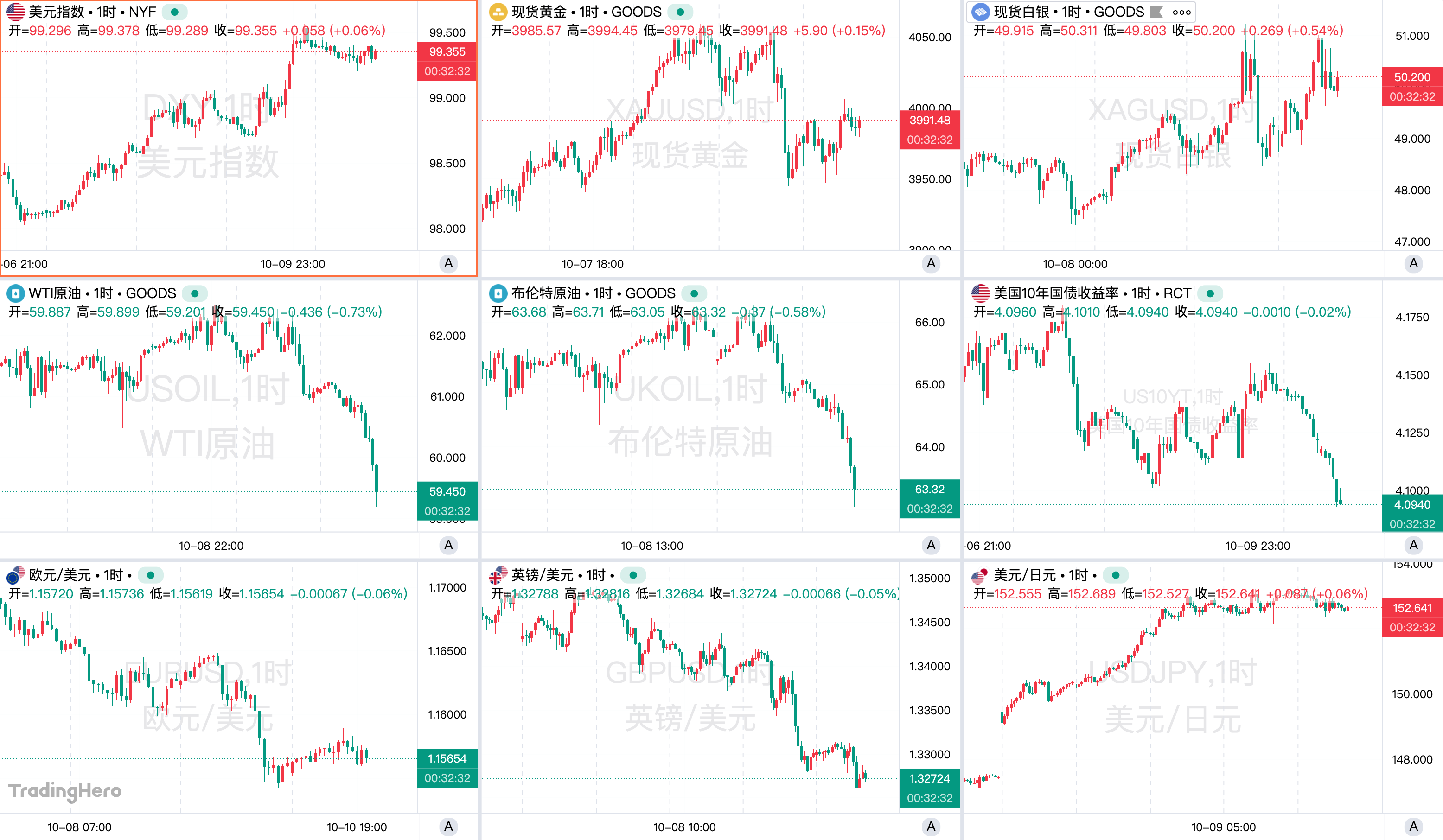
Market Overview - The US dollar index has continued to strengthen, breaking the 99 mark and reaching a two-month high, supported by political uncertainty and safe-haven demand [1] - Gold prices have surged, reaching nearly 4060 USD/ounce, driven by interest rate cut expectations and safe-haven sentiment [1] - Oil prices have experienced volatility, initially rising but then declining due to increased inventory and easing geopolitical tensions [1] - US stock market showed mixed performance, with technology stocks initially leading but later facing profit-taking and increased risk aversion [1] Investment Bank Insights - Citigroup raised its three-month gold price forecast from 3800 USD/ounce to 4000 USD [4] - Goldman Sachs increased its December 2026 gold price forecast from 4300 USD/ounce to 4900 USD, citing strong ETF inflows and central bank purchases [4] - Morgan Stanley projected gold prices could reach around 4200 USD, with a potential high of 6000 USD by the end of 2029, based on fundamental support factors [4] Major Events - The US government has been in a shutdown for over a week due to a stalemate between parties, affecting approximately 2 million government employees and causing economic disruptions [5] - The Federal Reserve's decision-making is hindered by delayed employment and inflation data due to the government shutdown, impacting the release of critical economic reports [6] - A ceasefire agreement has been reached between Israel and Hamas, marking a significant step towards peace in the Middle East [7] - The Federal Reserve's September meeting minutes revealed significant internal divisions regarding the interest rate cut path, with some officials advocating for further cuts while others expressed caution [8][9] Trade and Tariff Developments - The US Department of Commerce announced export controls on rare earth materials and related technologies, effective November 8, 2025, to maintain national security [11] - President Trump announced a 25% tariff on medium and heavy trucks starting November 1, 2025, while also deciding against tariffs on foreign generic drugs [12] - The World Trade Organization significantly downgraded its global goods trade growth forecast for 2026 from 1.8% to 0.5%, citing weak economic recovery and US tariff policies as contributing factors [20]
墨西哥强势推出的50%关税,为何突然暂停?中国有动作!
Sou Hu Cai Jing· 2025-10-10 13:12
Core Viewpoint - Mexico's President Claudia Sheinbaum's proposal for a 50% tariff on imports, particularly targeting non-free trade partner countries like China, has been put on hold following a trade barrier investigation initiated by China [1][15]. Tariff Plan: Shift in Trade Policy - The tariff reform proposal announced on September 10, 2025, is part of Mexico's "Plan Mexico" industrial policy, affecting 1,371 tariff codes, which represent 16.8% of all tariff codes in Mexico, with rates ranging from 10% to 50% [3][5]. - The proposal includes a significant increase in tariffs on various products, including automobiles, textiles, and steel, with the automotive sector facing the highest impact [4][6]. Impact on Industries - The automotive industry, particularly Chinese imports, is expected to be severely affected, with tariffs on cars imported from China rising from 20% to 50%, which could undermine price competitiveness [8][20]. - The proposed tariffs cover approximately $52 billion worth of imports, accounting for 8.6% of Mexico's total imports [8]. Underlying Motivations - The tariff increase is influenced by pressure from the United States, especially following Trump's return to the White House, which aims to limit Chinese goods entering the U.S. market through Mexico [9][10]. - Internally, Mexico faces a significant fiscal deficit, projected at 5.9% of GDP in 2024, prompting the government to seek immediate revenue through tariff increases [13][14]. China's Response - In response to Mexico's tariff proposal, China initiated a trade barrier investigation on September 25, which is expected to last six to nine months, highlighting the potential negative impact on Mexico's business environment and international investment confidence [15][16]. Political Dynamics - The Mexican Congress has decided to "pause" the tariff proposal, with plans to revisit it in late November, indicating a need for further deliberation and potential adjustments to the proposal [21][22]. - The current version of the tariff proposal is unlikely to gain congressional approval without modifications, suggesting a possible reduction in tariff rates or the scope of affected products [22].

交通运输部回应拟对美船舶收取船舶特别港务费
Di Yi Cai Jing· 2025-10-10 07:49
答:2025年4月,美国贸易代表办公室宣布了对中国海事、物流和造船领域301调查最终措施,10月14日 起,对中国公司拥有或运营的船舶、中国造船舶、中国籍船舶加收港口服务费。美国的做法罔顾事实, 充分暴露出其单边主义、保护主义本质,具有明显的歧视性色彩,严重损害中国海运业的正当利益,严 重扰乱全球供应链稳定,严重破坏国际经贸秩序。中方将对美国错误做法依法坚决采取反制措施,推动 构建公平正义的国际海运市场秩序,维护国际物流供应链安全稳定。 根据《中华人民共和国国际海运条例》,我部发布《关于对美船舶收取船舶特别港务费的公告》,决定 将于10月14日起对涉美船舶收取船舶特别港务费,这是我们维护中国海运企业合法权益的正当举措。我 们敦促美方立即纠正错误做法,停止对中国海运业的无理打压。 这是我们维护中国海运企业合法权益的正当举措。 交通运输部新闻发言人就拟对美船舶收取船舶特别港务费答记者问。 问:中方宣布将对美船舶收取船舶特别港务费,有何考虑? ...