信用风险

Search documents
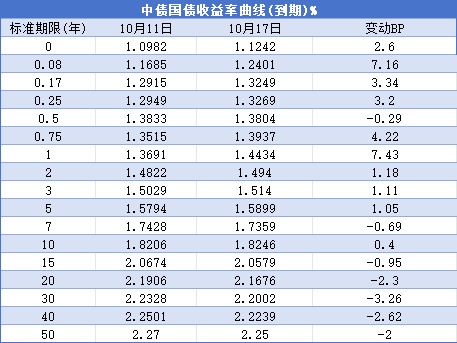
聚焦科技型企业科创债券:潜力蓝海与信用风险特征深度研究
Lian He Zi Xin· 2025-11-25 11:10
Report Industry Investment Rating No relevant content provided. Core Viewpoints of the Report - The science - innovation bond market in China has witnessed rapid development under policy impetus, with continuous expansion in scale and diverse industry distribution of the science - innovation sector. The future development potential is enormous. The predicted issuance scale of science - innovation bonds for sample companies exceeds 50 billion yuan, and the issuance willingness of technology - based enterprises is expected to increase. However, different science - innovation industries have significant differences in credit risk characteristics, and attention should be paid to science - innovation enterprises with weak growth, average profitability, and heavy debt pressure [2][61]. Summary According to Relevant Catalogs I. Overview of the Science - Innovation Bond Market - **Development Stages**: The science - innovation bond market in China has gone through three stages: the "Double - Innovation Bond" stage (starting in 2015), the "Science - Innovation Corporate Bond and Science - Innovation Note" stage (starting in 2022), and the "Science - and - Technology Innovation Bond" stage (starting in May 2025) [4][5]. - **Issuance Scale**: Since 2021, the issuance scale and number of science - innovation - related bonds have been growing. In 2025 from January to September, the issuance scale reached 1.180853 trillion yuan, with 992 bonds issued, a year - on - year increase of 113.28% and 81.35% respectively. As of the end of September 2025, the market scale of science - innovation bonds reached 2.89 trillion yuan, accounting for 5.59% of the credit - bond stock in terms of scale and 5.42% in terms of number [5]. - **Participation of Entities**: The participation of private and low - credit - rating entities is relatively low. In 2025 from January to September, among the 548 issuers of 992 science - innovation bonds, AAA - rated entities accounted for 67.88%, AA + - rated entities accounted for 22.45%, and AA - rated and below entities accounted for 9.67%. In terms of enterprise nature, local state - owned enterprises accounted for 57.66%, central state - owned enterprises accounted for 23.91%, and private enterprises accounted for 10.58%. The reasons include investor preference, low credit levels of private enterprises, and lack of effective credit enhancement measures [7]. II. Analysis of the Possibility of Technology - Based Enterprises Issuing Science - Innovation Bonds - **Issuance Capacity**: Using the average ratio of the scale of corporate bonds issued in the public market in 2024 to the ending owners' equity of the issuing entities (18.57%) as the upper limit of bond issuance, the predicted issuance scale of science - innovation bonds for 1032 sample companies exceeds 50 billion yuan. However, as of October 21, 2025, the actual issuance scale of bonds by these sample companies was 6.2645 billion yuan, and the scale of science - innovation bonds was only 390 million yuan, far lower than the predicted value, indicating large issuance potential [10][13]. - **Issuance Willingness**: Policy support provides opportunities for technology - based enterprises. Policies have expanded the scope of issuers, optimized the review process, and reduced costs. The improvement of market liquidity, infrastructure, and the long - term capital gap of technology - based enterprises, along with the limitations of traditional financing, are expected to enhance the issuance willingness of technology - based enterprises [17][20][21]. III. Analysis of Credit Risk Characteristics of Technology - Based Enterprises (1) Analysis of Industry Credit Risk Characteristics - **Information Technology Industry**: Sub - sectors face risks such as strong cyclical fluctuations, technological iteration, and geopolitical impacts on the supply chain. Hardware device sub - sectors like consumer electronics, communication equipment, and semiconductors have their own specific risks, and the software service sector has risks related to human capital and project - driven models [23]. - **Biopharmaceutical Industry**: It has "high - uncertainty" credit risks dominated by the R & D cycle. Under the policy of medical insurance cost control, the industry will continue to分化. The core of the credit risk lies in the R & D and clinical risks, patent and market monopoly risks, regulatory and policy risks, and financing and liquidity risks [30]. - **High - end Equipment Manufacturing Industry**: It is capital - and technology - intensive, and the credit risk is "asset + order" dual - driven. The credit risk of enterprises depends on the advancement of equipment, production capacity, and market orders [31]. (2) Analysis of Financial Risk Characteristics - **Information Technology Industry**: The semiconductor sub - sector shows high growth, high profitability, and low debt levels, but there is internal differentiation. The hardware device sub - sector has moderate revenue growth and profitability but relatively high debt levels. The software service sub - sector has slow revenue growth, extremely weak profitability, and serious internal differentiation, and faces greater financial risks [36]. - **Biopharmaceutical Industry**: The overall financial performance is relatively stable, but there is significant internal differentiation. Most enterprises have strong profitability, while some are in the R & D or market - introduction stage and rely on a single product or technology transformation for profit. Enterprises with R & D setbacks and heavy debt burdens face higher re - financing and liquidity risks [49]. - **High - end Industrial Industry**: The overall fundamentals are stable, with moderate revenue growth, differentiated profitability, and weak debt - repayment safety margins. Some enterprises have excessive debt and high supply - chain capital occupation, and face re - financing and liquidity risks [56]. IV. Summary - **Market Development**: The science - innovation bond market has developed rapidly and has great potential. Although the participation of private and low - credit - rating entities needs to be improved, the market is expected to expand further with policy support and infrastructure optimization [61]. - **Credit Risk Differences**: Different science - innovation industries have significant differences in credit risk characteristics. Some enterprises in advanced semiconductor manufacturing, communication equipment related to artificial intelligence and computing power, consumer electronics, biopharmaceuticals, and high - end equipment manufacturing have higher development potential and credit levels [62]. - **Attention to Specific Enterprises**: Attention should be paid to science - innovation enterprises with weak growth, average profitability, and heavy debt pressure, such as those in the software service and biopharmaceutical industries [64].
4 Reasons to Buy This Warren Buffett Stock Like There's No Tomorrow
The Motley Fool· 2025-11-16 11:40
Core Viewpoint - Visa is positioned as a strong investment opportunity due to its inflation resilience, high margins, lack of credit risk, and significant growth potential in digital payments [2][3][9][10]. Group 1: Inflation Resilience - Visa operates in a manner that allows it to benefit from inflation, as its transaction fees are a percentage of the transaction amount, leading to increased revenue during price rises [4]. - The company has a history of growing its dividend by 379% over the past decade, with a conservative cash payout ratio of 21.5%, indicating room for further increases [4]. Group 2: High Margins - Visa maintains a gross margin exceeding 70%, with net earnings of approximately $0.50 for every dollar earned, showcasing its high-margin business model [5][7]. - The company's payment network, which required significant upfront investment, allows it to handle vast transaction volumes with minimal marginal cost increases [7]. Group 3: Lack of Credit Risk - Visa does not issue credit or debit cards, thus avoiding credit risk associated with lending, which is a common issue for banks, especially during economic downturns [9]. Group 4: Growth Opportunities - There remains a substantial opportunity for Visa to convert trillions of dollars in cash and check transactions to digital formats, expanding its ecosystem [10]. - The growth of the e-commerce sector presents another long-term growth avenue, as online transactions typically do not utilize cash [11].



From Near-Certainty to "No Consensus:" FOMC's December Rate Cut Potential
Youtube· 2025-11-14 16:01
Welcome back to Morning Trade Live. It's time now for the big picture. Let's welcome in Colin Martin, head of fixed income research and strategy, Schwab Center for Financial Research.So, we're seeing a bit of a sell-off here and a few moving parts. I'm just looking at the latest Fed commentary actually coming out of Jeffrey Schmid, which has been an interesting dot there, particularly with regards to not agreeing with the rate cut that we saw the previous month. and then once again saying that uh he's unsur ...
美国大型企业破产数量逼近15年新高
Di Yi Cai Jing· 2025-11-13 23:32
Group 1 - The core issue of bankruptcy is concentrated in the industrial and consumer discretionary sectors, with recent defaults by First Brands and Tricolor raising concerns about potential credit risks [1][4] - As of October 31, 2023, there have been 655 bankruptcy filings by large U.S. companies, nearing the projected total of 687 for the entire year, which is likely to set a 15-year high [3][4] - In October alone, there were 68 new bankruptcies, slightly above the revised figure of 66 in September, and higher than the 76 in August, marking the highest monthly total since 2020 [3][4] Group 2 - The most affected sectors this year include industrial companies (98 filings) and consumer discretionary (80 filings), which are particularly sensitive to tightening financial conditions due to trade policy uncertainty, supply chain disruptions, and rising costs [4][5] - Notable bankruptcies include First Brands Group, which filed for bankruptcy with over $10 billion in liabilities, and Tricolor Holdings, which led to JPMorgan writing off approximately $170 million in risk exposure [4][5] - The rise in bankruptcy filings corresponds with the Federal Reserve's interest rate hikes, which have increased financing costs since 2022 [5] Group 3 - The U.S. credit market is showing signs of stress, with the high-yield credit default swap index reaching a peak of 343 basis points in mid-October, before settling at 328 basis points by the end of the month, still above September's low of 302 basis points [6][7] - The widening credit spreads indicate an increased risk premium demanded by investors for high-leverage companies, suggesting that refinancing difficulties are rising and funding costs are likely to impact cash-flow-sensitive firms more quickly [7][8] - There is a noticeable concentration of credit risk, with 345 of the 655 bankruptcies categorized by specific industries, primarily in industrial, consumer discretionary, and healthcare sectors, which together account for 223 filings [7][8]
当所有人都相信AI:这九张图看清“背后的隐忧”
Hua Er Jie Jian Wen· 2025-11-10 13:19
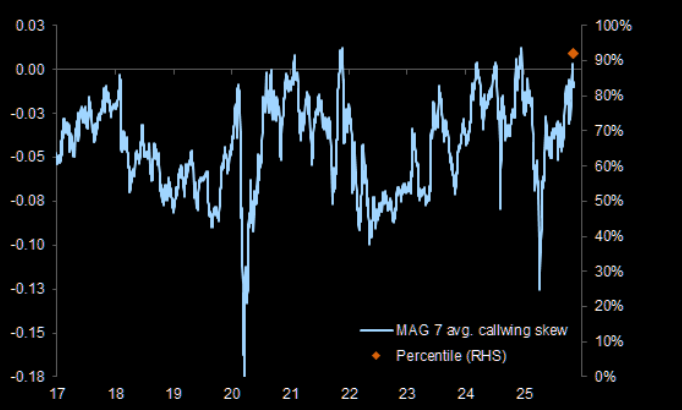
在经历数日抛售后,从华尔街到普通投资者,几乎所有人都在为AI进行有力辩护,而且,他们的理由都非常有说服力。 然而,多项指标显示当前AI投资已达到极端水平。大型成长股和科技股的持仓回到多季度高点,对冲基金的偏好股票已与散户投机者 趋同。更令人担忧的是,家庭股票敞口创下历史新高,一旦AI科技估值出现裂缝,仅财富效应就可能拖累美国GDP下滑2.9%。 Mag 7期权偏斜度仍处于历史高位 大型科技股的期权偏斜度已达到91百分位数。LSEG数据显示,自2012年5月以来,科技巨头七强(Mag 7)的3个月25 delta看涨期权偏斜 度处于历史高位,反映投资者对上涨的极度乐观预期。 科技股持仓大幅回升 德银数据进一步证实了这一趋势。大型成长股和科技股的持仓水平重新回到多季度高点,显示资金大量涌入这一领域。 对冲基金和散户已别无二致 最值得关注的是对冲基金行为的变化。Empirical Research Partners指出,基本面对冲基金已"拥抱高贝塔股票",即大型科技AI宠儿。换 言之,对冲基金的偏好股票已与散户投机者别无二致,专业投资与投机资金在同一赛道上拥挤不堪。 系统性风险加剧 产业集中度同样令人担忧。CB I ...
Optimism for U.S. and China Deal Lifts Sentiment
Youtube· 2025-10-27 12:30
Market Overview - The market sentiment is optimistic, driven by potential trade deal announcements between the US and China, which has positively impacted both equity and commodity markets [2][4] - The S&P 500 may reach the 7,000 level by the end of the week, supported by the current market backdrop and upcoming earnings reports [3][6] Sector Performance - There is a noticeable rotation from defensive sectors to more risk-on segments, including communication services, technology, and financials, as the market anticipates a Federal Reserve meeting [7][8] - Small-cap stocks are also gaining traction, indicating a broader market rally [8] Trade Relations - Upcoming trade discussions between the US and China are crucial, with expectations of delayed tariff increases and potential increases in soybean purchases from China [12][13] - There are indications that China may delay export restrictions on critical minerals for at least one year, which could ease trade tensions [14][17] M&A Activity - Novartis is acquiring Avidity Biosciences for $12 billion, offering a 46% premium to shareholders, which will enhance Novartis's portfolio in rare diseases [18][19] - This acquisition reflects Novartis's commitment to investing in the US market amidst concerns over potential tariffs on the pharmaceutical sector [21]
认识基金----债券基金
Sou Hu Cai Jing· 2025-10-23 17:07
Core Insights - The article defines bond funds as investment funds that primarily invest in tradable government bonds, local government financial bonds, and corporate bonds [2] - The development history of bond funds includes the establishment of the first bond fund in the United States, Keystone Custodian Fund, in 1935, and the launch of China's first bond fund, Southern Baoyuan Bond A, in 2002 [2] - Bond funds can be classified into pure bond funds, hybrid bond funds, and convertible bond funds based on their ability to invest in the stock market, and into government bond funds, municipal bond funds, and corporate bond funds based on the types of bonds they invest in [2] - The main characteristics of bond funds include a focus on bonds as investment targets, with over 80% of fund assets invested in bonds, offering relatively stable returns with lower risk compared to equity funds, but also lower expected returns [2] - Risks associated with bond funds include interest rate risk, credit risk, early redemption risk, and inflation risk, with rising market interest rates potentially leading to a decline in bond prices and a decrease in fund net value [2]
Dollar wavers with politics, credit risks and trade tensions in focus
Reuters· 2025-10-20 14:52
Core Insights - The dollar experienced a slight increase against the yen as investors redirected their attention to political developments in Japan and the euro area while concerns regarding U.S. credit risk persisted [1] Group 1 - The dollar edged up against the yen, indicating a shift in investor sentiment [1] - Political developments in Japan and the euro area are influencing market dynamics [1] - Ongoing concerns about U.S. credit risk are affecting investor confidence [1]

美国中小银行:新一轮“硅谷银行危机”?
2025-10-20 14:49
Summary of Key Points from Conference Call Records Industry Overview - The records primarily discuss the U.S. banking sector, particularly focusing on regional banks such as Zion and WAL, and the implications of credit risks in the current economic environment [1][3][4]. Core Insights and Arguments - **Stock Price Decline**: Zion and WAL banks experienced stock price declines of 13% and 11% respectively due to the disclosure of bad mortgage losses related to non-bank institution fraud lawsuits, with exposures of $60 million and $100 million [1][3]. - **Comparison with SVB**: Unlike SVB, which faced a liquidity crisis due to deposit runs, Zion and WAL have lower uninsured deposit ratios (43% and 50%) and a more stable liability structure, primarily consisting of loans (62% and 76%) [1][3][4]. - **Credit Risk Environment**: The U.S. corporate bond credit spread remains low at approximately 100 basis points, but there are concerns about potential black swan events that could cause rapid increases in credit spreads [1][4]. - **Bank Profitability**: U.S. listed banks reported strong third-quarter profits, with only 6% of banks reporting losses, and corporate profitability remains stable, with loss ratios at historical lows (11% of companies and 5% of market cap) [1][4]. - **Loan Tightening and Delinquency Rates**: Loan tightening ratios are below 10%, with a steady increase in loan growth. However, credit card delinquency rates have risen to 3.1%, doubling since 2021, indicating potential credit default risks [1][5]. Additional Important Insights - **Commercial Real Estate Risks**: The delinquency rate for commercial real estate loans has reached a historical high of 11.1%, with significant exposure concentrated in regional banks, which hold about 30% of their total assets in commercial real estate loans [1][6]. - **Private Credit and AI Investment Risks**: The private credit market is growing rapidly, with a projected $1 trillion maturing in the next five years, raising concerns about liquidity and credit risks in a high-interest-rate environment. AI investments contributed 92% of GDP growth in the first half of 2025, but the sector's reliance on capital investment makes it vulnerable to tightening financing conditions [2][6][7]. - **Banking Sector Challenges**: The banking sector faces challenges related to the stability of liabilities, with the ratio of money market funds to deposits at approximately 40%. Historical data suggests that if this ratio exceeds 50%, it could lead to liquidity risks and potential financial crises [8]. This summary encapsulates the critical points discussed in the conference call, highlighting the current state of the U.S. banking sector, credit risks, and the implications of economic conditions on financial stability.
【债市观察】避险情绪牵动收益率先上后下 超长端走强3BP
Xin Hua Cai Jing· 2025-10-20 02:49
Core Viewpoint - The bond market remains in a loose liquidity environment, with fluctuations driven by changes in risk sentiment and equity market volatility, resulting in a slight increase in the 10-year government bond yield to around 1.75% [1][4]. Market Review - From October 13 to October 17, the yields on various maturities of government bonds showed mixed movements, with the 1-year yield increasing by 7.43 basis points (BP) and the 30-year yield decreasing by 3.26 BP [2][3]. - The 10-year government bond yield rose by 0.4 BP to 1.8246% as of October 17 [3]. Specific Market Movements - On October 14, the 10-year government bond yield rose by 1.8 BP to 1.761% due to improved risk sentiment and strong import-export data [4]. - The bond market experienced fluctuations throughout the week, with the 10-year yield ending the week at 1.7475%, a net increase of 0.45 BP for the week [4][6]. Primary Market Activity - A total of 47 bonds were issued last week, amounting to 450.66 billion yuan, including 4 government bonds totaling 276 billion yuan [8]. - The Ministry of Finance completed the issuance of 400 billion yuan of 20-year special government bonds, marking the completion of this year's issuance of 1.3 trillion yuan of such bonds [8]. International Market Context - U.S. Treasury yields experienced a slight decline, with the 10-year yield dropping by 2 BP to 4.00% amid market concerns following the failure of two regional banks [10][12]. Institutional Perspectives - Huachuang Securities suggests that while there are no strong bullish factors driving a significant decline in yields, the market may find a new equilibrium around 1.75% [19]. - According to Fangzheng Securities, the bond market is expected to return to fundamental logic, with potential early issuance of local government refinancing bonds, although the scale is likely to be lower than last year [20].