技术升级

Search documents
OEXN:白银需求长期支撑
Xin Lang Cai Jing· 2025-12-16 11:27
Core Viewpoint - Investment demand is a significant driving force behind the recent rebound in silver prices, which have returned to above $63 per ounce. This demand is expected to provide sustained support for silver prices in the long term, resonating with fundamental factors [1][4]. Industry Insights - The long-term value of silver is increasingly reflected in the global electrification and technological upgrade processes. Silver's irreplaceable advantages in conductivity and thermal conductivity are enhancing its strategic position in new energy, smart transportation, and the digital economy, leading to continuous upward adjustments in industrial demand forecasts [1][4]. Industrial Demand Structure - Solar photovoltaic (PV) remains the most critical growth engine for silver demand. Although the silver usage per solar panel is declining, the rapid expansion of installed capacity is amplifying total silver demand. The share of silver demand from the solar sector has increased from approximately 11% in 2014 to nearly 30%, indicating a profound change in silver consumption driven by the green energy wave [2][3]. - The electric vehicle (EV) industry is becoming the second major pillar of silver industrial demand. As vehicles become more electrified and intelligent, their reliance on silver in battery management, electronic control systems, and charging networks has significantly increased. Data shows that the average silver usage in electric vehicles is about 67% to 79% higher than in traditional models, with per vehicle usage reaching 25 to 50 grams, making the automotive sector's demand for silver more certain [2][3]. New Growth Areas - The rapid development of artificial intelligence (AI) and data centers is opening new growth opportunities for silver demand. Over the past two decades, global IT power capacity has expanded several times, and the explosive growth in computing power necessitates more servers, chips, and supporting infrastructure, all of which rely on silver. As AI applications continue to extend, this demand trend is expected to strengthen [2][3]. Long-term Price Resilience - In the long run, the diversified growth of industrial demand is expected to maintain strong resilience in silver prices. Since the cost of silver in automotive manufacturing and data center construction remains limited, there is potential for further price increases without significantly eroding industry profits, providing a solid fundamental basis for the medium to long-term trend of silver [4].


Vail Resorts收窄亏损,倚重定价策略
Xin Lang Cai Jing· 2025-12-11 14:57
Core Insights - Vail Resorts (MTN) experienced a significant stock increase of 5.7% following the announcement of its seasonal losses and revenue figures [1] - The company reported a revenue of $271 million, indicating a widening of seasonal losses [1] - To support future customer traffic and profit margins, Vail Resorts plans to implement dynamic pricing, increase marketing investments, and upgrade technology [1]

“2025工程勘察设计行业综合实力百强”榜单在京发布
Sou Hu Wang· 2025-12-10 02:13
日前,由中国采购与招标网、中国名企排行网组织开展的"招标代理行业发展45周年纪念暨2025(第19 届)招投标领域年度聚焦活动",组委会在京正式发布了"2025工程勘察设计行业综合实力百强榜单"。 近年来,中国工程勘察设计行业在党和政府的坚强领导下,坚持以新发展理念为引领,深化改革创新, 取得了举世瞩目的成就。规模效益持续提升,行业营业收入和技术人员数量稳步增长,服务范围覆盖交 通、水利、能源、城市建设等关键领域,有力支撑了国家重大战略和基础设施建设。技术创新成果丰 硕,广泛应用BIM、数字化勘测、人工智能等新技术,推动行业向智能设计、绿色设计转型。参建港珠 澳大桥、北京大兴机场等"超级工程",突破多项复杂技术难题。主导或参与编制多项国际标准,技术话 语权显著增强。绿色转型成效显著。积极响应"双碳"目标,在新能源工程、生态修复、绿色建筑设计中 形成技术体系,助力可持续发展。国际竞争力持续增强,凭借先进技术和丰富经验,成功开拓"一带一 路"沿线市场,中国勘察设计标准、技术和装备走向世界。行业治理日趋完善,资质管理改革深化,市 场秩序持续规范,诚信体系加快建设,为高质量发展奠定制度基础。 中国工程勘察设计行业作为 ...
金道科技:未来几年是实现技术升级、市场扩容的重大历史机遇
Zheng Quan Ri Bao· 2025-12-09 11:13
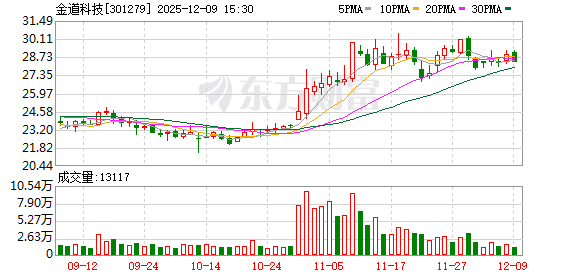
Core Viewpoint - The company sees the next few years as a significant historical opportunity for technological upgrades and market expansion [2] Group 1: Business Strategy - The company will adhere to an innovative and efficient development model, continuously upgrading and optimizing its existing product structure, focusing on high-end internal combustion forklift gearboxes, wet drive axles, and electric forklift gearboxes while enhancing product and service quality [2] - The company aims to develop high value-added new products and accelerate the application development and industrialization of electrification integrated products, leveraging its existing technological accumulation [2] - The company plans to advance its internationalization strategy, aiming to become a core supplier for overseas customers by enhancing research and development, service capabilities, and product quality [2] Group 2: Operational Efficiency - The company will work to enhance the capacity release and benefit transformation of its fundraising projects to strengthen overall competitiveness and risk resistance [2] - The company intends to improve internal management levels by implementing innovative management models and long-term incentive mechanisms, aiming to reduce costs and increase efficiency while building a team with international vision and capabilities [2] Group 3: Research and Development - The company will continue to strengthen its technology research and development system, promoting collaboration with higher education institutions and industry experts to enhance independent research capabilities and facilitate the transformation of scientific and technological achievements [2]
光伏50ETF(159864)涨超1.6%,行业景气与反内卷博弈成焦点
Mei Ri Jing Ji Xin Wen· 2025-12-08 06:12
Core Insights - The power equipment industry is benefiting from a surge in global electricity demand, with the International Energy Agency projecting an average annual growth rate of 4% in global electricity demand from 2025 to 2027, primarily driven by the expansion of data centers and AI training clusters [1] Industry Summary - Strong demand for UHV (Ultra High Voltage) in China, with the first five batches of bidding orders expected to grow by 30% year-on-year before 2025 [1] - Imbalance in overseas grid investment and renewable energy integration, with over 3000 GW of projects awaiting grid connection, driving demand for cables [1] - In the photovoltaic equipment sector, despite a projected adjustment in China's installed capacity to 180 GW in 2026, global demand remains high, with expected global installations of 590 GW, 538 GW, and 599 GW from 2025 to 2027 [1] - Energy storage equipment is also experiencing explosive growth, with global installations expected to reach 92 GW, 123 GW, and 138 GW during the same period, and battery shipment volumes projected to grow year-on-year by 69%, 50%, and 10% [1] - Industry technology upgrades and policy support, such as the "anti-involution" benchmark, are extending the lifecycle of products, optimizing the supply-demand structure, and allowing the power and photovoltaic equipment sectors to continue benefiting from the transition between old and new growth drivers [1] Investment Product Summary - The Photovoltaic 50 ETF (159864) tracks the photovoltaic industry index (931151), which selects listed company securities involved in silicon materials, silicon wafers, battery cells, modules, and photovoltaic equipment to reflect the overall performance of related listed companies across the photovoltaic industry chain [1] - This index focuses on the new energy sector, characterized by high growth potential and technological innovation [1]
研判2025!中国激光云高仪行业分类、市场规模及重点企业分析:国产替代与技术升级双轮驱动行业稳步增长,行业加速与AI、物联网融合成为发展新引擎[图]
Chan Ye Xin Xi Wang· 2025-12-08 01:11
内容概况:中国激光云高仪行业正处于国产替代加速与技术升级的关键期,2024年,中国激光云高仪行 业市场规模约为6.53亿元,同比增长7.22%。随着激光技术与AI、物联网的深度融合,行业正加速向高 精度、智能化、绿色化方向演进——高精度体现为云底高度测量精度突破±10米,智能化体现在机器学 习算法实现云类自动识别与动态预测,绿色化则体现在低功耗设计与光伏供电方案的推广。 相关上市企业:华工科技(000988)、大族激光(002008)、蓝盾光电(300862) 相关企业:苏州长光华芯光电技术股份有限公司、武汉华日精密激光股份有限公司、武汉锐科光纤激光 技术股份有限公司、中久光电产业有限公司、江苏中天科技股份有限公司、长飞光纤光缆股份有限公 司、中科院南京天文仪器有限公司、浙江水晶光电科技股份有限公司、武汉华工科技产业股份有限公 司、北方夜视技术股份有限公司、比亚迪股份有限公司 关键词:激光云高仪、激光云高仪市场规模、激光云高仪行业现状、激光云高仪发展趋势 一、行业概述 激光云高仪是基于激光雷达技术的大气探测仪器,通过发射特定波长的激光脉冲,接收云层、气溶胶等 粒子的后向散射信号,精确测量云底高度、云层厚度、垂 ...

厦门制衣厂代工市场蓬勃发展
Sou Hu Cai Jing· 2025-12-02 00:05
Core Insights - The Xiamen garment manufacturing market is experiencing significant growth, driven by a solid industrial foundation and increasing demand from domestic and international brands [1][12] Group 1: Industrial Foundation and Supply Chain - Xiamen's garment industry has developed a complete supply chain from fabric supply to finished garment processing, supported by advanced production equipment and skilled labor [2] - The geographical advantage of Xiamen, being close to ports, enhances logistics efficiency and reduces transportation costs, making it an attractive option for brands [2] Group 2: Demand from Domestic and International Brands - The rise of domestic emerging clothing brands is leading to increased outsourcing of production to reduce costs and risks, with Xiamen factories being preferred partners due to their flexible production models and competitive pricing [4] - International demand for Xiamen's manufacturing capabilities is also growing, particularly from small to medium-sized orders, due to the region's production quality and cost-effectiveness [4] Group 3: Technological Upgrades - Many Xiamen garment factories are investing in technology upgrades, such as automated cutting and smart sewing equipment, which enhance production efficiency and reduce human error [9] - The introduction of digital management systems is optimizing the entire process from order tracking to quality control, thereby increasing customer trust [9] Group 4: Cost Advantages and Challenges - Despite higher labor costs compared to inland regions, Xiamen maintains competitive overall efficiency due to skilled labor and a mature industrial cluster that facilitates easier procurement of raw materials [10] - The rise of Southeast Asian manufacturing markets poses competitive pressure, prompting Xiamen factories to adjust strategies towards higher value-added products and flexible production models [10] Group 5: Environmental and Sustainable Development Trends - The global focus on sustainability is influencing the garment industry, with brands increasingly requiring factories to adopt sustainable production methods [11] - Some Xiamen factories are experimenting with eco-friendly dyes and reducing wastewater emissions, which, while increasing short-term costs, align with long-term industry trends [11] Group 6: Future Outlook - The robust development of Xiamen's garment manufacturing market is attributed to its solid industrial base, efficient supply chain, and growing brand demand, with ongoing technological upgrades and sustainability efforts shaping its future [12]

2025年12月份有722份标准将实施(含下载)
仪器信息网· 2025-12-01 09:07
Core Viewpoint - The new standards to be implemented in December focus on enhancing detection regulations in key sectors such as electronics, food, and energy, utilizing advanced instrumentation technologies like ICP spectroscopy and liquid chromatography to promote quality improvement and green transformation across industries [2][3]. Group 1: Overview of New Standards - Over 700 new standards will be implemented in December, covering critical areas including food, agriculture, environment, healthcare, petroleum, electronics, transportation, and machinery [3]. - The release and implementation of these standards aim to realize the concept of "quality improvement and efficiency enhancement," supporting technological upgrades and quality enhancement for high-quality economic development [3]. Group 2: Advanced Analytical Techniques - Advanced analytical methods such as ICP-OES for measuring lead, phosphorus, and zirconium content, HPLC for determining bitter acid, and atomic fluorescence spectroscopy for measuring mercury and arsenic are widely adopted in chemical and fireworks detection projects [5]. - The power industry standards include methods for measuring anions in water vapor using ion chromatography [5]. Group 3: Food Safety and Biological Testing - New standards involve liquid chromatography-tandem mass spectrometry for detecting isothiazolinone compounds in feed, and rapid quantitative methods for grain toxins using fluorescence immunochromatography and colloidal gold [6]. - The biological field includes regulations for real-time quantitative PCR detection technology [6]. Group 4: Environmental and Physical Performance Monitoring - Standards cover methods for observing atmospheric particulate matter (PM10, PM2.5) using light scattering, testing radiation protection instrument performance, and measuring fuel calorific value using bomb calorimetry [6]. - Non-destructive testing guidelines have been introduced in the power and machinery sectors, including array eddy current, phased array ultrasound, and acoustic imaging detection technologies [6]. Group 5: Specific New Standards for December 2025 - A detailed list of new standards includes 96 standards related to agriculture and food, such as guidelines for classification and grading of agricultural products, and technical regulations for the cultivation and harvesting of Ganoderma [7]. - Additional standards cover various aspects of food safety, environmental protection, and industrial practices, reflecting a comprehensive approach to quality and safety across multiple sectors [8][9].

惠普盈利却裁员,6000人被淘汰,机器人上岗潮来临,员工前路难测
Sou Hu Cai Jing· 2025-11-29 23:16
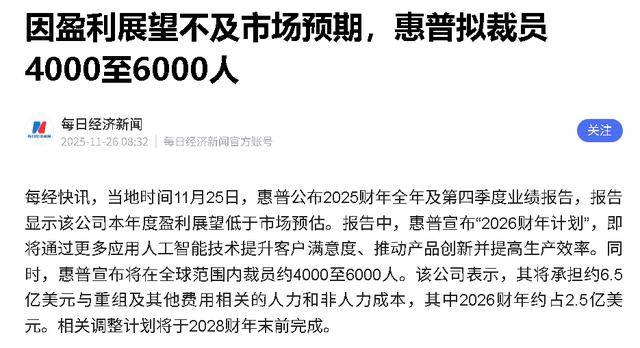
Core Insights - HP announced significant layoffs of 4,000 to 6,000 employees despite reporting increased revenue and strong sales in personal computers, highlighting a disconnect between profitability and workforce stability [1][4] - The trend of layoffs is not isolated to HP; other tech giants like Amazon, Microsoft, and Intel are also reducing their workforce despite good financial performance, indicating a broader industry shift [4][5] - The drive for efficiency and cost-cutting is being fueled by investor pressure, leading companies to prioritize productivity over headcount [7][9] Group 1: Layoff Trends - HP's decision to cut jobs comes after previous layoffs, reflecting a growing trend in the tech industry where companies are downsizing even when they are financially healthy [1][4] - The layoffs are particularly affecting older employees who may find it challenging to adapt to the changing job market [1][2] Group 2: Impact of Technology - The rise of AI and automation is replacing many traditional roles, allowing companies to operate with fewer employees while maintaining or increasing efficiency [9][11] - Companies are increasingly relying on technology to handle tasks that previously required human labor, leading to a significant reduction in the workforce [9][11] Group 3: Employment Landscape - The job market is becoming increasingly competitive, with many individuals forced into freelance work as traditional job security diminishes [11][13] - There is a growing need for workers to acquire new skills to remain employable, as the demand for high-skilled positions rises [11][13] Group 4: Societal Implications - The rapid changes in the job market due to technological advancements are creating significant pressure on individuals and families, necessitating a collective response from government and businesses to support workforce retraining [13][16] - The challenge lies in ensuring that technology serves to enhance human capabilities rather than replace them, which is crucial for future employment stability [16]


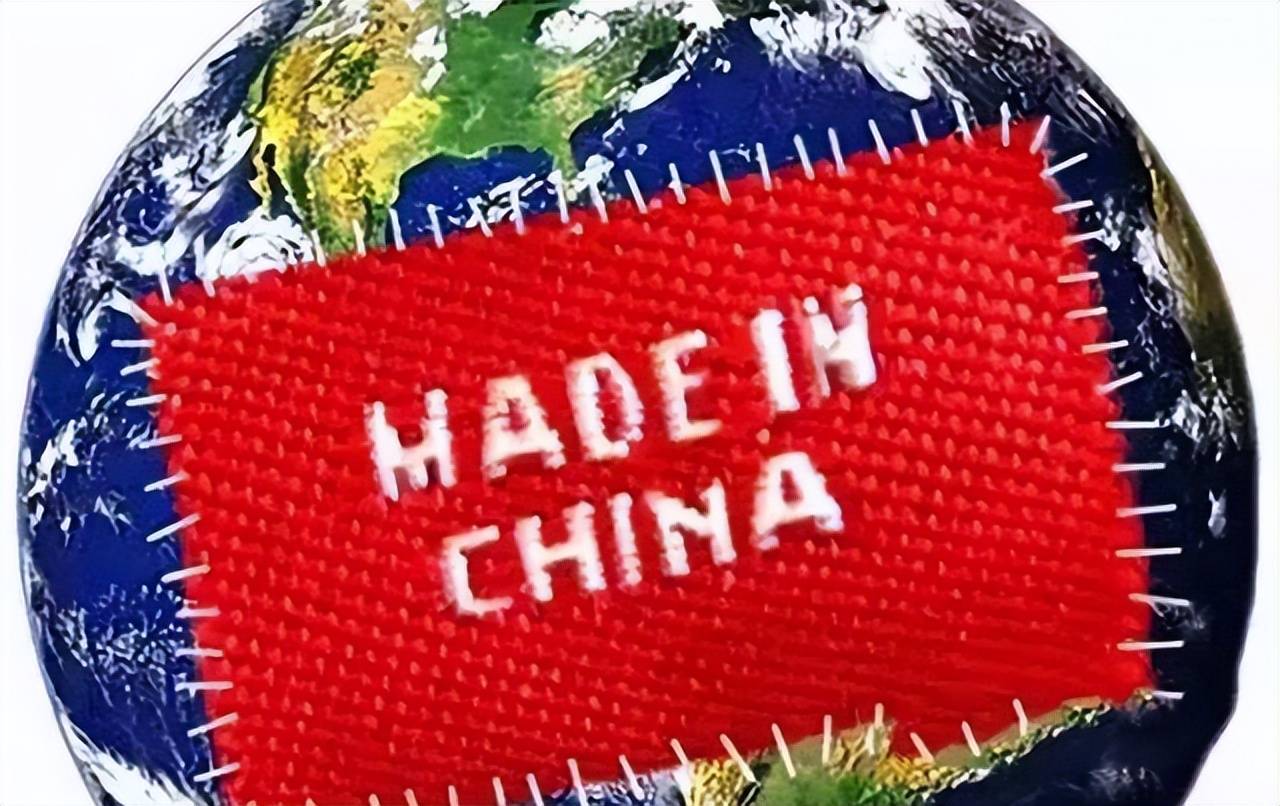
不再低调!多家科技企业亮出底牌,外媒:欠中国制造一个客观认识
Sou Hu Cai Jing· 2025-11-29 07:40
Core Insights - The transformation of China's manufacturing industry from low-end processing to high-tech output has been a gradual process over the past two decades, with significant milestones marking its evolution [1][3][14] - China's manufacturing output surpassed that of the United States in 2010, reaching $1.92 trillion, highlighting its position as a global leader in various industrial products [1][3] - The shift in manufacturing focus from labor-intensive to capital-intensive goods has been driven by policy support and increased R&D investment, which rose from 89.6 billion yuan in 2000 to 706 billion yuan in 2010 [3][5] Manufacturing Evolution - The 1990s saw the rise of private enterprises due to state-owned enterprise reforms, leading to a geographical expansion of the industrial chain from coastal to inland areas [5] - The 2008 financial crisis impacted exports but spurred domestic demand for machinery and infrastructure, contributing to the growth of high-speed rail technology exports [5] - By 2016, China led in electric vehicle battery production and initiated significant investments in semiconductors, while 5G standards were established in 2017 [5] Key Players and Innovations - Huawei's journey from a small agency to a global telecommunications leader illustrates the importance of innovation and market expansion, achieving a market share of 28.6% in 2023 [7][8] - DJI's rapid growth in the drone market, with a 70% market share in 2023, showcases the company's commitment to R&D and technological independence [10] - TCL's transformation from traditional manufacturing to smart appliances has resulted in significant growth, with a 42% increase in overseas sales in 2022 despite industry declines [12] Trade and Global Positioning - In 2022, China's total trade volume reached 42.07 trillion yuan, with exports of 23.97 trillion yuan, reflecting a 10.5% growth driven by high-tech product demand [14] - Reports indicate a shift in perception among foreign media, recognizing China as a leading innovator in advanced industries, with companies like Huawei and Tencent strengthening domestic supply chains [14] - The ongoing focus on high-end sectors, AI, and digitalization positions China for continued competitiveness in the global manufacturing landscape [14]