碳足迹

Search documents
《洞见ESG》6月刊 :ESG信披“双重重要性”
21世纪经济报道· 2025-06-30 12:31
Core Viewpoint - The article emphasizes the "dual importance" of ESG disclosures, highlighting the need for companies to enhance their climate-related information reporting to meet regulatory expectations and stakeholder demands [1][2]. Policy Updates - The Ministry of Finance has released an ESG disclosure application guide, reinforcing the dual importance and value chain disclosures [2]. - New standards for addressing climate change have been introduced, presenting companies with challenges in carbon accounting, reduction, and adaptation [2]. - The National Energy Administration reports that renewable energy installations have surpassed 2 billion kilowatts, with wind and solar power exceeding thermal power for the first time [2]. Industry Insights - 22 ESG-focused securities firms have submitted their ESG reports, but the challenge of climate information disclosure is just beginning [3]. - The Ministry of Ecology and Environment has completed the third marine pollution baseline survey, providing insights into marine ecological health [3]. - A comprehensive carbon footprint management system is being established, with over 70 national standards for product carbon footprint accounting expected to be published by the end of 2024 [3]. Corporate Actions - Yili Group is leading the dairy industry in carbon reduction efforts, collaborating with the entire supply chain to achieve sustainability goals [6][7]. - The company has launched a carbon management platform and has seen significant participation in its "Zero Carbon Alliance," with 90% of members achieving low-carbon transitions [7]. - Yili's ESG report has received the highest rating from the Chinese Academy of Social Sciences, and the company has been recognized as a "chain leader" by the UN Global Compact [7].



调研绿色供应链管理:建好本土数据库并寻求国际互认
Xin Lang Cai Jing· 2025-06-21 11:57
Core Viewpoint - The article highlights the significant role of the green low-carbon supply chain public service platform in Shanghai's Baoshan District, driven by the CN100 Green Low-Carbon Supply Chain Alliance, in facilitating the green transformation of supply chains and urban integration [3][4][6]. Group 1: Green Low-Carbon Supply Chain Platform - The green low-carbon supply chain platform, known as the "Green Chain Platform," aims to build a comprehensive service ecosystem for green low-carbon industries by integrating various service providers [4][6]. - The platform is a response to the EU's Carbon Border Adjustment Mechanism (CBAM) and aims to support Chinese enterprises in adapting to international green trade standards [6][12]. - The platform facilitates the establishment of a carbon footprint database and promotes data sharing among different industries to enhance transparency and traceability [8][11]. Group 2: Role of Key Enterprises - Baowu Group, as a state-owned enterprise, has been proactive in exploring low-carbon technologies and services, laying the groundwork for the Green Chain Platform [4][6]. - The platform collaborates with various enterprises, including banks, to provide green financial services and support for carbon footprint reporting [14][19]. - The CN100 Alliance, comprising leading enterprises from various sectors, plays a crucial role in driving the platform's initiatives and promoting data disclosure [7][8]. Group 3: Financial and Technological Integration - The integration of carbon asset management and carbon technology is essential for achieving net-zero emissions, with the platform facilitating this process [16][17]. - Financial institutions are increasingly evaluating companies based on their carbon footprint data, which can lead to favorable loan conditions for those committed to green practices [14][15]. - The platform is working on developing a comprehensive carbon technology and asset management module to enhance the efficiency of public services [17][19]. Group 4: Future Directions and Challenges - The establishment of localized carbon footprint data and methods that align with international standards is critical for Chinese enterprises to navigate green trade barriers [11][12]. - The platform aims to create a "zero-carbon space" by implementing energy-saving measures and promoting biodiversity in future developments [19]. - Continuous collaboration among industries is necessary to refine data accuracy and enhance the overall effectiveness of the green low-carbon transition [11][13].

越来越多跨国公司选择山东、创业齐鲁
Qi Lu Wan Bao· 2025-06-20 02:51
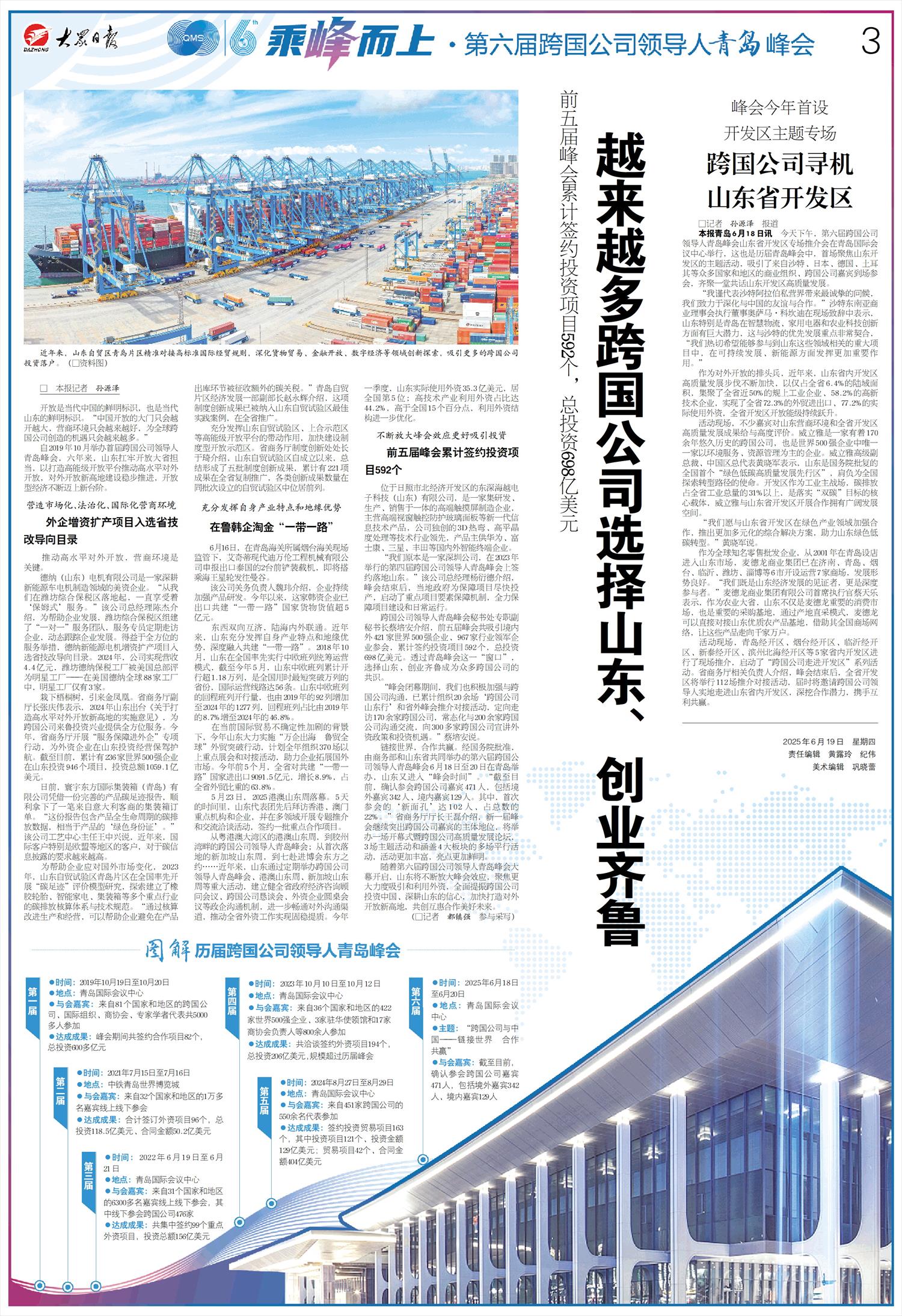
Core Viewpoint - Shandong province is enhancing its open economy by creating a high-level open platform to attract multinational companies, with a focus on improving the business environment and facilitating foreign investment [3][13]. Group 1: Investment Environment - Shandong has implemented high-standard international trade rules in the Qingdao Free Trade Zone, promoting innovation in goods trade, financial openness, and the digital economy to attract multinational companies [10][13]. - The province has seen significant foreign investment, with 236 Fortune 500 companies investing in 946 projects, totaling $105.91 billion [4][14]. - The government is providing comprehensive services to foreign enterprises, including a "one-on-one" service team to support their development [14]. Group 2: Carbon Footprint and Sustainability - Companies in Shandong are increasingly focusing on carbon footprint reporting to meet international client demands, particularly from the EU [15]. - The Qingdao Free Trade Zone has pioneered a carbon footprint evaluation model, establishing a carbon emission accounting system for key industries [15][16]. Group 3: Trade and Export Growth - Shandong has actively engaged in the Belt and Road Initiative, with exports to participating countries exceeding $500 million this year [18]. - The province has launched the "Ten Thousand Enterprises Going Global" initiative, planning over 370 trade fairs and matchmaking events to help companies expand into international markets [18]. Group 4: Multinational Company Engagement - The sixth Qingdao Summit for Multinational Company Leaders is set to take place, with 471 confirmed attendees, including 342 international guests [21]. - Previous summits have successfully attracted 421 Fortune 500 companies and resulted in 592 signed investment projects worth $69.8 billion [20][21].

有色业碳足迹管理迈出重要一步
Jing Ji Ri Bao· 2025-06-15 21:56
Group 1 - The non-ferrous metal industry carbon footprint database has been officially launched, marking a significant step in the establishment of a carbon footprint management system for the industry [1] - The database consists of four core subsystems: online data collection, carbon footprint accounting, carbon footprint analysis and display, and database management [1] - The first phase focuses on developing a carbon footprint database for electrolytic aluminum products [1] Group 2 - The non-ferrous metal industry is a crucial foundational industry for the national economy and a key sector for industrial carbon emissions [1] - The industry has made positive progress in integrating into the green low-carbon development framework and achieving "dual carbon" goals [1] - By 2024, the clean energy usage ratio in the electrolytic aluminum industry is expected to reach 25%, an increase of over 15 percentage points compared to 2015 [2] Group 3 - The production of recycled metals is becoming a core support for achieving "dual carbon" goals, with recycled copper, aluminum, lead, and zinc production expected to reach 19.15 million tons in 2024, a year-on-year increase of 7.1% [2] - The first national standard for product carbon footprint in the industrial sector has been published, providing a solid foundation for carbon footprint quantification in the aluminum industry [2] - The electrolytic aluminum industry has been included in the national carbon market, covering 98 enterprises and nearly 45 million tons of production capacity, accounting for over 60% of global electrolytic aluminum capacity [2] Group 4 - China Aluminum Group is focusing on key links and bottlenecks in carbon reduction, increasing investment in technology and application of results [3] - As an industry leader, China Aluminum Group is leading the establishment of a green low-carbon public service platform and an environmental product declaration platform for the non-ferrous metal industry [3] - The company has successfully constructed a life cycle assessment (LCA) quantitative model system for copper, aluminum, lead, and zinc, supporting the green low-carbon transition of the non-ferrous metal industry [3]
“第三届零碳联盟暨低水足迹倡议联盟峰会”,十大亮点抢先看
2 1 Shi Ji Jing Ji Bao Dao· 2025-06-13 06:48
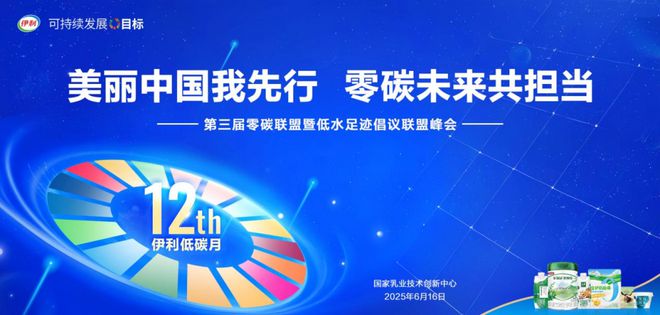
Core Viewpoint - The global climate crisis is reshaping human civilization, emphasizing the urgency of climate action and the need for accelerated low-carbon transformation and collaborative efforts to revive the planet [1] Group 1: Event Overview - The "Third Zero Carbon Alliance and Low Water Footprint Initiative Alliance Summit" will focus on the dairy industry's zero-carbon future, hosted by the Hohhot National Dairy Technology Innovation Center [1][3] - The summit's theme is "Beautiful China, I Take the Lead, Zero Carbon Future Together," highlighting Yili Group's commitment to a dual footprint reduction model [3] Group 2: Yili Group's Strategies - Yili Group is implementing a three-pronged strategy to address the challenges of zero-carbon park construction and international green trade barriers, focusing on standards, platforms, and talent [3][4] - The company aims to establish a transparent standard system to facilitate the green transformation of the dairy industry, with the release of the "1+N" report to enhance environmental performance [4][5] Group 3: Reports and Standards - Yili Group will unveil several key reports at the summit, including the "2024 Biodiversity Report" and the "2024 Yili Group Zero Carbon Future Report" [4][5] - The company is involved in developing 1+11 international and national standards, including the first ESG standard from the International Organization for Standardization (ISO) [5][6] Group 4: Carbon Measurement and Management - The establishment of the National Carbon Measurement Center (Inner Mongolia) Dairy Branch aims to address the challenge of accurately calculating the carbon footprint of dairy products [6][10] - Yili Group is launching China's first carbon management platform, utilizing blockchain technology for real-time tracking of carbon emissions across the supply chain [10][11] Group 5: Collaborative Initiatives - The summit will see the expansion of the Zero Carbon Alliance and the Low Water Footprint Initiative Alliance, which aim to include more upstream and downstream enterprises [7][8] - Yili Group's second global low water footprint initiative report will address water management challenges in dairy production [8][9] Group 6: Talent and Innovation - The "Zero Carbon Park Alliance" will be launched to explore new paths for low-carbon development, emphasizing the integration of talent and technology [12][13] - The summit will also recognize suppliers who have excelled in low-carbon practices and water conservation [15][16]
中国光伏商城www.pvshop.cn
Sou Hu Cai Jing· 2025-06-09 01:02
Group 1: Global Recognition Day and Its Importance - The theme for World Accreditation Day 2025 is "Empowering Small and Medium Enterprises" [1] - Established in 2008, World Accreditation Day aims to promote the development of certification and accreditation activities globally [1] - Recognition plays a crucial role in reducing trade and business costs, providing trust within supply chains [1] Group 2: International Mutual Recognition and Economic Impact - The international mutual recognition system covers economies that account for 96% of global GDP, supporting cross-border trade [2] Group 3: Trends in Quality Recognition in the New Energy Sector - The focus is shifting from single product performance to a comprehensive assessment of technology, environmental impact, and social benefits [4] - Companies are required to embed certification requirements during the R&D phase and utilize digital tools to enhance quality credibility [4] Group 4: Key Characteristics of Quality Recognition in 2025 - Global standardization and certification systems are being accelerated, with major economies collaborating to reduce trade barriers [5] - Lifecycle quality assessment is becoming central, with policies like the EU's Carbon Border Adjustment Mechanism (CBAM) enforcing carbon footprint tracking [6] - Safety standards are being upgraded, particularly for power batteries, with new national standards imposing higher requirements [7] - Mandatory certification for charging facilities will be enforced starting March 2025, with unapproved products banned from production and sale by August 2026 [8] - Stricter dual credit policies are increasing the difficulty of obtaining new energy credits, pushing for technological optimization [9] - New standards require comprehensive environmental management throughout the product lifecycle, emphasizing green supply chain management [10] Group 5: Differentiated Quality Competition in Niche Markets - In the power battery sector, safety certifications and fast charging cycle life are critical indicators for competition [11] - Hydrogen energy certification and pressure testing standards will influence commercialization, with Japan and China potentially leading in this area [11] - In the photovoltaic sector, parameters like PID resistance and bifacial generation rates will distinguish high-end from low-end markets [12] Group 6: Policy-Driven Quality Standards - New regulations in China may mandate transparency in battery health data, compelling companies to optimize battery management systems [13] - U.S. and EU regulations are reshaping supply chain quality competition through local production requirements and recycling material quotas [13] Group 7: Consumer Awareness and Brand Trust - The proliferation of quality transparency tools such as blockchain traceability and third-party evaluation platforms is influencing purchasing decisions [14] - A "zero-defect culture" is emerging, with companies enhancing defect repair capabilities through over-the-air updates, challenging traditional recall models [14]
我省积极践行“绿水青山就是金山银山”理念
Hai Nan Ri Bao· 2025-06-05 01:07
Core Viewpoint - The article emphasizes the successful implementation of the "Green Mountains and Clear Water are Gold and Silver Mountains" concept in Hainan, showcasing the province's commitment to ecological civilization and sustainable development, leading to significant economic and environmental benefits [6][8]. Group 1: Ecological Value and Economic Impact - The ecological product value (GEP) of the Wanquan River Basin for 2023 is estimated at 2097.53 billion yuan, marking the first time such a valuation has been conducted at the watershed level in the province [3]. - The "Two Mountains Platform" in Baisha has activated ecological resource value, providing over 41 million yuan in loans to small and micro enterprises, benefiting more than 3,900 farmers [5]. - The marine ranch at Wuzhizhou Island has seen fishery resources increase by over 200%, with fishery resources in artificial reef areas being five times higher than surrounding regions [5]. Group 2: Environmental Achievements - Hainan achieved a 99.4% proportion of good air quality days last year, with PM2.5 concentration at 12 micrograms per cubic meter, maintaining a leading position nationally in ecological quality [6]. - The flagship species of the Hainan gibbon has increased to 42 individuals across 7 groups, showcasing successful conservation efforts [6]. - The province has implemented a comprehensive ban on plastic, achieving an 80% replacement rate with biodegradable products [6]. Group 3: Green Industry Development - Hainan's new energy vehicle ownership reached 409,000 units by the end of last year, ranking second nationally, with a market share for new and replacement vehicles being the highest in the country [7]. - The province has established production capacities for modified materials (34,500 tons), catering products (45,000 tons), and film bags (57,100 tons) [7]. - The output value of biodegradable materials is projected to reach 406 million yuan in 2024, reflecting a growth of 68.25% [7]. Group 4: Future Directions - Hainan is committed to further advancing ecological protection and sustainable development, focusing on green and low-carbon transitions in production and lifestyle [7]. - The province aims to support the construction of a free trade port through high-level ecological environment protection [7].

工业硅、多晶硅日评:工业硅上方压力较强,多晶硅波动加剧-20250513
Hong Yuan Qi Huo· 2025-05-13 01:09
祁玉蓉(F03100031, Z0021060),联系电话:010-8229 5006 | | | | 工业硅&多晶硅日评20250513:工业硅上方压力较强,多晶硅波动加剧 | | | | --- | --- | --- | --- | --- | --- | | 2025/5/13 | 指标 | 单位 | 今值 | 变动 | 近期趋势 | | 不通氧553#(华东)平均价格 | | 元/吨 | 9,000.00 | -0.55% | | | 工业硅期现价格 | 期货主力合约收盘价 | 元/吨 | 8,320.00 | 1.40% | | | 基差(华东553#-期货主力) | | 元/吨 | 680.00 | -165.00 | | | N型多晶硅料 | | 元/千克 | 38.00 | 0.00% | | | 多晶硅期现价格 | 期货主力合约收盘价 | 元/吨 | 38,450.00 | 1.64% | | | | 基差 | 元/吨 | -450.00 | -620.00 | | | 不通氧553#(华东)平均价格 | | 元/吨 | 9,000.00 | -0.55% | | | 不通氧553#(黄埔 ...
看不见的减碳:A股“范围三”碳排放披露不到3%,“链主”难在何处
Mei Ri Jing Ji Xin Wen· 2025-04-24 07:42
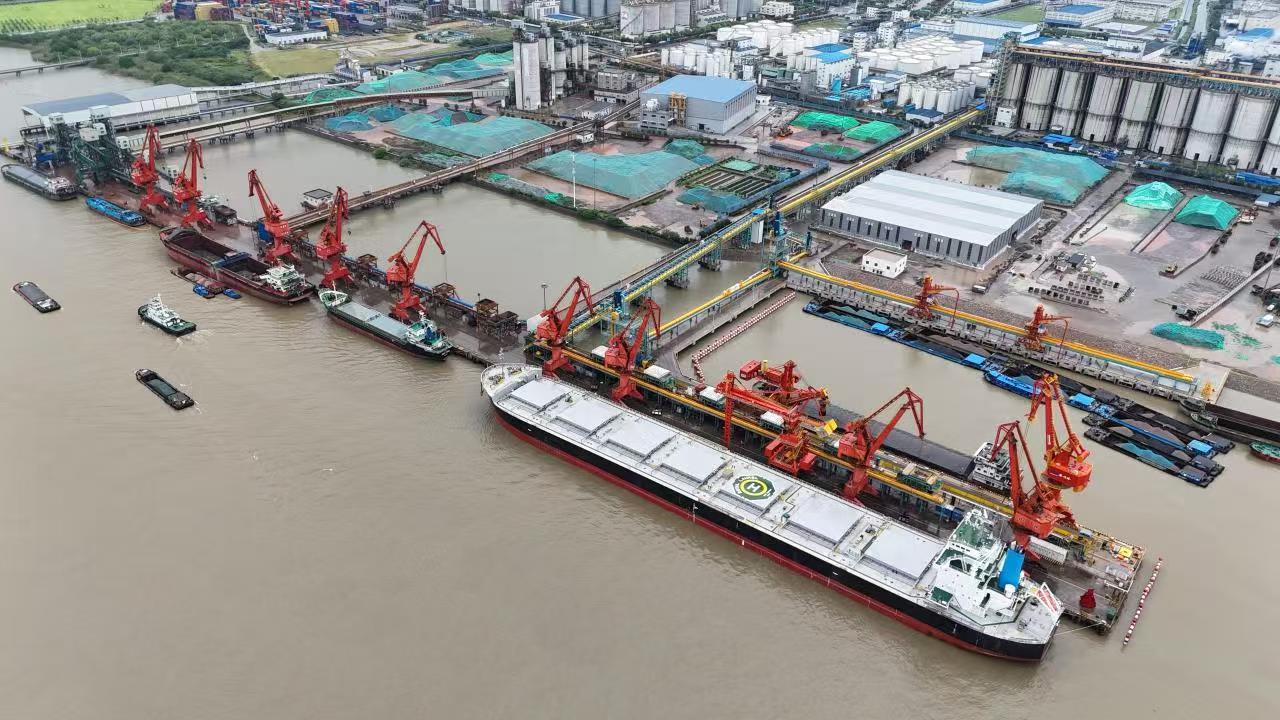
每经记者 黄宗彦 每经编辑 魏官红 编者按 大家可能想不到,金龙鱼的原料转运、海底捞的食材处理,都蕴含着减碳的方式方法。 每经品牌价值研究院策划了一组"跃迁2025:上市公司绿色供应链一线调查"系列报道,向受众揭示绿色供应链新现象,新特点,也反映企业构建绿色供应链 如何应对新挑战。本期为系列报道第一篇,聚焦绿色供应链的"低碳转型"。 清晨时分,江苏省泰州市永安港的江雾尚未散尽,十余台吸粮机已张开钢铁触手。玉米、大豆等粮食被触手吸入后,通过传送带带入封闭廊道,在全密封传 送系统中奔涌,最终到达船舱。 这是金龙鱼(SZ300999)的原料在港口进行船舶中转的作业场景。这种转运方式,省去了过去"落地再装车"的冗余环节,也成为供应链减碳的一种"看得 见"的方法。 但更重要的是,供应链上"看得见"的碳数据。每经品牌价值研究院统计显示,A股2024年全行业对范围三(注:产业链、价值链的碳排放)的披露率仅有 2.78%。 从低碳转型入手,构建绿色供应链,是当前许多上市公司面临的最大挑战之一。 缺少碳披露,供应链减碳"看不见" "这两年我们发现,越来越多的客户在选择供应商伙伴的时候,会关注企业的绿色发展现状,特别是碳排放。" ...

一文读懂全国碳市场:18个关键名词全解析
Sou Hu Cai Jing· 2025-04-07 16:50
Core Insights - The national carbon market in China is a government-led trading system aimed at reducing carbon emissions, officially launched on July 16, 2021, covering 2,225 enterprises in the power sector with an annual emission coverage of approximately 4.5 billion tons, making it the largest carbon trading market globally [1][2] Group 1: Key Terminology - Carbon Emission Allowance (CEA) allows companies to emit a specific amount of CO₂, where 1 allowance equals 1 ton of CO₂ equivalent (tCO₂e). Companies must hold enough allowances to cover their emissions by the end of the compliance period to avoid penalties [3][4] - Carbon Allowance refers to the emissions permits allocated to companies by the government, with a future trend of decreasing free allowances and increasing paid allowances to incentivize emission reductions [5] - Carbon Trading involves the buying and selling of carbon allowances or reduction credits, primarily through agreements, with potential future inclusion of financial instruments like futures and options [6] Group 2: Market Mechanisms - CCER (China Certified Emission Reduction) represents carbon credits generated from projects like renewable energy and forestry, which can offset up to 5% of a company's emissions [7] - The MRV (Monitoring, Reporting, Verification) system ensures the accuracy of carbon emission data, serving as the foundation for fair market operations [8] - Carbon Price is the market price for carbon allowances, currently ranging from 50 to 80 RMB per ton, significantly lower than the EU price of approximately 80 Euros per ton, with expectations of gradual increases as policies tighten [9][10] Group 3: Goals and Strategies - Peak Carbon refers to the point at which CO₂ emissions reach their highest level before beginning to decline, with China committing to achieve this by 2030 [11][12] - Carbon Neutrality aims for net-zero emissions by 2060 through emission reductions, carbon sinks, and technological innovations [15] - Carbon Sink involves natural processes, such as forests absorbing CO₂, which can be developed into carbon credit projects [16] Group 4: Financial and Regulatory Aspects - Carbon Finance encompasses financial innovations related to the carbon market, enhancing market liquidity and reducing compliance costs for companies [17] - Carbon Footprint measures the total carbon emissions produced directly or indirectly by individuals, companies, or products throughout their lifecycle [18] - Carbon Border Tax is a proposed tariff on high-carbon imports to balance domestic and international carbon costs, with potential implications for high-carbon exporting companies [19] Group 5: Monitoring and Verification - Carbon Monitoring utilizes technologies like sensors and satellites to track carbon emissions and greenhouse gas concentrations, with pilot projects already underway in 16 cities [20][21] - Carbon Accounting systematically quantifies carbon emissions for companies or products over a specific period, adhering to international standards [22] - Carbon Verification involves third-party audits of carbon emission reports to ensure data accuracy, a requirement for major emitters in the national carbon market [27]