超长期特别国债

Search documents
沪锡市场周报:海外累库进口担忧,预计锡价震荡调整-20251231
Rui Da Qi Huo· 2025-12-31 09:20
1. Report Industry Investment Rating - Not provided in the content 2. Core View of the Report - It is expected that Shanghai Tin will undergo a wide - range adjustment in the short term. Attention should be paid to the support at 31, and there is pressure at 33.5 above [4]. 3. Summary by Relevant Catalogs 3.1. Week - on - Week Summary - **Market Review**: This week, the main contract of Shanghai Tin pulled back from a high level, with a weekly gain or loss of - 4.62% and an amplitude of 9.82%. As of the close of this week, the main contract was quoted at 322,920 yuan/ton [4]. - **Market Outlook**: - **Macro - level**: According to the minutes of the Fed meeting, "most" officials expect it to be appropriate to continue cutting interest rates after December, while some advocate "holding steady for some time". The first batch of 62.5 billion yuan of ultra - long - term special treasury bonds in 2026 to support the replacement of consumer goods with old ones has been issued in advance [4]. - **Fundamental - level**: - **Supply side**: The import supply of domestic tin ore is still relatively tight, and the tin ore processing fee remains at a low level. The resumption of production in Myanmar and the end of the rainy season have provided some incremental supply of tin ore, but the supply in other regions is still highly unstable, and the overall import volume of tin ore is still at a low level. At the smelting end, the current tin ore raw materials are in short supply, and the raw material inventories of most enterprises are still low. For most enterprises, it is in a loss - making situation, and it is expected that the output of refined tin will continue to be restricted, still lacking year - on - year increments. In terms of imports, Indonesia's export volume increased significantly in November, alleviating concerns about restricted supply in Indonesia. Recently, the import loss has been repaired. If the window opens later, the import supply pressure will increase significantly [4]. - **Demand side**: Recently, the price of tin has pulled back from a high level, the market's willingness to purchase at an opportune time has improved, the inventory has decreased slightly, and the spot premium has remained at 500 yuan/ton. The LME inventory has increased significantly, and the spot premium has fluctuated [4]. - **Technical - level**: Trading volume has increased while positions have decreased, the long - buying sentiment has declined, and it is facing the key resistance at the upper edge of the upward channel [4]. 3.2. Futures and Spot Market Situation - **Price**: This week, the futures price fell, and the spot premium remained stable. As of December 31, 2025, the closing price of Shanghai Tin was 327,680 yuan/ton, a decrease of 13,110 yuan/ton or 3.85% compared with December 24. As of December 30, 2025, the closing price of LME Tin was 42,195 US dollars/ton, a decrease of 1,032 US dollars/ton or 2.39% compared with December 22 [6][9]. - **Ratio**: As of December 31, 2025, the current ratio of Shanghai Futures Exchange's tin - to - nickel price was 2.45, an increase of 0.23 compared with December 24. As of December 29, 2025, the Shanghai - London ratio of tin was 8.34, an increase of 0.32 compared with December 23 [13]. - **Position**: As of December 31, 2025, the position of Shanghai Tin was 87,788 lots, a decrease of 20,845 lots or 19.19% compared with December 24. As of December 26, 2025, the net position of the top 20 in Shanghai Tin was - 6,558 lots, a decrease of 5,187 lots compared with December 22, 2025 [18]. 3.3. Industrial Chain Situation - **Supply side**: - **Tin ore import and refined tin production**: In November 2025, the import volume of tin ore concentrates was 15,099.34 tons, a month - on - month increase of 29.81% and a year - on - year increase of 24.42%. From January to November this year, the import volume of tin ore concentrates was 118,119.99 tons, a year - on - year decrease of 21.51%. In October 2025, the refined tin output was 15,618 tons, a month - on - month increase of 60%. From January to October, the cumulative refined tin output was 142,971 tons, a year - on - year decrease of - 1.25% [24][25]. - **Tin ore processing fee**: On December 26, 2025, the processing fee for 60% tin concentrate was 6,500 yuan/ton, unchanged from December 24, 2025; the processing fee for 40% tin concentrate was 10,500 yuan/ton, unchanged from December 24, 2025 [30]. - **Refined tin import**: As of December 30, 2025, the tin import profit and loss was - 7,431.1 yuan/ton, a decrease of 3,624.44 yuan/ton compared with December 24, 2025. In November 2025, the refined tin import volume was 1,194.53 million tons, a month - on - month increase of 127.04% and a year - on - year decrease of 66.05%. From January to November, the cumulative refined tin import was 20,949.89 million tons, a year - on - year decrease of 5.21%. In November 2025, the refined tin export volume was 1,948.49 million tons, a month - on - month increase of 31.62% and a year - on - year increase of 33.73%. From January to November, the cumulative refined tin export was 20,620.28 million tons, a year - on - year increase of 34.87% [35][36]. - **Inventory**: As of December 30, 2025, the total LME tin inventory was 5,330 tons, an increase of 685 tons or 14.75% compared with December 19. As of December 31, 2025, the total tin inventory was 7,936 tons, a decrease of 541 tons or 6.38% compared with last week. As of December 31, 2025, the tin futures inventory was 7,442 tons, a decrease of 889 tons or 10.67% compared with December 24 [39]. - **Demand side**: - **Philadelphia Semiconductor Index**: On December 30, 2025, the Philadelphia Semiconductor Index was 7,169.1, an increase of 23.53 or 0.33% compared with December 22. From January to November 2025, the integrated circuit output was 431,840 million pieces, an increase of 36,570.72 million pieces or 9.25% compared with the same period last year [42][43]. - **Domestic tin - plated sheet export**: As of November 2025, the tin - plated sheet output was 100,000 tons, a decrease of 10,000 tons or 9.09% compared with October 2025. As of November 2025, the tin - plated sheet export volume was 147,375.58 tons, a decrease of 75,214.24 tons or 33.79% compared with October [46].
沪镍不锈钢市场周报:印尼政策情绪改善,镍不锈钢震荡偏强-20251231
Rui Da Qi Huo· 2025-12-31 09:20
1. Report Industry Investment Rating No information provided. 2. Core Viewpoints of the Report - It is expected that Shanghai nickel will undergo a strong - side adjustment in the short - term, with attention on the support of MA5 and testing the previous high resistance level of 136,000 yuan/ton [7]. - Stainless steel futures prices are expected to have a strong - side adjustment, and attention should be paid to the upper range of 13,200 - 13,600 yuan/ton [7]. 3. Summary by Relevant Catalogs 3.1 Week - to - Week Summary 3.1.1 Shanghai Nickel - This week, the main contract of Shanghai nickel continued to rise, with a weekly gain of +4.81% and an amplitude of 8.99%. As of this week's close, the main contract was quoted at 132,850 yuan/ton [7]. - Macroeconomically, the Fed meeting minutes showed that "most" officials expected it to be suitable to continue cutting interest rates after December, and some advocated staying put for "some time". In 2026, the plan for the first batch of 62.5 billion yuan of ultra - long - term special treasury bonds to support the replacement of old consumer goods with new ones has been advanced [7]. - Fundamentally, the Philippines has entered the rainy season, and the import volume of nickel ore is expected to decline. Indonesia plans to significantly cut the RKAB quota next year, causing market concerns about the tightening of raw material supply. In the smelting sector, Indonesia's nickel - iron production remains high, and the volume flowing back to China is expected to increase. Multiple new refined nickel projects in China and Indonesia have been put into operation one after another. Although the shortage of intermediate - product raw materials and profit losses have led to some production cuts, the production volume is still at a high level, and cost support has increased. In terms of demand, the price of nickel - iron, the raw material for stainless steel, has fallen, and steel mill profits have improved, with expected high production volume. The production and sales of new - energy vehicles continue to climb, and ternary batteries contribute a small incremental demand [7]. - Domestically, nickel inventories continue to accumulate. The market mainly makes purchases during price pull - backs, and the spot premium is at a high level. Overseas LME inventory growth has slowed down. Technically, trading volume has increased and positions have been added, with a strong bullish sentiment [7]. 3.1.2 Stainless Steel - This week, stainless steel continued to rise, with a weekly gain of +1.31% and an amplitude of 2.78%. As of this week's close, the main contract was quoted at 13,125 yuan/ton [7]. - In terms of raw materials, the Philippines is gradually entering the rainy season, and the nickel ore grade is decreasing, causing the raw material inventory of domestic nickel - iron plants to tighten. Indonesia plans to significantly cut the RKAB quota next year. Under the situation of shrinking raw material supply, nickel - iron production will face production - cut pressure. In terms of supply, the production profit of stainless steel plants has improved. Although the traditional peak demand season has passed, the actual decline in production is expected to be limited, and supply pressure still exists. In terms of demand, downstream demand is gradually entering the off - season, and the export volume of stainless steel is showing a downward trend. The impact of previous export squeezes has begun to appear. The market's purchasing willingness is not high, and overall inquiries and transactions are average. However, the market's arrivals are also limited, so the national social inventory of stainless steel maintains a seasonal slight decline. Technically, positions have increased and prices have risen, with a growing bullish sentiment [7]. 3.2 Futures and Spot Market 3.2.1 Price Changes - As of December 31, the closing price of Shanghai nickel was 132,850 yuan/ton, up 4,850 yuan/ton from last week; the closing price of stainless steel was 13,125 yuan/ton, up 50 yuan/ton from last week [13]. - As of December 31, the average price of nickel pig iron (1.5 - 1.7%) was 3,300 yuan/ton, up 50 yuan/ton from last week; the average price of nickel - iron (7 - 10%) nationwide was 915 yuan/nickel, up 15 yuan/nickel from last week [13]. 3.2.2 Basis Changes - As of December 31, the spot price of electrolytic nickel was 137,550 yuan/ton, with a basis of 4,700 yuan/ton; the closing price of stainless steel was 13,550 yuan/ton, with a basis of 425 yuan/ton [18]. 3.2.3 Ratio Changes - As of December 31, the price ratio of Shanghai nickel to stainless steel on the SHFE was 10.12, up 0.33 from last week; the price ratio of Shanghai tin to Shanghai nickel on the SHFE was 2.43 yuan/ton, down 0.24 from last week [26]. 3.2.4 Net Long Position Changes - As of December 31, 2025, the net long position of the top 20 in Shanghai nickel was - 54,386 lots, a decrease of 1,322 lots from December 25, 2025. - As of December 31, 2025, the net long position of the top 20 in stainless steel was - 14,200 lots, an increase of 2,118 lots from December 25, 2025 [32]. 3.3 Industrial Chain Situation 3.3.1 Supply Side - **Nickel Ore Port Inventory and Electrolytic Nickel Production Profit**: As of December 26, the nickel ore inventory in major domestic ports was 13.7647 million tons, a decrease of 626,700 tons from last week. As of December 31, the production profit of electrolytic nickel was 18,350 yuan/ton, an increase of 6,250 yuan/ton from last week [38][39]. - **Domestic Electrolytic Nickel Production and Import Volume**: In September 2025, the electrolytic nickel production was 36,795 tons, a year - on - year increase of 0.25%. In November 2025, the import volume of refined nickel and alloys was 12,840.486 tons, a year - on - year increase of 29.18%. From January to November, the cumulative import volume of refined nickel and alloys was 209,244.351 tons, a year - on - year increase of 157.2% [44]. - **Exchange Inventories**: As of January 2, the SHFE nickel inventory was 45,544 tons, an increase of 1,090 tons from last week. As of December 31, the LME nickel inventory was 255,186 tons, an increase of 426 tons from last week [51][52]. 3.3.2 Demand Side - **Stainless Steel Production and Export**: In November 2025, the total production of stainless crude steel was 3.4931 million tons, a month - on - month decrease of 0.59%. Among them, the production of the 400 series was 689,400 tons, a month - on - month increase of 4.49%; the production of the 300 series was 1.7617 million tons, a month - on - month decrease of 2.13%; the production of the 200 series was 1.042 million tons, a month - on - month decrease of 1.14%. In November 2025, the stainless steel import volume was 109,100 tons, a month - on - month decrease of 12,600 tons; the export volume was 333,000 tons, a month - on - month increase of 32,700 tons. From January, the cumulative net import volume was - 2.4695 million tons, a year - on - year decrease of 223,900 tons [56]. - **Inventory in Foshan and Wuxi**: As of December 26, the stainless steel inventory in Foshan was 264,500 tons, a decrease of 21,646 tons from last week; the stainless steel inventory in Wuxi was 544,038 tons, a decrease of 9,489 tons from last week [61]. - **Stainless Steel Production Profit**: As of December 31, the stainless steel production profit was 11 yuan/ton, a decrease of 206 yuan/ton from last week [66]. - **Real Estate and Home Appliance Industries**: From January to November 2025, the new housing construction area was 534.567 million square meters, a year - on - year decrease of 20.5%; the housing completion area was 394.5393 million square meters, a year - on - year decrease of 18%; real estate development investment was 785.909 million square meters, a year - on - year decrease of 15.9%. In November 2025, the air - conditioner production was 15.026 million units, a year - on - year decrease of 23.64%; the household refrigerator production was 9.442 million units, a year - on - year increase of 9.67%; the household washing machine production was 12.013 million units, a year - on - year increase of 7.96%; the freezer production was 2.619 million units, a year - on - year increase of 7.17% [70]. - **Automobile and Machinery Industries**: In November 2025, China's new - energy vehicle production was 3.532 million units, a year - on - year increase of 9.5%; sales were 3.429 million units, a year - on - year increase of 11.3%. In November 2025, the excavator production was 33,623 units, a year - on - year increase of 14.3%; the medium - and large - sized tractor production was 22,592 units, a year - on - year increase of 8.11%; the small - sized tractor production was 9,000 units, a year - on - year decrease of 25% [73].
沪锌市场周报:炼厂减产延续去库,预计锌价震荡偏强-20251231
Rui Da Qi Huo· 2025-12-31 09:15
1. Report Industry Investment Rating - Not provided in the document 2. Core Viewpoints of the Report - The report anticipates that the Shanghai zinc futures will undergo a bullish adjustment, suggesting attention to the support level at 23000 yuan/ton, with potential upside targets between 23600 - 24000 yuan/ton [4] 3. Summary by Relevant Catalogs 3.1 Weekly Key Points Summary - **Market Review**: The main contract of Shanghai zinc futures rose this week, with a weekly increase of 0.45% and an amplitude of 2.03%. The closing price of the main contract was 23275 yuan/ton [4] - **Market Outlook**: Macroscopically, most Fed officials expect further rate cuts after December, and 62.5 billion yuan of ultra - long - term special treasury bonds for consumer goods replacement have been pre - allocated. Fundamentally, zinc ore imports have declined, domestic smelters' winter raw material reserves have started, and processing fees have dropped, squeezing smelter profits and potentially reducing production. The export window may close again. On the demand side, the downstream market is entering the off - season, but there are some bright spots in the automotive sector. Domestic inventories continue to decline while LME inventory accumulation is slowing [4] 3.2 Futures and Spot Market - **Price Changes**: As of December 31, 2025, the closing price of Shanghai zinc futures was 23275 yuan/ton, up 45 yuan/ton (0.19%) from December 24. As of December 30, 2025, the closing price of LME zinc was 3130 US dollars/ton, up 57.5 US dollars/ton (1.87%) from December 22 [9] - **Net Positions and Open Interest**: As of December 31, 2025, the net position of the top 20 in Shanghai zinc futures was 5416 lots, a decrease of 3131 lots from December 24. The open interest was 195442 lots, a decrease of 6438 lots (3.19%) from December 24 [11] - **Price Spreads**: As of December 31, 2025, the aluminum - zinc futures price spread was 350 yuan/ton, a decrease of 550 yuan/ton from December 24. The lead - zinc futures price spread was 5920 yuan/ton, a decrease of 85 yuan/ton from December 24 [16] - **Spot Premiums**: As of December 31, 2025, the spot price of 0 zinc ingot was 23360 yuan/ton, up 70 yuan/ton (0.3%) from December 24. The spot premium was 115 yuan/ton, up 30 yuan/ton from last week. As of December 30, 2025, the LME zinc near - month to 3 - month spread was - 32.22 US dollars/ton, a decrease of 1.61 US dollars/ton from December 19 [22] - **Inventory Changes**: As of December 30, 2025, the LME refined zinc inventory was 106325 tons, an increase of 6425 tons (6.43%) from December 19. As of December 31, 2025, the SHFE refined zinc inventory was 69793 tons, a decrease of 3170 tons (4.34%) from last week. As of December 29, 2025, the domestic refined zinc social inventory was 105500 tons, a decrease of 13700 tons (11.49%) from December 22 [25] 3.3 Industry Situation - **Upstream - Zinc Ore**: In October 2025, the global zinc ore output was 1.1009 million tons, a month - on - month increase of 1.21% and a year - on - year increase of 4.87%. In November 2025, the import of zinc ore concentrates was 519018.96 tons, a month - on - month increase of 52.31% and a year - on - year increase of 14.06% [31] - **Supply - Global Refined Zinc**: In October 2025, the global refined zinc output was 1.2187 million tons, a year - on - year increase of 108400 tons (9.76%); the consumption was 1.2193 million tons, a year - on - year increase of 44200 tons (3.76%); the supply gap was 600 tons, compared with a gap of 64800 tons in the same period last year. The WBMS report showed a supply - demand balance of - 35700 tons in September 2024 [36][37] - **Supply - Refined Zinc Output**: In November 2025, the domestic zinc output was 654000 tons, a year - on - year increase of 13.3%. From January to November, the cumulative zinc output was 6.842 million tons, a year - on - year increase of 9.5% [40] - **Supply - Refined Zinc Exports**: In November 2025, the import of refined zinc was 18229.93 tons, a year - on - year decrease of 48.15%; the export was 42815.55 tons, a year - on - year increase of 8748.45% [43] - **Downstream - Galvanized Sheets**: From January to November 2025, the inventory of galvanized sheets of major domestic enterprises was 942600 tons, a year - on - year increase of 9.06%. In November 2025, the import of galvanized sheets was 36700 tons, a year - on - year decrease of 19.91%; the export was 317900 tons, a year - on - year increase of 11% [46][47] - **Downstream - Real Estate**: From January to November 2025, the new housing construction area was 534.567 million square meters, a year - on - year decrease of 20.58%; the housing completion area was 394.5393 million square meters, a year - on - year decrease of 17.58%. The funds available to real estate development enterprises were 851.4519 billion yuan, a year - on - year decrease of 11.9%, among which personal mortgage loans were 117.86 billion yuan, a year - on - year decrease of 15.1% [52][53] - **Downstream - Infrastructure Investment**: From January to November 2025, infrastructure investment increased by 0.13% year - on - year. In November 2025, the real estate development climate index was 91.9, a decrease of 0.52 from last month and 0.61 from the same period last year [58][59] - **Downstream - Home Appliances**: In November 2025, the refrigerator output was 9.442 million units, a year - on - year increase of 5.6%. From January to November, the cumulative refrigerator output was 99.342 million units, a year - on - year increase of 1.2%. The air - conditioner output in November was 15.026 million units, a year - on - year decrease of 23.4%. From January to November, the cumulative air - conditioner output was 245.361 million units, a year - on - year increase of 1.6% [61] - **Downstream - Automobiles**: In November 2025, the sales volume of Chinese automobiles was 3428998 units, a year - on - year increase of 3.4%; the output was 3531579 units, a year - on - year increase of 2.76% [66]
2025:25个关键词里的中国与世界
第一财经· 2025-12-31 04:11
Core Insights - The article summarizes key developments in China and the world in 2025, focusing on economic policies, market trends, and significant events that shaped various industries. Group 1: Economic Policies and Reforms - The main theme of 2025's economic work is the comprehensive rectification of "involution" in competition, with government reports emphasizing the need to regulate low-price competition and improve product quality [4] - The year marks the conclusion of the deepening reform of state-owned enterprises, with significant progress in strategic restructuring and improved governance [6] - The implementation of the "Private Economy Promotion Law" aims to create a fair business environment and protect the rights of private enterprises [7] Group 2: Debt Management and Fiscal Policies - A plan to replace 10 trillion yuan of hidden local government debt over five years was launched, with nearly 6 trillion yuan replaced by the end of 2025, significantly reducing debt risks [8] - The issuance of ultra-long special government bonds reached 1.3 trillion yuan, supporting major projects and expanding policies to boost consumption [9] Group 3: Consumer and Market Trends - A special action plan to boost consumption was introduced, focusing on increasing residents' income and improving consumer confidence [10] - The A-share market saw the Shanghai Composite Index reach 4,000 points for the first time in ten years, with total trading volume exceeding 400 trillion yuan [13] Group 4: Industry Developments - The gold market experienced a historic surge, with prices rising from $2,625 to a peak of $4,550 per ounce, driven by macroeconomic factors and central bank purchases [14] - The introduction of the "Science and Technology Innovation Growth Layer" on the STAR Market accelerated the IPO process for unprofitable companies, marking a significant shift in capital market dynamics [19] Group 5: Corporate Events and Challenges - The external delivery market saw increased competition with new entrants like JD and Taobao, reshaping the landscape and enhancing consumer choices [22] - The controversy surrounding Wahaha highlighted family disputes and governance issues within the company, affecting its market position [23] - The restaurant industry faced challenges as the crisis at Xibei over pre-made dishes prompted a reevaluation of consumer trust and operational practices [29]




国家发改委:对“国补”拖欠兑付较严重地区,将加大惩戒力度
Sou Hu Cai Jing· 2025-12-31 03:45
Core Viewpoint - The National Development and Reform Commission (NDRC) is implementing a concentrated rectification of issues related to subsidy fraud and mismanagement, while also improving the policy implementation mechanism for 2026 to enhance efficiency and compliance in subsidy distribution [1][2]. Group 1: Policy Improvements - The NDRC, in collaboration with the Ministry of Commerce, is addressing five typical issues including subsidy fraud, misallocation of funds, and low efficiency in fund disbursement [1]. - A new funding allocation method will be optimized, taking into account previous policy execution and audit findings to determine the scale of fund distribution to various regions [1]. - Regions with significant delays in fund disbursement will face increased supervision and penalties [1]. Group 2: Fund Management - The NDRC will ensure a balanced and orderly use of funds, distributing them quarterly and guiding local governments to manage subsidy expenditures effectively [1]. - A pre-allocation system for subsidy funds will be established to alleviate the financial burden on enterprises [1]. - The first batch of 625 billion yuan in special long-term bonds to support the consumption of old-for-new goods has already been allocated to local governments for the upcoming New Year and Spring Festival [1]. Group 3: Enforcement Measures - The NDRC is intensifying efforts to combat illegal activities with a focus on three strict measures: rigorous fund audits, strict price management, and enhanced law enforcement [2]. - A multi-department data-sharing channel will be established to accurately identify various illegal activities [2]. - Violations of price management will lead to immediate disqualification from participation in subsidy programs, with legal actions taken against offenders [2].
2026“国补”继续 第一批625亿元超长期特别国债已下达
Yang Shi Xin Wen Ke Hu Duan· 2025-12-31 03:36
Core Viewpoint - The National Development and Reform Commission (NDRC) and the Ministry of Finance have released a notification regarding the implementation of large-scale equipment updates and consumer goods replacement policies in 2026, focusing on optimizing support scope, subsidy standards, and implementation mechanisms [1][2][3][4] Group 1: Support Scope Optimization - The 2026 policy continues to support the 2025 scope, adding new areas such as elevator installations in old residential communities and equipment updates in elderly care institutions [1] - In the safety sector, updates for firefighting and inspection equipment are included, while consumer infrastructure now covers commercial complexes and large supermarkets [1] - The policy maintains subsidies for scrapping and replacing cars, as well as for six categories of household appliances, and expands digital product subsidies to include smart devices [1] Group 2: Subsidy Standard Optimization - The subsidy for updating old residential elevators will now be tiered based on the number of floors, rather than a flat rate [2] - For scrapping old operational trucks, there is a priority for electric truck replacements, while car subsidies will be adjusted to a percentage of the vehicle price [2] - Household appliance subsidies will focus on energy-efficient products, providing 15% of the product price with a cap of 1,500 yuan per item [2] Group 3: Implementation Mechanism Optimization - The policy aims to streamline project application and review processes, lowering investment thresholds to support small and medium-sized enterprises [2] - It includes measures to combat fraudulent claims and ensures a unified subsidy standard across the nation for various categories [2] - The NDRC will coordinate with other departments to implement the policy effectively and ensure local governments adhere to the guidelines [3] Group 4: Funding and Execution - A total of 625 billion yuan in special long-term bonds has been allocated to support the consumer goods replacement program for 2026, with early disbursement to meet seasonal demand [4] - The NDRC will work with relevant departments to monitor and manage the use of subsidy funds, ensuring a smooth implementation of the policy [4]
“两新”政策三大方面优化升级 首批625亿超长期特别国债已下达
Chang Jiang Shang Bao· 2025-12-30 23:19
Core Viewpoint - The 2026 policy for large-scale equipment updates and consumer goods trade-in aims to stimulate economic recovery through targeted subsidies and support measures [2][3][7]. Group 1: Policy Overview - The National Development and Reform Commission (NDRC) and the Ministry of Finance released a notification detailing the 2026 "Two New" policy, which includes 23 specific measures across five sections [2][6]. - The policy focuses on optimizing support scope, subsidy standards, and implementation mechanisms to enhance its effectiveness [2][7]. Group 2: Economic Impact - In 2025, the "Two New" policy significantly boosted consumption and investment, with equipment investment growing by 14% year-on-year, contributing 2 percentage points to overall investment growth [3]. - The trade-in program for consumer goods generated over 2.5 trillion yuan in sales, with over 1.12 million vehicles and 128 million home appliances traded in [3]. Group 3: Sectoral Growth - The manufacturing value added in general and smart consumer equipment sectors increased by 9.4% and 11.4% respectively, with over 80% of funding for equipment updates benefiting private enterprises [4]. - The recycling of waste electrical and electronic products saw a 70% year-on-year increase, indicating progress in resource recycling systems [4]. Group 4: Policy Adjustments - The 2026 policy expands support to include the installation of elevators in old residential areas and updates for equipment in elderly care institutions [7]. - New subsidy standards were introduced, including differentiated subsidies for old elevators based on the number of floors and prioritizing electric vehicles in trade-in programs [8]. Group 5: Implementation Mechanisms - The policy aims to simplify project application processes and enhance support for small and medium-sized enterprises, while also ensuring strict oversight to prevent fraud [9]. - A unified subsidy standard will be enforced nationwide for various categories of consumer goods, ensuring consistency in implementation [9].
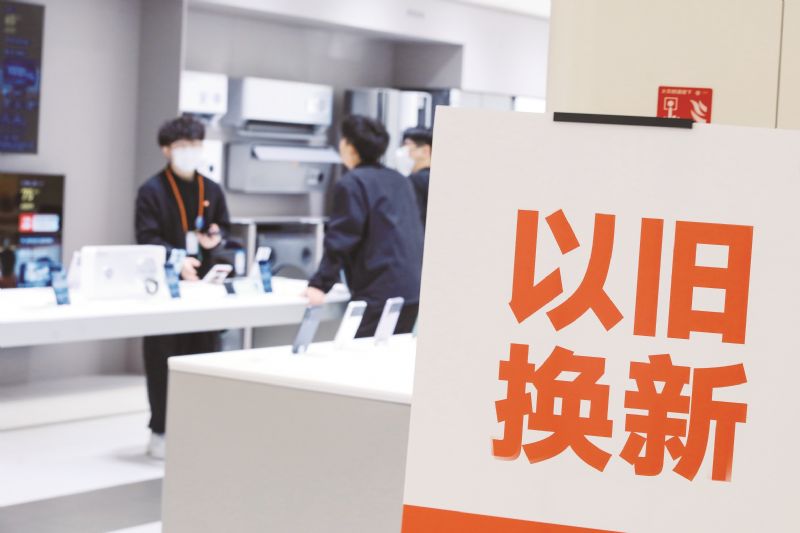
625亿元超长期特别国债提前下达
Xin Lang Cai Jing· 2025-12-30 19:09
Core Viewpoint - The National Development and Reform Commission (NDRC) and the Ministry of Finance have announced a plan to allocate 62.5 billion yuan in special long-term bonds to support the consumption upgrade policy for 2026, aiming to stimulate consumer demand during peak seasons like New Year's Day and Spring Festival [1] Group 1: Policy Implementation - The 2026 "Two New" policy will continue to support equipment updates in various sectors, including the installation of elevators in old residential areas and equipment updates in elderly care institutions [2] - The policy will also enhance the coverage of key consumer goods with high driving effects, focusing on the replacement and recycling of automobiles and household appliances [2][3] - The subsidy for old residential elevators will be adjusted to a tiered system based on the number of floors, while electric trucks will be prioritized for subsidies in the old operating vehicle replacement program [3] Group 2: Subsidy Standards - The subsidy for household appliances will focus on energy-efficient products, providing 15% of the product price with a maximum subsidy of 1,500 yuan per item [3] - The subsidy standards for digital and smart products will remain unchanged, covering items such as smartphones, tablets, and smart home devices [3] Group 3: Compliance and Oversight - The policy includes measures to combat fraudulent subsidy claims and ensure compliance with national standards for vehicle and appliance replacements [4] - The NDRC will lead inter-ministerial coordination to implement the "Two New" policy effectively, with various departments responsible for developing specific implementation guidelines [5]
2026年“两新”政策出炉 “范围、标准、机制”全面优化
Zheng Quan Shi Bao· 2025-12-30 18:23
Core Viewpoint - The Chinese government has announced a new policy for 2026 aimed at promoting large-scale equipment upgrades and a "trade-in" program for consumer goods, with a total of 625 billion yuan allocated to support these initiatives, particularly to meet the demand during peak consumption periods like New Year and Spring Festival [1] Group 1: Policy Support and Scope - The 2026 policy will optimize support in three main areas: scope of support, subsidy standards, and implementation mechanisms [2] - In the equipment upgrade sector, the policy will continue to support areas from 2025 while expanding to include the installation of elevators in old residential communities and equipment updates in elderly care institutions [2] - The "trade-in" program will continue to provide subsidies for scrapping and replacing cars, with maximum subsidies of 20,000 yuan for scrapping and 15,000 yuan for replacing [2] Group 2: Subsidy Standards and Implementation - The subsidy for household appliances will focus on six categories, including refrigerators, washing machines, televisions, air conditioners, computers, and water heaters, which account for over 70% of household appliance ownership [2] - The policy will adjust the subsidy for old elevators based on the number of floors, and prioritize electric trucks in the scrapping and replacement program for old operational vehicles [3] - The implementation mechanism will streamline project application processes and reduce investment thresholds to support small and medium-sized enterprises [3] Group 3: Consumer Protection and Regulation - The policy will enforce a unified subsidy standard nationwide for car scrapping, car replacement, and the six categories of household appliances [4] - Measures will be taken to combat fraudulent activities related to subsidies, such as price inflation before subsidies and "scalper" behaviors [4] - The government will enhance inter-departmental cooperation and data sharing to ensure effective monitoring and regulation of the subsidy funds [4]
财政部明确2026年继续支持消费品以旧换新,调整补贴范围标准
Sou Hu Cai Jing· 2025-12-30 05:47
Group 1 - The core viewpoint of the article is that the "National Subsidy" policy for consumer goods trade-in will continue in 2026, with adjustments to the subsidy scope and standards to boost consumption [1][2] - The "National Subsidy" policy has shown a clear trend of expansion since its implementation in 2024, initially focusing on vehicle scrappage and eight categories of home appliances, with significant increases in support for 2025 [1] - The subsidy standards have also been enhanced, with the scrappage subsidy for purchasing new energy vehicles set at 20,000 yuan and for fuel vehicles at 15,000 yuan, maintaining these high standards into 2025 [1] Group 2 - The funding for the "National Subsidy" policy is primarily sourced from the issuance of ultra-long-term special national bonds, with the issuance amount increasing from 150 billion yuan in 2024 to 300 billion yuan in 2025 [2] - Experts suggest that future policy directions should focus on optimizing implementation methods and expanding the scope from goods consumption to service consumption, including cash subsidies and support for childcare and employment [2] - The recommendation includes a gradual shift from product subsidies to service consumption subsidies to better align with the evolving consumer demand structure [2]