
降准

Search documents
中信证券:2026年宽货币环境仍有延续必要,央行和商业银行体系继续扩表必要性较高
Sou Hu Cai Jing· 2026-01-15 00:54
Core Viewpoint - The report from CITIC Securities indicates that the current logic of loose monetary policy is necessary to address the contradictions in the balance sheets of the real economy's three sectors, requiring counter-cyclical tools for intervention [1] Group 1: Monetary Policy Goals - The ultimate goal of monetary policy is to facilitate the repair and circulation of the balance sheets in the real economy, necessitating intervention through counter-cyclical tools [1] - The intermediary goal highlights that issues such as the inefficiency of financial intermediaries cannot be resolved spontaneously [1] - The operational goal points to a mismatch between changes in the banking system's asset structure and the reduction in interest rates [1] Group 2: Future Outlook - It is projected that the loose monetary environment will continue through 2026, indicating a high necessity for the central bank and commercial banks to expand their balance sheets [1] - There is potential for flexible application of interest rate cuts and reserve requirement ratio reductions [1]

中信证券:2026年宽货币环境仍有延续必要 央行和商业银行体系继续扩表必要性较高
Di Yi Cai Jing· 2026-01-15 00:25
Group 1 - The core viewpoint of the report is that a continued loose monetary policy is necessary to address the contradictions in the asset-liability balance of the real economy's three sectors, requiring counter-cyclical tools for intervention [1] - The report highlights that issues such as the inefficiency of financial intermediaries cannot be resolved spontaneously, indicating a need for ongoing monetary support [1] - It emphasizes that the changes in the banking system's asset structure and the misalignment with interest rate cuts necessitate a flexible approach to monetary policy, including potential interest rate and reserve requirement ratio reductions [1] Group 2 - The report suggests that the loose monetary environment is expected to persist until 2026, indicating a high necessity for the central bank and commercial banks to continue expanding their balance sheets [1]
瑞银投资银行高级中国经济学家张宁:2026年货币政策仍存宽松空间,降息或落在二季度及下半年
Xin Lang Cai Jing· 2026-01-13 05:19
Group 1 - The core viewpoint of the article is that there is potential for further monetary policy easing in China, with a probability of interest rate cuts in 2026, particularly in the second quarter and second half of the year, with an expected total reduction of 20 basis points, approximately 10 basis points per cut [1][3][4] - Zhang Ning, a senior economist at UBS Investment Bank, indicated that the current economic environment faces multiple pressures, including the need to solidify the foundation for price recovery and the necessity to restore confidence among residents and businesses [1][3] - The People's Bank of China (PBOC) is expected to maintain a neutral policy stance in the short term, with potential triggers for interest rate cuts including ongoing pressures in the real estate sector and uncertainties in external demand [1][3][4] Group 2 - Current inflation levels are gradually rising, which somewhat reduces the urgency for policy easing; however, China's real interest rates remain relatively high globally, indicating that there is still room for rate cuts due to pressures from real estate adjustments and corporate financing costs [2][4] - The first quarter of the year is characterized as having many uncertainties, leading to a relatively limited urgency for implementing interest rate cuts, with a tendency for the policy to remain cautious ahead of the National People's Congress in March [2][4] - Market expectations regarding the timing of interest rate cuts vary, but if cuts are implemented, they are likely to be concentrated in the second quarter and second half of the year, with an anticipated total reduction of 20 basis points [2][4]
中欧国际工商学院教授盛松成:货币政策“小步走”可能性较大 降准降息仍有空间
Shang Hai Zheng Quan Bao· 2026-01-11 18:51
Monetary Policy Outlook - The possibility of a "small step" approach in monetary policy is high in the near term, with room for both reserve requirement ratio (RRR) cuts and interest rate reductions [2] - Monetary policy typically focuses on short- to medium-term goals and requires cooperation from the private sector, commercial banks, and the entire financial system for effective implementation [2] Tools and Strategies - The toolbox for monetary policy in China is becoming increasingly rich, with the central bank enhancing the role of policy rates and using various liquidity support tools and secondary market government bond transactions to manage liquidity and adjust funding costs [2] - RRR cuts are preferred over interest rate cuts, as there is still significant room for RRR reductions compared to major central banks globally [3] Banking Sector Insights - As of Q3 2025, the net interest margin for commercial banks is at a historical low of 1.42%, which may influence the preference for RRR cuts over significant interest rate reductions [3] - The low interest rate elasticity of consumption and investment means that interest rate cuts have limited effects on stimulating these areas, as businesses prioritize investment risks and profits over minor interest rate changes [3] Inflation and External Environment - Current low inflation rates lead to higher real interest rates, with CPI growth at only 0.2% in 2024 and zero growth in 2025, while PPI remains in negative territory [4] - The external environment for interest rate cuts is improving due to the appreciation of the RMB and the Federal Reserve's ongoing rate cut cycle [4] Structural Monetary Policy Tools - The central bank is innovating with a series of structural monetary policy tools to guide credit structure adjustments, which can provide both quantity and price incentives [4] - There is potential for interest rate cuts through structural tools, particularly to support technological innovation and economically weaker sectors [4]

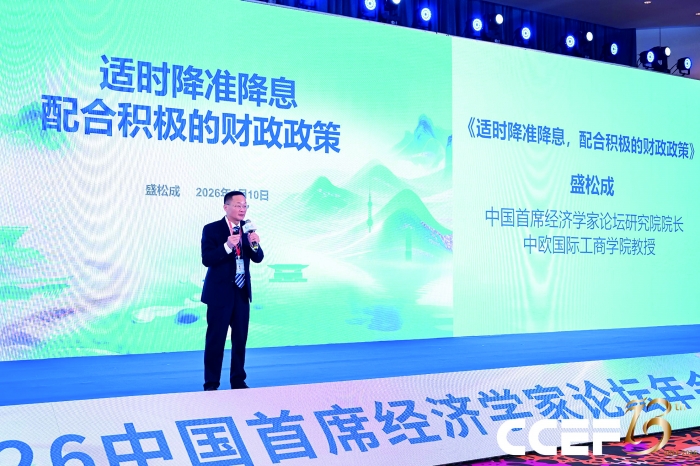
专家:中国降准还有较大空间
21世纪经济报道· 2026-01-10 14:49
Core Viewpoint - The likelihood of China's monetary policy adopting a "small step" approach is high, especially in the face of uncertainties [1]. Group 1: Monetary Policy Mechanism - Monetary policy generally targets short to medium-term goals and requires a "step-by-step" approach during uncertain times [3]. - The transmission mechanism of monetary policy is more complex than that of fiscal policy, with a longer transmission path [3]. - China's monetary policy transmission mechanism has evolved to include a sequence from policy interest rates (OMO rates) to loan market quotation rates (LPR) and then to actual loan rates [3]. Group 2: Reserve Requirement Ratio (RRR) and Interest Rates - RRR cuts are preferred over interest rate cuts as they increase the funds available for commercial banks, supporting active fiscal policies [5]. - Since 2016, the RRR has been adjusted downwards 23 times, with a cumulative decrease of 8.5 percentage points for large deposit-taking financial institutions [5]. - The net interest margin for commercial banks was 1.42% as of Q3 2025, indicating pressure on banks' profitability [6]. Group 3: Future Monetary Policy Outlook - There is still room for interest rate cuts, especially given the low inflation and high real interest rates in China [8]. - The external environment for interest rate cuts has improved, with the Federal Reserve having cut rates by a total of 75 basis points in 2025, while China's policy rate was only reduced by 10 basis points [8]. - Structural monetary policy tools can be used to lower interest rates, particularly to support technological innovation and weaker economic sectors [8]. Group 4: Fiscal Policy Considerations - The 2025 Central Economic Work Conference emphasized maintaining necessary fiscal deficits and total debt levels, suggesting that the expansionary fiscal policy will continue into 2026 [8]. - It is suggested that China could raise its fiscal deficit ratio to create conditions for more active fiscal policies, diverging from the Maastricht Treaty guideline of a 3% deficit ratio [8].

盛松成:中国货币政策“小步走”可能性较大,降准还有较大空间
Xin Lang Cai Jing· 2026-01-10 14:21
Group 1 - The core viewpoint is that China's monetary policy is likely to adopt a "small step" approach due to various uncertainties, requiring a cautious and gradual implementation [2] - Monetary policy generally targets short- to medium-term goals and operates indirectly, relying on the cooperation of the private sector, commercial banks, and the entire financial system [2] - The transmission mechanism of monetary policy is more complex than that of fiscal policy, with a longer transmission pathway, making it difficult for the central bank to control every aspect precisely [2] Group 2 - The People's Bank of China (PBOC) is enhancing the role of policy interest rates and utilizing various liquidity support tools to effectively stabilize short-term market fluctuations [2] - A reduction in the reserve requirement ratio (RRR) is preferred over interest rate cuts, as it increases the funds available for commercial banks to support active fiscal policies [3] - Since 2016, the RRR has been adjusted downwards 23 times, with a cumulative decrease of 8.5 percentage points for large deposit-taking financial institutions [3] Group 3 - There is still room for interest rate cuts, as current low inflation and high real interest rates provide a favorable external environment for such actions [3][4] - Structural monetary policy tools can be used to guide credit structure adjustments, focusing on supporting technological innovation and economically weaker sectors [4] - The central economic work conference in 2025 indicated that the fiscal policy will maintain an expansionary tone, with expectations of a continued increase in the fiscal deficit rate to create conditions for active fiscal policies [4]

盛松成:中国货币政策“小步走”可能性较大 降准还有较大空间
2 1 Shi Ji Jing Ji Bao Dao· 2026-01-10 13:44
Core Viewpoint - The possibility of a "small step" approach in China's monetary policy is significant, especially in the face of uncertainties, requiring a cautious and gradual implementation [1] Group 1: Monetary Policy Mechanism - Monetary policy generally targets short to medium-term goals and operates indirectly, relying on the cooperation of the private sector, commercial banks, and the financial system [1] - The transmission mechanism of monetary policy is more complex than that of fiscal policy, with a longer transmission path, exemplified by the mechanism from policy rates to actual loan rates [1] - The toolbox for monetary policy in China is becoming increasingly diverse, with the central bank enhancing the role of policy rates and utilizing various liquidity support tools [1] Group 2: Reserve Requirement Ratio and Interest Rates - The reduction in the reserve requirement ratio (RRR) is a primary tool for aligning monetary policy with fiscal policy, increasing the funds available for commercial banks to support active fiscal measures [2] - Since 2016, the RRR has been adjusted downwards 23 times, with a cumulative decrease of 8.5 percentage points for large deposit-taking institutions [2] - The net interest margin for commercial banks is at a historical low of 1.42%, indicating pressure on banks, which may explain the preference for RRR cuts over significant interest rate reductions [2] Group 3: Interest Rate Outlook - There is still room for interest rate cuts, given the low inflation and high real interest rates in China, alongside a favorable external environment due to the U.S. Federal Reserve's rate cuts [3] - Structural monetary policy tools can be utilized to lower interest rates, particularly to support technological innovation and weaker economic sectors [3] - However, the effectiveness of large-scale interest rate cuts is limited due to low interest elasticity in consumption and investment, with firms focusing more on investment risks and profits [3] Group 4: Fiscal Policy Stance - The fiscal policy in China is expected to remain expansive in 2026, with necessary fiscal deficits and total debt levels maintained [3] - There is a suggestion to increase the fiscal deficit ratio in China to create conditions for active fiscal policies, diverging from the EU's standard of a 3% deficit ratio [3]
盛松成:未来不排除继续降息,但更可能采取渐进式调整
Di Yi Cai Jing· 2026-01-10 09:04
Group 1 - The core viewpoint emphasizes a monetary policy approach focused on reserve requirement ratio (RRR) cuts as the primary tool, supplemented by interest rate cuts, to work in tandem with more proactive fiscal policies to stabilize economic operations [1] - The current external environment and domestic economy exhibit significant uncertainty, leading to a preference for gradual monetary policy adjustments rather than aggressive actions [1] - RRR cuts are deemed more relevant for the current Chinese economy, as the banking system plays a dominant role in the financial framework, with over 60% of government bonds and nearly 80% of local government bonds held by commercial banks [1] Group 2 - Caution is advised regarding substantial interest rate cuts due to the narrowing net interest margins of commercial banks, which have decreased to approximately 1.42% as of the end of Q3 2025, significantly lower than historical highs [2] - The reliance on indirect financing and the stability of the banking system are critical, as pressures on the financial system combined with real estate risks could pose greater challenges to macroeconomic stability [2] - There is still potential for interest rate cuts, given the low domestic price levels and positive real interest rates, with future adjustments likely to be gradual rather than drastic [2] - The importance of structural monetary policy tools is expected to rise, directing credit resources towards key areas such as technological innovation and the real estate "white list," enhancing policy support without significantly lowering overall interest rates [2]
——2026年1月流动性月报:宽松有望延续静待降准落地-20260109
Huafu Securities· 2026-01-09 07:37
Group 1 - The excess reserve ratio in November remained stable at 1.2%, while government deposits increased to a historical high of 6 trillion yuan, exceeding expectations by 492 billion yuan [2][16][20] - In December, the government deposit is expected to decrease by approximately 1.96 trillion yuan, marking a historical high decline, which will provide liquidity support [3][20][28] - The probability of a reserve requirement ratio (RRR) cut in January has significantly increased, with expectations of a potential release of about 1 trillion yuan in long-term liquidity [8][65][67] Group 2 - In December, the broad fiscal deficit is anticipated to reach a historical high, with a significant decrease in net government debt repayments [3][20][28] - The monetary issuance in December is expected to increase by about 300 billion yuan, while the required reserve ratio may rise by approximately 150 billion yuan [3][20][28] - The average DR001 rate in December dropped to a new low for the year, reflecting a very loose monetary state despite slight fluctuations in DR007 [4][36][45] Group 3 - The liquidity environment is expected to remain stable, with banks' net financing capabilities improving, as evidenced by a historical high in net financing from banks in December [4][37][40] - The anticipated increase in government deposits in January is expected to exert pressure on liquidity, with an expected rise of about 1.66 trillion yuan [8][67][68] - The overall liquidity situation is expected to remain manageable, with the central bank's policies likely to mitigate external pressures [10][45][46]
财联社C50风向指数调查:MLF与买断式逆回购或延续小额净投放 财政重心从总量加码向结构增效转型
Xin Lang Cai Jing· 2026-01-08 04:35
Core Viewpoint - The latest C50 Wind Direction Index survey indicates that despite potential liquidity pressure in January due to government debt repayments, credit issuance, and cash withdrawals for the Spring Festival, interbank liquidity is expected to remain relatively loose under the central bank's support [1] Group 1: Liquidity Outlook - In a survey of 20 market institutions, 3 believe there is essentially no liquidity gap, while 15 think the overall funding pressure is manageable, estimating a liquidity gap of around 1 trillion yuan [1] - Only 2 institutions view the situation as neutrally tightening, predicting a liquidity gap exceeding 2 trillion yuan [1] Group 2: Policy Tools and Fiscal Focus - Looking ahead to 2026, multiple market participants anticipate that the first quarter will see a path of easing through reserve requirement ratio cuts and structural interest rate reductions [1] - The expectation is that the central bank will continue small net injections through reverse repos and MLF, with a shift in fiscal focus from total volume increases to structural efficiency enhancements [1] - The pace of central bank easing is likely to align with fiscal efforts [1]