
新消费

Search documents
新消费强势崛起,Z世代和千禧一代重构高奢商场逻辑
Di Yi Cai Jing· 2025-09-29 03:21
Core Insights - The traditional classification of high-end and mid-range consumer goods is becoming blurred due to changing consumer trends, particularly among Gen Z and Millennials, who prioritize emotional value over mere practicality in their purchasing decisions [1][2][3] Consumer Behavior Trends - The rise of "emotional value" in consumer spending is evident, with nearly 30% of young respondents indicating they make purchases for emotional healing [2] - Consumers are increasingly seeking unique experiences and emotional satisfaction rather than just material ownership, leading to a shift towards more diverse and experiential consumption [2][4] Retail Space Evolution - Future retail spaces are expected to transform from mere transaction venues to platforms that offer unique experiences and emotional connections, necessitating a multi-dimensional approach from market participants [1][3] - Brands are focusing on creating engaging environments that encourage longer consumer visits, as seen with the "Louis Number" project, which significantly increased visitor dwell time compared to traditional retail [5][6] Brand Strategy Adjustments - Brands are moving away from strict high-end classifications and are instead focusing on content, relevance, and emotional value to attract consumers [3][4] - The trend of emotional value-driven brands is becoming a new traffic engine, with brands like Pop Mart and Jellycat successfully entering high-end retail spaces [3][4] Shift Back to Physical Retail - The emphasis on experiential consumption is driving a resurgence in physical retail, with many brands recognizing the importance of in-person experiences to foster deeper connections with consumers [5][6] - A notable trend is the expansion of physical stores by previously online-only brands, indicating a recognition of the value of tangible consumer interactions [6]
港股早盘高开 来凯医药短线涨超30%
Mei Ri Jing Ji Xin Wen· 2025-09-29 02:04
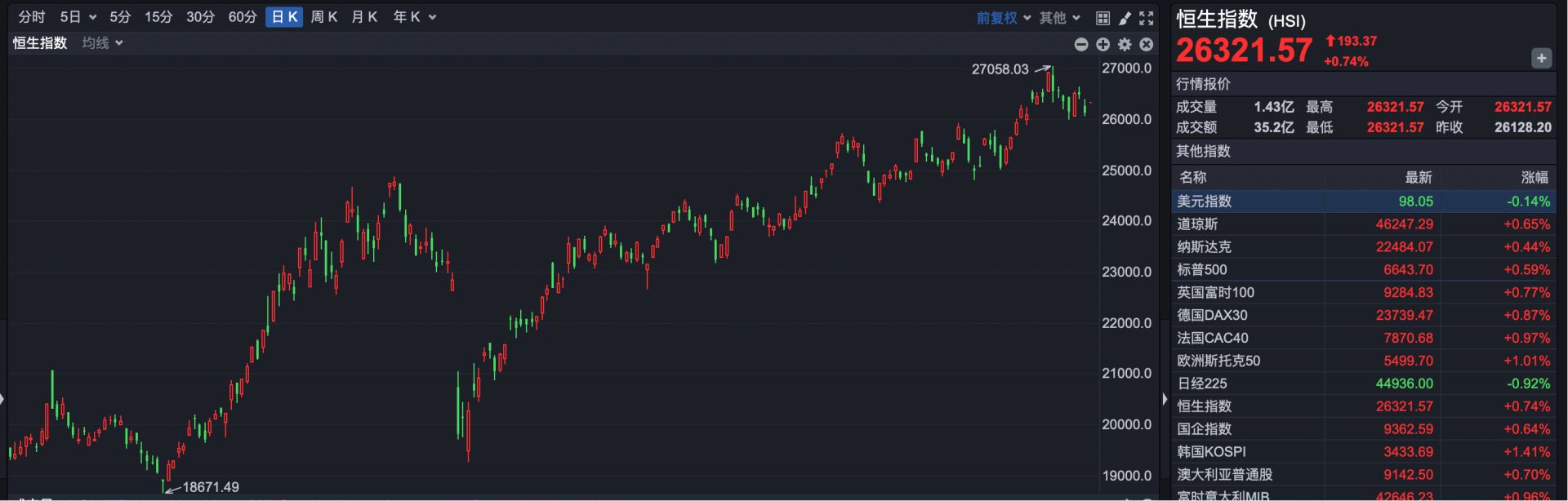
Group 1 - The Hong Kong stock market opened higher on September 29, with the Hang Seng Index at 26,321 points, up 193 points, a 0.74% increase, and the Hang Seng Tech Index at 6,236 points, up 41 points, a 0.67% increase [1] - Lai Kai Pharmaceutical-B (02105.HK) saw a surge of over 30% after announcing positive preliminary results from its LAE102 Phase I multi-dose escalation study for obesity, which included overweight/obese participants with an average BMI of 29.4 kg/m² [3] - In the LAE102 study, the 6 mg/kg dose group showed an average lean body mass increase of 1.7% and a fat mass reduction of 2.2% by week 5, with adjusted averages showing a 4.6% increase in lean body mass and a 3.6% reduction in fat mass compared to the placebo group [3] - The study results align with previous Phase I single-dose escalation study findings, demonstrating good tolerability and safety, with no serious adverse events reported [3] - Lai Kai Pharmaceutical is actively negotiating with potential partners to accelerate the clinical development and commercialization of LAE102 [3] Group 2 - The market outlook suggests increased volatility, but the long-term upward trend remains intact, with AI being a key focus for the Hong Kong stock market [6] - The metals sector is expected to benefit from liquidity easing due to interest rate cuts and rising inflation expectations [6] - Recommendations include focusing on technology (including AI internet and high-end manufacturing) and metals as market mainstays, while also considering undervalued insurance stocks and high-dividend value strategies [6] - Some undervalued innovative pharmaceutical stocks may be suitable for bottom-up investment [6]

消费主题基金业绩分化,新消费赛道成为核心增长极
Huan Qiu Wang· 2025-09-29 01:48
Group 1 - The performance of consumer-themed funds has shown significant divergence this year, with some funds achieving over 135% net value growth while others have less than 10% [1][3] - Notable top-performing funds include Hai Fu Tong Consumer Preferred Mixed A, which has a net value increase of 135.42%, and several others with gains exceeding 80% [1] - Conversely, three consumer-themed funds have reported net value growth of less than 10%, highlighting a stark performance gap [1] Group 2 - Many high-performing consumer funds have heavily invested in new consumer enterprises, such as Chao Hong Ji, which constitutes 4.87% of Hai Fu Tong Consumer Preferred Mixed A's portfolio and has seen a stock price increase of over 150% this year [3] - Another significant holding is Pop Mart, making up 9.11% of the portfolio in Yong Ying New Consumer Intelligent Selection Mixed A, with a stock price increase of 193.23% [3] - There has been substantial inflow into consumer-related ETFs, with Penghua Zhongzheng Wine ETF gaining 10.97 billion shares and attracting a net inflow of 6.537 billion yuan, indicating strong market interest in the consumer sector [3] Group 3 - Despite short-term challenges in the consumer sector's fundamentals, structural opportunities are emerging, with some experts suggesting that low-priced consumer stocks may be worth monitoring if consumer sentiment improves [4] - The investment focus is shifting towards the new consumer sector, which is seen as a key area for future growth [4]



消费主题基金业绩显著分化新消费成机构布局重点
Shang Hai Zheng Quan Bao· 2025-09-28 15:12
Core Viewpoint - The performance of consumer-themed funds has shown significant divergence this year, with many high-performing products focusing on new consumption-related assets. Institutions believe that while the long-term potential of the consumer sector is promising, short-term fundamentals still require data validation, making new consumption a key focus for future investments [2]. Group 1: Fund Performance - As of September 25, among 206 funds with "consumption" in their names, Hai Futong Consumption Preferred Mixed A ranked first with a net value increase of 135.42% over the past year, while several other products also saw increases exceeding 80% [2]. - Conversely, three consumer-themed funds had net value increases of less than 10% over the same period, indicating a stark contrast in performance [2]. Group 2: Fund Holdings - High-performing consumer funds predominantly hold shares in leading new consumption companies. For instance, as of the end of Q2, Chao Hong Ji, a jewelry industry leader, accounted for 4.87% of Hai Futong Consumption Preferred Mixed A's portfolio, with its stock price rising over 150% this year [2]. - Another example is Yongying Emerging Consumption Intelligent Selection Mixed Fund A, which held 9.11% of its portfolio in Pop Mart, with the stock price increasing by 193.23% year-to-date [2]. Group 3: Market Trends and Insights - Multiple fund managers acknowledge that while the consumer sector faces short-term fundamental challenges, structural opportunities are emerging. They emphasize that boosting consumption is a long-term strategy and express optimism about consumer stocks [4]. - Investment in the consumer sector heavily relies on fundamental data, and if consumption rebounds due to stock market wealth effects, undervalued consumer stocks may become attractive [4]. - A fund manager highlighted the importance of identifying segments with low penetration but high growth potential, such as trendy toys, beauty products, pet food, and gaming, which represent new lifestyle trends and offer opportunities for market expansion [4].

一周新消费NO.328|启初官宣中国香港演员张柏芝为品牌代言人;三元奶粉推出「爱蓓益稚悦」
新消费智库· 2025-09-28 13:00
Core Viewpoint - The article highlights the latest trends and developments in the new consumption sector, focusing on product launches, company activities, and investment movements within the industry [2][13][22]. Product Launches - Good Hope Water launched a new autumn product "Thick Yiyuan" raw barley milk, emphasizing health benefits and natural ingredients [5][7]. - Sanyuan Milk introduced "Aibei Yizhi Yue," featuring 100% native A2 β-casein and various nutritional elements [5][7]. - Water Otter launched a seasonal product, honeysuckle grapefruit fresh extract, with a focus on natural vitamin C and zero sugar [5][7]. - White Elephant introduced a new sparkling tea, combining quality tea leaves with fresh lemon for a refreshing taste [5][12]. - Three Squirrels established a new company for maternal and infant products, indicating expansion into this market [5][14]. Company Activities - Starbucks became the official coffee partner for the Los Angeles Olympics, planning to provide coffee services in various venues [17]. - Gaode announced a waiver of the annual entry fee for all restaurant merchants, aiming to support the industry [17]. - BeBeBus's parent company, Different Group, officially listed with an expected market value of 6 billion HKD [17]. - Haidilao completed the acquisition of the hot pot brand Jugaogao, expanding its market presence [22][29]. Investment Movements - Heineken announced a $3.2 billion acquisition of FIFCO's beverage and retail business in Central America [22][23]. - M Stand confirmed the acquisition of the restaurant brand RAC BAR, indicating growth in the food and beverage sector [22][23]. - Aiyingshi plans to acquire a 30% stake in Hubei Yongyi Nursing Products Co., focusing on diaper production [22][25]. - New Hope increased its registered capital from approximately 4.22 billion to 4.53 billion RMB, reflecting financial growth [22][26]. New Trends in Food and Beverage - Asahi Beverage announced new concentrated health care products under the Calpis brand, focusing on health benefits and reduced calories [30]. - Ximiao Oatmeal launched a new product featuring high content of five red ingredients, targeting health-conscious consumers [5][12]. - Nuo Wa Coffee introduced a global first 0-fat latte, aiming to lead the coffee industry towards healthier options [30][31].

60、70后基金经理业绩领跑!“老登”投资力压“小登”?
私募排排网· 2025-09-28 10:00
Core Insights - The A-share market has experienced a strong rally in 2023, with major indices showing significant gains, including a 15% increase in the Shanghai Composite Index and over 51% in the ChiNext Index, highlighting a stark divergence in market styles [1] - The performance of private fund managers from different generations shows that older managers (born in the 60s and 70s) have outperformed their younger counterparts (80s and 90s) this year, indicating a potential advantage in experience and investment style [1] Group 1: Performance of Fund Managers - The average return for private fund managers born in the 60s and 70s is 24.67%, with the top three managers achieving significant returns [3] - The top three fund managers from the 60s include 曾其喜 from 巴克夏投资, 张晓明 from 兆意投资, and 倪飞 from 开思私募, with their average returns being notably high [4] - The 70s generation's top performers include 童驯 from 同犇投资, 蔡英明 from 龙航资产, and 翟敬勇 from 榕树投资, all focusing on stock strategies [6] Group 2: Investment Strategies - 王文 from 日斗投资 emphasizes investing in undervalued companies with high cash flow and dividends, while also reducing exposure to the coal industry due to pressures from new energy developments [5] - 童驯 from 同犇投资 has shifted focus from traditional consumer stocks to new consumption trends, targeting younger consumers who value emotional connections with products [6] - 刘祥龙 from 富延资本 has concentrated on new consumer stocks in the Hong Kong market, with a strategy that adapts to market trends, including technology and resource sectors [8] Group 3: Market Trends and Insights - The article highlights a significant shift in market dynamics, with technology and AI-related sectors outperforming traditional blue-chip sectors like food and beverage and coal [1] - The performance of private equity funds indicates a growing trend towards technology and new consumption, reflecting broader market changes and investor sentiment [1][5]

A股“924”行情一周年 各类基金表现如何?
天天基金网· 2025-09-26 11:00
Core Viewpoint - Since September 24 of last year, the performance of public funds has rebounded significantly, with nearly 90% of funds achieving positive returns, and many funds showing remarkable growth rates exceeding 200% [1][6]. Fund Performance Summary - The average return of various fund indices has surpassed 50%, with the ordinary stock fund index leading at a 60.33% increase [6]. - Notable funds include: - Debon Xin Xing Value Flexible Allocation Mixed A with a return of 271.51% - CITIC Construction Investment North Exchange Selected Two-Year Open Mixed A at 268.41% - Other funds with returns exceeding 200% include China Europe Digital Economy Mixed Initiation A and Yongying Advanced Manufacturing Intelligent Selection Mixed Initiation A [4][6]. Market Outlook - Current index levels are at a phase high, indicating potential for sideways market movement, yet structural opportunities remain [5][7]. - Key sectors to watch include those aligned with industrial development trends, such as artificial intelligence, innovative pharmaceuticals, and new consumption [7]. - The rapid advancement of industrial upgrades and the release of policy dividends are expected to provide ongoing momentum for the A-share market [7]. - The stability of Sino-U.S. relations is anticipated to reduce overseas policy risk, fostering a favorable environment for the domestic equity market in the coming quarters [7].

长城基金汪立:“924行情”是关键转折点,市场有望长期向好
Xin Lang Ji Jin· 2025-09-26 04:01
Group 1 - The A-share market has experienced a significant upward trend since September 24 last year, with the Shanghai Composite Index rising approximately 39% and the ChiNext Index increasing about 102% as of September 19, 2025 [1][2] - Over 3,000 stocks in the market have seen gains exceeding 50%, with more than 1,400 stocks doubling in value [1] - The total market capitalization of A-shares has reached 104 trillion yuan [1] Group 2 - Three main factors have driven this sustained rally: supportive policies, rapid breakthroughs in the technology sector, and a notable increase in market risk appetite [2][3] - The People's Bank of China has implemented various structural monetary policy tools, while the China Securities Regulatory Commission has encouraged long-term capital inflows and optimized merger and acquisition mechanisms [1][2] - The technology sector has seen advancements in artificial intelligence, robotics, semiconductors, military industry, innovative pharmaceuticals, and new consumption, enhancing global competitiveness [2] Group 3 - The market's characteristics have changed significantly in terms of valuation, liquidity, and investor structure [3] - The price-to-earnings ratio of the Shanghai Composite Index has risen from around 12 times to 16.4 times, indicating a substantial valuation recovery [3] - The average trading volume has remained above 2 trillion yuan, reflecting active market sentiment [3] Group 4 - The investor structure has shifted, with insurance and retail investors becoming the main sources of capital inflow, leading to a diversified market style [3][4] - The upcoming "14th Five-Year Plan" and potential interest rate cuts by the Federal Reserve may provide more operational space for domestic macro policies, with expectations for a series of growth-stabilizing measures in the fourth quarter [3][4] - Key policy directions may include promoting a unified national market, enhancing the business environment, and implementing structural monetary policies to stimulate domestic demand [4]

A股“924”行情一周年 各类基金表现如何?
天天基金网· 2025-09-25 08:58
Core Viewpoint - Since September 24 of last year, the performance of public funds has rebounded significantly, with nearly 90% of funds achieving positive returns, and many funds seeing substantial gains exceeding 100% and even 200% [1][6]. Fund Performance Summary - The average return of various fund indices has exceeded 50%, with the ordinary stock fund index leading at a 60.33% increase [6]. - Notable funds include: - Debon Xin Xing Value Flexible Allocation Mixed A with a return of 271.51% - CITIC Construction Investment North Exchange Selected Two-Year Open Mixed A at 268.41% - Other funds with returns over 200% include China Europe Digital Economy Mixed Initiation A and Yongying Advanced Manufacturing Intelligent Selection Mixed Initiation A [4][6]. Market Outlook - Current index levels are at a phase high, suggesting a potential for sideways market movement, but structural opportunities remain [5][8]. - Key areas for investment include sectors aligned with industrial development trends, such as artificial intelligence, innovative pharmaceuticals, and new consumption [8]. - The rapid advancement of industrial upgrades and the release of policy dividends are expected to provide ongoing upward momentum for the A-share market [8]. - The stability of Sino-U.S. relations is anticipated to reduce overseas policy risk, creating a favorable environment for the domestic equity market in the coming quarters [8].

港股整体迎来看多行情 中信建投:关注中芯国际、联想等
Zhi Tong Cai Jing· 2025-09-25 07:27
Group 1 - The core viewpoint of the reports indicates that the Hong Kong stock market is gaining attention from both domestic and foreign funds, entering a bullish phase [1] - The long-term bull market for Hong Kong stocks was established in Q4 of last year and is currently in the mid-stage, with liquidity and valuation cycles showing signs of improvement [1] - The liquidity cycle is approximately at the mid-point, with a generally loose adjustment expected over the next 1-2 years [1] - After three years of bear market, Hong Kong stocks are experiencing a valuation recovery, currently at the upper mid-level after more than a year of continuous recovery [1] - The earnings cycle has just begun to recover from the bottom, with major recovery concentrated in structurally prosperous sectors [1] Group 2 - Foreign institutions are optimistic about the prospects of the Hong Kong stock market, with Goldman Sachs maintaining an "overweight" stance on Chinese stocks [2] - Standard Chartered Bank has an "overweight" rating for Chinese stocks in its 2025 Global Market Outlook [2] - Morgan Stanley highlights that key sectors such as artificial intelligence, semiconductors, humanoid robots, and new consumption are primarily traded in Hong Kong and A-shares, attracting unprecedented interest from investors [2] - Key investment targets in the Hong Kong market include core growth sectors like internet, innovative pharmaceuticals, new consumption, and technology, which are expected to drive overall valuation increases [2] - Specific companies to watch include Xiaomi Group, Lenovo Group, AAC Technologies, SMIC, and BYD [2]

