价格战

Search documents
China's EV Market Faces Brutal Test After BYD's Aggressive Price Cuts
ZACKS· 2025-05-28 14:25
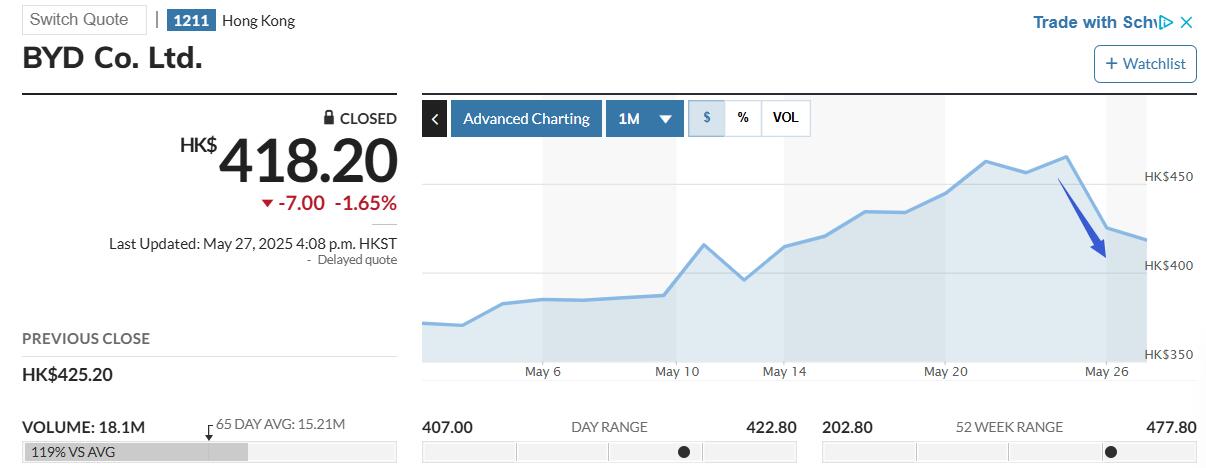
Core Insights - The Chinese electric vehicle (EV) market is facing significant challenges, with major players like BYD, NIO, XPeng, and Li Auto experiencing sharp declines in their stock prices due to fears of a price war and regulatory concerns [1][2][10] Group 1: BYD's Pricing Strategy - BYD has implemented aggressive price cuts on 22 electric and plug-in hybrid models, with the Seagull hatchback starting at 55,800 yuan (approximately $7,765) and the Seal sedan's price reduced by 34% to 102,800 yuan [2][3] - While these price cuts may increase sales volume, they are expected to significantly squeeze profit margins across the industry, affecting all competitors [3][6] Group 2: Competitors' Margin Pressures - Li Auto's vehicle margin decreased from 22.7% in Q4 2023 to 19.7% in Q4 2024, raising concerns about its ability to maintain profitability in a competitive market [4] - NIO aims to achieve a vehicle margin of 20% this year, but the ongoing price war may hinder this goal [4][5] - XPeng's vehicle margin increased slightly from 10% in Q4 2024 to 10.5% in Q1 2025, but its profitability remains uncertain as price reductions push breakeven further away [5] Group 3: Industry Dynamics and Challenges - The current price war is expected to lead to a shakeout in the industry, particularly affecting smaller and weaker competitors who may struggle to respond to price cuts [6][10] - Supply chain pressures are mounting, with industry leaders like Great Wall Motor highlighting the strain on suppliers due to demands for lower costs and delayed payments [7] - The influx of startups in the EV sector is now facing challenges as the competitive landscape erodes profitability, with advanced features being bundled into base models [8][9] Group 4: Regulatory Environment - China's state planner has raised concerns about excessive competition, warning against companies selling vehicles below cost, which undermines fair competition [9] - The upcoming earnings reports from Li Auto and NIO will be closely monitored as the market navigates this challenging phase [11]


何小鹏谈价格战:目前还不算激烈,下一个5年中的某一年竞争会更激烈
第一财经· 2025-05-28 13:19
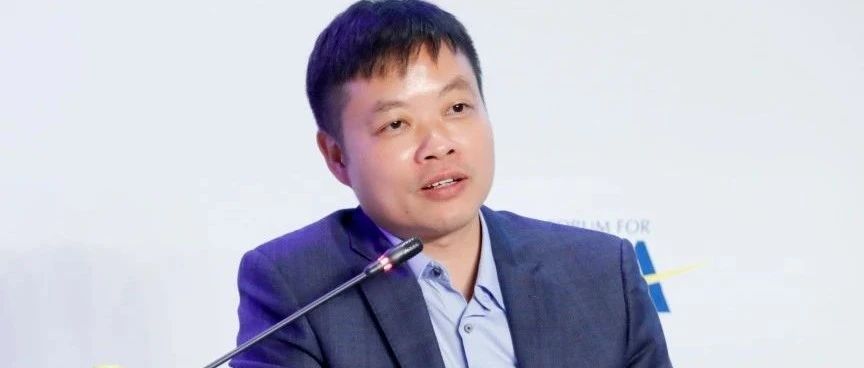
Core Viewpoint - The chairman of XPeng Motors, He Xiaopeng, indicated that the current competition in the automotive market is not yet intense, but it is expected to become more competitive in the next five years [1] Group 1: Industry Insights - He Xiaopeng emphasized that the ability to engage in price wars is insufficient for sustainable development in the automotive industry [1] - The focus should shift from price competition to technological advancement, suggesting that companies should invest in technology rather than merely competing on price [1] - He also encouraged companies to expand their presence internationally, indicating a strategic direction for growth beyond domestic markets [1]
何小鹏谈价格战:目前还不算激烈,最激烈的将诞生于下个五年
news flash· 2025-05-28 13:15
金十数据5月28日讯,5月28日晚间小鹏汽车董事长何小鹏在小鹏MONA M03 MAX发布会上谈及行业价 格战时表示:"目前车市的竞争还不算激烈,在下一个5年中的某一年竞争会更激烈。"他还表示,对车 企而言,卷价格的能力不足以支撑发展,不要卷价格,应该要卷科技,而且应该走出国门。 (一财) 何小鹏谈价格战:目前还不算激烈,最激烈的将诞生于下个五年 ...
比亚迪摊牌,吉利奇瑞跟进?车企“价格战”何时休?
Zhong Guo Jing Ji Wang· 2025-05-28 13:08
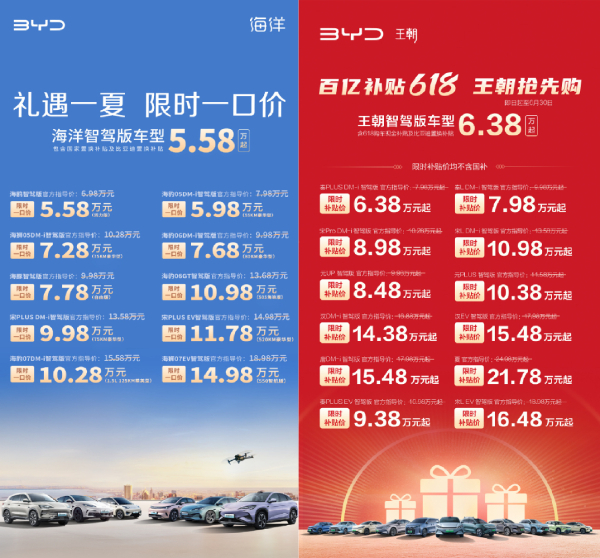
Core Viewpoint - The automotive market is experiencing a renewed price war, initiated by BYD's aggressive pricing strategy, which has prompted competitors like Geely and Chery to respond with their own discount campaigns [1][3][14]. Group 1: BYD's Pricing Strategy - BYD launched a "100 billion subsidy 618" campaign, offering significant discounts on 22 models, with the highest discount reaching 53,000 yuan [1][6]. - The company has previously implemented price cuts earlier in the year, but the current campaign is broader and more impactful, indicating a strategic shift to counter competitive pressures [6][8]. - BYD's sales in the first four months of the year reached 1.3809 million units, a year-on-year increase of 46.98%, but still falling short of its annual target of 5.5 million units [5][8]. Group 2: Competitors' Responses - Geely launched a "million welfare" campaign, offering discounts across its entire lineup, with the Geely Star Wish model starting at a subsidized price of 59,800 yuan [3][10]. - Chery also initiated a "100 billion factory subsidy" event, with discounts exceeding 20,000 yuan on over 30 models, including the Chery Tiggo 3X starting at 34,900 yuan [13]. - Both Geely and Chery's actions reflect a clear escalation in the price war, as they aim to reclaim market share from BYD [10][14]. Group 3: Market Dynamics and Implications - The ongoing price war is expected to further erode profit margins in the automotive manufacturing sector, which have already declined from 7.8% in 2017 to 4.4% in 2024 [15]. - The competitive landscape is shifting, with Geely and Chery responding to BYD's pricing moves, raising concerns about the sustainability of such aggressive pricing strategies [16][18]. - Industry experts suggest that while price wars can stimulate short-term sales, they may lead to long-term challenges for profitability and market health [15][18].


瑞达期货碳酸锂产业日报-20250528
Rui Da Qi Huo· 2025-05-28 09:11
1. Report Industry Investment Rating - No relevant content provided 2. Core Viewpoints of the Report - The lithium carbonate market is in a relatively weak state. The overall supply growth rate may slow down due to production cuts and maintenance by upstream smelters. The demand from downstream battery material factories is limited, resulting in a sluggish spot market. The industry's total inventory accumulation has slowed down, with upstream still rapidly stockpiling and downstream and traders reducing inventory. The option market shows a bullish sentiment, but the implied volatility has slightly decreased. It is recommended to conduct light - position oscillating trading and control risks [2]. 3. Summary by Relevant Catalogs 3.1 Market Data 3.1.1 Futures Market - The closing price of the main contract was 60,380 yuan/ton, down 540 yuan; the net position of the top 20 was - 30,172 hands, down 2,185 hands; the position of the main contract was 283,607 hands, down 10,088 hands; the spread between near - and far - month contracts was - 200 yuan/ton, up 160 yuan; the Guangzhou Futures Exchange warehouse receipts were 33,854 hands/ton, down 300 hands [2]. 3.1.2 Spot Market - The average price of battery - grade lithium carbonate was 61,500 yuan/ton, down 500 yuan; the average price of industrial - grade lithium carbonate was 59,900 yuan/ton, down 500 yuan; the basis of the Li₂CO₃ main contract was 1,120 yuan/ton, up 40 yuan [2]. 3.1.3 Upstream Situation - The average price of spodumene concentrate (6% CIF China) was 718 US dollars/ton, unchanged; the average price of amblygonite was 6,900 yuan/ton, down 50 yuan; the price of lithium mica (2 - 2.5%) was 1,636 yuan/ton, down 23 yuan [2]. 3.1.4 Industry Situation - The monthly output of lithium carbonate was 47,900 tons, up 4,720 tons; the monthly import volume was 28,335.89 tons, up 10,210.40 tons; the monthly export volume was 734.29 tons, up 514.26 tons; the enterprise operating rate was 53%, up 3 percentage points; the monthly output of power batteries was 118,200 MWh, down 100 MWh; the price of lithium manganate was 28,000 yuan/ton, down 1,000 yuan; the price of lithium hexafluorophosphate was 53,500 yuan/ton, unchanged; the price of lithium cobalt oxide was 220,000 yuan/ton, unchanged; the price of ternary material (811 type) in China was 146,500 yuan/ton, unchanged; the price of ternary material (622 power type) in China was 123,500 yuan/ton, unchanged [2]. 3.1.5 Downstream and Application Situation - The price of ternary material (523 single - crystal type) in China was 127,500 yuan/ton, unchanged; the operating rate of ternary cathode materials was 53%, up 5 percentage points; the price of lithium iron phosphate was 31,500 yuan/ton, unchanged; the operating rate of lithium iron phosphate cathode was 47%, down 10 percentage points; the monthly output of new energy vehicles was 1,251,000 vehicles, down 26,000 vehicles; the monthly sales volume was 1,226,000 vehicles, down 11,000 vehicles; the cumulative sales penetration rate of new energy vehicles was 42.74%, up 1.58 percentage points; the cumulative sales volume was 4,300,000 vehicles, up 1,360,000 vehicles; the monthly export volume was 200,000 vehicles, up 42,000 vehicles; the cumulative export volume was 642,000 vehicles, up 221,000 vehicles; the 20 - day average volatility of the underlying was 25.21%, down 0.02 percentage points; the 40 - day average volatility was 20.99%, unchanged [2]. 3.1.6 Option Situation - The total call position was 225,887 contracts, up 12,522 contracts; the total put position was 83,681 contracts, up 9,576 contracts; the put - call ratio of total positions was 37.05%, up 2.314 percentage points; the implied volatility of at - the - money IV was 0.28%, down 0.0032 percentage points [2]. 3.2 Industry News - In April, the profits of industrial enterprises above designated size in China increased by 3% year - on - year, 0.4 percentage points faster than in March. The profits of new - kinetic energy industries such as equipment manufacturing and high - tech manufacturing grew rapidly [2]. - Many car companies launched price - cut promotions, compressing the profit margins of upstream enterprises to 10% and extending the payment period to 120 days. There are concerns about supplier losses and vehicle quality and safety issues [2]. - Xiaomi Group's Q1 revenue increased by 47.4% year - on - year to 111.3 billion yuan, and the adjusted net profit increased by 64.5% year - on - year to 10.68 billion yuan. The sales volume of Xiaomi SU7 Ultra has exceeded 23,000 units [2]. - In April, the number of new Tesla vehicle registrations in Europe decreased by 52.6% year - on - year, and the cumulative number in the first four months decreased by about 46% [2]. - BYD's blade battery and flash - charging blade battery passed all tests of the new battery national standard and obtained certification [2].
魏建军又开炮,汽车行业巨震!
Jin Tou Wang· 2025-05-28 07:39
Group 1 - BYD has initiated significant price cuts across 22 models, with discounts reaching up to 53,000 yuan, indicating a shift towards a price war in the automotive market [1] - The price reductions have led to concerns about the impact on vehicle quality and safety, with industry leaders warning of potential risks similar to those faced by Evergrande in the real estate sector [3] - The automotive industry is experiencing a decline in profit margins, with the profit rate dropping from 7.8% in 2017 to 4.4% in 2024, and total industry profits decreasing from 683.3 billion yuan in 2017 to 508.6 billion yuan in 2023 [5][6] Group 2 - The average accounts payable turnover days for listed Chinese automotive companies have increased to 182 days, nearly double that of international counterparts, indicating financial strain within the supply chain [3][5] - High debt levels are a concern, with many state-owned automakers reporting asset-liability ratios exceeding 60%, and some, like NIO, reaching 87.45% [6] - Consumer complaints have surged by 83% in the first quarter, with issues related to cost-cutting measures, highlighting the potential risks to product quality and safety [8]
行业洞察:从“价格战”到“价值战”,成都香柏树食品的破局之道
Sou Hu Cai Jing· 2025-05-28 06:03
Group 1 - The core viewpoint of the article highlights that in the face of severe competition and price wars in the Chinese food industry, innovation and quality are essential for survival and growth [1][3]. - The food industry is experiencing a downturn characterized by low-price competition and homogenization, leading to many companies facing operational challenges [1][3]. - Cheng Meiying, the general manager of Xiangbaishu Food Factory, emphasizes that the company focuses on product quality rather than engaging in price wars, which she describes as a vicious cycle [3][5]. Group 2 - Xiangbaishu has developed a unique "millimeter-level craftsmanship" through a 17-year research process, allowing them to produce red bean paste with a fineness of 0.18 millimeters, which is difficult for competitors to replicate [3][5]. - The company adopts a flexible manufacturing model, enabling them to respond quickly to fluctuating orders, such as a 500-kilogram minimum order and a 24-hour response system for urgent demands [5][7]. - By analyzing customer needs and market trends, Xiangbaishu has successfully launched a "low-sugar health" product line that aligns with the growing demand for healthier options [5][7]. Group 3 - Xiangbaishu positions itself as a "growth think tank" for its clients, focusing on long-term partnerships rather than one-time transactions, which enhances customer loyalty [7][9]. - The company collaborates with clients on new product development and provides timely market insights, helping clients gain a competitive edge [7][9]. - The emphasis on building trust and delivering value over merely competing on price is seen as a key strategy for overcoming industry challenges [9].

小米卢伟冰:SU7发布这么久没对手,一个能打的都没有;谷歌回应在AI搜索里塞广告:用户觉得有用;夸克健康大模型通过副主任医师考试
雷峰网· 2025-05-28 00:26
Group 1 - The "2025 Elite Internship Program" launched by Industrial Bank aims to provide internship opportunities for high-net-worth clients' children, requiring a minimum deposit of 10 million yuan for new clients and 5 million yuan for existing clients [4][6] - The program faced backlash and was suspended due to misunderstandings in its promotion, with the bank apologizing for the confusion [6][4] Group 2 - Xiaomi Group reported a record revenue of 111.3 billion yuan for Q1 2025, a year-on-year increase of 47.4%, with adjusted net profit rising by 64.5% to 10.7 billion yuan [8][9] - The smart electric vehicle segment generated 18.1 billion yuan in revenue, contributing to a total of 18.6 billion yuan for the innovative business segment [8][9] - The delivery of the Xiaomi SU7 series reached 75,869 units in Q1 2025, with a total delivery exceeding 258,000 units [8] Group 3 - Deep Blue Automotive faced criticism for advertising to 480,000 old car owners without consent, leading to an apology from the CEO who admitted the decision was his fault [10][9] - The CEO promised not to use intrusive advertising methods in the future after acknowledging the negative impact on user experience [10] Group 4 - Geely's chairman Li Shufu emphasized the company's stance against price wars, advocating for value-based competition and sustainable growth in the automotive industry [13][12] - He highlighted the importance of foundational skills in the automotive sector, referencing Geely's acquisitions of established brands like Volvo [13] Group 5 - The competition in the Chinese food delivery market has led to a combined market value loss of approximately 100 billion USD for Meituan and JD.com [15][14] - Both companies have seen their stock prices drop over 30% since last October, reflecting the high costs of their aggressive market strategies [15][14] Group 6 - Long-term plans for Changan Automobile's high-end electric vehicle brand Avita indicate that 59% of its users come from traditional luxury brands like BBA (Benz, BMW, Audi) [19][18] - Changan plans to invest over 200 billion yuan in new energy and smart vehicle technologies, aiming for significant advancements in the automotive sector [19] Group 7 - Meta's Llama AI team has experienced significant talent loss, with 11 out of 14 core members leaving for competitors, raising concerns about the company's ability to retain top AI talent [25][26] - The company is facing internal challenges and has delayed the launch of its most powerful AI model due to performance concerns [25] Group 8 - Google has started integrating ads into its AI search results, claiming they provide useful connections for users, despite concerns about potential misleading information [27][28] - The company reported 72.5 billion USD in ad revenue, with expectations for growth as advertising expands into new areas [27] Group 9 - Volvo Cars announced plans to cut 3,000 jobs as part of a restructuring effort to address high costs and declining demand for electric vehicles [28][29] - The company is facing significant financial challenges, reporting a net loss of 670.9 billion yen (approximately 35.5 billion yuan) for the fiscal year [28][29]


整理:每日期货市场要闻速递(5月28日)
news flash· 2025-05-27 23:44
6. 一财记者走访多家供应商发现,随着中国汽车市场打起"价格战",上游企业利润空间持续压缩至 10%,账期也长达120天。业内人士认为"价格战"可能导致供应商陷入亏损和汽车质量安全问题。 7. 上期所公告,自2025年5月29日(星期四)收盘结算时起,氧化铝期货合约的涨跌停板幅度从7%上调 至9%,套保交易保证金比例从8%上调至10%,投机交易保证金比例从9%上调至11%;白银期货合约的 涨跌停板幅度从11%上调至12%,套保交易保证金比例从12%上调至13%,投机交易保证金比例从13% 上调至14%。 8. 阿拉丁(ALD)调研了解,贵州某中型氧化铝企业近日开始复产,暂未形成满产,阶段运行产能60 万吨左右,以满足长单交付为主,后续企业重点关注近期氧化铝价格走势再定满产节奏 9. 国际铝业协会(IAI)数据显示,2025年4月全球氧化铝产量为1240.7万吨,日均产量为41.36万吨;中 国2025年4月氧化铝预估产量为738.4万吨。 金十数据整理:每日期货市场要闻速递(5月28日) 1. 上期能源公告,自2025年5月29日(星期四)收盘结算时起,集运指数(欧线)期货合约的涨跌停板 幅度从16%上调至1 ...
最高降5.3万元,比亚迪掀起新一轮价格战,高盛自称卖方,中金称已有一定预期
Hua Er Jie Jian Wen· 2025-05-27 19:10
Core Viewpoint - BYD's significant price cuts on 22 models signal a potential price war that could redefine the electric vehicle industry landscape [3][5][8] Group 1: Price Cuts and Promotions - BYD announced price reductions of up to 53,000 yuan on 22 models, with the most substantial drop being 34% for the Seal 07 DM-i model [4] - This marks BYD's third major promotional effort in less than two months, indicating an aggressive pricing strategy to stimulate sales [4][5] - The promotional prices for the Ocean series start at 55,800 yuan, while the Dynasty series begins at 63,800 yuan, directly challenging traditional fuel vehicle pricing [4] Group 2: Market Conditions and Sales Pressure - The Chinese automotive market is facing severe challenges, with April inventory levels reaching 3.5 million vehicles, the highest since December 2023 [5] - BYD's sales from January to April totaled approximately 1.38 million units, only 25% of its annual target of 5.5 million units, indicating significant pressure to boost sales in the second half of the year [6] Group 3: Investor Sentiment and Industry Impact - Wall Street analysts express caution regarding BYD's price cuts, with concerns about long-term profitability and gross margins in the electric vehicle sector [7][8] - The price cuts may reignite competition in the market, as other manufacturers are expected to follow suit, potentially leading to a more intense price war [9] - Analysts predict that the competitive landscape will shift from low-level "involution" to diversified strategies aimed at enhancing product competitiveness [8]