绿色转型

Search documents
山东:12个重点行业划定稳增长路线图
Xin Hua Wang· 2026-01-03 02:49
Core Viewpoint - The "2026 Policy List" aims to stabilize and enhance the industrial economy in Shandong Province, focusing on 12 key industries that are crucial for economic growth and structural optimization [1][2]. Group 1: Key Industries and Economic Impact - The 12 targeted industries, including steel, non-ferrous metals, chemicals, automotive, and textiles, collectively generate approximately 7.8 trillion yuan, accounting for about 67% of the province's industrial output and 75% of manufacturing output [1]. - Maintaining stability in these key industries is essential for the overall industrial economy of Shandong [1]. Group 2: Growth Targets and Structural Optimization - Specific quantitative growth targets have been set for various sectors by 2026, such as a 4% increase in steel industry value-added, production of 1.2 million new energy vehicles, and over 850 billion yuan in revenue for the electronic information manufacturing sector [2]. - The policy emphasizes both growth and structural improvement, with a focus on enhancing technological capabilities and optimizing product structures [2]. Group 3: Support for Aerospace Industry - The policy includes measures to support the aerospace industry, such as subsidies for commercial rocket and satellite companies, with a maximum subsidy of 3 million yuan per project [3]. - These initiatives aim to reduce launch costs and foster innovation within the aerospace sector, contributing to the industry's overall growth [3]. Group 4: Green Building Initiatives - The policy promotes green building practices through government procurement, aiming to establish a long-term mechanism for supporting green building materials [4]. - New urban construction projects funded by government or state-owned investments are required to use green materials, with a target of at least 40% application in star-rated green building projects [4]. Group 5: Support for Private Enterprises - The policy outlines a comprehensive mechanism to address the needs of enterprises, ensuring a streamlined process for resolving issues and enhancing resource allocation [5]. - Continuous optimization of the "Ru Hui Tong" policy implementation platform is planned to facilitate quicker access to benefits for enterprises [5].
滨州马上红:产业骏马强根基,“铝都”扛牢发展大任
Xin Lang Cai Jing· 2026-01-03 01:43
Core Viewpoint - The article emphasizes the strategic importance of Binzhou, known as "China's Aluminum Capital," in leading the aluminum industry through innovation and deepening the aluminum processing industry chain, as outlined in Shandong Province's 14th Five-Year Plan [1] Group 1: Industry Position and Economic Impact - Binzhou holds the largest aluminum industry cluster globally, with significant contributions: one-third of China's bauxite imports, one-quarter of alumina production, one-eighth of electrolytic aluminum output, and nearly one-tenth of aluminum profile processing [1] - The high-end aluminum industry cluster in Binzhou is projected to generate revenue of 471.1 billion yuan in 2024 [1] Group 2: Innovation Ecosystem - The transformation of Binzhou's aluminum industry is driven by a systematic reconstruction of its innovation ecosystem, breaking the traditional silos among government, enterprises, and research institutions [3] - Weiqiao Group leads the establishment of a high-end aluminum manufacturing and application innovation community, collaborating with 62 universities and research institutes on 42 key projects [3] - The "chain innovation" model covers the entire process from bauxite import to recycled aluminum utilization, resulting in over 20 national and industry standards [3] Group 3: Research and Development Infrastructure - Weiqiao Guokai invested 180 million yuan to build 16 laboratories, enhancing research capabilities and establishing a regional public technology service platform [4] - The technology transfer mechanism in Binzhou is efficient, with a 1.2 million square meter technology achievement transformation park facilitating the transition from research to production [4] Group 4: Financial Support for Innovation - Seven innovation funds in Binzhou have invested a total of 3 billion yuan, supporting 15 projects in cutting-edge fields like aluminum matrix composites [5] - The combination of government-led funds and social capital effectively addresses the funding bottleneck for early-stage technology transfer [5] Group 5: Talent Strategy - Binzhou's aluminum industry has implemented a comprehensive talent strategy, focusing on attracting, retaining, and nurturing talent [7] - The establishment of a talent efficiency enhancement platform and flexible recruitment mechanisms has attracted 460 high-level talents, with nearly 90% holding master's or doctoral degrees [7][8] Group 6: Green and Intelligent Manufacturing - Binzhou's aluminum industry is leading the green transformation, with six companies recognized as national green factories and Weiqiao Group achieving the lowest energy consumption in electrolytic aluminum production globally [9] - The integration of clean energy and innovative recycling technologies has significantly improved production efficiency and product quality [9] Group 7: Future Prospects - Binzhou aims to leverage the 2026 Aluminum Expo to enhance its global cooperation, transitioning from "China's Aluminum Capital" to "World Aluminum Valley" [12] - The city has achieved 53 national firsts and 15 global firsts in the aluminum industry, showcasing its robust capabilities and setting a model for high-quality development in traditional industries [12]

武汉2025年全社会用电量同比增长4.76%
Chang Jiang Ri Bao· 2026-01-03 01:02
Core Insights - In 2025, the total electricity consumption in Wuhan reached 85.712 billion kilowatt-hours, reflecting a year-on-year growth of 4.76%, indicating robust resilience in the economy [1] - The electricity consumption data highlights a shift in Wuhan's economic landscape, with significant growth in sectors such as new energy vehicle manufacturing and internet data services, which saw year-on-year increases of 71.9% and 240.6% respectively [1] Group 1: Electricity Consumption Trends - The second industry saw a year-on-year electricity consumption increase of 5.53%, with manufacturing electricity consumption rising by 7.57%, significantly above the average growth rate [1] - New energy vehicle manufacturing electricity consumption grew by 71.9%, underscoring Wuhan's leading position in the electric vehicle transformation [1] - The computer, communication, and other electronic equipment manufacturing sectors experienced a 14.29% increase in electricity consumption [1] Group 2: Economic Growth Indicators - In the first three quarters of 2025, Wuhan's industrial added value above designated size grew by 5.4%, with the computer, communication, and other electronic equipment manufacturing sector growing by 18.0% [2] - The electrical machinery and equipment manufacturing sector saw an 11.7% growth, further supporting the trend of increased electricity consumption in high-tech manufacturing [2] - The production of automobiles in Wuhan showed steady growth, with new energy vehicle output expected to increase by 56.7%, raising its share of total vehicle production to 52.72% [2] Group 3: Changes in Electricity Structure - Urban and rural residential electricity consumption grew by 3.84%, which is lower than the overall electricity consumption growth rate, indicating a shift in consumption patterns [2] - The electricity consumption in the charging and swapping service industry increased by 17.4%, reflecting the rising willingness of citizens to adopt green transportation [2] - These changes in electricity consumption patterns illustrate the coordinated development and green transformation of urban and rural areas in Wuhan [2]
技术突破助推服务模式升级 “数”说服务贸易“含金量”“含智量”
Yang Shi Wang· 2026-01-02 04:11
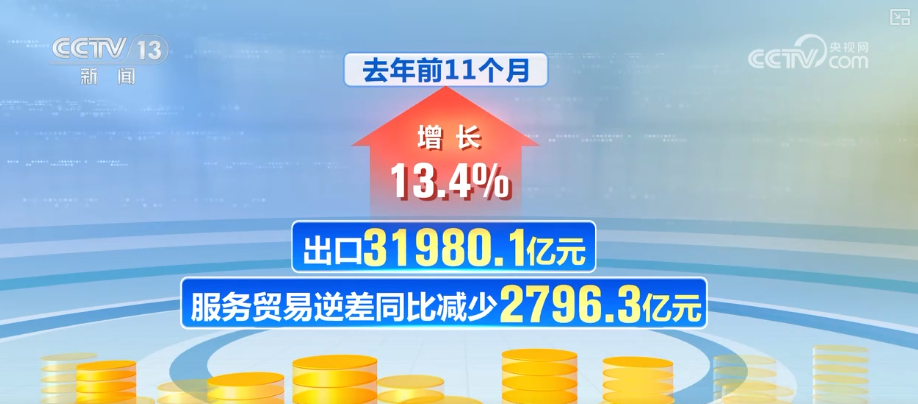
Core Insights - China's service trade continues to grow steadily, with knowledge-intensive services and travel services being significant growth drivers [1][7] Group 1: Service Trade Growth - The total service trade import and export value reached 72,023.7 billion yuan, a year-on-year increase of 7.1% [3] - Service exports amounted to 31,980.1 billion yuan, growing by 13.4%, while the service trade deficit decreased by 2,796.3 billion yuan [3] Group 2: Knowledge-Intensive Services - Knowledge-intensive service trade maintained growth, with an import and export value of 27,305.7 billion yuan, increasing by 5.6% [5] - The surplus in knowledge-intensive services expanded to 4,723.7 billion yuan, an increase of 1,067.4 billion yuan compared to the previous year [5] Group 3: Travel Services - Travel service trade reached 19,762.7 billion yuan, with an increase of 8.2%, where exports surged by 51.3% and imports grew by 1.9% [6] Group 4: Technological Advancements in Manufacturing - A rail transportation equipment company in Henan has transitioned from single product exports to a model that includes technology and service outputs, enhancing its global competitiveness [7][11] - The company has developed a rail wheel rolling mill with independent intellectual property rights, which has improved production efficiency and reduced costs significantly [14] Group 5: AI and Smart Solutions - An energy technology company in Inner Mongolia has integrated AI with energy storage systems, providing comprehensive solutions for international projects, thus enhancing the value of Chinese services [18][21] - The company's AI models can predict energy load with a 90% accuracy rate, enabling real-time trading opportunities and operational efficiency [20] Group 6: Policy Support and Future Directions - The Ministry of Commerce emphasizes the importance of integrating high-value mechanical equipment exports with technical services, aiming to enhance China's service trade global competitiveness [22]
如何将绿电的供给优势转化为绿色转型动能?
Jing Ji Ri Bao· 2026-01-01 23:34
Core Viewpoint - The expansion of green electricity application is a clear requirement from the Central Economic Work Conference, aimed at achieving carbon neutrality goals and enhancing industrial green competitiveness [1] Group 1: Current Status and Trends - As of October 2025, the total installed capacity of renewable energy in China is expected to reach 2.22 billion kilowatts, accounting for nearly 60% of the national total installed capacity [1] - In the first half of 2025, the national green electricity trading volume reached 154 billion kilowatt-hours, a year-on-year increase of 49.3%, indicating a rapid marketization and scaling of green electricity trading [1] - Regions like Guangdong have seen green electricity trading volumes increase by over 60% year-on-year in the first half of 2025, showcasing positive development momentum [1] Group 2: Challenges and Issues - The flexibility of the power system has shortcomings, with insufficient scale of flexible resources like pumped storage and new energy storage, leading to challenges in matching supply and demand during high output periods of renewable energy [2] - The market mechanism for green electricity needs standardization, as the relationship between electricity, certificates, and emission reduction effects requires further quantification [2] - There is structural differentiation in application scenarios and consumption motivation, with high-energy-consuming industries showing more urgent demand for green electricity compared to small and medium enterprises and public service sectors [2] Group 3: Strategic Recommendations - A coordinated planning approach should be adopted to advance large-scale development of renewable energy alongside the main grid and cross-province transmission channels, focusing on a diversified regulation system [3] - The establishment of a unified national trading platform for green electricity and certificates is essential to enhance efficiency in cross-province and cross-region electricity trading [3] - Public institutions and state-owned enterprises should lead the way in green electricity consumption by signing long-term procurement agreements, while government policies should incentivize key enterprises to join zero-carbon supply chains [4]
国际人士热议习近平新年贺词
Zhong Guo Xin Wen Wang· 2026-01-01 12:41
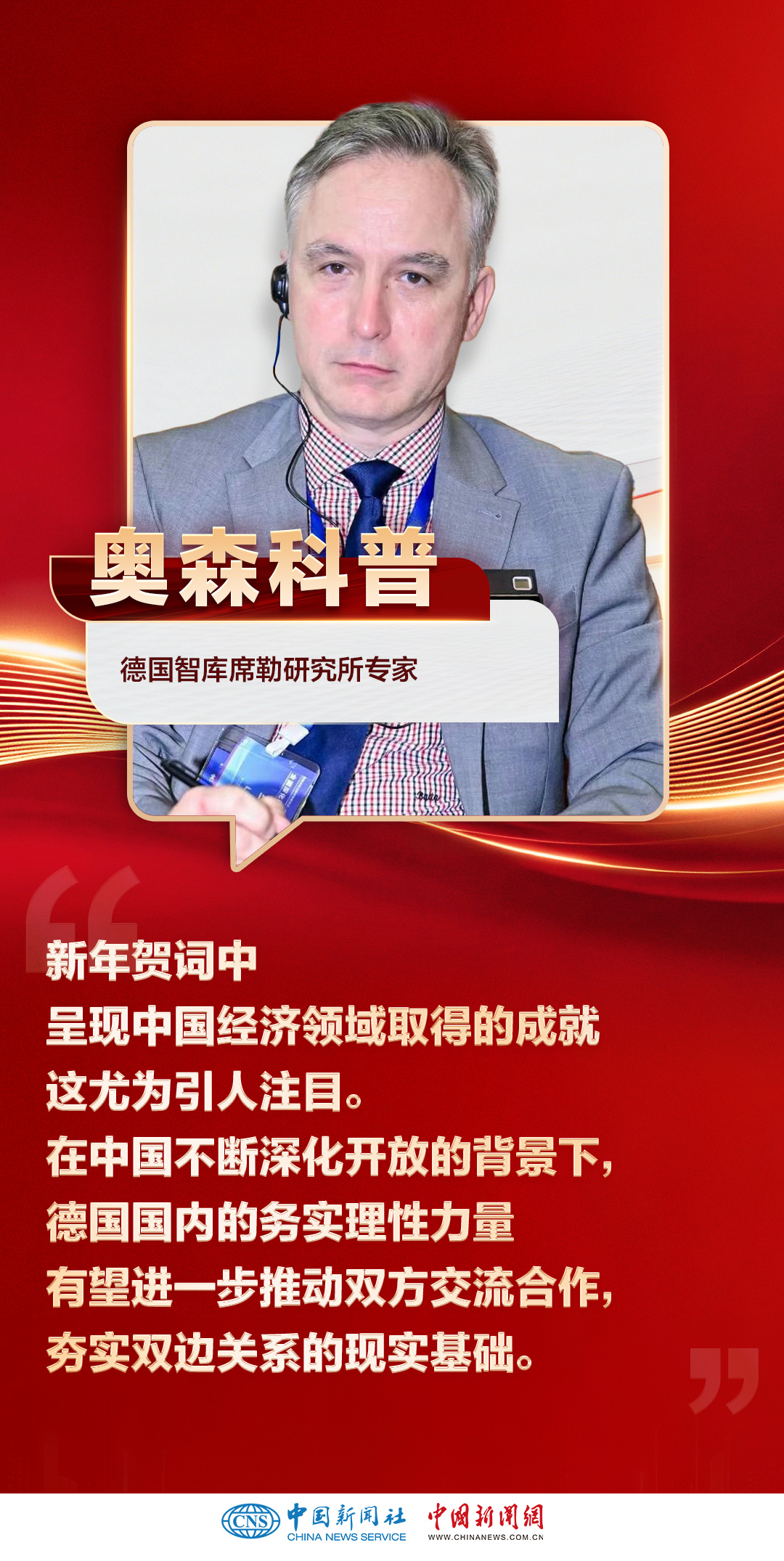
新年前夕,中国国家主席习近平发表二〇二六年新年贺词。海外多国专家学者对贺词给予积极评价。 在中国不断深化开放的背景下, 德国国内的务实理性力量 有望进一步推动双方交流合作, 夯实双边关系的现实基础。 (CNS)中国新闻社 HINA NEWS SERVICE 中网 狗闻 "谢菌诺夫 NT 7 7 11 1 - 4 俄罗斯外交部外交学院 乐万语言教研室主任、汉字家 习近平主席提出的全球治理倡议, 向世界展现 中国包建公正合理国际秩序的 展景和监督, 体现推动构建人类命运共同体的 中国智慧。 中国 利用 網 (CNS) 中国新闻社 秒11型元 韩国圆光大学韩中关系研究院院长 新年贺词 在展现中国发展成就的同时, 也从历史维度强调国家发展的连续性。 这不仅反映中国不断提升的综合实力, 也顺起重于中为国 在抵抗帝国主义侵略过程中 其同经历的历史记忆。 欧新闻社 HINA NEWS SERVICE ヤ网 狗 网 網 網 網 網 網 古丽娜尔-沙伊梅尔格诺娃 哈萨克斯坦中国研究中心主任 新年贺词片词 外界对中国在"十五五"开局之年 继续稳步前行的信心。 中国坚持高质量发展、 发展新质生产力、推动绿色转型, 为打造哈中关系新 ...
大河东流万物生
Xin Lang Cai Jing· 2025-12-31 21:06
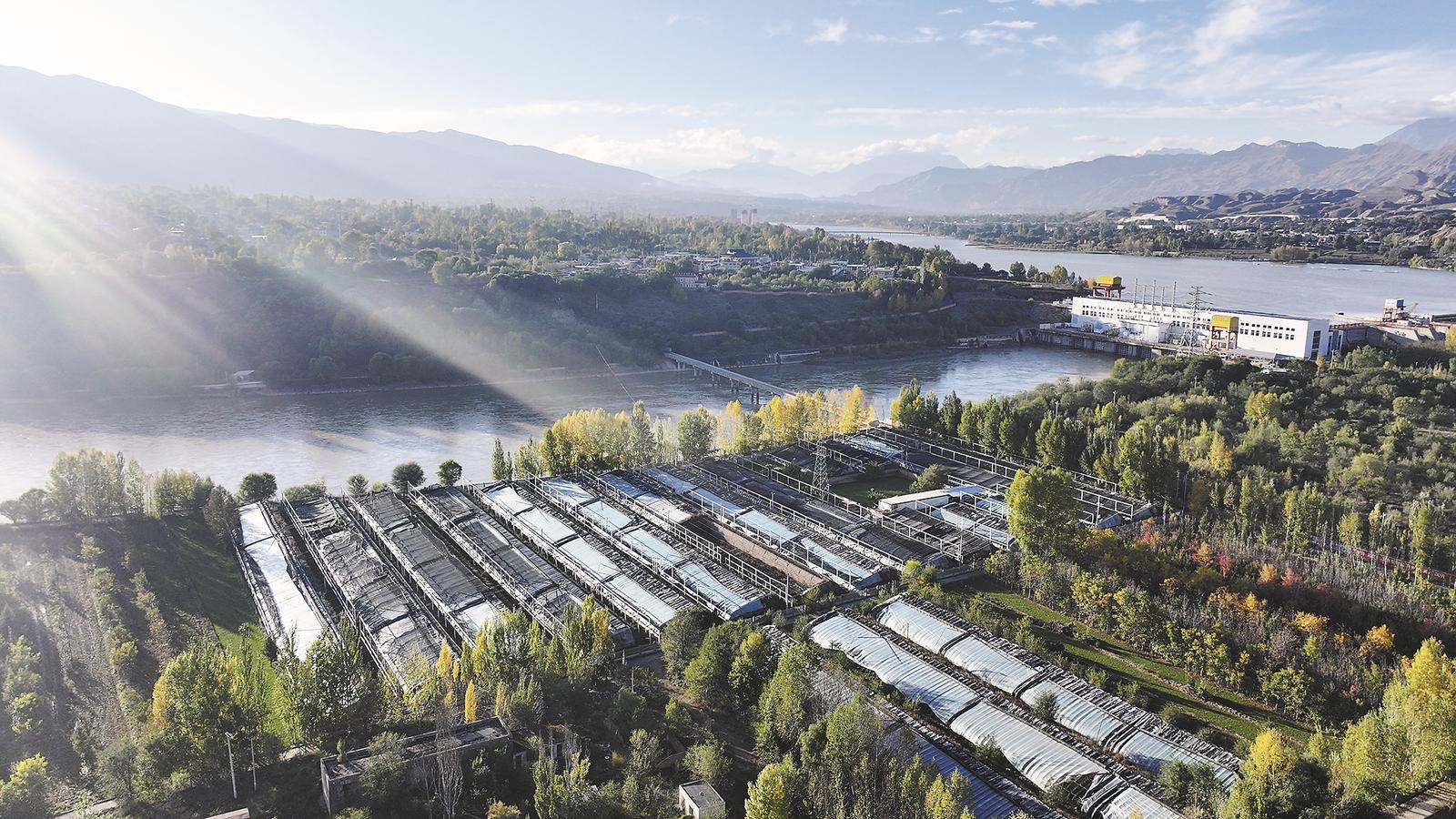
Core Viewpoint - The article highlights the ecological protection and high-quality development practices in the Yellow River basin, particularly in Qinghai, showcasing the integration of environmental conservation with economic growth and community well-being [5][10]. Group 1: Ecological Protection and Community Involvement - The Yellow River, originating from the Tibetan Plateau, plays a crucial role in the ecological and economic landscape of Qinghai, contributing nearly half of the river's runoff [5]. - Local residents, such as Tsering and Te Bao, exemplify the connection between ecological protection and livelihood, with Te Bao transitioning from poverty to stability through ecological management roles [8][9]. - The number of ecological guardians in Qinghai has stabilized at approximately 145,000, with an average annual income increase of over 20,000 yuan, benefiting many former impoverished households [9][10]. Group 2: Green Transformation and Energy Development - Qinghai is leading a green transformation by integrating renewable energy sources, with 94.23% of its installed capacity being clean energy, and it has become a significant player in national electricity supply [13][15]. - The "water-light complementary" project in Longyangxia demonstrates the synergy between hydropower and solar energy, enhancing environmental conditions and agricultural productivity [11][12]. - The province aims to establish a modern industrial system supported by clean energy, organic certification for over 12 million acres of grassland, and the promotion of high-quality agricultural products [15]. Group 3: Innovation and High-Quality Development - Qinghai is leveraging digital technology to modernize traditional industries, such as livestock trading, enhancing transparency and market responsiveness [14]. - The province's strategic focus on developing a "green electricity-green computing" model reflects a systematic approach to optimizing its unique ecological advantages [15]. - The commitment to sustainable development is evident in the promise that the best growth allows for mutual benefit between nature and communities, ensuring a harmonious future [15].
玉门油田:实现“双百”目标绿色转型谱新篇
Zhong Guo Qing Nian Bao· 2025-12-31 14:21
Core Insights - Yumen Oilfield has achieved its "double hundred" goal, reaching an oil and gas equivalent production of over 1 million tons and a new energy installed capacity exceeding 1 million kilowatts [1] Group 1: Production Achievements - Yumen Oilfield, known as the "cradle of China's petroleum industry," has successfully increased its oil and gas equivalent production to over 1 million tons after years of efforts [1] - The oilfield's production peaked at 1.4062 million tons in 1959 and has been below 1 million tons for decades until this recent achievement [1] - The oilfield has seen a continuous increase in proven reserves for seven consecutive years, with new growth areas such as the Huanqing New District and Ningqing Block showing effective results [1] Group 2: Strategic Initiatives - The oilfield has adopted a "dual oil and gas, multi-energy drive" strategy, optimizing mineral rights allocation to enhance production [1] - Yumen Oilfield is focusing on a green transformation strategy, aiming to create a "green China Petroleum" by establishing multiple centralized photovoltaic power stations and zero-carbon oilfields [1] - The completion of the main project for the Hongliuqing 500,000-kilowatt wind power project by the end of the year has contributed to the new energy installed capacity surpassing 1 million kilowatts [1] Group 3: Future Vision - Yumen Oilfield aims to focus on its "centennial oilfield" vision, continuing to enhance oil and gas reserves and production, improve new energy efficiency, and upgrade refining business [1] - The oilfield is committed to becoming a demonstration base for clean transformation, contributing new momentum to the construction of a world-class energy and chemical company [1]
天水税务:优策纾困强根基 暖屋兴业惠民生
Sou Hu Cai Jing· 2025-12-31 10:18
Group 1 - The national strategy of "dual carbon" is being deepened, focusing on the urban heating industry as a key area for both public welfare and green transformation [1][2] - The Tianshui City Taxation Bureau is actively providing tax incentives and support to heating enterprises to facilitate "green" heating during winter [1][2] - Tianshui City Heating Company has benefited from tax reductions of nearly 1.19 million yuan, which are reinvested into technology upgrades for heating systems [2][6] Group 2 - The Qin'an County Taxation Bureau is focused on reducing the burden on coal heating enterprises, promoting cost reduction and efficiency improvements through personalized guidance [3][6] - Qin'an Zhongtai Heating Company is transitioning to cleaner energy sources, receiving tax exemptions totaling 5 million yuan this year, which helps alleviate financial pressure [6][7] - Tianshui Kaisheng Heating Company has enjoyed a cumulative tax reduction of 228,100 yuan since the introduction of the environmental protection tax, which has been reinvested into environmental upgrades [7][8] Group 3 - The tax policies are designed to stimulate financial vitality for enterprises, directly translating into motivation for green development [7][8] - The Tianshui Economic and Technological Development Zone Taxation Bureau is utilizing big data to ensure that tax support measures reach enterprises effectively [7][8] - The future focus will be on tracking the effectiveness of policy implementation and optimizing service measures to enhance both green transformation and public welfare [8]
2026年汽车“两新”政策落地:按车价比例补贴,新能源车最高补2万元
Hua Xia Shi Bao· 2025-12-31 09:40
Core Viewpoint - The announcement of the 2026 "Two New" policy for automobiles is expected to significantly boost the automotive consumption market in China, providing a strong stimulus for consumer spending during the upcoming holiday season [2][8]. Group 1: Policy Changes - The 2026 policy introduces a major adjustment in the old-for-new vehicle subsidy standard, shifting from a fixed subsidy to a percentage-based calculation based on the price of the new vehicle [2][3]. - The government has allocated 62.5 billion yuan in special long-term bonds to ensure the timely implementation of the policy during peak consumption periods [2][8]. Group 2: Subsidy Details - The new subsidy structure encourages higher-end consumption, with personal consumers receiving a 12% subsidy (capped at 20,000 yuan) for purchasing new energy vehicles after scrapping their old cars, and a 10% subsidy (capped at 15,000 yuan) for fuel vehicles [3][4]. - In the vehicle replacement scenario, the subsidy for new energy vehicles is set at 8% (capped at 15,000 yuan), while for fuel vehicles, it is 6% (capped at 13,000 yuan) [3][4]. Group 3: Market Impact - The policy aims to address structural issues in the automotive market, promoting a shift from volume expansion to quality improvement, particularly benefiting brands with high-value, technology-rich models [5][6]. - The 2025 old-for-new policy had already shown significant results in boosting automotive consumption and facilitating the upgrade of the automotive industry, with over 60% of the market now driven by replacement demand [7][8]. Group 4: Implementation and Monitoring - The new policy emphasizes optimizing fund allocation and implementing strict measures against illegal practices, such as price gouging and fraudulent claims for subsidies [5][6]. - A pre-allocation system for subsidy funds has been established to alleviate financial pressure on enterprises, ensuring smooth policy execution [7].