数据中心

Search documents
七折甩卖,天孚通信大股东出手!
Shen Zhen Shang Bao· 2025-11-16 03:57
Core Viewpoint - Tianfu Communication, a leading global supplier of optical devices and integrated solutions, announced a plan to transfer 8.5 million shares, representing 1.09% of its total share capital, due to the funding needs of its controlling shareholder, Suzhou Tianfu Renhe Investment Management Co., Ltd [1][3]. Group 1: Share Transfer Details - The transfer price will not be lower than 70% of the average trading price of Tianfu Communication's shares over the 20 trading days prior to the date of the subscription invitation (November 14, 2025) [3]. - The transfer will be a non-public transfer and will not be conducted through centralized bidding; the shares acquired by the transferee cannot be transferred within six months after acquisition [3]. - As of the announcement date, Tianfu Renhe holds 295 million shares, accounting for 37.95% of the company [3]. Group 2: Financial Performance - For the first three quarters of 2025, Tianfu Communication achieved revenue of 3.918 billion yuan, a year-on-year increase of 63.63%, and a net profit attributable to shareholders of 1.465 billion yuan, up 50.07% year-on-year [4]. - In the third quarter alone, the company reported revenue of 1.463 billion yuan, a year-on-year growth of 74.37%, and a net profit of 566 million yuan, increasing by 75.68% year-on-year [4]. Group 3: Market Reaction and Shareholder Dynamics - Tianfu Communication's stock price has risen over 140% this year, closing at 155.47 yuan per share on November 14, with a total market capitalization of 120.9 billion yuan [4]. - Analysts suggest that the controlling shareholder's decision to transfer shares at a discount may signal concerns about the current stock price valuation or potential liquidity issues, especially given the significant price increase [4]. - The company has seen frequent share reduction activities from major shareholders, including the second-largest shareholder, Zhu Guodong, who has also conducted share transfers this year [5].



英特尔失手十年,AMD 迎来“复仇周期”
半导体行业观察· 2025-11-16 03:34
Core Insights - AMD is poised to capitalize on the AI wave and aims to gain a larger market share in traditional enterprise computing, leveraging its engineering capabilities and strategic acquisitions [2][3] - The Financial Analyst Day (FAD) held in New York highlighted AMD's progress and future plans, marking significant milestones in its revival in the data center market [3][4] Market Analysis - AMD's Total Addressable Market (TAM) for data center AI accelerators has been updated, with projections showing substantial growth from $30 billion in 2023 to $894 billion by 2028, reflecting a compound annual growth rate (CAGR) of 73% [5][6] - AMD's CEO Lisa Su emphasized the importance of data centers as the largest growth opportunity, with expectations of over 80% CAGR in data center AI revenue over the next three to five years [8][9] Revenue Projections - AMD anticipates achieving approximately $34 billion in total revenue by 2025, with around $16 billion coming from the data center segment, including $6.2 billion from AI GPU revenue [9][10] - The company expects to capture over 50% of the server CPU market and over 40% of the client CPU market by 2025, with significant growth in its data center revenue [8][9] Competitive Landscape - AMD is positioned as a reliable competitor to Intel in high-performance CPUs and GPUs, and as a credible alternative to Nvidia in the GPU and DPU markets [3][4] - The company is set to release new GPU models, including the MI400 series, which are expected to enhance its competitive edge in AI workloads [15][17] Future Outlook - AMD's strategic focus on data center leadership encompasses chips, software, and rack-level solutions, aiming for sustained growth in a rapidly evolving market [8][9] - The company is preparing for a significant increase in AI workload demands, which is expected to drive the need for advanced server CPUs and GPUs [14][15]

微软 AI 战略深度分析
傅里叶的猫· 2025-11-14 10:25
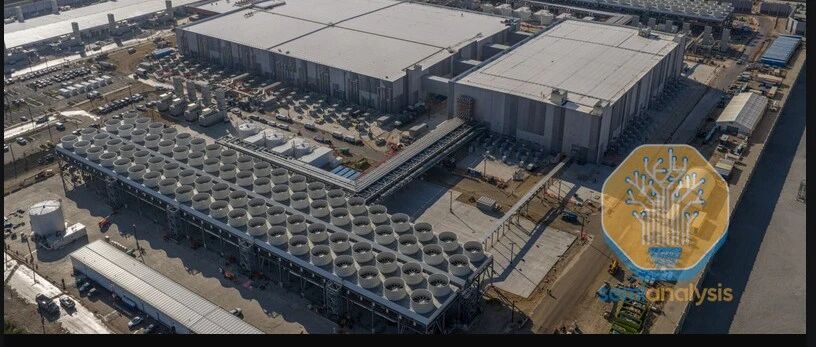
Core Insights - Microsoft, a leader in the AI industry from 2023 to 2024, paused its AI strategy due to concerns over return on investment (ROIC) and execution capabilities, but plans to reinvest in AI by 2025 as demand surges [3][10][19] Group 1: AI Strategy and Market Dynamics - Microsoft significantly increased its investment in OpenAI from $1 billion to $10 billion in early 2023, gaining exclusive access to OpenAI's models [3][11] - The company initiated an aggressive data center expansion plan to support OpenAI's computational needs, including a large-scale project named Fairwater [13][14] - By mid-2024, Microsoft faced a slowdown in data center construction and a shift in its commitment to OpenAI, leading to a strategic pause in its AI investments [5][19] Group 2: Competitive Landscape - In 2025, as global AI applications exploded, Microsoft resumed its AI investments, driven by a surge in demand for accelerated computing [7][19] - OpenAI diversified its partnerships, signing contracts with Oracle, Amazon, and Google, which diminished Microsoft's exclusive supply advantage [9][17] - Microsoft's market share in data center pre-leasing capacity dropped from over 60% to below 25% during the pause, indicating a loss of competitive edge [19] Group 3: Infrastructure and Execution Challenges - Microsoft encountered significant delays in its IaaS (Infrastructure as a Service) layer, particularly in the deployment of bare metal services, which are critical for AI training [20][21] - The company’s inability to meet OpenAI's growing computational demands led to the loss of key contracts, including a $100 billion project originally planned for Wisconsin [23][24] - Microsoft’s reliance on third-party cloud providers increased, with Neocloud's share of Microsoft's new computing capacity rising to nearly 50% [25][26] Group 4: PaaS Layer and Resource Allocation - Microsoft faced challenges in GPU resource allocation, prioritizing high-end GPUs for OpenAI and traditional enterprises, leaving AI startups with insufficient access [29][30] - The Azure platform's performance ratings declined due to stagnation in updates and features compared to competitors like CoreWeave [31][32] - Microsoft’s Azure Foundry aims to capture OpenAI API market share, leveraging its IP rights, but faces challenges in converting token usage into revenue [33][34] Group 5: Model and Application Development - Microsoft’s strategy involves leveraging OpenAI's IP while developing its own MAI models to reduce dependency [41][42] - The MAI series has seen rapid investment growth, with plans to increase annual spending to $16 billion, aiming for model independence [45] - GitHub Copilot, once a market leader, faces competition from new entrants, prompting Microsoft to integrate additional models to retain users [46][49] Group 6: Hardware and Chip Development - Microsoft’s self-developed ASIC chips, particularly the Maia series, have lagged behind competitors, impacting its hardware strategy [56][57] - The Maia 100 chip, released in late 2023, failed to meet industry standards, leading to delays in subsequent models [56][57] - Microsoft's strategic approach of synchronizing chip development with model readiness has resulted in missed opportunities compared to competitors who adopt asynchronous development [57]

宏发股份(600885.SH):高压直流继电器及配套产品可以用于数据中心高压直流供电系统
Ge Long Hui· 2025-11-14 10:14
Group 1 - The company, Hongfa Technology (600885.SH), has indicated that its high-voltage direct current relays and supporting products can be utilized in high-voltage direct current power supply systems for data centers [1] - The company is also expanding its product offerings to include circuit breakers and other low-voltage electrical products, which have promising application prospects in data centers [1]

电力优势成关键!高盛看好中国在AI数据中心竞赛中超越美国
Zhi Tong Cai Jing· 2025-11-14 07:40
虽然中国目前拥有全球约四分之一的数据中心容量,但可能很快就会赶上拥有44%份额、处于领先地位 的美国。 高盛称,数据中心已占美国电力需求的6%左右,这种快速增长加上缺乏新的发电厂建设意味着美国13 个区域电网中有8个已经达到或低于关键的备用容量水平,这使得它们容易受到电价飙升或电力短缺的 影响。 到2030年,这种紧张可能会限制数据中心的增长,因为数据中心需要大量电力来运行和冷却其内部的所 有计算能力。 分析师表示:"有限的有效的备用电力产能可能会成为美国数据中心进一步发展的瓶颈。相比之下,中 国的电网已经拥有大量的备用产能,而且我们预计这一产能还会进一步扩大。" 高盛集团表示,中国大规模的发电能力建设将使其在扩展为人工智能提供动力的数据中心方面比美国更 具优势。 自2021年和2022年遭遇一系列电力短缺问题以来,中国一直在大力建设电力设施,可再生能源、燃煤电 厂和核电机组的建设速度均处于世界领先地位。到2030年,中国可能会有约400千兆瓦的备用电力产 能,是全球数据中心预期需求的三倍,这为数据中心的持续扩张提供了充足的空间。 高盛的分析师最新的研究报告中写道:"我们预计中国的备用产能将保持充足,能够满足 ...

“一天一个价!”比黄金还猛!消费者:一个月,价格涨了一两千元
Zhong Guo Jing Ji Wang· 2025-11-14 04:40
Core Insights - The storage industry is experiencing a super cycle driven by AI giants' aggressive procurement, leading to significant price increases for memory products [1][5][10] - The rising costs are impacting smartphone manufacturers, particularly during the peak sales season of "Double 11" [1][3][11] Group 1: Price Surge and Market Dynamics - Prices for solid-state drives and memory modules have doubled in just two months, with DRAM prices increasing by 171.8% year-on-year in Q3 [1][5] - Major manufacturers like Samsung and SK Hynix have halted contract pricing for DDR5 DRAM due to rapid price increases [1][5] - The demand for storage is being driven by AI data centers and cloud service providers, who are less price-sensitive and are engaged in a "computing arms race" [5][6] Group 2: Impact on End Products - Smartphone manufacturers like Xiaomi are raising prices for new models due to increased memory costs, with significant price hikes noted for the K90 series [3][11] - The price of PC components has also surged, with reports of increases of 1,000 to 2,000 yuan for certain models during the "Double 11" sales [12] - The overall gross margin for companies like Xiaomi has been affected, dropping from 14.6% to 12.6% due to rising core component prices [11] Group 3: Future Outlook and Strategies - The current supply constraints are expected to persist, with many manufacturers locking in orders for 2027, exacerbating the tight supply situation [10][13] - Companies are exploring ways to mitigate the impact of rising memory costs by developing smaller models and enhancing storage chip capabilities [14][15] - The competition for HBM (High Bandwidth Memory) is intensifying, with major players like Samsung aiming to secure a leading position in the next generation of memory technology [6][9]
电力改变AI竞赛格局!高盛实测:到2030年,美国“备用电力”将跌至临界线以下,而中国还有高达400GW
Hua Er Jie Jian Wen· 2025-11-14 03:54
Core Insights - The report from Goldman Sachs highlights the critical role of electricity supply in the AI race, indicating that disparities in power availability may hinder the expansion of AI infrastructure in the U.S. while providing an unexpected competitive advantage to China [1][5]. Group 1: U.S. Electricity Supply Challenges - The U.S. is facing an imminent electricity supply crisis, with effective reserve power capacity projected to fall below the critical 15% threshold by 2030 due to rapid growth in data center demand [1][2]. - Currently, data centers account for approximately 6% of total U.S. electricity demand, expected to rise to 11% by 2030, putting additional strain on the grid [2]. - The effective reserve power capacity in the U.S. has decreased from 26% to 19% over the past five years, with eight out of thirteen regional grids already at or below the critical level [2][4]. Group 2: China's Electricity Supply Advantage - In contrast, China's electricity supply is robust, with an expected effective reserve power capacity of around 400 GW by 2030, significantly exceeding its own demand and the projected global data center electricity demand of approximately 120 GW [1][3]. - China's substantial investments in renewable energy, coal, and nuclear power have led to a significant increase in electricity capacity, providing a solid foundation for future AI-driven data center expansion [3][4]. Group 3: Implications for the AI Race - The report emphasizes that sufficient and reliable electricity supply is a key factor in the AI competition, with the potential for U.S. electricity infrastructure bottlenecks to slow down AI development until at least 2030 [5]. - Conversely, China's ample and cost-effective electricity supply may attract data center investments, potentially altering the global distribution of data centers and impacting related industries such as energy equipment and high-energy-consuming sectors [5].

高盛:中国备用电力充沛,成为与美国AI竞争的优势
Feng Huang Wang· 2025-11-14 03:12
高盛指出,数据中心目前已占美国用电需求的约6%。用电需求激增,加之缺乏新增发电产能,导致13 个区域电网中已有8个的备用电力容量处于或低于临界水平,使其易受电价飙升或电力短缺影响。到 2030年,这种紧张局面可能限制数据中心的发展。这些设施承载着海量算力,其运行和冷却均需消耗大 量电力。 "有限的有效备用电力容量可能成为美国数据中心进一步发展的瓶颈。相比之下,中国电网已经拥有可 观的备用容量,我们预计这一容量将进一步扩大。"高盛分析师称。(作者/箫雨) 高盛的魏宏岑(Hongcen Wei,音译)等分析师在周四的一份研报中写道:"我们预计中国的备用电力容量 将保持充足,以满足数据中心及其他行业日益增长的用电需求。" 中国目前拥有全球约四分之一的数据中心容量,可能很快就会追上市占率达44%的全球领头羊美国。 凤凰网科技讯 北京时间11月14日,据彭博社报道,高盛集团称,中国的大规模发电能力建设将使其在 数据中心扩张竞赛中比美国更具优势。这些数据中心支撑了AI的发展。 报道称,中国一直在大举建设电力设施,在可再生能源、燃煤电厂和核反应堆领域的投建规模位居世界 前列。到2030年时,中国很可能会有约400吉瓦的备用 ...
格林大华期货早盘提示-20251114
Ge Lin Qi Huo· 2025-11-13 23:41
Report Summary 1. Core Views - The global economy is entering the top region due to the continuous wrong policies of the United States [2] - The US investment - grade bond issuance scale has exceeded last year's $1.496 trillion, and the global bond issuance scale has exceeded $6 trillion for the first time this year [1] - The US sub - prime borrower auto - loan delinquency rate has reached a record high, and consumer spending is slowing down [1][2] 2. Key Information by Category Macroeconomic and Financial Information - **Gold Market**: Citigroup's latest gold outlook report predicts that the gold price may reach $6000 in a specific scenario, and US investors are the main force driving the gold price increase. In 2025, the net inflow of US gold ETFs accounts for 60.9% of the global total [1] - **Federal Reserve Policy**: New York Fed President Williams said that the Fed will assess when reserves are sufficient and then start gradually buying assets to maintain sufficient reserves [1] - **US Data Center Power Demand**: Morgan Stanley's report shows that the power demand of US data centers is rising sharply, and there will be a 44 - gigawatt power gap by 2028, equivalent to the power generation of 44 nuclear power plants [1][2] - **AI Infrastructure Investment**: Anthropic plans to invest $50 billion in AI infrastructure in the US, and Microsoft's first "AI super - factory" has been put into operation [1] - **Oil Market**: OPEC's November report shows that the oil market will be slightly oversupplied in 2026 [1] - **Bond Market**: The issuance scale of US investment - grade bonds has exceeded last year, and the global bond issuance scale has reached over $6 trillion this year [1] - **Auto - loan Delinquency**: As of October, the proportion of US sub - prime borrower auto - loans overdue for more than 60 days reached 6.65%, the highest since 1994 [1] Global Economic Logic - **US Government**: The US Senate passed a temporary appropriation bill to end the government shutdown [2] - **AI Competition**: NVIDIA CEO Huang Renxun believes that China will win the AI competition due to a more favorable regulatory environment and lower energy costs [2] - **Huawei's Achievements**: Huawei announced "ten major inventions", demonstrating its strength in computing power infrastructure and storage [2] - **Stock Market Outlook**: Goldman Sachs CEO is optimistic about the stock markets in Hong Kong and the Chinese mainland [2] - **AI Data Center Investment**: Morgan Stanley estimates that the construction boom of AI data centers will require at least $5 trillion in the next five years [2] - **Labor Shortage**: There is a shortage of plumbers, HVAC contractors, mechanics, and electricians in the construction of US data centers [2] - **Consumer Spending**: US household excess savings accumulated during the pandemic have been basically exhausted, and consumer spending is slowing down, especially among middle - income groups [2] - **Corporate Layoffs**: In October, the total number of US corporate layoffs was 153,074, mainly in the technology and warehousing industries, an increase of 183% from September and almost three times that of the same period last year [2]
【公告全知道】存储芯片+锂电池+储能+卫星导航+算力+数据中心!公司存储芯片产品可应用于服务器
财联社· 2025-11-13 15:12
Group 1 - The article highlights the importance of major announcements in the stock market, including suspensions, investments, acquisitions, performance reports, and other significant events that can impact stock prices [1] - It emphasizes the potential investment opportunities in sectors such as storage chips, lithium batteries, energy storage, satellite navigation, commercial aerospace, computing power, and data centers [1] - The article mentions a company's storage chip products that can be applied in servers and AI embedded fields, indicating a focus on advanced technology applications [1] Group 2 - Another company is noted for its involvement in the 6G communication sector, with developments in aerial unmanned platforms and satellite internet, showcasing its commitment to cutting-edge technology [1] - The article also discusses a company's investment in solid-state batteries and lithium batteries, including the establishment of a pilot project for battery-grade lithium sulfide, reflecting growth in the energy storage market [1]